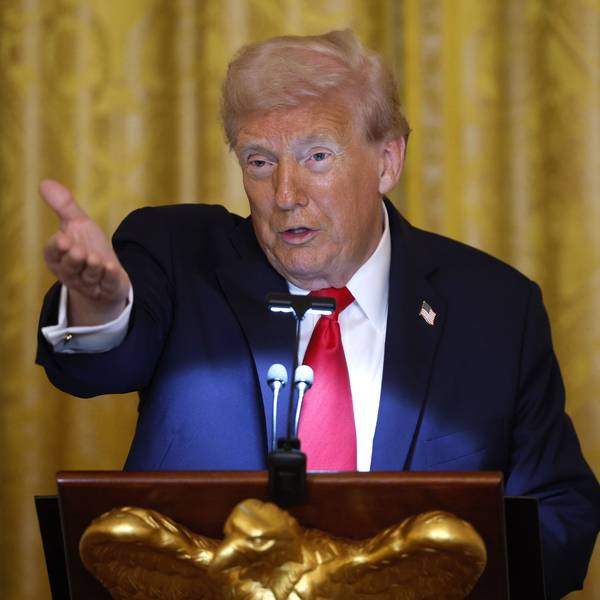
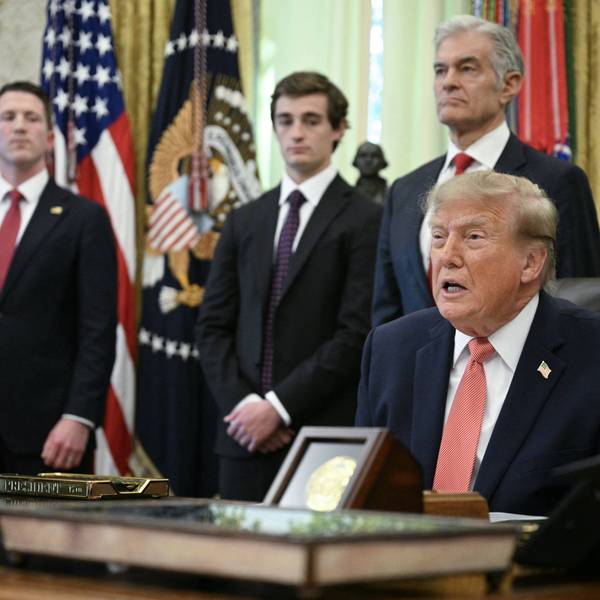
Acting US Attorney General Todd Blanche attends an address to the nation by President Donald Trump on July 16, 2026.
Letting Fraudsters Run Wild, Trump Justice Department Abandons Corporate Crime Enforcement
"The Trump DOJ’s grotesque retreat from corporate crime enforcement leaves Americans increasingly vulnerable to tainted food, workplace exploitation, environmental destruction, widespread ripoffs, and all-around illegal corporate predation."
US President Donald Trump's Justice Department is systematically taking a softer approach to corporate crime, letting companies and executives that have admitted to wrongdoing off the hook with no charges.
The Wall Street Journal reported over the weekend that "so far this year, 12 companies have pleaded guilty to federal criminal charges. At least six companies have reached deferred prosecution agreements, including refiner Phillips 66 and medical-waste specialist Stericycle, acquired by Waste Management in 2024." The Journal added that while Acting US Attorney General Todd Blanche and other officials have signaled that the Justice Department is "focusing on prosecuting employees rather than companies, it has also granted leniency or dropped charges against people it accused of wrongdoing."
"The Trump DOJ’s grotesque retreat from corporate crime enforcement leaves Americans increasingly vulnerable to tainted food, workplace exploitation, environmental destruction, widespread ripoffs, and all-around illegal corporate predation," said Rick Claypool, a researcher at the consumer advocacy group Public Citizen who has been tracking the fall of corporate enforcement during Trump's second White House term—which has been rife with corruption and profiteering at the very top.
Claypool called the Trump Justice Department's lenient approach to corporate criminals "an absolute outrage" and that the trend is "going from bad to worse."
The Journal lays out several examples of the Justice Department abandoning enforcement efforts against prominent companies. "In matters involving Alibaba, EagleBank, and Abbott Laboratories, the department declined to charge companies even when prosecutors thought executives or managers were involved in the wrongdoing," the newspaper reported. "In those cases, the department didn’t charge any individuals."
"The Justice Department this year dropped its long-running prosecution of Turkish state-owned lender Halkbank for allegedly evading US sanctions on Iran," the Journal added. "And last year, the Trump administration dropped charges against Boeing. The aerospace giant had been set to plead guilty to misleading air-safety regulators but instead paid a $243 million fine and received a nonprosecution agreement. That is the same form of leniency that prosecutors granted to Alibaba and EagleBank, which requires them to admit wrongdoing but spares them from being charged."
Trump's DOJ has also shown lenience toward corporate executives. "The department in January gave a deferred prosecution agreement to the chief executive of a technology contractor who had been charged with defrauding the Securities and Exchange Commission," the Journal reported.
Bloomberg reported last week that the Justice Department plans to drop charges against "alleged mastermind of a cryptocurrency Ponzi scheme that prosecutors said defrauded investors of $722 million."
According to Public Citizen's tracker, the second Trump administration has canceled or frozen enforcement actions against more than 170 US corporations so far—including dozens of companies that donated to the president's inaugural fund.
“The Trump administration is canceling accountability for corporate predators that cheat consumers, exploit workers, and illegally abuse their power at home and abroad,” Claypool said earlier this year. “The ‘law enforcement’ claims the White House uses as pretext for authoritarian anti-immigrant crackdowns, city occupations, and imperial resource seizures abroad lose all credibility when cast against the lawlessness Trump allows for the pursuit of corporate profits."
We are at a crossroads
This country and this world are at a monumental crossroads. In a few short weeks, US voters will have an opportunity to beat back the forces of fascism and confront the billionaires who are rigging the economy, our media system, and our democracy, making it increasingly impossible for ordinary people to get by. We’re not just talking about the election. We’re talking about what must be done once these fascist elements are vanquished from power. We need a bolder set of solutions than what either major party has so far been willing to offer and a working-class movement ready to fight like hell for it. Trump didn't emerge from nowhere. The conditions that fueled MAGA authoritarianism were created by decades of radical neoliberal economic policies and a corrupt political system dominated by corporate interests. They slashed taxes on the super-rich, promising that the benefits would trickle down. They said giveaways to the corporate titans would make life more affordable for the rest of us. It was all bullshit. And when a bitter, betrayed populace searches for someone to blame, right-wing demagogues have little trouble finding scapegoats. People know when they're being lied to, but you won't hear any of this from the corporate media. Only independent journalism—powered and funded by people who believe in building a better world—can deliver truly trustworthy daily news. Our Fall Campaign is underway, and we need your help. To power our newsroom through the rest of the year, we need to raise $125,000 by midnight on October 31. So if you share our vision, please contribute whatever you can to sustain our work. |
US President Donald Trump's Justice Department is systematically taking a softer approach to corporate crime, letting companies and executives that have admitted to wrongdoing off the hook with no charges.
The Wall Street Journal reported over the weekend that "so far this year, 12 companies have pleaded guilty to federal criminal charges. At least six companies have reached deferred prosecution agreements, including refiner Phillips 66 and medical-waste specialist Stericycle, acquired by Waste Management in 2024." The Journal added that while Acting US Attorney General Todd Blanche and other officials have signaled that the Justice Department is "focusing on prosecuting employees rather than companies, it has also granted leniency or dropped charges against people it accused of wrongdoing."
"The Trump DOJ’s grotesque retreat from corporate crime enforcement leaves Americans increasingly vulnerable to tainted food, workplace exploitation, environmental destruction, widespread ripoffs, and all-around illegal corporate predation," said Rick Claypool, a researcher at the consumer advocacy group Public Citizen who has been tracking the fall of corporate enforcement during Trump's second White House term—which has been rife with corruption and profiteering at the very top.
Claypool called the Trump Justice Department's lenient approach to corporate criminals "an absolute outrage" and that the trend is "going from bad to worse."
The Journal lays out several examples of the Justice Department abandoning enforcement efforts against prominent companies. "In matters involving Alibaba, EagleBank, and Abbott Laboratories, the department declined to charge companies even when prosecutors thought executives or managers were involved in the wrongdoing," the newspaper reported. "In those cases, the department didn’t charge any individuals."
"The Justice Department this year dropped its long-running prosecution of Turkish state-owned lender Halkbank for allegedly evading US sanctions on Iran," the Journal added. "And last year, the Trump administration dropped charges against Boeing. The aerospace giant had been set to plead guilty to misleading air-safety regulators but instead paid a $243 million fine and received a nonprosecution agreement. That is the same form of leniency that prosecutors granted to Alibaba and EagleBank, which requires them to admit wrongdoing but spares them from being charged."
Trump's DOJ has also shown lenience toward corporate executives. "The department in January gave a deferred prosecution agreement to the chief executive of a technology contractor who had been charged with defrauding the Securities and Exchange Commission," the Journal reported.
Bloomberg reported last week that the Justice Department plans to drop charges against "alleged mastermind of a cryptocurrency Ponzi scheme that prosecutors said defrauded investors of $722 million."
According to Public Citizen's tracker, the second Trump administration has canceled or frozen enforcement actions against more than 170 US corporations so far—including dozens of companies that donated to the president's inaugural fund.
“The Trump administration is canceling accountability for corporate predators that cheat consumers, exploit workers, and illegally abuse their power at home and abroad,” Claypool said earlier this year. “The ‘law enforcement’ claims the White House uses as pretext for authoritarian anti-immigrant crackdowns, city occupations, and imperial resource seizures abroad lose all credibility when cast against the lawlessness Trump allows for the pursuit of corporate profits."
US President Donald Trump's Justice Department is systematically taking a softer approach to corporate crime, letting companies and executives that have admitted to wrongdoing off the hook with no charges.
The Wall Street Journal reported over the weekend that "so far this year, 12 companies have pleaded guilty to federal criminal charges. At least six companies have reached deferred prosecution agreements, including refiner Phillips 66 and medical-waste specialist Stericycle, acquired by Waste Management in 2024." The Journal added that while Acting US Attorney General Todd Blanche and other officials have signaled that the Justice Department is "focusing on prosecuting employees rather than companies, it has also granted leniency or dropped charges against people it accused of wrongdoing."
"The Trump DOJ’s grotesque retreat from corporate crime enforcement leaves Americans increasingly vulnerable to tainted food, workplace exploitation, environmental destruction, widespread ripoffs, and all-around illegal corporate predation," said Rick Claypool, a researcher at the consumer advocacy group Public Citizen who has been tracking the fall of corporate enforcement during Trump's second White House term—which has been rife with corruption and profiteering at the very top.
Claypool called the Trump Justice Department's lenient approach to corporate criminals "an absolute outrage" and that the trend is "going from bad to worse."
The Journal lays out several examples of the Justice Department abandoning enforcement efforts against prominent companies. "In matters involving Alibaba, EagleBank, and Abbott Laboratories, the department declined to charge companies even when prosecutors thought executives or managers were involved in the wrongdoing," the newspaper reported. "In those cases, the department didn’t charge any individuals."
"The Justice Department this year dropped its long-running prosecution of Turkish state-owned lender Halkbank for allegedly evading US sanctions on Iran," the Journal added. "And last year, the Trump administration dropped charges against Boeing. The aerospace giant had been set to plead guilty to misleading air-safety regulators but instead paid a $243 million fine and received a nonprosecution agreement. That is the same form of leniency that prosecutors granted to Alibaba and EagleBank, which requires them to admit wrongdoing but spares them from being charged."
Trump's DOJ has also shown lenience toward corporate executives. "The department in January gave a deferred prosecution agreement to the chief executive of a technology contractor who had been charged with defrauding the Securities and Exchange Commission," the Journal reported.
Bloomberg reported last week that the Justice Department plans to drop charges against "alleged mastermind of a cryptocurrency Ponzi scheme that prosecutors said defrauded investors of $722 million."
According to Public Citizen's tracker, the second Trump administration has canceled or frozen enforcement actions against more than 170 US corporations so far—including dozens of companies that donated to the president's inaugural fund.
“The Trump administration is canceling accountability for corporate predators that cheat consumers, exploit workers, and illegally abuse their power at home and abroad,” Claypool said earlier this year. “The ‘law enforcement’ claims the White House uses as pretext for authoritarian anti-immigrant crackdowns, city occupations, and imperial resource seizures abroad lose all credibility when cast against the lawlessness Trump allows for the pursuit of corporate profits."