SUBSCRIBE TO OUR FREE NEWSLETTER
Daily news & progressive opinion—funded by the people, not the corporations—delivered straight to your inbox.
5
#000000
#FFFFFF
To donate by check, phone, or other method, see our More Ways to Give page.
Daily news & progressive opinion—funded by the people, not the corporations—delivered straight to your inbox.
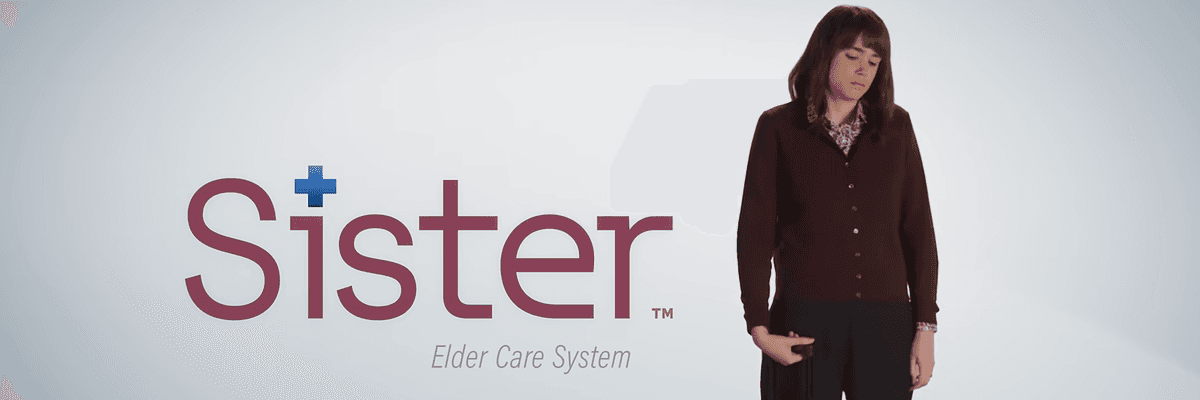
A scene from Saturday Night Live's "Sister" skit, which drew attention to the eldercare burdens faced by women.
"There's a saying that if you don’t laugh, you’ll cry—that's one reason this skit resonated so deeply with many," said one expert.
A skit on NBC's "Saturday Night Live" that aired over the weekend has struck a nerve after it satirized how women are expected to carry the full burden of caring for elders.
The skit was a mock advertisement for a product aimed at helping men look after their elderly parents called "Sister," which is pitched as "a live-in 24-7 eldercare provider that is completely free and also your sister."
The sister in the skit is shown going through assorted hassles such as dealing with insurance and pharmaceutical companies, while her brother boasts about being able to "get back to my life."
At one point in the skit, a doctor appears and explains that "years of internalized sexism have warped Sister's brain into thinking that caretaking is her responsibility and, somehow, not yours."
In the two days since it first aired, the skit has generated more than 4 million views on YouTube.
University of Massachusetts, Amherst economist Nancy Folbre said she hoped the skit would "finally kick off a serious discussion about all the things we can do to help reduce this burden for caregivers," including enacting long-term care insurance of the kind pioneered in Washington State.
"There's a saying that if you don’t laugh, you’ll cry—that's one reason this skit resonated so deeply with many," Folbre said. "The burden of caretaking, particularly on women, is staggering. But the caregiver burden is no joke."
In an op-ed published by MS NOW on Monday, University of Wisconsin-Madison sociologist Jessica Calarco argued that the "SNL" skit was an indictment of the neoliberal approach to eldercare, which treats it as a problem for individual families to solve.
"Instead, we could treat care as public good, the way that many other high-income countries have," Calarco wrote. "The Netherlands, for example, is a global leader in eldercare, coupling its universal healthcare program with a tax-subsidized public insurance program that guarantees access to low-fee long-term care services, including both nursing home placements and in-home personal care."
The SNL skit drew a personal reaction from US Sen. Andy Kim (D-NJ).
"This is hard to watch because it's true," Kim wrote in a Monday social media post. "These unfair, sexist gender roles are so engrained in our society—caregiving is no exception. As a caregiver to my dad, I think it's important to talk about what caregiving looks like as a son and as a father. We don't have to accept these norms."
Rep. Gwen Moore (D-Wis.) said she empathized with the sister in the skit, and pitched a potential policy solution.
"Sister has a friend in me!" wrote Moore. "Family members (predominantly women) perform about $1 trillion in unpaid caregiving work every year. I introduced legislation to expand Earned Income Tax Credit for unpaid caregivers, providing direct support to those who care for loved ones."
This country and this world are at a monumental crossroads. US voters have an opportunity to beat back the forces of fascism and confront the billionaires who are rigging the economy, our media system, and our democracy, making it increasingly impossible for ordinary people to get by. We’re not just talking about the election. We’re talking about what must be done once these fascist elements are vanquished from power. We need a bolder set of solutions than what either major party has so far been willing to offer and a working-class movement ready to fight like hell for it. Trump didn't emerge from nowhere. The conditions that fueled MAGA authoritarianism were created by decades of radical neoliberal economic policies and a corrupt political system dominated by corporate interests. They slashed taxes on the super-rich, promising that the benefits would trickle down. They said giveaways to the corporate titans would make life more affordable for the rest of us. It was all bullshit. And when a bitter, betrayed populace searches for someone to blame, right-wing demagogues have little trouble finding scapegoats. People know when they're being lied to, but you won't hear any of this from the corporate media. Only independent journalism—powered and funded by people who believe in building a better world—can deliver truly trustworthy daily news. If you share our vision, please contribute whatever you can to sustain our work. |
A skit on NBC's "Saturday Night Live" that aired over the weekend has struck a nerve after it satirized how women are expected to carry the full burden of caring for elders.
The skit was a mock advertisement for a product aimed at helping men look after their elderly parents called "Sister," which is pitched as "a live-in 24-7 eldercare provider that is completely free and also your sister."
The sister in the skit is shown going through assorted hassles such as dealing with insurance and pharmaceutical companies, while her brother boasts about being able to "get back to my life."
At one point in the skit, a doctor appears and explains that "years of internalized sexism have warped Sister's brain into thinking that caretaking is her responsibility and, somehow, not yours."
In the two days since it first aired, the skit has generated more than 4 million views on YouTube.
University of Massachusetts, Amherst economist Nancy Folbre said she hoped the skit would "finally kick off a serious discussion about all the things we can do to help reduce this burden for caregivers," including enacting long-term care insurance of the kind pioneered in Washington State.
"There's a saying that if you don’t laugh, you’ll cry—that's one reason this skit resonated so deeply with many," Folbre said. "The burden of caretaking, particularly on women, is staggering. But the caregiver burden is no joke."
In an op-ed published by MS NOW on Monday, University of Wisconsin-Madison sociologist Jessica Calarco argued that the "SNL" skit was an indictment of the neoliberal approach to eldercare, which treats it as a problem for individual families to solve.
"Instead, we could treat care as public good, the way that many other high-income countries have," Calarco wrote. "The Netherlands, for example, is a global leader in eldercare, coupling its universal healthcare program with a tax-subsidized public insurance program that guarantees access to low-fee long-term care services, including both nursing home placements and in-home personal care."
The SNL skit drew a personal reaction from US Sen. Andy Kim (D-NJ).
"This is hard to watch because it's true," Kim wrote in a Monday social media post. "These unfair, sexist gender roles are so engrained in our society—caregiving is no exception. As a caregiver to my dad, I think it's important to talk about what caregiving looks like as a son and as a father. We don't have to accept these norms."
Rep. Gwen Moore (D-Wis.) said she empathized with the sister in the skit, and pitched a potential policy solution.
"Sister has a friend in me!" wrote Moore. "Family members (predominantly women) perform about $1 trillion in unpaid caregiving work every year. I introduced legislation to expand Earned Income Tax Credit for unpaid caregivers, providing direct support to those who care for loved ones."