

5
#000000
#FFFFFF
To donate by check, phone, or other method, see our More Ways to Give page.
Daily news & progressive opinion—funded by the people, not the corporations—delivered straight to your inbox.
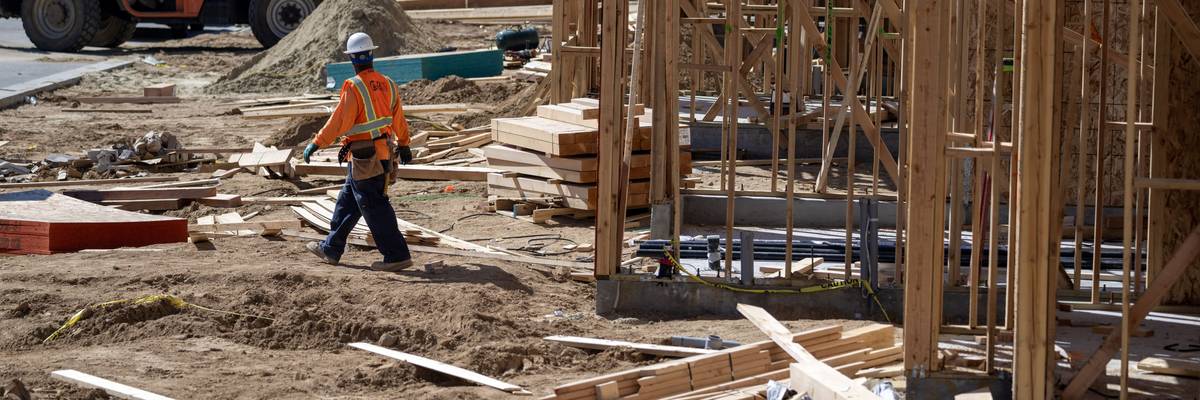
A worker is seen at a construction in Santa Clarita, California, on March 21, 2025.
"By setting aside those unconstitutional policies, the court has restored the rule of law."
A federal judge on Monday handed down a decision in a case brought by US citizen Leo Garcia Venegas, who was detained three times in the Trump administration's immigration raids at construction sites—but the court's order, said advocates, will protect workers across the country from federal agents' warrantless, violent raids.
Chief US District Judge Jeffrey U. Beaverstock in the US District Court for the Southern District of Alabama temporarily blocked Department of Homeland Security officers from conducting raids at construction sites. He issued stays on three DHS policies while Venegas' case proceeds and said agents had likely violated his Fourth Amendment rights.
The three practices Beaverstock blocked include DHS' warrantless entry policy; its preemptive detention policy, which allows agents to detain a person simply based on suspicion, even without evidence, that they are an undocumented immigrant; and its continued detention policy, which permits officers to hold a person even after they show evidence of citizenship or lawful presence in the US.
Those policies have resulted in three arrests of Venegas since the spring of 2025, including one instance in which masked officers followed him home from the construction site where he worked, ripped him from his car, tackled him to the ground, and handcuffed and shackled him—all while he was trying to show them his REAL ID to prove his citizenship.
“They can suddenly show up and detain you without having done anything,” Venegas testified in May. “Now I don’t feel free to drive, to go to work, or go to the store.”
The Institute of Justice, which is representing Venegas, noted that the Trump administration has urged all Americans to get their REAL ID cards—which, in most states, have a symbol like a star on them to comply with new rules—and Venegas' state of Alabama issues the cards only to citizens or those who are lawfully present. Yet a DHS official testified in Venegas' case that REAL ID cards do not prove that someone is authorized to be in the US.
"Venegas was not promptly released following the production of his REAL ID to officers. Instead, the officers disregarded the veracity of his documentation and continued to detain him," reads the court order. "A policy that permits such action is likely to run afoul of the Fourth Amendment."
In the ruling, Beaverstock also noted that DHS last year had claimed Venegas tried to interfere with officers when he was first detained in May 2025—something that video of the arrest did not support.
DHS also claimed that the agency treats construction sites as "open fields" where agents do not need a warrant or even a reason to search the premises and make arrests—but Venegas works in closed construction sites that are posted with "No Trespassing" signs, and was working inside a house that was in the finishing stages of being built when he was arrested for a second time last June.
"Agents walked inside a house where Leo was working, surrounded him, and ordered him to follow them," said the Institute for Justice last year when Venegas sued the Trump administration. "Again, Leo produced his REAL ID. Again, the agents refused to accept it. They marched him out of the development and detained him alongside other workers they had grabbed—only releasing him (and other lawful residents) 20 minutes later after confirming his citizenship."
Beaverstock wrote that "the government has not convinced this court that the warrantless entry into a structure—which undisputedly occurred during the June encounter—does not implicate the Fourth Amendment."
Jared McClain, senior attorney at the Institute for Justice, called the judge's decision "a huge blow to DHS’ lawless enforcement practices."
“The government stood up in court and argued that they don’t need warrants to enter private construction sites and round up all the workers, and that they can’t trust government-issued IDs," said McClain. "By setting aside those unconstitutional policies, the court has restored the rule of law. Construction workers like Leo can finally go to work in peace again.”
Dear Common Dreams reader, It’s been nearly 30 years since I co-founded Common Dreams with my late wife, Lina Newhouser. We had the radical notion that journalism should serve the public good, not corporate profits. It was clear to us from the outset what it would take to build such a project. No paid advertisements. No corporate sponsors. No millionaire publisher telling us what to think or do. Many people said we wouldn't last a year, but we proved those doubters wrong. Together with a tremendous team of journalists and dedicated staff, we built an independent media outlet free from the constraints of profits and corporate control. Our mission has always been simple: To inform. To inspire. To ignite change for the common good. Building Common Dreams was not easy. Our survival was never guaranteed. When you take on the most powerful forces—Wall Street greed, fossil fuel industry destruction, Big Tech lobbyists, and uber-rich oligarchs who have spent billions upon billions rigging the economy and democracy in their favor—the only bulwark you have is supporters who believe in your work. But here’s the urgent message from me today. It's never been this bad out there. And it's never been this hard to keep us going. At the very moment Common Dreams is most needed, the threats we face are intensifying. We need your support now more than ever. We don't accept corporate advertising and never will. We don't have a paywall because we don't think people should be blocked from critical news based on their ability to pay. Everything we do is funded by the donations of readers like you. When everyone does the little they can afford, we are strong. But if that support retreats or dries up, so do we. Will you donate now to make sure Common Dreams not only survives but thrives? —Craig Brown, Co-founder |
A federal judge on Monday handed down a decision in a case brought by US citizen Leo Garcia Venegas, who was detained three times in the Trump administration's immigration raids at construction sites—but the court's order, said advocates, will protect workers across the country from federal agents' warrantless, violent raids.
Chief US District Judge Jeffrey U. Beaverstock in the US District Court for the Southern District of Alabama temporarily blocked Department of Homeland Security officers from conducting raids at construction sites. He issued stays on three DHS policies while Venegas' case proceeds and said agents had likely violated his Fourth Amendment rights.
The three practices Beaverstock blocked include DHS' warrantless entry policy; its preemptive detention policy, which allows agents to detain a person simply based on suspicion, even without evidence, that they are an undocumented immigrant; and its continued detention policy, which permits officers to hold a person even after they show evidence of citizenship or lawful presence in the US.
Those policies have resulted in three arrests of Venegas since the spring of 2025, including one instance in which masked officers followed him home from the construction site where he worked, ripped him from his car, tackled him to the ground, and handcuffed and shackled him—all while he was trying to show them his REAL ID to prove his citizenship.
“They can suddenly show up and detain you without having done anything,” Venegas testified in May. “Now I don’t feel free to drive, to go to work, or go to the store.”
The Institute of Justice, which is representing Venegas, noted that the Trump administration has urged all Americans to get their REAL ID cards—which, in most states, have a symbol like a star on them to comply with new rules—and Venegas' state of Alabama issues the cards only to citizens or those who are lawfully present. Yet a DHS official testified in Venegas' case that REAL ID cards do not prove that someone is authorized to be in the US.
"Venegas was not promptly released following the production of his REAL ID to officers. Instead, the officers disregarded the veracity of his documentation and continued to detain him," reads the court order. "A policy that permits such action is likely to run afoul of the Fourth Amendment."
In the ruling, Beaverstock also noted that DHS last year had claimed Venegas tried to interfere with officers when he was first detained in May 2025—something that video of the arrest did not support.
DHS also claimed that the agency treats construction sites as "open fields" where agents do not need a warrant or even a reason to search the premises and make arrests—but Venegas works in closed construction sites that are posted with "No Trespassing" signs, and was working inside a house that was in the finishing stages of being built when he was arrested for a second time last June.
"Agents walked inside a house where Leo was working, surrounded him, and ordered him to follow them," said the Institute for Justice last year when Venegas sued the Trump administration. "Again, Leo produced his REAL ID. Again, the agents refused to accept it. They marched him out of the development and detained him alongside other workers they had grabbed—only releasing him (and other lawful residents) 20 minutes later after confirming his citizenship."
Beaverstock wrote that "the government has not convinced this court that the warrantless entry into a structure—which undisputedly occurred during the June encounter—does not implicate the Fourth Amendment."
Jared McClain, senior attorney at the Institute for Justice, called the judge's decision "a huge blow to DHS’ lawless enforcement practices."
“The government stood up in court and argued that they don’t need warrants to enter private construction sites and round up all the workers, and that they can’t trust government-issued IDs," said McClain. "By setting aside those unconstitutional policies, the court has restored the rule of law. Construction workers like Leo can finally go to work in peace again.”
A federal judge on Monday handed down a decision in a case brought by US citizen Leo Garcia Venegas, who was detained three times in the Trump administration's immigration raids at construction sites—but the court's order, said advocates, will protect workers across the country from federal agents' warrantless, violent raids.
Chief US District Judge Jeffrey U. Beaverstock in the US District Court for the Southern District of Alabama temporarily blocked Department of Homeland Security officers from conducting raids at construction sites. He issued stays on three DHS policies while Venegas' case proceeds and said agents had likely violated his Fourth Amendment rights.
The three practices Beaverstock blocked include DHS' warrantless entry policy; its preemptive detention policy, which allows agents to detain a person simply based on suspicion, even without evidence, that they are an undocumented immigrant; and its continued detention policy, which permits officers to hold a person even after they show evidence of citizenship or lawful presence in the US.
Those policies have resulted in three arrests of Venegas since the spring of 2025, including one instance in which masked officers followed him home from the construction site where he worked, ripped him from his car, tackled him to the ground, and handcuffed and shackled him—all while he was trying to show them his REAL ID to prove his citizenship.
“They can suddenly show up and detain you without having done anything,” Venegas testified in May. “Now I don’t feel free to drive, to go to work, or go to the store.”
The Institute of Justice, which is representing Venegas, noted that the Trump administration has urged all Americans to get their REAL ID cards—which, in most states, have a symbol like a star on them to comply with new rules—and Venegas' state of Alabama issues the cards only to citizens or those who are lawfully present. Yet a DHS official testified in Venegas' case that REAL ID cards do not prove that someone is authorized to be in the US.
"Venegas was not promptly released following the production of his REAL ID to officers. Instead, the officers disregarded the veracity of his documentation and continued to detain him," reads the court order. "A policy that permits such action is likely to run afoul of the Fourth Amendment."
In the ruling, Beaverstock also noted that DHS last year had claimed Venegas tried to interfere with officers when he was first detained in May 2025—something that video of the arrest did not support.
DHS also claimed that the agency treats construction sites as "open fields" where agents do not need a warrant or even a reason to search the premises and make arrests—but Venegas works in closed construction sites that are posted with "No Trespassing" signs, and was working inside a house that was in the finishing stages of being built when he was arrested for a second time last June.
"Agents walked inside a house where Leo was working, surrounded him, and ordered him to follow them," said the Institute for Justice last year when Venegas sued the Trump administration. "Again, Leo produced his REAL ID. Again, the agents refused to accept it. They marched him out of the development and detained him alongside other workers they had grabbed—only releasing him (and other lawful residents) 20 minutes later after confirming his citizenship."
Beaverstock wrote that "the government has not convinced this court that the warrantless entry into a structure—which undisputedly occurred during the June encounter—does not implicate the Fourth Amendment."
Jared McClain, senior attorney at the Institute for Justice, called the judge's decision "a huge blow to DHS’ lawless enforcement practices."
“The government stood up in court and argued that they don’t need warrants to enter private construction sites and round up all the workers, and that they can’t trust government-issued IDs," said McClain. "By setting aside those unconstitutional policies, the court has restored the rule of law. Construction workers like Leo can finally go to work in peace again.”

