SUBSCRIBE TO OUR FREE NEWSLETTER
Daily news & progressive opinion—funded by the people, not the corporations—delivered straight to your inbox.
5
#000000
#FFFFFF
To donate by check, phone, or other method, see our More Ways to Give page.
Daily news & progressive opinion—funded by the people, not the corporations—delivered straight to your inbox.
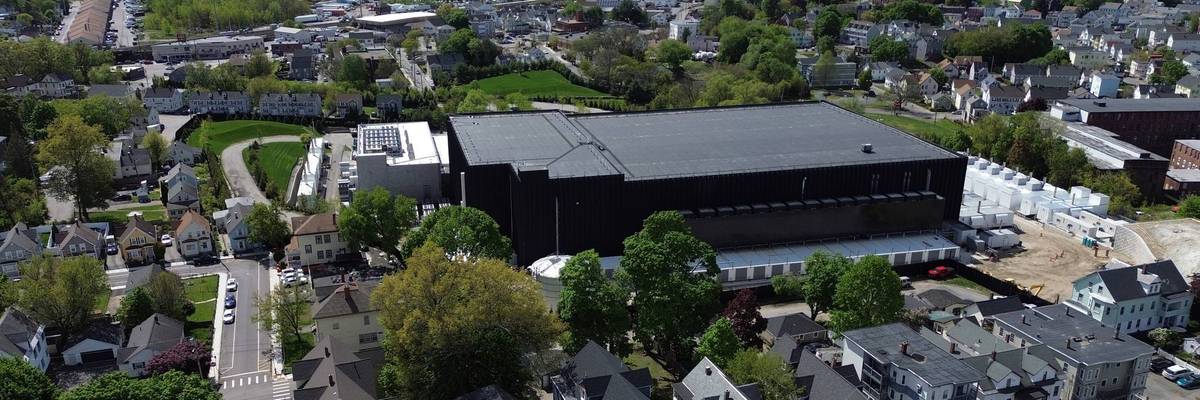
Drone image of the Markley Group data center within a residential neighborhood in Lowell, Massachusetts on May 12, 2026.
As power grids become strained amid the latest US heatwave, residents of communities with data centers are being asked to make sacrifices in the form of cost, comfort, and potentially safety.
The rise of global temperatures has made oppressive summer heatwaves an annual occurrence, and for many Americans, air conditioning is no longer optional.
But as scorching temperatures bear down on the US once again this week, affecting more than 250 million people across the country, some are suddenly being forced to share the precious cool air with data centers that have popped up in their towns to power the breakneck build-out of artificial intelligence technology.
To keep their massive arrays of computer servers cool, these complexes require large amounts of energy even in normal times. But during a heatwave, the demand becomes even greater.
As power grids become strained, residents of communities with data centers are being asked to make sacrifices in the form of cost, comfort, and potentially safety.
In Henrico County, Virginia, which has 37 data centers, thousands of county employees received an email last week from County Manager John Vithoulkas warning them that beginning on July 1, the rate paid by "government and school facilities will increase dramatically—by 25%, increasing costs by an estimated $5 million next fiscal year."
"To mitigate the impact of higher electric costs, I am asking that we, collectively, make slight adjustments to conserve electricity across our individual workspaces,” he said in the email, which was obtained by 404 Media. “Turn off your lights when leaving your workspace, including when you leave for the day,” he continued. “Turn off your computers/laptops at the end of each workday. If your workspace has windows, adjust the blinds to manage heat from sunlight.”
He also informed them of the high cost of running "space heaters," which Frank Landymore of Futurism.com suggested was a thinly veiled way of telling residents to turn down the AC, since nobody would be using space heaters in 100-degree heat.
It was a signifier of what's happened across the entire mid-Atlantic grid, whose largest operator, PJM Interconnection, is experiencing record energy demand.
According to Reuters, the grid that supplies power to 67 million people has seen a roughly 1,000% increase in capacity prices since 2024 as a result of the AI boom, which is already being passed onto consumers in the form of higher bills.
To reduce the risk of outages caused by an overburdened grid, the US Department of Energy granted PJM the authority to require data centers to operate backup diesel generators.
Under the emergency order, Politico reported, data centers are allowed to produce enough diesel emissions that the Environmental Protection Agency (EPA) would categorize it as a "possible human carcinogen."
The result has been what Shaolei Ren, a professor at the University of California, Riverside, told The Associated Press could be “a disaster for the local air quality" in communities with data centers.
In Lowell, Massachusetts, where a Markley Group data center sits in the working-class Sacred Heart neighborhood, residents told the AP that they were staying inside to avoid smelling the diesel fumes being belched up near their homes.
Public backlash led the Lowell City Council to vote unanimously for a moratorium on data center building in February. But many residents feel the damage has already been done, with the Markley center gobbling up their town's electric and water resources.
One resident told The Harvard Crimson in May that since the center came to town, his winter electric bill has shot up from $40 to $177.
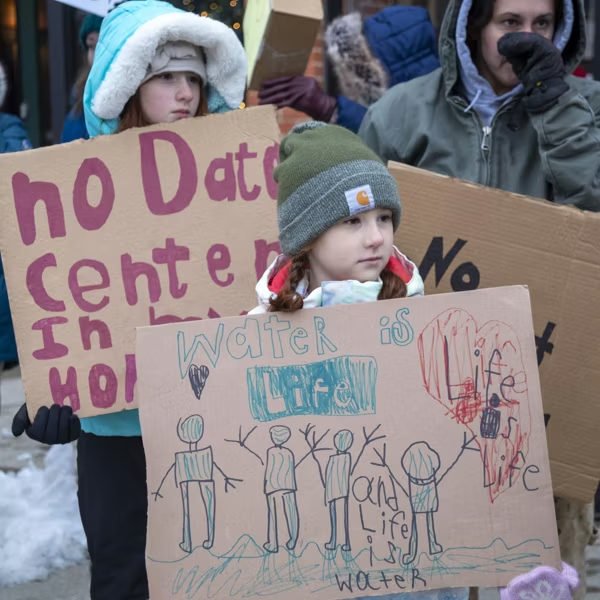
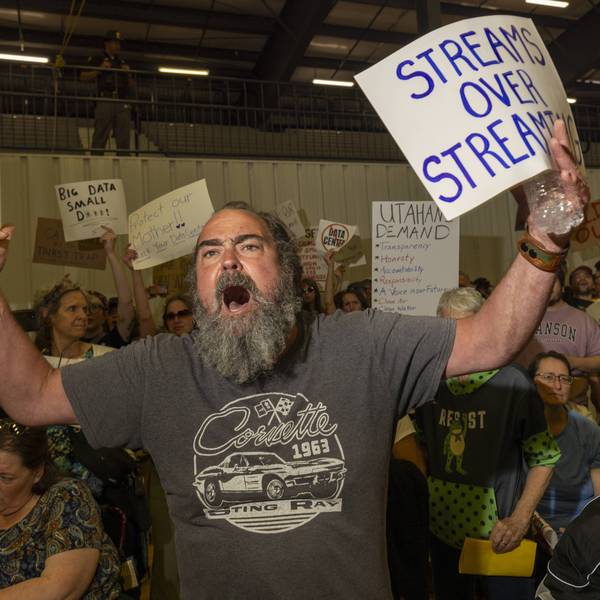
As temperatures spiked this week, more than 200 protesters flooded a local zoning meeting to voice their anger about the noise, pollution, and surveillance equipment bearing down on their homes. One 14-year-old girl was dragged out of the meeting by police officers.
"I'm not hurting anyone," she shouted as cops escorted her through the exit. "We just don't want data centers!"
Within roughly three years, data centers have come to consume about 4.5% of all electricity in the US, a number that is expected to keep ballooning in the coming years.
Even before the data center boom began, scientists had long warned that the climate crisis caused by human carbon emissions would make US heatwaves more frequent, longer, and more intense.
Heatwaves in major US cities are already three times as common as they were in the 1960s, according to an EPA report from 2024, and the average heatwave season is now 46 days longer.
The number of heat-related deaths in the US more than doubled from 1,069 in 1999 to 2,325 in 2023, according to a JAMA Network study analyzing mortality data from the Centers for Disease Control and Prevention.
With more than 1,500 data center projects currently underway across the US, a vicious cycle appears poised to accelerate.
The rapid buildout of data centers has already culminated in massive emission spikes. Amazon, which once pledged to reach net-zero emissions by 2040, saw its carbon output increase by 16% in 2025 in large part due to its multi-billion dollar data center buildout.
According to a report out Wednesday from the Environmental Integrity Project, at least 74 natural gas-fired power plants are being planned to power the industry's expansion, which are expected to release 662 million tons of greenhouse gas—equivalent to the entire nation of Australia—per year.
Many of the plants are being built in low-income areas that already have poorer health outcomes and could produce nearly 160,000 tons of health-damaging pollutants that can cause lung damage, asthma, and heart attacks.
“In their wholehearted embrace of dirty and outdated gas power, data center developers are announcing to the public that they don’t care about us," said Alex Bomstein, the executive director at Clean Air Council. "We deserve better than decades of toxic pollution, parched streambeds, and climate chaos.”
Dear Common Dreams reader, It’s been nearly 30 years since I co-founded Common Dreams with my late wife, Lina Newhouser. We had the radical notion that journalism should serve the public good, not corporate profits. It was clear to us from the outset what it would take to build such a project. No paid advertisements. No corporate sponsors. No millionaire publisher telling us what to think or do. Many people said we wouldn't last a year, but we proved those doubters wrong. Together with a tremendous team of journalists and dedicated staff, we built an independent media outlet free from the constraints of profits and corporate control. Our mission has always been simple: To inform. To inspire. To ignite change for the common good. Building Common Dreams was not easy. Our survival was never guaranteed. When you take on the most powerful forces—Wall Street greed, fossil fuel industry destruction, Big Tech lobbyists, and uber-rich oligarchs who have spent billions upon billions rigging the economy and democracy in their favor—the only bulwark you have is supporters who believe in your work. But here’s the urgent message from me today. It's never been this bad out there. And it's never been this hard to keep us going. At the very moment Common Dreams is most needed, the threats we face are intensifying. We need your support now more than ever. We don't accept corporate advertising and never will. We don't have a paywall because we don't think people should be blocked from critical news based on their ability to pay. Everything we do is funded by the donations of readers like you. When everyone does the little they can afford, we are strong. But if that support retreats or dries up, so do we. Will you donate now to make sure Common Dreams not only survives but thrives? —Craig Brown, Co-founder |
The rise of global temperatures has made oppressive summer heatwaves an annual occurrence, and for many Americans, air conditioning is no longer optional.
But as scorching temperatures bear down on the US once again this week, affecting more than 250 million people across the country, some are suddenly being forced to share the precious cool air with data centers that have popped up in their towns to power the breakneck build-out of artificial intelligence technology.
To keep their massive arrays of computer servers cool, these complexes require large amounts of energy even in normal times. But during a heatwave, the demand becomes even greater.
As power grids become strained, residents of communities with data centers are being asked to make sacrifices in the form of cost, comfort, and potentially safety.
In Henrico County, Virginia, which has 37 data centers, thousands of county employees received an email last week from County Manager John Vithoulkas warning them that beginning on July 1, the rate paid by "government and school facilities will increase dramatically—by 25%, increasing costs by an estimated $5 million next fiscal year."
"To mitigate the impact of higher electric costs, I am asking that we, collectively, make slight adjustments to conserve electricity across our individual workspaces,” he said in the email, which was obtained by 404 Media. “Turn off your lights when leaving your workspace, including when you leave for the day,” he continued. “Turn off your computers/laptops at the end of each workday. If your workspace has windows, adjust the blinds to manage heat from sunlight.”
He also informed them of the high cost of running "space heaters," which Frank Landymore of Futurism.com suggested was a thinly veiled way of telling residents to turn down the AC, since nobody would be using space heaters in 100-degree heat.
It was a signifier of what's happened across the entire mid-Atlantic grid, whose largest operator, PJM Interconnection, is experiencing record energy demand.
According to Reuters, the grid that supplies power to 67 million people has seen a roughly 1,000% increase in capacity prices since 2024 as a result of the AI boom, which is already being passed onto consumers in the form of higher bills.
To reduce the risk of outages caused by an overburdened grid, the US Department of Energy granted PJM the authority to require data centers to operate backup diesel generators.
Under the emergency order, Politico reported, data centers are allowed to produce enough diesel emissions that the Environmental Protection Agency (EPA) would categorize it as a "possible human carcinogen."
The result has been what Shaolei Ren, a professor at the University of California, Riverside, told The Associated Press could be “a disaster for the local air quality" in communities with data centers.
In Lowell, Massachusetts, where a Markley Group data center sits in the working-class Sacred Heart neighborhood, residents told the AP that they were staying inside to avoid smelling the diesel fumes being belched up near their homes.
Public backlash led the Lowell City Council to vote unanimously for a moratorium on data center building in February. But many residents feel the damage has already been done, with the Markley center gobbling up their town's electric and water resources.
One resident told The Harvard Crimson in May that since the center came to town, his winter electric bill has shot up from $40 to $177.
As temperatures spiked this week, more than 200 protesters flooded a local zoning meeting to voice their anger about the noise, pollution, and surveillance equipment bearing down on their homes. One 14-year-old girl was dragged out of the meeting by police officers.
"I'm not hurting anyone," she shouted as cops escorted her through the exit. "We just don't want data centers!"
Within roughly three years, data centers have come to consume about 4.5% of all electricity in the US, a number that is expected to keep ballooning in the coming years.
Even before the data center boom began, scientists had long warned that the climate crisis caused by human carbon emissions would make US heatwaves more frequent, longer, and more intense.
Heatwaves in major US cities are already three times as common as they were in the 1960s, according to an EPA report from 2024, and the average heatwave season is now 46 days longer.
The number of heat-related deaths in the US more than doubled from 1,069 in 1999 to 2,325 in 2023, according to a JAMA Network study analyzing mortality data from the Centers for Disease Control and Prevention.
With more than 1,500 data center projects currently underway across the US, a vicious cycle appears poised to accelerate.
The rapid buildout of data centers has already culminated in massive emission spikes. Amazon, which once pledged to reach net-zero emissions by 2040, saw its carbon output increase by 16% in 2025 in large part due to its multi-billion dollar data center buildout.
According to a report out Wednesday from the Environmental Integrity Project, at least 74 natural gas-fired power plants are being planned to power the industry's expansion, which are expected to release 662 million tons of greenhouse gas—equivalent to the entire nation of Australia—per year.
Many of the plants are being built in low-income areas that already have poorer health outcomes and could produce nearly 160,000 tons of health-damaging pollutants that can cause lung damage, asthma, and heart attacks.
“In their wholehearted embrace of dirty and outdated gas power, data center developers are announcing to the public that they don’t care about us," said Alex Bomstein, the executive director at Clean Air Council. "We deserve better than decades of toxic pollution, parched streambeds, and climate chaos.”
The rise of global temperatures has made oppressive summer heatwaves an annual occurrence, and for many Americans, air conditioning is no longer optional.
But as scorching temperatures bear down on the US once again this week, affecting more than 250 million people across the country, some are suddenly being forced to share the precious cool air with data centers that have popped up in their towns to power the breakneck build-out of artificial intelligence technology.
To keep their massive arrays of computer servers cool, these complexes require large amounts of energy even in normal times. But during a heatwave, the demand becomes even greater.
As power grids become strained, residents of communities with data centers are being asked to make sacrifices in the form of cost, comfort, and potentially safety.
In Henrico County, Virginia, which has 37 data centers, thousands of county employees received an email last week from County Manager John Vithoulkas warning them that beginning on July 1, the rate paid by "government and school facilities will increase dramatically—by 25%, increasing costs by an estimated $5 million next fiscal year."
"To mitigate the impact of higher electric costs, I am asking that we, collectively, make slight adjustments to conserve electricity across our individual workspaces,” he said in the email, which was obtained by 404 Media. “Turn off your lights when leaving your workspace, including when you leave for the day,” he continued. “Turn off your computers/laptops at the end of each workday. If your workspace has windows, adjust the blinds to manage heat from sunlight.”
He also informed them of the high cost of running "space heaters," which Frank Landymore of Futurism.com suggested was a thinly veiled way of telling residents to turn down the AC, since nobody would be using space heaters in 100-degree heat.
It was a signifier of what's happened across the entire mid-Atlantic grid, whose largest operator, PJM Interconnection, is experiencing record energy demand.
According to Reuters, the grid that supplies power to 67 million people has seen a roughly 1,000% increase in capacity prices since 2024 as a result of the AI boom, which is already being passed onto consumers in the form of higher bills.
To reduce the risk of outages caused by an overburdened grid, the US Department of Energy granted PJM the authority to require data centers to operate backup diesel generators.
Under the emergency order, Politico reported, data centers are allowed to produce enough diesel emissions that the Environmental Protection Agency (EPA) would categorize it as a "possible human carcinogen."
The result has been what Shaolei Ren, a professor at the University of California, Riverside, told The Associated Press could be “a disaster for the local air quality" in communities with data centers.
In Lowell, Massachusetts, where a Markley Group data center sits in the working-class Sacred Heart neighborhood, residents told the AP that they were staying inside to avoid smelling the diesel fumes being belched up near their homes.
Public backlash led the Lowell City Council to vote unanimously for a moratorium on data center building in February. But many residents feel the damage has already been done, with the Markley center gobbling up their town's electric and water resources.
One resident told The Harvard Crimson in May that since the center came to town, his winter electric bill has shot up from $40 to $177.
As temperatures spiked this week, more than 200 protesters flooded a local zoning meeting to voice their anger about the noise, pollution, and surveillance equipment bearing down on their homes. One 14-year-old girl was dragged out of the meeting by police officers.
"I'm not hurting anyone," she shouted as cops escorted her through the exit. "We just don't want data centers!"
Within roughly three years, data centers have come to consume about 4.5% of all electricity in the US, a number that is expected to keep ballooning in the coming years.
Even before the data center boom began, scientists had long warned that the climate crisis caused by human carbon emissions would make US heatwaves more frequent, longer, and more intense.
Heatwaves in major US cities are already three times as common as they were in the 1960s, according to an EPA report from 2024, and the average heatwave season is now 46 days longer.
The number of heat-related deaths in the US more than doubled from 1,069 in 1999 to 2,325 in 2023, according to a JAMA Network study analyzing mortality data from the Centers for Disease Control and Prevention.
With more than 1,500 data center projects currently underway across the US, a vicious cycle appears poised to accelerate.
The rapid buildout of data centers has already culminated in massive emission spikes. Amazon, which once pledged to reach net-zero emissions by 2040, saw its carbon output increase by 16% in 2025 in large part due to its multi-billion dollar data center buildout.
According to a report out Wednesday from the Environmental Integrity Project, at least 74 natural gas-fired power plants are being planned to power the industry's expansion, which are expected to release 662 million tons of greenhouse gas—equivalent to the entire nation of Australia—per year.
Many of the plants are being built in low-income areas that already have poorer health outcomes and could produce nearly 160,000 tons of health-damaging pollutants that can cause lung damage, asthma, and heart attacks.
“In their wholehearted embrace of dirty and outdated gas power, data center developers are announcing to the public that they don’t care about us," said Alex Bomstein, the executive director at Clean Air Council. "We deserve better than decades of toxic pollution, parched streambeds, and climate chaos.”