5
#000000
#FFFFFF
To donate by check, phone, or other method, see our More Ways to Give page.
Daily news & progressive opinion—funded by the people, not the corporations—delivered straight to your inbox.

Doses of mifepristone and misoprostol are pictured at Dr. Franz Theard's Women's Reproductive Clinic in Santa Teresa, New Mexico on May 7, 2022.
"Mifepristone is safe and effective, and women should be able to get abortion medication through the mail or telehealth if they need," said Sen. Patty Murray.
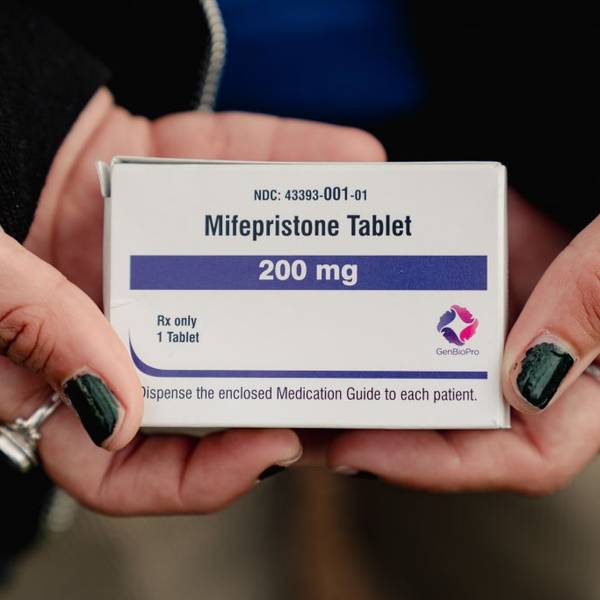
Defenders of reproductive rights, including key Democrats in Congress, reiterated the safety of mifepristone on Monday after the US Supreme Court temporarily extended access to the medication—commonly used in abortion and miscarriage care—by mail while the justices review a ruling from a notoriously right-wing appellate court.
The US Court of Appeals for the 5th Circuit blocked a federal rule allowing mifepristone to be dispensed by mail at the beginning of the month. Drugmakers quickly appealed to the high court, where Justice Samuel Alito, who is part of the right-wing supermajority, issued a one-week stay to give himself and colleagues time to review the case.
As Alito's initial Monday evening deadline approached, he extended the stay until 5:00 pm ET on Thursday. The move means that "for now, mifepristone is still available via telehealth, mail order, and pharmacy while the case proceeds," noted the Democratic Women's Caucus in the US House of Representatives.
However, pro-choice advocates and policymakers are still sounding the alarm and arguing that, as the caucus put it in a social media post, "reproductive freedom should not depend on emergency rulings or political attacks."
Senate Minority Leader Chuck Schumer (D-NY) said in a statement that "mifepristone has been safe, effective, and trusted for decades. Today's order keeps access in place for now, but it's not cause for celebration—it's a reminder that basic reproductive care is still under attack every day. Anti-abortion extremists are trying to use the courts to roll back access to medication abortion nationwide, and Senate Dems will keep fighting to protect women's freedom to make their own healthcare decisions."
Sen. Patty Murray (D-Wash.) similarly wrote on social media: "Another extension, but this shouldn't be complicated. Mifepristone is safe and effective, and women should be able to get abortion medication through the mail or telehealth if they need. Extremist judges shouldn't get to decide how women get healthcare."
This case traces back to early 2023, when the Biden administration's Food and Drug Administration permanently lifted mifepristone's in-person dispensing requirement, just months after the Supreme Court's right-wing supermajority overturned Roe v. Wade. Louisiana, which has among the most restrictive abortion policies in the country, sued over the FDA's policy change.
Medication abortions account for the majority of abortions provided in the United States, and those patients generally take both mifepristone and another drug, misoprostol. Demand for abortion pills by mail increased after Roe's reversal, as advocates of forced pregnancy policies in Republican-controlled states ramped up attacks on reproductive freedom.
"With the Supreme Court punting a decision on access to mifepristone—a safe, effective medication used in abortion care—until later this week, patients and providers are left facing continued uncertainty," said Rachel Fey, interim co-CEO of Power to Decide. "Wondering day by day whether you'll have access to an essential medication is not practical, and the confusion only deepens the barriers people already face when seeking abortion care."
"Access to mifepristone should be based on scientific evidence, not ideology," Fey declared. "We urge the Supreme Court to follow that science and maintain current telehealth access to mifepristone—not just for a few days at a time, but permanently."
Alito's extensions in recent days are not necessarily signals of where the conservative will ultimately come down. The Associated Press pointed out Monday that "the current dispute is similar to one that reached the court three years ago," when the justices blocked another 5th Circuit ruling "over the dissenting votes of Alito and Justice Clarence Thomas," and then unanimously dismissed that case due to lack of standing, or a legal right to sue.
The battle comes as the Trump administration's FDA is conducting a review of mifepristone that Julia Kaye, senior staff attorney for the ACLU’s Reproductive Freedom Project, has said seems "designed to manufacture an excuse for further restricting medication abortion across the country."
The New York Times noted Monday that US Department of Justice "lawyers have not said in court proceedings or publicly whether they back regulations that allow people to be prescribed the pills through telehealth appointments. Instead, they have asked the lower courts to pause the litigation to give the FDA time to complete a review of the safety of mifepristone, which was first approved in 2000."
Dear Common Dreams reader, It’s been nearly 30 years since I co-founded Common Dreams with my late wife, Lina Newhouser. We had the radical notion that journalism should serve the public good, not corporate profits. It was clear to us from the outset what it would take to build such a project. No paid advertisements. No corporate sponsors. No millionaire publisher telling us what to think or do. Many people said we wouldn't last a year, but we proved those doubters wrong. Together with a tremendous team of journalists and dedicated staff, we built an independent media outlet free from the constraints of profits and corporate control. Our mission has always been simple: To inform. To inspire. To ignite change for the common good. Building Common Dreams was not easy. Our survival was never guaranteed. When you take on the most powerful forces—Wall Street greed, fossil fuel industry destruction, Big Tech lobbyists, and uber-rich oligarchs who have spent billions upon billions rigging the economy and democracy in their favor—the only bulwark you have is supporters who believe in your work. But here’s the urgent message from me today. It's never been this bad out there. And it's never been this hard to keep us going. At the very moment Common Dreams is most needed, the threats we face are intensifying. We need your support now more than ever. We don't accept corporate advertising and never will. We don't have a paywall because we don't think people should be blocked from critical news based on their ability to pay. Everything we do is funded by the donations of readers like you. When everyone does the little they can afford, we are strong. But if that support retreats or dries up, so do we. Will you donate now to make sure Common Dreams not only survives but thrives? —Craig Brown, Co-founder |
Defenders of reproductive rights, including key Democrats in Congress, reiterated the safety of mifepristone on Monday after the US Supreme Court temporarily extended access to the medication—commonly used in abortion and miscarriage care—by mail while the justices review a ruling from a notoriously right-wing appellate court.
The US Court of Appeals for the 5th Circuit blocked a federal rule allowing mifepristone to be dispensed by mail at the beginning of the month. Drugmakers quickly appealed to the high court, where Justice Samuel Alito, who is part of the right-wing supermajority, issued a one-week stay to give himself and colleagues time to review the case.
As Alito's initial Monday evening deadline approached, he extended the stay until 5:00 pm ET on Thursday. The move means that "for now, mifepristone is still available via telehealth, mail order, and pharmacy while the case proceeds," noted the Democratic Women's Caucus in the US House of Representatives.
However, pro-choice advocates and policymakers are still sounding the alarm and arguing that, as the caucus put it in a social media post, "reproductive freedom should not depend on emergency rulings or political attacks."
Senate Minority Leader Chuck Schumer (D-NY) said in a statement that "mifepristone has been safe, effective, and trusted for decades. Today's order keeps access in place for now, but it's not cause for celebration—it's a reminder that basic reproductive care is still under attack every day. Anti-abortion extremists are trying to use the courts to roll back access to medication abortion nationwide, and Senate Dems will keep fighting to protect women's freedom to make their own healthcare decisions."
Sen. Patty Murray (D-Wash.) similarly wrote on social media: "Another extension, but this shouldn't be complicated. Mifepristone is safe and effective, and women should be able to get abortion medication through the mail or telehealth if they need. Extremist judges shouldn't get to decide how women get healthcare."
This case traces back to early 2023, when the Biden administration's Food and Drug Administration permanently lifted mifepristone's in-person dispensing requirement, just months after the Supreme Court's right-wing supermajority overturned Roe v. Wade. Louisiana, which has among the most restrictive abortion policies in the country, sued over the FDA's policy change.
Medication abortions account for the majority of abortions provided in the United States, and those patients generally take both mifepristone and another drug, misoprostol. Demand for abortion pills by mail increased after Roe's reversal, as advocates of forced pregnancy policies in Republican-controlled states ramped up attacks on reproductive freedom.
"With the Supreme Court punting a decision on access to mifepristone—a safe, effective medication used in abortion care—until later this week, patients and providers are left facing continued uncertainty," said Rachel Fey, interim co-CEO of Power to Decide. "Wondering day by day whether you'll have access to an essential medication is not practical, and the confusion only deepens the barriers people already face when seeking abortion care."
"Access to mifepristone should be based on scientific evidence, not ideology," Fey declared. "We urge the Supreme Court to follow that science and maintain current telehealth access to mifepristone—not just for a few days at a time, but permanently."
Alito's extensions in recent days are not necessarily signals of where the conservative will ultimately come down. The Associated Press pointed out Monday that "the current dispute is similar to one that reached the court three years ago," when the justices blocked another 5th Circuit ruling "over the dissenting votes of Alito and Justice Clarence Thomas," and then unanimously dismissed that case due to lack of standing, or a legal right to sue.
The battle comes as the Trump administration's FDA is conducting a review of mifepristone that Julia Kaye, senior staff attorney for the ACLU’s Reproductive Freedom Project, has said seems "designed to manufacture an excuse for further restricting medication abortion across the country."
The New York Times noted Monday that US Department of Justice "lawyers have not said in court proceedings or publicly whether they back regulations that allow people to be prescribed the pills through telehealth appointments. Instead, they have asked the lower courts to pause the litigation to give the FDA time to complete a review of the safety of mifepristone, which was first approved in 2000."
Defenders of reproductive rights, including key Democrats in Congress, reiterated the safety of mifepristone on Monday after the US Supreme Court temporarily extended access to the medication—commonly used in abortion and miscarriage care—by mail while the justices review a ruling from a notoriously right-wing appellate court.
The US Court of Appeals for the 5th Circuit blocked a federal rule allowing mifepristone to be dispensed by mail at the beginning of the month. Drugmakers quickly appealed to the high court, where Justice Samuel Alito, who is part of the right-wing supermajority, issued a one-week stay to give himself and colleagues time to review the case.
As Alito's initial Monday evening deadline approached, he extended the stay until 5:00 pm ET on Thursday. The move means that "for now, mifepristone is still available via telehealth, mail order, and pharmacy while the case proceeds," noted the Democratic Women's Caucus in the US House of Representatives.
However, pro-choice advocates and policymakers are still sounding the alarm and arguing that, as the caucus put it in a social media post, "reproductive freedom should not depend on emergency rulings or political attacks."
Senate Minority Leader Chuck Schumer (D-NY) said in a statement that "mifepristone has been safe, effective, and trusted for decades. Today's order keeps access in place for now, but it's not cause for celebration—it's a reminder that basic reproductive care is still under attack every day. Anti-abortion extremists are trying to use the courts to roll back access to medication abortion nationwide, and Senate Dems will keep fighting to protect women's freedom to make their own healthcare decisions."
Sen. Patty Murray (D-Wash.) similarly wrote on social media: "Another extension, but this shouldn't be complicated. Mifepristone is safe and effective, and women should be able to get abortion medication through the mail or telehealth if they need. Extremist judges shouldn't get to decide how women get healthcare."
This case traces back to early 2023, when the Biden administration's Food and Drug Administration permanently lifted mifepristone's in-person dispensing requirement, just months after the Supreme Court's right-wing supermajority overturned Roe v. Wade. Louisiana, which has among the most restrictive abortion policies in the country, sued over the FDA's policy change.
Medication abortions account for the majority of abortions provided in the United States, and those patients generally take both mifepristone and another drug, misoprostol. Demand for abortion pills by mail increased after Roe's reversal, as advocates of forced pregnancy policies in Republican-controlled states ramped up attacks on reproductive freedom.
"With the Supreme Court punting a decision on access to mifepristone—a safe, effective medication used in abortion care—until later this week, patients and providers are left facing continued uncertainty," said Rachel Fey, interim co-CEO of Power to Decide. "Wondering day by day whether you'll have access to an essential medication is not practical, and the confusion only deepens the barriers people already face when seeking abortion care."
"Access to mifepristone should be based on scientific evidence, not ideology," Fey declared. "We urge the Supreme Court to follow that science and maintain current telehealth access to mifepristone—not just for a few days at a time, but permanently."
Alito's extensions in recent days are not necessarily signals of where the conservative will ultimately come down. The Associated Press pointed out Monday that "the current dispute is similar to one that reached the court three years ago," when the justices blocked another 5th Circuit ruling "over the dissenting votes of Alito and Justice Clarence Thomas," and then unanimously dismissed that case due to lack of standing, or a legal right to sue.
The battle comes as the Trump administration's FDA is conducting a review of mifepristone that Julia Kaye, senior staff attorney for the ACLU’s Reproductive Freedom Project, has said seems "designed to manufacture an excuse for further restricting medication abortion across the country."
The New York Times noted Monday that US Department of Justice "lawyers have not said in court proceedings or publicly whether they back regulations that allow people to be prescribed the pills through telehealth appointments. Instead, they have asked the lower courts to pause the litigation to give the FDA time to complete a review of the safety of mifepristone, which was first approved in 2000."