SUBSCRIBE TO OUR FREE NEWSLETTER
Daily news & progressive opinion—funded by the people, not the corporations—delivered straight to your inbox.
5
#000000
#FFFFFF
To donate by check, phone, or other method, see our More Ways to Give page.
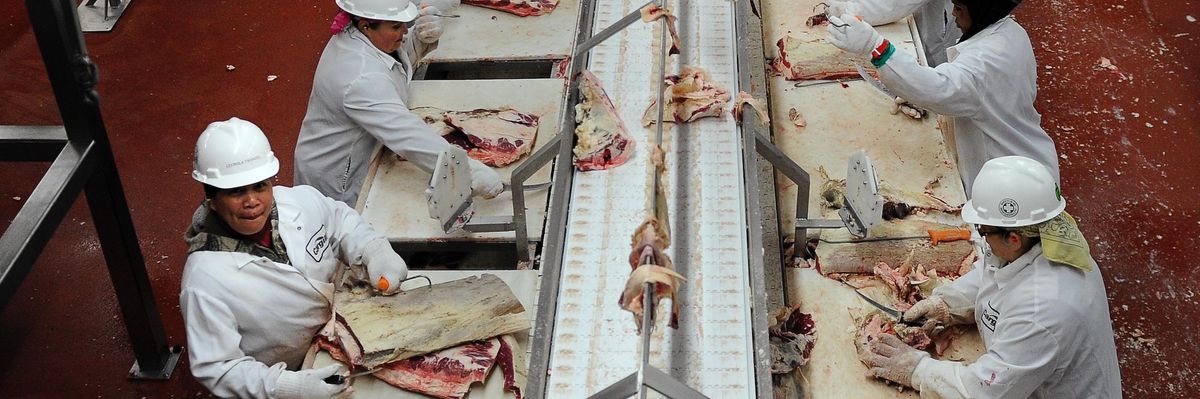
A congressional report published Thursday revealed that meat processing companies worked with and lobbied the Trump administration to continue operating during the Covid-19 pandemic, despite the danger to workers in the high-risk industry.
"The devastating impacts of the Covid crisis on workers in these industries should push lawmakers and the Biden administration to crack down on the meatpacking giants."
The House Select Subcommittee on the Coronavirus Crisis report--entitled Now to Get Rid of Those Pesky Health Departments!--shows how major meatpackers including Tyson Foods, JBS USA, and Smithfield Foods engaged political appointees in the Trump administration in "an aggressive campaign to ensure their facilities remained at maximum capacity."
As a result of the meat processing industry's successful efforts, employees--many of them low-income Latino and other immigrants--were forced to work in dangerously close quarters in plants with a high risk of coronavirus transmission.
"This coordinated campaign prioritized industry production over the health of workers and communities, and contributed to tens of thousands of workers becoming ill, hundreds of workers dying, and the virus spreading throughout surrounding areas," Committee Chair Rep. James Clyburn (D-S.C.) said in a statement.
"The shameful conduct of corporate executives pursuing profit at any cost during a crisis and government officials eager to do their bidding regardless of resulting harm to the public must never be repeated," he added.
At one point during the spring of 2020, the U.S. Centers for Disease Control and Prevention identified Smithfield's Sioux Falls, South Dakota plant as the nation's biggest single source of Covid-19 cases, and several other meat processing facilities were listed in the top 10. Through May 2020, counties with meatpacking plants recorded 10 times as many coronavirus infections as counties without such facilities, according to a U.S. Department of Agriculture study.
All told, at least 59,000 workers at plants operated by just five companies--Tyson, JBS, Smithfield, Cargill Meat Solutions, and National Beef--were infected, and at least 269 people died. As they were dying, Tyson managers placed bets on how many employees at the company's Waterloo, Iowa plant would become infected. More than 1,000 workers--over a third of the facility's staff--would test positive for Covid-19, at least five of them died, and the plant ultimately shut down for two weeks.
Related Content

The new report, which is based on more than 151,000 pages of documents collected from companies and interest groups, found that meatpacking industry representatives identified "fixers" in the Trump administration who would block attempts by regulators to improve health and safety conditions in processing plants.
The publication also shows how the industry collaborated with the administration to ensure that workers remained on the job despite the clear risk to their lives--even as meatpacking companies sought federal liability protection against lawsuits from workers who were infected with coronavirus on the job.
Instead of working with state and local health departments to ensure worker safety, companies treated them as impediments to maximizing profits. One lobbyist, voicing what the report says is an industry-wide sentiment, once even said, "Now to get rid of those pesky health departments!"
Furthermore, Tyson attorneys drafted an executive order to invoke the Defense Production Act--a civil defense provision--to ensure continued peak operations and then relentlessly lobbied the Trump administration to issue the order. Then-President Donald Trump did so on April 28, 2020, less than a week after receiving the Tyson draft.
Related Content

"From the very beginning of the pandemic, consumer advocates and industry watchdogs warned that meat giants like Smithfield and Tyson were stoking fears of a shortage in order to keep their plants operating--putting public health and workers' lives at risk," Wenonah Hauter, executive director of the advocacy group Food & Water Watch--which last year sued Smithfield for allegedly lying to consumers about a looming meat shortage in order to protect profits--said in a statement.
"These fear-mongering PR campaigns were nothing more than a cover-up for corporate greed and pandemic profiteering," she continued. "The unsafe conditions in meatpacking plants have raised alarms for decades."
"The devastating impacts of the Covid crisis on workers in these industries should push lawmakers and the Biden administration to crack down on the meatpacking giants," Hauter added. "This is an urgent matter of public health, food safety, and workers' rights."
A congressional report published Thursday revealed that meat processing companies worked with and lobbied the Trump administration to continue operating during the Covid-19 pandemic, despite the danger to workers in the high-risk industry.
"The devastating impacts of the Covid crisis on workers in these industries should push lawmakers and the Biden administration to crack down on the meatpacking giants."
The House Select Subcommittee on the Coronavirus Crisis report--entitled Now to Get Rid of Those Pesky Health Departments!--shows how major meatpackers including Tyson Foods, JBS USA, and Smithfield Foods engaged political appointees in the Trump administration in "an aggressive campaign to ensure their facilities remained at maximum capacity."
As a result of the meat processing industry's successful efforts, employees--many of them low-income Latino and other immigrants--were forced to work in dangerously close quarters in plants with a high risk of coronavirus transmission.
"This coordinated campaign prioritized industry production over the health of workers and communities, and contributed to tens of thousands of workers becoming ill, hundreds of workers dying, and the virus spreading throughout surrounding areas," Committee Chair Rep. James Clyburn (D-S.C.) said in a statement.
"The shameful conduct of corporate executives pursuing profit at any cost during a crisis and government officials eager to do their bidding regardless of resulting harm to the public must never be repeated," he added.
At one point during the spring of 2020, the U.S. Centers for Disease Control and Prevention identified Smithfield's Sioux Falls, South Dakota plant as the nation's biggest single source of Covid-19 cases, and several other meat processing facilities were listed in the top 10. Through May 2020, counties with meatpacking plants recorded 10 times as many coronavirus infections as counties without such facilities, according to a U.S. Department of Agriculture study.
All told, at least 59,000 workers at plants operated by just five companies--Tyson, JBS, Smithfield, Cargill Meat Solutions, and National Beef--were infected, and at least 269 people died. As they were dying, Tyson managers placed bets on how many employees at the company's Waterloo, Iowa plant would become infected. More than 1,000 workers--over a third of the facility's staff--would test positive for Covid-19, at least five of them died, and the plant ultimately shut down for two weeks.
Related Content
The new report, which is based on more than 151,000 pages of documents collected from companies and interest groups, found that meatpacking industry representatives identified "fixers" in the Trump administration who would block attempts by regulators to improve health and safety conditions in processing plants.
The publication also shows how the industry collaborated with the administration to ensure that workers remained on the job despite the clear risk to their lives--even as meatpacking companies sought federal liability protection against lawsuits from workers who were infected with coronavirus on the job.
Instead of working with state and local health departments to ensure worker safety, companies treated them as impediments to maximizing profits. One lobbyist, voicing what the report says is an industry-wide sentiment, once even said, "Now to get rid of those pesky health departments!"
Furthermore, Tyson attorneys drafted an executive order to invoke the Defense Production Act--a civil defense provision--to ensure continued peak operations and then relentlessly lobbied the Trump administration to issue the order. Then-President Donald Trump did so on April 28, 2020, less than a week after receiving the Tyson draft.
Related Content
"From the very beginning of the pandemic, consumer advocates and industry watchdogs warned that meat giants like Smithfield and Tyson were stoking fears of a shortage in order to keep their plants operating--putting public health and workers' lives at risk," Wenonah Hauter, executive director of the advocacy group Food & Water Watch--which last year sued Smithfield for allegedly lying to consumers about a looming meat shortage in order to protect profits--said in a statement.
"These fear-mongering PR campaigns were nothing more than a cover-up for corporate greed and pandemic profiteering," she continued. "The unsafe conditions in meatpacking plants have raised alarms for decades."
"The devastating impacts of the Covid crisis on workers in these industries should push lawmakers and the Biden administration to crack down on the meatpacking giants," Hauter added. "This is an urgent matter of public health, food safety, and workers' rights."
A congressional report published Thursday revealed that meat processing companies worked with and lobbied the Trump administration to continue operating during the Covid-19 pandemic, despite the danger to workers in the high-risk industry.
"The devastating impacts of the Covid crisis on workers in these industries should push lawmakers and the Biden administration to crack down on the meatpacking giants."
The House Select Subcommittee on the Coronavirus Crisis report--entitled Now to Get Rid of Those Pesky Health Departments!--shows how major meatpackers including Tyson Foods, JBS USA, and Smithfield Foods engaged political appointees in the Trump administration in "an aggressive campaign to ensure their facilities remained at maximum capacity."
As a result of the meat processing industry's successful efforts, employees--many of them low-income Latino and other immigrants--were forced to work in dangerously close quarters in plants with a high risk of coronavirus transmission.
"This coordinated campaign prioritized industry production over the health of workers and communities, and contributed to tens of thousands of workers becoming ill, hundreds of workers dying, and the virus spreading throughout surrounding areas," Committee Chair Rep. James Clyburn (D-S.C.) said in a statement.
"The shameful conduct of corporate executives pursuing profit at any cost during a crisis and government officials eager to do their bidding regardless of resulting harm to the public must never be repeated," he added.
At one point during the spring of 2020, the U.S. Centers for Disease Control and Prevention identified Smithfield's Sioux Falls, South Dakota plant as the nation's biggest single source of Covid-19 cases, and several other meat processing facilities were listed in the top 10. Through May 2020, counties with meatpacking plants recorded 10 times as many coronavirus infections as counties without such facilities, according to a U.S. Department of Agriculture study.
All told, at least 59,000 workers at plants operated by just five companies--Tyson, JBS, Smithfield, Cargill Meat Solutions, and National Beef--were infected, and at least 269 people died. As they were dying, Tyson managers placed bets on how many employees at the company's Waterloo, Iowa plant would become infected. More than 1,000 workers--over a third of the facility's staff--would test positive for Covid-19, at least five of them died, and the plant ultimately shut down for two weeks.
Related Content
The new report, which is based on more than 151,000 pages of documents collected from companies and interest groups, found that meatpacking industry representatives identified "fixers" in the Trump administration who would block attempts by regulators to improve health and safety conditions in processing plants.
The publication also shows how the industry collaborated with the administration to ensure that workers remained on the job despite the clear risk to their lives--even as meatpacking companies sought federal liability protection against lawsuits from workers who were infected with coronavirus on the job.
Instead of working with state and local health departments to ensure worker safety, companies treated them as impediments to maximizing profits. One lobbyist, voicing what the report says is an industry-wide sentiment, once even said, "Now to get rid of those pesky health departments!"
Furthermore, Tyson attorneys drafted an executive order to invoke the Defense Production Act--a civil defense provision--to ensure continued peak operations and then relentlessly lobbied the Trump administration to issue the order. Then-President Donald Trump did so on April 28, 2020, less than a week after receiving the Tyson draft.
Related Content
"From the very beginning of the pandemic, consumer advocates and industry watchdogs warned that meat giants like Smithfield and Tyson were stoking fears of a shortage in order to keep their plants operating--putting public health and workers' lives at risk," Wenonah Hauter, executive director of the advocacy group Food & Water Watch--which last year sued Smithfield for allegedly lying to consumers about a looming meat shortage in order to protect profits--said in a statement.
"These fear-mongering PR campaigns were nothing more than a cover-up for corporate greed and pandemic profiteering," she continued. "The unsafe conditions in meatpacking plants have raised alarms for decades."
"The devastating impacts of the Covid crisis on workers in these industries should push lawmakers and the Biden administration to crack down on the meatpacking giants," Hauter added. "This is an urgent matter of public health, food safety, and workers' rights."