SUBSCRIBE TO OUR FREE NEWSLETTER
Daily news & progressive opinion—funded by the people, not the corporations—delivered straight to your inbox.
5
#000000
#FFFFFF
To donate by check, phone, or other method, see our More Ways to Give page.
Daily news & progressive opinion—funded by the people, not the corporations—delivered straight to your inbox.
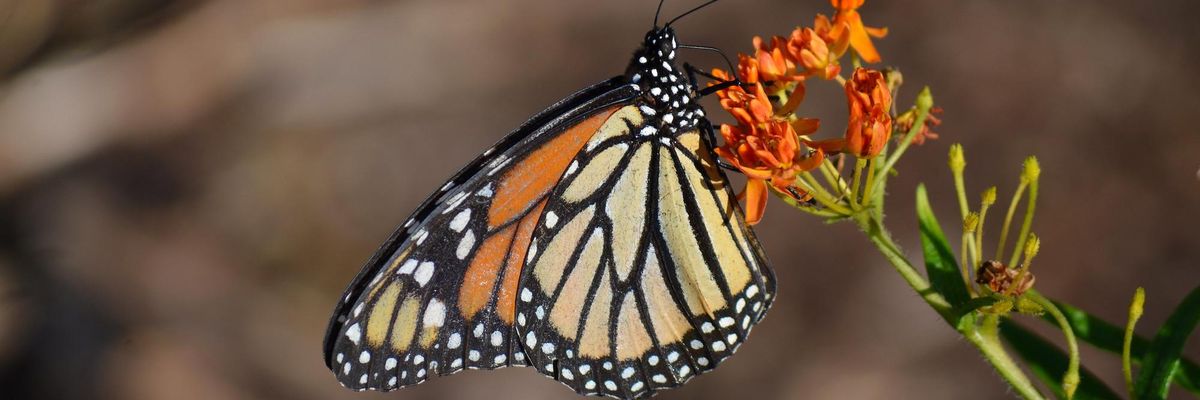
A monarch butterfly sits on milkweed. (Photo: Mara Koenig/USFWS)
The Center for Food Safety on Wednesday denounced the Biden administration's Environmental Protection Agency for arguing that Roundup should remain on U.S. shelves for an undisclosed period of time even after admitting that the Trump-era review of glyphosate--the key ingredient found in Roundup, the world's most widely used herbicide--was flawed and requires a do-over.
"We will ask the court to deny this extraordinary request to paper over glyphosate's ecological harms only to approve it anyway down the road."
--George Kimbrell, CFS
In its federal court filing (pdf) requesting to redo the Trump administration's faulty assessment of glyphosate, the EPA failed to provide a deadline for a new decision; instead, the agency maintained that Roundup--created by agrochemical giant Monsanto, which was acquired in 2018 by the German pharmaceutical and biotech company Bayer--should stay on the market in the meantime.
The EPA's request comes as it faces two lawsuits, including one brought by a coalition of farmworkers and environmentalists represented by the Center for Food Safety (CFS), that seek to reverse the Trump EPA's approval of glyphosate, a decision that was made despite evidence that the substance--described by the World Health Organization as "probably carcinogenic"--poses threats to human health and to pollinators such as bumblebees and monarch butterflies.
"Rather than defend its prior decision, at the 11th hour EPA is asking for a mulligan and indefinite delay, despite having previously spent far too long, over a decade, in re-assessing it," CFS legal director George Kimbrell said Wednesday in a statement. "Worse, EPA admits its approval risks harms to farmers and endangered species, but makes no effort to halt it."
According to CFS:
EPA is required by law to re-assess each pesticide every 15 years in a process known as registration review. EPA completed part of its registration review of glyphosate in 2020, designating it an "interim" decision because it had failed to assess glyphosate's impacts to endangered species, or complete other key assessments, such as glyphosate's potential to disrupt hormonal systems and harm pollinators. The 2020 interim decision represented EPA's first comprehensive assessment of the herbicide since 1993.
After the ongoing lawsuits and the agency's most recent biological evaluation identified the deleterious social and environmental impacts of glyphosate, the EPA "admits it can no longer affirm glyphosate's putative benefits outweigh its risks and costs, or that measures imposed to mitigate risks are at all effective," CFS noted.
Some of the harmful effects of glyphosate, according to CFS, include a heightened risk of cancer among farmworkers and others who spray glyphosate-based herbicides or are nonetheless subjected to it as a result of "off-field drift." Moreover, farmers must contend with the development of glyphosate-resistant superweeds, the organization said.
In addition, CFS noted, because Roundup kills the milkweed on which monarch butterflies rely for survival, it poses a danger to the once-ubiquitous pollinators. And before it suggested that Roundup continue to be sold in the U.S. for an unspecified period of time, the EPA found that the herbicide is likely to adversely affect 93% of exposed species under the Endangered Species Act as well as 96% of their critical habitats.
In his statement, Kimbrell said that "we will ask the court to deny this extraordinary request to paper over glyphosate's ecological harms only to approve it anyway down the road."
"Time to face the music, not run and hide," he added.
Dear Common Dreams reader, It’s been nearly 30 years since I co-founded Common Dreams with my late wife, Lina Newhouser. We had the radical notion that journalism should serve the public good, not corporate profits. It was clear to us from the outset what it would take to build such a project. No paid advertisements. No corporate sponsors. No millionaire publisher telling us what to think or do. Many people said we wouldn't last a year, but we proved those doubters wrong. Together with a tremendous team of journalists and dedicated staff, we built an independent media outlet free from the constraints of profits and corporate control. Our mission has always been simple: To inform. To inspire. To ignite change for the common good. Building Common Dreams was not easy. Our survival was never guaranteed. When you take on the most powerful forces—Wall Street greed, fossil fuel industry destruction, Big Tech lobbyists, and uber-rich oligarchs who have spent billions upon billions rigging the economy and democracy in their favor—the only bulwark you have is supporters who believe in your work. But here’s the urgent message from me today. It's never been this bad out there. And it's never been this hard to keep us going. At the very moment Common Dreams is most needed, the threats we face are intensifying. We need your support now more than ever. We don't accept corporate advertising and never will. We don't have a paywall because we don't think people should be blocked from critical news based on their ability to pay. Everything we do is funded by the donations of readers like you. When everyone does the little they can afford, we are strong. But if that support retreats or dries up, so do we. Will you donate now to make sure Common Dreams not only survives but thrives? —Craig Brown, Co-founder |
The Center for Food Safety on Wednesday denounced the Biden administration's Environmental Protection Agency for arguing that Roundup should remain on U.S. shelves for an undisclosed period of time even after admitting that the Trump-era review of glyphosate--the key ingredient found in Roundup, the world's most widely used herbicide--was flawed and requires a do-over.
"We will ask the court to deny this extraordinary request to paper over glyphosate's ecological harms only to approve it anyway down the road."
--George Kimbrell, CFS
In its federal court filing (pdf) requesting to redo the Trump administration's faulty assessment of glyphosate, the EPA failed to provide a deadline for a new decision; instead, the agency maintained that Roundup--created by agrochemical giant Monsanto, which was acquired in 2018 by the German pharmaceutical and biotech company Bayer--should stay on the market in the meantime.
The EPA's request comes as it faces two lawsuits, including one brought by a coalition of farmworkers and environmentalists represented by the Center for Food Safety (CFS), that seek to reverse the Trump EPA's approval of glyphosate, a decision that was made despite evidence that the substance--described by the World Health Organization as "probably carcinogenic"--poses threats to human health and to pollinators such as bumblebees and monarch butterflies.
"Rather than defend its prior decision, at the 11th hour EPA is asking for a mulligan and indefinite delay, despite having previously spent far too long, over a decade, in re-assessing it," CFS legal director George Kimbrell said Wednesday in a statement. "Worse, EPA admits its approval risks harms to farmers and endangered species, but makes no effort to halt it."
According to CFS:
EPA is required by law to re-assess each pesticide every 15 years in a process known as registration review. EPA completed part of its registration review of glyphosate in 2020, designating it an "interim" decision because it had failed to assess glyphosate's impacts to endangered species, or complete other key assessments, such as glyphosate's potential to disrupt hormonal systems and harm pollinators. The 2020 interim decision represented EPA's first comprehensive assessment of the herbicide since 1993.
After the ongoing lawsuits and the agency's most recent biological evaluation identified the deleterious social and environmental impacts of glyphosate, the EPA "admits it can no longer affirm glyphosate's putative benefits outweigh its risks and costs, or that measures imposed to mitigate risks are at all effective," CFS noted.
Some of the harmful effects of glyphosate, according to CFS, include a heightened risk of cancer among farmworkers and others who spray glyphosate-based herbicides or are nonetheless subjected to it as a result of "off-field drift." Moreover, farmers must contend with the development of glyphosate-resistant superweeds, the organization said.
In addition, CFS noted, because Roundup kills the milkweed on which monarch butterflies rely for survival, it poses a danger to the once-ubiquitous pollinators. And before it suggested that Roundup continue to be sold in the U.S. for an unspecified period of time, the EPA found that the herbicide is likely to adversely affect 93% of exposed species under the Endangered Species Act as well as 96% of their critical habitats.
In his statement, Kimbrell said that "we will ask the court to deny this extraordinary request to paper over glyphosate's ecological harms only to approve it anyway down the road."
"Time to face the music, not run and hide," he added.
The Center for Food Safety on Wednesday denounced the Biden administration's Environmental Protection Agency for arguing that Roundup should remain on U.S. shelves for an undisclosed period of time even after admitting that the Trump-era review of glyphosate--the key ingredient found in Roundup, the world's most widely used herbicide--was flawed and requires a do-over.
"We will ask the court to deny this extraordinary request to paper over glyphosate's ecological harms only to approve it anyway down the road."
--George Kimbrell, CFS
In its federal court filing (pdf) requesting to redo the Trump administration's faulty assessment of glyphosate, the EPA failed to provide a deadline for a new decision; instead, the agency maintained that Roundup--created by agrochemical giant Monsanto, which was acquired in 2018 by the German pharmaceutical and biotech company Bayer--should stay on the market in the meantime.
The EPA's request comes as it faces two lawsuits, including one brought by a coalition of farmworkers and environmentalists represented by the Center for Food Safety (CFS), that seek to reverse the Trump EPA's approval of glyphosate, a decision that was made despite evidence that the substance--described by the World Health Organization as "probably carcinogenic"--poses threats to human health and to pollinators such as bumblebees and monarch butterflies.
"Rather than defend its prior decision, at the 11th hour EPA is asking for a mulligan and indefinite delay, despite having previously spent far too long, over a decade, in re-assessing it," CFS legal director George Kimbrell said Wednesday in a statement. "Worse, EPA admits its approval risks harms to farmers and endangered species, but makes no effort to halt it."
According to CFS:
EPA is required by law to re-assess each pesticide every 15 years in a process known as registration review. EPA completed part of its registration review of glyphosate in 2020, designating it an "interim" decision because it had failed to assess glyphosate's impacts to endangered species, or complete other key assessments, such as glyphosate's potential to disrupt hormonal systems and harm pollinators. The 2020 interim decision represented EPA's first comprehensive assessment of the herbicide since 1993.
After the ongoing lawsuits and the agency's most recent biological evaluation identified the deleterious social and environmental impacts of glyphosate, the EPA "admits it can no longer affirm glyphosate's putative benefits outweigh its risks and costs, or that measures imposed to mitigate risks are at all effective," CFS noted.
Some of the harmful effects of glyphosate, according to CFS, include a heightened risk of cancer among farmworkers and others who spray glyphosate-based herbicides or are nonetheless subjected to it as a result of "off-field drift." Moreover, farmers must contend with the development of glyphosate-resistant superweeds, the organization said.
In addition, CFS noted, because Roundup kills the milkweed on which monarch butterflies rely for survival, it poses a danger to the once-ubiquitous pollinators. And before it suggested that Roundup continue to be sold in the U.S. for an unspecified period of time, the EPA found that the herbicide is likely to adversely affect 93% of exposed species under the Endangered Species Act as well as 96% of their critical habitats.
In his statement, Kimbrell said that "we will ask the court to deny this extraordinary request to paper over glyphosate's ecological harms only to approve it anyway down the road."
"Time to face the music, not run and hide," he added.