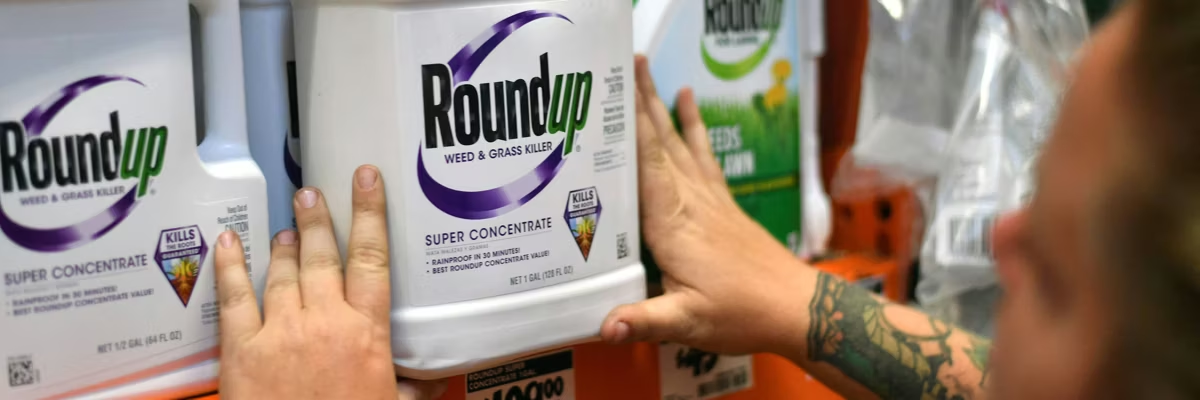
An employee adjusts Roundup products on a shelf at a store in San Rafael, California on July 9, 2018.
Citing Child Cancer Risk, Lawsuit Targets Trump EPA Over Glyphosate
"The EPA's silence leaves families in the dark and falls far short of its responsibility to protect public health," said the Environmental Working Group's president.
Just days before the US Supreme Court is set to hear arguments related to glyphosate's health risks, the Environmental Working Group on Tuesday sued the Trump administration for unlawfully delaying its response to an EWG petition seeking stronger restrictions on "the most widely used herbicide in the United States and globally."
The filing at the US Court of Appeals for the District of Columbia Circuit calls out the US Environmental Protection Agency (EPA) for failing to act on evidence that glyphosate, the active ingredient in Monsanto's Roundup, "is exposing infants and young children to harmful levels through everyday foods."
EWG and its co-petitioners filed a formal administrative petition under the Federal Food, Drug, and Cosmetic Act in 2018, during President Donald Trump's first term, and amended it the following year. They want the EPA to revoke or modify the glyphosate policy for oats, so it's stricter, and restrict its use as a pre-harvest drying agent.
"Congress required EPA to ensure that pesticide residues in food are safe, with particular protection for children," the new filing states. "Yet, more than seven years after being presented with substantial scientific evidence that the current tolerance for glyphosate in oats may not meet that standard, EPA has failed to make any final, reviewable determination."
EWG president and co-founder Ken Cook declared in a Tuesday statement that "parents shouldn't have to second-guess whether everyday foods like cereal and snack bars are putting their children at risk of cancer."
"The EPA's silence leaves families in the dark and falls far short of its responsibility to protect public health," he continued. "It's time for the agency to stop stalling and do its job."
The World Health Organization's International Agency for Research on Cancer classified glyphosate as "probably carcinogenic" to humanity over a decade ago, while the EPA has repeatedly claimed that it is not likely to cause cancer in humans despite mounting research, the recent retraction of a landmark study on the pesticide's supposed safety, and legal battles between patients and Bayer, which bought Monsanto in 2018.
Next week, the nation's top court is set to hear arguments in a case that, as EWG warned Tuesday, "could have sweeping implications for whether farmers and consumers can keep pursuing lawsuits for harms linked to glyphosate, and whether states can require warning labels on glyphosate products."
The Wall Street Journal noted Monday that while the company continues to insist on glyphosate's safety, it "wants anyone with a claim to join the settlement" negotiated with a team of lawyers representing around 40,000 claimants that "would bring Bayer's total price tag to resolve the Roundup litigation to roughly $22 billion."
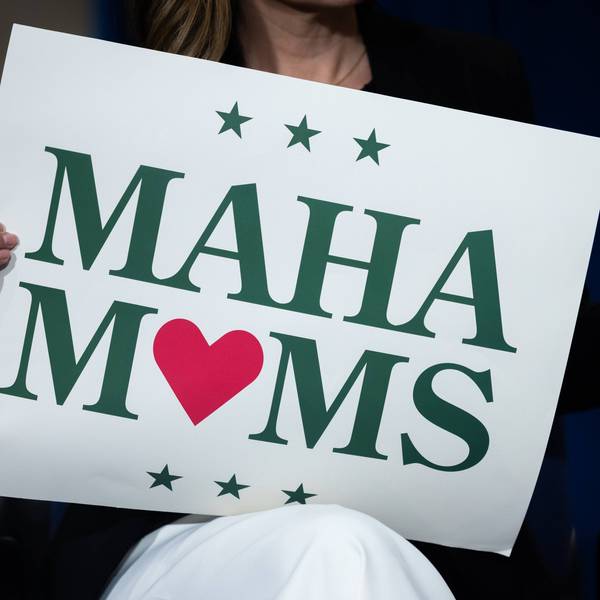
Despite Trump and Health and Human Services Secretary Robert F. Kennedy Jr.'s campaign promise to "Make America Healthy Again," the administration has notably sided with Bayer in the case before the Supreme Court, and the president in February even issued an executive order mandating the production of glyphosate.
"If anyone still wondered whether 'Make America Healthy Again' was a genuine commitment to protecting public health or a scam concocted by President Trump and RFK Jr. to rally health-conscious voters in 2024, today's decision answers that question," Cook said at the time. "It's a shocking betrayal to all of us but especially the people who live and work near farm fields where glyphosate is used."
Still, EWG is plowing ahead with its legal action, arguing that "the EPA has a clear legal duty to act on this petition, and it has simply refused to do so," as the group's general counsel and COO, Caroline Leary, put it. "This kind of delay has real consequences for families who rely on the agency to ensure children are not exposed to toxic farm chemical residues like glyphosate."
"This is exactly the kind of situation where courts are meant to step in," Leary added. "The EPA cannot avoid its responsibilities simply by doing nothing."
We are at a crossroads
This country and this world are at a monumental crossroads. In a few short weeks, US voters will have an opportunity to beat back the forces of fascism and confront the billionaires who are rigging the economy, our media system, and our democracy, making it increasingly impossible for ordinary people to get by. We’re not just talking about the election. We’re talking about what must be done once these fascist elements are vanquished from power. We need a bolder set of solutions than what either major party has so far been willing to offer and a working-class movement ready to fight like hell for it. Trump didn't emerge from nowhere. The conditions that fueled MAGA authoritarianism were created by decades of radical neoliberal economic policies and a corrupt political system dominated by corporate interests. They slashed taxes on the super-rich, promising that the benefits would trickle down. They said giveaways to the corporate titans would make life more affordable for the rest of us. It was all bullshit. And when a bitter, betrayed populace searches for someone to blame, right-wing demagogues have little trouble finding scapegoats. People know when they're being lied to, but you won't hear any of this from the corporate media. Only independent journalism—powered and funded by people who believe in building a better world—can deliver truly trustworthy daily news. Our Fall Campaign is underway, and we need your help. To power our newsroom through the rest of the year, we need to raise $125,000 by midnight on October 31. So if you share our vision, please contribute whatever you can to sustain our work. |
Just days before the US Supreme Court is set to hear arguments related to glyphosate's health risks, the Environmental Working Group on Tuesday sued the Trump administration for unlawfully delaying its response to an EWG petition seeking stronger restrictions on "the most widely used herbicide in the United States and globally."
The filing at the US Court of Appeals for the District of Columbia Circuit calls out the US Environmental Protection Agency (EPA) for failing to act on evidence that glyphosate, the active ingredient in Monsanto's Roundup, "is exposing infants and young children to harmful levels through everyday foods."
EWG and its co-petitioners filed a formal administrative petition under the Federal Food, Drug, and Cosmetic Act in 2018, during President Donald Trump's first term, and amended it the following year. They want the EPA to revoke or modify the glyphosate policy for oats, so it's stricter, and restrict its use as a pre-harvest drying agent.
"Congress required EPA to ensure that pesticide residues in food are safe, with particular protection for children," the new filing states. "Yet, more than seven years after being presented with substantial scientific evidence that the current tolerance for glyphosate in oats may not meet that standard, EPA has failed to make any final, reviewable determination."
EWG president and co-founder Ken Cook declared in a Tuesday statement that "parents shouldn't have to second-guess whether everyday foods like cereal and snack bars are putting their children at risk of cancer."
"The EPA's silence leaves families in the dark and falls far short of its responsibility to protect public health," he continued. "It's time for the agency to stop stalling and do its job."
The World Health Organization's International Agency for Research on Cancer classified glyphosate as "probably carcinogenic" to humanity over a decade ago, while the EPA has repeatedly claimed that it is not likely to cause cancer in humans despite mounting research, the recent retraction of a landmark study on the pesticide's supposed safety, and legal battles between patients and Bayer, which bought Monsanto in 2018.
Next week, the nation's top court is set to hear arguments in a case that, as EWG warned Tuesday, "could have sweeping implications for whether farmers and consumers can keep pursuing lawsuits for harms linked to glyphosate, and whether states can require warning labels on glyphosate products."
The Wall Street Journal noted Monday that while the company continues to insist on glyphosate's safety, it "wants anyone with a claim to join the settlement" negotiated with a team of lawyers representing around 40,000 claimants that "would bring Bayer's total price tag to resolve the Roundup litigation to roughly $22 billion."
Despite Trump and Health and Human Services Secretary Robert F. Kennedy Jr.'s campaign promise to "Make America Healthy Again," the administration has notably sided with Bayer in the case before the Supreme Court, and the president in February even issued an executive order mandating the production of glyphosate.
"If anyone still wondered whether 'Make America Healthy Again' was a genuine commitment to protecting public health or a scam concocted by President Trump and RFK Jr. to rally health-conscious voters in 2024, today's decision answers that question," Cook said at the time. "It's a shocking betrayal to all of us but especially the people who live and work near farm fields where glyphosate is used."
Still, EWG is plowing ahead with its legal action, arguing that "the EPA has a clear legal duty to act on this petition, and it has simply refused to do so," as the group's general counsel and COO, Caroline Leary, put it. "This kind of delay has real consequences for families who rely on the agency to ensure children are not exposed to toxic farm chemical residues like glyphosate."
"This is exactly the kind of situation where courts are meant to step in," Leary added. "The EPA cannot avoid its responsibilities simply by doing nothing."
- 'Outrageous': New Roundup Is 45 Times More Toxic ›
- EPA Urged to Put Public Health Over Monsanto Profits by Banning Cancer-Linked Glyphosate ›
- 'Historic Victory': Bayer to End US Residential Sales of Glyphosate-Based Herbicides ›
- 'Groundbreaking' Legal Action Demands EPA Finally Ban Glyphosate ›
- After Promising to 'Make America Healthy Again,' Trump Mandates Production of Cancer-Causing Glyphosate ›
- Bayer Continues Push to 'Close the Door' on Glyphosate Victims at US Supreme Court | Common Dreams ›
- Green Groups Sue Trump EPA for Approving Toxic Semiconductor Chemicals Amid AI Data Center Boom | Common Dreams ›
Just days before the US Supreme Court is set to hear arguments related to glyphosate's health risks, the Environmental Working Group on Tuesday sued the Trump administration for unlawfully delaying its response to an EWG petition seeking stronger restrictions on "the most widely used herbicide in the United States and globally."
The filing at the US Court of Appeals for the District of Columbia Circuit calls out the US Environmental Protection Agency (EPA) for failing to act on evidence that glyphosate, the active ingredient in Monsanto's Roundup, "is exposing infants and young children to harmful levels through everyday foods."
EWG and its co-petitioners filed a formal administrative petition under the Federal Food, Drug, and Cosmetic Act in 2018, during President Donald Trump's first term, and amended it the following year. They want the EPA to revoke or modify the glyphosate policy for oats, so it's stricter, and restrict its use as a pre-harvest drying agent.
"Congress required EPA to ensure that pesticide residues in food are safe, with particular protection for children," the new filing states. "Yet, more than seven years after being presented with substantial scientific evidence that the current tolerance for glyphosate in oats may not meet that standard, EPA has failed to make any final, reviewable determination."
EWG president and co-founder Ken Cook declared in a Tuesday statement that "parents shouldn't have to second-guess whether everyday foods like cereal and snack bars are putting their children at risk of cancer."
"The EPA's silence leaves families in the dark and falls far short of its responsibility to protect public health," he continued. "It's time for the agency to stop stalling and do its job."
The World Health Organization's International Agency for Research on Cancer classified glyphosate as "probably carcinogenic" to humanity over a decade ago, while the EPA has repeatedly claimed that it is not likely to cause cancer in humans despite mounting research, the recent retraction of a landmark study on the pesticide's supposed safety, and legal battles between patients and Bayer, which bought Monsanto in 2018.
Next week, the nation's top court is set to hear arguments in a case that, as EWG warned Tuesday, "could have sweeping implications for whether farmers and consumers can keep pursuing lawsuits for harms linked to glyphosate, and whether states can require warning labels on glyphosate products."
The Wall Street Journal noted Monday that while the company continues to insist on glyphosate's safety, it "wants anyone with a claim to join the settlement" negotiated with a team of lawyers representing around 40,000 claimants that "would bring Bayer's total price tag to resolve the Roundup litigation to roughly $22 billion."
Despite Trump and Health and Human Services Secretary Robert F. Kennedy Jr.'s campaign promise to "Make America Healthy Again," the administration has notably sided with Bayer in the case before the Supreme Court, and the president in February even issued an executive order mandating the production of glyphosate.
"If anyone still wondered whether 'Make America Healthy Again' was a genuine commitment to protecting public health or a scam concocted by President Trump and RFK Jr. to rally health-conscious voters in 2024, today's decision answers that question," Cook said at the time. "It's a shocking betrayal to all of us but especially the people who live and work near farm fields where glyphosate is used."
Still, EWG is plowing ahead with its legal action, arguing that "the EPA has a clear legal duty to act on this petition, and it has simply refused to do so," as the group's general counsel and COO, Caroline Leary, put it. "This kind of delay has real consequences for families who rely on the agency to ensure children are not exposed to toxic farm chemical residues like glyphosate."
"This is exactly the kind of situation where courts are meant to step in," Leary added. "The EPA cannot avoid its responsibilities simply by doing nothing."
- 'Outrageous': New Roundup Is 45 Times More Toxic ›
- EPA Urged to Put Public Health Over Monsanto Profits by Banning Cancer-Linked Glyphosate ›
- 'Historic Victory': Bayer to End US Residential Sales of Glyphosate-Based Herbicides ›
- 'Groundbreaking' Legal Action Demands EPA Finally Ban Glyphosate ›
- After Promising to 'Make America Healthy Again,' Trump Mandates Production of Cancer-Causing Glyphosate ›
- Bayer Continues Push to 'Close the Door' on Glyphosate Victims at US Supreme Court | Common Dreams ›
- Green Groups Sue Trump EPA for Approving Toxic Semiconductor Chemicals Amid AI Data Center Boom | Common Dreams ›