SUBSCRIBE TO OUR FREE NEWSLETTER
Daily news & progressive opinion—funded by the people, not the corporations—delivered straight to your inbox.
5
#000000
#FFFFFF
To donate by check, phone, or other method, see our More Ways to Give page.
Daily news & progressive opinion—funded by the people, not the corporations—delivered straight to your inbox.
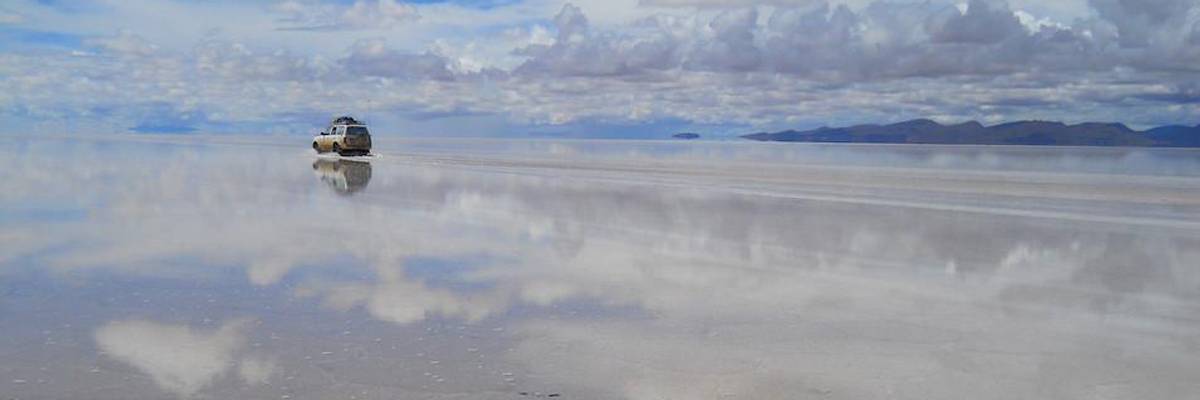
Bolivia's Salar de Uyuni salt flats hold the largest reserves of lithium in the world. (Photo: Psyberartist/Flickr/cc)
The Sunday military coup in Bolivia has put in place a government which appears likely to reverse a decision by just-resigned President Evo Morales to cancel an agreement with a German company for developing lithium deposits in the Latin American country for batteries like those in electric cars.
"Bolivia's lithium belongs to the Bolivian people," tweeted Washington Monthly contributor David Atkins. "Not to multinational corporate cabals."
The coup, which on Sunday resulted in Morales resigning and going into hiding, was the result of days of protests from right-wing elements angry at the leftist Morales government. Sen. Jeanine Anez, of the center-right party Democratic Unity, is currently the interim president in the unstable post-coup government in advance of elections.
Investment analyst publisher Argus urged investors to keep an eye on the developing situation and noted that gas and oil production from foreign companies in Bolivia had remained steady.
The Morales move on Nov. 4 to cancel the December 2018 agreement with Germany's ACI Systems Alemania (ACISA) came after weeks of protests from residents of the Potosi area. The region has 50% to 70% of the world's lithium reserves in the Salar de Uyuni salt flats.
Among other clients, ACISA provides batteries to Tesla; Tesla's stock rose Monday after the weekend.
As Bloomberg News noted in 2018, that has set the country up to be incredibly important in the next decade:
Demand for lithium is expected to more than double by 2025. The soft, light mineral is mined mainly in Australia, Chile, and Argentina. Bolivia has plenty--9 million tons that have never been mined commercially, the second-largest amount in the world--but until now there's been no practical way to mine and sell it.
Morales' cancellation of the ACISA deal opened the door to either a renegotiation of the agreement with terms delivering more of the profits to the area's population or the outright nationalization of the Bolivian lithium extraction industry.
As Telesur reported in June, the Morales government announced at the time it was "determined to industrialize Bolivia and has invested huge amounts to ensure that lithium is processed within the country to export it only in value-added form, such as in batteries."
It's unclear what the next steps are for the industry in a post-coup Bolivia, according to global intelligence analysis firm Stratfor:
In the longer term, continued political uncertainty will make it more difficult for Bolivia to increase its production of strategic metals like lithium or develop a value-added sector in the battery market. The poor investment climate comes at a time of expanding global opportunities in lithium-ion battery production to meet rising demand from electric vehicle manufacturing.
ACISA told German broadcaster DW last week that the company was "confident that our lithium project will be resumed after a phase of political calmness and clarification."
On Sunday, Morales resigned.
Dear Common Dreams reader, It’s been nearly 30 years since I co-founded Common Dreams with my late wife, Lina Newhouser. We had the radical notion that journalism should serve the public good, not corporate profits. It was clear to us from the outset what it would take to build such a project. No paid advertisements. No corporate sponsors. No millionaire publisher telling us what to think or do. Many people said we wouldn't last a year, but we proved those doubters wrong. Together with a tremendous team of journalists and dedicated staff, we built an independent media outlet free from the constraints of profits and corporate control. Our mission has always been simple: To inform. To inspire. To ignite change for the common good. Building Common Dreams was not easy. Our survival was never guaranteed. When you take on the most powerful forces—Wall Street greed, fossil fuel industry destruction, Big Tech lobbyists, and uber-rich oligarchs who have spent billions upon billions rigging the economy and democracy in their favor—the only bulwark you have is supporters who believe in your work. But here’s the urgent message from me today. It's never been this bad out there. And it's never been this hard to keep us going. At the very moment Common Dreams is most needed, the threats we face are intensifying. We need your support now more than ever. We don't accept corporate advertising and never will. We don't have a paywall because we don't think people should be blocked from critical news based on their ability to pay. Everything we do is funded by the donations of readers like you. When everyone does the little they can afford, we are strong. But if that support retreats or dries up, so do we. Will you donate now to make sure Common Dreams not only survives but thrives? —Craig Brown, Co-founder |
The Sunday military coup in Bolivia has put in place a government which appears likely to reverse a decision by just-resigned President Evo Morales to cancel an agreement with a German company for developing lithium deposits in the Latin American country for batteries like those in electric cars.
"Bolivia's lithium belongs to the Bolivian people," tweeted Washington Monthly contributor David Atkins. "Not to multinational corporate cabals."
The coup, which on Sunday resulted in Morales resigning and going into hiding, was the result of days of protests from right-wing elements angry at the leftist Morales government. Sen. Jeanine Anez, of the center-right party Democratic Unity, is currently the interim president in the unstable post-coup government in advance of elections.
Investment analyst publisher Argus urged investors to keep an eye on the developing situation and noted that gas and oil production from foreign companies in Bolivia had remained steady.
The Morales move on Nov. 4 to cancel the December 2018 agreement with Germany's ACI Systems Alemania (ACISA) came after weeks of protests from residents of the Potosi area. The region has 50% to 70% of the world's lithium reserves in the Salar de Uyuni salt flats.
Among other clients, ACISA provides batteries to Tesla; Tesla's stock rose Monday after the weekend.
As Bloomberg News noted in 2018, that has set the country up to be incredibly important in the next decade:
Demand for lithium is expected to more than double by 2025. The soft, light mineral is mined mainly in Australia, Chile, and Argentina. Bolivia has plenty--9 million tons that have never been mined commercially, the second-largest amount in the world--but until now there's been no practical way to mine and sell it.
Morales' cancellation of the ACISA deal opened the door to either a renegotiation of the agreement with terms delivering more of the profits to the area's population or the outright nationalization of the Bolivian lithium extraction industry.
As Telesur reported in June, the Morales government announced at the time it was "determined to industrialize Bolivia and has invested huge amounts to ensure that lithium is processed within the country to export it only in value-added form, such as in batteries."
It's unclear what the next steps are for the industry in a post-coup Bolivia, according to global intelligence analysis firm Stratfor:
In the longer term, continued political uncertainty will make it more difficult for Bolivia to increase its production of strategic metals like lithium or develop a value-added sector in the battery market. The poor investment climate comes at a time of expanding global opportunities in lithium-ion battery production to meet rising demand from electric vehicle manufacturing.
ACISA told German broadcaster DW last week that the company was "confident that our lithium project will be resumed after a phase of political calmness and clarification."
On Sunday, Morales resigned.
The Sunday military coup in Bolivia has put in place a government which appears likely to reverse a decision by just-resigned President Evo Morales to cancel an agreement with a German company for developing lithium deposits in the Latin American country for batteries like those in electric cars.
"Bolivia's lithium belongs to the Bolivian people," tweeted Washington Monthly contributor David Atkins. "Not to multinational corporate cabals."
The coup, which on Sunday resulted in Morales resigning and going into hiding, was the result of days of protests from right-wing elements angry at the leftist Morales government. Sen. Jeanine Anez, of the center-right party Democratic Unity, is currently the interim president in the unstable post-coup government in advance of elections.
Investment analyst publisher Argus urged investors to keep an eye on the developing situation and noted that gas and oil production from foreign companies in Bolivia had remained steady.
The Morales move on Nov. 4 to cancel the December 2018 agreement with Germany's ACI Systems Alemania (ACISA) came after weeks of protests from residents of the Potosi area. The region has 50% to 70% of the world's lithium reserves in the Salar de Uyuni salt flats.
Among other clients, ACISA provides batteries to Tesla; Tesla's stock rose Monday after the weekend.
As Bloomberg News noted in 2018, that has set the country up to be incredibly important in the next decade:
Demand for lithium is expected to more than double by 2025. The soft, light mineral is mined mainly in Australia, Chile, and Argentina. Bolivia has plenty--9 million tons that have never been mined commercially, the second-largest amount in the world--but until now there's been no practical way to mine and sell it.
Morales' cancellation of the ACISA deal opened the door to either a renegotiation of the agreement with terms delivering more of the profits to the area's population or the outright nationalization of the Bolivian lithium extraction industry.
As Telesur reported in June, the Morales government announced at the time it was "determined to industrialize Bolivia and has invested huge amounts to ensure that lithium is processed within the country to export it only in value-added form, such as in batteries."
It's unclear what the next steps are for the industry in a post-coup Bolivia, according to global intelligence analysis firm Stratfor:
In the longer term, continued political uncertainty will make it more difficult for Bolivia to increase its production of strategic metals like lithium or develop a value-added sector in the battery market. The poor investment climate comes at a time of expanding global opportunities in lithium-ion battery production to meet rising demand from electric vehicle manufacturing.
ACISA told German broadcaster DW last week that the company was "confident that our lithium project will be resumed after a phase of political calmness and clarification."
On Sunday, Morales resigned.