

SUBSCRIBE TO OUR FREE NEWSLETTER
Daily news & progressive opinion—funded by the people, not the corporations—delivered straight to your inbox.
5
#000000
#FFFFFF
To donate by check, phone, or other method, see our More Ways to Give page.
Daily news & progressive opinion—funded by the people, not the corporations—delivered straight to your inbox.
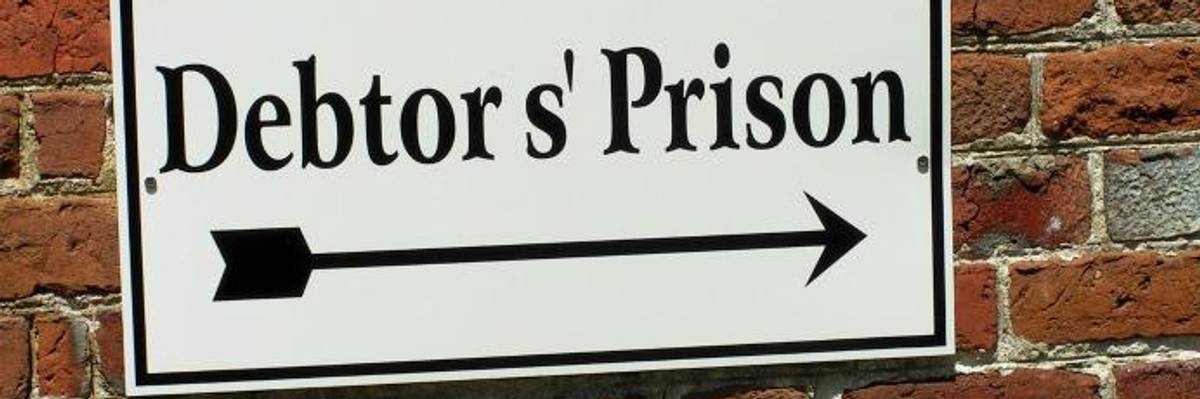
"Consumers have little chance of justice when our courts take the debt collector's side in almost every case--even to the point of ordering people jailed until they pay up," says report author Jennifer Turner. (Photo: Bill Smith/flickr/cc)
Threatened with arrest for a case involving a few dollars in debt held by a collection agency?
This is not a science fiction, nor a scenario from the United States more than 185 years ago when debtors prisons were still allowed. Rather, it's a part of the current justice system where, in states across the country, state courts and local prosecutors abet debt collectors in arresting and jailing some of the tens of millions of Americans who have debt held by private collection agencies.
The injustice is laid out in new report from the ACLU, "A Pound of Flesh: The Criminalization of Private Debt."
"The private debt collection industry uses prosecutors and judges as weapons against millions of Americans who can't afford to pay their bills," said report author Jennifer Turner, also a principal human rights researcher at the ACLU. "Consumers have little chance of justice when our courts take the debt collector's side in almost every case--even to the point of ordering people jailed until they pay up," she said.
The practice has the potential to affect a wide swathe of the U.S. population: the report notes that 1 in 3 Americans has some debt that's been turned over to a private collection agency, but given entrenched poverty and wealth gaps, it disproportionately affects communities of color. The jailings and threats of jailing affects those often already living in financially precarious situations, such as those relying on Social Security or unemployment benefits, or those who are terminally ill.
Report found over 1,000 cases in 26 states in which civil court judges issued arrest warrants for debtors. "In 44 states," the report notes, "a court can even issue warrants for the arrest of debtors who fail to appear at post-judgment court proceedings or fail to provide information about their finances." That includes people who may not know they've been sued or received notice to appear in cour.
Here's how it works, as noted in report:
Millions of collection lawsuits are filed each year in state and local courts that have effectively become collectors' courts. The majority of cases on many state court dockets are debt collection suits, and in many state courts, debt purchasers file more suits than any other type of plaintiff. Debt collection lawyers can file hundreds of suits a day, often with little evidence that the alleged debt is actually owed.
Once a lawsuit is filed, the process is stacked against defendants, the overwhelming majority of whom are not represented by an attorney. And collectors have a big advantage in small-claims courts, which provide very limited due process protections to debtors.
Many courts churn through collection lawsuits with astonishing speed and little scrutiny. Over 95 percent of debt collection suits end in favor of the collector, usually because alleged debtors do not mount a defense. In many cases, defendants did not know they had been sued. And, of course, collectors have little incentive to give proper notice to the defendants.
Once the collection company wins the case, it " can seek to have a defendant's paycheck or bank account garnished, seize their cars or other personal property, or record a lien against their property. Creditors can also ask courts to require defendants to be in court for post-judgment proceedings," it continues.
When debtors do not appear in court,
creditors can ask the judge to issue a civil warrant for the debtor's arrest. In the cases the ACLU documented, debtors failed to appear at hearings for various reasons, most often because they did not receive notification of the court date or even of the existence of the lawsuit. Some were unable to appear because of work, child care responsibilities, lack of transportation, physical disability, illness, or dementia. We found two cases in which debtors missed hearings because they were terminally ill and died shortly after warrants were issued for their arrest.
After the arrest--which can occur "in the middle of the night or at a workplace"--a debtor may sit in jail until he/she can post bail payment.
Through this system, debtors' "procedural due process rights are infringed upon when there is inadequate notice, automatic default judgments, or deficient evidence," the report states.
An even if a warrant doesn't lead to jail time, the publication says that it "can cause long-lasting harm because such warrants may be entered into background check databases, with serious consequences for future employment, housing applications, education opportunities, and access to security clearances."
Local prosecutors can even be in cahoots with the debt collectors:
Private debt collectors have entered into hundreds of partnerships with local district attorneys' offices to get people to pay on bounced check claims under threat of prosecution. Some collectors with these contracts send letters on the district attorney's letterhead to threaten people with criminal prosecution, jail, and fines--even when the prosecutor hasn't reviewed the case to see if a criminal violation occurred.
In fact, the report finds, in many instances there was no criminal intent when the person wrote the check, and the amount--perhaps as little as 2 bucks--doesn't even meet the criteria for criminal prosecution.
Among case studies spotlighted in report is that of mother of three Denise Zencka, who was arrested in Indiana in 2013 because of medical fees incurred from cancer treatment.
During a several-month period while recovering from the treatment, she was living with her parents out of state in Florida.
During that time--unbeknownst her-- she was ordered to appear in small-claims court in her home state of Indiana because of the outstanding medical bills. Since she didn't appear in court, three arrest warrants were issued. "Still dressed in her pajamas," Zenck , who had filed for bankruptcy, "was arrested in front of her eight-year- old autistic son, four-year-old son, and 12-year-old daughter."
In a further injustice, when she was detained, because she was physically unable to to climb the stairs to reach the women's section, Zencka was held in a men's mental health unit, which has glass walls.
"As in Zencka's case, and in thousands of other similar cases around the country," Turner writes in a blog post, "courts are issuing arrest warrants and serving as taxpayer-funded tools of the multi-billion-dollar debt collection industry."
Among the key recommendations outlined in report are for district attorney offices to end their contracts with private check collection companies; for federal laws to be updated to bar courts from issuing arrest warrants in debt collection proceedings; and for the Consumer Financial Protection Bureau to promulgate rules that preclude debt collectors from seeking the arrest or jailing of alleged debtors in pursuit of payments toward civil debts.
Dear Common Dreams reader, It’s been nearly 30 years since I co-founded Common Dreams with my late wife, Lina Newhouser. We had the radical notion that journalism should serve the public good, not corporate profits. It was clear to us from the outset what it would take to build such a project. No paid advertisements. No corporate sponsors. No millionaire publisher telling us what to think or do. Many people said we wouldn't last a year, but we proved those doubters wrong. Together with a tremendous team of journalists and dedicated staff, we built an independent media outlet free from the constraints of profits and corporate control. Our mission has always been simple: To inform. To inspire. To ignite change for the common good. Building Common Dreams was not easy. Our survival was never guaranteed. When you take on the most powerful forces—Wall Street greed, fossil fuel industry destruction, Big Tech lobbyists, and uber-rich oligarchs who have spent billions upon billions rigging the economy and democracy in their favor—the only bulwark you have is supporters who believe in your work. But here’s the urgent message from me today. It's never been this bad out there. And it's never been this hard to keep us going. At the very moment Common Dreams is most needed, the threats we face are intensifying. We need your support now more than ever. We don't accept corporate advertising and never will. We don't have a paywall because we don't think people should be blocked from critical news based on their ability to pay. Everything we do is funded by the donations of readers like you. When everyone does the little they can afford, we are strong. But if that support retreats or dries up, so do we. Will you donate now to make sure Common Dreams not only survives but thrives? —Craig Brown, Co-founder |
Threatened with arrest for a case involving a few dollars in debt held by a collection agency?
This is not a science fiction, nor a scenario from the United States more than 185 years ago when debtors prisons were still allowed. Rather, it's a part of the current justice system where, in states across the country, state courts and local prosecutors abet debt collectors in arresting and jailing some of the tens of millions of Americans who have debt held by private collection agencies.
The injustice is laid out in new report from the ACLU, "A Pound of Flesh: The Criminalization of Private Debt."
"The private debt collection industry uses prosecutors and judges as weapons against millions of Americans who can't afford to pay their bills," said report author Jennifer Turner, also a principal human rights researcher at the ACLU. "Consumers have little chance of justice when our courts take the debt collector's side in almost every case--even to the point of ordering people jailed until they pay up," she said.
The practice has the potential to affect a wide swathe of the U.S. population: the report notes that 1 in 3 Americans has some debt that's been turned over to a private collection agency, but given entrenched poverty and wealth gaps, it disproportionately affects communities of color. The jailings and threats of jailing affects those often already living in financially precarious situations, such as those relying on Social Security or unemployment benefits, or those who are terminally ill.
Report found over 1,000 cases in 26 states in which civil court judges issued arrest warrants for debtors. "In 44 states," the report notes, "a court can even issue warrants for the arrest of debtors who fail to appear at post-judgment court proceedings or fail to provide information about their finances." That includes people who may not know they've been sued or received notice to appear in cour.
Here's how it works, as noted in report:
Millions of collection lawsuits are filed each year in state and local courts that have effectively become collectors' courts. The majority of cases on many state court dockets are debt collection suits, and in many state courts, debt purchasers file more suits than any other type of plaintiff. Debt collection lawyers can file hundreds of suits a day, often with little evidence that the alleged debt is actually owed.
Once a lawsuit is filed, the process is stacked against defendants, the overwhelming majority of whom are not represented by an attorney. And collectors have a big advantage in small-claims courts, which provide very limited due process protections to debtors.
Many courts churn through collection lawsuits with astonishing speed and little scrutiny. Over 95 percent of debt collection suits end in favor of the collector, usually because alleged debtors do not mount a defense. In many cases, defendants did not know they had been sued. And, of course, collectors have little incentive to give proper notice to the defendants.
Once the collection company wins the case, it " can seek to have a defendant's paycheck or bank account garnished, seize their cars or other personal property, or record a lien against their property. Creditors can also ask courts to require defendants to be in court for post-judgment proceedings," it continues.
When debtors do not appear in court,
creditors can ask the judge to issue a civil warrant for the debtor's arrest. In the cases the ACLU documented, debtors failed to appear at hearings for various reasons, most often because they did not receive notification of the court date or even of the existence of the lawsuit. Some were unable to appear because of work, child care responsibilities, lack of transportation, physical disability, illness, or dementia. We found two cases in which debtors missed hearings because they were terminally ill and died shortly after warrants were issued for their arrest.
After the arrest--which can occur "in the middle of the night or at a workplace"--a debtor may sit in jail until he/she can post bail payment.
Through this system, debtors' "procedural due process rights are infringed upon when there is inadequate notice, automatic default judgments, or deficient evidence," the report states.
An even if a warrant doesn't lead to jail time, the publication says that it "can cause long-lasting harm because such warrants may be entered into background check databases, with serious consequences for future employment, housing applications, education opportunities, and access to security clearances."
Local prosecutors can even be in cahoots with the debt collectors:
Private debt collectors have entered into hundreds of partnerships with local district attorneys' offices to get people to pay on bounced check claims under threat of prosecution. Some collectors with these contracts send letters on the district attorney's letterhead to threaten people with criminal prosecution, jail, and fines--even when the prosecutor hasn't reviewed the case to see if a criminal violation occurred.
In fact, the report finds, in many instances there was no criminal intent when the person wrote the check, and the amount--perhaps as little as 2 bucks--doesn't even meet the criteria for criminal prosecution.
Among case studies spotlighted in report is that of mother of three Denise Zencka, who was arrested in Indiana in 2013 because of medical fees incurred from cancer treatment.
During a several-month period while recovering from the treatment, she was living with her parents out of state in Florida.
During that time--unbeknownst her-- she was ordered to appear in small-claims court in her home state of Indiana because of the outstanding medical bills. Since she didn't appear in court, three arrest warrants were issued. "Still dressed in her pajamas," Zenck , who had filed for bankruptcy, "was arrested in front of her eight-year- old autistic son, four-year-old son, and 12-year-old daughter."
In a further injustice, when she was detained, because she was physically unable to to climb the stairs to reach the women's section, Zencka was held in a men's mental health unit, which has glass walls.
"As in Zencka's case, and in thousands of other similar cases around the country," Turner writes in a blog post, "courts are issuing arrest warrants and serving as taxpayer-funded tools of the multi-billion-dollar debt collection industry."
Among the key recommendations outlined in report are for district attorney offices to end their contracts with private check collection companies; for federal laws to be updated to bar courts from issuing arrest warrants in debt collection proceedings; and for the Consumer Financial Protection Bureau to promulgate rules that preclude debt collectors from seeking the arrest or jailing of alleged debtors in pursuit of payments toward civil debts.
Threatened with arrest for a case involving a few dollars in debt held by a collection agency?
This is not a science fiction, nor a scenario from the United States more than 185 years ago when debtors prisons were still allowed. Rather, it's a part of the current justice system where, in states across the country, state courts and local prosecutors abet debt collectors in arresting and jailing some of the tens of millions of Americans who have debt held by private collection agencies.
The injustice is laid out in new report from the ACLU, "A Pound of Flesh: The Criminalization of Private Debt."
"The private debt collection industry uses prosecutors and judges as weapons against millions of Americans who can't afford to pay their bills," said report author Jennifer Turner, also a principal human rights researcher at the ACLU. "Consumers have little chance of justice when our courts take the debt collector's side in almost every case--even to the point of ordering people jailed until they pay up," she said.
The practice has the potential to affect a wide swathe of the U.S. population: the report notes that 1 in 3 Americans has some debt that's been turned over to a private collection agency, but given entrenched poverty and wealth gaps, it disproportionately affects communities of color. The jailings and threats of jailing affects those often already living in financially precarious situations, such as those relying on Social Security or unemployment benefits, or those who are terminally ill.
Report found over 1,000 cases in 26 states in which civil court judges issued arrest warrants for debtors. "In 44 states," the report notes, "a court can even issue warrants for the arrest of debtors who fail to appear at post-judgment court proceedings or fail to provide information about their finances." That includes people who may not know they've been sued or received notice to appear in cour.
Here's how it works, as noted in report:
Millions of collection lawsuits are filed each year in state and local courts that have effectively become collectors' courts. The majority of cases on many state court dockets are debt collection suits, and in many state courts, debt purchasers file more suits than any other type of plaintiff. Debt collection lawyers can file hundreds of suits a day, often with little evidence that the alleged debt is actually owed.
Once a lawsuit is filed, the process is stacked against defendants, the overwhelming majority of whom are not represented by an attorney. And collectors have a big advantage in small-claims courts, which provide very limited due process protections to debtors.
Many courts churn through collection lawsuits with astonishing speed and little scrutiny. Over 95 percent of debt collection suits end in favor of the collector, usually because alleged debtors do not mount a defense. In many cases, defendants did not know they had been sued. And, of course, collectors have little incentive to give proper notice to the defendants.
Once the collection company wins the case, it " can seek to have a defendant's paycheck or bank account garnished, seize their cars or other personal property, or record a lien against their property. Creditors can also ask courts to require defendants to be in court for post-judgment proceedings," it continues.
When debtors do not appear in court,
creditors can ask the judge to issue a civil warrant for the debtor's arrest. In the cases the ACLU documented, debtors failed to appear at hearings for various reasons, most often because they did not receive notification of the court date or even of the existence of the lawsuit. Some were unable to appear because of work, child care responsibilities, lack of transportation, physical disability, illness, or dementia. We found two cases in which debtors missed hearings because they were terminally ill and died shortly after warrants were issued for their arrest.
After the arrest--which can occur "in the middle of the night or at a workplace"--a debtor may sit in jail until he/she can post bail payment.
Through this system, debtors' "procedural due process rights are infringed upon when there is inadequate notice, automatic default judgments, or deficient evidence," the report states.
An even if a warrant doesn't lead to jail time, the publication says that it "can cause long-lasting harm because such warrants may be entered into background check databases, with serious consequences for future employment, housing applications, education opportunities, and access to security clearances."
Local prosecutors can even be in cahoots with the debt collectors:
Private debt collectors have entered into hundreds of partnerships with local district attorneys' offices to get people to pay on bounced check claims under threat of prosecution. Some collectors with these contracts send letters on the district attorney's letterhead to threaten people with criminal prosecution, jail, and fines--even when the prosecutor hasn't reviewed the case to see if a criminal violation occurred.
In fact, the report finds, in many instances there was no criminal intent when the person wrote the check, and the amount--perhaps as little as 2 bucks--doesn't even meet the criteria for criminal prosecution.
Among case studies spotlighted in report is that of mother of three Denise Zencka, who was arrested in Indiana in 2013 because of medical fees incurred from cancer treatment.
During a several-month period while recovering from the treatment, she was living with her parents out of state in Florida.
During that time--unbeknownst her-- she was ordered to appear in small-claims court in her home state of Indiana because of the outstanding medical bills. Since she didn't appear in court, three arrest warrants were issued. "Still dressed in her pajamas," Zenck , who had filed for bankruptcy, "was arrested in front of her eight-year- old autistic son, four-year-old son, and 12-year-old daughter."
In a further injustice, when she was detained, because she was physically unable to to climb the stairs to reach the women's section, Zencka was held in a men's mental health unit, which has glass walls.
"As in Zencka's case, and in thousands of other similar cases around the country," Turner writes in a blog post, "courts are issuing arrest warrants and serving as taxpayer-funded tools of the multi-billion-dollar debt collection industry."
Among the key recommendations outlined in report are for district attorney offices to end their contracts with private check collection companies; for federal laws to be updated to bar courts from issuing arrest warrants in debt collection proceedings; and for the Consumer Financial Protection Bureau to promulgate rules that preclude debt collectors from seeking the arrest or jailing of alleged debtors in pursuit of payments toward civil debts.

