

Jingoistic crowds erupted with frat-boy glee shortly after President Barack Obama announced the extrajudicial assassination of Osama Bin Laden earlier this month. After all, America's public enemy Numero Uno -- our own veritable Darth Vadar - had lost what the mainstream media depicts as a Manichean battle ten years in the making. The lone voices in the wilderness that dared to point out the covert operation violated elementary norms of international law were quickly dismissed as "fanatics".
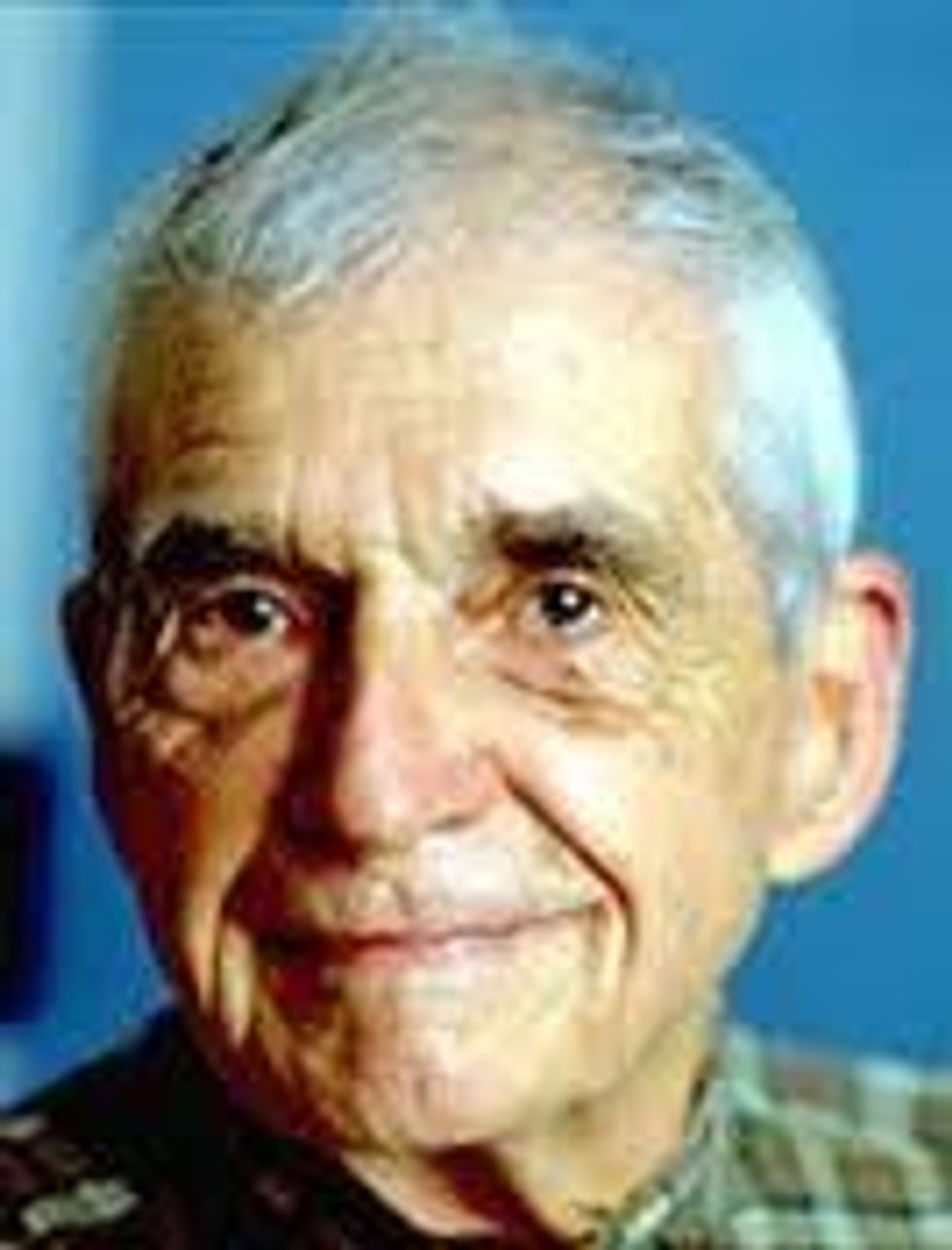
Last year, after badgering members of the Catholic Worker community across the country, I tracked down America's most famous living priest. When I arrived at Berrigan's Lower West Side friary in Manhattan, I half expected to find a Bible-toting warrior, but on that clement morning, I walked into the friary's cozy hallway to find a slightly hunched elderly man with a meek smile and skin crinkled like aluminum foil. Greeting me with the softest, gentlest "hello" that I've heard since my first day at Montessori school, Father Berrigan clasped my hand and led me into his tastefully decorated office. The walls of his office showcased posters of freedom fighters such as Mahatma Gandhi, a child's drawing of a circus clown, and framed quilts of butterflies. Among his impressive collection of books are volumes by his longtime heroes: Dorothy Day, Martin Luther King Jr., and Thomas Merton. Just shy of his ninetieth birthday, Berrigan spoke with me for an hour and a half, patiently answering my many questions and stopping only twice or so to cough.
Notes:
[1] Joe Sabia, "The Cornell Catholic Community is in Crisis" Cornell Daily Sun. September 23, 2003
Jingoistic crowds erupted with frat-boy glee shortly after President Barack Obama announced the extrajudicial assassination of Osama Bin Laden earlier this month. After all, America's public enemy Numero Uno -- our own veritable Darth Vadar - had lost what the mainstream media depicts as a Manichean battle ten years in the making. The lone voices in the wilderness that dared to point out the covert operation violated elementary norms of international law were quickly dismissed as "fanatics".
Last year, after badgering members of the Catholic Worker community across the country, I tracked down America's most famous living priest. When I arrived at Berrigan's Lower West Side friary in Manhattan, I half expected to find a Bible-toting warrior, but on that clement morning, I walked into the friary's cozy hallway to find a slightly hunched elderly man with a meek smile and skin crinkled like aluminum foil. Greeting me with the softest, gentlest "hello" that I've heard since my first day at Montessori school, Father Berrigan clasped my hand and led me into his tastefully decorated office. The walls of his office showcased posters of freedom fighters such as Mahatma Gandhi, a child's drawing of a circus clown, and framed quilts of butterflies. Among his impressive collection of books are volumes by his longtime heroes: Dorothy Day, Martin Luther King Jr., and Thomas Merton. Just shy of his ninetieth birthday, Berrigan spoke with me for an hour and a half, patiently answering my many questions and stopping only twice or so to cough.
Notes:
[1] Joe Sabia, "The Cornell Catholic Community is in Crisis" Cornell Daily Sun. September 23, 2003
Jingoistic crowds erupted with frat-boy glee shortly after President Barack Obama announced the extrajudicial assassination of Osama Bin Laden earlier this month. After all, America's public enemy Numero Uno -- our own veritable Darth Vadar - had lost what the mainstream media depicts as a Manichean battle ten years in the making. The lone voices in the wilderness that dared to point out the covert operation violated elementary norms of international law were quickly dismissed as "fanatics".
Last year, after badgering members of the Catholic Worker community across the country, I tracked down America's most famous living priest. When I arrived at Berrigan's Lower West Side friary in Manhattan, I half expected to find a Bible-toting warrior, but on that clement morning, I walked into the friary's cozy hallway to find a slightly hunched elderly man with a meek smile and skin crinkled like aluminum foil. Greeting me with the softest, gentlest "hello" that I've heard since my first day at Montessori school, Father Berrigan clasped my hand and led me into his tastefully decorated office. The walls of his office showcased posters of freedom fighters such as Mahatma Gandhi, a child's drawing of a circus clown, and framed quilts of butterflies. Among his impressive collection of books are volumes by his longtime heroes: Dorothy Day, Martin Luther King Jr., and Thomas Merton. Just shy of his ninetieth birthday, Berrigan spoke with me for an hour and a half, patiently answering my many questions and stopping only twice or so to cough.
Notes:
[1] Joe Sabia, "The Cornell Catholic Community is in Crisis" Cornell Daily Sun. September 23, 2003