SUBSCRIBE TO OUR FREE NEWSLETTER
Daily news & progressive opinion—funded by the people, not the corporations—delivered straight to your inbox.
5
#000000
#FFFFFF
To donate by check, phone, or other method, see our More Ways to Give page.
Daily news & progressive opinion—funded by the people, not the corporations—delivered straight to your inbox.
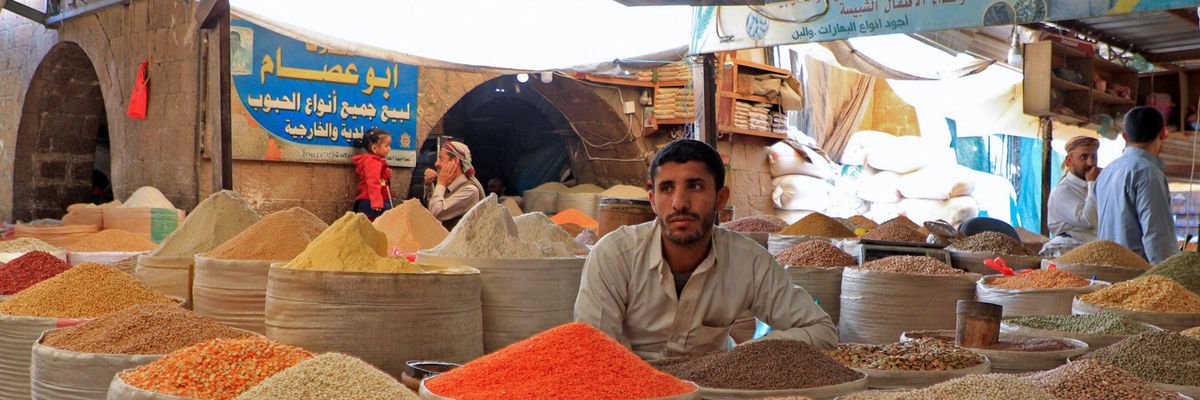
A vendor waits for costumers at a market in the Sanaa, Yemen on February 28, 2022. Russia's invasion of Ukraine could mean less bread on the table in Egypt, Lebanon, Yemen and elsewhere in the Global South where millions already struggle to access sufficient food. (Photo: Mohammed Huwais/AFP via Getty Images)
If the war in Ukraine, that was initiated three months ago, does not end, and without a reduction in the growing number of conflicts in other parts of the world, hunger will only continue to increase.
This data demonstrates the increasingly close relationship between conflicts, climate change, economic and financial crises, as well as energy and health problems, with the fight against hunger.
As rarely seen in recent history, issues related to agrifood systems and world food security are at the centre of global and regional debates and actions in the search of possible solutions to prevent the rapid worsening of world hunger as a result of war and other conflicts.
It also seeks to accelerate efforts to transform agrifood systems, to ensure inclusive and environmentally sound development and better nutrition.
"Peace is essential to protect people from hunger," FAO Director-General Qu Dongyu has repeatedly said at major world forums.
Ukraine is obviously the country most affected by the war because of the human suffering and the destruction of food supply and value chains.
However, the consequences of this conflict are also being felt by low-income and food-importing countries that depend on Russia and Ukraine for food, grain, fuel and fertilizer supplies, especially in Africa and Asia, as they face an unprecedented rise in food prices.
At the end of March, just over a month after the start of the war, on 24 February, food products increased by 12.6%, the highest increase since 1990, according to data from the Food and Agriculture Organization of the United Nations (FAO).
At the end of April, prices fell slightly; however, the prospects for the coming months are far from encouraging.
According to a recent study by FAO, World Food Programme (WFP), and other institutions, around 193 million people in 53 countries were already suffering from acute food insecurity and in need of very urgent assistance in 2021, almost 40 million more than in 2020.
It is expected that the figures will continue to increase in 2022 if wars and conflicts continue.
Afghanistan alone represents approximately 20 million people in this situation, half of its population, with very high figures also in Somalia, South Sudan and Yemen.
Wars and conflicts have pushed more than 139 million people in 24 countries into acute food insecurity; extreme weather events have been responsible for extreme hunger for another 23 million people in eight countries, while economic shocks have enormously affected 30 million people in 21 countries.
This data demonstrates the increasingly close relationship between conflicts, climate change, economic and financial crises, as well as energy and health problems, with the fight against hunger.
All this in a context already worsened by the effects of COVID-19 in recent years, which further aggravated the situation of people who numbered more than 800 million at the beginning of the pandemic. The effects of COVID-19 increased that figure by an additional 100 million, not to mention the problems of malnutrition that affect more than 3 billion people.
The war increased prices, especially of wheat, corn and oilseeds as well as fertilizers. These increases come on top of already high increases in the worst period of the COVID-19 pandemic.
Wheat export forecasts for Russia and Ukraine have been revised downwards, and while other players such as India and the European Union have increased their offers, solutions remain very limited, and prices are expected to remain high.
Countries likely to be most affected by their dependence on wheat imports from European countries at war include Egypt and Turkey, as well as several African countries such as Congo, Eritrea, Madagascar, Namibia, Somalia and Tanzania.
In addition, some countries that rely heavily on imported fertilizers from Russia are exporters of grains and high-value commodities such as Argentina, Bangladesh and Brazil.
To face this difficult reality for a group close to 60 countries, FAO is proposing at major international forums, such as the Group of Seven (G7) meeting in Stuttgart, Germany, this month, the creation of a global Food Financing Fund.
This Fund would be designed to help the most affected countries cope with rising food prices and thus contribute to alleviating the situation of 1.8 billion people.
To guarantee greater market transparency, this specialized agency of the United Nations, together with the countries of the Group of 20 (G20), is promoting the strengthening and expansion of the Agricultural Market Information System (AMIS).
It is an inter-agency platform designed to improve the transparency of food markets, established in 2011 by the world's most powerful countries following the global food price increases of 2007-2008 and 2010.
At the same time, the aim is to support Ukrainian rural families with rapid action to enable them to cultivate crops in time for the harvest that begins in the coming months, which represents an essential source of income for the country's 12 million rural inhabitants, almost a third of its population.
This involves, for example, distributing potato-planting inputs for to thousands of Ukrainian producers in at least 10 provinces and making targeted economic transfers.
Addressing these dramatically growing emergencies, investing in the healthier, more nutritious and equitable agrifood systems, applying science and innovation more intensely to these processes, and reducing food losses can solve the food situation of hundreds of millions of people.
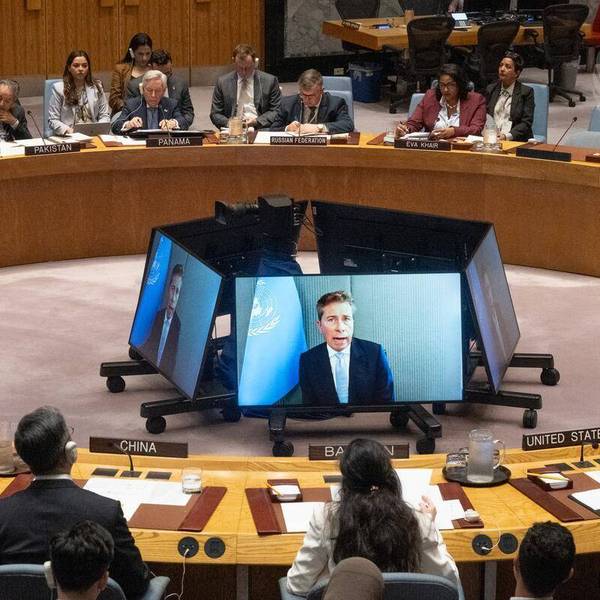
"Time is short and the situation is dire," warned Qu at the United Nations Security Council on 19 May.
Dear Common Dreams reader, It’s been nearly 30 years since I co-founded Common Dreams with my late wife, Lina Newhouser. We had the radical notion that journalism should serve the public good, not corporate profits. It was clear to us from the outset what it would take to build such a project. No paid advertisements. No corporate sponsors. No millionaire publisher telling us what to think or do. Many people said we wouldn't last a year, but we proved those doubters wrong. Together with a tremendous team of journalists and dedicated staff, we built an independent media outlet free from the constraints of profits and corporate control. Our mission has always been simple: To inform. To inspire. To ignite change for the common good. Building Common Dreams was not easy. Our survival was never guaranteed. When you take on the most powerful forces—Wall Street greed, fossil fuel industry destruction, Big Tech lobbyists, and uber-rich oligarchs who have spent billions upon billions rigging the economy and democracy in their favor—the only bulwark you have is supporters who believe in your work. But here’s the urgent message from me today. It's never been this bad out there. And it's never been this hard to keep us going. At the very moment Common Dreams is most needed, the threats we face are intensifying. We need your support now more than ever. We don't accept corporate advertising and never will. We don't have a paywall because we don't think people should be blocked from critical news based on their ability to pay. Everything we do is funded by the donations of readers like you. When everyone does the little they can afford, we are strong. But if that support retreats or dries up, so do we. Will you donate now to make sure Common Dreams not only survives but thrives? —Craig Brown, Co-founder |
If the war in Ukraine, that was initiated three months ago, does not end, and without a reduction in the growing number of conflicts in other parts of the world, hunger will only continue to increase.
This data demonstrates the increasingly close relationship between conflicts, climate change, economic and financial crises, as well as energy and health problems, with the fight against hunger.
As rarely seen in recent history, issues related to agrifood systems and world food security are at the centre of global and regional debates and actions in the search of possible solutions to prevent the rapid worsening of world hunger as a result of war and other conflicts.
It also seeks to accelerate efforts to transform agrifood systems, to ensure inclusive and environmentally sound development and better nutrition.
"Peace is essential to protect people from hunger," FAO Director-General Qu Dongyu has repeatedly said at major world forums.
Ukraine is obviously the country most affected by the war because of the human suffering and the destruction of food supply and value chains.
However, the consequences of this conflict are also being felt by low-income and food-importing countries that depend on Russia and Ukraine for food, grain, fuel and fertilizer supplies, especially in Africa and Asia, as they face an unprecedented rise in food prices.
At the end of March, just over a month after the start of the war, on 24 February, food products increased by 12.6%, the highest increase since 1990, according to data from the Food and Agriculture Organization of the United Nations (FAO).
At the end of April, prices fell slightly; however, the prospects for the coming months are far from encouraging.
According to a recent study by FAO, World Food Programme (WFP), and other institutions, around 193 million people in 53 countries were already suffering from acute food insecurity and in need of very urgent assistance in 2021, almost 40 million more than in 2020.
It is expected that the figures will continue to increase in 2022 if wars and conflicts continue.
Afghanistan alone represents approximately 20 million people in this situation, half of its population, with very high figures also in Somalia, South Sudan and Yemen.
Wars and conflicts have pushed more than 139 million people in 24 countries into acute food insecurity; extreme weather events have been responsible for extreme hunger for another 23 million people in eight countries, while economic shocks have enormously affected 30 million people in 21 countries.
This data demonstrates the increasingly close relationship between conflicts, climate change, economic and financial crises, as well as energy and health problems, with the fight against hunger.
All this in a context already worsened by the effects of COVID-19 in recent years, which further aggravated the situation of people who numbered more than 800 million at the beginning of the pandemic. The effects of COVID-19 increased that figure by an additional 100 million, not to mention the problems of malnutrition that affect more than 3 billion people.
The war increased prices, especially of wheat, corn and oilseeds as well as fertilizers. These increases come on top of already high increases in the worst period of the COVID-19 pandemic.
Wheat export forecasts for Russia and Ukraine have been revised downwards, and while other players such as India and the European Union have increased their offers, solutions remain very limited, and prices are expected to remain high.
Countries likely to be most affected by their dependence on wheat imports from European countries at war include Egypt and Turkey, as well as several African countries such as Congo, Eritrea, Madagascar, Namibia, Somalia and Tanzania.
In addition, some countries that rely heavily on imported fertilizers from Russia are exporters of grains and high-value commodities such as Argentina, Bangladesh and Brazil.
To face this difficult reality for a group close to 60 countries, FAO is proposing at major international forums, such as the Group of Seven (G7) meeting in Stuttgart, Germany, this month, the creation of a global Food Financing Fund.
This Fund would be designed to help the most affected countries cope with rising food prices and thus contribute to alleviating the situation of 1.8 billion people.
To guarantee greater market transparency, this specialized agency of the United Nations, together with the countries of the Group of 20 (G20), is promoting the strengthening and expansion of the Agricultural Market Information System (AMIS).
It is an inter-agency platform designed to improve the transparency of food markets, established in 2011 by the world's most powerful countries following the global food price increases of 2007-2008 and 2010.
At the same time, the aim is to support Ukrainian rural families with rapid action to enable them to cultivate crops in time for the harvest that begins in the coming months, which represents an essential source of income for the country's 12 million rural inhabitants, almost a third of its population.
This involves, for example, distributing potato-planting inputs for to thousands of Ukrainian producers in at least 10 provinces and making targeted economic transfers.
Addressing these dramatically growing emergencies, investing in the healthier, more nutritious and equitable agrifood systems, applying science and innovation more intensely to these processes, and reducing food losses can solve the food situation of hundreds of millions of people.
"Time is short and the situation is dire," warned Qu at the United Nations Security Council on 19 May.
If the war in Ukraine, that was initiated three months ago, does not end, and without a reduction in the growing number of conflicts in other parts of the world, hunger will only continue to increase.
This data demonstrates the increasingly close relationship between conflicts, climate change, economic and financial crises, as well as energy and health problems, with the fight against hunger.
As rarely seen in recent history, issues related to agrifood systems and world food security are at the centre of global and regional debates and actions in the search of possible solutions to prevent the rapid worsening of world hunger as a result of war and other conflicts.
It also seeks to accelerate efforts to transform agrifood systems, to ensure inclusive and environmentally sound development and better nutrition.
"Peace is essential to protect people from hunger," FAO Director-General Qu Dongyu has repeatedly said at major world forums.
Ukraine is obviously the country most affected by the war because of the human suffering and the destruction of food supply and value chains.
However, the consequences of this conflict are also being felt by low-income and food-importing countries that depend on Russia and Ukraine for food, grain, fuel and fertilizer supplies, especially in Africa and Asia, as they face an unprecedented rise in food prices.
At the end of March, just over a month after the start of the war, on 24 February, food products increased by 12.6%, the highest increase since 1990, according to data from the Food and Agriculture Organization of the United Nations (FAO).
At the end of April, prices fell slightly; however, the prospects for the coming months are far from encouraging.
According to a recent study by FAO, World Food Programme (WFP), and other institutions, around 193 million people in 53 countries were already suffering from acute food insecurity and in need of very urgent assistance in 2021, almost 40 million more than in 2020.
It is expected that the figures will continue to increase in 2022 if wars and conflicts continue.
Afghanistan alone represents approximately 20 million people in this situation, half of its population, with very high figures also in Somalia, South Sudan and Yemen.
Wars and conflicts have pushed more than 139 million people in 24 countries into acute food insecurity; extreme weather events have been responsible for extreme hunger for another 23 million people in eight countries, while economic shocks have enormously affected 30 million people in 21 countries.
This data demonstrates the increasingly close relationship between conflicts, climate change, economic and financial crises, as well as energy and health problems, with the fight against hunger.
All this in a context already worsened by the effects of COVID-19 in recent years, which further aggravated the situation of people who numbered more than 800 million at the beginning of the pandemic. The effects of COVID-19 increased that figure by an additional 100 million, not to mention the problems of malnutrition that affect more than 3 billion people.
The war increased prices, especially of wheat, corn and oilseeds as well as fertilizers. These increases come on top of already high increases in the worst period of the COVID-19 pandemic.
Wheat export forecasts for Russia and Ukraine have been revised downwards, and while other players such as India and the European Union have increased their offers, solutions remain very limited, and prices are expected to remain high.
Countries likely to be most affected by their dependence on wheat imports from European countries at war include Egypt and Turkey, as well as several African countries such as Congo, Eritrea, Madagascar, Namibia, Somalia and Tanzania.
In addition, some countries that rely heavily on imported fertilizers from Russia are exporters of grains and high-value commodities such as Argentina, Bangladesh and Brazil.
To face this difficult reality for a group close to 60 countries, FAO is proposing at major international forums, such as the Group of Seven (G7) meeting in Stuttgart, Germany, this month, the creation of a global Food Financing Fund.
This Fund would be designed to help the most affected countries cope with rising food prices and thus contribute to alleviating the situation of 1.8 billion people.
To guarantee greater market transparency, this specialized agency of the United Nations, together with the countries of the Group of 20 (G20), is promoting the strengthening and expansion of the Agricultural Market Information System (AMIS).
It is an inter-agency platform designed to improve the transparency of food markets, established in 2011 by the world's most powerful countries following the global food price increases of 2007-2008 and 2010.
At the same time, the aim is to support Ukrainian rural families with rapid action to enable them to cultivate crops in time for the harvest that begins in the coming months, which represents an essential source of income for the country's 12 million rural inhabitants, almost a third of its population.
This involves, for example, distributing potato-planting inputs for to thousands of Ukrainian producers in at least 10 provinces and making targeted economic transfers.
Addressing these dramatically growing emergencies, investing in the healthier, more nutritious and equitable agrifood systems, applying science and innovation more intensely to these processes, and reducing food losses can solve the food situation of hundreds of millions of people.
"Time is short and the situation is dire," warned Qu at the United Nations Security Council on 19 May.