SUBSCRIBE TO OUR FREE NEWSLETTER
Daily news & progressive opinion—funded by the people, not the corporations—delivered straight to your inbox.
5
#000000
#FFFFFF
To donate by check, phone, or other method, see our More Ways to Give page.
Daily news & progressive opinion—funded by the people, not the corporations—delivered straight to your inbox.
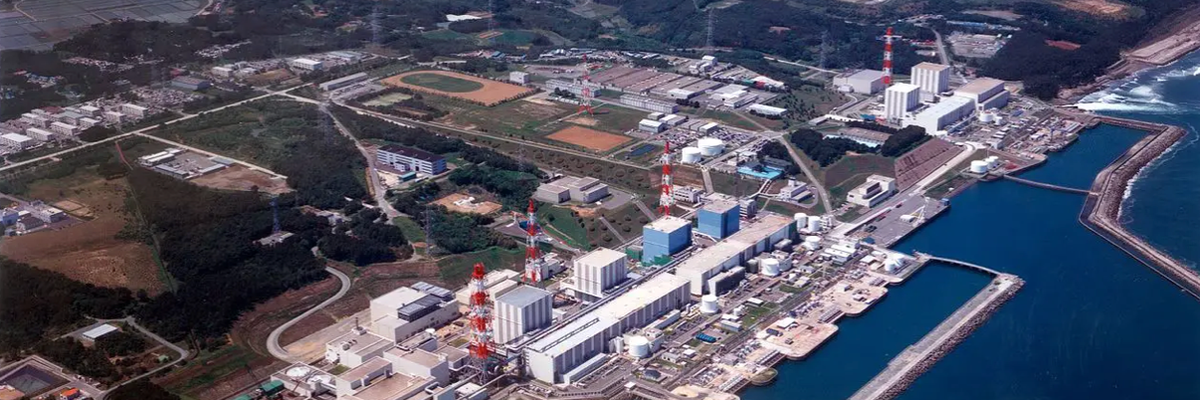
Fukushima Daiichi Nuclear Power Station. (Photo: IAEA Imagebank via Wikimedia Commons)
A decade later, the footage of the dramatic hydrogen explosions in the Fukushima Daiichi nuclear power plant, broadcast live on television--and the subsequent disruptions to livelihoods, ecosystems, and economic activities--still reverberate.
Amid a looming climate crisis and a desperate need to curb emissions, analyzing the costs, risks and benefits of nuclear energy cannot be more timely and relevant.
In the wake of the Chernobyl nuclear disaster in 1986, several new nuclear safety institutions such as the World Association of Nuclear Operators and the Convention on Nuclear Safety were created. Nevertheless, the West-based nuclear industry used an "us and them" pretext to mask some of the intrinsic and global flaws in nuclear safety practices, asserting that an accident like Chernobyl, caused by flawed technology and operational practices, could never happen within their own national borders. Then came Fukushima, a catastrophe that flipped such a narrative on its head and exposed the nuclear industry's limitations in understanding the risks of the so-called "beyond design basis accidents."
Amid a looming climate crisis and a desperate need to curb emissions, analyzing the costs, risks and benefits of nuclear energy cannot be more timely and relevant. If the global expansion of nuclear energy to address climate change is inevitable, how can we prevent, or at least mitigate, the effects of the next nuclear accident or disaster? If nuclear accidents are no longer unimaginable, can we accept the inevitability of future nuclear accidents and focus our efforts just as much on mitigation as accident prevention?
Providing coherent and credible answers to these questions in a polarized and opinionated world is not easy. Nevertheless, this is a task we took on when we organized "Nuclear Safety and Security after Chernobyl and Fukushima: Lessons learned and forgotten," a three-day international conference hosted by the Project on Managing the Atom at the Harvard Kennedy School of Government.
This commentary series is more than just a distillate of the views that were presented during the conference by some of the world's leading thinkers, scholars and practitioners on the 10th anniversary of Fukushima. It is a call for action, for change, and for a genuine collective engagement.
As our experts share in this series, the lessons learned and forgotten from past nuclear disasters are many. But, broadly speaking, they can be placed under four themes:
First, the impacts of nuclear accidents should not be measured quantitatively alone. Quantitative measures such as the number of fatalities or deaths per kilowatt hour are not only inappropriate, they are incomplete and unethical. The lingering human suffering resulting from forced dislocation and resettlement due to the destruction of human habitats and ecosystems ought to be fully appreciated and accounted for.
Third, it is vitally important to strike a balance between sharing information and harmonizing practices and approaches, while also developing and preserving country-specific ways of thinking about safety and security. Yet, these shared accountability mechanisms should not dilute national, organizational and individual accountability.
Finally, an aphorism bears repeating: A nuclear accident anywhere is an accident everywhere. Countries tend to assert that an accident could never happen within their own national borders because of differences in technological or institutional designs. When we embrace narratives of national exceptionalism, we lose opportunities to learn lessons from each other and set ourselves up for future catastrophe.
We hope that the commentaries presented here will inspire renewed and creative reflection on the future of nuclear safety and the governance of nuclear technologies.
Editor's note: This collection was produced in a collaboration between the Project on Managing the Atom at Harvard Kennedy School and the Bulletin.
This country and this world are at a monumental crossroads. US voters have an opportunity to beat back the forces of fascism and confront the billionaires who are rigging the economy, our media system, and our democracy, making it increasingly impossible for ordinary people to get by. We’re not just talking about the election. We’re talking about what must be done once these fascist elements are vanquished from power. We need a bolder set of solutions than what either major party has so far been willing to offer and a working-class movement ready to fight like hell for it. Trump didn't emerge from nowhere. The conditions that fueled MAGA authoritarianism were created by decades of radical neoliberal economic policies and a corrupt political system dominated by corporate interests. They slashed taxes on the super-rich, promising that the benefits would trickle down. They said giveaways to the corporate titans would make life more affordable for the rest of us. It was all bullshit. And when a bitter, betrayed populace searches for someone to blame, right-wing demagogues have little trouble finding scapegoats. People know when they're being lied to, but you won't hear any of this from the corporate media. Only independent journalism—powered and funded by people who believe in building a better world—can deliver truly trustworthy daily news. If you share our vision, please contribute whatever you can to sustain our work. |
A decade later, the footage of the dramatic hydrogen explosions in the Fukushima Daiichi nuclear power plant, broadcast live on television--and the subsequent disruptions to livelihoods, ecosystems, and economic activities--still reverberate.
Amid a looming climate crisis and a desperate need to curb emissions, analyzing the costs, risks and benefits of nuclear energy cannot be more timely and relevant.
In the wake of the Chernobyl nuclear disaster in 1986, several new nuclear safety institutions such as the World Association of Nuclear Operators and the Convention on Nuclear Safety were created. Nevertheless, the West-based nuclear industry used an "us and them" pretext to mask some of the intrinsic and global flaws in nuclear safety practices, asserting that an accident like Chernobyl, caused by flawed technology and operational practices, could never happen within their own national borders. Then came Fukushima, a catastrophe that flipped such a narrative on its head and exposed the nuclear industry's limitations in understanding the risks of the so-called "beyond design basis accidents."
Amid a looming climate crisis and a desperate need to curb emissions, analyzing the costs, risks and benefits of nuclear energy cannot be more timely and relevant. If the global expansion of nuclear energy to address climate change is inevitable, how can we prevent, or at least mitigate, the effects of the next nuclear accident or disaster? If nuclear accidents are no longer unimaginable, can we accept the inevitability of future nuclear accidents and focus our efforts just as much on mitigation as accident prevention?
Providing coherent and credible answers to these questions in a polarized and opinionated world is not easy. Nevertheless, this is a task we took on when we organized "Nuclear Safety and Security after Chernobyl and Fukushima: Lessons learned and forgotten," a three-day international conference hosted by the Project on Managing the Atom at the Harvard Kennedy School of Government.
This commentary series is more than just a distillate of the views that were presented during the conference by some of the world's leading thinkers, scholars and practitioners on the 10th anniversary of Fukushima. It is a call for action, for change, and for a genuine collective engagement.
As our experts share in this series, the lessons learned and forgotten from past nuclear disasters are many. But, broadly speaking, they can be placed under four themes:
First, the impacts of nuclear accidents should not be measured quantitatively alone. Quantitative measures such as the number of fatalities or deaths per kilowatt hour are not only inappropriate, they are incomplete and unethical. The lingering human suffering resulting from forced dislocation and resettlement due to the destruction of human habitats and ecosystems ought to be fully appreciated and accounted for.
Third, it is vitally important to strike a balance between sharing information and harmonizing practices and approaches, while also developing and preserving country-specific ways of thinking about safety and security. Yet, these shared accountability mechanisms should not dilute national, organizational and individual accountability.
Finally, an aphorism bears repeating: A nuclear accident anywhere is an accident everywhere. Countries tend to assert that an accident could never happen within their own national borders because of differences in technological or institutional designs. When we embrace narratives of national exceptionalism, we lose opportunities to learn lessons from each other and set ourselves up for future catastrophe.
We hope that the commentaries presented here will inspire renewed and creative reflection on the future of nuclear safety and the governance of nuclear technologies.
Editor's note: This collection was produced in a collaboration between the Project on Managing the Atom at Harvard Kennedy School and the Bulletin.