SUBSCRIBE TO OUR FREE NEWSLETTER
Daily news & progressive opinion—funded by the people, not the corporations—delivered straight to your inbox.
5
#000000
#FFFFFF
To donate by check, phone, or other method, see our More Ways to Give page.


Daily news & progressive opinion—funded by the people, not the corporations—delivered straight to your inbox.

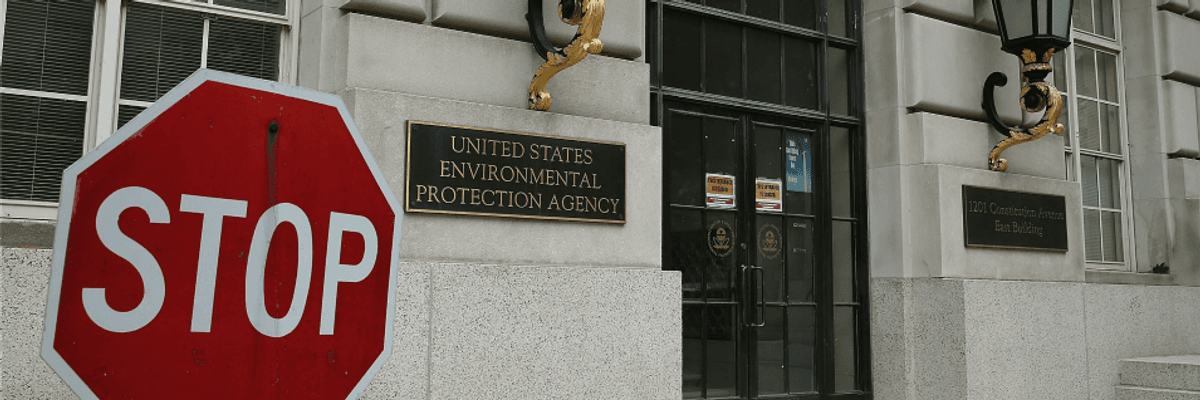
When you can't do good science, you can't base your public health regulations--your pesticide bans, your pollution controls, your clean water rules, and whatever else--on good science. (Photo: Mark Wilson/Getty Images)
The Trump EPA wants to introduce a new rule: Its scientists can only use studies that make all of their data public.
The new proposal is crafted to sound like a win for transparency, which is supposed to be a good thing. In reality, the rule will significantly harm public health -- and loosen the reins on polluters.
And that, of course, is the idea.
Let me explain. I am a graduate student in sociology, a social science. I study people, which means I collect some kind of data about them. For any scientist who studies people, transparency is important -- but so is confidentiality.
Any basic research ethics class includes famous cases of unethical research on people that occurred in the not too distant past. So now, our institutions carefully review each study on people to ensure they are ethical.
Ethical research requires providing participants with enough information that they can give informed consent to participate. It means not taking advantage of vulnerable populations (like prison inmates or mental health patients), minimizing any risk of harm that might come to the people you are studying as much as possible, and disclosing any risk before they agree to participate.
In my case, that means that in any study I've done, I've promised my participants confidentiality.
With their permission, I might quote them in a publication using a fake name, but only if I can do so in a way that won't allow anyone to identify them. I don't want anything they tell me to be used to harm them back in their communities.
In the case of the new EPA rules, the information collected in public health studies can be even more intimate. When scientists study the effects of pollution on people's health, they may confidentially review people's private medical records. Obviously, these records should not be made public.
When a researcher cannot promise confidentiality, the quality of their research suffers. Fewer people may be willing to participate, which might harm the reliability of the results. Those who do will be less open.
How can we trust studies in which all of the data is not made public? Often, some of the data is made public, or at least made available to others in certain circumstances (such as by request).
Additionally, science is not an individual endeavor. Communities of scientists in each field work together to advance the knowledge within that field. Any new study will be picked apart by everyone who reads it, because that's what we do to each other. Others will try to replicate your findings--and if they can't, your conclusions will be called into question.
It's rough on the ego, but it's good for science.
Dismissing any study that does not make its data public, on the other hand--particularly when that data has a good reason to remain confidential, like medical data--serves to harm science, not help it.
And when you can't do good science, you can't base your public health regulations--your pesticide bans, your pollution controls, your clean water rules, and whatever else--on good science.
Given the track record of the Trump administration on the environment so far, it's far more plausible that this proposal is intended to eliminate necessary public health regulations, not to promote transparency.
Dear Common Dreams reader, It’s been nearly 30 years since I co-founded Common Dreams with my late wife, Lina Newhouser. We had the radical notion that journalism should serve the public good, not corporate profits. It was clear to us from the outset what it would take to build such a project. No paid advertisements. No corporate sponsors. No millionaire publisher telling us what to think or do. Many people said we wouldn't last a year, but we proved those doubters wrong. Together with a tremendous team of journalists and dedicated staff, we built an independent media outlet free from the constraints of profits and corporate control. Our mission has always been simple: To inform. To inspire. To ignite change for the common good. Building Common Dreams was not easy. Our survival was never guaranteed. When you take on the most powerful forces—Wall Street greed, fossil fuel industry destruction, Big Tech lobbyists, and uber-rich oligarchs who have spent billions upon billions rigging the economy and democracy in their favor—the only bulwark you have is supporters who believe in your work. But here’s the urgent message from me today. It's never been this bad out there. And it's never been this hard to keep us going. At the very moment Common Dreams is most needed, the threats we face are intensifying. We need your support now more than ever. We don't accept corporate advertising and never will. We don't have a paywall because we don't think people should be blocked from critical news based on their ability to pay. Everything we do is funded by the donations of readers like you. When everyone does the little they can afford, we are strong. But if that support retreats or dries up, so do we. Will you donate now to make sure Common Dreams not only survives but thrives? —Craig Brown, Co-founder |
The Trump EPA wants to introduce a new rule: Its scientists can only use studies that make all of their data public.
The new proposal is crafted to sound like a win for transparency, which is supposed to be a good thing. In reality, the rule will significantly harm public health -- and loosen the reins on polluters.
And that, of course, is the idea.
Let me explain. I am a graduate student in sociology, a social science. I study people, which means I collect some kind of data about them. For any scientist who studies people, transparency is important -- but so is confidentiality.
Any basic research ethics class includes famous cases of unethical research on people that occurred in the not too distant past. So now, our institutions carefully review each study on people to ensure they are ethical.
Ethical research requires providing participants with enough information that they can give informed consent to participate. It means not taking advantage of vulnerable populations (like prison inmates or mental health patients), minimizing any risk of harm that might come to the people you are studying as much as possible, and disclosing any risk before they agree to participate.
In my case, that means that in any study I've done, I've promised my participants confidentiality.
With their permission, I might quote them in a publication using a fake name, but only if I can do so in a way that won't allow anyone to identify them. I don't want anything they tell me to be used to harm them back in their communities.
In the case of the new EPA rules, the information collected in public health studies can be even more intimate. When scientists study the effects of pollution on people's health, they may confidentially review people's private medical records. Obviously, these records should not be made public.
When a researcher cannot promise confidentiality, the quality of their research suffers. Fewer people may be willing to participate, which might harm the reliability of the results. Those who do will be less open.
How can we trust studies in which all of the data is not made public? Often, some of the data is made public, or at least made available to others in certain circumstances (such as by request).
Additionally, science is not an individual endeavor. Communities of scientists in each field work together to advance the knowledge within that field. Any new study will be picked apart by everyone who reads it, because that's what we do to each other. Others will try to replicate your findings--and if they can't, your conclusions will be called into question.
It's rough on the ego, but it's good for science.
Dismissing any study that does not make its data public, on the other hand--particularly when that data has a good reason to remain confidential, like medical data--serves to harm science, not help it.
And when you can't do good science, you can't base your public health regulations--your pesticide bans, your pollution controls, your clean water rules, and whatever else--on good science.
Given the track record of the Trump administration on the environment so far, it's far more plausible that this proposal is intended to eliminate necessary public health regulations, not to promote transparency.

The Trump EPA wants to introduce a new rule: Its scientists can only use studies that make all of their data public.
The new proposal is crafted to sound like a win for transparency, which is supposed to be a good thing. In reality, the rule will significantly harm public health -- and loosen the reins on polluters.
And that, of course, is the idea.
Let me explain. I am a graduate student in sociology, a social science. I study people, which means I collect some kind of data about them. For any scientist who studies people, transparency is important -- but so is confidentiality.
Any basic research ethics class includes famous cases of unethical research on people that occurred in the not too distant past. So now, our institutions carefully review each study on people to ensure they are ethical.
Ethical research requires providing participants with enough information that they can give informed consent to participate. It means not taking advantage of vulnerable populations (like prison inmates or mental health patients), minimizing any risk of harm that might come to the people you are studying as much as possible, and disclosing any risk before they agree to participate.
In my case, that means that in any study I've done, I've promised my participants confidentiality.
With their permission, I might quote them in a publication using a fake name, but only if I can do so in a way that won't allow anyone to identify them. I don't want anything they tell me to be used to harm them back in their communities.
In the case of the new EPA rules, the information collected in public health studies can be even more intimate. When scientists study the effects of pollution on people's health, they may confidentially review people's private medical records. Obviously, these records should not be made public.
When a researcher cannot promise confidentiality, the quality of their research suffers. Fewer people may be willing to participate, which might harm the reliability of the results. Those who do will be less open.
How can we trust studies in which all of the data is not made public? Often, some of the data is made public, or at least made available to others in certain circumstances (such as by request).
Additionally, science is not an individual endeavor. Communities of scientists in each field work together to advance the knowledge within that field. Any new study will be picked apart by everyone who reads it, because that's what we do to each other. Others will try to replicate your findings--and if they can't, your conclusions will be called into question.
It's rough on the ego, but it's good for science.
Dismissing any study that does not make its data public, on the other hand--particularly when that data has a good reason to remain confidential, like medical data--serves to harm science, not help it.
And when you can't do good science, you can't base your public health regulations--your pesticide bans, your pollution controls, your clean water rules, and whatever else--on good science.
Given the track record of the Trump administration on the environment so far, it's far more plausible that this proposal is intended to eliminate necessary public health regulations, not to promote transparency.