SUBSCRIBE TO OUR FREE NEWSLETTER
Daily news & progressive opinion—funded by the people, not the corporations—delivered straight to your inbox.
5
#000000
#FFFFFF
To donate by check, phone, or other method, see our More Ways to Give page.
Daily news & progressive opinion—funded by the people, not the corporations—delivered straight to your inbox.
Hillary Clinton won't be the only winner when Donald Trump and his fellow haters are defeated on Election Day (as looks increasingly likely). Another will be Paul Ryan, who will rule the Republican roost.
Democrats may take back the Senate but they won't take back the House. Gerrymandering has given House Republicans an impregnable fortress of safe seats.
This means that in order for President Hillary Clinton to get anything done, she'll have to make deals with Speaker Paul Ryan.
Hillary Clinton won't be the only winner when Donald Trump and his fellow haters are defeated on Election Day (as looks increasingly likely). Another will be Paul Ryan, who will rule the Republican roost.
Democrats may take back the Senate but they won't take back the House. Gerrymandering has given House Republicans an impregnable fortress of safe seats.
This means that in order for President Hillary Clinton to get anything done, she'll have to make deals with Speaker Paul Ryan.
While the Clinton-Ryan years won't be marked by the same kind of petulant gridlock we've witnessed over the last eight, the ascendance of Ryan and Clinton will mark a win for big business and Wall Street over the strongest anti-establishment surge America has witnessed since Great Depression.
Clinton might be able to summon Ryan's support on a "Buffet rule" for the highest-income taxpayers - an effective minimum tax of 30 percent on top incomes. She might also be able to wangle some additional spending on infrastructure and paid family leave.
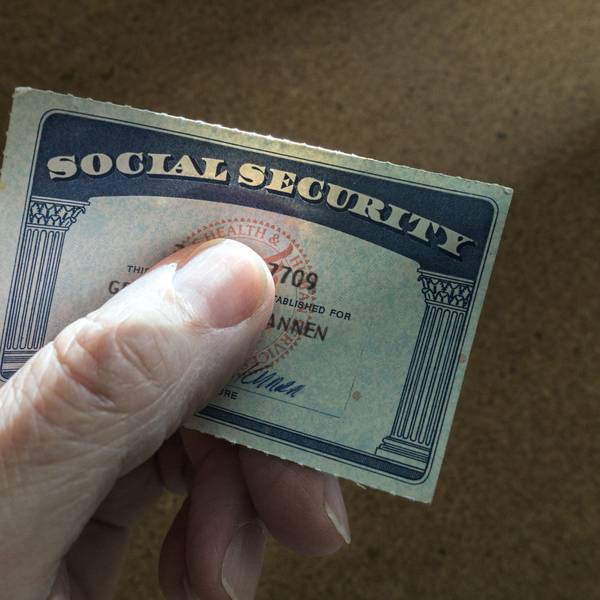
But the price Ryan can be expected to exact will be lower corporate tax rates, along with a tax amnesty on corporate profits repatriated to the United States. And to offset the added spending and tax cuts, Ryan will probably want Clinton to trim Social Security (perhaps reviving the terrible idea of a "chained" CPI for determining cost of living increases), and slow the growth of Medicare.
None of this will do much to remedy the central economic challenge of our era - reversing the declining incomes and wealth of most Americans.
Although incomes rose in 2015, the typical household is still worse off today than it was in 2000, adjusted for inflation. The assets of the typical family today are worth 14 percent less than the assets of the typical family in 1984. And the typical job is less secure than at any time since the Great Depression.
These trends are not sustainable - neither economically nor politically. They generated the fury that's undergirded Trump's ugly campaign, and fueled the anger that propelled Bernie Sanders's insurgency.
They've fed a growing sense that the political-economic system is rigged in favor of those at the top.
And it is. Big money has corrupted our democracy, resulting in laws and rules that systematically favor big corporations, Wall Street, and the very rich over everyone else.
Consider, for example, the growing market power of leading pharmaceutical companies, private health insurers, the biggest Wall Street banks, giant cable providers, four major airlines, and five largest high-tech companies. And the decreasing market power of unions.
The resulting imbalance is transferring money out of the pockets of average Americans directly into the pockets of major shareholders and top executives.
A similar upward distribution is occurring through bankruptcy laws that allow giant corporations and billionaires to avoid paying what they owe, yet don't allow average people overburdened with mortgage or student debt to renegotiate those obligations.
Mandatory arbitration clauses in contracts with giant corporations are forcing people to give up rights under a wide variety of consumer and employment laws. Meanwhile, workers classified as "independent contractors" are losing whatever rights they once had under the nation's labor laws.
In all these respects, the American political economy has become radically imbalanced.
The reforms Hillary Clinton and Paul Ryan are likely to agree to are miniscule compared with the scale of this imbalance.
Hopefully, the leaders of big business and Wall Street - the true winners of the 2016 election - will realize that although they avoided Trump's authoritarian populism and Sanders's "political revolution" this time around, they won't for much longer.
The forces that gave rise to both will grow unless our political economy is rebalanced to work for everyone and not just for those at the top.
There is precedent. In the first decades of the twentieth century, enlightened business leaders joined with progressive reformers to rebalance American capitalism - thereby rescuing it from the savage inequalities and corruption of the Gilded Age.
If they understand what happened in the 2016 election, enlightened business leaders will do so once again.
Dear Common Dreams reader, It’s been nearly 30 years since I co-founded Common Dreams with my late wife, Lina Newhouser. We had the radical notion that journalism should serve the public good, not corporate profits. It was clear to us from the outset what it would take to build such a project. No paid advertisements. No corporate sponsors. No millionaire publisher telling us what to think or do. Many people said we wouldn't last a year, but we proved those doubters wrong. Together with a tremendous team of journalists and dedicated staff, we built an independent media outlet free from the constraints of profits and corporate control. Our mission has always been simple: To inform. To inspire. To ignite change for the common good. Building Common Dreams was not easy. Our survival was never guaranteed. When you take on the most powerful forces—Wall Street greed, fossil fuel industry destruction, Big Tech lobbyists, and uber-rich oligarchs who have spent billions upon billions rigging the economy and democracy in their favor—the only bulwark you have is supporters who believe in your work. But here’s the urgent message from me today. It's never been this bad out there. And it's never been this hard to keep us going. At the very moment Common Dreams is most needed, the threats we face are intensifying. We need your support now more than ever. We don't accept corporate advertising and never will. We don't have a paywall because we don't think people should be blocked from critical news based on their ability to pay. Everything we do is funded by the donations of readers like you. When everyone does the little they can afford, we are strong. But if that support retreats or dries up, so do we. Will you donate now to make sure Common Dreams not only survives but thrives? —Craig Brown, Co-founder |
Hillary Clinton won't be the only winner when Donald Trump and his fellow haters are defeated on Election Day (as looks increasingly likely). Another will be Paul Ryan, who will rule the Republican roost.
Democrats may take back the Senate but they won't take back the House. Gerrymandering has given House Republicans an impregnable fortress of safe seats.
This means that in order for President Hillary Clinton to get anything done, she'll have to make deals with Speaker Paul Ryan.
While the Clinton-Ryan years won't be marked by the same kind of petulant gridlock we've witnessed over the last eight, the ascendance of Ryan and Clinton will mark a win for big business and Wall Street over the strongest anti-establishment surge America has witnessed since Great Depression.
Clinton might be able to summon Ryan's support on a "Buffet rule" for the highest-income taxpayers - an effective minimum tax of 30 percent on top incomes. She might also be able to wangle some additional spending on infrastructure and paid family leave.
But the price Ryan can be expected to exact will be lower corporate tax rates, along with a tax amnesty on corporate profits repatriated to the United States. And to offset the added spending and tax cuts, Ryan will probably want Clinton to trim Social Security (perhaps reviving the terrible idea of a "chained" CPI for determining cost of living increases), and slow the growth of Medicare.
None of this will do much to remedy the central economic challenge of our era - reversing the declining incomes and wealth of most Americans.
Although incomes rose in 2015, the typical household is still worse off today than it was in 2000, adjusted for inflation. The assets of the typical family today are worth 14 percent less than the assets of the typical family in 1984. And the typical job is less secure than at any time since the Great Depression.
These trends are not sustainable - neither economically nor politically. They generated the fury that's undergirded Trump's ugly campaign, and fueled the anger that propelled Bernie Sanders's insurgency.
They've fed a growing sense that the political-economic system is rigged in favor of those at the top.
And it is. Big money has corrupted our democracy, resulting in laws and rules that systematically favor big corporations, Wall Street, and the very rich over everyone else.
Consider, for example, the growing market power of leading pharmaceutical companies, private health insurers, the biggest Wall Street banks, giant cable providers, four major airlines, and five largest high-tech companies. And the decreasing market power of unions.
The resulting imbalance is transferring money out of the pockets of average Americans directly into the pockets of major shareholders and top executives.
A similar upward distribution is occurring through bankruptcy laws that allow giant corporations and billionaires to avoid paying what they owe, yet don't allow average people overburdened with mortgage or student debt to renegotiate those obligations.
Mandatory arbitration clauses in contracts with giant corporations are forcing people to give up rights under a wide variety of consumer and employment laws. Meanwhile, workers classified as "independent contractors" are losing whatever rights they once had under the nation's labor laws.
In all these respects, the American political economy has become radically imbalanced.
The reforms Hillary Clinton and Paul Ryan are likely to agree to are miniscule compared with the scale of this imbalance.
Hopefully, the leaders of big business and Wall Street - the true winners of the 2016 election - will realize that although they avoided Trump's authoritarian populism and Sanders's "political revolution" this time around, they won't for much longer.
The forces that gave rise to both will grow unless our political economy is rebalanced to work for everyone and not just for those at the top.
There is precedent. In the first decades of the twentieth century, enlightened business leaders joined with progressive reformers to rebalance American capitalism - thereby rescuing it from the savage inequalities and corruption of the Gilded Age.
If they understand what happened in the 2016 election, enlightened business leaders will do so once again.
Hillary Clinton won't be the only winner when Donald Trump and his fellow haters are defeated on Election Day (as looks increasingly likely). Another will be Paul Ryan, who will rule the Republican roost.
Democrats may take back the Senate but they won't take back the House. Gerrymandering has given House Republicans an impregnable fortress of safe seats.
This means that in order for President Hillary Clinton to get anything done, she'll have to make deals with Speaker Paul Ryan.
While the Clinton-Ryan years won't be marked by the same kind of petulant gridlock we've witnessed over the last eight, the ascendance of Ryan and Clinton will mark a win for big business and Wall Street over the strongest anti-establishment surge America has witnessed since Great Depression.
Clinton might be able to summon Ryan's support on a "Buffet rule" for the highest-income taxpayers - an effective minimum tax of 30 percent on top incomes. She might also be able to wangle some additional spending on infrastructure and paid family leave.
But the price Ryan can be expected to exact will be lower corporate tax rates, along with a tax amnesty on corporate profits repatriated to the United States. And to offset the added spending and tax cuts, Ryan will probably want Clinton to trim Social Security (perhaps reviving the terrible idea of a "chained" CPI for determining cost of living increases), and slow the growth of Medicare.
None of this will do much to remedy the central economic challenge of our era - reversing the declining incomes and wealth of most Americans.
Although incomes rose in 2015, the typical household is still worse off today than it was in 2000, adjusted for inflation. The assets of the typical family today are worth 14 percent less than the assets of the typical family in 1984. And the typical job is less secure than at any time since the Great Depression.
These trends are not sustainable - neither economically nor politically. They generated the fury that's undergirded Trump's ugly campaign, and fueled the anger that propelled Bernie Sanders's insurgency.
They've fed a growing sense that the political-economic system is rigged in favor of those at the top.
And it is. Big money has corrupted our democracy, resulting in laws and rules that systematically favor big corporations, Wall Street, and the very rich over everyone else.
Consider, for example, the growing market power of leading pharmaceutical companies, private health insurers, the biggest Wall Street banks, giant cable providers, four major airlines, and five largest high-tech companies. And the decreasing market power of unions.
The resulting imbalance is transferring money out of the pockets of average Americans directly into the pockets of major shareholders and top executives.
A similar upward distribution is occurring through bankruptcy laws that allow giant corporations and billionaires to avoid paying what they owe, yet don't allow average people overburdened with mortgage or student debt to renegotiate those obligations.
Mandatory arbitration clauses in contracts with giant corporations are forcing people to give up rights under a wide variety of consumer and employment laws. Meanwhile, workers classified as "independent contractors" are losing whatever rights they once had under the nation's labor laws.
In all these respects, the American political economy has become radically imbalanced.
The reforms Hillary Clinton and Paul Ryan are likely to agree to are miniscule compared with the scale of this imbalance.
Hopefully, the leaders of big business and Wall Street - the true winners of the 2016 election - will realize that although they avoided Trump's authoritarian populism and Sanders's "political revolution" this time around, they won't for much longer.
The forces that gave rise to both will grow unless our political economy is rebalanced to work for everyone and not just for those at the top.
There is precedent. In the first decades of the twentieth century, enlightened business leaders joined with progressive reformers to rebalance American capitalism - thereby rescuing it from the savage inequalities and corruption of the Gilded Age.
If they understand what happened in the 2016 election, enlightened business leaders will do so once again.