SUBSCRIBE TO OUR FREE NEWSLETTER
Daily news & progressive opinion—funded by the people, not the corporations—delivered straight to your inbox.
5
#000000
#FFFFFF
To donate by check, phone, or other method, see our More Ways to Give page.
Daily news & progressive opinion—funded by the people, not the corporations—delivered straight to your inbox.
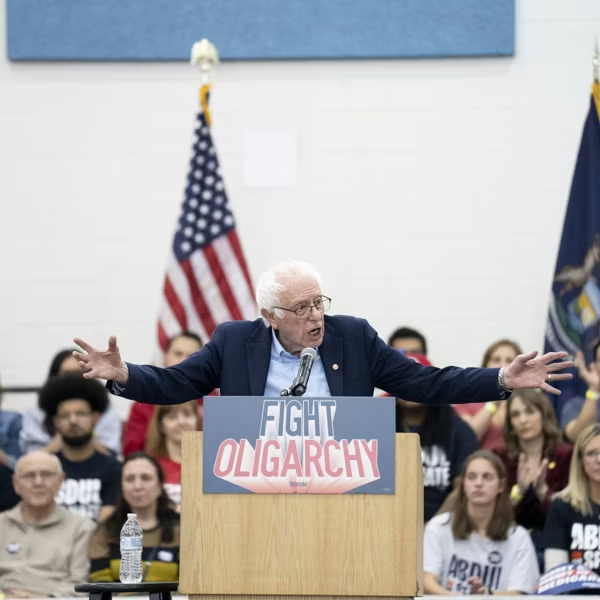
Bernie Sanders may eventually get flattened like a proverbial pancake by the Hillary Clinton juggernaut. Still, for the time being, at least, he's not only drawing increasingly large and enthusiastic crowds to his rallies, but it was also announced on August 10 that he had landed his first major labor endorsement, being embraced by the 185,000-member NNU (National Nurses United).
Founded in 2009 and led by its charismatic executive director, Rose Ann DeMoro, the AFL-CIO-affiliated NNU is regarded as one of the country's most progressive and visionary unions. Partnering with the equally progressive and visionary Vermont senator seems like a marriage made in Heaven.
Not only does the endorsement give Sanders the impetus he needs at this stage in the campaign, but declaring this early puts the spotlight squarely on the NNU. Everyone is paying attention. Indeed, in the coming months, union endorsements, big and small, will become so plentiful, you'll need a score sheet to keep track.
Of course, given the presumed cozy relationship between organized labor and the Democratic Party, learning that a Democrat (even a "dark horse" candidate like Sanders) has received an endorsement from a union isn't exactly breaking news. But the NNU isn't your "typical" labor union.
While its membership (185,000) is a fraction of the size of the Teamsters or SEIU, credibility, innovation, and talent-wise, it is regarded as a "comer." As far as the labor movement goes, who knows? This modest NNU endorsement could grow legs and give Bernie Sanders some much-needed momentum.
But let's not get carried away here. Once Hillary Clinton shifts into high gear and begins accepting suitors, Sanders will have to brace himself for an onslaught. Clinton is expected to extract blood oaths from organized labor's royal family—big-time unions from both federations, the AFL-CIO and Change to Win.
Still, labor endorsements can be unpredictable. Just because you're a big, bad union doesn't mean you have commensurate electoral muscle. To make a dent in an election, you need not only many members but also to agree with your endorsement and be willing to vote.
In 1980 and again in 1984, the Teamsters shocked everyone by endorsing the Republican Ronald Reagan, a move that outraged the House of Labor and freaked out much of the old-time Teamster membership. Granted, there were reports of backroom political intrigue involved, stories of Teamster President Jackie Presser being an FBI fink, but in the end, the Teamster endorsement of a Republican confused the issue more than settled it.
Being relatively newly formed, what the NNU seems to have in its favor is a healthy, infectious sense of optimism and solidarity. Alas, that's not always the case with unions. In 1988, you saw "Bush-Quayle '88" bumper stickers on cars in the parking lots of UAW auto plants, even though the United Auto Workers had officially endorsed Michael Dukakis.
Speaking of 1988, it was Dick Gephardt who won the Iowa Caucus that year, having been proudly viewed as "labor's candidate." When 2004 rolled around, he had once again lined up an impressive number of labor endorsements, including the Longshoremen, PACE, Steelworkers, and Machinists, along with a dozen other big-name national unions. It was an impressive roster.
Despite the endorsements, Gephardt finished a distant fourth in Iowa, behind John Kerry, John Edwards, and Howard Dean. He beat only Dennis Kucinich and Wesley Clark. A day later, he withdrew from the primary.
But the NNU's endorsement is significant news. Given the union's progressive reputation and willingness to lead the charge early, this could be a big deal for Sanders. Just look back at the humble beginnings of Barack Obama's presidential campaign. It's all about momentum.
Dear Common Dreams reader, It’s been nearly 30 years since I co-founded Common Dreams with my late wife, Lina Newhouser. We had the radical notion that journalism should serve the public good, not corporate profits. It was clear to us from the outset what it would take to build such a project. No paid advertisements. No corporate sponsors. No millionaire publisher telling us what to think or do. Many people said we wouldn't last a year, but we proved those doubters wrong. Together with a tremendous team of journalists and dedicated staff, we built an independent media outlet free from the constraints of profits and corporate control. Our mission has always been simple: To inform. To inspire. To ignite change for the common good. Building Common Dreams was not easy. Our survival was never guaranteed. When you take on the most powerful forces—Wall Street greed, fossil fuel industry destruction, Big Tech lobbyists, and uber-rich oligarchs who have spent billions upon billions rigging the economy and democracy in their favor—the only bulwark you have is supporters who believe in your work. But here’s the urgent message from me today. It's never been this bad out there. And it's never been this hard to keep us going. At the very moment Common Dreams is most needed, the threats we face are intensifying. We need your support now more than ever. We don't accept corporate advertising and never will. We don't have a paywall because we don't think people should be blocked from critical news based on their ability to pay. Everything we do is funded by the donations of readers like you. When everyone does the little they can afford, we are strong. But if that support retreats or dries up, so do we. Will you donate now to make sure Common Dreams not only survives but thrives? —Craig Brown, Co-founder |
Bernie Sanders may eventually get flattened like a proverbial pancake by the Hillary Clinton juggernaut. Still, for the time being, at least, he's not only drawing increasingly large and enthusiastic crowds to his rallies, but it was also announced on August 10 that he had landed his first major labor endorsement, being embraced by the 185,000-member NNU (National Nurses United).
Founded in 2009 and led by its charismatic executive director, Rose Ann DeMoro, the AFL-CIO-affiliated NNU is regarded as one of the country's most progressive and visionary unions. Partnering with the equally progressive and visionary Vermont senator seems like a marriage made in Heaven.
Not only does the endorsement give Sanders the impetus he needs at this stage in the campaign, but declaring this early puts the spotlight squarely on the NNU. Everyone is paying attention. Indeed, in the coming months, union endorsements, big and small, will become so plentiful, you'll need a score sheet to keep track.
Of course, given the presumed cozy relationship between organized labor and the Democratic Party, learning that a Democrat (even a "dark horse" candidate like Sanders) has received an endorsement from a union isn't exactly breaking news. But the NNU isn't your "typical" labor union.
While its membership (185,000) is a fraction of the size of the Teamsters or SEIU, credibility, innovation, and talent-wise, it is regarded as a "comer." As far as the labor movement goes, who knows? This modest NNU endorsement could grow legs and give Bernie Sanders some much-needed momentum.
But let's not get carried away here. Once Hillary Clinton shifts into high gear and begins accepting suitors, Sanders will have to brace himself for an onslaught. Clinton is expected to extract blood oaths from organized labor's royal family—big-time unions from both federations, the AFL-CIO and Change to Win.
Still, labor endorsements can be unpredictable. Just because you're a big, bad union doesn't mean you have commensurate electoral muscle. To make a dent in an election, you need not only many members but also to agree with your endorsement and be willing to vote.
In 1980 and again in 1984, the Teamsters shocked everyone by endorsing the Republican Ronald Reagan, a move that outraged the House of Labor and freaked out much of the old-time Teamster membership. Granted, there were reports of backroom political intrigue involved, stories of Teamster President Jackie Presser being an FBI fink, but in the end, the Teamster endorsement of a Republican confused the issue more than settled it.
Being relatively newly formed, what the NNU seems to have in its favor is a healthy, infectious sense of optimism and solidarity. Alas, that's not always the case with unions. In 1988, you saw "Bush-Quayle '88" bumper stickers on cars in the parking lots of UAW auto plants, even though the United Auto Workers had officially endorsed Michael Dukakis.
Speaking of 1988, it was Dick Gephardt who won the Iowa Caucus that year, having been proudly viewed as "labor's candidate." When 2004 rolled around, he had once again lined up an impressive number of labor endorsements, including the Longshoremen, PACE, Steelworkers, and Machinists, along with a dozen other big-name national unions. It was an impressive roster.
Despite the endorsements, Gephardt finished a distant fourth in Iowa, behind John Kerry, John Edwards, and Howard Dean. He beat only Dennis Kucinich and Wesley Clark. A day later, he withdrew from the primary.
But the NNU's endorsement is significant news. Given the union's progressive reputation and willingness to lead the charge early, this could be a big deal for Sanders. Just look back at the humble beginnings of Barack Obama's presidential campaign. It's all about momentum.
Bernie Sanders may eventually get flattened like a proverbial pancake by the Hillary Clinton juggernaut. Still, for the time being, at least, he's not only drawing increasingly large and enthusiastic crowds to his rallies, but it was also announced on August 10 that he had landed his first major labor endorsement, being embraced by the 185,000-member NNU (National Nurses United).
Founded in 2009 and led by its charismatic executive director, Rose Ann DeMoro, the AFL-CIO-affiliated NNU is regarded as one of the country's most progressive and visionary unions. Partnering with the equally progressive and visionary Vermont senator seems like a marriage made in Heaven.
Not only does the endorsement give Sanders the impetus he needs at this stage in the campaign, but declaring this early puts the spotlight squarely on the NNU. Everyone is paying attention. Indeed, in the coming months, union endorsements, big and small, will become so plentiful, you'll need a score sheet to keep track.
Of course, given the presumed cozy relationship between organized labor and the Democratic Party, learning that a Democrat (even a "dark horse" candidate like Sanders) has received an endorsement from a union isn't exactly breaking news. But the NNU isn't your "typical" labor union.
While its membership (185,000) is a fraction of the size of the Teamsters or SEIU, credibility, innovation, and talent-wise, it is regarded as a "comer." As far as the labor movement goes, who knows? This modest NNU endorsement could grow legs and give Bernie Sanders some much-needed momentum.
But let's not get carried away here. Once Hillary Clinton shifts into high gear and begins accepting suitors, Sanders will have to brace himself for an onslaught. Clinton is expected to extract blood oaths from organized labor's royal family—big-time unions from both federations, the AFL-CIO and Change to Win.
Still, labor endorsements can be unpredictable. Just because you're a big, bad union doesn't mean you have commensurate electoral muscle. To make a dent in an election, you need not only many members but also to agree with your endorsement and be willing to vote.
In 1980 and again in 1984, the Teamsters shocked everyone by endorsing the Republican Ronald Reagan, a move that outraged the House of Labor and freaked out much of the old-time Teamster membership. Granted, there were reports of backroom political intrigue involved, stories of Teamster President Jackie Presser being an FBI fink, but in the end, the Teamster endorsement of a Republican confused the issue more than settled it.
Being relatively newly formed, what the NNU seems to have in its favor is a healthy, infectious sense of optimism and solidarity. Alas, that's not always the case with unions. In 1988, you saw "Bush-Quayle '88" bumper stickers on cars in the parking lots of UAW auto plants, even though the United Auto Workers had officially endorsed Michael Dukakis.
Speaking of 1988, it was Dick Gephardt who won the Iowa Caucus that year, having been proudly viewed as "labor's candidate." When 2004 rolled around, he had once again lined up an impressive number of labor endorsements, including the Longshoremen, PACE, Steelworkers, and Machinists, along with a dozen other big-name national unions. It was an impressive roster.
Despite the endorsements, Gephardt finished a distant fourth in Iowa, behind John Kerry, John Edwards, and Howard Dean. He beat only Dennis Kucinich and Wesley Clark. A day later, he withdrew from the primary.
But the NNU's endorsement is significant news. Given the union's progressive reputation and willingness to lead the charge early, this could be a big deal for Sanders. Just look back at the humble beginnings of Barack Obama's presidential campaign. It's all about momentum.