SUBSCRIBE TO OUR FREE NEWSLETTER
Daily news & progressive opinion—funded by the people, not the corporations—delivered straight to your inbox.
5
#000000
#FFFFFF
To donate by check, phone, or other method, see our More Ways to Give page.
This weekend, activist list-serves and web-sites were crackling with furious debate over whether or not progressives should be voting for President Obama this time around or helping to build a third party organization. For those in the latter camp, the list of the President's failures (and not just failures, but dreadful acts of commission) rendered support for him a perfidious moral choice. That indictment extended as well to the Congressional Democrats, who had a majority in 2009 and blew the chance to make constructive changes.
The take-away from the past four years, it was argued, is that the two mainstream parties are so completely dominated by corporate America that they are incapable of acting in the public interest. This perception is not simply confined to the third-party advocates. I suspect there are few readers on this web-site, who have not been stunned at times, and disappointed at how the 2008 mandate for "change" has been squandered.
The question remains: what should we be doing on the day after the election, no matter how it turns out?
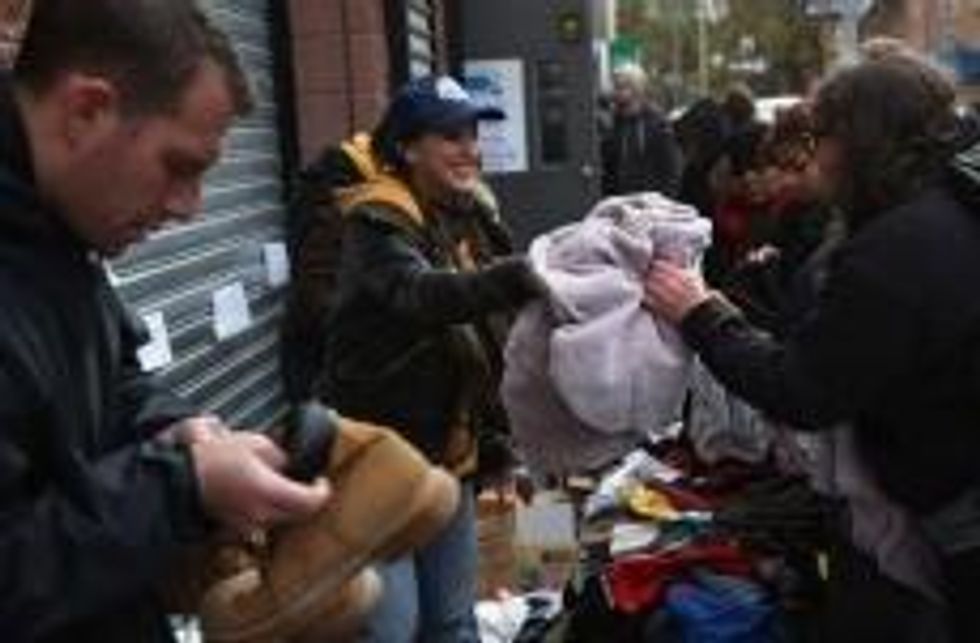
And from that standpoint, another aspect of this weekend seems relevant: the response to Hurricane Sandy. Here in Brooklyn, where most neighborhoods were unscathed and others severely damaged, volunteers and supplies have been pouring into makeshift centers run by Occupy Sandy and other grass-roots organizations. From our local PTAs, religious centers, and hastily formed groups of neighbors, people are anxious to help and are generous with their time. This is most reminiscent of the situation here after 9-11, when the dominant mood was one of helping fellow New Yorkers.
Such community mobilizations in the face of a local crisis are familiar. But it is useful to reflect on why this is the case. Unlike the situation in Afghanistan, the plight of people stranded in their Brooklyn apartments has been made real by the mass media and it is easy enough to identify with their plight. Furthermore, there is an obvious connection between the action taken and a positive result. I was struck with this yesterday when deciding how much peanut butter to purchase. With reasonable confidence that the food would be helpful to some particular families, it was sensible to buy more.
Significant social and political change will never be as simple as buying peanut butter. But as we ponder the lessons of the past four years, we can vent our fury at the mainstream parties and at fellow Americans who support them, or we can look for better ways of communicating and mobilizing new people. Corporate pressures notwithstanding, Republican and Democratic officials are responsive to popular opinion, when it is linked to visible resistance and activism. After November 6 this remains the challenge for the existing peace and social justice movements--building on the idealism and generosity that exists in our country, finding ways to make our concerns real even if the victims do not appear on television and devising forms of action, which offer a prospect of achievable results.
This weekend, activist list-serves and web-sites were crackling with furious debate over whether or not progressives should be voting for President Obama this time around or helping to build a third party organization. For those in the latter camp, the list of the President's failures (and not just failures, but dreadful acts of commission) rendered support for him a perfidious moral choice. That indictment extended as well to the Congressional Democrats, who had a majority in 2009 and blew the chance to make constructive changes.
The take-away from the past four years, it was argued, is that the two mainstream parties are so completely dominated by corporate America that they are incapable of acting in the public interest. This perception is not simply confined to the third-party advocates. I suspect there are few readers on this web-site, who have not been stunned at times, and disappointed at how the 2008 mandate for "change" has been squandered.
The question remains: what should we be doing on the day after the election, no matter how it turns out?
And from that standpoint, another aspect of this weekend seems relevant: the response to Hurricane Sandy. Here in Brooklyn, where most neighborhoods were unscathed and others severely damaged, volunteers and supplies have been pouring into makeshift centers run by Occupy Sandy and other grass-roots organizations. From our local PTAs, religious centers, and hastily formed groups of neighbors, people are anxious to help and are generous with their time. This is most reminiscent of the situation here after 9-11, when the dominant mood was one of helping fellow New Yorkers.
Such community mobilizations in the face of a local crisis are familiar. But it is useful to reflect on why this is the case. Unlike the situation in Afghanistan, the plight of people stranded in their Brooklyn apartments has been made real by the mass media and it is easy enough to identify with their plight. Furthermore, there is an obvious connection between the action taken and a positive result. I was struck with this yesterday when deciding how much peanut butter to purchase. With reasonable confidence that the food would be helpful to some particular families, it was sensible to buy more.
Significant social and political change will never be as simple as buying peanut butter. But as we ponder the lessons of the past four years, we can vent our fury at the mainstream parties and at fellow Americans who support them, or we can look for better ways of communicating and mobilizing new people. Corporate pressures notwithstanding, Republican and Democratic officials are responsive to popular opinion, when it is linked to visible resistance and activism. After November 6 this remains the challenge for the existing peace and social justice movements--building on the idealism and generosity that exists in our country, finding ways to make our concerns real even if the victims do not appear on television and devising forms of action, which offer a prospect of achievable results.
This weekend, activist list-serves and web-sites were crackling with furious debate over whether or not progressives should be voting for President Obama this time around or helping to build a third party organization. For those in the latter camp, the list of the President's failures (and not just failures, but dreadful acts of commission) rendered support for him a perfidious moral choice. That indictment extended as well to the Congressional Democrats, who had a majority in 2009 and blew the chance to make constructive changes.
The take-away from the past four years, it was argued, is that the two mainstream parties are so completely dominated by corporate America that they are incapable of acting in the public interest. This perception is not simply confined to the third-party advocates. I suspect there are few readers on this web-site, who have not been stunned at times, and disappointed at how the 2008 mandate for "change" has been squandered.
The question remains: what should we be doing on the day after the election, no matter how it turns out?
And from that standpoint, another aspect of this weekend seems relevant: the response to Hurricane Sandy. Here in Brooklyn, where most neighborhoods were unscathed and others severely damaged, volunteers and supplies have been pouring into makeshift centers run by Occupy Sandy and other grass-roots organizations. From our local PTAs, religious centers, and hastily formed groups of neighbors, people are anxious to help and are generous with their time. This is most reminiscent of the situation here after 9-11, when the dominant mood was one of helping fellow New Yorkers.
Such community mobilizations in the face of a local crisis are familiar. But it is useful to reflect on why this is the case. Unlike the situation in Afghanistan, the plight of people stranded in their Brooklyn apartments has been made real by the mass media and it is easy enough to identify with their plight. Furthermore, there is an obvious connection between the action taken and a positive result. I was struck with this yesterday when deciding how much peanut butter to purchase. With reasonable confidence that the food would be helpful to some particular families, it was sensible to buy more.
Significant social and political change will never be as simple as buying peanut butter. But as we ponder the lessons of the past four years, we can vent our fury at the mainstream parties and at fellow Americans who support them, or we can look for better ways of communicating and mobilizing new people. Corporate pressures notwithstanding, Republican and Democratic officials are responsive to popular opinion, when it is linked to visible resistance and activism. After November 6 this remains the challenge for the existing peace and social justice movements--building on the idealism and generosity that exists in our country, finding ways to make our concerns real even if the victims do not appear on television and devising forms of action, which offer a prospect of achievable results.