
SUBSCRIBE TO OUR FREE NEWSLETTER
Daily news & progressive opinion—funded by the people, not the corporations—delivered straight to your inbox.
5
#000000
#FFFFFF
To donate by check, phone, or other method, see our More Ways to Give page.


Daily news & progressive opinion—funded by the people, not the corporations—delivered straight to your inbox.
Viktor Orbán and Fidesz' loss in the April 2026 elections serves as a warning to right-wing autocrats that corruption, poverty and authoritarianism do not sell.
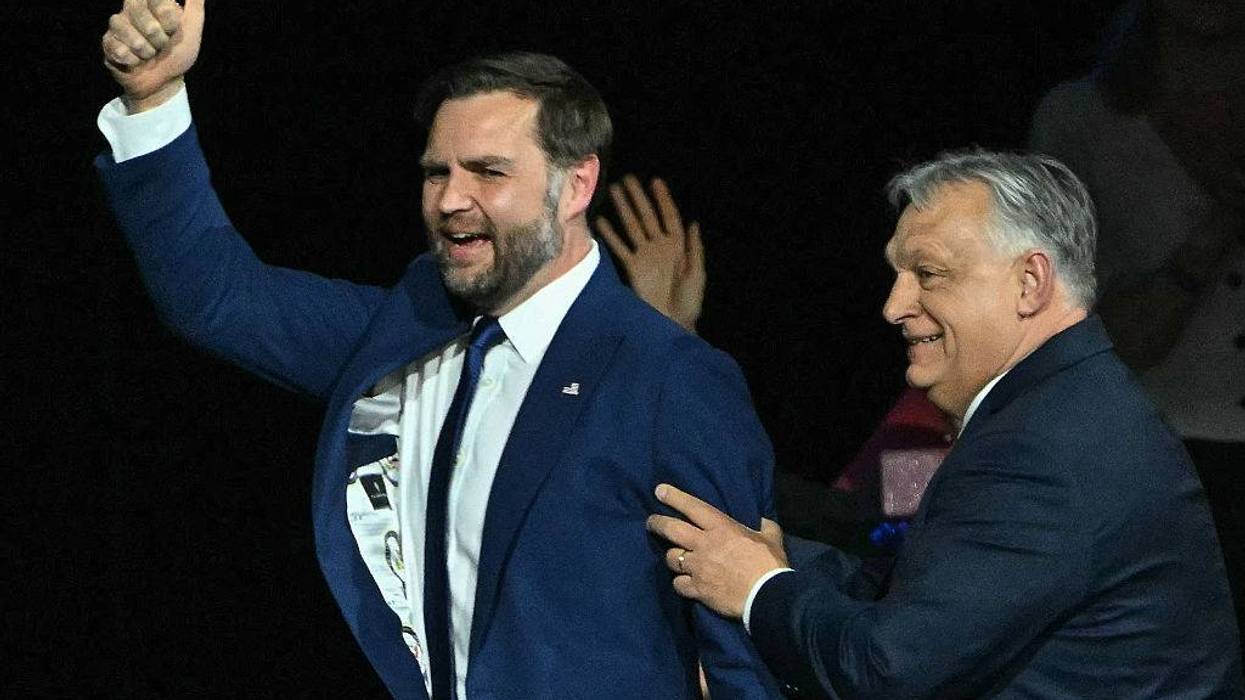
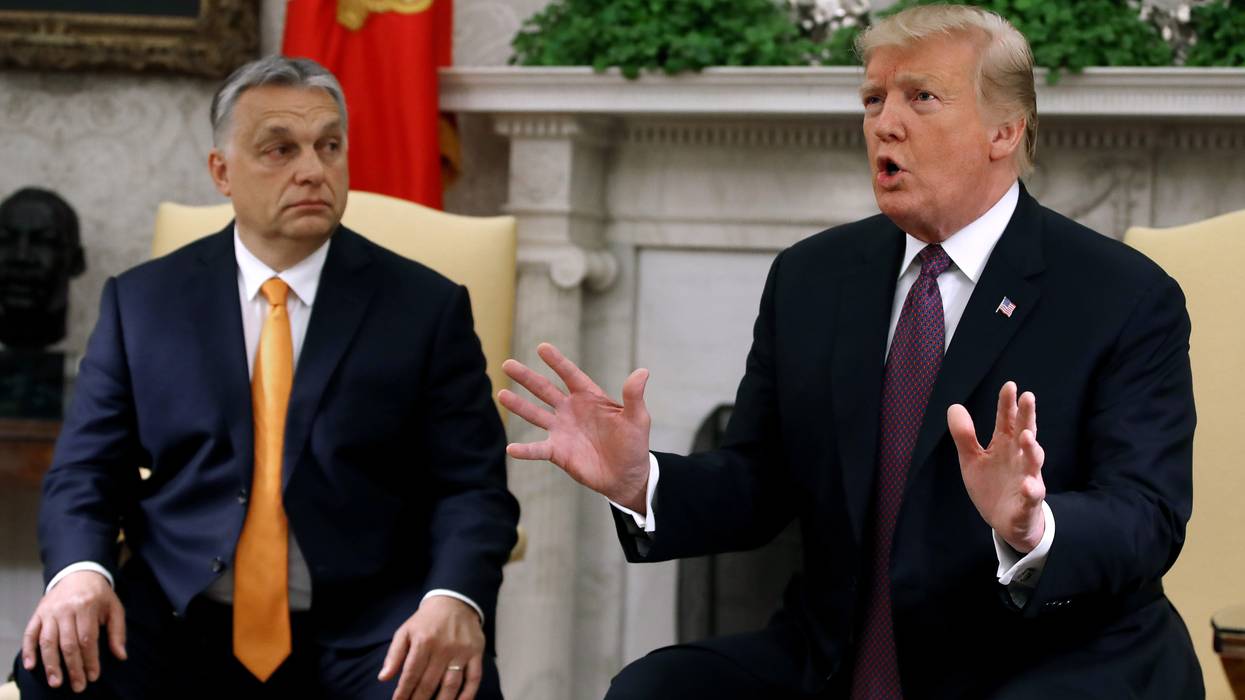
The defeat of Viktor Orbán and the Fidesz Party in Hungarian national elections on April 12 signaled a turning point for right-wing movements across Europe and in the United States. Orbán, having used quasilegal to tools control the electorate, enrich himself and his cronies, and align the country with Russian interests, was soundly beaten, with a centrist, Peter Magyar and the Tisza Party, winning a supermajority in parliament. Magyar promised to abandon the corrupt rule of Fidesz, its close ties to Russia, and its connections with the international MAGA movement. How could Orbán have failed so spectacularly; after all, US Presidnet Donald Trump put his influence on the line to support him by ordering Vice President JD Vance to appear at a Budapest rally on the eve of the elections?
Over 16 years Orbán had established stricter and stricter control over Hungarian society. He came to power on a wave of voter resentment over the 2008 global financial crisis that forced many people into poverty, and because of the belief that Hungary had lost sovereignty to European Union interests in Brussels. New laws enabled Fidesz to manipulate voting. Police actions and surveillance helped to intimidate alternative voices. Endemic corruption gave financial advantages to Fidesz politicians and their allies. The party used government-owned media to identify immigrants, minorities, and other enemies as threats to the traditional family as the foundation of society. Yet, in the end, Orbán’s turn away from Europe, toward Moscow, and against Ukraine in the war with Russia, along with a foundering economy, proved too much for Hungarian voters.
There had been almost universal support for democratic reforms among Hungarian voters after the collapse of the USSR. Throughout the 1990s the expat financier, George Soros, invested heavily in Eastern Europe to establish educational institutions and programs dedicated to human rights, in particular in Hungary. Eventually, however, Fidesz politicians came to accuse Soros of being part of a “globalist” conspiracy to control the country. The conflict between the vision of Orbán for authoritarian rule and that of people like Soros for an “Open Society” gained traction in the run-up to the April 2024 election. The catastrophic loss of Fidesz in the elections has now triggered concern among right-wing politicians across Europe—and in the MAGA movement in the US—that voters have finally rejected their heavy-handed, authoritarian rule.
A symbol of the bankruptcy of socialism was the East German Trabant, an automobile with a smoke-belching two-cycle engine made available for the working class consumer. Before the Wall fell in November 1989 in Berlin, pro-democracy movements had opened the borders in Hungary and Poland. East Germans, as yet unable to travel directly to the West, drove some 20,000 Trabants into Budapest, abandoned them with their keys in the ignition for anyone to claim, and took trains to Vienna and thence to the Federal Republic of Germany to reunite with friends and family.
In general, the Orbán-Putin-MAGA countries underperform the world in life expectancy and infant mortality.
In sharp contrast with the clunky, polluting Trabants were nascent institutions of democracy, some of which were supported by George Soros. Soros (b. 1930) has become the bugaboo of right-wing ideologues and antisemites who are convinced he represents an international conspiracy of bankers, a conspiracy theory that Orbán brought to the fore in Hungarian elections. In the mid-1940s the Soros family used forged documents to escape the mass deportation of Jews from Hungary to the Auschwitz death camps as organized by Adolf Eichmann. Soros moved to London to pursue university, began work in finance, and developed highly successful hedge funds. Soros’ philanthropic efforts date to 1979 and the award of scholarships to Black South Africans under apartheid.
Soros established the Central European University (CEU) in 1991 to rebuild “open societies” in East Central Europe after the collapse of the USSR. He created the CEU “to foster critical thinking—which at that time was an alien concept” in socialist universities. He endowed CEU with $250 million in 2001. Soros’s vision was of a university dedicated to examining the contemporary challenges of "open societies” and human rights.
Soros also funded the Open Society Archive (OSA) from 1995. At the end of the Cold War, OSA secured the collections of the US-funded Radio Free Europe/Radio Liberty (RFE/RL) from its Munich offices. The archive, totaling over 3 kilometers of materials on the history of the Eastern Bloc, documented the murderous Soviet invasions of Hungary in 1956 and Czechoslovakia in 1968 during the so-called Prague Spring. The materials reveal the essence of the closed socialist system; the failure of central economic planning; the endemic corruption of party officials; and the damage to culture, literature, and the arts of ideological interference. Communist officials felt so threatened by RFE/RL that they bombed the Munich offices in 1981, injuring seven people and causing $1 million in damage. I was honored to receive one of the early OSA grants in 1996 to work in the Budapest archive—and consider the socialist detritus of Trabants.
Having quickly established an international reputation for academic excellence, CEU ran afoul of the illiberal Orbán regime because of its pro-democracy stances and pedagogy; CEU had opened leading women’s and environmental studies departments, for example. In the 2010s the government forced CEU into exile in Vienna as part of its effort to close civil society groups. Fidesz instead promoted culture wars through Christian, nationalist, anti-immigrant, and homophobic programs and propaganda that served as a template for similar political impulses as far away as the United States.
The attack on the CEU further resembled Russian President Vladimir Putin’s ongoing battle against scientific freedoms. After a brief period of reform and internationalization, the Kremlin centralized control over university curricula and personnel appointments. It has arrested researchers for public lectures under charges of treason for revealing “state secrets.” It opened offices of state security police, the FSB, on every campus. It is no coincidence that, in the battle against critical thinking, Trump and his allies are carrying out an assault on academic integrity by withholding funds, threatening academic programs that celebrate diversity, and insisting on teaching “patriot,” ahistorical education.
But incoming Hungarian Prime Minister Peter Magyar intends to reverse this heavy-handed interference. After the elections, he promised to end state funding of the Matthias Corvinus Collegium, a university breeding ground for elites aligned with the Fidesz political party whose faculty felt pressure to write promotional articles for Fidesz. He is seeking to rekindle Hungarian academic excellence to spur economic growth.
With a population of 9.5 million people, Hungary’s economy ranks much higher in global output than in population. The country’s high economic performance was noteworthy even under socialism with the NEM (New Economic Policy, 1968-1991), a turn to market mechanisms and away from central planning that led the country to outperform other economies in the socialist bloc, something called “Goulash Socialism.” But like Donald Trump who falsely claims that his policies enable the US economy to thrive in the growing, self-imposed isolation of tariffs and other questionable macroeconomic policies, Orbán came to power in part by condemning the global economic system that led to the 2008 financial crisis. He promised to overcome Hungary’s embarrassment at having to accept a €20 billion European bailout to avoid bankruptcy. He promised to break with the “liberal paradigm" and build a "sovereign" economy free from the EU dictates. These were strange claims given the fact that Hungary relies significantly on EU market access, EU investments and imported energy, and EU institutional rules that it uses as leverage for its economy.
After a brief recovery in the 2010s, owing precisely to the influx of foreign capital and EU funds, Hungary’s economy faltered. It stagnated because of underinvestment in education and innovation that led to stultified growth, and because of the sloughing off of benefits and privileges to party loyalists. The shocks of the Covid-19 pandemic, Russia’s invasion of Ukraine, an energy crisis, and growing conflict with the EU that led to the suspension of EU funds “were not the source of these problems but rather sharply exposed pre-existing structural weaknesses.” The practice of funneling contracts to friends, family, and chosen oligarchs, which resembles the selling of crypto and stock deals out of public view and the awarding of government contracts that are so prominent in the US under Trump and Russia under Putin, contributed to public disgust.
Growing poverty, the collapse of healthcare, and universal corruption damned Orbán to lose. In general, the Orbán-Putin-MAGA countries underperform the world in life expectancy and infant mortality. In Hungary severe doctor shortages due to emigration, longer patient waiting times, and shortages of such basic supplies as toilet paper turned off voters. To balance budgets on the poor, the country’s healthcare spending fell to among the lowest in the European Union. (In the US, ahead of the midterm elections in November, a healthcare crisis has unfolded. It is caused by MAGA policies that have sent costs skyrocketing, cut insurance programs, removed safety nets, forced people into bankruptcy, yet have seen industry profits increase to $54 billion in 2025. This has triggered backlash among voters.)
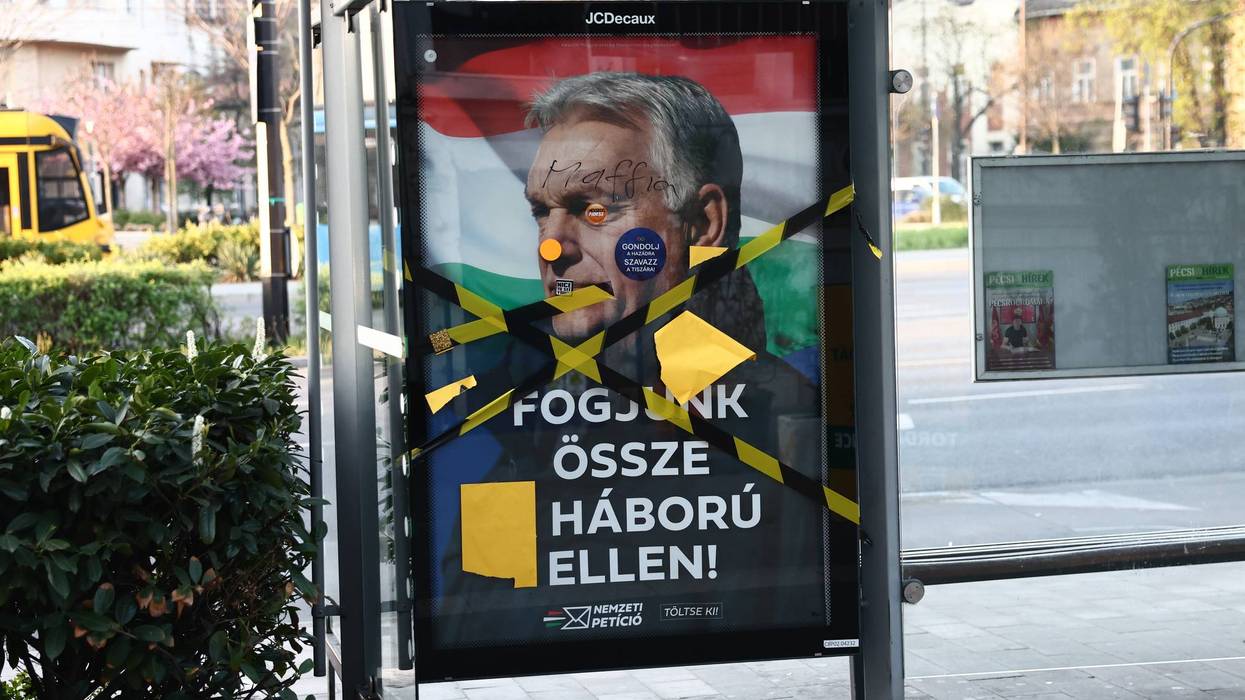
On top of rigging the electoral system, media, and economy to hold onto power, Orbán advanced a pro-family, anti-immigrant, and antisemitic message to cement his grip. Since 2013 Fidesz has used Soros’ face on billboards and in other campaign materials to suggest that the Jewish financier had a secret agenda to destroy Hungary. In 2026, the billboards carried the same messages, but with photographs of Ukrainian President Volodymyr Zelenskyy who is also of Jewish descent. Other rightists employ the same tactics. Putin accuses Jews of being godless people who try to tear apart the Russian Orthodox Church, and he frequently distorts the history of the Holocaust to lay some of the blame for Nazism on Jews. Trump has accused Jews of being disloyal; he calls bankers “Shylock” to tie them to the stereotype of the evil Jewish moneylender, Shylock, in Shakespeare’s Merchant of Venice; he consorts with racist, antisemitic extremists and claims that some Nazis are “good people”; and he calls Soros and other Jews “globalists,” a code word for claiming that they conspire to control the world’s economies. Trump seeks nothing less than the prosecution of Soros in US courts.
Like other illiberal societies, Fidesz has promulgated anti-LGBTQ legislation. In its rejection of human rights agendas advanced by Soros and others, the party claims to defend the family from decadence and immorality. In the early 2020s, Fidesz banned same-sex couples from adopting children, ended legal recognition of transgender people, and prohibited speech about homosexuality. The European Commission recently rejected these laws as contrary to the values set forth in the Treaty on European Union and the principle of non-discrimination in the Charter of Fundamental Rights of the EU. Not to be deterred, in March 2025 the government banned a Budapest Pride event and authorized city authorities to use facial recognition software to identify—and fine —participants. The parade drew 100,000 marchers—a harbinger of the election failure. All of this was in the name of championing the values of Christian civilization which were threatened by what Orbán called “gender madness.”
In all these ways Fidesz set an example for the feckless Trump who appoints MAGA loyalists as the heads of regulatory agencies and seeks the consolidation of major communications companies under sycophantic billionaire businessmen.
Putin had shown Orbán the way. In June 2013 the Russian parliament passed a law to punish LGBT individuals with fines and imprisonment for even speaking about “non-traditional” relationships. The law encouraged police to ignore rising violence against the community. In the US, conservative states have long agitated against equal rights for the LGBTQ community through laws limiting bathroom access, denying driver’s licenses, making hormonal therapy illegal, and other discriminatory practices. Under Trump the federal government has ratcheted anti-trans propaganda, misinformation, and discrimination; blocked gender-affirming care, stifled research; and banned trans people from serving in the military.
In its programs and initiatives, the Open Society organizations stand in solidarity with gays, lesbians, Roma, and other people. For George Soros this was a personal quest. “In every country I visited,” Soros recalled, “I saw the same pattern. Roma communities were denied access to decent housing, employment, healthcare, and education.” Pointedly, in 2023, Alex Soros, who succeeded his father as chair of Open Society, announced the launch of the Roma Foundation for Europe, supporting a new generation of Roma leaders working across the Western Balkans, Eastern Europe, Spain, Italy, and Germany.
If Soros and Fidesz had cooperated in the 1990s in the effort to rebuild Hungary from socialist stagnation, the relationship grew hostile after Orbán lost in 2002 elections. In the 2010s, after Orbán returned to office, Fidesz, with a two-thirds majority of seats in parliament, amended Hungary’s constitution to ensure future victories. In 2013 it passed rules to limit pre-election political advertising to broadcasters controlled by Orbán’s allies. Ownership of the media shifted to these oligarchs through inexpensive loans from state-owned banks that enabled them to buy up media outlets. The state, the biggest advertiser in Hungary’s media market, pulled advertising from outlets deemed hostile to Fidesz, starving them; for example, Klubradio was forced off air in 2021. State-controlled media spread absurd messages of fear that included the claim that Ukraine was ready to invade Hungary. They depicted Magyar “as a reckless enemy of peace, bent on dragging Hungary into the war in neighboring Ukraine.”
In all these ways Fidesz set an example for the feckless Trump who appoints MAGA loyalists as the heads of regulatory agencies and seeks the consolidation of major communications companies under sycophantic billionaire businessmen. He rails against fake news. Showing allegiance to Orbán, Putin, and other authoritarians, he attempted to shutter the Voice of America and RFE/RL, perhaps because they provide an alternative to Kremlin, Chinese, and other misinformation efforts. He tasked conspiracy theorist Kari Lake to cut programs; fire employees; and stop broadcast, investigation, and reporting activities. Overnight, such shows as “Current Time” that provided information beyond Kremlin control were cancelled and journalists were fired. In this way, Trump cemented Kremlin dominance of messages at home: Putin’s government controls six national TV networks, two national radio networks, two news agencies, two national newspapers, and over 60% of the remaining press.
In the end Orbán was unable to fix the recent election. A huge turnout of 74% of voters who were angry about failed economic policies and overly friendly ties with Russia—the nation that had murdered hundreds of Hungarians in the 1956 invasion—ensured a landside loss. When he was interviewed after his victory on the state-controlled M1 television network by a still-hostile newscaster, Magyar reprimanded her for spreading “lies” about his family and compared the channel’s coverage to propaganda from North Korea and Nazi-era Germany.
Illiberalism has had significant international ramifications, notably in bringing together such unlikely conservative bedfellows as Orbán, Putin, and Trump into the effort to foment rightist victories across the globe. The cast of international right-wing characters who endorsed Orbán did not help him to victory. The last minute, highly publicized visit by US Vice President JD Vance, and increasingly vocal endorsements from Trump on Truth Social, backfired with an electorate fed up with Orbán. He had become synonymous with democratic backsliding: a gangster-driven authoritarianism that weakened judicial independence, degraded media pluralism, entrenched patronage networks, and sought out repeated battles with Brussels, not only as a Hungarian leader but as “a transnational symbol for the authoritarian and nationalist right.” JD Vance parroted this litany of complaints about “bureaucrats in Brussels” trying to “destroy the economy of Hungary.”
Russian election interference, consisting of disinformation campaigns and direct financial support, has been far more dangerous, intrusive, and long-term. Between 2014 and 2022 Moscow spent over $300 million financing foreign political parties. As of 2023, more than 900 political parties and organizations in 19 European countries were promoting pro-Russian narratives, for example, the Alternative für Deutschland (AfD) party whose members sabotaged arms deliveries to Ukraine and seek to block military assistance to Kyiv. In addition, Putin hosts far-right gatherings and uses covert tools, threats, and violence to achieve foreign policy ends.
Against this history of the rise and fall of Hungarian socialism; the rise and fall of Hungarian illiberalism, Russian interference, and invasion; and the overlap of rightist groups and interests from Europe to the US, Orbán’s electoral failure may represent a turning point.
In exchange for Russian support, Orbán stalled Ukrainian EU accession negotiations. He blocked a €90 billion EU loan to Ukraine over the latter’s refusal to allow Russian oil to transit to Hungary through the Druzhba pipeline (recently opened). Russian front organizations produced memes, graphics, and videos for Hungarian social media that were designed to incite hostility between Hungary and Ukraine. A Kremlin-linked bot network, “Matryoshka,” shared fake posts on X that portrayed Orbán as “a peacemaker” and a victim of warlike Ukrainians. Even worse, reminiscent of Trump’s clumsy efforts to coerce Ukraine into providing “dirt” on his 2020 election opponent, Joe Biden, Hungarian Foreign Minister Péter Szijjártó established a hotline with Russian Foreign Minister Sergey Lavrov to give Moscow strategic information on critical EU issues. Szijjártó acted on behalf of the Kremlin to remove sanctioned oligarchs from EU blacklists. It appears that Orbán put his chips in with Putin and Chinas Xi Jinping because he believes that the European Union was doomed to collapse.
The rightist connections are deeply incestuous. Incoming Hungarian Prime Minister Péter Magyar accused Orbán of diverting taxpayer money to the US’ CPAC (Conservative Political Action Conference). Indeed, CPAC has “deep roots in Hungary,” its website is filled with positive reference to conservative Hungary, and it “stood firmly” with Orbán during the recent election campaign. CPACHungary spreads the same kind of disinformation as CPAC. Attempting to frighten Hungarian voters into thinking seeing the Tisza party as anti-Hungarian, CPACHungary claimed that “Brussels and Kiev may be on the side of Tisza, but Europe and the world stand by Viktor Orbán.” CPACHungary shares with CPAC anti-immigrant and homophobic positions, insisting that the “Hungarian right clearly stood in favor of border protection, family, and peace policies.”
But Hungarian voters had clearly had enough of the corrupt Fidesz regime. It did not help that Orbán and his circle had made money through corrupt deals, as became shockingly visible after the release of drone footage of Orbán’s estate with manicured gardens, underground garages, and zebras grazing on the grounds at a kind of Hungarian Mar-a-Lago, Hatvanpuszta. Orbán claimed it was his father’s property and had nothing to do with him or Fidesz.
With Orbán defeated, the potential for a return to Hungary’s commitments to the EU has been renewed. These commitments include a Hungarian vote on EU sanctions against Russia. Already a €90 billion EU loan to Ukraine has been approved, while a project between Orbán and Putin to build two Rosatom 1,200 megawatt reactors at Hungary’s Paks nuclear power plant on the basis of 40 year loans and technological dependencies—against EU and local interests—has been put on hold.
There has been an alternative vision to Fidesz illiberalism since the 1990s in the Open Society programs. For his efforts to support human rights, establish a new university, build a research archive on the history of socialist repressions, and create “open” institutions, George Soros has been nominated for the Nobel Peace Prize a number of times, including by former Soviet leader Mikhail Gorbachev. In 1992 Soros established the International Science Foundation (ISF) with a $100 million grant to support scientists in the former Soviet Union during economic and political crises that saw research programs collapse. Russian security agents tried to stop the ISF in the 1990s, claiming that the West (and a Jewish banker, Soros,) were buying Russian science on the cheap. In 2017, the Soros Open Society Foundations announced that he had transferred $18 billion for the future work of the foundations, bringing the total since 1984 to over $32 billion. These amounts likely make Soros the world’s most generous donor based on the percentage of his net worth donated.
Against this history of the rise and fall of Hungarian socialism; the rise and fall of Hungarian illiberalism, Russian interference, and invasion; and the overlap of rightist groups and interests from Europe to the US, Orbán’s electoral failure may represent a turning point. His loss in the April 2026 elections serves as a warning to right-wing autocrats that corruption, poverty and authoritarianism do not sell. Indeed, the Hungarian results may be a bellwether for the midterm elections in the US.
For us fighting democratic backsliding, this is exceedingly consequential. Orbán wrote the authoritarian playbook now being used by Donald Trump; the people’s playbook used to oust him is a critical case study to learn from.
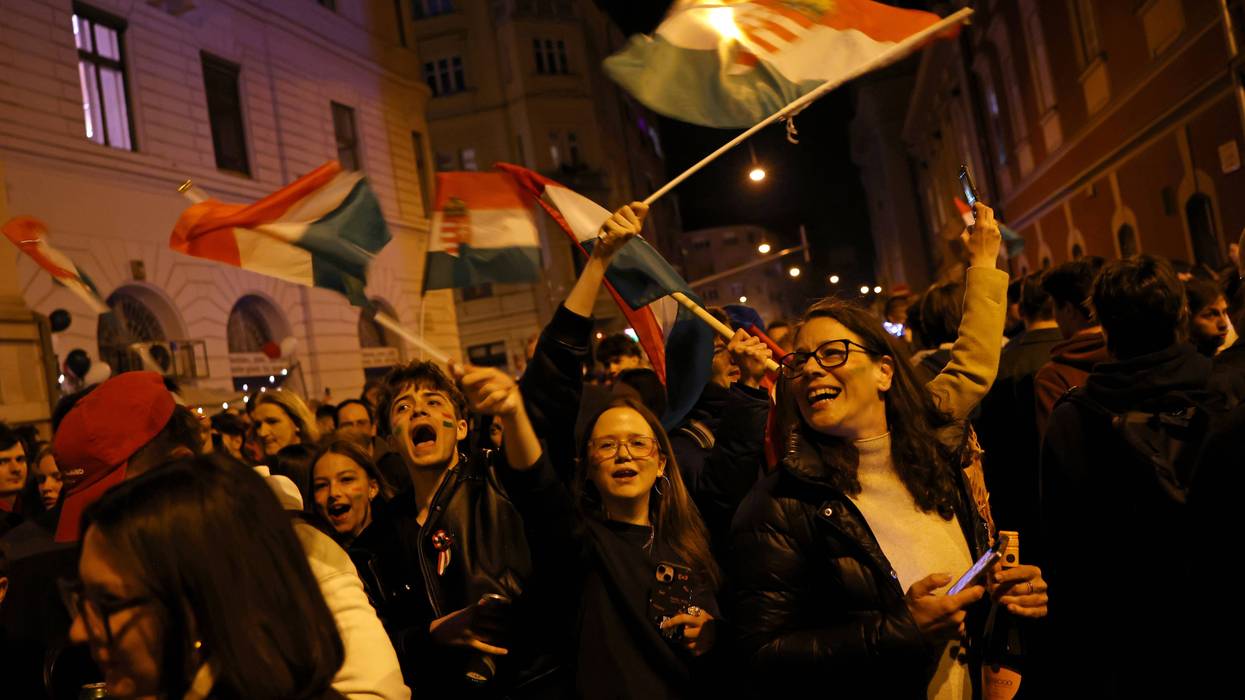
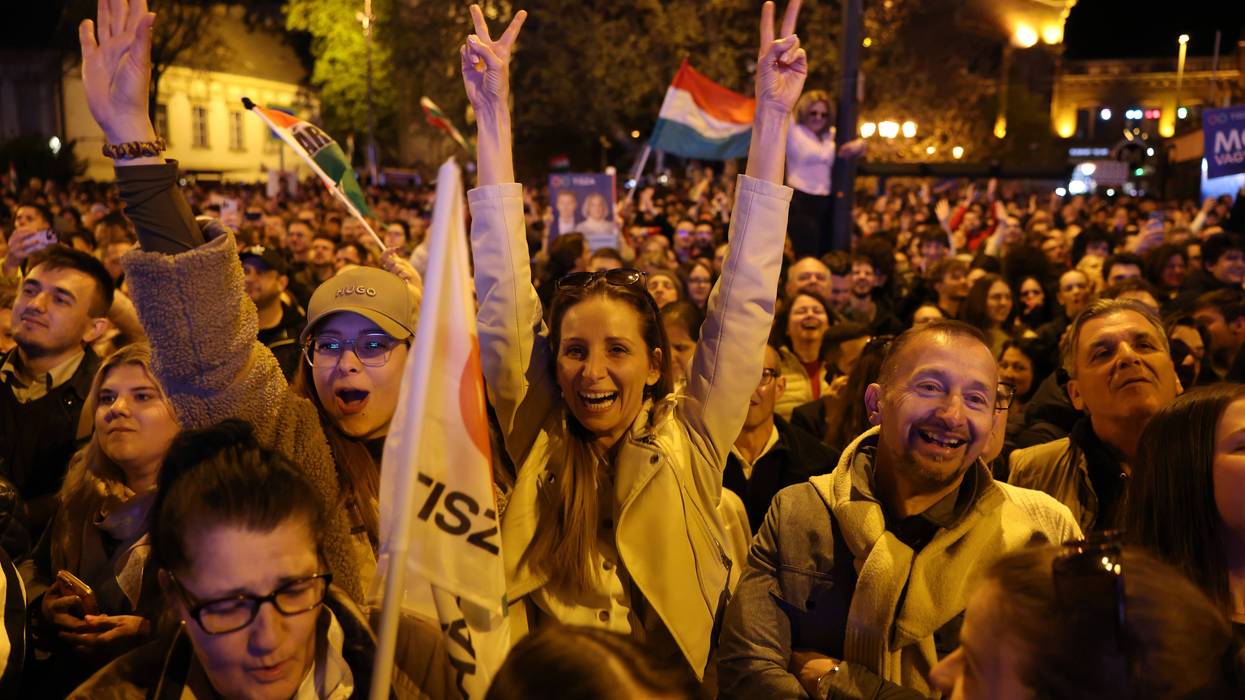
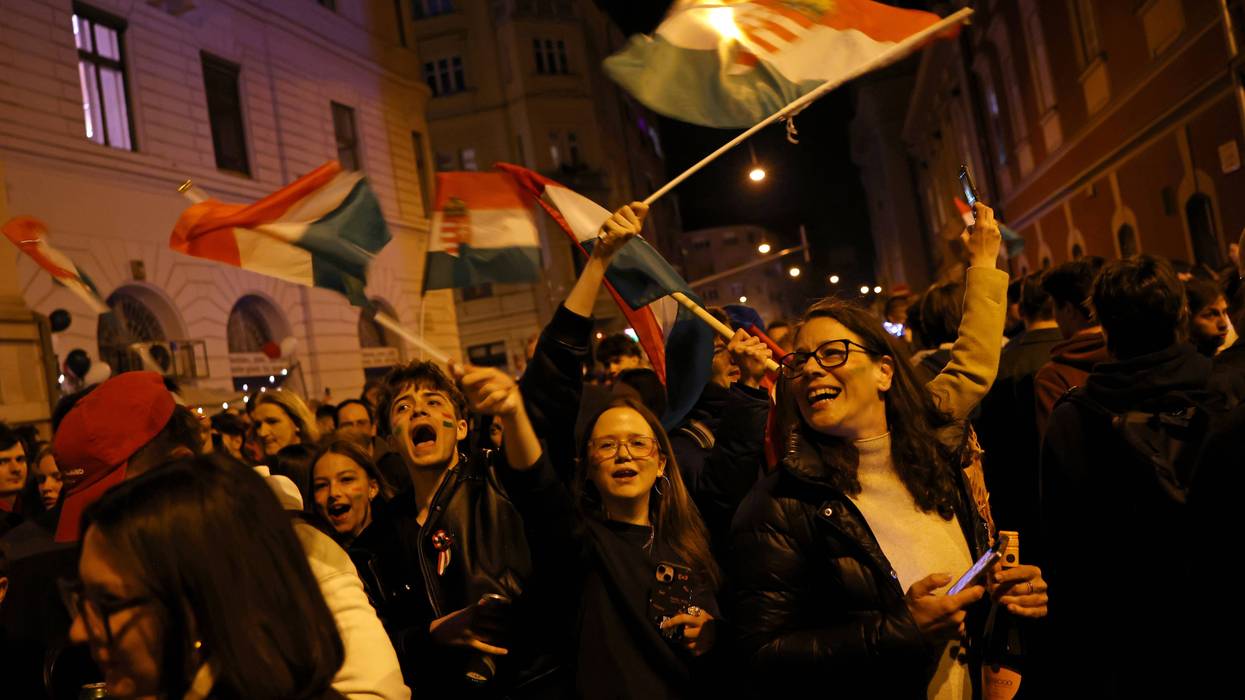
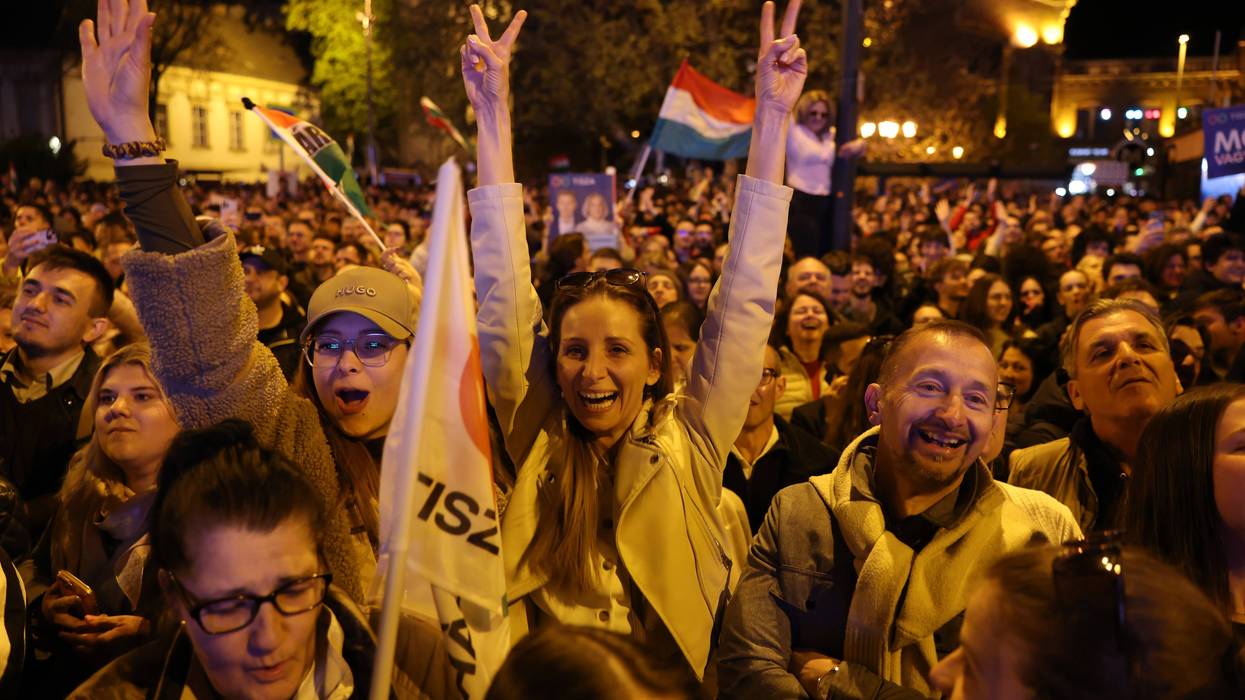
On Sunday night, the streets of Budapest were filled. Tens of thousands of Hungarians poured into the streets along the Danube River, singing folk songs and waving flags celebrating the end of Viktor Orbán’s rule. A young man named Mark Szekeres, his face painted with the colors of the Hungarian flag, told CBC News: “This election was about a clash of civilizations. Either you belong in a Western-type democracy or an Eastern-type dictatorship.”
For 16 years, Orbán controlled the country as the classic strongman. Orbán’s electoral defeat was sound—so much so that he conceded defeat before all the votes were counted. Péter Magyar’s Tisza Party captured more than 53% of the vote and approximately 136 of 199 parliamentary seats, a supermajority decisive enough to undo the constitution and other laws that Orbán rewrote. The turnout alone was a verdict: nearly 80% of all eligible voters.
For us fighting democratic backsliding, this is exceedingly consequential. Orbán wrote the authoritarian playbook now being used by Donald Trump and actively exported his approach, even giving Hungarian tax dollars to fund the Conservative Political Action Conference. The people’s playbook used to oust him is a critical case study to learn from—from how the opposition party organized in Orbán’s strongholds, to how they made repression backfire when he overreached, and more.
Informed by talking with people on the ground, I’m writing an outside take of lessons gleaned knowing we’ll need more analyses to make the most of our learning. Already D-HUB, a network of international anti-authoritarian activists, has vowed a more thorough case study after more study and reflection.
Authoritarians create four times as many economic crises—a threat very much in our sightlines in the US.
Orbán’s loss raises a question we all should learn from: How do you beat someone who has spent 16 years rigging the game?
To appreciate what happened Sunday, you have to understand just how thoroughly Orbán had slanted Hungarian political life toward authoritarian rule.
Within months of taking power in 2010, Orbán began systematically dismantling independent journalism. He encouraged his oligarch friends to buy media. He created a new state broadcaster, called MTVA, as a government mouthpiece. And his party created a Media Council—staffed by party loyalists—that issued crushing fines for “unbalanced” news that didn’t toe the party line.
By 2018, more than 470 pro-government outlets had been merged into a single conglomerate called KESMA—the Central European Press and Media Foundation—making the concentration of power official. Orbán’s party and friends eventually controlled roughly 80% of Hungary’s media landscape. “You can’t write anything bad about the government,” one anonymous Hungarian journalist told Al Jazeera.
Then the courts. Orbán passed a new constitution and forced 274 judges and prosecutors into early retirement in the first year alone. The judiciary became almost entirely a political instrument.
Then, most consequentially, he moved to rig elections: The maps were redrawn, and he gained control of independent institutions overseeing elections. Orbán shaped Hungary’s 106 electoral districts with no input from the opposition, concentrating urban voters into large districts while spreading out his rural voters into more districts. The results were staggering: In 2014, Orbán’s ruling party captured 45% of the vote—but 91% of the districts. “Free but not fair,” as the ever insightful John Oliver put it in his review of Orbán’s rule just ahead of the elections. “You are free to vote for anyone you want, whether it’s Orbán or whoever inevitably loses to him.”
Universities are often the birthplace of pro-democracy movements, and grinding them down was essential. The most famous casualty was Central European University, founded by George Soros, which was slandered and pushed out of the country. This was in line with right-wing and antisemitic attacks on anything Soros-related (even though Orbán had once received a Soros-funded scholarship).
And finally, he created imagined enemies of the state. Like every authoritarian, Orbán used divide-and-rule to create people to fear and keep his own growing scandals and corruption off the front page. Like most authoritarians of late, he chose LGBTQ people and immigrants as his primary scapegoats. George Soros, the EU, and Ukrainians were added to the roster of villains.
When President Trump sent Vice President JD Vance to campaign for Orbán, Vance followed Orbán’s escalating attacks on EU bureaucrats, who had voiced concerns about how Orbán’s re-election would affect the future of the EU. With no sense of irony, at his campaign stop Vance called the EU bureaucrats “one of the worst examples of foreign election interference that I have ever seen or ever even read about.”
So with that much control, how did Orbán lose? And so badly?
One reason dictatorships can be appealing, at least to some, is that they appear effective. To his supporters, Trump gets things done. While the democratic process is slow and grinding, the dictatorial one is about action. It breaks through red tape and fixes problems.
There’s truth in this, so far as democracy can be messy and dictatorships simple to understand. But it’s also mythical. Because a dictator doesn’t run a country—they order others to run a country.
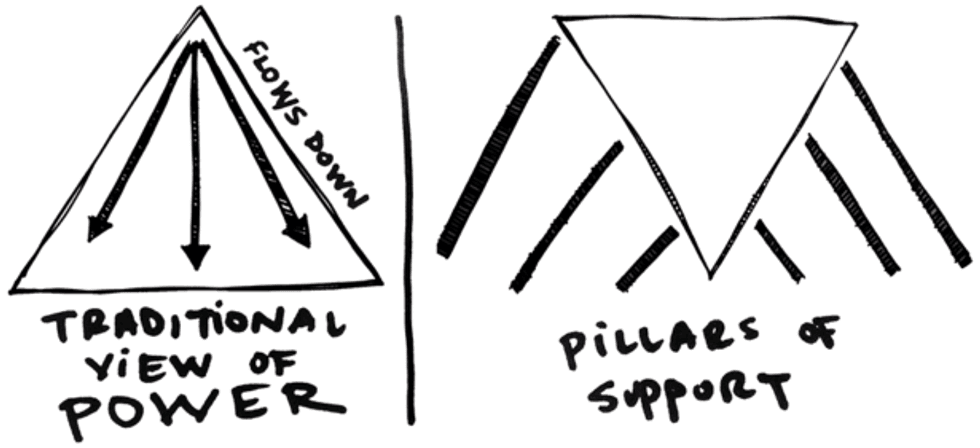
Whereas power is traditionally seen as flowing downwards, in fact many pillars are required to hold it upright. These are groups and institutions—like media, religious institutions, the business community, civil servants, and security forces—that prop up the regime. In Thailand, where I first learned about this model of the “pillars of support,” it was drawn as an upside-down triangle.
A dictatorship is no exception. By keeping society functioning, these pillars support the regime, even if they may disagree with it in private.
It’s important to recognize that power is never as stable as it seems. It is not the natural state of humans to be dictated to.
As a parent of a 7-year-old, I can attest: Go to any playground and you will see a bunch of kids experimenting with ordering each other around. Kids don’t like being bossed around. So the wise ones learn how to ask, entice, convince. The bullies learn to just use fear.
The problem with ruling with fear is that it requires constant and ongoing pressure. It creates frustration from those who have been slighted, grudges get nursed and a level of control needs to be constantly applied.
Ahead of the election, many (but not all!) of the pillars propping up Orbán began to crack. The economy, the media stranglehold, and the manufactured fear—all began to crumble.
Most activists I talked with described the Hungarian economy as Orbán’s primary vulnerability. Hungary has suffered the worst inflation of any EU country over the past 25 years. Prices rose 57% over that period—nearly double the EU average of 28%. The healthcare system deteriorated badly, with hospitals crumbling and doctors fleeing for better jobs. Hungary ranked last in the EU on household wealth in 2025.
This is common for authoritarians. We know instinctively that authoritarians do not take orders from polls or the number of people in the streets. As Rebecca Solnit beautifully put it, authoritarians view power as a “conquering army that would terrorize and intimidate the populace into subjugation”—as opposed to that of a flower, where “when you treat others well, when you meet their needs, you can enter into relationships that serve you as well as them.”
The outcome is that authoritarians ignore the pleas of the people. According to research from the Varieties of Democracy Institute, authoritarians create four times as many economic crises—a threat very much in our sightlines in the US. They spend 50% less on social protections like healthcare. Unresponsive to the needs of the people, they spend less on education, with students in school for fewer years, receiving lower quality instruction. All this adds up to life expectancies that are 12 years lower and infant mortality rates that are 62.5% higher. And, of course, corruption becomes the standard way of life.
As Hungarians struggled in all of these ways, Orbán’s friends grew rich. Video footage circulated of an estate owned by Orbán’s father with zebras grazing near it. It turned out that the zebras were from a nearby estate owned by Hungary’s richest man, who is also a close friend of Orbán—so they became a potent symbol of elite excess.
Stefania Kapronczay, a Hungarian human rights strategist, identified the core problem Fidesz faced: It thought it had a sales problem when it really had a problem with the product. “Instead of addressing [voters’] demands they resorted to creating enemies and being louder,” she explained. “The economy stalled in the past 4 years. The explanation that it’s somehow Brussels’ fault and soon there will be never-seen-before success rang empty. They also miscalculated how pro-European Hungarians are.”
Unable to campaign on any positive accomplishments, Orbán defaulted to fearmongering. As an analyst wrote in Foreign Policy, Orbán’s campaign was centered on “fantastical claims about Ukraine planning military actions against Hungary,” substituting conspiracy for governance. “After a while voters, especially moderates, become exhausted by constant messages of fear, hatred, and vituperation.”
But conditions alone do not dictate election outcomes. I’ve been running around the US telling the story of Zimbabwe. In the 2002 elections, President Robert Mugabe abducted activists and controlled elections. By the time the 2005 parliamentary election rolled around, a Zimbabwean colleague told me, “We’re already living in hell; it can’t get any worse.” The inflation rate had exceeded 100%. But Mugabe managed to buy and steal the election for his party again. By 2008 the economy had completely bottomed out with an unbelievable inflation rate: over 200 million percent. The colleague told me the same thing, “This time it can’t get any worse.” Still, Mugabe won—this time by attacking and torturing people so extensively that opposition candidate Morgan Tsvangirai withdrew from the race.
My point here is this: It can get a lot worse and that alone won’t change the electoral outcomes. Organizing, not conditions, is most important.
The opposition party candidate who won the campaign, Péter Magyar, is not a left-wing hero. He was a loyal insider until 2024—an Orbán man through and through. He married a government minister.
His break came after a corruption scandal where—you guessed it—Orbán’s party pardoned a convicted accomplice in child sexual abuse.
Magyar went public on Partizán, an independent YouTube channel, revealing the rot at the center of Orbán’s “Christian nationalist” project. “For a long time I believed in an idea, the national, sovereign, civil Hungary,” he wrote. “Today, I had to realize that all of this is really just a political product, a frosting that serves only two purposes, covering up the operation of the power factory and acquiring enormous amounts of wealth.”
The lesson for Democrats—and for any opposition movement—is painfully direct: Running against the other side’s failures, without a clear and compelling alternative vision, leaves persuadable voters with nothing to vote toward.
His credibility as a defector—someone who had seen it from the inside—gave him a voice that no outside opposition figure could replicate.
He was also a masterful communicator. Unlike traditional politicians who attempt to govern at a distance, he regularly walked the country and held rallies in small towns that the opposition party had “sewn up.” For years, he went directly and repeatedly to Orbán strongholds. In the final weeks before the election, he was visiting up to six towns per day.
As Kapronczay observed: “Tisza won because they went all-in: did not stop campaigning, went around the country to meet people and with an amazing political talent reacted to all the mistakes of Fidesz.”
Magyar did not rely on an anti-Orbánism message. He talked regularly about corruption, healthcare, and everyday affordability—things people actually care about. Political analyst Zsuzsanna Végh of the German Marshall Fund described him as “focusing on policy responses, hitting a moderate tone, and giving back agency to voters to decide about their and their country’s future.” A regular campaign slogan was a call for a “humane Hungary.”
And while a bad dictator versus a strong candidate is a good combo, that alone would not suffice to win. Civil society had to play its role.
One of the most important tactical decisions of the opposition party, Tisza, was the creation of Tisza Szigetek, or “Tisza Islands.”
Beginning in mid-2024 after Magyar’s strong showing in European Parliament elections, the party began systematically building local chapters across the country—not just in Budapest’s liberal districts, but in the small towns and rural constituencies where Orbán’s party had historically been uncontested. By January 2025, social media analysis suggested there were 208 “islands” with over 20,000 members.
Inside the new chapters were a mix of brand new activists and experienced civic and political activists who had been working to reform Hungary for years. New and old, all were active supporters. They staffed campaign stalls. They distributed a volunteer-delivered newspaper called Tiszta Hang, or Clear Voice, launched in July 2025, specifically designed to reach rural voters who were only exposed to pro-Orbán media.
That last point matters. The Tisza Islands were not top-down campaign field offices. They functioned with genuine local autonomy. The party even held closed primaries for all 106 of its constituency candidates—an internal democratic process designed to give local members real ownership of who represented them.
Crucially, this meant that by election day, Tisza was able to deploy a breath-taking 50,000 activists as election monitors across the country’s polling stations. I’m hoping Hungarians will write more about this polling operation, to relay both how it was set up and its effectiveness in assuring a wary public that elections would hold. This was an historic, organized, and scaled effort of election protection.
One other piece multiple Hungarian activists have raised with me was the critical role of journalists.
Remember that Orbán controlled 80% of the country’s media. And yet, a handful of outlets—Partizán, Direkt36, Telex, 444, Magyar Hang—managed not only to survive but to land body blows in the final months of the campaign.
Partizán gave Magyar the interview that broke open the sexual abuse pardon scandal. Direkt36 broke the story of attempts by government-connected operatives to infiltrate Tisza’s digital infrastructure. Telex published an interview with a police whistleblower about the government’s attempt to send Hungarian troops to Chad. As Martón Kárpáti, the president of the board of Telex, described it: “This campaign showed the importance of the free media.”
A few people acting courageously opens the doors for more.
A key documentary—A Szavazat Ára, or The Price of the Vote—was released on March 26 by the investigative team at DE! Akcióközösség. Based on a six-month investigation, the film documented Orbán’s party’s systematic operation of vote buying and voter intimidation and coercion in impoverished rural communities. It showed that Orbán’s mayors controlled who got food, housing, and even drugs. Within days, the documentary had been watched 1.3 million times.
This weakened the intimidation network. For the first time, government loyalists felt that they might be exposed. As political scientist Gábor Toka noted, “Intermediaries are [now] far less confident that illegal activities won’t be investigated and punished.”
Ahead of the election, this led Euractic to conclude in a headline: “Hungary’s Independent Media Has Already Won the Election.”
The June 2025 Budapest Pride parade was a classic backfire moment. Orbán had been escalating his war against LGBTQ folks for sometime. LGBTQ rights activists had been pushing back for years. But last summer his party took an extreme step and all but banned the Budapest Pride parade. His party enacted extremely tight rules on when and where and how the parade could proceed, wild police oversight, further restrictions under the pretense of “child protection,” and encouraged local authorities to deny event approvals entirely. It was an overreach, and the Pride parade swelled to massive numbers, with people clearly having fun and boldly proclaiming they would not let the government scare them off.
“The unsuccessful ban on the Pride parade was a clear sign of Fidesz’s inability to regain the political initiative,” wrote Hungarian journalist Pal Daniel Rényi. Ahead of the elections, the people had signaled that they were not going to be cowed. The massive parades exposed the government as out of ideas and increasingly disconnected from the public mood.
This kind of moment has been described by Turkish-American economist and political scientist Timur Kuran as an “unanticipated revolution”—a moment when an otherwise powerful political leader who seems to have full support suddenly has it evaporate.
Backfire happens when the public shakes off its fear, and the rift between the people and the authoritarian is revealed.
Here, then, are eight points about what the defeat of Viktor Orbán offers to people doing the long, unglamorous, essential work of democracy defense.
1. You have to meet people where they actually live. The Tisza Islands model is a direct rebuke to opposition campaigns that organize from the cities outward or from the top downwards. Magyar’s team built physical, relational infrastructure in communities that had been written off—not because they expected to win every seat, but because showing up is the message. The act of going to rural Hungary, of knocking on doors in Fidesz strongholds, communicated something no television ad could: that people in those communities were worth fighting for. Any opposition movement that limits itself to mobilizing its existing base is already half-defeated.
2. Anti is not enough—you need a proposition. Magyar ran on corruption, yes, but he ran for something: affordability, public healthcare, housing, a “humane Hungary.” He hammered relentlessly on what Orbán’s rule had cost ordinary people in their daily lives. The lesson for Democrats—and for any opposition movement—is painfully direct: Running against the other side’s failures, without a clear and compelling alternative vision, leaves persuadable voters with nothing to vote toward.
3. Build for the long game, but deploy at election time. The underground LGBTQ organizing work and the Tisza Islands didn’t spring up in campaign season. They were built over many years, quietly, in communities across the country. Civil society organizations spent that same period building nonpartisan mobilization infrastructure, producing online videos, and recruiting election monitors. The 50,000 activists who showed up as poll watchers on election day didn’t materialize from nowhere—they were organized, trained, and ready. Democracy defense isn’t a sprint. It’s a marathon that occasionally demands a sprint.
4. Investigative journalism is infrastructure. This is perhaps the most striking lesson for movements in countries where independent media has been similarly squeezed. In a media environment where 80% of outlets are government-aligned, a handful of scrappy independent outlets broke stories that changed the trajectory of an election. The lesson isn’t just to support independent journalism (though that matters). It’s that, when coordinated with civil society organizing and election protection, investigative journalism creates a kind of immune system for democracy. When those functions work together, they become more than the sum of their parts.
5. Election protection is a form of power. Hungary’s activists understood something that is increasingly essential in systems where the electoral rules are rigged: You cannot simply outperform the fraud margin and hope for the best. You have to actively contest it. The 50,000 election monitors Tisza deployed were not passive observers—they reduced fear and combated intimidation. The documentary released weeks before the election served a similar function, activating public consciousness about what was happening in those rural constituencies. This combination—exposing the system, then flooding it with watchers—helped neutralize what had historically been a decisive advantage for Fidesz.
6. Plan for backfire. Yes, some moments just arise—in Hungary, wearing zebra costumes; in the US, frog costumes. But other moments are organized, such as the surge of people at the Budapest Pride parade. The folks at HOPE have created a curriculum to learn more about the dynamics of backfire. A key insight: Backfire isn’t automatic. Repression only sparks outrage when it’s seen, understood, and emotionally felt, which means movements have to actively expose injustice, frame it clearly, and help people connect the dots so what power tries to hide becomes impossible to ignore.
7. If you can only do one thing: Act courageously. Much of Orbán’s rule was marked by people publicly kowtowing. Timothy Kuran wrote a book called Private Truths, Public Lies about “preference falsification”—the idea that people fabricate their public preferences to match social pressure. When there’s enough social pressure, people conform—even if privately they disagree. This can generate a collective illusion that the authoritarian has broad support even when he doesn’t—until a sudden tipping point is reached and the whole facade collapses rapidly. Before that tipping point is reached, however, some individuals have to be very brave: acting noncooperatively, voicing dissent, organizing marches and protests, taking public stances, and going into strongholds to convince people they are being cheated. A few people acting courageously opens the doors for more.
8. Don’t let the perfect be the enemy of the winnable. Magyar is not a folk hero. He’s a politician who is, for now, best suited to dismantle Orbán’s authoritarian state. Magyar’s party does promote greater inclusion of women and Romani people in its platform. However, he remains socially conservative, and his history as an Orbán loyalist is more than cause for concern. But after left-wing parties failed to meet the moment, the people saw him as their best chance to defeat Orbán. Movements fighting authoritarianism will always face the tension between holding out for the ideal candidate and unifying behind the one who can actually win.
As with any electoral win, the work is only started. Orbán still controls Hungary’s media. He packed the Constitutional Court. He built an economy of patronage and dependency that reaches into every village. Magyar’s supermajority gives them the constitutional power to undo much of what was done—but the institutions, the oligarchic networks, the culture of intimidation, will not dissolve the day Magyar is inaugurated.
For organizers, this is the sobering coda: Electoral victory is a door, not a destination. But on a Sunday night in Budapest, they earned a moment to celebrate. And we should take a lot of hope from that, too. As US organizer Ash-Lee Henderson noted in her response to Orbán’s loss: “I’m not trying to tell you that Hungary is America. It’s not. I’m telling you, though, that the math is similar everywhere. There are always more of us than there are of them. The question is never whether the people have the power. The question is whether we build something worth moving for.”
Vance had followed Trump into Orbán’s abyss, and now Trump is taking him on another losing journey.
As Prime Minister of Hungary for 16 years, Viktor Orbán became a beacon for the right and one of President Donald Trump’s favorite authoritarian role models. A self-described populist, Orbán’s conquest of democracy’s three pillars—the media, institutions of higher education, and the justice system—became Trump’s template.
Another Orbán characteristic attracted Trump: His regime consistently ranked No. 1 as the most corrupt country in the European Union. He abused political power for self-enrichment. He installed friends and family members in positions of influence and power that made him (and them) wealthy. He used his majority in the legislature to enhance his power. A persistent critic of Ukraine, Orbán also enjoyed the support of Russian President Vladimir Putin.
Sound familiar?
Trump embraced and praised Orbán, which meant that his Vice President JD Vance embraced and praised him too.
In 2016, Vance had called himself a “Never Trump Guy” and wrote a New York Times op-ed titled, “Mr. Trump Is Unfit For Our Nation's Highest Office." But he reversed course in 2021 when he ran for the US. Senate and sought successfully to gain Trump’s endorsement.
As a junior senator, Vance could have refrained from voicing an opinion about Orbán. But ambition required otherwise. In a February 2024 interview with European Conservative, Vance was well aware of Trump’s views as he lobbied to become the vice-presidential pick on the Republican ticket. He held out Trump’s Hungarian idol as an example to emulate:
The closest that conservatives have ever gotten to successfully dealing with left-wing domination of universities is Viktor Orbán’s approach in Hungary. I think his way has to be the model for us: not to eliminate universities, but to give them a choice between survival or taking a much less biased approach to teaching.
Of course, Vance—a Yale Law School graduate—knew that Orbán did not offer a “much less biased approach to teaching.” He demanded instruction centered on his view of history and the world.
In the same 2024 interview, Vance previewed what would also become some of Trump’s tactics:
And whether it’s the incentives that you put into place, funding decisions that are made, and the curricula that are developed, you really can use politics to influence culture. And we should be doing more of that on the American Right.
In a July 2024 interview on Face the Nation, Vance reaffirmed his praise for Orbán’s approach:
What I do think is on the university—on the university principle, the idea that taxpayers should have some influence in how their money is spent at these universities. It’s a totally reasonable thing. And I do think that he’s made some smart decisions there that we could learn from in the United States.
It was only the beginning of Vance’s “awakening.”
As vice president, Vance used his speech at the Munich Security Conference in February 2025 to attack many of Europe’s democracies by name—but not Hungary. He said that actors from within posed a greater threat than China or Russia: “In Britain, and across Europe, free speech, I fear, is in retreat.”
To a stone-faced audience of European leaders, Vance complained about “old, entrenched interests hiding behind ugly, Soviet-era words like ‘misinformation’ and ‘disinformation,’ who simply don't like the idea that somebody with an alternative viewpoint might express a different opinion…”
In fact, what responsible leaders don’t like is misinformation and disinformation pervading the political landscape. Orbán relied on both, as have Trump and Vance.
And Vance declared that mass immigration was Europe's most significant problem, noting record levels of foreign-born residents in Germany and increased EU immigration from non-EU countries caused by “conscious decisions” from certain European leaders.
For Trump and Vance, leaders like Orbán were the antidote to the decline of Western civilization. But heading into the April 2026 election in Hungary, Orbán was down by double digits in the polls.
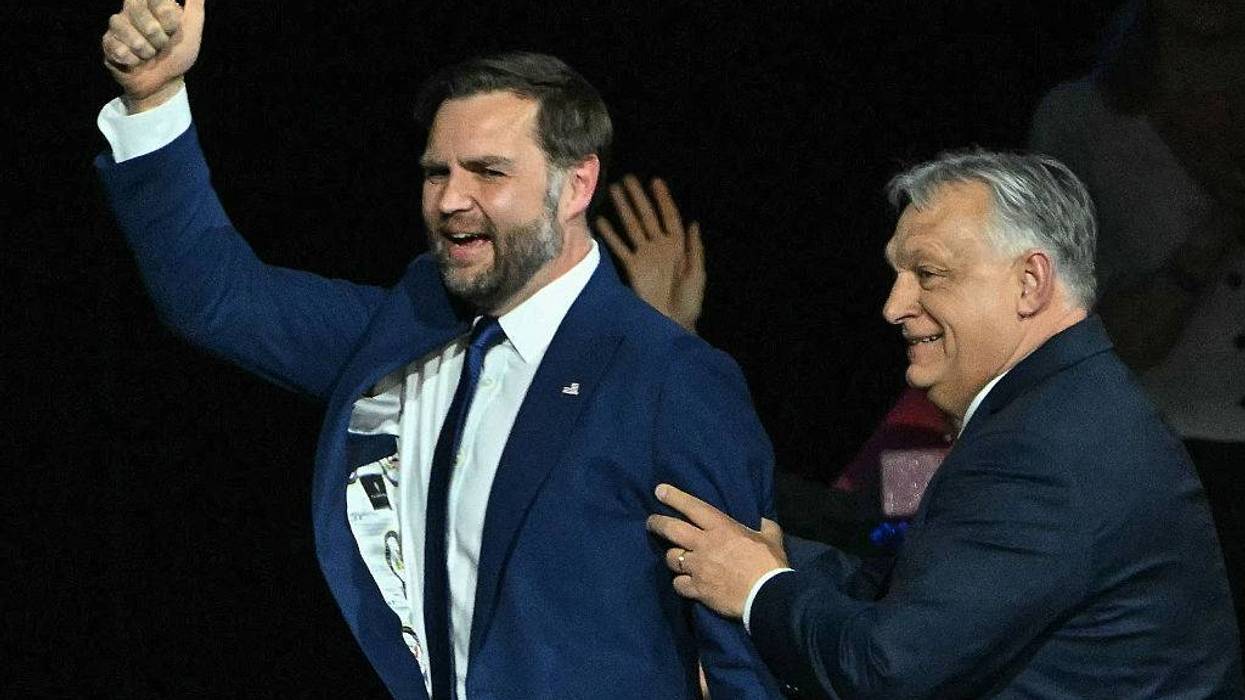
On April 8, Trump dispatched Vance to Budapest where he held a rally for the embattled leader. Vance portrayed Orbán as a hero:
I’m here because of the moral cooperation between our two countries. Because what the United States and Hungary together represent under Viktor’s leadership and under President Trump’s is the defense of Western civilization… The defense of the idea that we are founded on a certain Christian civilization and Christian values that animate everything from freedom of speech to rule of law to respect for minority rights and protection of the vulnerable.
Vance continued:
Will you stand for sovereignty and democracy? Will you stand for Western civilization? Will you stand for freedom, for truth, and for the God of our fathers? Then my friends, go to the polls in the weekend, stand with Viktor Orbán because he stands for you and he stands for all these things.
In fact, Orbán stood for none of those things.
The closest Trump got to the rally was a speakerphone call via Vance’s cellphone through which he said, “I love Hungary and I love that Viktor.”
On April 12, 2026, three days after Vance’s rally for Orbán, a reckoning arrived for all three men—Orbán, Trump, and Vance. In a landslide, Hungarian voters threw Orbán out of office. The populist had become unpopular, and Hungary’s citizens reclaimed their country.
Vance had followed Trump into Orbán’s abyss, and now Trump is taking him on another losing journey. Vance is the highest-ranking Catholic in the Trump administration, and he has joined Trump in attacking the Pope.
Sometimes ambition makes a person not only blind, but also deaf and dumb.