

SUBSCRIBE TO OUR FREE NEWSLETTER
Daily news & progressive opinion—funded by the people, not the corporations—delivered straight to your inbox.
5
#000000
#FFFFFF
To donate by check, phone, or other method, see our More Ways to Give page.
Daily news & progressive opinion—funded by the people, not the corporations—delivered straight to your inbox.
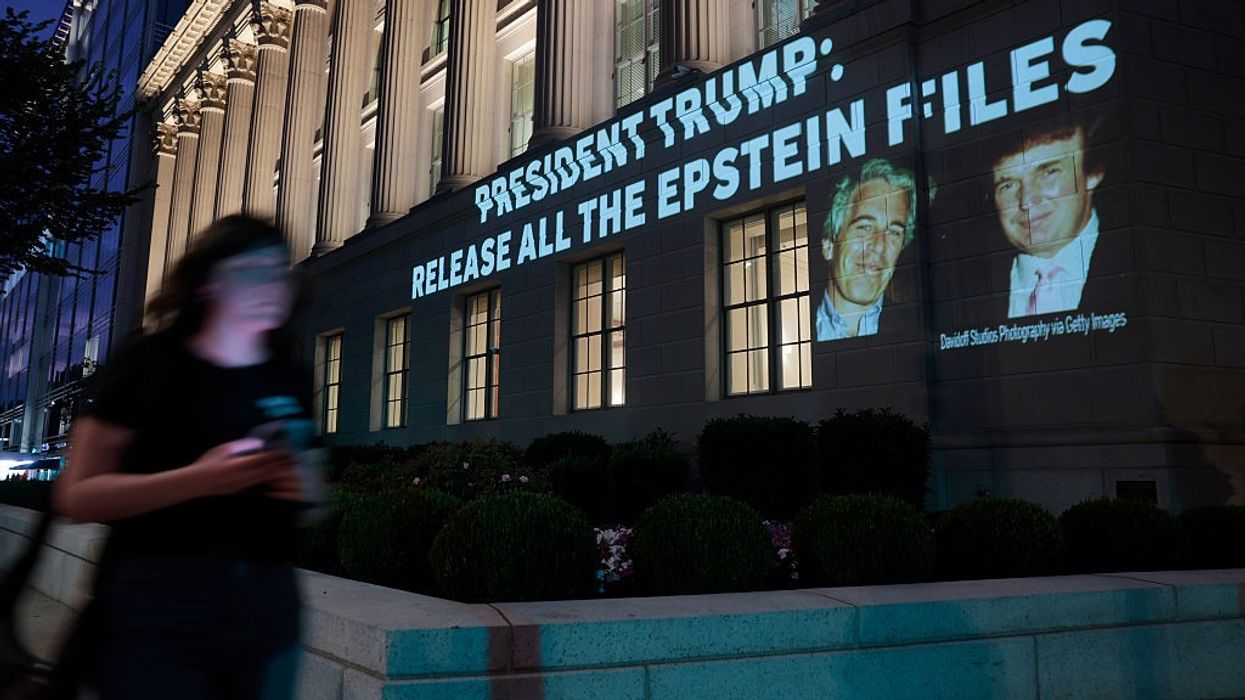
"The only thing transparent about the Trump-Vance administration is how clearly they continue to disregard our nation's laws," said the head of the group behind the suit.
A pro-democracy legal advocacy group on Friday sued the U.S. Department of Justice and Federal Bureau of Investigation for not releasing documents concerning deceased child sex trafficker Jeffrey Epstein amid President Donald Trump's stonewalling and attempted deflection of all things related to his former close friend.
In a lawsuit filed in the U.S. District Court for the District of Columbia, Democracy Forward—which has lodged multiple Freedom of Information Act requests with the DOJ and FBI for Epstein-related material—accuses the Trump administration of violating FOIA by failing to produce the files. The suit seeks an order compelling the government "to produce the requested documents in an expedited manner, as required by public records laws."
Tanya Chutkan, the federal judge presiding over the suit, previously oversaw Trump's federal election interference case concerning his efforts to overturn the results of the 2020 presidential contest and his incitement of the January 6, 2021 Capitol insurrection.
BREAKING: We just filed a first-of-its-kind lawsuit demanding records related to the Trump-Vance admin’s handling of the Epstein Files.The only thing transparent about this administration is how clearly they continue to disregard our nation’s laws.
[image or embed]
— Democracy Forward (@democracyforward.org) August 8, 2025 at 6:52 AM
"In January 2024, unsealed court documents disclosed the names of dozens of powerful men with alleged connections to Epstein, including President Donald J. Trump, British Royal Prince Andrew, former President Bill Clinton, lawyer Alan Dershowitz, and others," the lawsuit states.
"This and other information raise persistent questions about what the government uncovered during the years of investigation into Epstein's criminal activity," the filing continues. "Accordingly, there is broad-based public pressure for the government to release that information by disclosing records that are often referred to as the 'Epstein files.'"
"There is widespread public speculation that the Epstein files contain a roster of powerful clients to whom Epstein trafficked underaged girls," the lawsuit adds. "This list has become known as the 'Epstein list' or the 'client list.'"
The suit notes that Trump said during his 2024 presidential campaign that he was inclined to release the Epstein files. The filing also references U.S. Attorney General Pam Bondi's claim that the list was "sitting on my desk right now to review," and highlights reported "frantic scrubbing" of Trump's name from relevant documents by DOJ and FBI teams.
Furthermore, the lawsuit recounts Deputy Attorney General Todd Blanche's recent meetings with Ghislaine Maxwell, Epstein's erstwhile procurer who is serving a 20-year federal prison sentence for child sex trafficking, and the Trump administration's subsequent transfer of Maxwell to a lower-security correctional facility. The suit also notes that Trump has refused to rule out clemency for Maxwell.
"President Trump has repeatedly said he would release the Epstein files, his spokesperson claims his administration is 'the most transparent in history,' and yet, they continue to hide from the American people," Democracy Forward president and CEO Skye Perryman said in a statement. "The only thing transparent about the Trump-Vance administration is how clearly they continue to disregard our nation's laws."
"Public records laws outline a clear and simple process that requires the government to immediately produce important documents in response to urgent public information requests, and yet again, this administration is ignoring the law," Perryman added. "The court should intervene urgently to ensure the public has access to the information they need about this extraordinary situation."
Trump's efforts to deflect and distract from the Epstein scandal have outraged even many of his hardcore supporters and resulted in calls for transparency from both sides of the political aisle. The president denies any wrongdoing related to Epstein, calling the controversy over the files a "hoax" while denouncing Republicans demanding transparency as "weaklings." Trump also sued The Wall Street Journal over reporting that he wrote a "bawdy" letter for Epstein's 50th birthday in 2003.
On Thursday, Rep. Ayanna Pressley (D-Mass.) led 15 Democratic colleagues in a letter urging House Oversight and Government Reform Committee Chair James Comer (R-Ky.) to hold a hearing with victims of Epstein and Maxwell.
Congress must stand up for Epstein’s victims, not protect his rich and powerful friends.@pressley.house.gov is demanding a public Oversight hearing to give these survivors the opportunity to share their stories with the American people.
[image or embed]
— Oversight Dems (@oversightdemocrats.house.gov) August 7, 2025 at 2:19 PM
"If we are to hold powerful people to account, our investigation must center the voices they tried to silence," the Democratic lawmakers wrote. "To ensure that our investigation is comprehensive and credible, we urge the committee to allow survivors the opportunity to provide their testimony if they wish to do so."
Pressley—a survivor of childhood sexual abuse and rape in college—told The 19th* that if Comer refuses to hold such a hearing, "I will remind people why it didn't happen and that those elected officials are on the side of predators, while the Democrats are on the side of survivors."
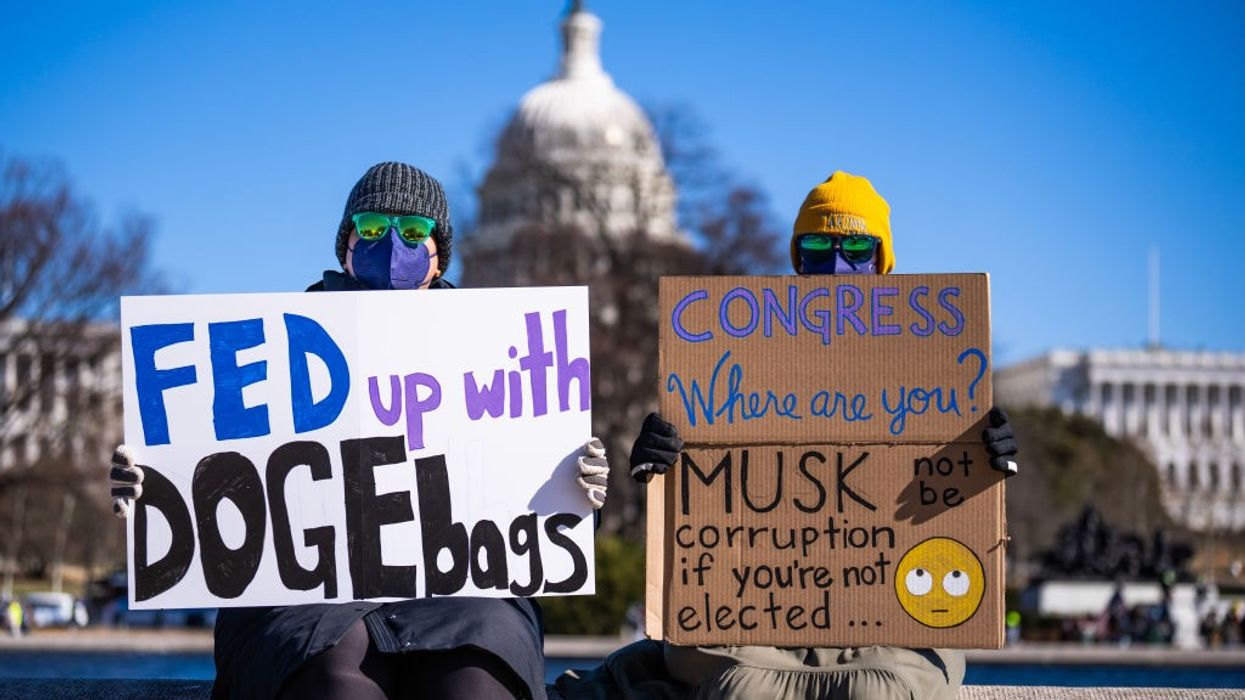
"As expected, Judge Chutkan won't issue a sweeping TRO against Elon Musk and DOGE, but she fires this shot across the bow to them both," said one journalist.
A federal court on Tuesday declined to block Elon Musk and and President Donald Trump's Department of Government Efficiency from accessing data systems at seven government agencies and firing or placing on leave their employees—but she also signaled that the Democratic state attorneys general challenging the billionaire and DOGE raise legitimate concerns in the case.
Led by New Mexico's attorney general, Raúl Torrez, 14 states sued Musk, DOGE, and Trump in Washington, D.C. last week. They asked District Judge Tanya Chutkan for a temporary restraining order (TRO) to protect data and workers at the Office of Personnel Management as well as the departments of Commerce, Education, Energy, Health and Human Services, Labor, and Transportation.
Chutkan, an appointee of former Democratic President Barack Obama, wrote in a 10-page order on Tuesday that "based on the parties' briefing, oral argument, and the current record, the court finds that plaintiffs have not carried their burden of showing that they will suffer imminent, irreparable harm absent a temporary restraining order."
The New York Times reported Tuesday that "while several judges have already considered more limited restraining orders halting Musk team operations within individual agencies, the case before Judge Chutkan is unique in its focus on the Constitution's appointments clause, which specifies which officials can be appointed by the executive branch without the consent of the Senate. The states argued in their lawsuit that Mr. Trump had violated the clause by granting broad powers to Mr. Musk."
Chutkan explained in her order that "plaintiffs raise a colorable appointments clause claim with serious implications. Musk has not been nominated by the president nor confirmed by the U.S. Senate, as constitutionally required for officers who exercise 'significant authority pursuant to the laws of the United States' But even a strong merits argument cannot secure a temporary restraining order at this juncture."
"Plaintiffs legitimately call into question what appears to be the unchecked authority of an unelected individual and an entity that was not created by Congress and over which it has no oversight," she continued. "In these circumstances, it must be indisputable that this court acts within the bounds of its authority. Accordingly, it cannot issue a TRO, especially one as wide-ranging as plaintiffs request, without clear evidence of imminent, irreparable harm to these plaintiffs. The current record does not meet that standard."
Chutkan also called out defendants' attorneys for a notice and related declaration from the White House, which generated widespread confusion by stating that Musk "is a senior adviser to the president" and "is not the U.S. DOGE service administrator."
As the judge pointed out in a footnote on Tuesday, the lawyers claim that "neither of the president's executive orders regarding 'DOGE' contemplate—much less furnish—... authority" to "order personnel actions at any of the agencies" specified.
She also noted that "based on the executive orders' plain text, 'new career appointment hiring decisions' at each federal agency 'shall be made in consultation with the agency's DOGE team lead' and agencies 'shall not fill any vacancies for career appointments that the DOGE team lead assesses should not be filled, unless the agency need determines the positions should be filled.'"
The judge stressed in her order that "at a minimum, this language 'contemplates' DOGE's authority over personnel actions. Defense counsel is reminded of their duty to make truthful representations to the court."
The law will not save you.
[image or embed]
— Alejandra Caraballo (@esqueer.net) February 18, 2025 at 5:04 PM
Responding to Chutkan's decision in a statement, Torrez said that "while we are disappointed that the court declined to issue a temporary restraining order, we remain committed to putting an end to Elon Musk's unlawful power grab."
"Every day that he is allowed to operate without a congressional mandate and with little apparent supervision, Musk is destabilizing our government and disrupting critical funding for education, public health, and national security," he added. "His move-fast-and-break-things mentality is not only reckless, but also unconstitutional, and we are prepared to pursue this case for as long as it takes to bring this chaos to an end."
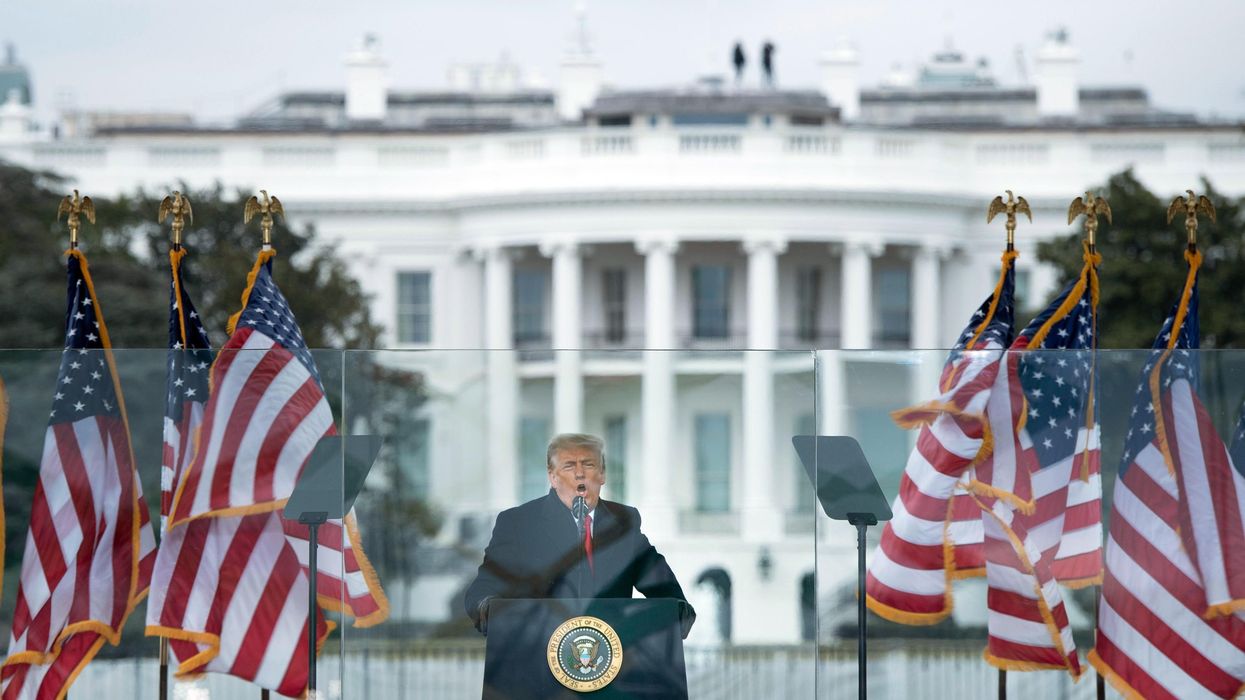
"The desperate plan that Trump embarked on to try and overturn the results of a legitimate election was reprehensible, irresponsible, and—the document shows—criminal," said one consumer advocate.
Jack Smith, the special counsel probing former U.S. President Donald Trump's attempt to subvert the 2020 presidential contest, on Wednesday presented a massive trove of fresh evidence supporting his election interference case against the 2024 Republican nominee.
Smith's sprawling and highly anticipated 165-page motion—which was partly unsealed Wednesday by presiding U.S. District Judge Tanya Chutkan—states that Trump "asserts that he is immune from prosecution for his criminal scheme to overturn the 2020 presidential election because, he claims, it entailed official conduct. Not so."
Trump—who in August 2023 was charged with conspiracy to defraud the United States, conspiracy to obstruct an official proceeding, obstruction of and attempt to obstruct an official proceeding, and conspiracy against rights—contends that his actions were taken in his official capacity as president and not as a private individual.
In July, the U.S. Supreme Court's right-wing justices—including three Trump appointees—ruled that the ex-president is entitled to "absolute immunity" for "official acts" taken while he was in office, raising questions about the future of this case. According to Smith's motion:
Although the defendant was the incumbent president during the charged conspiracies, his scheme was fundamentally a private one. Working with a team of private co-conspirators, the defendant acted as a candidate when he pursued multiple criminal means to disrupt, through fraud and deceit, the government function by which votes are collected and counted—a function in which the defendant, as president, had no official role.
In Trump v. United States... the Supreme Court held that presidents are immune from prosecution for certain official conduct—including the defendant's use of the Justice Department in furtherance of his scheme, as was alleged in the original indictment—and remanded to this court to determine whether the remaining allegations against the defendant are immunized.
The answer to that question is no. This motion provides a comprehensive account of the defendant's private criminal conduct; sets forth the legal framework created by Trump for resolving immunity claims; applies that framework to establish that none of the defendant's charged conduct is immunized because it either was unofficial or any presumptive immunity is rebutted; and requests the relief the government seeks, which is, at bottom, this: that the court determine that the defendant must stand trial for his private crimes as would any other citizen.
Smith's filing details what Trump told various people in his inner circle, including then-Vice President Mike Pence, his now-disgraced and twice-disbarred lawyer Rudy Giuliani, and leading White House and Republican Party figures—some of whose names remain undisclosed.
The motion also highlights Trump's actions on January 6, 2021, when his supporters stormed the U.S. Capitol in an attempt to stop Congress from certifying President Joe Biden's Electoral College victory. Trump is still pushing his "Big Lie" that Democrats stole the 2020 election; his running mate, U.S. Sen. J D Vance (R-Ohio), on Tuesday
refused to acknowledge that Trump lost to Biden when he was asked about the election during a vice presidential debate against Democratic Minnesota Gov. Tim Walz.
"Upon receiving a phone call alerting him that Pence had been taken to a secure location, [PERSON 15] rushed to the dining room to inform [Trump] in hopes that the defendant would take action to ensure Pence's safety," the filing states. "Instead, after [P15] delivered the news, the defendant looked at him and said only, 'So what?'"
Smith argued that deceit was central to Trump's efforts, specifically, "the defendant's and co-conspirators' knowingly false claims of election fraud," which they used to purvey the Big Lie.
The motion states:
When the defendant lost the 2020 presidential election, he resorted to crimes to try to stay in office. With private co-conspirators, the defendant launched a series of increasingly desperate plans to overturn the legitimate election results in seven states that he had lost—Arizona, Georgia, Michigan, Nevada, New Mexico, Pennsylvania, and Wisconsin (the "targeted states"). His efforts included lying to state officials in order to induce them to ignore true vote counts; manufacturing fraudulent electoral votes in the targeted states; attempting to enlist Pence, in his role as president of the Senate, to obstruct Congress' certification of the election by using the defendant's fraudulent electoral votes; and when all else had failed, on January 6, 2021, directing an angry crowd of supporters to the United States Capitol to obstruct the congressional certification.
For a historic second time, Trump was
impeached by the House of Representatives following his effort to subvert the election, although he was subsequently acquitted by the Senate.
Trump spokesperson Steven Cheung
blasted Smith's motion as "unconstitutional" and "falsehood-ridden."
"Deranged Jack Smith and Washington D.C. Radical Democrats are hell-bent on weaponizing the Justice Department in an attempt to cling to power," Cheung said in a statement aping Trump's habit of overcapitalizing words. "President Trump is dominating, and the Radical Democrats throughout the Deep State are freaking out. This entire case is a partisan, Unconstitutional Witch Hunt that should be dismissed entirely, together with ALL of the remaining Democrat hoaxes."
Democracy defenders, however, welcomed Smith's ruling.
"Jack Smith has shown us yet again the merits of his case against former President Trump," said Lisa Gilbert, co-president of the consumer advocacy group Public Citizen and co-chair of the Not Above the Law Coalition.
"In his filing, Smith clarifies that the alleged criminal actions occurred while Trump was acting as a private citizen," Gilbert added. "The desperate plan that Trump embarked on to try and overturn the results of a legitimate election was reprehensible, irresponsible, and—the document shows—criminal. Accountability to the American people and our democracy is our only path forward."
Judge Chutkan unsealed the motion five weeks before Trump will face off against Democratic Vice President Kamala Harris in a tight presidential election. If he wins, Trump will have the power to order the Department of Justice to drop the criminal charges against him.
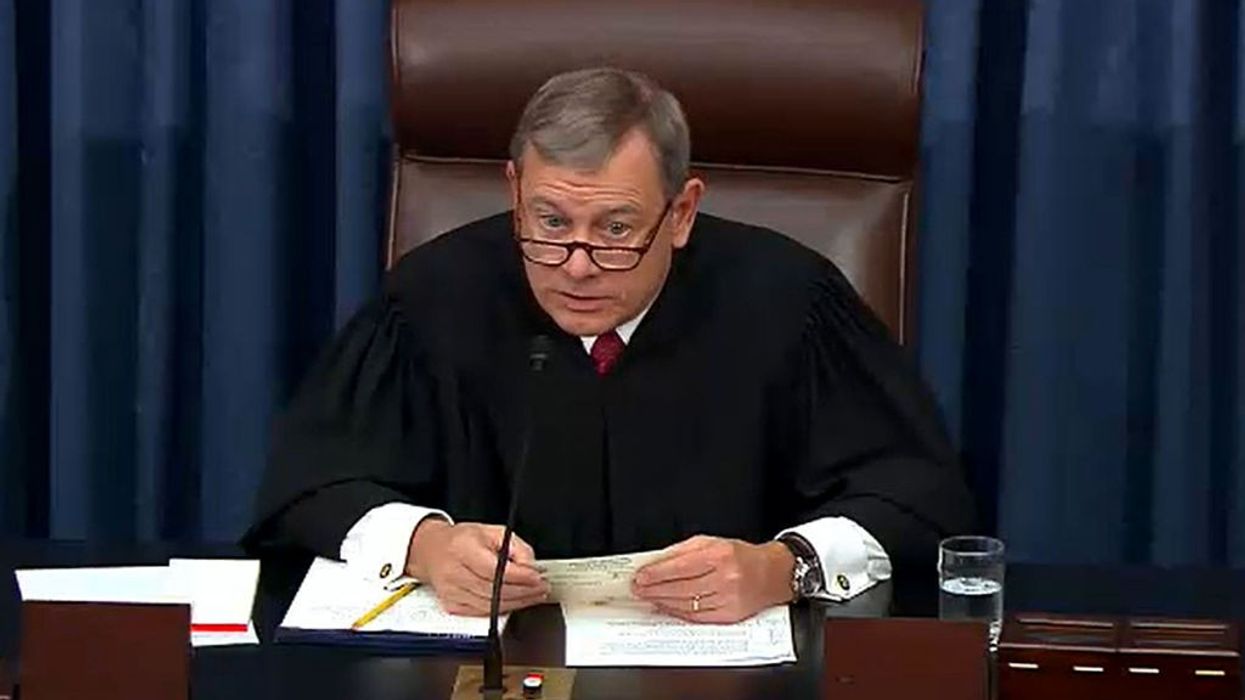
The opinion proves beyond a reasonable doubt that we do, in fact, have Trump judges. And Roberts is the quintessential example.
In November 2018, a public spat broke out between former President Donald Trump and Supreme Court Chief Justice John Roberts. It began when District Court Judge Jon Tigar of San Francisco overturned the Trump administration’s new restrictions on political asylum, leading the president to dismiss Tigar as an “Obama judge.” In response, Roberts issued a statement to The Associated Press, declaring, “We do not have Obama judges or Trump judges, Bush judges or Clinton judges. What we have is an extraordinary group of dedicated judges doing their level best to do equal right to those appearing before them. The independent judiciary is something we should all be thankful for.”
Determined to have the last word, Trump tweeted: “Sorry Chief Justice John Roberts, but you do indeed have ‘Obama judges,’ and they have a much different point of view than the people who are charged with the safety of our country.”
The exchange with Trump bolstered Roberts’ image as an institutionalist committed to the fair and impartial administration of justice. But that image was and always has been a chimera.
Apart from Roberts’ lack of fidelity to constitutional text, history, and precedent, his opinion is conceptually sloppy, poorly organized, and incomplete.
Roberts’ 6-3 majority opinion in Trump v. United States, which accords Trump broad immunity from criminal prosecution for his “official” acts as president, proves beyond a reasonable doubt that we do, in fact, have Trump judges. And Roberts is the quintessential example. He is the leader of a reactionary judicial junta hellbent on rolling back the Voting Rights Act, gutting reproductive freedom, dismantling the New Deal, and establishing an imperial presidency that is beyond legal accountability.
The immediate effect of Roberts’ ruling is that Special Counsel Jack Smith’s election-subversion indictment of Trump will be stripped of many of its most important allegations, and any trial on the indictment will be delayed until well after the November election. If Trump wins, as he likely would if the election were held today, he would be able to order his new attorney general to dismiss the case, and do the same with the Mar-a-Lago documents prosecution.
Longer term, as Justice Sonia Sotomayor argued in a blistering dissent, Roberts’ opinion will have more dire consequences, as it “invents an atextual, ahistorical, and unjustifiable immunity that puts the president above the law.” The opinion is also, according to Boston University School of Law professor Jed Shugerman, a “constitutional embarrassment… incoherent… [and] hard to decipher.”
But this is the Supreme Court, and decipher it we must.
Distilled to its essence, Roberts and his like-minded benchmates held that the separation of powers mandates immunity. Without presidential immunity, Roberts proclaimed, the executive branch would be unable to take the “bold and unhesitating action” the country demands from its commander-in-chief for fear that his successor would target him for prosecution, turning the executive branch into one that “cannibalizes itself” with every change of administration. This is a novel interpretation of the Constitution, which does not contain text providing for presidential immunity from criminal prosecution. It also deviates dramatically from the Founding Fathers’ vision of a constitutional republic. In Federalist 69 and 77, two of the most seminal of the founding-era texts, Alexander Hamilton wrote that the presidents of the then-new United States would not have unlimited power but could, if needed, be prosecuted in the ordinary course of law. The entire point of the revolution was to rid the fledgling nation of an absolute monarch and enshrine the principle that no one is above the law.
Contrary to this sacred tradition, Roberts’ ruling endows Trump and future presidents with a monarchical kind of immunity, which he divides into three categories:
This distinction between official and unofficial acts seems to be designed to rescue Trump from the clutches of the special counsel. Prior to the Roberts decision, the Supreme Court had never been called upon to review a criminal prosecution of a former president. Richard Nixon came close, but he had the good sense and just enough residual patriotism to resign and accept a pardon from Gerald Ford to avoid an indictment.
Roberts based his ruling in large part on a 1982 decision involving a wrongful termination lawsuit against Richard Nixon brought by a federal contractor. Nixon v. Fitzgerald held that presidents are entitled to “absolute immunity” in civil cases seeking damages arising from their official acts and “the outer perimeter” of their official duties. But Nixon v. Fitzgerald was explicitly limited to civil litigation, and the concurring and dissenting opinions in that case emphasized that the court’s decision had no application to criminal law. Now, courtesy of Roberts and his collaborators, Nixon v. Fitzgerald is the law of the land in both civil and criminal litigation.
Apart from Roberts’ lack of fidelity to constitutional text, history, and precedent, his opinion is conceptually sloppy, poorly organized, and incomplete. For example, Roberts concluded that Trump’s discussions with his then-acting attorney general and members of the Department of Justice about overturning the 2020 election were official acts entitled to immunity, but he declined to decide whether Trump’s discussions with Vice President Mike Pence are similarly entitled to protection or unofficial conduct undertaken as a candidate for office. That task—and the job of evaluating every other allegation set forth in Smith’s 45-page indictment—will be assigned to District Court Judge Tanya Chutkan when the case is sent back to her.
Even with the clearest guidance from the Supreme Court, the assignment of separating the official acts contained in Smith’s indictment from the unofficial ones would be time-consuming and daunting. But nowhere does Roberts offer a working definition of an unofficial act. Is an unofficial act one related to a political campaign, or one that is personal or private in nature, as Justice Amy Coney Barrett suggested in her concurring opinion? Although Roberts acknowledged that “distinguishing the president’s official actions from his unofficial ones can be difficult,” the closest he came to a definition is a line describing an unofficial act as one that is “manifestly or palpably beyond [the president’s] authority.”
Assuming that Chutkan can cut through the dense legalese of the majority opinion, she also will have to contend with the section of the ruling where Roberts holds that, “in dividing official from unofficial conduct, courts may not inquire into the president’s motives.” Because motive is often the key to proving criminal intent and intent is an element of the crimes alleged against Trump, it’s hard to see just how much of Smith’s case could survive even if Trump loses in November.
All that has Sotomayor and the dissenting justices outraged. “In fact,” Sotomayor argued in her dissent, “the majority’s dividing line between ‘official’ and ‘unofficial’ conduct narrows the conduct considered ‘unofficial’ almost to a nullity. It says that whenever the president acts in a way that is ‘not manifestly or palpably beyond [his] authority,’ he is taking official action.”
Forecasting nothing less than the demise of American democracy, Sotomayor continued:
The president of the United States is the most powerful person in the country, and possibly the world. When he uses his official powers in any way, under the majority’s reasoning, he now will be insulated from criminal prosecution. Orders the Navy’s Seal Team 6 to assassinate a political rival? Immune. Organizes a military coup to hold onto power? Immune. Takes a bribe in exchange for a pardon? Immune. Immune, immune, immune.
As the chief justice, Roberts could have assigned any other concurring member of the court to draft the majority opinion. That Roberts chose to write the opinion himself rather than farm it out to Clarence Thomas or Samuel Alito—both of whom should have recused themselves due to the conduct of their wives as outspoken supporters of the MAGA movement—or to one of the three younger justices appointed by Trump, is a testament to Roberts’ ego and a final and full revelation of his ideological extremism.
Roberts has spent his legal career as a right-wing political operative, dating back to his stint as a clerk for the late Supreme Court Chief Justice William Rehnquist, continuing in his work for the Reagan and Bush administrations, and into his role as a behind-the-scenes GOP “consultant, lawsuit editor, and prep coach for arguments before the Supreme Court” in the run-up to Bush v. Gore, the case that decided the 2000 presidential election.
His 2013 majority opinion in Shelby County v. Holder, which eviscerated the Voting Rights Act, ranks among the worst decisions in the Supreme Court’s history. His opinion in Trump v. United States deserves the same infamy.

One legal analyst said, "A president being immune to prosecution would fly in the face of our nation's core values."
A three-judge panel from the federal appeals court in Washington, D.C. on Tuesday unanimously ruled against former U.S. President Donald Trump's claims of immunity in a criminal case stemming from his efforts to overturn his 2020 loss.
"For the purpose of this criminal case, former President Trump has become citizen Trump, with all of the defenses of any other criminal defendant. But any executive immunity that may have protected him while he served as president no longer protects him against this prosecution," states the 57-page opinion.
The panel included one judge appointed by former GOP President George H.W. Bush and two appointed by Democratic President Joe Biden, who is seeking reelection this year. Trump is the Republican front-runner despite four ongoing criminal cases and arguments he is constitutionally disqualified from holding office again after engaging in insurrection on January 6, 2021.
Welcoming the development, the watchdog Citizens for Responsibility and Ethics in Washington declared: "Donald Trump is not above prosecution. The law and the Constitution apply to him just like they apply to every other American. This is a major victory for our democracy and the rule of law."
Lisa Gilbert, executive vice president of Public Citizen, said: "Yet another court has recognized that Trump's immunity arguments are absurd and held that he can be prosecuted for actions, undertaken while president, that enabled the January 6 insurrection. This decision puts yet another period at the end of the statement, 'No one is above the law.'"
People for the American Way President Svante Myrick also praised the decision, saying that "the judges on the D.C. Circuit court got it right: No president can swear to uphold the laws of the land and then enjoy immunity if he breaks them. The idea is absurd on its face and Donald Trump's claim of immunity is a desperate attempt to avoid accountability for his actions."
"But make no mistake; this ruling is likely to make Trump even more desperate, as he tries to escape criminal prosecution by any means—including winning reelection to the presidency so he can make this prosecution go away," he warned. "Now is the time to double down on our work to make sure Trump is held accountable for his crimes, and that he never occupies the Oval Office again."
The ruling aligns with the panel's skepticism during arguments last month. When one judge had challenged the limits of immunity by asking Trump's attorney whether a president could "order SEAL Team 6 to assassinate a political rival," the lawyer responded that "he would have to be and would speedily be impeached and convicted before the criminal prosecution."
The panel's decision comes after Judge Tanya Chutkan of the U.S. District Court for the District of Columbia—who rejected Trump's immunity claim in December—last week postponed his election interference trial, which had been scheduled for March. Trump is expected to appeal Tuesday's decision to the U.S. Supreme Court, whose right-wing supermajority includes three justices he appointed.
The mandate from the appellate court opinion denying Trump immunity "issues in six days on February 12," noted Los Angeles Times senior legal affairs columnist Harry Litman. "That's very quick and puts him in a box having to find a stay before then," from the full D.C. Circuit or the Supreme Court, or Chutkan can proceed with the trial.
The high court in December rejected a request from Special Counsel Jack Smith—who is overseeing Trump's two federal cases rather than the U.S. Justice Department because of the November election—that the justices skip over the appeals court to swiftly settle the immunity debate.

The delay sparked criticism of the D.C. Circuit that, as one legal journalist put it, "had a responsibility to Trump, the District Court, the Supreme Court, and the nation to rule expeditiously" on the immunity claims.
In a widely anticipated move, the judge overseeing former U.S. President Donald Trump's federal election interference case on Friday indefinitely postponed his March trial due to a pending decision from a higher court about the Republican front-runner's immunity claims.
Since Judge Tanya Chutkan of the U.S. District Court for the District of Columbia announced last August that the trial would begin March 4, Trump has argued that he is immune from criminal charges related to trying to overturn his 2020 loss to Democratic President Joe Biden, which culminated in the January 6, 2021 insurrection, because he was still in office at the time.
Chutkan, an appointee of former Democratic President Barack Obama, rejected the immunity argument in December. The U.S. Supreme Court—whose right-wing supermajority includes three Trump appointees and Justice Clarence Thomas, who wife was involved with the GOP effort to overturn the 2020 election—declined a request from Special Counsel Jack Smith to skip over the appeals court.
A panel from the Court of Appeals for the D.C. Circuit heard arguments for the case last month. While the trio—one judge appointed by former Republican President George H.W. Bush and two Biden appointees—appeared skeptical of Trump's argument, they have yet to issue a decision, which is widely expected to be appealed.
After Chutkan's move Friday, Law Dork's Chris Geidner pointed to his commentary from last week: "Sure, there are reasons why rulings—especially a ruling like this—takes time, but it's also a bit of bullshit. The D.C. Circuit had a responsibility to Trump, the District Court, the Supreme Court, and the nation to rule expeditiously. It has failed to do so."
Politico's Kyle Cheney reported that "in a lightly attended proceeding Friday... Chutkan didn't explicitly mention Trump's case. But she made clear that she's keeping her calendar flexible in the event she is able to reschedule" the election interference trial.
Trump faces 91 felony charges from four ongoing cases: one in New York, another in Georgia, and two at the federal level, both overseen by Smith due to the presidential election. He is also involved in various legal battles over whether he is allowed to be on state ballots after engaging in insurrection—an issue the Supreme Court is set to take up next week.
As The Washington Post highlighted Friday:
The delay in the D.C. case makes it increasingly likely that the first of Trump's four criminal trials could be held this spring in Manhattan on New York state charges of business fraud in connection with hush money payments during the 2016 election. That trial has nominally been set for March 25, but the court in that case has signaled deference to Trump's federal election subversion case. New York Supreme Court Justice Juan Merchan has scheduled a pretrial hearing in two weeks—Februray 15—and is expected to decide after that if the trial will go forward as planned.
The trial for the other federal case, which focuses on classified documents and is overseen by a Trump appointee in Florida, is scheduled for May but could be pushed back. A date has not been set for the Georgia case, which is also about 2020 election interference.
Despite his legal trouble, Trump is leading the dwindling GOP field of presidential candidates, with recent wins in the Iowa caucuses and New Hampshire primary.

"Defendants don't get to say whatever they want to in front of a jury," explained on legal expert. "Expect more motions like this from Smith."
Former U.S. President Donald Trump's federal election interference case may not ever go to trial, but that didn't stop Special Counsel Jack Smith from filing a formal request on Wednesday asking District Judge Tanya Chutkan to impose certain limitations if it does.
While the trial is scheduled for March, it could be delayed or blocked due to an ongoing legal battle over Trump's claim that he is immune from charges related to his involvement in efforts to overturn the 2020 election results, including the insurrection at the U.S. Capitol on January 6, 2021, because he was president at the time.
The U.S. Supreme Court on Friday rejected Smith's request that the justices skip over an appeals court and weigh in immediately. The appellate court is set to hear that case on January 9, after which it is expected to end up before the Supreme Court again. Smith's new motion could help establish some ground rules if the trial ever happens.
"Through public statements, filings, and argument in hearings before the court, the defense has attempted to inject into this case partisan political attacks and irrelevant and prejudicial issues that have no place in a jury trial," the motion begins. "Although the court can recognize these efforts for what they are and disregard them, the jury—if subjected to them—may not."
"The court should not permit the defendant to turn the courtroom into a forum in which he propagates irrelevant disinformation, and should reject his attempt to inject politics into this proceeding," the 20-page filing continues. "To ensure that the jury remains focused on its fact-finding duty and applies the law as instructed by the court, the defendant's improper evidence and argument should be excluded."
Despite Trump's several criminal cases and arguments that inciting an insurrection disqualifies him from holding office again, he is the leading GOP candidate for 2024. Democratic President Joe Biden, who beat him in 2020, is seeking reelection.
After Trump formally launched his current campaign last year, Biden-appointed U.S. Attorney General Merrick Garland announced Smith as special counsel to take over ongoing Department of Justice (DOJ) probes into the twice-impeached former president. Trump was indicted in a federal classified documents case overseen by Smith in June and in the election case in August.
Since then, Trump "has made a baseless claim of selective and vindictive prosecution... and repeatedly has levied the false accusation that the indictment—returned by a grand jury of citizens of this district on a finding of probable cause—was directed by the current president as a form of election interference," Smith wrote Wednesday. "In addition to being wrong, these allegations are irrelevant to the jury's determination of the defendant's guilt or innocence, would be prejudicial if presented to the jury, and must be excluded."
Trump has also "signaled his intention to blame the events of January 6 on the Capitol Police, National Guard, and the district's mayor," the special counsel added, noting that courts have "overwhelmingly rejected" attempts by other insurrection defendants to blame law enforcement.
"A bank robber cannot defend himself by blaming the bank's security guard for failing to stop him," Smith argued. "A fraud defendant cannot claim to the jury that his victims should have known better than to fall for his scheme. And the defendant cannot argue that law enforcement should have prevented the violence he caused and obstruction he intended."
Responding to the motion in a series of posts on social media, Los Angeles Times senior legal affairs columnist Harry Litman posited that the filing "has to make Trump apoplectic."
Addressing the motion on his social media platform, Trump said:
Crooked Joe Biden's errand boy, Deranged Jack Smith, is obsessed with attacking your favorite President, me, and with interfering in the 2024 Presidential Election, which I am Dominating. Deranged Jack is so Viciously and Desperately Angry that the Supreme Court just unanimously rejected his flailing attempt to rush this Witch Hunt, that he is ignoring the Law and clear instructions from the D.C. Court that this "case" should be stayed, and there cannot be any more filings. Today’s pathetic motion is not just Illegal, it is also another Unconstitutional attempt to take away my First Amendment Rights, and to prevent me from saying the TRUTH—that all of these Hoaxes are nothing but a political persecution of me, the MAGA Movement, and the Republican Party by Crooked Joe and his Despicable Thugs. The Radical Left Communists, Marxists, and Fascists are petrified of me speaking the TRUTH because the American People don't want them destroying our Country. Make America Great Again!
Litman said that Trump and Smith "know that the filing will be devoured by press and public and put the DOJ's unanswered argument into public play... Trump won't answer on the merits—he's relying on the stay. But he could file a motion before Chutkan asking her to order DOJ not to keep filing."
"Yet that raises the question what exactly is wrong with it. She'll assure the parties that she's not looking at the papers, but there's not a prohibition on parties' filing motions early. So she could respond to the motion by saying DOJ can do what it wants; I just won't read," he explained. "It's actually a bit of a provocation on Smith's part."
The expert stressed that "on the merits, the motion is perfectly orthodox and proper: says don't let Trump try to sneak in evidence that it's a politically motivated prosecution by Biden no less, which would be 1. false; 2. irrelevant; and 3. unduly prejudicial in that it's not a basis for acquittal."
"And that has the collateral effect of emphasizing to the public that Trump's whole campaign is not just legally but logically, fairly, justly completely separate from his guilt for the serious charges growing out of his attempt to reverse the election," he added.
Former federal prosecutor David Aaron similarly told The Washington Post that "it's is not unusual at all for a prosecutor to try to protect their case by trimming off these potentially irrelevant, or confusing, or misleading areas in advance of trial."
"If Jack Smith prevails in these motions," he added, "it's just another step in a normal criminal proceeding."
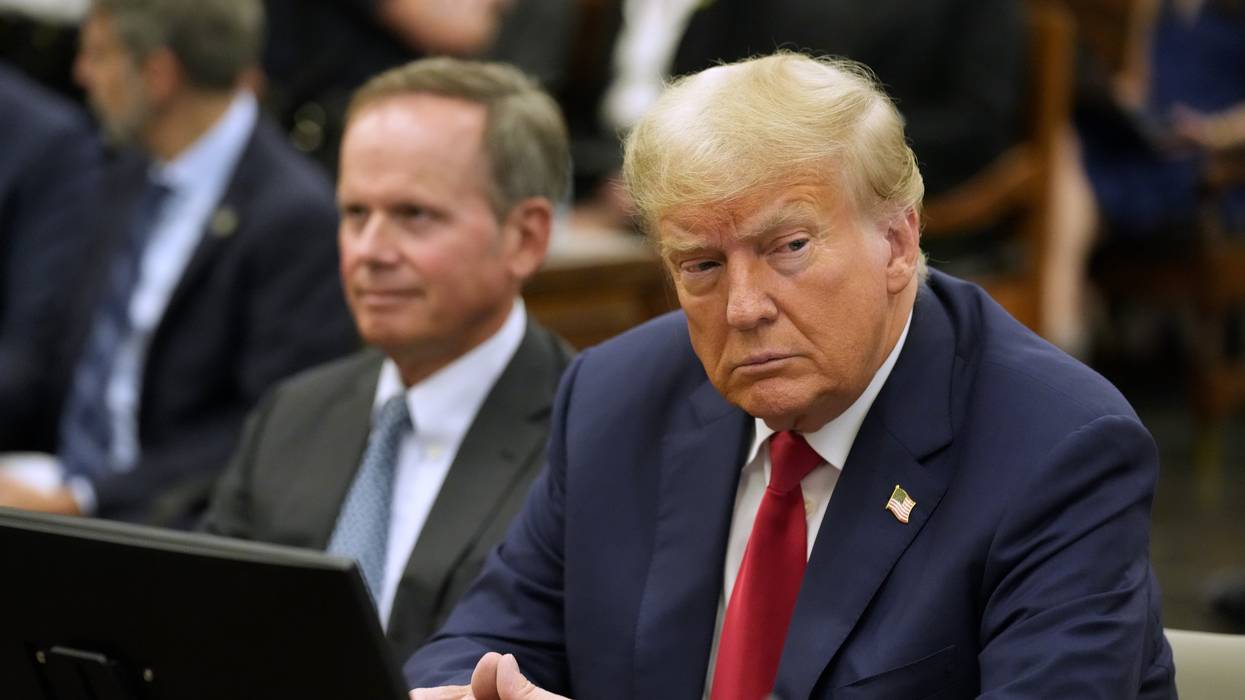
"Personal attacks on members of my court staff are unacceptable, inappropriate, and I will not tolerate them in any circumstances," said Justice Arthur Engoron.
In a New York on Tuesday afternoon, Justice Arthur Engoron issued a gag order against former President Donald Trump and said he would face further "serious sanctions" if he issues any more threats or public comments against the judge, his staff, or the court where Trump is on trial for civil fraud.
Engoron, who sits on the New York City Civil and State Supreme Court, issued the order shortly after the Republican 2024 presidential candidate's claimed on social media that Engoron's clerk is "running this case against" him.
"Consider this statement a gag order forbidding all parties from posting, emailing, or speaking publicly about any of my staff," he said. "Personal attacks on members of my court staff are unacceptable, inappropriate, and I will not tolerate them in any circumstances."
During a lunch break on Tuesday, Trump posted a photo of the clerk, attorney Allison Greenfield, with U.S. Senate Majority Leader Chuck Schumer (D-N.Y.) and called her "Schumer's girlfriend."
"How disgraceful! This case should be dismissed immediately," he wrote on Truth Social in a post that Engoron ordered him to delete.
On Monday as the trial opened, Trump called the proceedings a "scam," "a continuation of the single greatest witch hunt of all time," and "an attempt to hurt me in an election."
The judge noted on Tuesday that he had "warned counsel off the record about the former president's comments yesterday, but the warning went unheeded," according to The Hill.
The case is one of four pending civil and criminal cases against the former president and centers on allegations that Trump inflated the value of his assets in New York.
As Common Dreams reported on Monday, advocates are expressing concern for the safety of jurors in the four trials due to Trump's repeated claims that he will not "get a fair trial" and comments he's made regarding his legal troubles including, "If you go after me, I will come after you."
He has also targeted U.S. District Judge Tanya Chutkan, who is presiding over a case in Washington regarding Trump's alleged 2020 election interference, on social media.
Katie Phang, host of "The Katie Phang Show" on MSNBC, predicted that "this is the first of many gag orders against Trump that will be issued by Justice Engoron in this case."

Legal experts dismissed the move, which comes after the judge rejected an attempt by the GOP ex-president and current presidential candidate to delay the trial until 2026, after the 2024 election.
Former U.S. President Donald Trump's legal team on Monday asked the judge overseeing his federal election interference case—stemming from his efforts to overturn the 2020 results and him provoking the January 6, 2021 insurrection—to recuse herself, citing comments she made during cases involving some of his supporters who stormed the Capitol.
"The recusal motion was a risky gambit by Mr. Trump's legal team given that the judge, Tanya S. Chutkan, will have the initial say about whether or not to grant it," The New York Times noted. "Mr. Trump's lawyers have tried this strategy before, attempting—and failing—to have the judge overseeing his state felony trial in Manhattan step aside."
Along with those two cases, Trump faces an election interference case in Georgia and second federal case that, like the one overseen by Chutkan, is spearheaded by Special Counsel Jack Smith due to his presidential campaign. Trump remains the front-runner in the GOP's 2024 primary race despite being indicted four times this year.
A grand jury indicted Trump in the federal election case early last month, hitting him with what one watchdog group called his "most significant charges yet." His attorneys pushed for a 2026 trial—well after next year's election—but Chutkan, an appointee of former President Barack Obama who was randomly assigned to the case, scheduled it for March 4, 2024.
"Judge Chutkan has, in connection with other cases, suggested that President Trump should be prosecuted and imprisoned. Such statements, made before this case began and without due process, are inherently disqualifying," Trump's lawyers argued in the Monday motion. "Although Judge Chutkan may genuinely intend to give President Trump a fair trial—and may believe that she can do so—her public statements unavoidably taint these proceedings, regardless of outcome."
The motion points out that during a December 2021 hearing for Robert Palmer, Chutkan said: "Mr. Palmer—you have made a very good point, one that has been made before—that the people who exhorted you and encouraged you and rallied you to go and take action and to fight have not been charged... So you have a point, that the people who may be the people who planned this and funded it and encouraged it haven't been charged, but that’s not a reason for you to get a lower sentence."
The filing adds that during an October 2022 hearing, the judge told another defendant, Christine Priola:
This was nothing less than an attempt to violently overthrow the government, the legally, lawfully, peacefully elected government by individuals who were mad that their guy lost. I see the videotapes. I see the footage of the flags and the signs that people were carrying and the hats they were wearing and the garb. And the people who mobbed that Capitol were there in fealty, in loyalty, to one man—not to the Constitution, of which most of the people who come before me seem woefully ignorant; not to the ideals of this country; and not to the principles of democracy. It's a blind loyalty to one person who, by the way, remains free to this day.
Responding to Trump's motion on social media, University of Alabama law professor Joyce Vance, who is also an NBC News and MSNBC legal analyst, said Monday that it is "unsurprising that he would do this" but it "seems unlikely to succeed."
"The case for refusing Judge [Aileen] Cannon in Florida would be far stronger and so far, the [government] has not chosen to bring it," Vance added of the Trump appointee overseeing the other federal case, which involves classified documents.
Stephen Gillers, a legal ethics professor at New York University School of Law, reached a similar conclusion.
"I understand why Trump would like another judge, and I understand why Trump would like another venue," Gillers told The Washington Post, "but nothing I've heard—including the fact that Judge Chutkan has sentenced harshly other January 6 defendants—would warrant a recusal."
"Things such as what is said or done within the four corners of a case before her as a judge cannot be a basis for recusal because she's doing her job," he continued. "That's what judges do."
Some legal scholars and advocacy groups argue that regardless of the results of the four criminal cases, the 14th Amendment to the U.S. Constitution disqualifies Trump from holding office again because he incited an insurrection. A watchdog and lawyers for six Republican and unaffiliated Colorado voters filed a related lawsuit last week.

The Scottsboro Boys were victims of racism; Trump, conversely, has long been known for his racism.
“War Is Peace, Freedom Is Slavery, Ignorance Is Strength.” So wrote George Orwell in 1984, his famous dystopian novel about authoritarianism. The book gave us the term “Orwellian,” describing situations where facts are ignored, truth is turned on its head, and 2+2=5. Now, almost 75 years after its publication, the United States is confronting its own brush with authoritarianism, by prosecuting former President Donald Trump for his attempt to seize power after losing the 2020 election.
One of Trump’s recent federal court filings is truly Orwellian. Trump was trying to delay his trial by almost three years. The filing compares Trump, a self-proclaimed billionaire, to the Scottsboro Boys, nine Black youths who suffered one of the most notoriously racist judicial persecutions in U.S. history,
On March 25, 1931, a freight train was passing through Alabama en route from Chattanooga to Memphis. Two white women on the train, 23-year-old Victoria Price and 17-year-old Ruby Bates, accused a group of Black youths of gang raping them. Aged 12 to 20, they were arrested and hauled to jail in nearby Scottsboro, Alabama. A mob formed outside the jail, hoping to lynch the accused. Fortunately for the prisoners, both the sheriff and Alabama’s governor were opposed to lynching. The governor ordered the Alabama National Guard to surround the jail.
Retired California Superior Court Judge LaDoris Hazzard Cordell called Trump’s failed comparison to the Scottsboro Boys “stunningly stupid” on CNN
While protected from the mob, the Scottsboro Boys had no defense against Alabama’s deeply racist justice system. The day after their arrest, all nine were indicted. Two weeks later, eight of the Scottsboro Boys had been tried, found guilty, and sentenced to death. Their ordeal continued for decades. Ruby Bates subsequently recanted her accusation and testified on behalf of the nine. Two appeals made it to the U.S. Supreme Court, resulting in remarkable rulings that set the standards for requiring effective counsel and adequate time to prepare a defense, and barring racist exclusion of people of color from juries.
Which brings us to Donald Trump. On August 1, Trump was indicted on four counts related to his efforts to overturn his 2020 election loss—including the charge of conspiracy against rights, originally enacted in 1870 to prosecute the Ku Klux Klan for denying freed Black citizens their right to vote. Special Counsel Jack Smith asked for the trial to begin in January, 2024.
Trump’s lawyers countered with a request to delay his trial until April, 2026. In their court filing, they invoked the Scottsboro Boys’ Supreme Court decision, Powell v. Alabama, in which the Court ruled that the scandalously fast pace of their arrest and sentencing to death, along with the shoddy legal representation they received, were unconstitutional.
In rejecting Trump’s outlandish request, U.S. District Judge Tanya Chutkan said, “Many cases are unduly delayed because a defendant lacks adequate representation or cannot properly review discovery because they are detained. That is not the case here.”
Retired California Superior Court Judge LaDoris Hazzard Cordell called Trump’s failed comparison to the Scottsboro Boys “stunningly stupid” on CNN.
Anthony Michael Kreis, assistant professor of law at Georgia State University, said on the Democracy Now! news hour, “The important lesson from the Scottsboro Boys case is that in Alabama in the early 1930s, you had powers that be who used the criminal justice system in order to reinforce white supremacy—all-white juries, rushed sham trials, lack of criminal process and procedure. That’s just not what’s happening here in Washington, D.C., in the special counsel’s case at all. Donald Trump has been afforded every opportunity to have a robust defense.”
The Scottsboro Boys were victims of racism. Trump, conversely, has long been known for his racism, from discriminating against people of color as prospective tenants in the 1970s, to calling for the execution of the wrongfully accused Central Park Five in a full-page newspaper ad. Trump refused to apologize or retract his demand, despite their exoneration after spending years in prison. In 2017, he referred to the white supremacist mob in Charlottesville, Virginia, including Klansmen and neo-Nazis, as “very fine people.”
The Scottsboro Boys were falsely accused of rape, and had their lives ruined. Trump has been accused of sexual misconduct, sexual assault, or rape by no less than 26 women, and has so far avoided any consequences save a recent $5 million civil court verdict finding he had sexually abused writer E. Jean Carroll.
Clarence Norris was the sole living Scottsboro Boy to receive a pardon, in 1976. He died in 1989. In 2013, the remaining Scottsboro Boys received posthumous pardons from the State of Alabama. Their story of justice denied and delayed belongs in every school curriculum, not purged with Black history as is happening in red states from Arkansas to Florida. The Scottsboro Boys have no place, however, in cynical, Orwellian court filings from criminal defendants like Donald Trump.