
SUBSCRIBE TO OUR FREE NEWSLETTER
Daily news & progressive opinion—funded by the people, not the corporations—delivered straight to your inbox.
5
#000000
#FFFFFF
To donate by check, phone, or other method, see our More Ways to Give page.


Daily news & progressive opinion—funded by the people, not the corporations—delivered straight to your inbox.
The actions of these DAFs directly undermine democracy by excluding a group the administration has targeted and potentially denying funding to other targeted groups.
We know the Trump Department of Justice has threatened individuals they consider political opponents. Echoing authoritarian regimes worldwide, they’re now indicted Southern Poverty Law Center, or SPLC.
In response, major Donor-Advised Funds (DAFs), including Vanguard, Fidelity, and Schwab, have prevented clients from donating to SPLC, cutting the organization off from funding without even a shred of due process. If the DAFs follow this precedent, it could eliminate a key source of funding for any nonprofits this—or any future—administration chooses to attack.
The funds claim their action is necessary because, according to the administration, it constituted fraud for SPLC to have paid hate group informants. But federal and state law enforcement agencies have known about the infiltrations for years, using information they provided to help secure indictments and convictions. So the charges are spurious.
Fidelity justified its actions by citing a policy of pausing DAF giving if an organization “is being investigated for alleged illegal activities… such as terrorism, money laundering, hate crimes or fraud,” or if “state and federal agencies” are investigating a charitable organization. Schwab’s fund quietly removed SPLC from its list of eligible nonprofits, and a representative read me similar boilerplate, saying the fund was deciding on next steps.
If the Trump administration and its enablers can do this to SPLC, they can do it to far smaller and more vulnerable nonprofits.
The danger is far larger than the SPLC case. The listed criteria would let federal or state authorities cripple any nonprofit they choose, simply by launching an investigation. The organization doesn’t have to be convicted, or even indicted. They just have to be investigated, which makes this a perfect way to target political opponents. The administration has already issued a memorandum promising investigations of groups that promote “anti-fascism,” “anti-Christianity,” or “hostility” toward “traditional American views on family, religion, and morality.” It’s threatened Wikipedia, the Vera Institute for Justice, and the governmental watchdog Citizens for Responsibility and Ethics in Washington, not to mention major universities. All the federal government, or even a state government, would need to do to launch a DAF freeze is to open an official public investigation. And these major DAFs would then block the targeted organization from receiving funding.
The implications aren’t confined to the Trump administration. Under this precedent, Democrats holding power could do the same to disfavored nonprofits. Just launching an investigation would cut off a significant part of a targeted organization’s money flow. The defunding or banning of targeted NGOs is exactly what Vladimir Putin did in Russia, Viktor Orbán in Hungary, Recep Tayyip Erdoğan in Turkey, and Nicolás Maduro in Venezuela. It’s a classic way to eliminate opposition and consolidate power. And the anticipatory compliance of Vanguard, Fidelity, and Schwab is the exact kind of response that empowers would-be dictatorships, whatever their politics.
If a nonprofit is convicted of fraud or money laundering, it’s of course legitimate to remove or suspend their 501(c)(3) nonprofit status. But SPLC has neither been tried nor convicted, so the DAFs are letting a hostile administration’s mere accusation of wrongdoing become an excuse to block funding. The $326 billion of money that DAFs hold is part of the lifeblood of nonprofits. The actions of these DAFs directly undermine democracy by excluding a group the administration has targeted and potentially denying funding to other targeted groups. That’s true whatever you think of SPLC.
If there’s a nonprofit that could weather this, it’s SPLC, with its $786 million endowment. I don’t give to them because I think other groups are more impactful for the money they spend. But if the Trump administration and its enablers can do this to SPLC, they can do it to far smaller and more vulnerable nonprofits. For instance, they could target nonpartisan voter engagement groups, drying up funding (including pledged contributions) at the point when these groups need it the most to engage citizens in democracy. Damaging attacks on nonprofit funding also don’t have to come from the federal Department of Justice. Under Fidelity’s criteria, attacks could come from state governments as well, with potential targets including either conservative or liberal groups depending on which party runs a particular state.
But ordinary citizens have the power to change this. The campaigns that got ABC to reinstate Jimmy Kimmel offer a model. This issue has less visibility, but for the nonprofits it could affect is equally critical. If we have money in a DAF, our calls or emails could well make the difference. Schwab told me that they’d been getting lots of critical responses. But even if we don’t have a DAF, nearly 60% of us have retirement or other investment accounts, with most housed at the major affiliated brokerages. So we can reach out as well, threatening to switch our investments to brokerages that don’t empower authoritarian initiatives, like TIAA-CREF (at least for now Merrill Lynch-Bank of America is still putting through grants as well), and, if we have DAF’s, transfer them to ones that haven’t banned SPLC contributions, like Amalgamated Bank, Impact Assets, or Daffy. A group of socially responsible investment advisers have created a sign-on letter. New York’s historic Riverside Church just divested $12 million from Vanguard. A long-time activist friend created a leavefidelity.com site with cut and paste templates to send to the companies involved.
The goal is to echo what people did in the Kimmel situation when they boycotted the channels, advertisers, and theme park properties of national ABC-Disney and local Sinclair and Nextstar stations. People also protested in front of affiliated ABC stations—something they could do at the headquarters of the relevant brokerage houses. While DAFs are technically separate entities, they share investment management, administration, and the parent brand, which offers them as an incentive for clients. So we’re far from powerless.
The job of the brokerage houses is not to police client giving. Their affiliated DAFs need to allow donations to all legitimate nonprofits, whether or not the Trump administration—or any administration—agrees with what they do.
"Another example of the dangerous, overreaching abuse of executive power so endemic in this authoritarian administration."
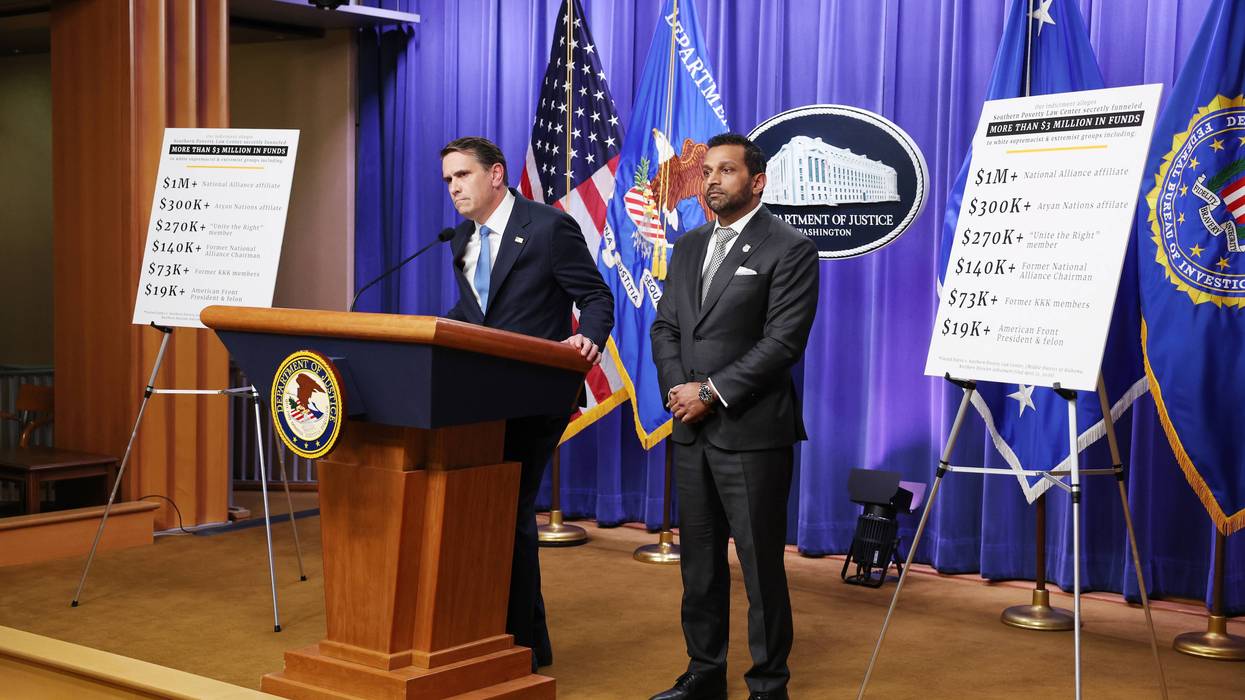
The civil rights and progressive advocacy community is rallying to the defense of the Southern Poverty Law Center after President Donald Trump's Justice Department indicted the organization on Tuesday on multiple counts of wire fraud and other charges, which the group has condemned as false and politically motivated.
The Justice Department, led by Acting Attorney General Todd Blanche—who previously served as Trump's personal attorney—said Tuesday that a grand jury in Montgomery, Alabama returned an indictment charging SPLC with "11 counts of wire fraud, false statements to a federally insured bank, and conspiracy to commit concealment money laundering." The Justice Department accused SPLC, which specializes in monitoring extremist groups and movements, of "funding" far-right white supremacist organizations such as the Ku Klux Klan by paying people to infiltrate them and gather information.
Bryan Fair, SPLC's interim chief executive, said the Trump DOJ's "false allegations" won't "shake our resolve to fight for justice and ensure the promise of the civil rights movement becomes a reality for all." Fair noted that SPLC no longer works with paid informants but emphasized that they "risked their lives to infiltrate and inform on the activities of our nation’s most radical and violent extremist groups."
Allied civil rights organizations spoke out in defense of the SPLC and warned that the Trump administration's legal assault on the group is part of a broader attack on those who oppose the far-right and work to protect democracy.
“What is happening to civil rights organizations right now is the most coordinated assault on our sector since COINTELPRO," Maya Wiley, president and CEO of the Leadership Conference on Civil and Human Rights. "We are the people who train poll workers, run food banks, fight discrimination, protect the right to protest, and staff domestic violence hotlines. We are the ones who make sure that everyone can live, love, vote, work, study, travel and simply be themselves, free from discrimination. This administration views that as a threat to its power."
"In order to have absolute power, it must dismantle our rights," Wiley added. "And that’s why they’re coming after us."
"We condemn this appalling move from a captured, weak-willed DOJ that is devoid of integrity and has lost sight of its mission under this administration."
Lisa Gilbert, co-president of the consumer watchdog group Public Citizen, called the SPLC indictment "another example of the dangerous, overreaching abuse of executive power so endemic in this authoritarian administration."
“This is a craven attempt to silence dissent by attacking a core civil rights organization focused on combating violent extremism," said Gilbert. "We condemn this appalling move from a captured, weak-willed DOJ that is devoid of integrity and has lost sight of its mission under this administration. We stand in solidarity with SPLC."
SPLC has repeatedly criticized Trump, members of his two administrations, people in his orbit, and extremist groups—such as the Proud Boys and Oath Keepers—that have supported the president's efforts to subvert American democracy, including with violence on January 6, 2021.
"To be clear: Trump’s FBI is going after the Southern Poverty Law Center because they infiltrated and exposed the same dangerous right-wing extremist groups that many Trump allies are associated with," activist Melanie D'Arrigo said in response to the indictment.
Anthony Romero, executive director of the ACLU, said in a statement that the Trump administration's "continued weaponization of the Justice Department to target organizations speaking out against its agenda is anti-American behavior harkening back to the McCarthy era."
“The Trump administration’s attack against the Southern Poverty Law Center is a direct threat to the values that make America great," said Romero. "In this time of unprecedented peril for our democracy, we urge all Americans of good conscience to join us as we stand in support of the Southern Poverty Law Center."
"We believe in democracy, and we believe that when politicians fail to act, the people have the right to step in," said the campaign manager of Florida Decides Healthcare, a plaintiff in the suit.
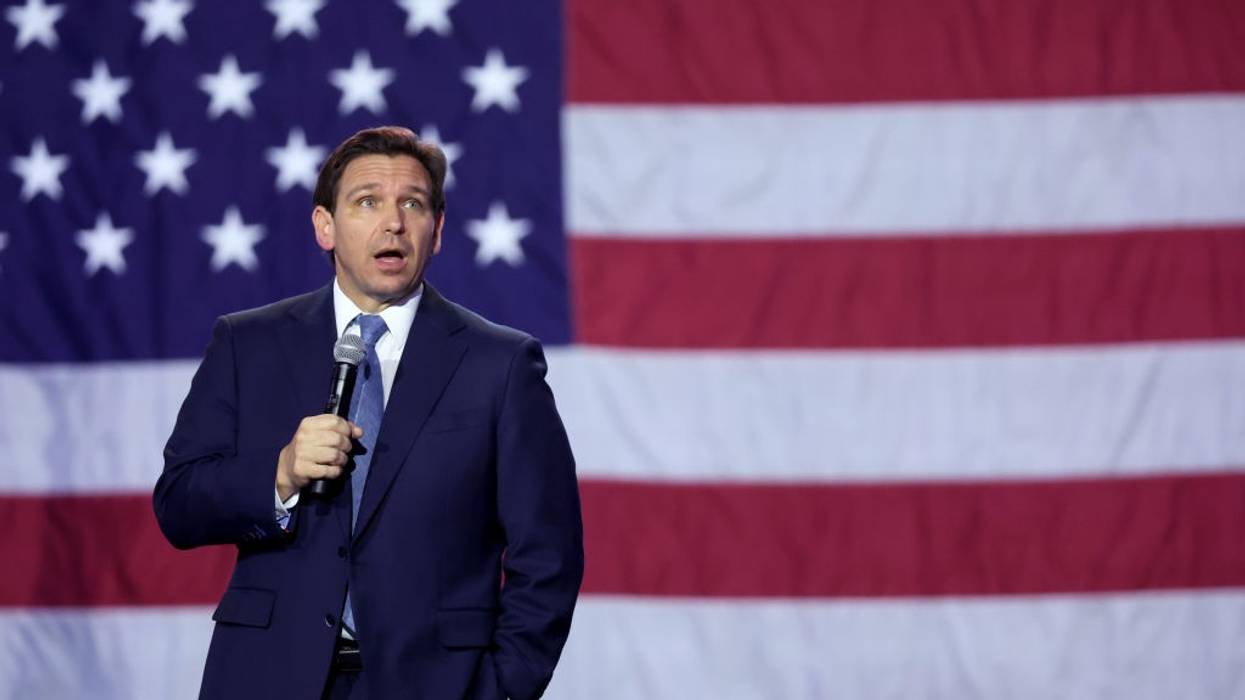
Florida Decides Healthcare, a political committee and nonprofit that is fighting for expanded Medicaid eligibility in the Sunshine State, on Sunday sued the Florida secretary of state and other state officials, challenging a law Republican Gov. Ron DeSantis signed last week that makes it tougher for citizens to get constitutional amendments on the ballot.
According to the lawsuit, which was filed in federal court, Florida Decides Healthcare (FDH) is working to qualify a ballot measure to appear on the 2026 general election ballot that, if voted through, would expand Medicaid coverage in Florida.
Provisions in H.B. 1205 include decreased time for organizers to submit signed petitions and increased monetary penalties for violations. The law also makes it a third-degree felony for anyone other than a registered petition circulator to collect or physically possess more than 25 signed petition forms beyond ones own and immediate family members.
"Because of H.B. 1205's punitive and onerous restrictions, set to go into effect in the middle of FDH's ongoing petition drive, the organization faces the real and imminent threat of being unable to continue its operations," according to the suit. "H.B. 1205 creates intolerable uncertainty, exposes FDH to ruinous civil and criminal penalties, and could ultimately force FDH to shut down its campaign entirely."
According to a statement from FDH, the lawsuit contends that the bill is a "direct assault" on the citizen-led constitutional amendment process in Florida, "a vital democratic tool that gives everyday Floridians the power to propose ballot initiatives."
H.B. 1205 creates "vague" and "punitive" restrictions around the process that will have a chilling impact on political speech and dissuade civic engagement, according to the group.
The Elias Law Group, a prominent Democratic law firm, and the Southern Poverty Law Center, a racial justice and legal advocacy group, are lending legal support to FDH.
This targeting of the citizens amendment process comes less than one year after two ballot initiatives in Florida narrowly failed. Amendment 4 sought to ensure the right to an abortion up until fetal viability. The measure narrowly failed, falling short of the 60% majority needed to pass, meaning Florida will remain under a six-week abortion ban. Amendment 3 sought to legalize marijuana and also failed. Groups backing the initiatives raised tens of millions of dollars.
According to the Orlando Sentinel, the DeSantis administration used public money to run ads targeting the initiatives, and defended the ad campaigns as educational.
"Floridians have a constitutional right to change policy themselves. State legislators have now effectively silenced their constituents, all in order to maintain their chokehold on policymaking," said Kelly Hall, executive director of the Fairness Project, in a statement on Tuesday. The Fairness Project was among the groups that backed Amendment 4 last fall.
"It's the ultimate cowardly act—for politicians to enact minority rule when they know their policies don't align with the will of the majority," Hall added. "Sadly, this is nothing new for DeSantis, who used extraordinarily undemocratic means to block the will of the people during the 2024 election."
Mitch Emerson, campaign manager for Florida Decides Healthcare, similarly called the law "cowardly." Emerson is also a plaintiff in the suit.
"It's not reform—it's repression. We are filing this lawsuit because we refuse to let them silence the people of Florida," said Emerson in a statement on Monday. "We believe in democracy, and we believe that when politicians fail to act, the people have the right to step in. Floridians are ready to vote for Medicaid expansion—and we intend to make sure they get that chance."