SUBSCRIBE TO OUR FREE NEWSLETTER
Daily news & progressive opinion—funded by the people, not the corporations—delivered straight to your inbox.
5
#000000
#FFFFFF
To donate by check, phone, or other method, see our More Ways to Give page.
Daily news & progressive opinion—funded by the people, not the corporations—delivered straight to your inbox.

"Rewarding an official who is actively executing the White House's war on an independent press with the keys to the intelligence community would be a catastrophic mistake."
A coalition of progressive groups is pressuring Senate Democrats to oppose President Donald Trump's nomination of Jay Clayton III to lead America's spy agencies over his role in helping the administration use the legal system to attack journalists.
Over the weekend, The New York Times reported that Clayton, who currently serves as the US attorney for Manhattan, had issued subpoenas to four of its journalists after they'd reported on security concerns related to the luxury jet gifted by the Qatari government, which Trump has begun to use in place of Air Force One against the wishes of the Secret Service.
The US Department of Justice said in a statement that the goal of the investigation was to prosecute leakers who spoke to the press about the plane's lacking security features. According to the Times, the FBI requested that it hold off publishing the story and reveal the names of its anonymous sources, which it refused to do.
A top newsroom lawyer for the Times described the subpoenas as "an attempt to prevent the public from knowing what is happening in their country by intimidating journalists from doing their jobs.”
On Monday, the group Demand Progress and nearly three dozen other progressive advocacy groups sent a letter to Democrats on the Senate Select Committee on Intelligence, as well as Minority Leader Chuck Schumer (NY) and Whip Dick Durbin (Ill.).
It urged them to oppose the nomination of Clayton to serve as director of national intelligence, a role previously held by Tulsi Gabbard, who resigned in May.
"The committee need not speculate how Clayton would exercise the enormous powers of the federal government: He is demonstrating it now," the coalition wrote. "A federal prosecutor who will weaponize the grand jury process against reporters—and their sources—to punish disclosures unwelcome to the president has shown the Senate the precise instinct that is disqualifying in a director of national intelligence."
"Rewarding an official who is actively executing the White House's war on an independent press with the keys to the intelligence community would be a catastrophic mistake," the letter continued.
The coalition emphasized that Clayton, whose confirmation hearing in the Senate is scheduled for Wednesday, has no experience in intelligence work, having spent most of his career as a corporate lawyer on Wall Street. He was tapped to lead the Securities and Exchange Commission during Trump's first term and then to serve as US attorney for the Southern District of New York in his second.
"More troublingly," it said, "Clayton has spent his time in this position weaponizing his authority on behalf of the president, particularly by politicizing high-profile investigations."
As Trump came under fire for his relationship with the late child sex criminal Jeffrey Epstein, Clayton was assigned to "take the lead" of a Department of Justice probe that selectively targeted a list of the president's enemies.
Clayton also oversaw the process of redacting files related to Epstein before their release to the public, which was met with criticism for including identifying information of abuse survivors, including nude photos, while blacking out the names of Trump and other prominent individuals despite a mandate from Congress.
The letter also notes Clayton's amplifying of Trump's debunked theories of election fraud in California as part of efforts to restrict mail-in voting, as well as his defense of Trump's $1.8 billion "slush fund," which a judge ruled this week constituted an improper act of self-dealing.
"We are living with the serious consequences of unqualified Trump loyalists, blindly pursuing the "MAGA" agenda at agencies like the Departments of Defense, Homeland Security, Education, Health and Human Services, and more," the letter concludes. "Adding the [intelligence community] to this list—especially in light of Clayton's shocking willingness to weaponize federal power to satisfy the president's political grievances... will have devastating consequences for our national security and the civil liberties of Americans."
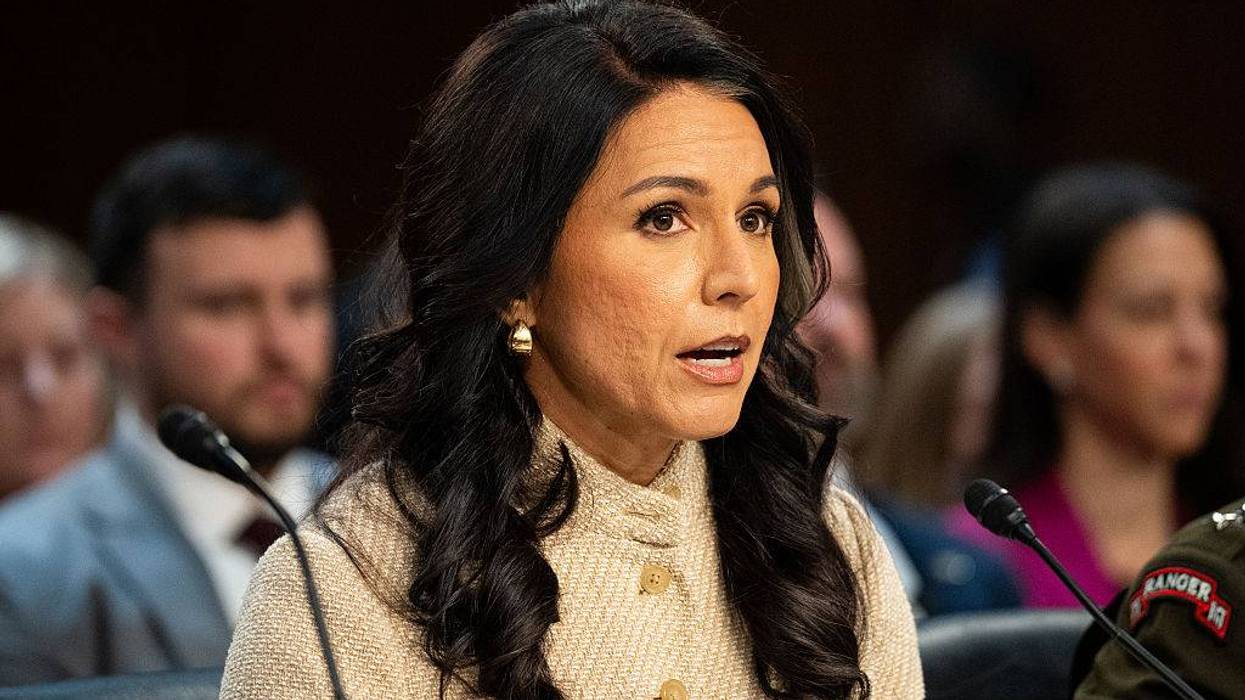
Sen. Jon Ossoff questioned how Iran could pose an "imminent nuclear threat" despite the purported "obliteration" of its nuclear program.
Sen. Jon Ossoff on Wednesday cornered Director of National Intelligence Tulsi Gabbard over President Donald Trump's false claims that he launched a war with Iran because it was an "imminent" threat to US national security.
During a Senate Select Intelligence Committee hearing, Ossoff (D-Ga.) questioned Gabbard about how any purported threat from Iran could possibly be deemed "imminent" given past administration statements about the state of its nuclear weapons program.
Ossoff began by noting that Gabbard's opening statement given to the committee ahead of the meeting claimed that "Iran's nuclear enrichment program was obliterated" as a result of airstrikes launched last year by the US.
"So the assessment of the intelligence community is that Iran's nuclear enrichment program was obliterated by last summer's airstrikes?" he asked.
"Yes," replied Gabbard, who prior to joining the Trump administration had a long history of advocating against launching a regime change war against Iran.
OSSOFF: Your opening statement stated that as a result of last summer's airstrikes, Iran's nuclear enrichment program was 'obliterated.' Correct?
GABBARD: That's right
OSSOFF: The WH stated on March 1 that this war was launched to 'eliminate the imminent nuclear threat posed by… pic.twitter.com/3rPVnmZVTb
— Aaron Rupar (@atrupar) March 18, 2026
"The opening statement you submitted to the community last night also stated, 'There has been no effort since then to try to rebuild their enrichment capability,' correct?" Ossoff continued.
"That's right," Gabbard replied.
"The White House stated on March 4 of this year that this war... was a 'military campaign to eliminate the imminent nuclear threat posed by the Iranian regime,'" Ossoff said. "That's a statement from the White House: 'The imminent nuclear threat posed by the Iranian regime.' Was it the assessment of the intelligence community that there was an imminent nuclear threat posed by the Iranian regime?"
Gabbard briefly paused and then responded that "the intelligence community assessed that Iran maintained the intention to rebuild and to continue to grow their nuclear enrichment capabilities."
At this point, Ossoff interjected.
"Was it the assessment of the intelligence community that there was an 'imminent nuclear threat' posted by the Iranian regime, yes or no?" he pressed.
"Senator, the only person who can determine what is or is not an imminent threat is the president," Gabbard said.
"False," Ossoff shot back. "This is the worldwide threats hearing where you present to Congress national intelligence... you've stated today that the intelligence community's assessment is that Iran's nuclear enrichment program was 'obliterated,' and that there 'had been no efforts since then to try to enrich their capability.'"
Ossoff then asked Gabbard if the intelligence community believed Iran posed an "imminent nuclear threat" despite the purported "obliteration" of its nuclear program.
"It is not the intelligence community's responsibility to determined what is and is not an imminent threat," Gabbard said.
"It is precisely your responsibility to determine what constitutes a threat to the United States," Ossoff countered. "This is the worldwide threats hearing."
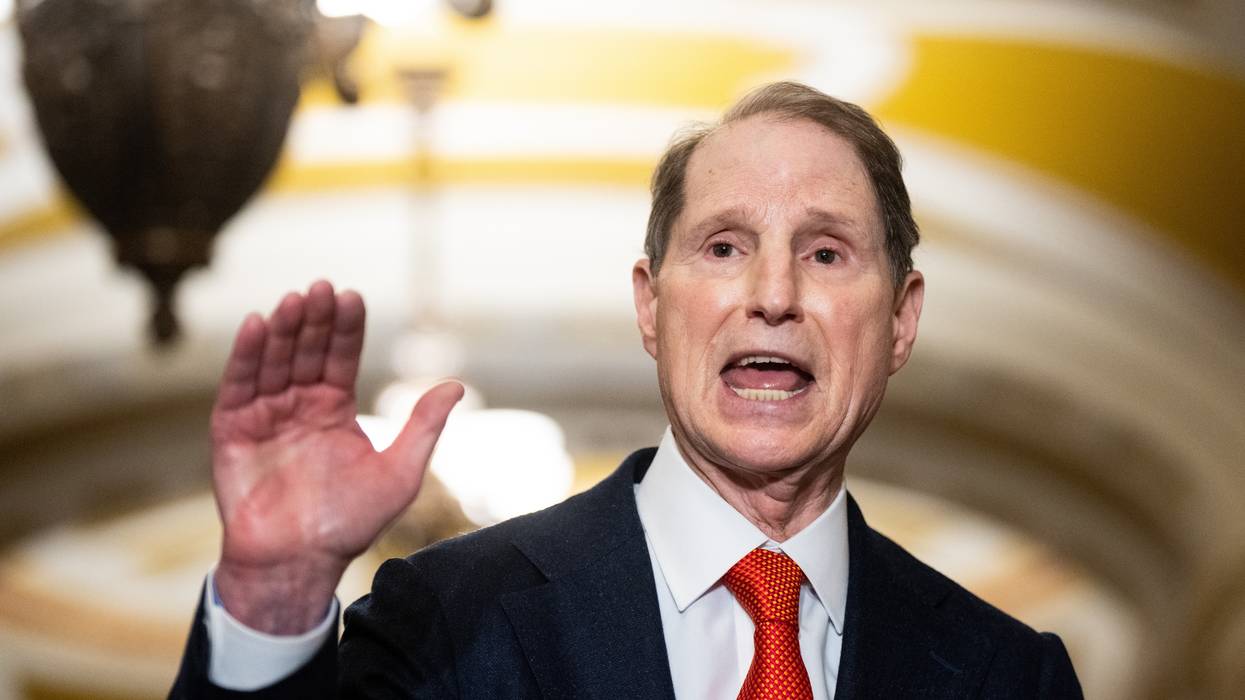
"When Wyden sends a cryptic letter or asks a pointed question suggesting something concerning is happening behind the classification curtain, something concerning is absolutely happening," said one observer.
Sen. Ron Wyden "only talks like this when the spies do something *real* bad."
That's how journalist Spencer Ackerman reacted Thursday to a letter from the Oregon Democrat to Central Intelligence Agency Director John Ratcliffe expressing alarm over unspecified CIA activities, as observers noted Wyden's history of heads-up previews of government wrongdoing.
“I write to alert you to a classified letter I sent you earlier today, in which I express deep concerns about CIA activities,” Wyden, who is a member of the Senate Intelligence Committee, said in the letter. “Thank you for your attention to this important matter.”
Senate Intelligence Committee Vice Chair Mark Warner “shares many of the concerns expressed by Sen. Wyden in his letter, and in fact he has expressed them to... Ratcliffe himself," according to a spokesperson for the Virginia Democrat.
This is how Sen. Ron Wyden clues the public into activity that he finds extremely alarming. He does a press release about a letter he sent to the director of the CIA that basically says, 'I want to make sure you saw the classified letter I sent early today.' www.wyden.senate.gov/imo/media/do...
[image or embed]
— Kashmir Hill (@kashhill.bsky.social) February 4, 2026 at 1:53 PM
Wyden told HuffPost Thursday that “the reason I sent the public letter is that is all that I’m allowed to say publicly, and I’m gonna leave it at that.”
“I said what I did for a specific reason," he added. "I wrote it for a specific reason. That’s all I can say.”
Wyden has a storied history of issuing cryptic warnings about classified government or intelligence misdeeds before they are disclosed to the public, going back to the Obama administration's secret reinterpretation of the PATRIOT Act in 2011.
The senator also warned about a withheld 2015 Department of Justice legal opinion on cybersecurity, Section 702 surveillance during the first Trump administration, US Immigration and Customs Enforcement's (ICE) use of bulk administrative subpoenas to collect millions of Americans’ financial records during the Biden administration, and more.
Techdirt blog editor Mike Masnick calls it the "Wyden Siren": "The pattern repeats. Wyden asks a specific question about surveillance. The intelligence community answers a slightly different question in a way that technically isn’t lying but is designed to mislead. Wyden calls them out. Eventually, the truth comes out, and it’s always worse than people assumed."
"The track record here is essentially perfect," Masnick added. "When Wyden sends a cryptic letter or asks a pointed question suggesting something concerning is happening behind the classification curtain, something concerning is absolutely happening behind the classification curtain."
Masnick continued:
So what’s happening at the CIA that has Wyden sending a two-sentence letter that amounts to “I legally cannot tell you what’s wrong, but something is very wrong?"
We don’t know yet. That’s the whole point of classification—it keeps the public in the dark about what their government is doing in their name. But Wyden’s letter is the equivalent of a fire alarm. He’s seen something. He can’t say what. But he wants there to be a record that he raised the concern.
"Given the current administration’s approach to, well, everything, the possibilities are unfortunately vast," Masnick said. "Is it about domestic surveillance? Something about current [Office of the Director of National Intelligence] Tulsi Gabbard? International operations gone sideways? Some new interpretation of the CIA’s authorities that would make Americans’ hair stand on end if they knew about it? We’re left guessing, just like we were guessing about the PATRIOT Act’s secret interpretation back in 2011."
"But here’s what we do know: Ron Wyden has been doing this for at least 15 years," Masnick added. "And every single time, he’s been vindicated. The secret programs were real. The abuses were real. The gap between what the public thought was happening and what was actually happening was real."
"The Wyden Siren is blaring," he added. "Pay attention."
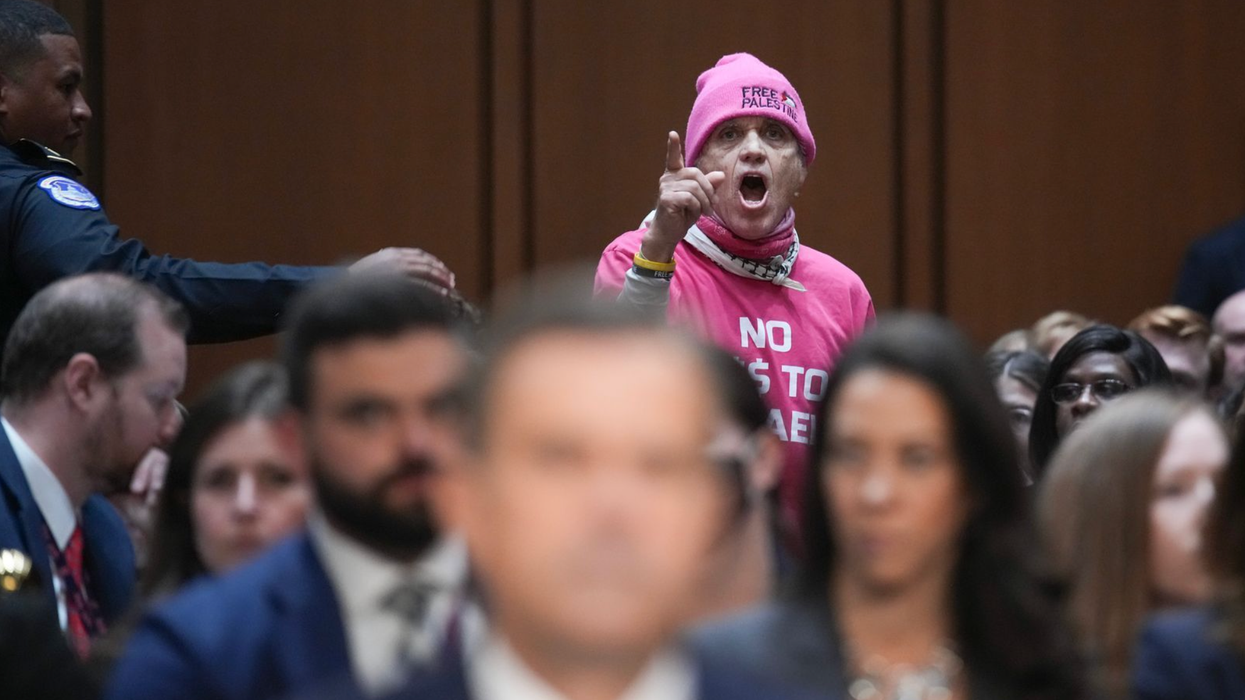
Sen. Cotton does not seem to care that his untruthful statements in a U.S. congressional hearing aired around the world can have immediate and dangerous consequences for those he lies about, their friends, and family.
On Tuesday, in the U.S. Senate Intelligence Committee hearing on global threats with the five heads of intelligence agencies of the U.S. government, Republican Arkansas Sen. Tom Cotton accused on national TV a group I have worked with for over 20 years, CODEPINK: Women for Peace, of being funded by the Communist Party of China.
During the hearing CODEPINK activist Tighe Barry stood up following the presentation of the Director of National Security Tulsi Gabbard’s lengthy statement about global threats to U.S. national security and yelled, “Stop Funding Israel,” since neither Intelligence Committee Chair Cotton nor Vice Chair Sen. Mark Warner (D-Va.) had mentioned Israel in their opening statement, nor had Gabbard mentioned the Israeli genocide of Palestinians in Gaza in her statement either.
As Capitol police were taking Barry out of the hearing room, in the horrific style of the McCarthy hearings in the 1950s, Cotton maliciously said that Barry was a “CODEPINK lunatic that was funded by the Communist Party of China.” Cotton then said if anyone had something to say to do so.
CODEPINK members have been challenging in the U.S. Congress the war policies of five presidential administrations, beginning in 2001 with the Bush wars on Afghanistan and Iraq, long before Sen. Cotton was elected as a U.S. Senator in 2014.
Refusing to buckle or be intimidated by Cotton’s lies about the funding of CODEPINK, I stood up and yelled, “I’m a retired Army colonel and former diplomat. I work with CODEPINK, and it is not funded by Communist China.” I too was hauled out of the hearing room by Capitol police and arrested.
After I was taken out of the hearing room, Cotton libelously continued his McCarthyite lie: “The fact that Communist China funds CODEPINK, which interrupts a hearing about Israel, illustrates Director Gabbard’s point that China, Russia, Iran, and North Korea are working together in greater concert than they ever had before.”
Sen. Cotton does not appreciate the responsibility he has in his one-month-old elevation to the chair of the Senate’s Intelligence Committee.
Sen. Cotton does not seem to care that his untruthful statements in a U.S. congressional hearing aired around the world can have immediate and dangerous consequences for those he lies about, their friends, and family. In today’s polarized political environment, we know that the words of senior leaders can rile supporters into frenzies as we saw on January 6, 2021, with President Donald Trump’s loyal supporters injuring many Capitol police and destroying parts of the nation’s Capitol building in their attempt to stop the presidential election proceedings.
CODEPINK members have been challenging in the U.S. Congress the war policies of five presidential administrations, beginning in 2001 with the Bush wars on Afghanistan and Iraq, long before Sen. Cotton was elected as a U.S. Senator in 2014. We have been in the U.S. Senate offices and halls twice as long as he has. We have nonviolently protested the war policies of former Presidents George W. Bush, Barack Obama, Trump, Joe Biden, and now Trump again.
After getting out of the Capitol Hill police station, a CODEPINK delegation went to Sen. Cotton’s office in the Russell Senate Office building and made a complaint to his office staff.
We are also submitting a complaint to the Senate Ethics Committee over the untrue and libelous statements Sen. Cotton made in the hearing.
The abduction and deportation of international students who joined protests against U.S. complicity in the Israeli genocide of Palestinians in Gaza and ethnic cleansing of the West Bank, the scathing treatment of visitors who have wanted to enter our country, and now the McCarthyite intimidating tactics used by Sen. Cotton in a Senate Intelligence Committee hearing of telling lies about individuals and organizations that challenge the policies of the U.S. government, particularly its complicity in the Israeli genocide of Gaza, must be called out and pushed back against.
And we must push back against U.S. senators who actually receive funding from front groups for other countries. Sen. Cotton has received $1,197,989 from the American Israel Public Affairs Committee (AIPAC) to advocate for the genocidal policies of the State of Israel.
Yesterday, June 16th, marked one year since Jeffrey Sterling began his 3.5-year prison sentence for divulging classified information to a New York Times journalist, a crime he did not commit. One year, he was deprived of the freedom that so many of us take for granted every day; one year separated from his loving wife, his friends, and his family, and one year of wasted talent as a licensed attorney, a former CIA case officer fluent in Farsi, and a successful investigator who uncovered over 32 million dollars in healthcare fraud.
Today, we want to remind the American people that Jeffrey's conviction and sentence were unjust and renew our appeal to President Barack Obama to pardon him.
Why has he had to suffer such an injustice? Because the United States government wanted to punish Jeffrey for blowing the whistle and for fighting for his civil rights against the CIA?
Jeffrey is a beloved husband, a brother, a friend, and an honorable man who has consistently worked to keep our country safe. He was one of the few African Americans to work as a CIA case officer, and he was incredibly proud of this accomplishment. But he soon became disillusioned by a work environment characterized by racial disparity and was dismayed to learn that the government he worked for was shrouded in mistruths and secrecy.
The CIA planned to use a former Russian nuclear engineer to pass flawed designs to Iranian scientists, a program that was revealed in New York Times Journalist James Risen's book "State of War." Jeffrey had grave concerns about the mismanagement of this program and the potential harm to the citizens of our country, and so he used proper legal channels to inform the Senate Select Committee on Intelligence.
During Jeffrey's trial, the Department of Justice was unable to present any direct evidence proving that he divulged classified information to James Risen. To convict him, the DOJ relied solely on circumstantial evidence -- emails and telephone conversations -- to try to prove that Jeffrey was Risen's source. In the end, Jeffrey was severely punished for merely communicating with a journalist, which caused a public outcry from press freedom organizations like Reporters Without Borders.
How did the government justify that Jeffrey was their only suspect when over 90 additional individuals had access to the same classified information and could have easily leaked it to James Risen?
As Jeffrey repeatedly made clear throughout his trial, his relationship with Risen was related to his interest in Jeffrey's discrimination lawsuit against the CIA.
When Jeffrey was preparing for his first overseas post for the agency in Germany, his supervisor told him "we are concerned you would stick out as a big black guy speaking Farsi" and informed him that another person would be taking the assignment. When he filed an Equal Opportunity Employment complaint, the CIA fired him. Shortly afterward, he became the first African American to file a racial discrimination lawsuit against the CIA. Still, his suit was never allowed to go forward because the government claimed it would reveal "state secrets."
According to the United States government, Jeffrey then "retaliated" against the CIA by leaking classified information to James Risen. The moment that the administration felt there was an opportunity to incriminate him for fighting for his civil rights, every finger pointed to Jeffrey, and no amount of evidence or lack thereof could defy the verdict that followed.
Jeffrey's case drastically differs from that of former CIA Director General David Petraeus, who pleaded guilty to divulging huge amounts of classified information to his biographer and lying to an FBI agent, far more egregious acts than Jeffrey was accused of. Yet Petraeus was able to walk away with two years probation and a fine. Suppose one strips away the race, financial status, and political clout of each of these men and solely compares their alleged crimes. In that case, it is glaringly obvious that this was selective prosecution and sentencing.
Petraeus' treatment solidified the belief in this country that the white man is presumed to be innocent and can do no wrong, and at worst, receives a slap on the wrist, while the black man is guilty until proven innocent and belongs behind bars. Never in the history of this nation has there been a black person who had the courage to fight racial discrimination in the CIA, and a black man in the White House that would allow him to go to jail unjustly.
Justice must be served for this mockery of the truth. Jeffrey is innocent and always has been. Our appeal to the President to pardon Jeffrey is a request for the acknowledgment of this undeniable injustice done to Jeffrey and amends to the wrongful conviction that changed our lives forever. Please don't forget him; he serves time for a crime he didn't commit.
To learn more about Jeffrey's case, click here. To sign the petition asking President Obama to pardon him, click here.
The two psychologists credited with creating the brutal, post-9/11 Central Intelligence Agency (CIA) torture regime are being sued by three victims of their program on charges that include "human experimentation" and "war crimes."
The American Civil Liberties Union (ACLU) on Tuesday filed the suit against CIA contractors James Mitchell and Bruce Jessen on behalf of torture survivors Suleiman Abdullah Salim and Mohamed Ahmed Ben Soud, as well as the family of Gul Rahman, who died of hypothermia in his cell as a result of the torture he endured.
The suit, which is the first to rely on the findings of the Senate Intelligence Committee report on CIA torture, charges Mitchell and Jessen under the Alien Tort Statute for "their commission of torture, cruel, inhuman, and degrading treatment; non-consensual human experimentation; and war crimes," all of which violate international law.
The pair, both former U.S. military psychologists, earned more than $80 million for "designing, implementing, and personally administering" the program, which employed "a pseudo-scientific theory of countering resistance that justified the use of torture" that was based on studies in which researchers "taught dogs 'helplessness' by subjecting them to uncontrollable pain," according to the suit.
"These psychologists devised and supervised an experiment to degrade human beings and break their bodies and minds," said Dror Ladin, a staff attorney with the ACLU National Security Project. "It was cruel and unethical, and it violated a prohibition against human experimentation that has been in place since World War II."
In a lengthy report, the ACLU describes each plaintiff's journey.
After being abducted by CIA and Kenyan agents in Somalia, Suleiman Abdullah, a newlywed fisherman from Tanzania, was subjected to "an incessant barrage of torture techniques," including being forced to listen to pounding music, doused with ice-cold water, beaten, hung from a metal rod, chained into stress positions "for days at a time," starved, and sleep deprived. This went on for over a month and was continually interspersed with "terrifying interrogation sessions in which he was grilled about what he was doing in Somalia and the names of people, all but one of whom he'd never heard of."
Held for over five years without charge and moved numerous times, Abdullah was eventually sent home to Zanzibar "with a document confirming he posed no threat to the United States." He continues to suffer from flashbacks and physical pain and has "become a shell of himself."
Mohamed Ben Soud was captured in April 2003 during a joint U.S.-Pakistani raid on his home in Pakistan, where he and his wife moved after fleeing the Gaddafi regime in Libya. Ben Soud said that Mitchell even "supervised the proceedings" at one of his water torture sessions.
Describing Ben Soud's ordeal, the ACLU writes:
The course of Mohamed's torture adhered closely to the "procedures" the CIA laid out in a 2004 memo to the Justice Department. Even before arriving at COBALT, [a CIA prison in Afghanistan] Mohamed was subjected to "conditioning" procedures designed to cause terror and vulnerability. He was rendered to COBALT hooded, handcuffed, and shackled. When he arrived, an American woman told him he was a prisoner of the CIA, that human rights ended on September 11, and that no laws applied in the prison.
Quickly, his torture escalated. For much of the next year, CIA personnel kept Mohamed naked and chained to the wall in one of three painful stress positions designed to keep him awake. He was held in complete isolation in a dungeon-like cell, starved, with no bed, blanket, or light. A bucket served as his toilet. Ear-splitting music pounded constantly. The stench was unbearable. He was kept naked for weeks. He wasn't permitted to wash for five months.
According to the report, the torture regime designed and implemented by Mitchell and Jessen "ensnared at least 119 men, and killed at least one--a man named Gul Rahman who died in November 2002 of hypothermia after being tortured and left half naked, chained to the wall of a freezing-cold cell."
Gul's family has never been formally notified of his death, nor has his body been returned to them for a dignified burial, the ACLU states. Further, no one has been held accountable for his murder. But the report notes, "An unnamed CIA officer who was trained by Jessen and who tortured Rahman up until the day before he was found dead, however, later received a $2,500 bonus for 'consistently superior work.'"
The ACLU charges that the theories devised by Mitchell and Jessen and employed by the CIA "had never been scientifically tested because such trials would violate human experimentation bans established after Nazi experiments and atrocities during World War II." Yet, they were the basis of "some of the worst systematic brutality ever inflicted on detainees in modern American history."
Despite last year's release of the Senate Torture Report, the government has prosecuted only a handful of low-level soldiers and one CIA contractor for prisoner abuse. Meanwhile, the architects of the CIA's torture program, which include Mitchell and Jessen, have escaped any form of accountability.
Physicians for Human Rights (PHR) issued a statement saying they welcomed the federal lawsuit as "a landmark step toward accountability" and urged the U.S. Department to follow suit and criminally "investigate and prosecute all those responsible for torture, including health professionals."
In the wake of the Senate report, the group strongly criticized Mitchell and Jessen for betraying "the most fundamental duty of the healing professions."
In Tuesday's statement, Donna McKay, PHR's executive director, said: "Psychologists have an ethical responsibility to 'do no harm,' but Mitchell and Jessen's actions rank among the worst medical crimes in U.S. history."
Last week CIA whistleblower Jeffrey Sterling went to prison. If he were white, he probably wouldn't be there.
Sterling was one of the CIA's few African-American case officers, and he became the first to file a racial discrimination lawsuit against the agency. That happened shortly before the CIA fired him in late 2001. The official in Langley who did the firing face-to-face was John Brennan, now the CIA's director and a close adviser to President Obama.
Five months ago, in court, prosecutors kept claiming that Sterling's pursuit of the racial bias lawsuit showed a key "motive" for providing classified information to journalist James Risen. The government's case at the highly problematic trial was built entirely on circumstantial evidence. Lacking anything more, the prosecution hammered on ostensible motives, telling the jury that Sterling's "anger," "bitterness" and "selfishness" had caused him to reveal CIA secrets.
But the history of Sterling's conflicts with the CIA has involved a pattern of top-down retaliation. Sterling became a problem for high-ranking officials, who surely did not like the bad publicity that his unprecedented lawsuit generated. And Sterling caused further hostility in high places when, in the spring of 2003, he went through channels to tell Senate Intelligence Committee staffers of his concerns about the CIA's reckless Operation Merlin, which had given Iran some flawed design information for a nuclear weapons component.
Among the U.S. government's advantages at the trial last winter was the fact that the jury did not include a single African American. And it was drawn from a jury pool imbued with the CIA-friendly company town atmosphere of Northern Virginia.
Sterling's long struggle against institutionalized racism is far from over. It continues as he pursues a legal appeal. He's in prison near Denver, nearly 900 miles from his home in the St. Louis area, making it very difficult for his wife, Holly, to visit.
Last week, as Sterling headed to Colorado, journalist Kevin Gosztola wrote an illuminating piece that indicated the federal Bureau of Prisons has engaged in retaliation by placing Sterling in a prison so far from home. Gosztola concluded: "There really is no accountability for BOP officials who inappropriately designate inmates for prisons far away from their families."
With the government eager to isolate Jeffrey Sterling, it's important for him to hear from people who wish him well. Before going to prison, Sterling could see many warmly supportive comments online, posted by contributors to the Sterling Family Fund and signers of the petition that urged the Justice Department to drop all charges against him. Now he can get postal mail at: Jeffrey Sterling, 38338-044, FCI Englewood, Federal Correctional Institution, 9595 West Quincy Ave., Littleton, CO 80123.
(Sterling can receive only letters and cards. "All incoming correspondence is reviewed," the Sterling Family Fund notes. "It is important that all content is of an uplifting nature as any disparaging comments about the government, the trial or any peoples involved will have negative consequences for Jeffrey.")
While it's vital that Sterling hear from well-wishers, it's also crucial that the public hear from him. "The Invisible Man: CIA Whistleblower Jeffrey Sterling," released the day after he was sentenced in mid-May, made it possible for the public to hear his voice. The short documentary (which I produced for ExposeFacts) was directed by Oscar nominee Judith Ehrlich.
More recently, journalist Peter Maass did a fine job with an extensive article, "How Jeffrey Sterling Took on the CIA -- and Lost Everything."
It should be unacceptable that racism helped the government to put Jeffrey Sterling in prison.
It was a truly historic moment Tuesday when Senate Intelligence Committee Chair Dianne Feinstein took to the Senate floor to warn that the CIA's continuing cover-up of its torture program is threatening our constitutional division of power. By blatantly concealing what Feinstein condemned as "the horrible details of a CIA program that never, never, never should have existed," the spy agency now acts as a power unto itself, and the agency's outrages have finally aroused the senator's umbrage.
As Sen. Patrick J. Leahy, chair of the Judiciary Committee that will be investigating Feinstein's charges noted, "in 40 years here, it was one of the best speeches I'd ever heard and one of the most important." That was particularly so, given that Feinstein's searing indictment of the CIA's decade-long subversion of congressional oversight of its torture program comes from a senator who previously has worked overtime to justify the subversion of democratic governance by the CIA and other spy agencies.
But clearly the lady has by now had enough, given the CIA's recent hacking of her Senate committee's computers in an effort to suppress a key piece of evidence supporting the veracity of the committee's completed but still not released 6,300-page study that the CIA is bent on suppressing.
The Senate's investigation began in earnest with the Dec. 7, 2007, revelation in The New York Times that the CIA had destroyed videotapes of its "enhanced interrogation techniques," despite objections from then-President Bush's director of national security and the White House counsel. At that time, then-committee chair Jay Rockefeller, D-W.Va., sent staffers to begin the painstaking process of reviewing the limited material that the CIA was willing to make available; their preliminary report wasn't issued until early 2009.
By then, Feinstein had assumed the chairmanship and, as she recalled in her Tuesday speech, "The resulting staff report was chilling. The interrogations and the conditions of confinement at the CIA detention sites were far different and far more harsh than the way the CIA had described them to us."
Feinstein on the Intel Committee's CIA ReportSenator Dianne Feinstein spoke on the Senate floor on March 11, 2014, about the Senate Intelligence Committee's study of the ...
Feinstein, ostensibly backed by new President Barack Obama, who had campaigned as an opponent of the CIA's methods, obtained the committee's bipartisan backing for an expanded investigation. But the CIA, led at the time by Obama appointee Leon Panetta, the former Democratic congressman, put numerous logistical obstacles in the way of the Senate investigation.
As Feinstein pointed out, "the CIA hired a team of outside contractors--who otherwise would not have had access to these sensitive documents--to read, multiple times, each of the 6.2 million pages of documents produced, before providing them to fully-cleared committee staff conducting the committee's oversight work. This proved to be a slow and very expensive process."
It was so slow that the committee's investigation has only now been completed. Along the way, documents that Senate staffers found interesting would then mysteriously disappear from the system. One such set of disappeared documents, referred to as the "Internal Panetta Review," is now at the center of the CIA hacking scandal.
The Panetta Review became relevant in June, when the CIA offered its critique of the Senate study. But as Feinstein points out, "Some of those important parts that the CIA now disputes in our committee study are clearly acknowledged in the CIA's own Internal Panetta Review. To say the least, this is puzzling. How can the CIA's official response to our study stand factually in conflict with its own Internal Review?"
Relations between the Senate committee responsible for oversight of the CIA and the agency were so poor that, as Feinstein states, "after noting the disparity between the official CIA response to the committee study and the Internal Panetta Review, the committee staff securely transported a printed portion of the draft Internal Panetta Review from the committee's secure room at the CIA-leased facility to the secure committee spaces in the Hart Senate Office Building."
Feinstein defended the committee staff's spiriting information away from the CIA:
"As I have detailed, the CIA has previously withheld and destroyed information about its Detention and Interrogation Program. ... There was a need to preserve and protect the Internal Panetta Review in the committee's own secure spaces."
The response of the CIA was to hack the computers that Senate staffers had been using at the CIA off-site location, and the agency's acting general counsel filed a crimes report with the Department of Justice against the Senate committee's staff.
That was too much for Feinstein, who outed the CIA's counsel:
"I should note that for most, if not all, of the CIA's Detention and Interrogation Program, the now acting general counsel was a lawyer in the CIA's Counterterrorism Center--the unit within which the CIA managed and carried out this program. From mid-2004 until the official termination of the Detention and Interrogation Program in January 2009, he was the unit's chief lawyer. He is mentioned by name more than 1,600 times in our study. And now this individual is sending a crimes report to the Department of Justice on the actions of congressional staff--the same congressional staff who researched and drafted a report that details how CIA officers--including the acting general counsel himself--provided inaccurate information to the Justice Department about the program."
Enough said, except that White House spokesman Jay Carney put the president on the side of those like current CIA Director John Brennan covering up torture: "The president has great confidence in John Brennan and confidence in our intelligence community and in our professionals at the CIA." It's something that George W. Bush would have said.
The CIA must release a previously unknown and classified internal study that is said to detail torture and secret detentions conducted by the agency, Senator Mark Udall urged Tuesday at a confirmation hearing for Caroline Krass, a nominee for the CIA's general counsel.
Leading the charge among members on the committee calling for more transparency and better cooperation from the clandestine agency, Udall said he would not support Krass' nomination until the internal report--which has so far been kept even from members of the Senate Intelligence Committee--is released.
According to a statement put out by Udall's office, the senator's understanding is that the CIA's internal report, initiated by former CIA Director Leon Panetta, reached similar conclusions to those in the committee's 6,300-page study, which was approved and sent to the CIA in December 2012.
In order to put pressure on the CIA, Udall used Thursday's hearings to push the issue. As Reuters reports:
Udall asked Krass to ensure that the CIA provided the committee a copy of the internal review [...] of the agency's detention and interrogation program.
"It appears that this review ... is consistent with the Intelligence Committee's report, but, amazingly, it conflicts with the official CIA response to the committee's report," Udall said.
"If this is true, it raises fundamental questions about why a review the CIA conducted internally years ago and never provided to the committee is so different from the CIA's formal written response to the committee's study," he added.
The report's existence was not public knowledge until Udall questioned Krass during the hearing.
Udall said that the committee have "requested a copy of the internal review, but the CIA has yet to provide it."
The Senate's own investigation, which has also been classified, is said to document the brutality of the CIA torture's program, but calls to make that report public have so far been resisted by the both the CIA and the White House.
Udall says he has pressed for a public statement from the White House "committing to the fullest possible declassification" of the committee's own study, in addition to the CIA's response.
As The Guardian's Spencer Ackerman reports, "It is unclear if the committee will reject Krass's nomination. But the two-hour exchange highlighted the difficulties the intelligence committees can face in getting basic factual information from the intelligence agencies they are tasked with overseeing."
Reports Ackerman:
Asked directly and repeatedly if the Senate panel was entitled to the memos, which several senators claimed were crucial for performing their oversight functions, Krass replied: "I do not think so, as a general matter."
Dianne Feinstein, the California Democrat who chairs the committee, suggested that Krass placed her nomination as CIA general counsel in jeopardy. "You are going to encounter some heat in that regard," Feinstein said.
The Senate intelligence committee, whose public hearings are increasingly rare, is usually a bastion of support for the CIA and its sister intelligence agencies. The exception is the committee's prolonged fight with the CIA over a 6,300-page report on the agency's torture of terrorism detainees in its custody since 9/11.
The committee has prepared its report for years; the former chairman, Jay Rockefeller of West Virginia, said the classified version contains 50,000 footnotes. For a year, the panel has sought to release a public version that multiple members of the panel say documents both the brutality of CIA torture and what they have called "lies" told by the CIA to the oversight committees in Congress and the rest of the executive branch concerning its torture practices.
CIA director John Brennan, who was a senior CIA official during the years scrutinised by the committee, is resisting release of the report. The CIA has told reporters that the report contains numerous factual errors, which Senator Mark Udall, a Colorado Democrat on the panel, said on Tuesday was a "misleading" and self-serving description of differences of "interpretation" between the agency and the committee. "I'm more confident than ever in the factual accuracy" of the torture report, Udall said.
Watch a portion of Udall's exchange below:
Udall Presses CIA Nominee on Brutal Detention, Interrogation ProgramMark Udall, who serves on the U.S. Senate Select Committee on Intelligence, pressed for a full and transparent accounting of the ...
The Senate Intelligence Committee yesterday held a hearing, ostensibly to investigate various issues raised about the NSA's activities. What the hearing primarily achieved instead was to underscore what a farce the notion of Congressional oversight over the NSA is.
In particular, the current chair of the Senate Committee created in the mid-1970s to oversee the intelligence community just so happens to be one of the nation's most steadfast and blind loyalists of and apologists for the National Security State: Dianne Feinstein. For years she has abused her position to shield and defend the NSA and related agencies rather than provide any meaningful oversight over it, which is a primary reason why it has grown into such an out-of-control and totally unaccountable behemoth.
Underscoring the purpose of yesterday's hearing (and the purpose of Feinstein's Committee more broadly): the witnesses the Committee first heard from were all Obama officials - Director of National Intelligence James Clapper, NSA chief Gen. Keith Alexander, Deputy Attorney James Cole - who vehemently defended every aspect of the NSA. At the conclusion of their testimony, Feinstein announced that it was very, very important to hear from the two non-governmental witnesses the Committee had invited: virulent NSA defender Ben Wittes of the Brooking Institution and virulent NSA defender Timothy Edgar, a former Obama national security official. Hearing only from dedicated NSA apologists as witnesses: that's "oversight" for Dianne Feinstein and her oversight Committee.
Democratic Sen. Mark Warner stated the obvious to Gen. Alexander: "a lot of Americans have lost trust in what you're doing." But of course they all spent the entire afternoon blaming Snowden and "the media" for this development rather than taking any responsibility themselves. The very idea that meaningful reform of the NSA will come out of this annexed, captured, corrupted Committee is ludicrous on its face.
But there are two members of that Committee who actually do take seriously its oversight mandate: Democrats Ron Wyden and Mark Udall. Those two spent years publicly winking and hinting that the NSA under President Obama was engaged in all sorts of radical and abusive domestic surveillance (although - despite the absolute immunity protection they enjoy as Senators under the Constitution - they took no action, and instead waited for Edward Snowden (who had no such immunity) to bravely step up and reveal to the American people specifically what these two Senators kept hinting at).
Wyden spoke yesterday for 6 minutes - part of of it as monologue and part of it questioning Gen. Alexander - and it's really worth watching the video, embedded below. The Oregon Democrat condemned what he called "the intrusive, constitutionally flawed surveillance system" the NSA built. About Snowden's whistleblowing, he said that NSA officials should have known from "a quick read of history, in America, the truth always managed to come out." And his primary point was this: "the leadership of NSA built an intelligence collection system that repeatedly deceived the American people."
Indeed, if I had to pick the single most revealing aspect of this entire NSA scandal - and there are many revealing ones about many different realms - it would be that James Clapper lied to the faces of the Senate Intelligence Committee about core NSA matters, and not only was he not prosecuted for that felony, but he did not even lose his job, and continues to be treated with great reverence by the very Committee which he deliberately deceived. That one fact tells you all you need to know about how official Washington functions.
Wyden Statement at Finance Committee Hearing on IRS Budget and Filing SeasonApril 19, 2023 - Senator Ron Wyden (D-Ore.)
This is an insightful, and quite hilarious, Op-ed in the New York Times this morning by the Brazilian journalist Vanessa Barbara about how Brazilians are using humor to mock and subvert the NSA's surveillance schemes.
Finally, in case there are any people left who thought that exploiting Terrorism and fear-mongering over it for power was a unique by-product of the Bush era (and really: could there really be any people left who believe that at this point?), Gen. Alexander this week "warned that if Congress hampers the NSA's ability to gather information, it could allow for terrorist attacks in the United States similar to last week's massacre in a mall in Nairobi, Kenya", while Feinstein's deputy Chair, GOP Sen. Saxby Chambliss (who revealingly sounds like every Democratic NSA defender I ever hear) said that the recent NSA disclosures "caused huge damage to the US" and "would ultimately claim lives."
Anyone who has any interest in understanding how the US media works: please read this article about what Seymour Hersh said in a speech yesterday regarding government-subservient, "chicken shit" US journalists. editors and media outlets. It is hard to put into words just how comprehensively accurate his remarks are.