

SUBSCRIBE TO OUR FREE NEWSLETTER
Daily news & progressive opinion—funded by the people, not the corporations—delivered straight to your inbox.
5
#000000
#FFFFFF
To donate by check, phone, or other method, see our More Ways to Give page.
Daily news & progressive opinion—funded by the people, not the corporations—delivered straight to your inbox.
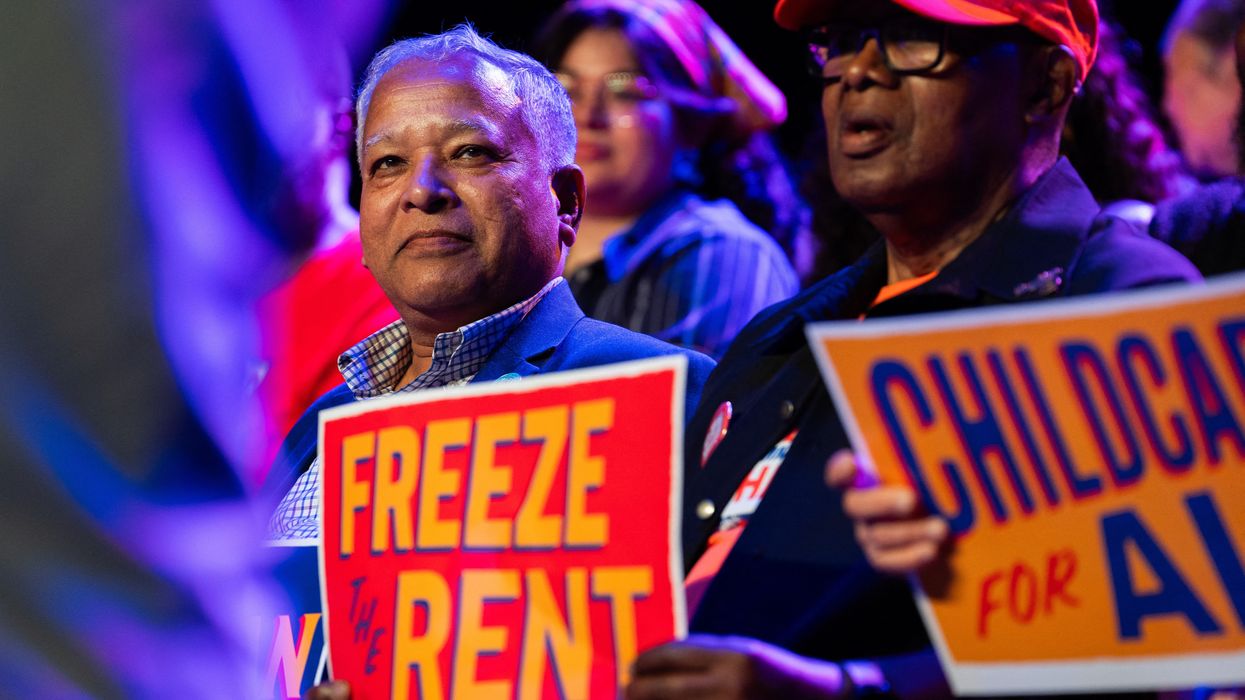
This election was a fight between tenants versus landlords, and we have won the first battle. We still need to organize to win the general, and beyond that, tenant-focused policies.
New York City is a tenant town. But for decades, in City Hall and in Albany, the real estate industry has used their vast power—manifested through money, networks, and control over major influential universities and civic institutions—to run New York. Politicians regularly see property owners as more deserving constituents—a condition that is downstream from how they are elected in the first place.
Traditional campaign consultants on both sides of the aisle train their candidates to believe that homeowners vote and that tenants—comparatively more transient—have less of a stake in our communities and neighborhoods. This creates a vicious feedback loop: If tenants are more transient, it is because of public policy that doesn’t believe in our right to housing stability. If we do not vote, it is because no one is giving us anything to vote for. If public policy doesn’t favor tenants, it is because lawmakers are accustomed to delivering for the interest groups that they believe elected them.
For too long, a vocal minority coalition of property owners, landlords, and real estate developers have used their vast wealth to buy our elections and control New York City. This is not only bad for tenants, it is a threat to our democracy. They then use this power to marginalize tenants further—blocking tenant protections and writing in new ways to raise our rents.
We need people in City Hall who know that we—not the real estate industry, not the landlords—put them there.
Historically, national tenant voter turnout is lower than property owner turnout, but in New York, a majority tenant city, that isn’t the case. Because we are breaking the cycle.
Things began to change in 2018, when a group of eight Working Families Party-backed Democrats and one democratic socialist lawmaker were elected to the state legislature. During their campaigns, they refused real estate donations, emboldened by Rep. Alexandria Ocasio Cortez’s (D-N.Y.) similar pledge and victory just months before. With the support and organizing of tenants, the New York State lawmakers immediately passed the Housing Stability and Tenant Protection Act of 2019, a landmark shift against pro-landlord policymaking in Albany.
And now tenants are at the heart of another shakeup. Campaigning on affordability and a promise to freeze the rent for four years, Assemblymember Zohran Mamdani (D-36) decisively beat the establishment-picked Andrew Cuomo, winning the Democratic mayoral primary by 12 points.
At every turn, Zohran was Cuomo’s foil. While Cuomo was every landlord’s favorite candidate, Zohran ran aggressively for the tenant majority, putting rental costs front and center in his campaign’s message. Cuomo accepted millions from the real estate industry. In return, he promised to raise the rent, to expand valuable tax exemptions, and to dismantle the very tenant protection laws he signed into law just six years ago.
Zohran, on the other hand, promised to hold slumlords accountable, build truly affordable homes, and freeze the rent. Again and again, in video after video, interview and campaign appearances across the city the message was relentless: Zohran will stand up to your landlord and fight alongside you. He will use the vast tools of the New York City government to deliver higher quality and more affordable housing. If your landlord doesn’t make repairs, we’ll fix it ourselves and fine them. If they don’t pay, we’ll collect the debt.
Initial analysis show that he crushed his opponent in places like Washington Heights and the South Bronx—places that are both super majority tenant neighborhoods—traditionally thought of as moderate and Democratic establishment strongholds.
This is not surprising for those of us who have worked with Zohran for years. As an assemblymember, he was a dogged advocate for Good Cause Eviction protections, defended rent stabilization against real estate industry attacks, and got arrested in civil disobedience actions protesting rent increases and evictions alongside tenant organizers. He has advocated for non-market-controlled housing for years. Zohran announced his mayoral campaign with tenants’ rights organizations like New York Communities for Change and CAAAV Voice.
And as Zohran laid the foundation for the path to Gracie Mansion, the tenant movement launched a new 501c4 political vehicle—the New York State Tenant Bloc (the organization of which I am the director.) The timeline is not a coincidence: We launched with an explicit goal of building a 250,000-strong tenant voting bloc and using our collective voices and votes to elect a tenant majority mayor.
Collectively, tenants’ rights organizations delivered Zohran tens of thousands of votes. While we were a small part of his overall gargantuan volunteer operation, we were proud to mobilize over 715 volunteers to take action in support of his campaign, week after week. Over 20,000 people vowed to vote in favor of Zohran’s core campaign pledge to Freeze the Rent—and by hosting forums, mobilizing in huge numbers to rent board hearings, and elevating our campaign on social media and the press, we reached countless more tenant voters.
While we are proud of Zohran’s record, we didn’t volunteer in droves for him because of his history. We did it because we know that if we want universal rent stabilization and public investments in social housing that is truly affordable for every New Yorker, we need people in City Hall who know that we—not the real estate industry, not the landlords—put them there.
Now, as the organized tenant movement is on the cusp of having a rent stabilized tenant in City Hall, we must organize more forcefully, in greater numbers, than ever before. We need a mayor and a movement.
The machine that tried to elect Andrew Cuomo is bruised, but it is not broken. The real estate industry is now on the offensive, campaigning aggressively in the press and spending big in the general election. They are threatening lawsuits and engaging in a capital strike: refusing to maintain our homes under so-far unsubstantiated claims they cannot afford to. To deliver on a rent freeze, the mayor will have to call their bluff. And doing so will require strong tenant movement organizing at every level—our buildings, our neighborhoods, our city, our state—to make it possible.
This election was a fight between tenants versus landlords, and we have won the first battle. We still need to organize to win the general, and beyond that, tenant-focused policies. We are determined to turn the rent freeze electoral majority into a permanent political powerhouse. Through this voting bloc, tenants will shape budgets and legislation. We will determine the electoral fate of lawmakers, especially those who stand in the way of policies that deliver truly affordable housing, and yes, frozen rents.
What happens in New York matters for the rest of the country: Our tenant majority was once seen as a unique blip in a country that is overall defined by homeownership. But fewer and fewer people can afford to own their own home, and being a tenant is increasingly the norm. Nearly every major city in the country is majority tenant. Many are unable to afford the rents, live in slum conditions, and are forced to move from apartment to apartment as landlords price us out. And just like in New York, politicians who work for property owners but claim to represent tenants are a dangerous threat to democracy.
Unable to afford basic essentials like housing and groceries, voters are turning to the far-right (which is offering a fascistic solution based on deportation and fear), or they are dropping out of politics altogether and simply not voting.
To stop the spread of fascism, leaders running for local and state office must follow Zohran’s path to victory. Run for the tenant majority. Give us something to vote for, and we’ll go to the polls. Our democracy depends on it.
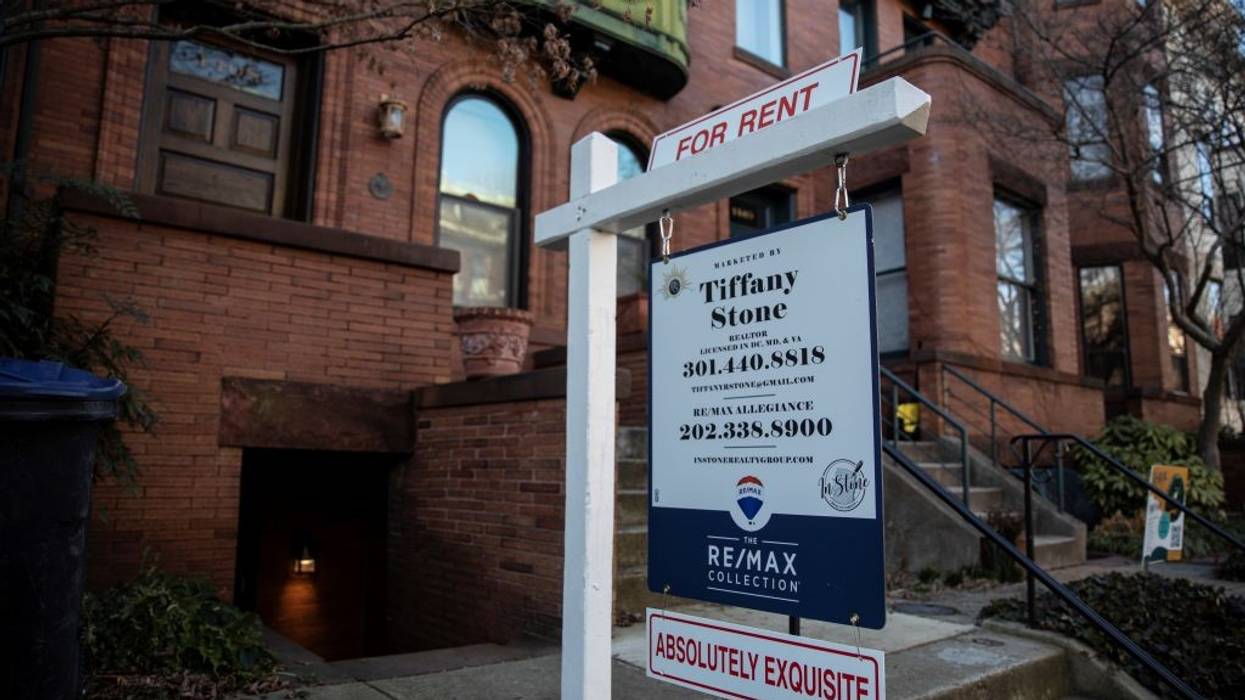
"Housing programs are among the important public services being targeted for significant cuts to fund tax giveaways for billionaires and their wealthy donors," warned one group.
House Republicans' proposed budget reconciliation package will make mortgages expensive and harder to obtain, a progressive tax policy group warned Thursday, while over 30 advocacy groups sounded the alarm over the Trump administration's gutting of federal agencies and programs, moves that are exacerbating the U.S. housing crisis.
Americans for Tax Fairness (ATF) said that the proposed permanent extension of expiring portions of the Tax Cuts and Jobs Act (TCJA) signed into law by President Donald Trump during his first term would grant massive tax breaks to big corporations and the ultrawealthy, "wasting trillions of dollars that could help solve our country's affordable housing crisis."
"The deficit-financed tax cuts would also increase interest rates, making housing less affordable," ATF added. "To the extent the tax cuts are not added to the deficit, housing programs are among the important public services being targeted for significant cuts to fund tax giveaways for billionaires and their wealthy donors."
"They are paving the way for more predatory landlords to jack up rent."
ATF's assertion is supported by a report published in February by the Economic Policy Institute finding that "large, deficit-financed tax cuts would put upward pressure on inflation and interest rates, slowing growth and causing pain to households," including by making borrowing for a home more expensive.
ATF noted that extending the TCJA's weakened low-income housing tax credit (LIHTC) could result in 235,000 fewer affordable housing units over 10 years.
"Trump's tax scam reduced the financial incentive for corporations—the largest LIHTC investors—to make equity investments in the tax credits by slashing the corporate tax rate to 21%, and adopting a stingier measure of inflation," the group said.
"One of the most regressive provisions in the 2017 Trump-GOP tax law is the so-called 'opportunity zone' tax break," ATF contended. "While proponents claimed it would encourage investment in low-income neighborhoods, it has instead been ruthlessly exploited by wealthy real estate investors."
"In fact, this program has failed to deliver the promised economic opportunity to underserved communities, instead turning many of these neighborhoods into what can more accurately be described as exploitation zones," the group added.
The Lever's Luke Goldstein and Katya Schwenk reported Tuesday that the reconciliation package's proposed restrictions on state governments passing new regulations on artificial intelligence technology "could kill crackdowns on real estate management company RealPage for raising rents and contributing to the country's housing crisis."
RealPage is accused of price gouging renters via AI-powered surveillance pricing and automated insurance denials and management systems.
"Not only are House Republicans giving their billionaire donors and large corporations a massive tax handout, they are giving RealPage and bad actors like them a free pass to rip off working families," Lindsay Owens, executive director of the economic justice group Groundwork Collaborative, said Wednesday.
"They are paving the way for more predatory landlords to jack up rent, more apps to drive down gig worker wages, and more retailers to hike prices on consumers," Owens added. "The GOP tax bill tells you everything you need to know about the Republican Party's priorities and how unserious they are about lowering costs for working families."
More than a dozen states have joined a class action lawsuit accusing RealPage of using AI to artificially inflate housing prices across the nation.
Also on Thursday, more than 30 housing, consumer, and civil rights groups warned that the Trump administration's deep cuts to federal agencies and programs—spearheaded by the so-called Department of Government Efficiency—"are worsening the nation's housing crisis."
"Our families, neighbors, and communities deserve better than these untenable and unconscionable proposals."
"The Trump administration promised to address the high cost of housing, but so far has proposed policies that will increase the cost of rent, shred the nation's housing safety net, and push more people into homelessness," National Low Income Housing Coalition interim president and CEO Renee Willis said in a statement.
"At a time when more people than ever are struggling to afford the cost of rent and a record number of people are experiencing homelessness, rolling back fair housing protections and cutting funding for rental assistance, homelessness services, and affordable housing development—and gutting the workforce responsible for administering these programs—will only create more hardship," Willis added. "Our families, neighbors, and communities deserve better than these untenable and unconscionable proposals."
In a wider critique of Trump's policy proposals, U.S. Sen. Bernie Sanders (I-Vt.) said Thursday on social media: "Wages are stagnant. Housing costs are soaring."
"Many young people will never be able to afford their own homes, but Trump wants to increase the bloated military budget by $150 billion," Sanders added. "WRONG. That money should go toward building the affordable housing that we desperately need."

"Greedy landlords shouldn't profit from human tragedy," argued one housing defender. "Put people over profits for once!"
With some Los Angeles-area landlords jacking up rental listing prices by 50% or more as historic wildfires rage, housing advocates in the nation's second-largest city are calling for an immediate eviction moratorium and rent freeze.
As California authorities have noted in recent days, state Penal Code Section 396 prohibits taking "unfair advantage" of consumers during times of emergency or disaster. Landlords cannot raise rent by more than 10% of the price immediately prior to the emergency. Democratic California Gov. Gavin Newsom declared a state of emergency last Tuesday.
"If you're a renter who has been impacted by the fires, remember that you have rights!"
"It's called price gouging," California Attorney General Rob Bonta, also a Democrat, said during a Saturday news conference. "It is illegal. You cannot do it. It is a crime punishable by up to a year in jail and fines."
That isn't stopping some landlords from trying to profit from the deadly wildfires. Tenant rights advocate Chelsea Kirk—the director of policy and advocacy at the L.A.-based Strategic Actions for a Just Economy—has created an open database of more than 100 Zillow listings in which landlords have raised asking prices for rents by more than the legal limit, and in some cases by over 50 or even 75% or more.
Activists said there are two related things officials can do right now to mitigate the disaster's impact on renters.
"We need a rent freeze and eviction moratorium," the anti-capitalist collective People's City Council—Los Angeles said on social media.
NOlympics LA said, "L.A. City Council needs to implement a rent freeze NOW."
"Price gouging in the wake of disaster is unacceptable, this is simple and could be done immediately but will L.A. leaders even propose it?" the group added. "We need an eviction moratorium to stop landlords [from] evicting people to cash in on crisis."
Temporary eviction moratoriums and rent freezes were implemented at the national, state, and local level during the Covid-19 pandemic. While California's moratorium did not protect everyone from eviction, with thousands of renters removed from their homes under various exceptions, evictions plummeted thanks to the policy. However, by 2023 eviction rates had returned to—or surpassed—pre-pandemic levels.
The L.A. Tenants Union noted that "in the midst of all this destruction, eviction courts are still churning."
"The 6th floor of the downtown courthouse is packed today," the group added. "We demand an emergency eviction moratorium and a rent freeze."
If you’re a renter who has been impacted by the fires, remember that you have rights! Resources for renters below:
[image or embed]
— Ground Game LA (@groundgamela.bsky.social) January 9, 2025 at 4:35 PM
With thousands of Los Angeles area families now unhoused due to the fires, desperate victims are vulnerable to these unscrupulous landlords and real estate agents. Kirk wants them to know—and exercise—their rights.
"Because California is currently under an emergency declaration, rental price gouging is illegal," she told Common Dreams. "If you see a rental listing with a significant price increase—such as more than 10% over the pre-emergency price—you should report it to the attorney general's office immediately, and confront the landlord or agent about it, if you feel comfortable doing so."
Kirk continued:
That said, I recognize this is an incredibly vulnerable time, especially for people who have lost their homes and are urgently trying to secure housing. Confronting a landlord may feel risky and might compromise your chances of getting the place. But it's crucial to remember you have rights, even if you've already signed a lease. If you realize after signing that the landlord engaged in price gouging, don't hesitate to push back. There are groups actively working to ensure these laws are enforced and to support tenants in these situations.
Bonta offered similar advice: "If you know someone who's been a victim of price gauging please report it."
As for the landlords and agents trying to capitalize on disaster victims, Kirk said that "their actions are not only illegal but profoundly shameful."
"The community sees what they are doing, and we will hold them accountable," she told Common Dreams. "While I do not have much faith that officials will penalize landlords, we—the tenants and community organizers—will not sit idly by. We will take action, whether through organizing, direct action, or other means, to expose and stop these exploitative practices. Renters deserve to be treated with dignity, especially during times of crisis."
Bonta noted how new technology is being utilized to determine prices, and it's not just landlords and their agents using it.
"Some of our hotels and some of our landlords use algorithms based on demand and supply to set their prices," the attorney general said. "If those prices lead to prices higher than before the emergency by 10% that's against the law."
"If you're a mom and pop and you're not aware of these laws now you are aware," Bonta added. "Ignorance is not an excuse."
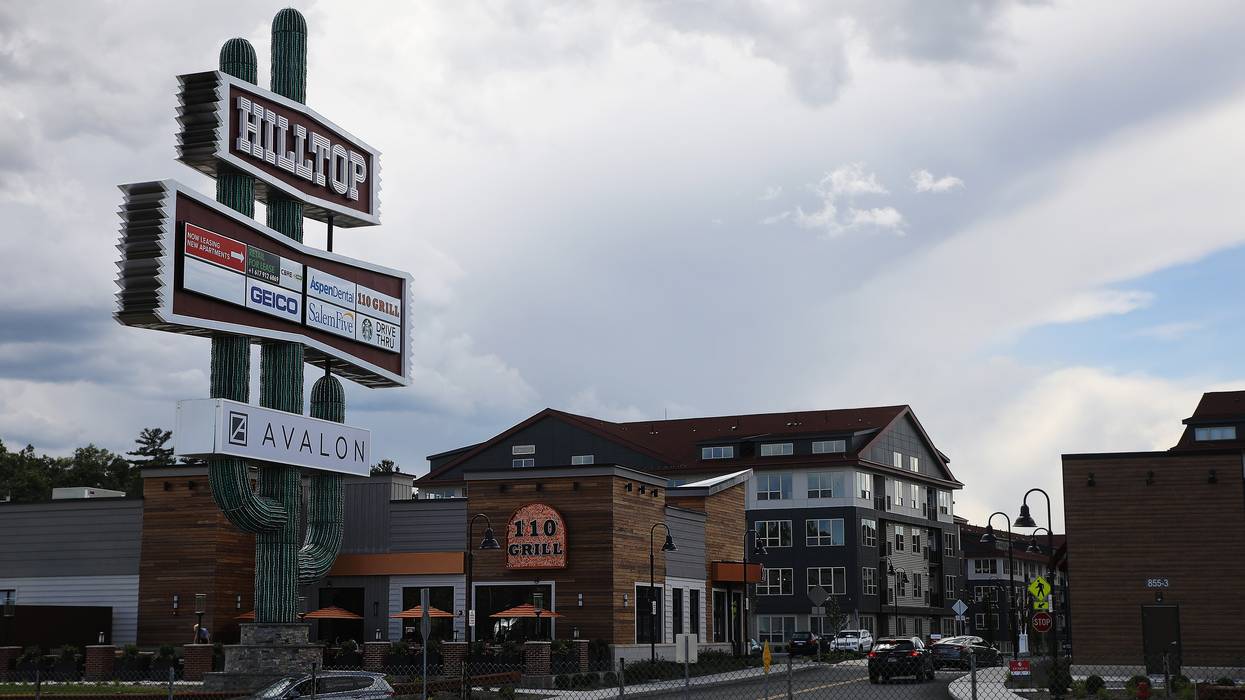
"Today is a good day for renters and families and a bad day for predatory landlords," said one advocate.
Executives at the property management software company RealPage claimed they had the "greater good" in mind when they offered corporate landlords a price-fixing algorithm service, said the U.S. Department of Justice as it filed a lawsuit Friday against the firm—but the scheme allegedly drove rental costs up in communities across the country, contributing to the housing crisis.
The antitrust lawsuit, filed with attorneys general from states including California and Colorado, accused RealPage of using confidential data about its clients to algorithmically determine the highest price renters would pay, using its AI software.
U.S. Attorney General Merrick Garland and other officials said the company has violated antitrust laws by providing the service, which gives corporate landlords recommended rental prices and allows them to align prices with one another instead of having to compete.
Assistant Attorney General Jonathan Kanter said the lawsuit is "best understood in the words of RealPage's own executives," who have said the company's software allows landlords to "drive every possible opportunity to increase price, even in the most downward trending or unexpected conditions."
"RealPage tells landlords that it would prefer everybody succeeding versus essentially trying to compete against one another," said Kanter. "But that's not how free markets work. Competition among landlords, not RealPage, should determine prices for renters."
Garland added that "Americans should not have to pay more in rent because a company has found a new way to scheme with landlords to break the law."
As Common Dreams reported in June, RealPage and the corporate landlords that rely on it has come under the scrutiny of watchdogs including Accountable.US, which found that the six largest property management firms brought in a combined $300 million in increased profits in the first quarter of 2024, thanks largely to rent hikes.
The windfall came as rent prices have skyrocketed by more than 31% since 2019, while wages have gone up by just 23%.
RealPage's algorithm is alleged to have helped fix rent prices for about 16 million rental units across the country, said Accountable.US.
"Today is a good day for renters and families and a bad day for predatory landlords," said Lindsay Owens, executive director of the progressive think tank Groundwork Collaborative. "The Department of Justice is right to take on the affordability crisis that RealPage has been supercharging. Algorithms are being used to unfairly drive up prices for housing, meat, and more. This price-fixing must be stopped."
Caroline Ciccone, president of Accountable.US, said Friday's lawsuit shows that "the Justice Department sees evidence of a major rental price-fixing conspiracy by RealPage that extends to metro areas around the country."
"We've documented how many of the same landlord companies that were sued in the initial rent fixing lawsuit have boasted of massive profits after jacking up rents," said Ciccone. "Any property company that uses RealPage in one of these states should face a serious probe. No renter in America should be price gouged under a potentially illegal rent fixing scheme."
Accountable.US added in a social media post that "while rents soared, RealPage executives bragged about how their software could 'maximize' profits, even in the face of a housing crisis."
Andrea Beaty, research director for the Revolving Door Project, said RealPage's actions have "left tenants across the country paying the literal price of corporate greed, even in the midst of a global pandemic."
"This lawsuit will hopefully usher forth renewed corporate accountability in the rental market beyond RealPage, which is far from the only corporation capitalizing on tenant's struggles to live in safe and affordable homes," said Beaty. "We hope that in addition to the bipartisan set of eight state attorneys general suing RealPage, even more attorneys general will sign on in response to RealPage's actions to drive up rental costs in communities in their states."

"With the Supreme Court decision to criminalize people who are unhoused, we need you to stand up and create more humane housing policies today."
In the wake of a U.S. Supreme Court ruling that is devastating for homeless people, over 50 organizations on Tuesday urged President Joe Biden to take immediate action to address the nation's housing emergency before his first term ends next January.
"We appreciate the steps your administration has taken to address America's affordable housing crisis," the coalition wrote, applauding his proposed 5% cap on rent hikes for tenants of corporate landlords and "regulatory actions to use public land for affordable housing, provide grants for deeply affordable homes, and require 30-day notice for rent increases and lease expirations."
Noting that Biden is not seeking a second term—Democratic Vice President Kamala Harris is set to face former Republican President Donald Trump in the November election—and the urgency of the housing crisis, the groups argued that "taking stronger action will resonate deeply with working and low-income people and people of color nationwide."
"Now is a critical moment for aggressive action to help end the worst housing and homelessness crisis our country has ever seen, help renters and houseless folks struggling with the cost of rent now, and set the country on a long-term path of providing safe, stable, and permanently affordable rental housing for decades to come," the letter states. "We, the undersigned, are calling on you to show leadership by using your executive authority immediately, to effect change now—during the worst housing and homelessness crisis of a generation."
"We must urgently create a more just and sustainable housing system."
Specifically, the coalition is calling for Biden to issue one executive order to establish an Office of Social Housing at the U.S. Department of Housing and Urban Development, and another for rent regulations and good cause eviction protections in federally insured properties.
Additionally, the groups want Biden to demand federal legislation supporting the right of all renters to organize and bargain collectively as tenant unions with landlords over rents and living conditions, along with appropriating $1 trillion over a decade to create 12 million permanently affordable homes, as well as $230 billion to fully repair and green existing public housing.
The letter—part of the House Every One! campaign—is led by the Center for Popular Democracy (CPD) Action and backed by groups including Stand Up Alaska, Make the Road Connecticut, Delaware Alliance for Community Advancement, Florida Rising, New Georgia Project, Step Up Louisiana, Maryland Communities United, Maine People's Alliance, Detroit Action, TakeAction Minnesota, New York Communities for Change, One Pennsylvania, Texas Organizing Project, and Our Future West Virginia.
As part of the campaign, "during the month of August, thousands of renters and community groups across the country will host local town hall meetings to call on their local and national representatives to crack down on corporate landlords, cap rents, and invest in tenant-owned, permanently affordable green social housing," CPD said in an email Monday.
The coalition wrote to Biden Tuesday that "we must protect families from the looming threat of unprecedented homelessness and displacement; halt Wall Street speculation and corporate landlords' growing influence over the housing market; create truly affordable green social housing; and redress our federal government's history of institutionalized bias, putting us on a path towards greater racial, economic, and gender equity."
"We all deserve a safe, stable, and affordable place to call home," the letter says. "We must urgently create a more just and sustainable housing system."
The letter also stresses that "with the Supreme Court decision to criminalize people who are unhoused, we need you to stand up and create more humane housing policies today, nodding to the City of Grants Pass, Oregon v. Johnson ruling. The right-wing justices ruled that local governments can enforce bans on sleeping outdoors, regardless of whether they are able to offer shelter space.
Some Democrats are under fire for welcoming the June ruling—including California Gov. Gavin Newsom, who is widely believed to have presidential ambitions. Since the decision, Newsom has issued an executive order directing officials to clear out homeless encampments, participated in clearing of a Los Angeles encampment, and threatened to withhold funding from counties that don't crack down on unhoused people.

"The rent is too damn high—and rent control is a real fix," one group said, praising the proposal.
As former U.S. President Donald Trump secured the Republican nomination and announced his running mate on Monday, Democratic President Joe Biden prepared to unveil a proposal that would cap annual rent increases at 5% for tenants of major landlords.
After Biden briefly previewed the proposal during a press conference last week, The Washington Post reported on the planned announcement Monday, citing three people familiar with the matter. The Associated Press separately confirmed the plan.
Biden is set to formally introduce the proposal on Tuesday in Nevada, which "has seen among the biggest explosions of housing costs in the country," the Post noted. "Democrats have grown increasingly concerned that Trump could win the state in November."
The president, who is seeking reelection, will propose taking a tax benefit away from landlords who hike rents by more than 5% annually, according to the reporting. The plan would only apply to the existing housing stock of landlords who own more than 50 units and would require congressional approval—so it is not expected to go anywhere unless Biden wins in November and Democrats secure majorities in both chambers of Congress.
As the newspaper detailed:
The Biden administration is also pushing numerous policies to increase housing construction, through incentives to local governments to change their zoning codes and new federal financial incentives for builders. If implemented, they could bring 2 million new units to the market in addition to the 1.6 million already in the pipeline.
"It would make little sense to make this move by itself. But you have to look at it in the context of the moves they propose to make to expand supply," said Jim Parrott, nonresident fellow at the Urban Institute and co-owner of Parrott Ryan Advisors. "The question is: Even if we get all these new units built, what do we do about rising rents in the meantime? Coming up with a relatively targeted bridge to help renters while new supply is coming online makes a fair amount of sense."
While housing industry representatives criticized the reported proposal, Diane Yentel, president and CEO of the National Low Income Housing Coalition, told The Associated Press that having it in effect in recent years could have helped renters.
"The recent unprecedented increases in homelessness in communities across the country are the result of those equally unprecedented—and unjustified—rent hikes of a couple years ago," she said. "Had such protections against rent gouging been in place then, many families could have avoided homelessness and stayed stably housed."
Other rent control advocates and progressive officials also welcomed the plan, with Kendra Brooks—the first Working Families Party member ever elected to Philadelphia City Council—declaring that "this is exactly the kind of leadership that working families need!"
Jacobin's Branko Marcetic said that "this is huge," particularly considering that "housing has rapidly climbed as a cost-of-living concern (and is also under 30s' most important issue)."
Multiple campaigners and organizations credited housing advocates for pushing rent control at the national level.
"It's amazing how rapidly the conversation around rent caps has changed," noted Shamus Roller, executive director of the National Housing Law Project. "Tenant organizing has created this change. It's a proposal for Congress which will face serious headwinds but the president just called for rent caps (even if only temporarily)."
The Debt Collective said, "We will say it over and over again: The rent is too damn high—and rent control is a real fix."
"Rent caps wouldn't be a national policy proposal without tenants unions across the country making it possible through organizing," the group added. "On our way to land without landlords, remember that rent control works. The 99%'s need for a roof over our head should not be 1% profits."

"Through-the-roof rent hikes based on greed—not need—have kept many Americans from getting ahead," said one advocate at Accountable.US.
With monthly inflation down to its lowest point in more than two years and heading toward the Federal Reserve's target, the Biden administration on Wednesday celebrated "welcome progress."
But an analysis from Accountable.US showed how more than 100 million people who rent their homes in the U.S. are not seeing the benefits of what one Biden spokesperson called "the great American comeback" in their housing costs, particularly millions of people whose homes are owned by corporate landlords.
The government watchdog found that the six largest corporate landlord companies brought in close to a combined $300 million in increased profits in the first quarter of 2024, with the profits mostly stemming from rent hikes.
Overall in the U.S., rent prices have skyrocketed by 31.4% since 2019 while wages have increased by just 23%, meaning tenants need to earn nearly $80,000 per year to keep from being rent-burdened and spending 30% or more of their income on rent.
The six companies included in the Accountable.US analysis on Wednesday have more than rent increases in common: They have all faced lawsuits regarding their use of the property management software company RealPage, which is alleged to have used an algorithm to fix rent prices, impacting about 16 million rental units in the United States.
The largest net income increase Accountable.US found among the six corporate landlords was that of Camden Property Trust, which increased its net income by 97% in the first quarter of this year to $85.8 million. The company spent $50 million on stock buybacks that it said were made possible by its "weighted average monthly rental rate," which went up nearly 2% year over year.
"Big corporate landlords have kept right on raising rent on everyday families regardless of how high their profits have grown."
Essex Property Trust increased its net income by 76% year over year to more than $285 million, also raising rents by 2.1%, while Equity Residential's income jumped 39% to $305 million as it increased its rental rates by 3.4%, with tenants paying an average of $3,077.
AvalonBay Communities saw its net income increase 18% to $173.6 million, apparently owing both to its "rental and other income" revenue going up by 5.6% and its "management, development, and other fees" for tenants soaring by 68.4% to nearly $1.8 million.
"Big corporate landlords have kept right on raising rent on everyday families regardless of how high their profits have grown. Adding insult to injury, many landlords rewarded a small group of wealthy investors with new handouts at the expense of struggling tenants," said Liz Zelnick, director of the economic security and corporate power program at Accountable.US.
The group's analysis was released weeks after the Federal Bureau of Investigation conducted a raid on an Atlanta-based property management firm in the Department of Justice's antitrust investigation into RealPage regarding "allegations of a nationwide conspiracy to artificially inflate apartment rents."
As Competition Policy International (CPI) reported earlier this month, "RealPage's system, which provides rental price recommendations based on real-time data from landlords, is alleged to be a key tool in manipulating the rental market. The firm's influence covers 70% of multifamily apartment buildings."
"The scheme purportedly operated by encouraging landlords to adopt RealPage's pricing recommendations, a practice they follow 80-90% of the time," reported CPI. "This coordinated approach reduces the availability of rental units, driving up prices. One of the architects of RealPage's system reportedly stated that the aim is to prevent landlords from undervaluing their properties, ensuring consistently higher rents across the board."
Zelnick said it was "unsurprising that some of the same companies that needlessly inflated housing costs have worked closely with a software company accused of helping landlords coordinate a massive price fixing scheme. Through-the-roof rent hikes based on greed—not need—have kept many Americans from getting ahead, which is why Congress must do more to support the Biden administration's affordable housing actions."
President Joe Biden has urged Congress to pass legislation to stop price gouging by landlords and to build millions of affordable rental units.
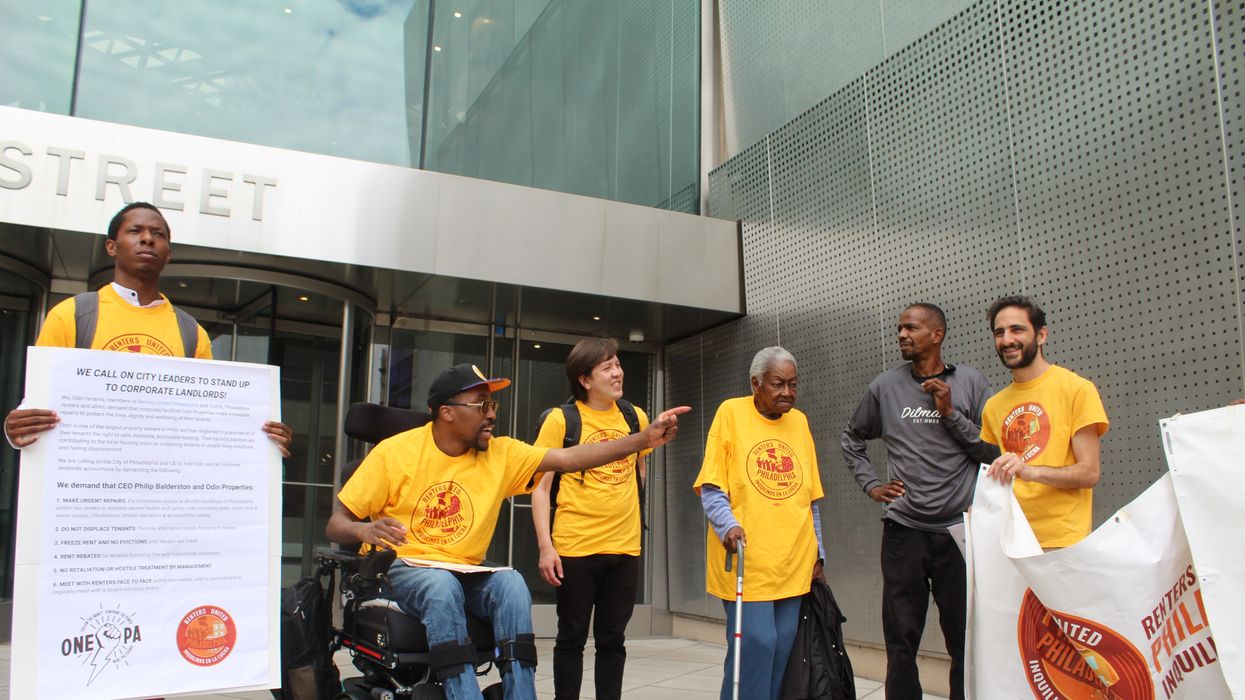
The Philadelphia renters are part of a growing tenants’ rights movement, with advocacy that centers on the government support provided to irresponsible corporate landlords.
Tyrone Jones had good reasons for pulling on a bright gold Renters United Philadelphia t-shirt and delivering a petition to the corporate headquarters of Odin Properties last week. Jones is a tenant of Odin’s, one of the largest property owners in Philadelphia and the landlord for 10,000 rental units across multiple states, and he has been living through difficult conditions.
Jones uses a wheelchair, and only one of the four entrances to his building is accessible. Even at that entrance, the ramp is so narrow that he can barely fit through. The lock to the door to the building is hard to reach from the chair, the double doors of the elevator nearly impossible to navigate.
Leaks coming through Jones’ ceiling went unrepaired so long that the ceiling caved in. Now, mold has developed. The closest exit from his apartment has steep stairs Jones cannot descend. “God forbid if there is a fire on the side where the ramp is,” Jones says. “I couldn’t get out of this building at all.” A short video of Jones showing his building and apartment has been posted online by Renters United Philadelphia here.
Among the other renters joining Jones at Odin headquarters was Lori Peterson. Also an Odin renter, Peterson explains that the rodent problem in her apartment is so bad that bugs crawl on her while she sleeps. Cockroaches drop into any pot or pan of food while she is cooking. “They say they do pest control regularly, but they don’t,” she says. The front door to Peterson’s building has a hole where the doorknob should be, she too has leaks in her apartment, and she recently found a dead mouse on top of a dress in her closet.
The petition the Odin renters delivered was signed by over 450 people and states in part, “In neighborhoods across Philadelphia, particularly in Black working-class areas, Odin Properties has allowed its buildings to fall into disrepair... These unsafe living conditions are a direct assault on our dignity and well-being, exacerbating the housing crisis and fueling displacement.”
The petition calls for the problems to be fixed by July 17, along with a freeze on rent and evictions during the repair period and rent rebates for those who lived through poor conditions. The renters also call on the City of Philadelphia to inspect all of Odin rental properties and severely penalize all landlords whose properties violate housing codes.
The tenants point out that Odin is receiving generous government subsidies, with the Philadelphia Housing Authority paying the rent for many of the Odin units that are in the worst condition. The City of Philadelphia has even promoted its partnership with Odin, which receives reimbursement from low-income housing vouchers. “We are asking the city to light a fire under Odin’s behind, to be honest with you,” Peterson says.
Odin Property did not respond to a request for comment.
The Philadelphia renters are part of a growing tenants’ rights movement, which includes strong tenant union presence in places like Louisville, Kansas City, and Connecticut. Much of the advocacy centers on the government support provided to corporate landlords like Odin through direct subsidies or federal housing loan support .
On the way home from delivering the petition, Peterson received a call from Odin staff, asking for a meeting. Management was waiting for Jones at his building, asking to look at his apartment problems. No repairs have happened yet, so the renters have a plan to escalate the confrontation on July 18 if their demands are not met.
“I have at least a little hope,” Jones says. “When we are fighting together, we are stronger.”
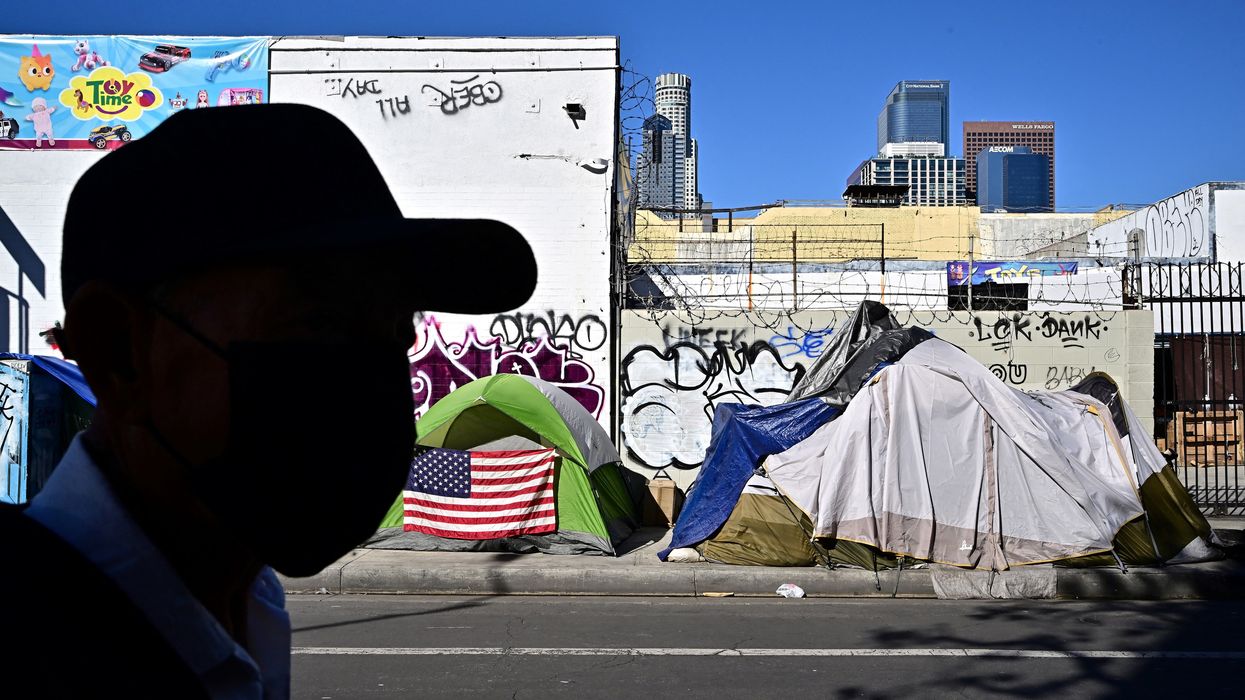
"Without significant and sustained federal investments to make housing affordable for people with the lowest incomes, the affordable housing and homelessness crises in this country will only continue to worsen," warned one campaigner.
The number of people in shelters, temporary housing, and unsheltered settings across the United States set a new record this year, "largely due to a sharp rise in the number of people who became homeless for the first time."
That's a key takeaway from an annual report released Friday by the U.S. Department of Housing and Urban Development (HUD).
On a single night in January 2023, "roughly 653,100 people—or about 20 of every 10,000 people in the United States—were experiencing homelessness," with about 60% in shelters and the remaining 40% unsheltered, according to HUD. That's a 12% increase from 2022 and the highest number of unhoused people since reporting began in 2007.
"We must address the main driver of homelessness and housing instability—the gap between low incomes and rent costs."
Jeff Olivet, executive director of the U.S. Interagency Council on Homelessness—the federal agency behind President Joe Biden's plan from last year to reduce homelessness 25% by 2025—told The Associated Press that extra assistance during the Covid-19 pandemic "held off the rise in homelessness that we are now seeing."
Research and advocacy groups responded to the HUD report by also highlighting the positive impacts of federal pandemic-era relief including emergency rental aid, a national moratorium on evictions for nonpayment, and the expanded child tax credit.
"The historic resources and protections provided during the pandemic kept millions of renters stably housed, and the success of these resources is shown by the decrease in homelessness over that same period," said National Low-Income Housing Coalition president and CEO Diane Yentel. "Just as these emergency resources were depleted and pandemic-era renter protections expired, however, renters reentered a brutal housing market, with skyrocketing rents and high inflation."
"Eviction filing rates have now reached or surpassed pre-pandemic averages in many communities, resulting in increased homelessness," she noted. "Without significant and sustained federal investments to make housing affordable for people with the lowest incomes, the affordable housing and homelessness crises in this country will only continue to worsen."
Olivet said that "while numerous factors drive homelessness, the most significant causes are the shortage of affordable homes and the high cost of housing that have left many Americans living paycheck to paycheck and one crisis away from homelessness."
National Alliance to End Homelessness CEO Ann Oliva called for funding "urgent and overdue investments in affordable housing and rental assistance to keep people housed, as well as in proven housing and supportive service models that rapidly reconnect people experiencing homelessness with permanent housing."
Peggy Bailey, vice president for housing and income security at the Center on Budget and Policy Priorities, also stressed the need for a funding boost, saying that "we have the tools to ensure everyone has a safe, stable place to live, but we've failed to invest in them."
"Homelessness is unacceptable," Bailey declared. "We must address the main driver of homelessness and housing instability—the gap between low incomes and rent costs. That means expanding rental assistance for all people with the lowest incomes."
HUD Secretary Marcia Fudge similarly said Friday that "homelessness is solvable and should not exist in the United States."
"From day one, this administration has put forth a comprehensive plan to tackle homelessness and we've acted aggressively and in conjunction with our federal, state, and local partners to address this challenge," she continued. "We've made positive strides, but there is still more work to be done. This data underscores the urgent need for support for proven solutions and strategies that help people quickly exit homelessness and that prevent homelessness in the first place."
Academics and advocates have long criticized the department's approach, which relies on reporting from a single night each January. Samuel Carlson, manager of research and outreach at the Chicago Coalition for the Homeless, told The Washington Post last year that "the HUD data is just catching a fraction of the people."
For that night in January, HUD found that roughly 186,100 people who reported experiencing homelessness, or over a quarter, were part of a family with children, a 16% increase from last year. Additionally, more than 1 in 5 people were age 55 or older, 35,574 were veterans, and 31% "reported having experienced chronic patterns of homelessness."
"People who identify as Black, African American, or African, as well as Indigenous people (including Native Americans and Pacific Islanders), continue to be overrepresented among the population experiencing homelessness," the report notes. "People who identify as Asian or Asian American experienced the greatest percentage increase among all people experiencing homelessness," while the largest numerical increase "was among people who identify as Hispanic or Latin(a)(o)(x)."
The report adds that over half "were in four states: California (28% of all people experiencing homelessness in the U.S, or 181,399 people); New York (16% or 103,200 people); Florida (5% or 30,756 people); and Washington (4% or 28,036 people)."
While progressive lawmakers have introduced federal legislation to help tackle the issue—from Congresswoman Cori Bush's (D-Mo.) Unhoused Bill of Rights to the Housing is a Human Right Act led by Reps. Pramila Jayapal (D-Wash.) and Grace Meng (D-N.Y.)—such measures are unlikely to advance with a GOP-controlled House and divided Senate.

There is no single solution to the growing problem of unaffordable housing, but with political will and organizing action at the local, state, and federal levels it could be dealt with.
In 1937, the American folklorist Alan Lomax invited Louisiana folksinger Huddie Ledbetter (better known as Lead Belly) to record some of his songs for the Library of Congress in Washington, D.C. Lead Belly and his wife Martha searched in vain for a place to spend a few nights nearby. But they were Black and no hotel would give them shelter, nor would any Black landlord let them in, because they were accompanied by Lomax, who was white. A white friend of Lomax’s finally agreed to put them up, although his landlord screamed abuse at him and threatened to call the police.
In response to this encounter with D.C.’s Jim Crow laws, Lead Belly wrote a song, “The Bourgeois Blues,” recounting his and Martha’s humiliation and warning Blacks to avoid the capital if they were looking for a place to live. The chorus goes,
“Lord, in a bourgeois town
It’s a bourgeois town
I got the bourgeois blues
Gonna spread the news all around”
And one verse adds,
“I want to tell all the colored people to listen to me
Don’t ever try to get a home in Washington, D.C.
‘Cause it’s a bourgeois town”
Such affronts, Lead Belly sang, occurred in the “home of the brave, land of the free,” where he didn’t want “to be mistreated by no bourgeoisie.”
There are music scholars who believe that Lead Belly didn’t really understand what “bourgeois” meant. They claim Lomax, later accused of being a Communist “fellow traveler,” provided him with that addition to his vocabulary and he simply understood it as a synonym for “racist.” Personally, I think that, in a few deft verses, Lead Belly managed to show how racism and class stratification merged to make it all but impossible to find a home in Washington, as in so many other places in America.
Still a Bourgeois Town
In the late 1970s, after a period of unemployment, my mother got a job for a year in Washington. We’d lived there while I was growing up, but she hadn’t been back for almost a decade. She was a white middle-class professional and it was still hell finding an affordable place to rent. (She’d been without a job for more than a year.) It would be some time before credit ratings would be formalized, thanks to the financial corporation FICO, producing a model of a standardized credit score for anyone. But her prospective landlords had other ways of checking on her creditworthiness. That she was a divorced woman with no rental history and no recent jobs didn’t make things easy.
Still, she had her sense of humor. One day during that search, she mailed me an old 45 rpm recording of Lead Belly’s “Bourgeois Blues.” It seemed to perfectly catch her frustrated efforts to escape a friend’s guest room before she wore out her welcome.
I was reminded of that record recently when I read about the travails of Maxwell Alejandro Frost, a new Democratic congressman from Orlando, Florida. Born in 1996, he’s the youngest member of the House of Representatives. He quit his full-time job to campaign for Congress, supporting himself by driving an Uber. When he tried to find a home in Washington, his application for a studio apartment was rejected because of a bad credit score. As Frost tweeted:
“Just applied to an apartment in DC where I told the guy that my credit was really bad. He said I’d be fine. Got denied, lost the apartment, and the application fee.
This ain’t meant for people who don’t already have money.”
Nor, as Lead Belly might have added, for people like Frost who are Black.
Washington, D.C., it seems, remains a “bourgeois” town.
The True Costs of Renting
Suppose you want to rent a place to live. What will you need to have put aside just to move in? This depends not only on the monthly rent, but on other fees and upfront payments in the place where you plan to live. And, of course, your credit score.
Application fee: One part of Frost’s story caught my attention: he had to forfeit his “application fee” for an apartment he didn’t get. If, like me, you haven’t rented a house or apartment in a while you might not even know about such fees. They’re meant to cover the cost of a background check on the applicant. You might expect them to be rolled into the rent, but in a seller’s (or renter’s) market, there’s no risk to landlords in making them extra.
Frost’s fee was $50 for one application. (These fees tend to top out around $75.) Not so bad, right? Until you grasp that many potential renters find themselves filing multiple applications — 10 isn’t unheard of — simply to find one place to rent, so you’re potentially talking about hundreds of dollars in fees. California, my own state, is among the few that regulate application fees. The maximum rises to match inflation. In December 2022, that max was $59.67. Some states set a lower maximum, and some don’t regulate the fees at all.
Move-in fees: If you haven’t rented in a while, this one may take you by surprise. Unlike a security deposit, move-in fees are nonrefundable. They’re supposed to cover the costs of preparing a place for a new tenant — everything from installing new locks to replacing appliances and painting. Once subsumed in the monthly rent, today these costs are often passed on directly to renters. Nationally, they average between 30% and 50% of a month’s rent.
In June 2022, the median rent for an apartment in the United States crossed the $2,000 threshold for the first time, which means the median move-in fee now ranges from $600 to $1,000.
First and last months’ rent: This upfront cost should be familiar to anyone who’s ever rented. Landlords almost always require two months’ rent upfront and hold on to the last month’s rent to ensure that a tenant can’t skip out without paying. Because landlords can invest the money they’re holding (and tenants can’t invest what they’ve forked over to landlords), in recent years, most states have required landlords to pay interest on the tenant’s funds.
Security deposit: Unlike the move-in fee, a security deposit — often a month’s rent — is refundable if tenants leave a place in good condition. Its ostensible purpose: to reimburse the landlord for future cleaning and repair costs that exceed normal wear-and-tear. (But wait! Isn’t that what the non-refundable move-in fee should do?)
Other fees: If you’re renting a condo, you may have to cover the owner’s monthly Home Owner Association fees. In some cases, you’ll also pay for a utility’s hookup like gas or electricity.
So, how much will you have to pay to set foot in that apartment? Well, if you’re like Nuala Bishari, a San Francisco Chronicle reporter who recently tried to rent a house in nearby Oakland, California, you’ll need to set aside almost $10,000. If you’re not sure how you could possibly put that kind of money together, the credit score company Experian has some advice for you:
First, “calculate your odds.” Find out how many other people are applying for the unit you’re interested in and, if the competition is stiff, “consider looking elsewhere.” (As if you haven’t done that already!)
Then tighten your belt. “Reducing extraneous expenses,” it observes, “is an easy way to save.” Stop going out to eat, for instance, and look for free family activities. If that’s not enough, it’s time to “get serious about cost cutting.” Their brilliant suggestions include:
Such “advice” to people desperate to find housing would be amusing if it weren’t so desperately insulting.
Rent Is Unaffordable for More Than Half the Country
Suppose you’ve managed to get together your up-front costs. What can you expect to pay each month? The federal Department of Housing and Urban Development considers housing affordable when rent takes no more than 30% of an individual’s or family’s monthly income. Human Rights Watch (!) reported in December 2022 that the Census Bureau’s 2021 Annual Community Survey revealed a little over half of all renters are spending more than 30% of their income that way — and in many cases, significantly more.
It tells you something that Human Rights Watch is concerned about housing costs in this country. The National Low Income Housing Coalition (NLIHC) put its data in perspective through what it calls a “Housing Wage”: the hourly rate you’d need to make working 40 hours a week to afford to rent a place in a specific area. For many Americans, housing, they report, is simply “out of reach.”
“In 2022, a full-time worker needs to earn an hourly wage of $25.82 on average to afford a modest, two-bedroom rental home in the U.S. This Housing Wage for a two-bedroom home is $18.57 higher than the federal minimum wage of $7.25. In 11 states and the District of Columbia, the two-bedroom Housing Wage is more than $25.00 per hour. A full-time worker needs to earn an hourly wage of $21.25 on average in order to afford a modest one-bedroom rental home in the U.S.”
Unfortunately, many people don’t earn $21.25 an hour, which is why they hold two or three jobs, or add Uber or Door Dash shifts to their other work. It’s hardest for minimum wage workers. As the NLIHC observes, “In no state can a person working full-time at the prevailing federal, state, or county minimum wage afford a two-bedroom apartment at the [fair market rate].” Furthermore, “in only 274 counties out of more than 3,000 nationwide can a full-time worker earning the minimum wage afford a one-bedroom rental home at the [fair market rate].”
For people living at or below the poverty line, the situation is even direr, which is why so many end up unhoused, whether by couch-surfing among friends and family or pitching a tent on the street.
In the coming months, the situation is only expected to worsen now that pandemic-era eviction moratoriums and the $46.5 billion federal Emergency Rental Assistance Program are expiring. According to the Pew Research Center, those programs prevented more than a million people from being evicted.
It Wasn’t Always This Way
People have always experienced poverty, but in the United States, the poor have not always gone without housing. Yes, they lived in tenements or, if they were men down on their luck, in single-room occupancy hotels. And yes, the conditions were often horrible, but at least they spent their nights indoors.
Indeed, the routine presence of significant populations of the urban unhoused on this country’s city streets goes back only about four decades. When I moved to the San Francisco Bay Area in 1982, there was a community of about 400 people living in or near People’s Park in Berkeley. Known as the Berkeley Beggars, they were considered a complete oddity, a hangover of burnt-out hippies from the 1960s.
During President Ronald Reagan’s administration, however, a number of factors combined to create a semi-permanent class of the unhoused in this country: high interest rates implemented by the Federal Reserve’s inflation fight drove up the cost of mortgages; a corruption scandal destroyed many savings and loan institutions from which middle-income people had long secured home mortgages; labor unions came under sustained attack, even by the federal government; and real wages (adjusted for inflation) plateaued.
Declaring that government was the problem, not the solution, Reagan began a four-decade-long Republican quest to dismantle the New Deal social-safety net implemented under President Franklin Delano Roosevelt and supplemented under President Lyndon Johnson. Reagan savaged poverty-reduction programs like Food Stamps and Medicaid, while throwing more than 300,000 people with disabilities off Social Security. Democrat Bill Clinton followed up, joining with Republicans to weaken Aid to Families with Dependent Children (“welfare”).
A decade earlier, scandal-ridden state asylums for the mentally ill began to be shut down all over the country. In the late 1960s, Reagan had led that effort in California when he was governor. While hundreds of thousands were freed from a form of incarceration, they also instantly lost their housing. (On a personal note, this is why, in 1990, my mother found herself living in unsupervised subsidized housing for a population of frail elderly and recently de-institutionalized people with mental illnesses. This wasn’t a good combination.)
By the turn of the century, a permanent cohort of people without housing had come to seem a natural part of American life.
And It Doesn’t Have to Be Like This Forever
There is no single solution to the growing problem of unaffordable housing, but with political will and organizing action at the local, state, and federal levels it could be dealt with. In addition to the obvious — building more housing — here are a few modest suggestions:
At the state and local level:
At the federal level:
Then maybe the next time we send new people to Congress, all of them will be able to find a home in Washington, D.C.