

SUBSCRIBE TO OUR FREE NEWSLETTER
Daily news & progressive opinion—funded by the people, not the corporations—delivered straight to your inbox.
5
#000000
#FFFFFF
To donate by check, phone, or other method, see our More Ways to Give page.
Daily news & progressive opinion—funded by the people, not the corporations—delivered straight to your inbox.
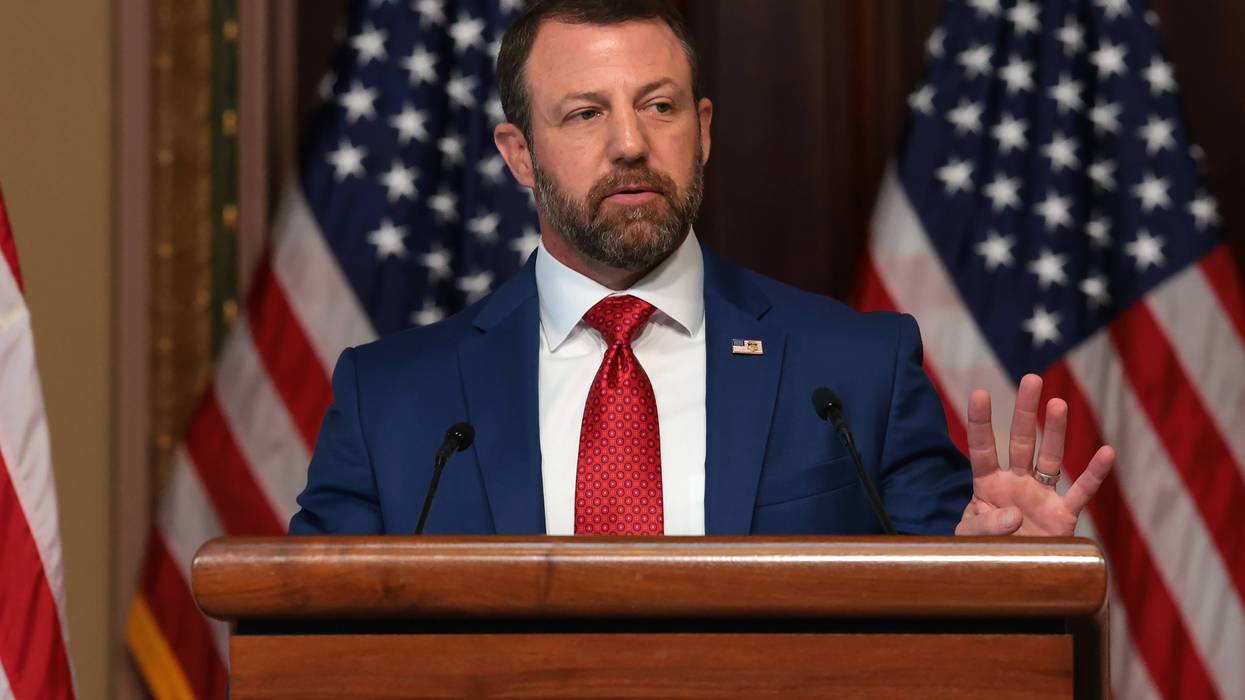
"They are losing, and they know it. Election officials will not be intimidated," said Senate Minority Leader Chuck Schumer.
US Homeland Security Secretary Markwayne Mullin on Friday threatened state election officials with prison time if they do not comply with the Trump administration's "mandatory" changes to how they run their elections.
During a press conference, Mullin said that the Trump administration was making so-called "security enhancements" to US elections "mandatory," adding that any uncooperative states will be penalized.
"If these states want a grant and they want to be reimbursed to run federal elections, they're going to have to implement security issues," Mullin said. "We're saying that your [voting] machines have to be secured and that your voter registration list needs to be scrubbed."
Later in the press conference, Mullin elaborated further on penalties states could face if they didn't "scrub" their voter rolls to the administration's specifications.
"The states that choose... not to participate in securing the elections, we will make sure we make those states a priority to look into who voted in their states, and hold then the election officials accountable," he said. "If the election officials, once we gave them the information they need to secure their elections, and they chose not to, then those individuals can also be held accountable."
Mullin added that this accountability can come "by fines, by penalties, and even, depending on how far it goes, prison time."
Mullin says that election officials in states that don’t cooperate with the Trump administration may face jail time pic.twitter.com/FvIaKmTEdc
— Aaron Rupar (@atrupar) July 17, 2026
Article 1, Section 4 of the United States Constitution explicitly gives states the power to run their own elections, while granting the US Congress the authority to implement federal regulations if needed.
The executive branch of the federal government is given no role in the administration and regulation of elections.
Democratic California Gov. Gavin Newsom reacted to Mullin's threats of jail time for election officials with defiance.
"California has free, fair, and secure elections and we will fight for them," Newsom wrote in a social media post. "Try us."
Senate Minority Leader Chuck Schumer (D-NY) similarly vowed to fight the administration's efforts to meddle in the elections.
"They are losing, and they know it," Schumer wrote. "Election officials will not be intimidated. Senate Democrats will make sure resources are in place to fight back against any illegal activity by the Trump administration."
Sen. Raphael Warnock (D-Ga.) warned that Mullin's Friday statements appear to be an escalation in the administration's tactics.
"First, they sent the FBI to seize ballots in Georgia," he wrote. "Then, they tried to get data on election workers in Fulton County. Now, they’re threatening to imprison election officials. This is escalating quickly. Every single American should be alarmed."
Government watchdog Citizens for Responsibility and Ethics in Washington also indicated it would file legal challenges to the administration's efforts to take over the elections process.
"The Constitution gives states, not the federal government, the power to administer elections," the group wrote. "That's for a good reason, but the Trump admin keeps trying and failing to grab power anyway. We're fighting back in court."
Aaron Reichlin-Melnick, senior fellow at the American Immigration Council, expressed skepticism that the Trump White House's election meddling would be successful.
The Department of Homeland Security "has literally zero power to do this," Reichlin-Melnick wrote. "The Trump admin has lost every single lawsuit on their efforts to get state voter data or change voter requirements. The power to administer elections is given to the states."
Historian Patrick Wyman similarly predicted the administration's efforts would end in failure.
"They’re going to threaten this stuff, they’ll ham-fistedly screw up the implementation, commit seven atrocities, and still lose every election that matters in November," Wyman wrote. "We’re now nearing the 'fuck you, do it, see what happens' stage of this confrontation."
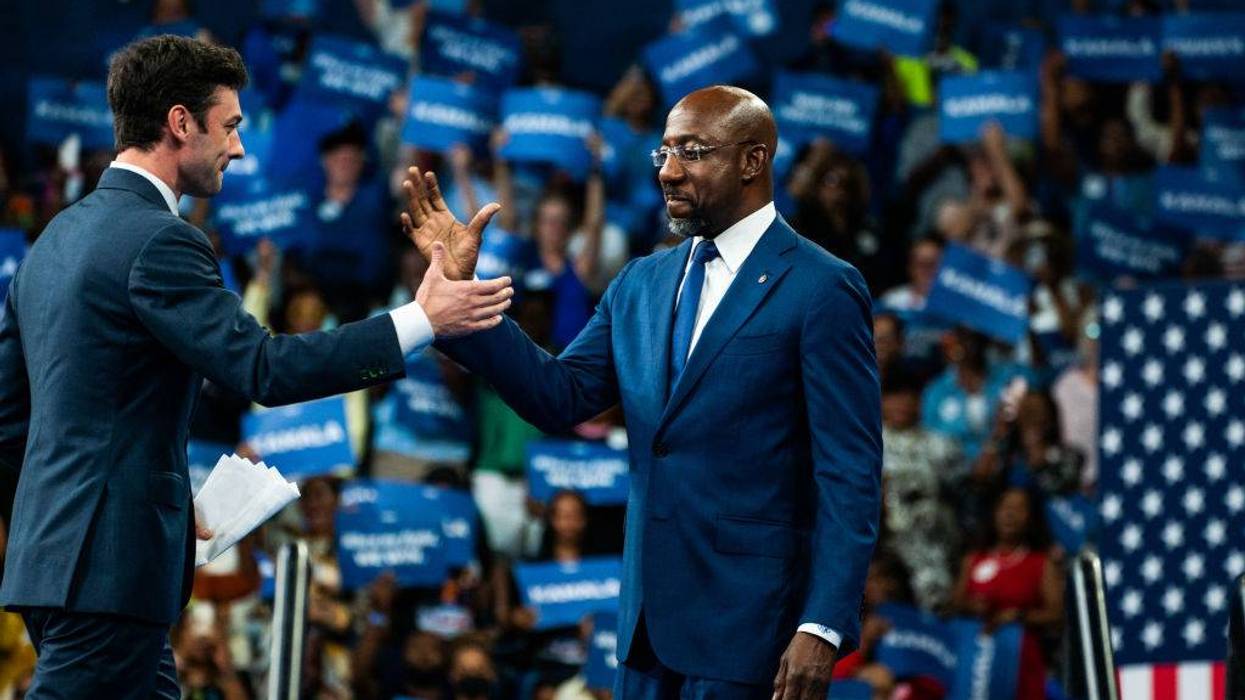
"Today, thanks to the people showing up and showing out, we won. Racist, rigged maps are dead for now."
Democrats in Georgia are celebrating as Republicans in the state abandoned efforts to redraw congressional maps that would have taken effect in 2028.
Eight Georgia Republicans, including Speaker of the House Jon Burns, sent a letter to Gov. Brian Kemp on Wednesday informing him that they would not be going through with his request to enact redistricting ahead of the 2028 election cycle.
"Changes to Georgia's maps should take place only when members of the General Assembly and citizens have been given ample opportunity to gather the facts, provide input, and engage in meaningful discussion," the letter states. "For this reason, we will not be taking up congressional or legislative redistricting for the 2028 election cycle during this special session."
However, there is still a chance that Georgia Republicans could ram through new maps later this year. According to Democracy Docket, Kemp "could still call another special session later this year—and if Republicans lose the midterms, they could try to lock in a 2028 advantage by passing new maps before Kemp leaves office next year."
Democrats in the state nonetheless celebrated Republicans' decision to shelve Kemp's redistricting plan.
In a joint statement, Georgia Senate Minority Leader Harold Jones II and House Minority Leader Carolyn Hugley called on supporters to celebrate "a monumental civil rights victory."
"Republicans thought they could get away with drawing racist, rigged maps without a fight," they said. "Today, thanks to the people showing up and showing out, we won. Racist, rigged maps are dead for now."
Sen. Raphael Warnock (D-Ga.) praised the work of activists who protested against the redistricting plan earlier in the day, putting pressure on Republicans to drop it.
"Hours after I visited the State Capitol with thousands of Georgians, Georgia House Republicans announced they are backing down from gerrymandering our maps, potentially giving them two extra seats," wrote Warnock.
“John Lewis never backed down from getting into good trouble and I won’t either," he added, referring to the late civil rights icon and Democratic member of Congress.
Trump last year sparked an unprecedented mid-decade redistricting battle when he pushed Texas to redraw its congressional map to gain extra Republican seats, and GOP-led states including North Carolina, Missouri, and Florida have since followed suit.
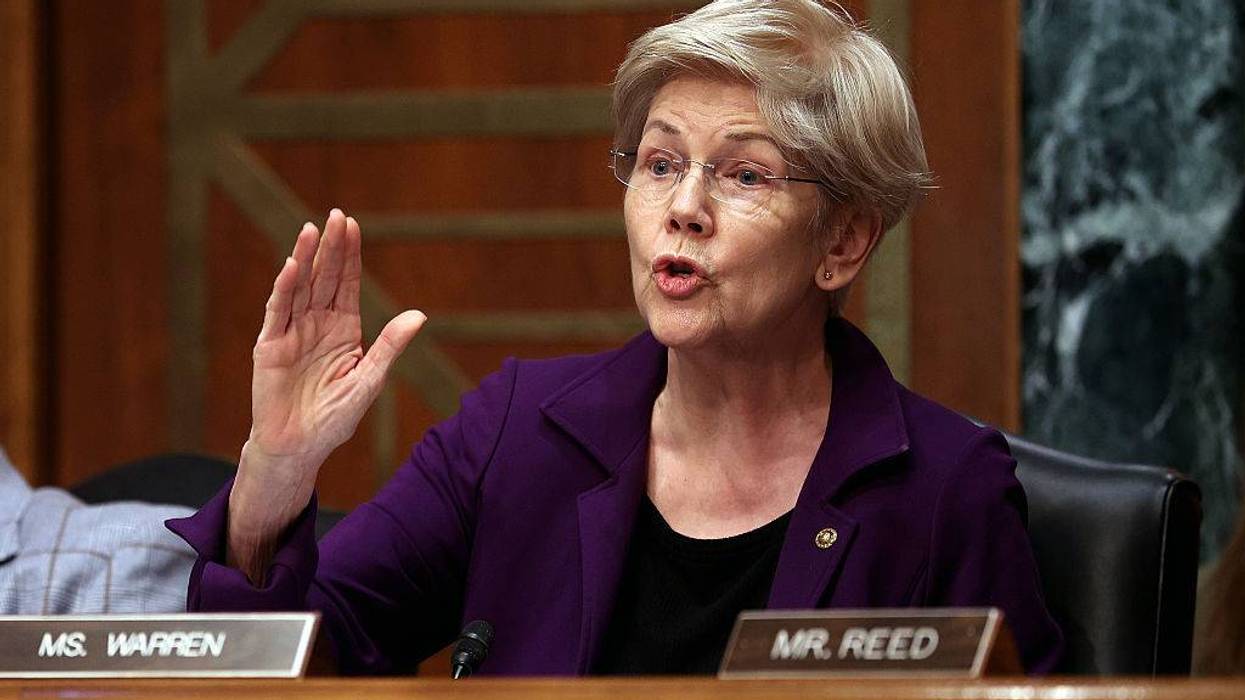
“American monetary and bank safety policy will now depend on a demented ventriloquist in the White House," said one consumer watchdog.
Kevin Warsh, the financier picked by President Donald Trump to be the next chair of the US Federal Reserve, found himself tripped up by a seemingly simple question from Sen. Elizabeth Warren.
During a confirmation hearing before the Senate Banking Committee, Warren (D-Mass.) said she wanted Warsh to demonstrate he had the prerequisite independence to serve as chairman of America's central bank.
"Independence takes courage," Warren informed Warsh. "Let's check out your independence and your courage."
She then asked Warsh if Trump lost the 2020 election to former President Joe Biden—a question numerous appointees of Trump have failed to answer correctly during their confirmation hearings.
"We try to keep politics, if I'm confirmed, out of the Federal Reserve..." Warsh began.
At this point, Warren interjected.
"I'm just asking you a factual question," she said. "I need to know, I need to measure your independence and your courage."
ELIZABETH WARREN: Did Donald Trump lose the 2020 election?
KEVIN WARSH: Uhm, we try to keep politics if I'm confirmed out of the Federal Reserve
WARREN: I'm just asking a factual question
WARSH: I believe this body certified the election
WARREN: That's not the question I'm… pic.twitter.com/AZvmIqZXhN
— Aaron Rupar (@atrupar) April 21, 2026
"Senator, I believe that [the US Senate] certified that election many years ago," said Warsh.
"That's not the question I'm asking," Warren shot back. "I'm asking, 'Did Donald Trump lose in 2020?'"
Warsh refused to directly answer the question, insisting that asking about the outcome of the election was outside the realm of monetary policy.
University of Michigan economist Justin Wolfers took note of Warsh's response to Warren, and wrote in a social media post that it "raises real questions about whether Warsh is independent of the president and if he has the courage to tell hard truths."
Later in the hearing, Warren pressed Warsh on whether there was anything he would disagree with Trump about any aspect of his economic agenda, the financier responded with a joke about the president's comment that Warsh was straight out of "central casting."
"Quite adorable," the senator said sarcastically. "But you know, we need a Fed chair who is independent."
Warren wasn't the only senator to probe Warsh's ability to maintain his independence should he be confirmed as chairman of the Federal Reserve.
Sen. Raphael Warnock (D-Ga.) asked Warsh, who is a visiting scholar at the Stanford Graduate School of Business, to give a letter grade to the US economy.
Trump and top administration officials including Treasure Secretary Scott Bessent have insisted is strong and serving working families well even as the war in Iran has sent gas prices soaring and Trump's tariff policy has cost households more than $2,500 on average.
Warsh joked that modern universities practically require all students to get "A" grades, but Warnock nonetheless pressed him to give his own evaluation of the economy under Trump's stewardship.
"Well, if I gave a student anything other than an 'A,' the dean would summon me to his office because I would have hurt his self-image," Warsh replied.
WARNOCK: What grade would you give the American economy?
WARSH: Well, if i gave a student anything other than an A, the dean would summon me because I would've hurt his self-image
WARNOCK: Consumer confidence is at a record low. That's Americans' grade on the economy pic.twitter.com/3B5dOa2DKe
— Aaron Rupar (@atrupar) April 21, 2026
Warnock was not satisfied with Warsh's answer.
"Well, the Americans that I talk to, particularly in the state of Georgia," said Warnock, "who haven't had the benefit of attending some of these elite institutions... they're sitting around their kitchen tables trying to figure out how to put their kids through school."
Warnock then added that "regardless of how the markets are doing, consumer confidence is at a record low."
Bartlett Naylor, economist for Public Citizen, said on Tuesday that Warsh's confirmation hearing showed how fundamentally unfit he is to be chair of the Federal Reserve.
"Trump named Kevin Warsh because he won the sycophancy contest, threatening the independence of the nation’s most important economic institution," Naylor said. "At his nomination hearing, he failed to acknowledge that Trump lost the 2020 election, affirming that loyalty, not facts, will govern his policy choices."
Naylor warned that, if Warsh is confirmed, then "American monetary and bank safety policy will now depend on a demented ventriloquist in the White House."
Sen. Raphael Warnock said he was "heartbroken to see the news of an active shooter incident at Fort Stewart today" and that he would "join all of Georgia as we pray for the safety of our service members, staff, and their families."
A U.S. Army sergeant is in custody as a suspect in a mass shooting at Fort Stewart, Georgia.
As reported by The Associated Press, the suspect opened fire on Wednesday morning and shot five of his fellow military personnel at Fort Stewart, one of the largest military bases in the U.S.
At this time, law enforcement officials have not identified the name of the suspect nor have they released specifics about the current conditions of the five soldiers who were shot. However, the base announced in a social media post that those wounded in the shooting have since been treated and transferred to Winn Army Community Hospital.
The shooting caused the entire base to go into lockdown for roughly an hour before law enforcement officials apprehended the suspect and determined there was no further threat to the community.
Several elected officials weighed in on the shooting shortly after the news broke. Sen. Raphael Warnock (D-Ga.) said he was "heartbroken to see the news of an active shooter incident" and that he would "join all of Georgia as we pray for the safety of our service members, staff, and their families."
Rep. Joaquin Castro (D-Texas) also commented on the shooting in a post on X.
"My heart is with the loved ones of the victims from the shooting that took place at Fort Stewart in Georgia," he said . "Our service members deserve to be safe in the country they sacrifice so much for. We must work to end the gun violence epidemic that has reached every corner of our society."
Rep. Raja Krishnamoorthi (D-Ill.) said he was "heartbroken" to learn of the shooting and that his thoughts were "with the injured soldiers, their families, and the entire military community during this difficult time."
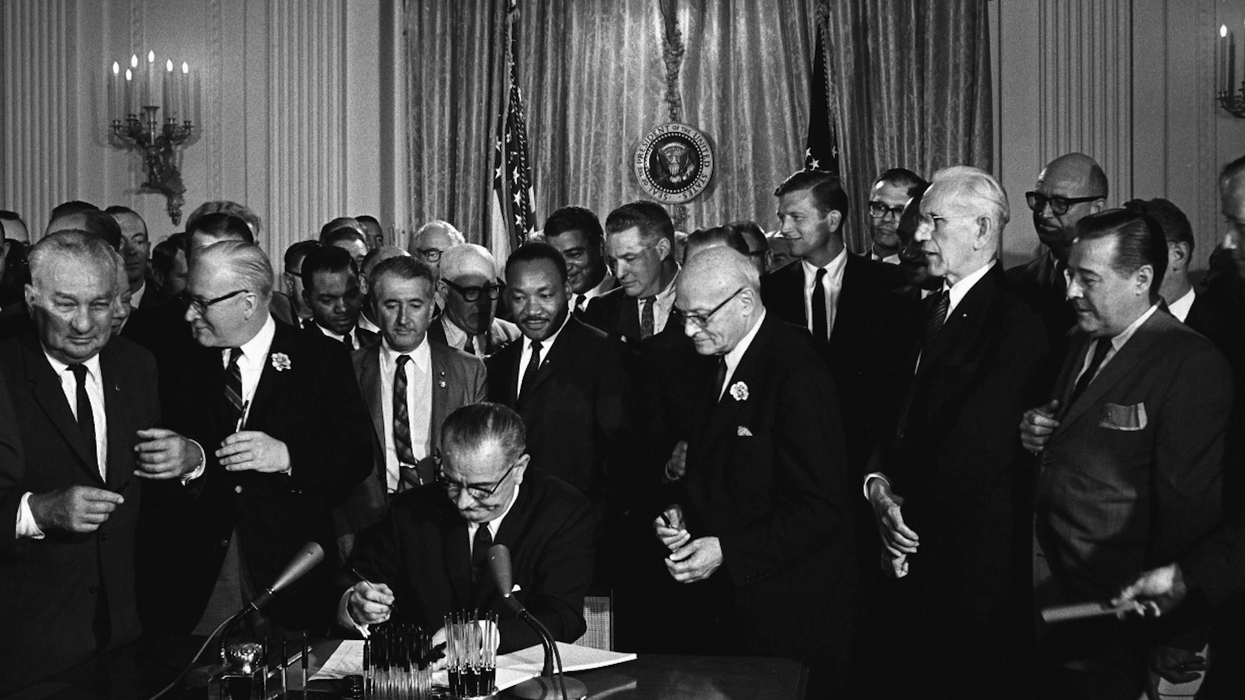
"It's time for Congress to restore its full protections by passing the John R. Lewis Voting Rights Advancement Act," said one Democratic lawmaker.
As the Voting Rights Act turned 60 on Wednesday, advocates highlighted right-wing attacks on the landmark legislation and called on Congress to pass a long-stagnant bill aimed at restoring and strengthening one of the most important civil rights laws in U.S. history.
The VRA, signed into law in 1965 by then-President Lyndon B. Johnson amid a groundswell of civil rights activism, was meant to ensure that state and local governments could not "deny or abridge the right of any citizen of the United States to vote on account of race or color."
However, the law has been eroded in recent decades by Republican-controlled state legislatures across the country, including through racially rigged and other gerrymandered congressional maps, restrictions on voter registration, reduction in early voting options, and voter identification laws. These measures disproportionately disenfranchise minority voters, and some GOP officials have admitted that they are intended to give Republican candidates an electoral edge.
In 2013, the U.S. Supreme Court dealt a major blow to the VRA in Shelby County v. Holder, which eviscerated a key section of the law that required jurisdictions with a history of racist disenfranchisement to obtain federal approval prior to altering voting rules. In 2021, the nation's high court voted 5-4 in Brnovich v. Democratic National Committee to uphold Arizona's voting restrictions—even as Chief Justice John Roberts acknowledged that they disproportionately affect minorities.
"Instead of anniversary toasts, election law experts are preparing eulogies for the landmark legislation."
Now, the Supreme Court's right-wing supermajority is poised to "end voting rights as we know them," as Mother Jones reporter Pema Levy put it Tuesday. That's because the justices said last week that they would rehear a case that could result in them striking down Section 2 of the VRA, what University of California, Los Angeles legal scholar Richard L. Hasen calls "the last remaining pillar" of the law.
"Instead of anniversary toasts, election law experts are preparing eulogies for the landmark legislation, which conservative lawyers have attacked on multiple fronts in recent years, after the U.S. Supreme Court took square aim at the statute's constitutionality last week," Jim Saksa wrote Tuesday for Democracy Docket.
As Hasen explained:
Louisiana v. Callais, the case that was the subject of last Friday's order, is a voting case over the drawing of the state's six congressional districts. Louisiana has a one-third Black population, but after the 2020 census the state Legislature drew a districting plan, passed over a Democratic governor's veto, that created only one district in which Black voters would be likely to elect their candidate of choice.
Before Callais, Black voters had successfully sued Louisiana in a case called Robinson v. Ardoin, arguing that Section 2 of the Voting Rights Act required drawing a second congressional district giving Black voters that opportunity. Section 2 says minority voters should have the same chance as other voters to elect their candidates of choice, and courts have long used it to require new districts when there is a large and cohesive minority population concentrated in a given area, when white and minority voters choose different candidates, and when the minority has difficulty electing its preferred representatives.
However, a group of non-Black voters argued in a lawsuit that the consideration of race in creating a second minority-majority district violated the 14th Amendment's equal protection clause and the 15th Amendment's ban on federal and state governments denying citizens the right to vote based on "race, color, or previous condition of servitude."
"To me, this is it," Luis Fuentes-Rohwer, a law professor at Indiana University Bloomington, told Democracy Docket. "I would bet my left arm that they will tell us that Section 2 is in violation of the 15th Amendment."
Civil rights defenders including numerous Democratic lawmakers urged Congress to pass the John R. Lewis Voting Rights Advancement Act, legislation first introduced in 2021 whose sponsors said will "update and restore critical safeguards of the original Voting Rights Act."
"Sixty years ago today, the Voting Rights Act became law thanks to the perseverance of civil rights activists. Today, our sacred right to vote remains under attack," Sen. Raphael Warnock (D-Ga.), one of the bill's primary sponsors, said on social media Wednesday. "We must protect our democracy and honor those who risked everything by passing the John R. Lewis Voting Rights Advancement Act."
Although the bill passed the then-Democrat controlled House of Representatives in 2021, it failed to pass the Senate and a subsequent bid to advance the legislation failed the following year.
Calling for passage of the bill, Rep. Terri Sewell (D-Ala.)—whose home state played a critical role in the civil rights struggle—said on the social media site Bluesky that the VRA "is on life support after being gutted by the Supreme Court and far-right judges."
The Voting Rights Act was signed into law exactly 60 years ago. But today, it is on life support after being gutted by the Supreme Court and far-right judges.It’s time for Congress to restore its full protections by passing the John R. Lewis Voting Rights Advancement Act. 🗳️
[image or embed]
— Rep. Terri A. Sewell (@sewell.house.gov) August 6, 2025 at 6:35 AM
Rep. Jasmine Crockett (D-Texas) said on Bluesky that "60 years ago today, the Voting Rights Act became law. Now, we have an administration conducting voter suppression in real time. In Texas, Republicans are trying to gut our democracy by redrawing maps to erase five Democratic seats—before a single vote is cast."
"The fight continues," Crockett added. "We owe it to those who marched, bled, and believed to keep pushing until every voice is heard and every vote counts."
The ACLU said: "Democracy can't wait. Congress must protect our voting rights at the federal level by passing the reintroduced John Lewis Voting Rights Advancement Act."
However, passing the bill will be next to impossible, given Republican control of both houses of Congress and President Donald Trump in the White House. That doesn't mean voting rights defenders should give up, Legal Defense Fund president and director-counsel Janai Nelson stressed Wednesday.
"If we are to continue the pursuit of the multiracial democracy that the VRA set in motion 60 years ago and if we are to honor our republican form of government founded on representation by the people, we must be unwavering in our commitment to fulfill the promise of Selma, refuse to cede any further ground, and mobilize in support of equal voting rights and fair elections," Nelson said.

Sen. Warren decried Republicans for helping "squeeze" struggling families and warned that the "latest attack on the CFPB would let big banks rake in huge profits by slamming working people with outrageous overdraft fees."
All but one Republican in the U.S. Senate voted Wednesday night to advance a joint resolution that would nullify a cap on overdraft fees, a protection put in place by the Consumer Financial Protection Bureau to prevent Wall Street banks from making billions more in profits on the backs of vulnerable American consumers.
" Republicans in the Senate voted tonight while no one is watching to fatten Wall Street profits by jacking up overdraft fees on you," said Sen. Elizabeth Warren, following the 52-47 vote that fell almost strictly along party lines. "So much for lowering costs," she added.
Not one Democrat voted in favor pushing the rule forward, while only Sen. Josh Hawley (R-Mo.) voted against and Sen. Brian Schatz (D-Hawaii) did not vote.
In a speech on the Senate floor ahead of the vote, Sen. Warren decried Republicans for helping Wall Street "squeeze" struggling families and warned the "latest attack on the CFPB would let big banks rake in huge profits by slamming working people with outrageous overdraft fees."
Senate Republicans’ latest attack on the CFPB would let big banks rake in huge profits by slamming working people with outrageous overdraft fees.
I spoke on the Senate floor to fight back—because American families deserve a system that works for them, not just Wall Street. pic.twitter.com/W0VzO3cX1I
— Elizabeth Warren (@SenWarren) March 26, 2025
The draft rule was put in place in the final months of the Biden administration as a way to curb excessive fees and provide reasonable protections for consumers who overdraft their accounts. As The Atlanta Journal-Constitution reports:
In 2023, big banks made $5.8 billion from overdraft and non-sufficient fund fees, according to the Consumer Financial Protection Bureau. CFPB announced a new rule capping those fees in December, shortly before [President Joe] Biden left office, that is slated to take effect in October.
The rule gave banks three options: cap overdraft fees at $5; if offering overdraft as a service, rather than for profits, charge a fee that covered the bank's costs and losses; or if looking to make a profit off an overdraft loan, disclose the loan terms to consumers beforehand.
For households that pay overdraft fees, the rule was expected to save them $225 a year.
Sen. Raphael Warnock (D-Ga.) joined Warren in slamming his Republican colleagues over the vote.
"If we leave this $5 cap for overdraft fees in place, guess what, [the banks will] still be doing just fine,” Warnock told the Journal-Constitution. "But if we overturn it, families that are already being squeezed by inflation and by tariffs and a whole range of bad policies that are putting them in jeopardy are going to be squeezed even more."
According to the watchdog group Accountable.US, lifting the rule will allow large Wall Street banks and other financial institutions "to continue exploiting American families" with little or no recourse for relief from such predatory and profit-seeking practices.
"Senate Republicans are siding with big banks to make it easier for them to trick their customers into paying excessive fees," said Tony Carrk, the group's executive director, on Thursday. "The CFPB's overdraft rule limits abusive fees and puts money back in the pockets of consumers. Any vote against the rule is a gift to Wall Street special interests at our expense."
With the
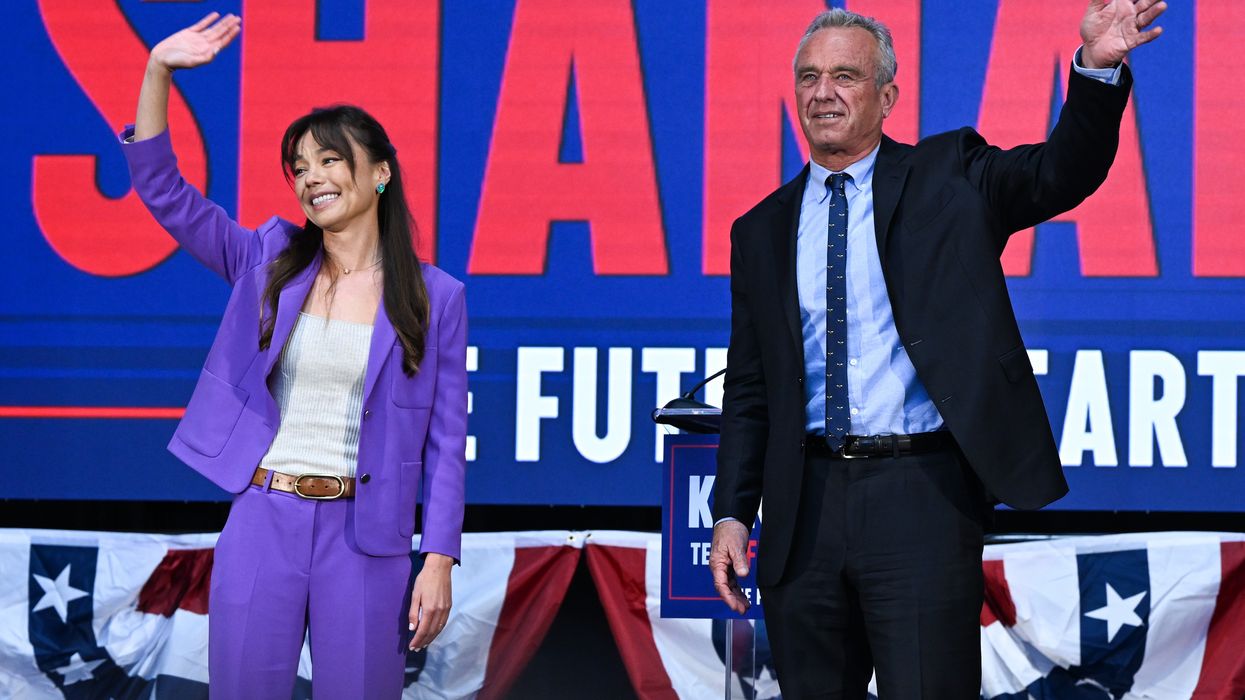
"I know entitled rich people think they can buy Nevada's Senate seat—they can't," said one Democratic senator. "I work for Nevada, not billionaires like Nicole Shanahan."
Nicole Shanahan, the billionaire former running mate of erstwhile Independent presidential candidate Robert F. Kennedy Jr., is threatening political retribution against any senator who does not vote to confirm Kennedy as Republican U.S. President Donald Trump's health and human services secretary.
This week, Shanahan vowed to "personally fund" primary challenges against senators who don't support Kennedy's nomination to head the U.S. Department of Health and Human Services.
"This is a bipartisan message, and it comes directly from me," Shanahan said in a video posted Monday on the social media platform X. "While Bobby may be willing to play nice, I won't."
Shanahan specifically admonished more than a dozen senators, including Democrats, Republicans, and Bernie Sanders (I-Vt.).
"The two candidates I helped elect, Sen. Raphael Warnock and Sen. Jon Ossoff, please know I will be watching your votes very closely,” she said, singling out the two Georgia Democrats. "I will make it my personal mission that you lose your seats in the Senate if you vote against the future health of America's children."
At least one senator responded to Shanahan's threat. Sen. Catherine Cortez Masto (D-Nev.)
said on social media Wednesday: "Big Pharma spent millions against me and I didn't back down. Koch spent millions against me, I didn't back down. I know entitled rich people think they can buy Nevada's Senate seat—they can't. I work for Nevada, not billionaires like Nicole Shanahan."
Shanahan—who reportedly gained most of her wealth from her previous marriage to Google co-founder Sergey Brin—poured millions of dollars of her own money into Kennedy's longshot presidential campaign before the conspiracy theorist chose her as his running mate. She was also among the early voices urging Kennedy to drop his independent White House bid and throw his support behind Trump, as he ultimately did.
Before that, Shanahan donated to prominent Democratic politicians including the party's presidential nominee, Hillary Clinton, in 2016 and former President Joe Biden in 2020. Kennedy, the son of former Democratic Sen. Robert F. Kennedy (Mass.) and nephew of former President John F. Kennedy—both of whom were assassinated in the 1960s—was also a longtime Democrat prior to his switch last year.
A wide range of public health experts oppose Kennedy's nomination. Last month, a group of 75 Nobel laureates urged senators to reject his appointment, citing his deadly history of amplifying discredited conspiracy theories and his "lack of credentials or relevant experience in medicine, science, public health, or administration."
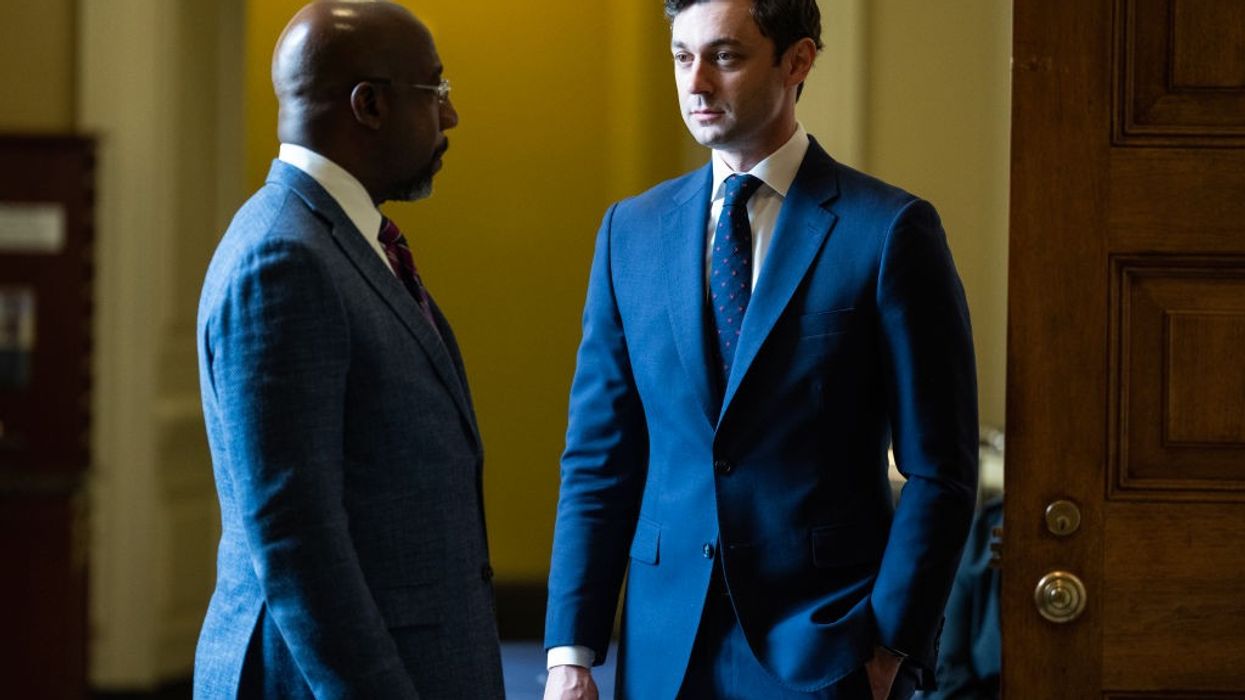
The bill, noted one opponent, "has some egregious provisions that will have dramatic consequences beyond its stated goal of locking up undocumented individuals like the man who murdered Laken Riley."
A dozen U.S. Senate Democrats on Monday helped the GOP pass the Laken Riley Act—an immigration bill decried as a far-right power grab—just hours after Republican President Donald Trump was sworn in for a second term.
Those 12 Democrats are Sens. Catherine Cortez Masto (Nev.), John Fetterman (D-Pa.), Ruben Gallego (Ariz.), Maggie Hassan (N.H.), Mark Kelly (Ariz.), Jon Ossoff (Ga.), Gary Peters (Mich.), Jacky Rosen (Nev.), Jeanne Shaheen (N.H.), Elissa Slotkin (Mich.), Mark Warner (Va.), and Raphael Warnock (Ga.). Fetterman and Gallego co-sponsored the bill.
A version of the legislation—named for a 22-year-old woman murdered by a Venezuelan migrant in Georgia last year—was passed by the House of Representatives earlier this month in a 264-159 vote, with support from 48 Democrats. However, it must be approved by the chamber again before it will head to Trump's desk.
"I just voted against the Laken Riley Act," said Senate Judiciary Committee Ranking Member Dick Durbin (D-Ill.). "This bill won't accomplish its goals. I'm disappointed in its passage as it stands, and I'm deeply concerned about how it will be implemented."
Writing to members of Congress ahead of the Senate's 64-35 vote, over 70 national groups said that "the senselessness of the murder of Laken Riley does not justify making unprecedented changes to immigration detention laws that—like all mandatory incarceration provisions—will only result in more discrimination while doing little to increase public safety."
Urging lawmakers to oppose the bill the coalition explained:
S. 5 would require the mandatory detention—without any possibility of bond—of undocumented persons who are merely arrested for or charged with certain offenses, including misdemeanor shoplifting. It does not require conviction. There is no statute of limitations, and the bill does not specify any process by which a person might contest either their immigration detention or the underlying criminal charges (if charges are even pursued). Mandatory immigration detention on the basis of a mere arrest is unprecedented, and it would invite abuses that almost certainly would disproportionately impact people of color.
We are also concerned with language in the bill that would give states standing to sue the federal government over any allegation that the federal government is improperly implementing immigration laws, such as detention and removal provisions, visa provisions, or its discretionary parole authority. This language would open the floodgates to litigation, and it would enable individual states to shape federal immigration policies.
"Laken Riley should be with us today. Her murder is a tragedy, and the perpetrator should be held fully accountable," said Sen. Jeff Merkley (D-Ore.) after the vote. "The Laken Riley Act, however, has some egregious provisions that will have dramatic consequences beyond its stated goal of locking up undocumented individuals like the man who murdered Laken Riley. Specifically, it requires mandatory imprisonment for undocumented children who have never been charged with or convicted of a crime. This is twisted."
"We've seen time and again the damage the federal government can cause our children with dangerous immigration policies like this," he added. "I will continue to champion proposals that keep all of us safe, fix America's broken immigration system, and strengthen our border security. Our families and communities demand nothing less."
The Senate vote came as Trump began imposing his anti-immigrant agenda with a slew of executive orders. The Republican, who campaigned on mass deportations and ending birthright citizenship, is expected to sign the Laken Riley Act once it reaches him.
"Trump's first actions as president show us exactly who he is and what he believes about America," said Congresswoman Delia Ramirez (D-Ill.). "While he talked about unity, he used his first moment in the office to stoke fear and fuel division. While he talked about a 'golden age,' he signed unconstitutional and un-American executive orders that gut equality initiatives, criminalize immigrants, end asylum, roll back climate protections, and endanger our national security. There is nothing great about an America that denies peoples' civil rights, refuses refuge to the persecuted, or denies future generations clean air and water."
"I believe America is greatest when we pursue justice, equality, and peace and honor our shared humanity," she added. "This daughter of immigrants, citizen by birthright, and congresista from a district that celebrates our diversity, stands ready to fight for the soul of our nation. Regardless of who is president, I will continue to fight for the policies working people demand: affordable housing and healthcare, good-paying jobs, clean air and water, public safety, and comprehensive immigration reform."
The vote showed the hypocrisy of the two senators who are pastors of the Christian denomination.
The February 12, 2024 U.S. Senate vote on $14 billion to Israel shows the depravity of most of the members of the legislative body.
In particular it showed the hypocrisy of the two senators who are pastors of a Christian denominations as well as the shallowness of the few senators who called for a cease-fire and then voted for money to kill more Palestinians. Only three Senators who caucus with the Democrats voted against the funding—Sens. Bernie Sanders (I-Vt.), Peter Welch (D-Vt.), and Jeff Merkley (D-Ore.)
Senator Raphael Warnock (D-Ga.) voted for $14 billion for Israel. He is a Baptist preacher from Georgia. For 19 years Warnock was the pastor of Ebenezer Baptist Church in Atlanta, Georgia, Martin Luther King Jr.’s former congregation. He is the fifth and youngest person to serve as Ebenezer’s senior pastor since its founding, and he has continued with the position while serving in the Senate.
Would Martin Luther King, Jr. be proud of Ebenezer Church Senior Pastor Warnock? I think not!
Warnock was elected with the help of volunteers who came to Georgia from all over the country… and by funds from the American Israel Public Affairs Committee (AIPAC) that wanted desperately for the Democrats to be in charge of the Senate so that Israel super-supporter Sen. Chuck Schumer (D-N.Y.) would become the Senate majority leader. Schumer ties President Joe Biden as the strongest supporter for the state of Israel in the U.S. government. They both have protected the criminal actions of the state of Israel for decades, throughout Biden’s 36 years in the Senate, eight years as vice president, and now three years as president and Schumer’s 25 years in the Senate.
A small group of us caught Senator Warnock outside the door of the private entrance to his office in the Dirksen Senate Office Building on February 12, less than 15 hours before the early morning vote on $14 billion to Israel to continue the Israeli slaughter of Palestinians in Gaza.
In our appeal to his Christian values, we pleaded with him as a pastor, the only pastor in the Senate, to not vote for money for Israel to continue the killing in Gaza. He shook the hands of each in our group, our red-stained hands from our daily protests, symbolizing the blood on the hands of those protecting Israeli crimes in Gaza and the West Bank. Warnock thanked us for our comments but would not say he would call for a cease-fire, and he didn’t say he was voting for the money to Israel and why.
But, as an aside, Warnock mentioned that he was not the only pastor in the Senate. We asked who the other one was?
Warnock replied, “James Lankford,” to which our group gave a collective groan. Lankford is from Oklahoma and is known as an ultra-conservative and is a strong supporter of Israel. He said that Israel is fighting “morally” while Hamas is not. Lankford was for 15 years the director of student ministry for the Baptist Convention of Oklahoma.
During the 2022 Georgia run-off election, Warnock’s 2018 sermon in which he condemned Israel for directing fire at unarmed Palestinian protesters near Israel’s separation fence with the occupied Gaza Strip was dug up by opponent former Sen. Kelly Loeffler.
As an African-American church leader, Warnock certainly knew of Israeli apartheid actions in Gaza and the West Bank. In 2019, he signed a statement published on the website of the National Council of Churches which compared Israeli control of the West Bank to “previous oppressive regimes” such as “apartheid South Africa” and said that the “ever-present physical walls that wall in Palestinians” are “reminiscent of the Berlin Wall.”
The statement was signed by several Christian faith leaders who traveled to Israel and the Palestinian territories in late February and early March of 2019 as part of a joint delegation including representatives of “historic Black denominations of the National Council of Churches” as well as “heads of South African church denominations of the South African Council of Churches.”
Despite his comments that challenged the Israeli apartheid treatment of Palestinians and Israel’s actions in the West Bank and Gaza, Warnock interestingly received campaign donations from the Democratic Majority for Israel (DMFI) and began parroting its agenda, which includes supporting unconditional aid for Israel; condemning the boycott, divestment, and sanctions movement; and strengthening the U.S.-Israel relationship. All of this to get another Democratic Senator so that Chuck Schumer would become the Senate majority leader.
15 hours after our conversation with Pastor Warnock, at 5:00 am in the morning of February 13, the two Christian pastors in the U.S. Senate voted for $14 billion for Israel to continue the killing of massive numbers of Palestinians.
Would Martin Luther King, Jr. be proud of Ebenezer Church Senior Pastor Warnock? I think not!
As Warnock is a pastor in the footsteps and in the church of Martin Luther King Jr., one is quite sure that MLK in heaven is not pleased with Pastor Warnock’s vote for more military funding for Israel and for Ukraine.
One hopes that MLK comes to Warnock in his dreams to give him counsel for any future votes, votes that one would hope would reflect an abhorrence to genocide instead of bowing to Israeli political pressure.

"While state politicians continue playing games with people's lives, Georgians are dying because they can't afford the healthcare they need," said Sen. Raphael Warnock.
An effort by the Republican-led Georgia government to partially expand Medicaid is falling well short of enrollment expectations, a failure that could stem from the program's burdensome work requirements and other administrative barriers that are abundant in a for-profit system that doesn't guarantee healthcare to all as a right.
Politico reported Tuesday that just 1,800 people enrolled during the program's first four months—leaving the state on pace to miss Republican Gov. Brian Kemp's target of 31,000 enrollees within the first year.
"Critics blame the paltry expansion on an overly complex program with too many hurdles for people to clear," the outlet noted.
Brendan Duke, senior director for economic policy at the Center for American Progress, wrote in response to Politico's reporting that "a large part of progressive opposition to work requirements in safety net programs isn’t principle—it's about the paperwork that prevents working people from enrolling in programs they qualify for."
"Great example with Georgia and Medicaid here," Duke added. "Work requirement supporters will ask, 'Why do you oppose work reqs if the vast majority of people would still qualify?' Some of the problem is you're denying support to people who can't find a job. But some of it is you're functionally denying support to people with a job!"
As Georgia began rolling out its Pathways to Coverage program earlier this year following a legal fight with the Biden administration, researchers at Georgetown University's Center for Children and Families (CCF) argued that the state's insistence on a work requirement would likely box many people out, including workers with irregular hours and parents who lack access to childcare.
The work requirements in Georgia's program do not include an exemption for caregiving or high childcare costs, the CCF experts noted. As such, they warned, "many parents will likely remain uninsured under the Pathways program especially parents of babies and toddlers who are preschool age."
Georgia, which has one of the highest uninsured rates in the U.S., is currently the only state with a Medicaid work requirement in effect—though it's not the first to ever implement one.
In 2018, with the approval of the Trump administration, Arkansas put in place work mandates for Medicaid with disastrous results. Before the policy was blocked in federal court, more than 18,000 people in the state were thrown off Medicaid in just seven months for failing to adhere to the requirements.
The Arkansas policy did not boost employment, an outcome consistent with research showing that work requirements are only effective at stripping people of benefits.
"Pathways to Coverage has cost Georgia more money and covers far fewer people than if the state simply joined 40 other states in expanding Medicaid."
In 2021, the Biden administration rescinded Trump-approved waivers that had allowed Georgia and other states to add work requirements to their Medicaid programs. Georgia challenged the decision in court and prevailed last year, thanks to its argument that the experiment would lead to more people receiving coverage than if the program were blocked.
Kemp has suggested that around 345,000 Georgians could be eligible for the expanded Medicaid program, but the state expects that just around 64,000 will eventually enroll in the program.
That's just 14% of the people who would be covered if Georgia joined nearly every other U.S. state in fully expanding Medicaid under the Affordable Care Act, CCF researchers estimated earlier this year.
In addition to covering fewer people than full Medicaid expansion, Georgia's experiment is also expected to cost the state far more.
Leah Chan, senior health analyst at the Georgia Budget and Policy Institute, told a local Georgia newspaper earlier this year that Pathways to Coverage will cost roughly $2,420 per enrollee. Full Medicaid expansion, by contrast, would run the state just $496 per enrollee, as the federal government pays much of the cost.
Sen. Raphael Warnock (D-Ga.) told Politico that "Pathways to Coverage has cost Georgia more money and covers far fewer people than if the state simply joined 40 other states in expanding Medicaid."
"While state politicians continue playing games with people's lives," he added, "Georgians are dying because they can't afford the healthcare they need."
Heightened scrutiny of Georgia's Medicaid experiment comes as states across the U.S. are rapidly conducting eligibility checks and kicking people off Medicaid en masse following the end of pandemic-era protections. Georgia is one of nine Republican-led states that collectively account for 60% of Medicaid and Children's Health Insurance Program disenrollments this year.
An overwhelming majority of the disenrollments nationwide have been for procedural reasons, such as a paperwork error.