

SUBSCRIBE TO OUR FREE NEWSLETTER
Daily news & progressive opinion—funded by the people, not the corporations—delivered straight to your inbox.
5
#000000
#FFFFFF
To donate by check, phone, or other method, see our More Ways to Give page.
Daily news & progressive opinion—funded by the people, not the corporations—delivered straight to your inbox.
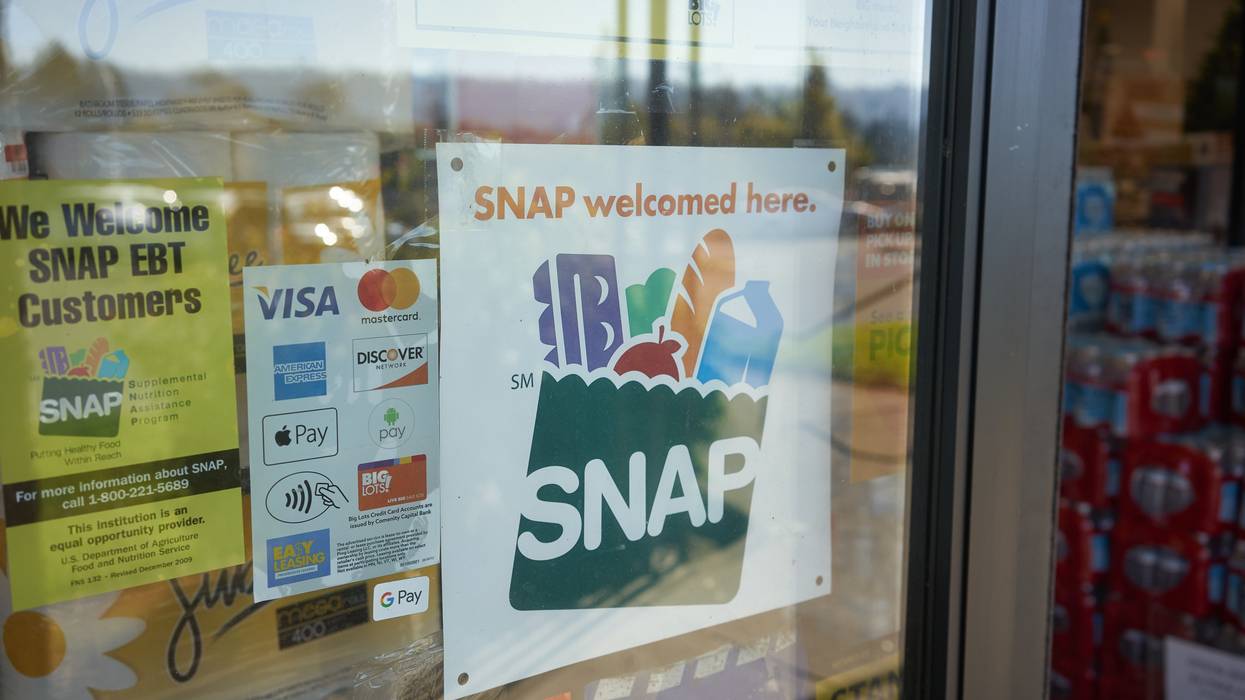
By focusing on the facts and the program’s broad benefits, Americans can move past partisan divides and recognize the Supplemental Nutrition Assistance Program for the bipartisan, practical tool it truly is.
On January 31, 1964, President Lyndon B. Johnson requested that Congress pass federal legislation to make the Food Stamp Program permanent. Up to that point, the program had operated as a pilot in select counties and states, serving about 380,000 participants. The Food Stamp Program expanded dramatically in the ensuing decades, driven largely by a recognition of domestic hunger. It has also undergone many changes—notably 2008 legislation that changed the name to the Supplemental Nutrition Assistance Program, or SNAP, in part to fight the politicized stigma of receiving food assistance.
Today, the program is without a doubt one of the most effective food assistance programs in reducing food insecurity and poverty across the United States. The US Census Bureau reports that supplemental nutrition assistance lifted nearly 3.6 million people out of poverty in 2024, the most recent year for which full data are available.
What’s more, every dollar in SNAP benefits generates about $1.50 in economic activity, as recipients spend their benefits at grocery stores, farmers’ markets, and small businesses. This ripple effect strengthens communities, keeping businesses open and workers employed.
Looking solely at the data, it would seem the anti-hunger program would be viewed by the vast majority of US voters as a practical solution that helps families put food on the table while also supporting local economies. After all, the vast majority of SNAP recipients are children, seniors, and people with disabilities, not the able-bodied adults who are often misrepresented as the main beneficiaries in political debates. And many rural communities, which tend to vote conservatively, rely heavily on this nutrition assistance, with some of the highest SNAP participation rates found in states that lean Republican.
The politicization of social welfare programs generated long-lasting shifts in voting behavior.
Yet in spite of its broad social and economic benefits, food assistance has been a politically contested issue ever since it was enacted more than five decades ago, often shaped by ideological and racialized narratives. This polarization persists today, exemplified by the massive cuts to the Supplemental Nutrition Assistance Program in the 2025 Republican budget reconciliation bill (commonly referred to as the “One Big Beautiful Bill Act”) that was passed by the 119th US Congress and signed into law by President Donald Trump in July 2025.
In new research, I, together with co-authors Troup Howard at the University of Utah and William Mullins at the University of California, San Diego, examine the process through which policy-based polarization emerges and persists over time. Using the historical expansion of the federal Food Stamp Program between 1961 and 1975 as a case study, we provide empirical evidence that the politicization of social welfare programs generated long-lasting shifts in voting behavior. Understanding this history and its persistence is essential to making sense of current debates over the Supplemental Nutrition Assistance Program.
The historical rollout of the Food Stamp Program provides a case study in how social and economic policies become polarized and how those divisions persist across generations. Political views on food assistance are emblematic of the deeply partisan divide over social insurance programs and racial attitudes, which consistently emerge as key fault lines in US politics, reflecting deep-seated ideological and historical divisions.
Even though political polarization is often framed as a natural consequence of personal preferences and ideological sorting, such an interpretation overlooks the strategic role of political parties in shaping public perception for electoral advantage. We find that these behaviors persisted well beyond the first two decades—through 2020, as detailed in our research, and arguably even more so today.
The Food Stamp Program, now known as the Supplemental Nutrition Assistance Program, has played a critical role in the network of US social programs for more than half a century. After state- and federal-level experimentation, the program was rolled out nationwide between 1964 and 1975 to combat food insecurity and improve nutrition among low-income Americans. The program currently supports 42 million people, including nearly 1 in 5 American children. Research consistently demonstrates its effectiveness in reducing poverty, stabilizing household food consumption, and improving long-term health and economic outcomes.
The initial rollout of the Food Stamp Program coincided with a period of intense legal and political transformation, marked by the Civil Rights Act of 1964, the Voting Rights Act of 1965, and the broader dismantling of Jim Crow laws that legally discriminated against Black Americans across the South. In this context, the introduction of a federal food assistance program was not merely a policy shift but also became a political flash point.
Our analysis provides, to the best of our knowledge, the first causal estimates on the racial politicization of social programs. Using individual-level voting data, we find three key results:
When a government program is first implemented, voters are often uncertain about its long-term effects. This initial ambiguity provides political parties with an opportunity to shape public perception through strategic political moves, particularly in the early stages of a policy’s rollout. Politicians can change the narrative framing surrounding discussions about the program. Or they can steer political resources away from the program and bring into focus other politically polarizing issues. Or they can set agendas that cater to specific groups of voters in an effort to offset any political advantages the opposing party might be accruing from public discussion about the policy.
These are classic partisan political strategies, and we show in our research that political parties, recognizing the potential to consolidate their voter base, have incentives to selectively target different demographic groups with distinct messaging. Even when a policy itself does not explicitly favor one group over another, partisan political moves can amplify political divisions and solidify long-term realignments in voter preferences.
To implement our analysis, we used a comprehensive dataset covering the universe of US voters as of 2020. We then compared the voting behavior between individuals who were adults when the Food Stamp Program was introduced in their county and those who were younger at the time. This methodology, which incorporates a rich set of fixed effects and demographic controls, including age, race, and gender, ensures that our findings are not driven by geographic variation, cohort effects, or broader shifts in political attitudes between 1960 and 2020.
SNAP is often misunderstood or misrepresented, but at its core, it is a practical program that helps families meet basic nutritional needs.
The results reveal the lasting impact of the Food Stamp Program on partisan affiliations. White voters who lived through the Food Stamp rollout as adults were significantly more likely to be registered as Republicans—and less likely to be Democrats—in 2020, compared with White voters who were younger, especially those who were born in a world where the Food Stamp Program was already an established feature of US social programs.
In contrast, Black and Hispanic voters who lived through the Food Stamp rollout as adults were significantly more likely to be registered as Democrats or Independents than Black and Hispanic voters who were younger. Racial polarization in partisan affiliations is an order of magnitude larger than electorate-wide effects, underscoring the extent to which food assistance became a racialized political issue.
Further analysis of voting behavior conditional on party affiliation reveals additional layers of polarization. Exposure to the rollout of the program increased the likelihood of white Republicans turning out to vote while simultaneously boosting turnout among Black and Hispanic Democrats. This divergence suggests that the politicization of food assistance not only influenced party registration but also reinforced voting engagement along racial and ideological lines.
Moreover, when focusing on individuals who registered to vote before the age of 25—a group likely to be more politically engaged—we observe even stronger effects, highlighting the formative role of early political experiences in shaping long-term partisan identity.
Taken together, these findings illustrate how social policy can serve as a catalyst for enduring political realignments. The case of the Food Stamp Program suggests that initial framing and partisan efforts can have consequences that extend well beyond the policy itself, shaping voting behavior for generations.
The program’s name shift in 2008 to the Supplemental Nutrition Assistance Program and its catchy acronym SNAP was intended to partially address this polarization that had developed over many decades. Beyond reducing the stigma associated with “food stamps,” the rebranding sought to counter the racialized and partisan narratives that had taken root during the program’s early rollout by emphasizing nutrition, work, and temporary assistance. By reframing food assistance as a modern, employment-adjacent social support rather than a form of welfare, policymakers aimed to make the program more politically durable amid persistent partisan scrutiny—even as the underlying political divisions documented in our analysis continued to shape debates over the program’s scope and funding.
As contemporary debates over social programs continue—not just about SNAP benefits but also in the context of the expansion of Medicaid in the Affordable Care Act of 2010 and the recent cuts to Medicaid in 2025—understanding the historical roots of this polarization is critical. The long-run political consequences of early policy framing should be a central consideration in both policymaking and electoral strategy. And the long-run economic fallout if partisan politics are successful in further diminishing social insurance programs could include substantial contractions in local economic activity as federal SNAP dollars are withdrawn from communities.
To make discussions about SNAP benefits less partisan, it is important that views about the program become decoupled from partisan politics. Yet separating the program from political narratives and stereotypes can be challenging. SNAP is often misunderstood or misrepresented, but at its core, it is a practical program that helps families meet basic nutritional needs.
By focusing on the facts and the program’s broad benefits, as documented in this issue brief, Americans can move past partisan divides and recognize the Supplemental Nutrition Assistance Program for what it truly is—a bipartisan investment in food security, economic stability, and the well-being of US families.
This piece was first published by the Washington Center for Equitable Growth.
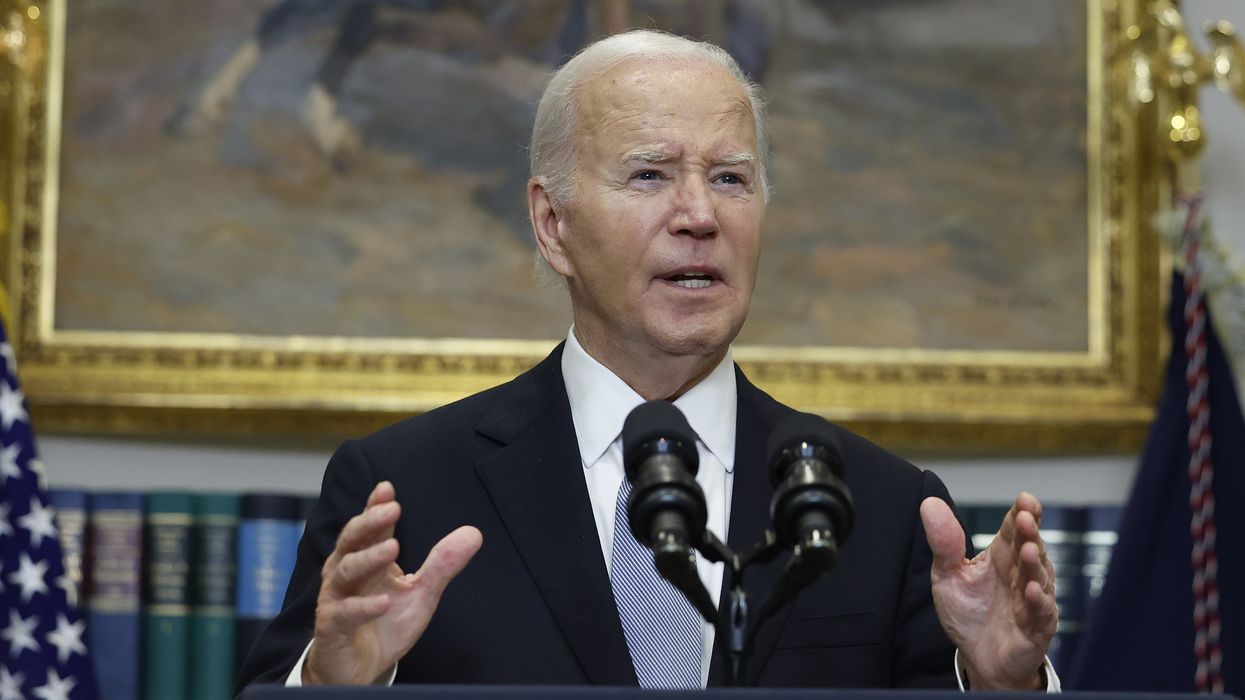
The former president, warned a broad rights coalition, "executed more people than the previous ten administrations combined."
A large and diverse coalition of broad coalition of rights organizations on Monday sent a letter to U.S. President Biden Monday, urging him to commute the sentences of all 40 individuals who are on federal death row.
The letter adds to a chorus of voices—including prosecutors and law enforcement officials—advocating for Biden to use his clemency powers to issue such commutations before he departs office.
The calls for Biden to issue pardons and commutations have only grown since the president issued a pardon for his son, clearing Hunter Biden of wrongdoing in any federal crimes he committed or may have committed in the last 11 years.
The joint letter to Biden was backed by over 130 organizations, including the ACLU, Brennan Center for Justice, and The Sentencing Project, commends his administration's "actions to repudiate capital punishment, including imposing a moratorium on executions for those sentenced to death, and for publicly calling for an end to the use of the death penalty during your 2020 campaign. In the face of a second Trump administration, more is necessary."
"President Trump executed more people than the previous ten administrations combined. Of those he executed, over half were people of color: six Black men and one Native American. The only irreversible action you can take to prevent President-elect Trump from renewing his execution spree, as he has vowed to do, is commuting the death sentences of those on federal death row now," the letter states.
The letter cites additional reasons that Biden ought to commute the sentences, including that the death penalty "has been rooted in slavery, lynchings, and white vigilantism."
A separate letter to Biden—sent in November by group of attorneys general, law enforcement officials, and others—argues that "condemning people to death by the state does not advance public safety. The death penalty fails as an effective deterrent and does not reduce crime. As an outdated, error-riddled, and racially-biased practice, its continued use—and the potential for its abuse—erodes public trust in the criminal legal system and undermines the legitimacy of the entire criminal legal system."
Matt Bruenig, president of the People's Policy Project think tank, directly tied Biden's inaction on this issue to the pardon he issued for his son in a blog post last week, writing that "if Biden does not act, there is little doubt that Trump will aggressively schedule executions in his next term. Their blood will primarily be on Trump's hands, but, if Biden does not act to prevent it, his hands will be bloody too."
The call for commutations for death row prisoners aligns with a wider push for the President to use his clemency powers before he leaves office.
Rep. Ayanna Pressley (D-Mass.), who has been particularly vocal on this issue, said Sunday on social media that President Biden "must use his clemency power to change lives for the better. And we have some ideas on who he can target: Folks in custody with unjustified sentencing disparities, the elderly and chronically ill, people on death row, women punished for crimes of their abusers, and more."
Pressley was one of over 60 members of Congress who sent a letter to Biden last month, encouraging Biden to intervene to help these groups.
Several lawmakers have specific pardons or commutations in mind, according to Axios. For example, Rep. Thomas Massie (R-Ky.) has urged Biden to pardon Julian Assange of WikiLeaks, and Rep. Alexandria Ocasio-Cortez (D-N.Y.) has called for a pardon of Indigenous activist Leonard Peltier, per Axios.
So far, Biden has granted far fewer clemency petitions (161 total) than former President Barrack Obama, according to the Department of Justice's Office of the Pardon Attorney, and a few dozen less than President-elect Trump did during his entire first presidency. However, in 2022, Biden did grant full and unconditional pardons to all U.S. citizens convicted of simple federal marijuana possession—a move that was cheered by advocates.
According to The New York Times, White House press secretary Karine Jean-Pierre said last week that Biden was expected to make more clemency announcements "at the end of his term."
"He's thinking through that process very thoroughly," she said.
What's the value of an Academy Award?
It's a question I've been mulling over ever since the Academy of Motion Picture Arts and Sciences--the revered gatekeepers of America's film industry--announced the nominees for their 88th Academy Awards ceremony, also known as the Oscars. In a bold feat of tone-deafness (read: overt racism), the Academy chose not to nominate a single Black actor in any of their four acting categories--again.
I wasn't surprised by the Academy's casual racism in refusing to recognize Black performers at this year's ceremony. Hollywood's diversity problems aren't new. The fact that there are still people who blithely question whether Black performances are even worthy of recognition speaks to the existence of pervasive bigotry within the institution. It's why Black people (along with other historically marginalized communities) have banded together to create our own institutions to recognize our work: without celebrations like the National Association for the Advancement of Colored People (NAACP) Image Awards--and yes, even the BET Awards--daring to uplift Black performers in Hollywood, where else could we go to applaud and honor our stars?
What did surprise me was how some high-profile individuals like Helen Mirren, instead of grappling with the issue of the Academy's accountability to Black actors, blamed this year's lack of Black nominees on broader race and power dynamics within the industry. The Academy's lack of racial sensitivity, she argued, is a symptom of a deeply engrained culture of racial bias that disadvantages Black professionals; as a result, one should not read racist intent into the Academy's nomination decisions.
It isn't entirely wrong to deflect blame onto the wider industry. As many have rightly pointed out, industry diversity starts in the boardrooms, where casting and business decisions get made. But in our hurry to write off the Oscars' diversity problems as the logical byproduct of Hollywood's ubiquitous racism, we shouldn't dismiss the Academy's distinct responsibility to recognize Black artists. More than mere pageantry, the Oscars award ceremony represents an issue of economic justice because of its role as a public evaluation of people in the film industry. Neither the Academy nor the Oscars operate in a vacuum; the Oscars are where Hollywood ascribes value to the artistic and cultural experiences that move and define us and, by proxy, the performers who embody these stories.
Moreover, the awards aren't just a competition for cultural value: they double as an assessment tool that helps pick the industry's economic winners and losers--in full view of the adoring public. While mainstream recognition from an institution like the Academy is not necessary to validate the contributions and experiences of Black performers, it still carries significant implications for the economic realities of the movie industry. Because the vast majority of Black artists don't receive the same opportunities for exposure as their white counterparts, they aren't given access to the same springboard that launches other workers in the industry. For the working actor, the value of an Academy Award is concrete: increased exposure to the best directors, casting agents, and managers, combined with greater leverage for higher pay and more favorable working conditions. Even receiving a nomination can make booking the next job and sustaining a career easier.
And as resilient as Black people are--Black entertainers especially--it is not enough for us to create spaces where we validate our work if those spaces do not wield the same access to economic opportunities. Dismantling systemic racism goes hand-in-hand with ending economic inequality, and it's imperative to the liberation of Black people that we tackle them in tandem. And so, we must fight for inclusion in mainstream spaces where our economic futures are at stake and create spaces for Black achievement to be validated in a way that honors and respects us.
The whitewashing of the Academy Awards presents a unique economic challenge to Black performers and other Black workers in the industry. In addition to shaking our fists at the intersecting systems of oppression that permeate Hollywood, we must call equal attention to the Academy's actions--precisely because they speak to a larger ethos for how Black work and Blackness go unrecognized and devalued within the film and more significant entertainment industry.
Officer Ben Fields had not a moment's hesitation in putting a black girl in a chokehold to yank her from her desk chair, slam her to the ground, and throw her across her classroom. The video of this assault has gone viral and has rightly prompted outrage from white people.
Here's the thing: The suspension, expulsions, beating, and arresting of black students in the U.S. is closer to the rule than the exception when childish behaviors occur at school. The national statistics on how often school discipline involves authorities physically attacking students isn't available. But we do have data on the disproportionately high rates of out-of-school suspensions, expulsions, and referrals to the criminal justice system that black children experience in our schools daily.
Here are some recent stories illustrating the data:
Honor student Kiera Wilmot, a black high school sophomore, was arrested for conducting a science experiment that had been going viral on the internet by putting household cleaner and a piece of aluminum foil in a bottle and making smoke. She was charged with two felonies.
A 14-year-old black student from Texas was choked by a school police officer "for his own safety," during a lunch-room tussle with another student.
A 12-year-old black boy was arrested for engaging in a staring contest with a white student, who while giggling, told the teacher that she felt "intimidated" though she had started the game.
Dontradrian Bruce, a black high school student who earned all A's and B's, held up three fingers-the number of his football jersey- in a photo taken by his science teacher as he completed a successful science project. Dontradrian was suspended for 21 days, accused of making a gang sign.
Kyle Thompson's school principal said that Kyle was such a great kid, he wished his school was full of Kyle Thompson's. Yet when this 14-year-old black student declined to show his teacher a note he had written, the child was led from school in handcuffs, barred from all public schools in the state for a year and is spending a year under house arrest.
The criminalization of black children starts almost the moment that the child leaves her mother's door. According to a recent report from the National Education Association, black children represent only 18% of pre-schoolers, but they make up nearly half of all pre-school suspensions. Anecdotal evidence is sometimes even more horrifying than the data itself:
Joah was 3 years old and his mother received a call from the school that he hit a staff member on the arm, was deemed "a danger to the staff," and suspended. He was suspended 5 times that year.
A little 5-year-old black child in Mississippi was required to wear black shoes as part of the school's dress code. The family didn't have black shoes for him and his mother colored in some white and red sneakers with black magic marker. He was nabbed by the cops at school and sent home in the back of a police vehicle.
Due to a spike in crime by juveniles in the 1990s, social scientist John Delulio propagated a myth of the rise of "superpredators." These superpredators were to be "radically impulsive, brutally remorseless elementary school youngsters who pack guns instead of lunches" and "have absolutely no respect for human life." This false panic paved the way for Zero Tolerance policies that over-criminalized childish behaviors in schools. Consequently, we've seen expulsions and suspensions almost double since then. The Vera Institute reports that about 2 million secondary school students are now suspended annually. Compare that to just 3 million students graduating high school that same year.
Black and Latino students are suspended and expelled at much higher rates than white students. Black students in middle school are suspended at a rate almost four times more often than white youth and three times more likely than white youth for the same infractions overall. Particularly alarming is that over 70% of all students receiving school-related arrests and referrals to law enforcement are black or Latino.
The consequences of both this excessive criminalizing of children and the racial bias in harsh punishments are extreme. The Kirwan Institute cites studies showing that a single suspension in the first year of high school doubles the dropout chance for that child. Children who experience expulsions are three times more likely to end up in the juvenile justice system. Once caught within the juvenile system, the psychological and economic consequences can have a lasting and burdensome impact on children while simultaneously decreasing their educational and financial opportunities and increasing the chances of re-incarceration. People incarcerated as youth are nearly 70% more likely to be in jail again by age 25 than youth who were not referred to juvenile detention.
The current discipline policies in our schools undoubtedly criminalize our children and criminalize them with a bias, especially against black youth. When officers like Ben Fields react to a child who won't relinquish her cell phone with excessive violence and arrest, he is potentially condemning her before she has even had the chance to grow up. Right now, our school policies assume black kids are criminals, and we should beat 'em up, kick 'em out, and lock 'em up.
Are you outraged yet?
Here are just a handful of stories about police misconduct in domestic violence and sexual assault cases that acknowledge the experiences of women at the intersection of racial and gender-biased policing: