

SUBSCRIBE TO OUR FREE NEWSLETTER
Daily news & progressive opinion—funded by the people, not the corporations—delivered straight to your inbox.
5
#000000
#FFFFFF
To donate by check, phone, or other method, see our More Ways to Give page.
Daily news & progressive opinion—funded by the people, not the corporations—delivered straight to your inbox.
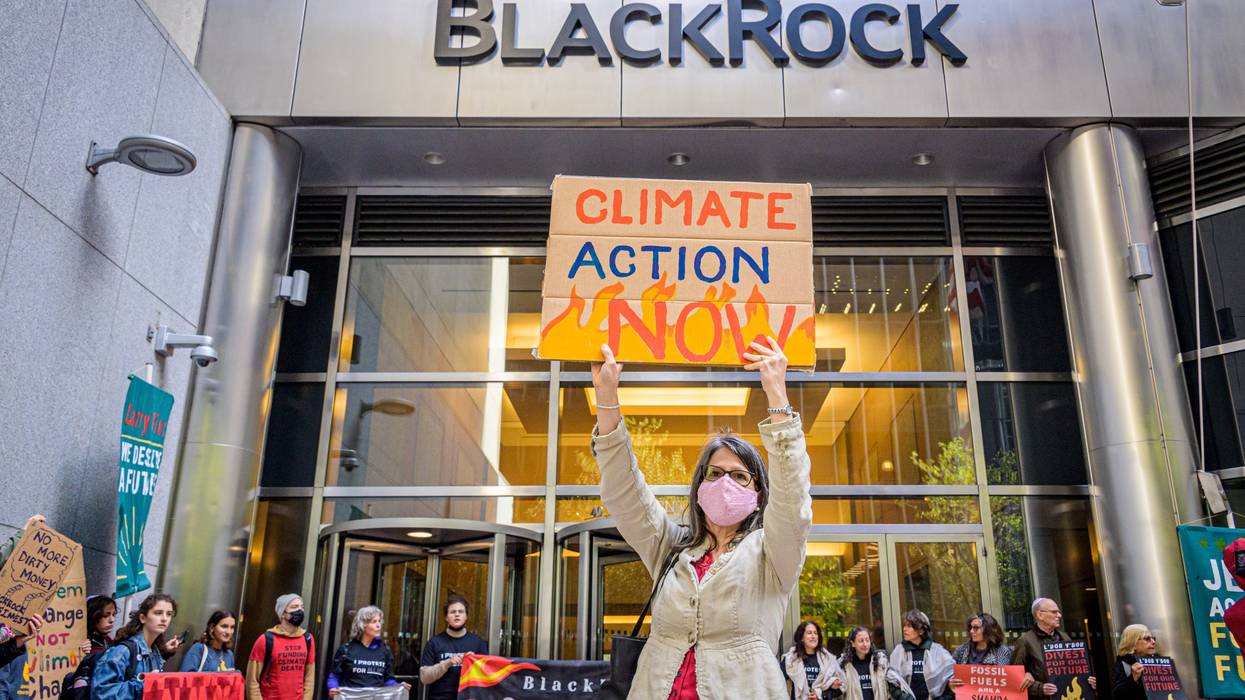
"This is a massive win for Dutch pensioners—not to mention all living creatures on Earth."
Pensioenfonds Recreatie just became the latest Dutch pension fund to ditch US-based BlackRock, the world's largest asset manager and a leading investor in climate-wrecking fossil fuels.
Recreatie, which is for workers in the Netherlands' recreation sector, last Friday named Cardano as the new manager of its €450 million—or $525 million—equity portfolio.
Xander den Uyl, a board member at the pension fund, told the Dutch publication Pensioen Pro that AF Advisors "assessed a long list of asset managers—including BlackRock—based on a dozen criteria," including cost as well as environmental, social, and governance (ESG) policy, and Cardano was the strongest.
HUGE NEWS: Superpolluting firm BlackRock just lost ANOTHER $525 million in Dutch pension funds due to concerns over its funding of coal, oil, and gas. This is a massive win for Dutch pensioners – not to mention all living creatures on Earth. 🧵
— Stop the Money Pipeline (@stopmoneypipeline.bsky.social) August 19, 2026 at 3:01 PM
BlackRock announced in February 2024 that it was transferring its Climate Action 100+ membership to its international arm and last year, just before anti-ESG President Donald Trump returned to power, it left the Net Zero Asset Managers Initiative.
Den Uyl said BlackRock's ESG controversies did not help the asset manager in the review process but "were not decisive," and described the switch to Cardano as "a business decision."
Asked about the development by IPE, a BlackRock spokesperson said: "We respect the fund's decision. We remain proud to manage more than €350 billion on behalf of Dutch clients."
However, as journalists and campaigners have noted this week, Recreatie's decision followed similar moves by other Dutch pension funds. PFZW said last September that it had stopped investing in stock funds managed by BlackRock, and PME in December pulled around €5 billion, or $5.9 billion.
By abandoning "megapolluter" BlackRock, Recreatie "is sending an important message," Fossil Free Netherlands said Tuesday. "Powerful entities that backtrack on climate policy under pressure from Trump will lose European clients. It matters who you partner with as a pension fund—and whose power you strengthen."
"BlackRock is one of the largest investors in fossil fuel companies worldwide and profits from the genocide in Gaza," Fossil Free Netherlands stressed. "BlackRock is one of the largest shareholders in many companies and, as a result, wields enormous influence over both the stock prices of individual companies and the global economy. Moreover, the company consistently prioritizes short-term profits over what matters to us all: a livable climate, fair working conditions, and human rights."
🎉 En wéér breekt een pensioenfonds met mega vervuiler BlackRock.Pensioenfonds Recreatie haalt 450 miljoen euro weg bij de Amerikaanse vermogensreus, onder andere vanwege onvrede met BlackRocks klimaatbeleid.Lees hier meer: fossielvrij.nl/blackrock-vl...
[image or embed]
— Fossielvrij NL (@fossielvrijnl.bsky.social) August 18, 2026 at 8:54 AM
In addition to the decisions by PFZW and PME, Fossil Free Netherlands pointed to European pension funds cutting ties "with the equally unscrupulous and powerful State Street," and an ongoing search for asset managers for New York City's pension funds, the latter of which was also highlighted by US campaigners this week.
New York Communities for Change senior director Jose Gonzalez said in a statement that Recreatie's "exit from BlackRock is the latest in a string of international funds that understand the urgency and long-term fiduciary responsibility resulting from climate change," and comes after NYC Comptroller Mark Levine announced the search, which is considering "ESG factors and limits on carbon."
"In the US context, although heartened by Comptroller Levine's June announcement that the pension systems will bid out contracts for its money managers, it is imperative that the comptroller is serious about meeting its 2040 net zero goals," the campaigner said. "NYC should continue to lead domestically on divestment, and with other pension funds as a universal owner. The proof will be when the comptroller's office moves AUM out of dirty managers like BlackRock and State Street to cleaner ones."
Alec Connon, Stop the Money Pipeline coalition director, also welcomed that "as much of the country swelters under extreme heat and breathes in toxic wildfire smoke, more and more major pension funds are moving money away from the world's dirtiest asset managers."
"As it continues its search for a new asset manager," he added, "New York City and Comptroller Levine have a great chance to continue the funds' climate leadership by divesting from BlackRock and selecting a new asset manager that takes the climate crisis and climate financial risk seriously."

It's the latest of several national strikes over the past year and a half against policies that one union leader said will heighten "inequality" and "poverty."
Much of Belgium ground to a halt on Tuesday as tens of thousands of workers flooded the streets of Brussels as part of a general strike against government austerity measures.
Schools closed, public transit operated with reduced service, and flights out of major airports were grounded as workers walked off the job. Instead, they marched through the capital clad in red and green, the colors of Belgium's major labor unions, with some carrying signs that read, "Hands off our pensions" and "We will not pay the price of their wars."
According to Morning Star, as many as 100,000 people took part in the strike, which was called by the nation's three biggest trade unions in protest of measures by Prime Minister Bart De Wever's government that the unions say slash pensions, reduce wages, and attack collective bargaining.
The marchers called on the government to roll back plans to raise Belgium's retirement age to 67 and have called for an end to what the unions have dubbed a “pension penalty” that would cut benefits for those who retire early.
Amid rising costs caused by the US-Israeli war against Iran, the unions are also outraged by a proposed temporary cap on wage indexation, which requires wages to rise in tandem with inflation.
It's part of a broader trend of the government loosening labor rules for employers, which unions say has led to longer, more irregular hours and diminished employees' work-life balance.
"People will have less money left over and will still have to work more flexibly and longer," said Ann Vermorgen, the chair of the Confederation of Christian Trade Unions. "Even the Planning Bureau says that the reform will promote inequality and that poverty will emerge.”
Tuesday's general strike was just the latest over the past year and a half, as the unions have refused to let up on their push to reverse De Wever's agenda.
Gert Truyens, the chair of the General Confederation of Liberal Trade Unions of Belgium (ACLVB), said that with the pension penalty and the other labor proposals, the government was displaying “total disregard” for social dialogue by “unilaterally imposing things without discussing them with the trade unions and employers.”
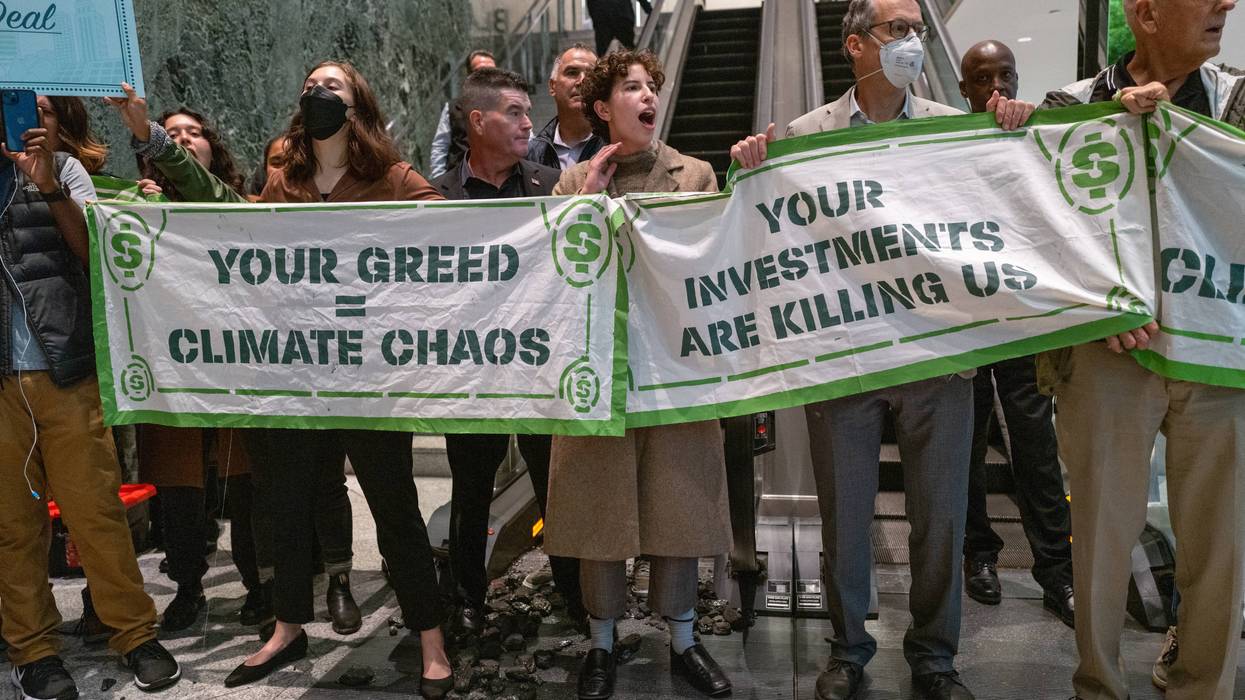
Corporations are using the hard-earned money of today's workers to further their own goals—many of which are directly at odds with the goals, livelihoods, and futures of public employees.
Our country faces an affordability crisis amidst fundamental attacks on democracy. Public employee pension plans can either be part of the solution or part of the problem.
Late last year, New York City Comptroller Brad Lander recommended the city’s pension boards drop BlackRock and other portfolio managers that don’t have decarbonization plans up to the city’s standards. Lander’s initiative was blocked, and the editorial board of The Washington Post accused him of playing politics. But Lander argued that his recommendation was in line with the government’s fiduciary duty to protect the long-term value of pension funds, the retirement systems most public sector workers rely on—and have been paying into their entire careers. He’s right. In this critical moment in history, companies that are actively hastening climate change, threatening housing security, eliminating jobs and industries, and destabilizing our democracy and economy do not deserve our investment. Yes, they are acting immorally but they are also very bad investments with little promise of future returns for public sector workers. It’s not “playing politics” to refuse to fund their efforts to dismantle our society. That’s why we’re calling on pension boards across the country to take a hard look at their portfolios and make the smart business decision: stop investing in companies like this today.
The stakes could not be higher: pension funds account for $6.1 trillion in state and local defined-benefit funds alone. Every month, nearly 15 million workers across the country contribute part of their paycheck to ensure they have enough income to retire securely. This is a big pot of money and the companies that boards choose to invest it with matter. For public sector workers, pensions are not only retirement funds, but deferred current compensation. Workers are forsaking their hard-earned money today for the potential of a dignified future. Meanwhile, corporations are using that money today to further their own goals—many of which are directly at odds with the goals, livelihoods, and futures of public employees.
The interests of public workers and these companies dangerously diverge, but even the one area of alignment is fraught: secure return on investment.
Public pension systems across the country, including the California State Teachers’ Retirement System (CalSTERS), California Public Employees' Retirement System (CalPERS) and New York City retirement funds, are heavily invested in Blackstone, the private equity company turning profits by hiking up rents during a housing affordability crisis. RealPage, the company sued last year by the DOJ for allegedly operating a nationwide rental price-fixing scheme, has investments from over a dozen pension funds through private equity funds. Public workers are watching their deferred compensation funnel into corporate exploitation while they fight to pay their own rent or mortgages.
Palantir, the data surveillance software company whose co-founder has stated his support for public hangings and apartheid, has multi-million dollar investments from The Teacher Retirement System of Texas, the Ohio Public Employees Retirement System, CalPERS, CalSTERS and other pension funds. Palantir’s tools have been used by the military to conduct destabilizing wars around the world, by DOGE to gather and merge data on millions of US residents, endangering the safety and security of us all, and by ICE to terrorize individuals and families across the country— threatening our democracy at home and abroad.
The interests of public workers and these companies dangerously diverge, but even the one area of alignment is fraught: secure return on investment. We are almost undeniably in the midst of an AI bubble, much larger than the dot com bubble that came before. With so many pension fund portfolios overly concentrated in the tech industry, funding new data centers built on speculative calculations and crypto companies propped up by hype—Palantir, Coinbase, VC firms like Andreessen Horowitz and others, NVIDIA and many more—a shift in the global appetite for new technology could empty the pockets of millions of workers. Short-term gains are not a good predictor of long-term returns for investors like public employees, who are stuck with the terms of their retirement funds and can’t pull out when markets turn. When the editorial board of the Washington Post writes that “the job of pension fund managers is to maximize returns for retirees who depend on them,” they should take these very real—and apolitical—risks into account.
Public pension funds are an enormous engine driving the economy today, and the investment choices that pension boards make are critical to the future of the country and the world. When boards invest workers’ money, they contribute to the specific visions and plans of companies and the people who run them. And when those plans include the destruction of our environment, our right to housing and fair work, and our democracy, it’s assisted suicide. Today we are urging pension boards to think beyond short-term gains and market bubbles. We’re calling on leaders to speak out and push for change as Former Comptroller Brad Lander did. Public worker retirement money must be invested responsibly in a secure future for us all.
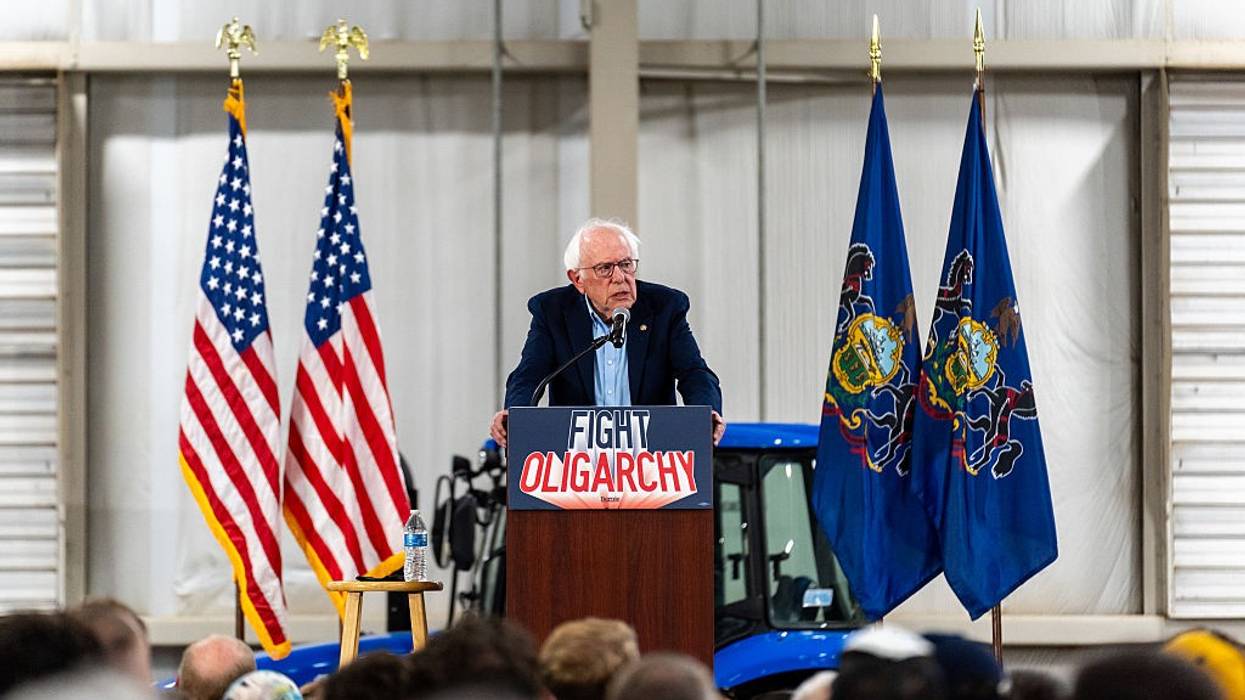
"We can no longer tolerate a rigged retirement system that allows the CEOs of large corporations to receive massive golden parachutes for themselves, while denying workers a pension after a lifetime of work," said Sen. Bernie Sanders.
U.S. Sen. Bernie Sanders introduced legislation Thursday aimed at addressing the nation's retirement security crisis as President Donald Trump reportedly prepared an executive order that would give private equity vultures easier access to the 401(k) plans that have overtaken traditional pensions.
Sanders' (I-Vt.) Pensions for All Act would require big corporations to either provide their workers with a pension plan that is at least as generous as the one enjoyed by members of Congress or "pay into the federal retirement system at a level that ensures all of their workers receive the same amount of retirement benefits" as lawmakers.
The senator characterized the new bill as a supplement to his proposal to expand Social Security benefits.
"We can no longer tolerate a rigged retirement system that allows the CEOs of large corporations to receive massive golden parachutes for themselves, while denying workers a pension after a lifetime of work," Sanders said in a statement. "If we are serious about addressing the retirement crisis in America, corporations must be required to offer all of their workers a traditional pension plan that guarantees a monthly income in retirement."
"And if corporations refuse to offer a decent retirement plan, their workers must be allowed to receive the same type of pension that every member of Congress receives," the senator added. "If we can guarantee a defined-benefit pension plan for members of Congress, we can and we must provide that same level of retirement security to every worker in America."
"Every member of Congress has a guaranteed pension—for life. If it's good enough for them, it's good enough for the people who build this country."
Sanders introduced his bill after The Wall Street Journal reported that Trump is expected to sign an executive order in the coming days "designed to help make private-market investments more available to U.S. retirement plans"—a move that one critic called "a dangerous scheme to fleece savers."
"The retirement system is supposed to serve workers, not Wall Street," wrote Oscar Valdés Viera, a policy analyst with the advocacy group Americans for Financial Reform. "We need policies that strengthen retirement security and allow people to retire with dignity—not policies that invite hidden fees, reduced transparency, and elevated risk. Allowing predatory private equity and private credit funds to infiltrate 401(k)s would result in a massive transfer of wealth from small investors and workers to the richest men on Wall Street."
Supporters of Sanders' legislation similarly argued for retirement system reforms that benefit workers, not Wall Street and corporate executives.
Shawn Fain, president of the United Auto Workers—which has pushed the so-called Big Three automakers to restore traditional pension plans—said Thursday that "the billionaire class gutted pensions in pursuit of profit, and Washington let it happen."
"CEOs walk away with golden parachutes while working people walk into retirement with nothing," said Fain. "Meanwhile, every member of Congress has a guaranteed pension—for life. If it's good enough for them, it's good enough for the people who build this country. The retirement crisis is real, and it's time for Congress to act."
In a summary of the new legislation, Sanders' office observed that just 9% of private-sector workers in the U.S. currently have access to traditional defined-benefit pension plans—down from 44% in 1975.
"The results for workers have been tragic," Sanders' team continued, noting that "in our country today, nearly half of older workers between the ages of 55 and 64 have no savings at all and no idea how they will be able to retire with any shred of dignity or respect."
"If Congress can provide over $1 trillion in tax breaks for the top 1% and over $900 billion in tax breaks for large corporations," Sanders said Thursday, "please do not tell me that we cannot afford to make sure that every worker in America can retire with the dignity and the respect they deserve."
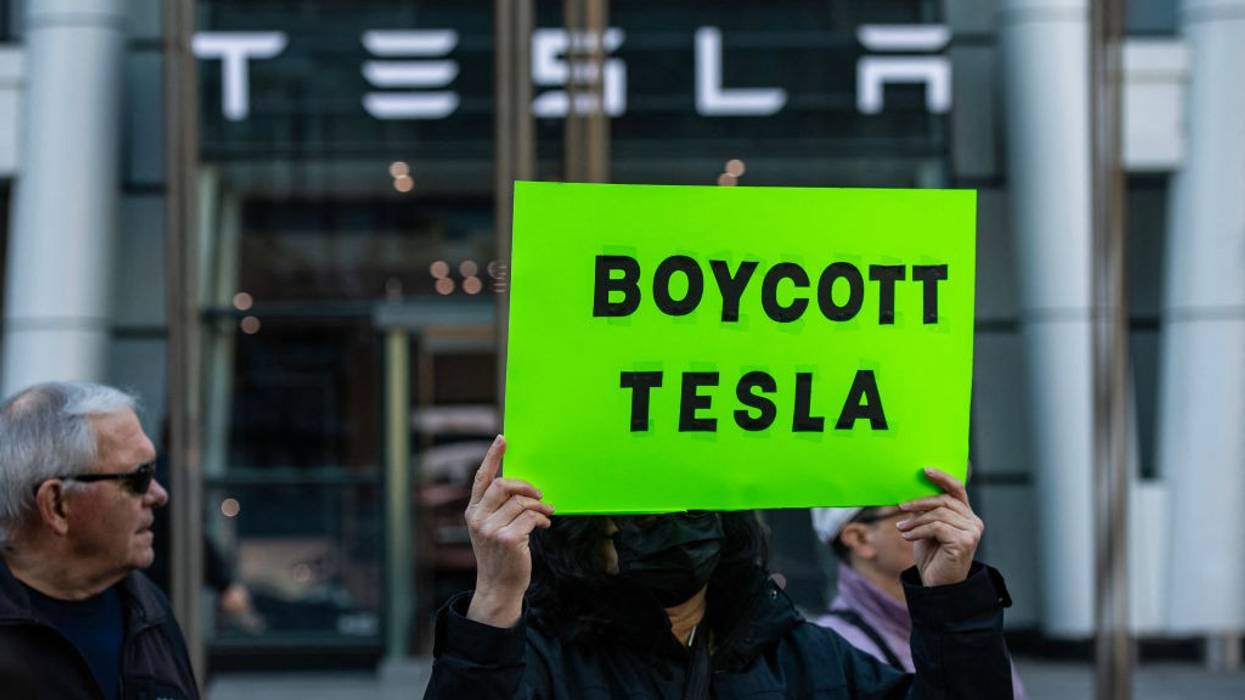
Tesla no longer behaves like a company focused on innovation, customer loyalty, or product integrity. It behaves like a company driven by ego.
As the controller of Lehigh County and a pension board member, I am entrusted with safeguarding public workers' retirement savings—people who fix our roads, teach our children, and keep our community running. This duty requires more than spreadsheets. It demands foresight, integrity, and courage when risks outweigh rewards. Public pensions are not just private retirements—they are public trusts. Every dollar mismanaged today becomes a broken promise tomorrow.
That's why I introduced a resolution, which our board passed, to halt new Tesla stock purchases in our actively managed funds.
Tesla's earnings have collapsed by 71% compared to last year. Auto revenues are down 20%. Sales in Germany plummeted 76% in February. Tesla lost 49% of its market share in China while BYD gained 161%. General Motors, once dismissed as outdated, now leads domestic electric Vehicle sales with a 50% increase in 2024. Its price-to-earnings ratio, how much investors pay for every dollar the company earns, is wildly inflated compared to industry norms. That kind of mismatch isn't a vote of confidence; it's a flashing warning light.
Public pension boards have long been treated as silent partners in the economy. But silence is no longer neutral. We are shareholders in the future, and that gives us responsibility.
But the numbers tell only part of the story. Tesla is bleeding trust.
The company's CEO, Elon Musk, has made himself a spectacle. He dismantled Twitter's identity on a whim, and now, by becoming a symbol of political division, he's destabilizing one of America's most recognizable brands. The consequences are already here: public walkouts, showroom protests, declining global sales.
For those of us managing public money, those signs matter. Tesla no longer behaves like a company focused on innovation, customer loyalty, or product integrity. It behaves like a company driven by ego. That is not a foundation we can trust with our employees' retirements.
This is why we voted to pause. We also requested that our investment consultant provide a complete accounting of our exposure.
We are not alone in this concern. Dutch and Danish pension funds have already divested. Canada's largest public-sector union has called for action. In the U.S., state treasurers and union leaders are beginning to raise similar alarms. Momentum is building, and it's grounded in a simple reality: Fiduciary responsibility must be insulated from erratic leadership.
Tesla has spent years fighting off unions, firing organizers, intimidating workers, and refusing to sign collective bargaining agreements. But now, the stability it has rejected might be the only thing that can restore what it has lost. Unions don't just raise wages, they stabilize companies. They create guardrails that protect against reckless leadership and ensure that decision-makers are accountable not just to shareholders, but to the people who build the product. A unionized workforce would offer not just internal structure, but public credibility. When workers have power, companies are held to account.
I urge public pension funds nationwide, especially those shaped by organized labor, including the United Auto Workers, to look hard at their Tesla holdings. These funds represent the collective strength of working people. They should not underwrite volatility, reward self-interest, or ignore risk. Coordinated action by labor-aligned funds can do more than shift portfolios; it can send a clear message to the market: Long-term value isn't earned through celebrity or chaos, but through companies that treat their workers, customers, and shareholders like they matter.
There is a connection between morality and capitalism. Profit built on spectacle crumbles quickly. But profit built on trust, stability, and accountability, that endures. That's the kind of return our retirees deserve.
Public pension boards have long been treated as silent partners in the economy. But silence is no longer neutral. We are shareholders in the future, and that gives us responsibility. We can't build a just economy while funding its collapse. If our dollars prop up instability, then silence is complicity.
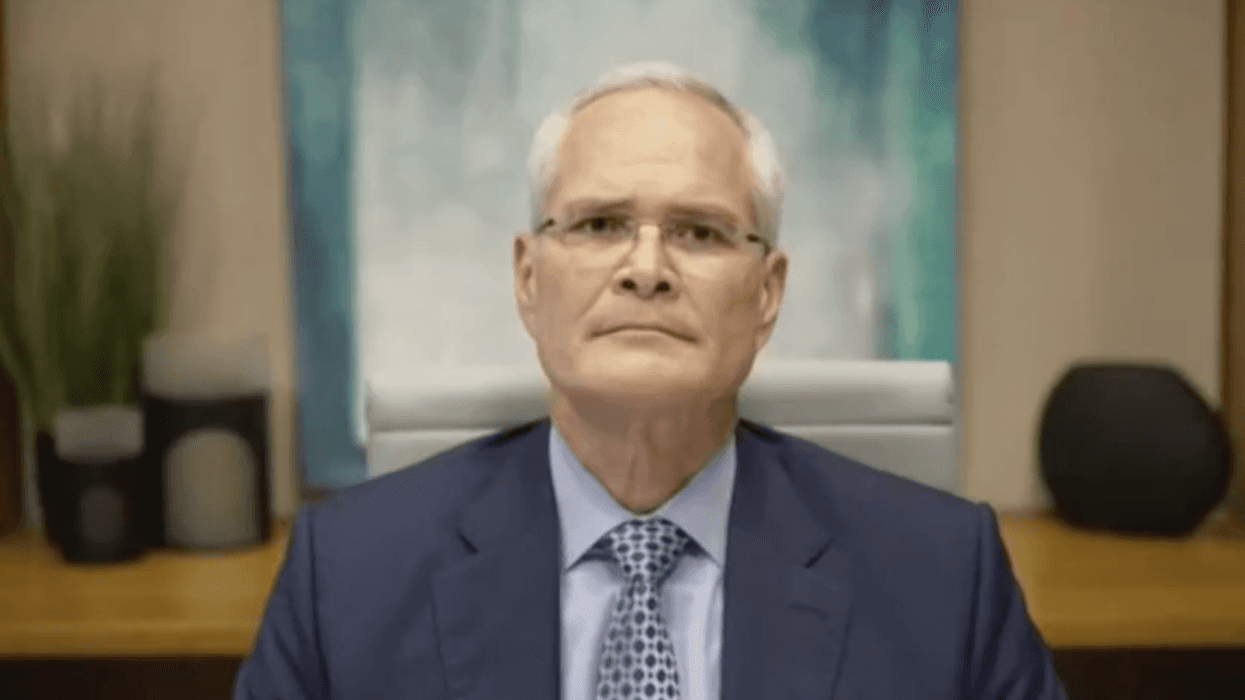
Public pensions must exit Exxon to protect workers' savings and retirement.
It is no secret that ExxonMobil poses some of the most powerful opposition to climate action at every level of government. Environmentalists have long pointed out that Exxon Knew about climate change, and instead of pivoting their business model to a more sustainable energy future, buried the evidence and began a decades-long disinformation campaign.
Leaders across the country have wisened up to the oil major's dirty politics, which is why the House Oversight Committee has been investigating Exxon and its peers, and state attorneys general have sued the company for damages. Most recently, California AG Rob Bonta, alongside environmental organizations like the Sierra Club, sued the company for lying to the public about the recyclability of plastics.
If the tide is turning against Exxon, why haven't investors caught on?
Unrestricted funding for companies engaged in fossil fuel expansion threatens workers' right to dignified retirement safety, a right that unions have fought hard to win.
ExxonMobil sparked headlines and investor outrage this spring when the company sued its own shareholders over a climate-related shareholder resolution. Public pensions representing trillions in worker savings across the country pushed back and mounted a vote-no effort against CEO Darren Woods and Director Joseph Hooley, but Wall Street asset managers watered down their efforts instead offering unwavering support of Exxon.
To add insult to injury, Woods made an appearance at the Council of Institutional Investors—a nonprofit dedicated to advocating for the investor rights of public, union, and private employee benefit funds—in September. There, he promised to continue to crack down on "extreme" investors who are concerned that the company's business model has loaded the economy with systemic financial risks and instability. Never mind that such a definition of extreme would describe many of the institutions present, which represent over 15 million workers and $5 trillion in assets under management.
But perhaps most indicative of ExxonMobil's commitment to business-as-usual pollution is the bonds they've issued this fall, with a maturity date of 2074.
These long-dated bonds represent unrestricted funds for ExxonMobil to continue to pursue fossil fuel expansion and plastic pollution well past most of the world's—and investors'—Net Zero by 2050 goals. This is an especially risky gamble for investors with long-term obligations, including public pension funds that manage millions of workers' retirement savings.
Not only is the future of oil and gas uncertain, but prolonged pollution wrought by disinformation and investor cash increases economy-wide systemic risks. Investors—and the everyday people who rely on institutions to manage their savings—will be left holding the purse strings as climate change wreaks havoc. Moreover, bond ownership does not come with the shareholder rights investors hope to use to influence company behavior. This gives Exxon complete freedom to use the funds however it wishes, even if that's out of alignment with investor interests.
This increasing risk is why we joined California Common Good and pension beneficiaries to testify during a recent CalPERS Board meeting to ask CalPERS to issue a moratorium on purchasing Exxon bonds.
The Sierra Club represents millions of members, many of whom are saving for retirement in the face of an uncertain future and working tirelessly to protect the communities and places they love. Whether relying on a public pension plan or a private asset manager, our members rely on investment professionals to keep their futures in mind. Unrestricted funding for companies engaged in fossil fuel expansion threatens workers' right to dignified retirement safety, a right that unions have fought hard to win. That's why we call on investors, particularly public pension funds, to refuse to participate in Exxon's bond issuances.
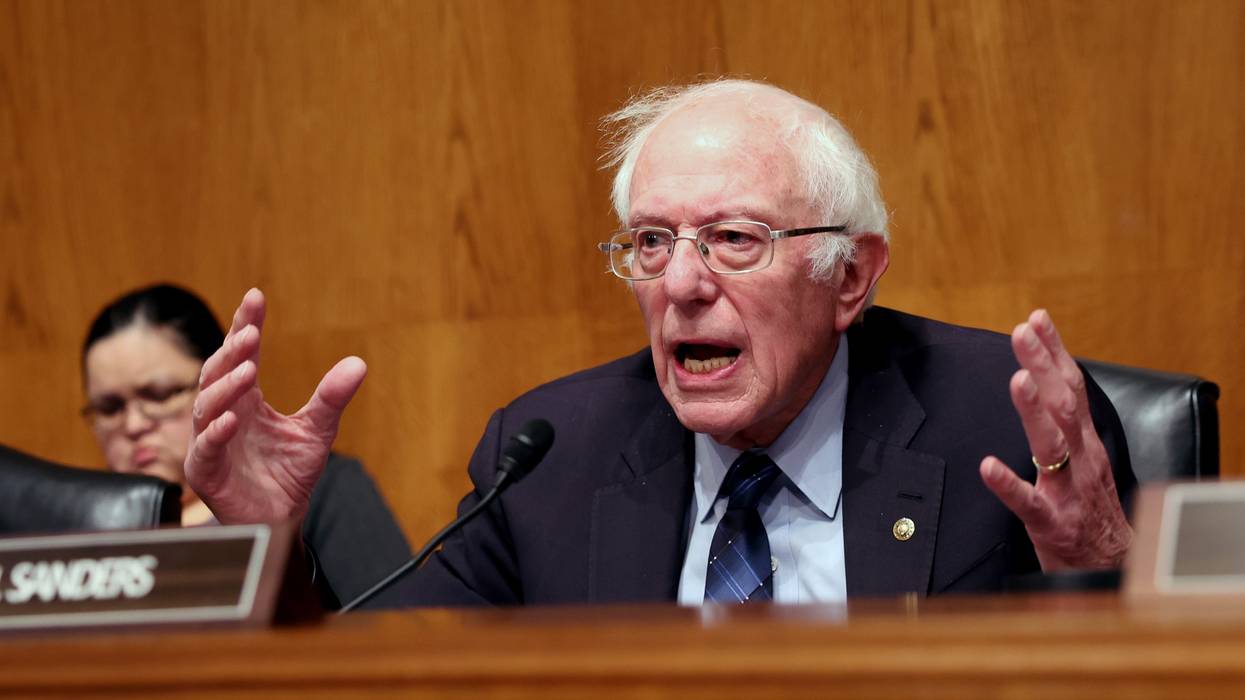
"If Congress can bail out the crooks on Wall Street," said the senator, "please do not tell me that Congress can't support a secure retirement for working Americans."
Days after hearing the testimony of a fourth-generation autoworker whose family has experienced first-hand the shredding of the social contract over the course of several decades, U.S. Sen. Bernie Sanders demanded on Monday that Congress swiftly pass legislation to cut the "unacceptable" rate of poverty among senior citizens and ensure that American workers can once again "retire with the dignity and the respect that they deserve."
In an op-ed for Fox News, Vermont independent senator wrote about the hearing he held last week as chairman of the Senate Health, Education, Labor, and Pensions (HELP) Committee about the country's retirement crisis.
The committee heard from Sara Schambers, whose grandfather retired at 55 from his job as an autoworker at Ford Motor Company, receiving "a pension and good healthcare" provided by the company where he'd worked for three decades.
Schambers' grandmother had to retire early due to a diagnosis of Lou Gehrig's disease, "but she didn’t have to choose between paying her medical bills and buying dinner for her family, because her job provided her with the retirement security she needed."
In sharp contrast, Schambers told Sanders and the rest of the committee that she will not have healthcare or a pension when she retires from her job as an autoworker.
"For generations, getting a job at Ford meant stability and security," said Schambers. "It meant being able to plan for yourself and your children. It meant being able to buy a house and see a future for yourself. But for those of us who were hired in after the financial crisis, that has not been our truth."
Schambers said auto companies have been "adamant that they couldn't afford to add to our pension liability... and that giving back our pensions could affect their stock prices and possibly lead to lower credit ratings. Nowadays, a stock price is more important than 150,000 autoworkers."
In his op-ed, Sanders wrote that the loss of pension and fixed benefit plans among American workers—60% of whom had them in the early 1980s, compared to just 4% in 2023—has led to a 23% poverty rate among senior citizens, one of the highest rates compared to other wealthy countries, according to the Organization for Economic Co-operation and Development.
"In Denmark, only 3% of seniors live in poverty," wrote Sanders. "In France, the senior poverty rate is 4.4%. In Germany, it's 9.1%. In Canada, it's 12.3%. In the United Kingdom, it's 15.5%."
Sanders called on Congress to pass the Social Security Expansion Act, which he introduced last year with nine other senators, including Sens. Elizabeth Warren (D-Mass.), Sheldon Whitehouse (D-R.I.), and Tina Smith (D-Minn.).
The bill would make Social Security solvent for the next 75 years and expand the programs benefits for seniors and people with disabilities by $2,400 a year, making a difference to the 1-in-4 senior citizens who now live on less than $15,000 per year and 1-in-2 who live on less than $30,000 per year, as the Senate HELP Committee noted in a report ahead of the hearing last week.
In keeping with Sanders' longtime push to require the wealthy to pay their fair share into the program, the Social Security Expansion Act would apply the Social Security payroll tax to all income, including those from capital gains and dividends, for those who make more than $250,000 per year.
Currently, the senator wrote, the wealthiest Americans benefit from a cap on the Social Security payroll tax.
"Absurdly and unfairly, a billionaire pays the same amount of money into Social Security as someone who makes $168,700 a year," wrote Sanders. "That means, if you make up to $168,700 a year, you pay 6.2% of your income in Social Security taxes. But if you make 10 times more—$1,687,000—you pay just 0.62% of your income in Social Security taxes."
"That may make sense to someone," he added. It doesn't make sense to me."
In an interview with CNN over the weekend, Sanders was asked about a Republican proposal to raise the retirement age instead of properly funding Social Security by taxing the rich.
"Brilliant idea," said the senator sarcastically. "Yes, we've got our people, 87-year-olds packing groceries in a supermarket. You know, really? People have worked hard their whole lives, this is the richest country in the history of the world. Raise the retirement age, cut benefits? I don't think so."
Sanders proposed that every corporation in America should be required to either provide their employees with a retirement plan or "give workers the option of contributing to a federal pension plan similar to what members of Congress and federal employees receive."
"If Congress can provide trillions of dollars in tax breaks to billionaires and large corporations," said the senator, "if Congress can bail out the crooks on Wall Street who caused millions of Americans to lose their jobs, homes, and life savings back in 2008, please do not tell me that Congress can't support a secure retirement for working Americans."

"It is the people who have the power in Switzerland," one union leader said.
In a move that pensioners rights group Avivo called "a historic victory for retirees," Swiss voters on Sunday voted to boost their pension by one-month's payment.
At the same time, voters rejected a measure to raise the retirement age from 65 to 66. The vote marks the first time in Switzerland's history that its people have voted directly to increase their own benefits, and one expert said the break with the past could be a response to the government bailout of Credit Suisse in 2023.
"Many think that the entrepreneurs and managers have broken the unwritten Swiss social contract: That managers are modest with bonuses and debauchery and the people are modest with social demands," Michael Hermann, who leads the Sotomo poll, told newspaper SonntagsZeitung. "People have been angry for a long time about the behavior of corporations, managers, tax evaders. So you often hear now: 'If they help themselves, then we also want something for us.'"
" Democracy is alive and kicking in Switzerland."
The pension plan measure will see pensioners receive a 13th payment every November, as is already the case for Swiss paychecks, as BBC News explained. Currently, pensioners are paid between $1,393 and $2,760 a month, which many argue is not enough given Switzerland's high cost of living. Zurich tied with Singapore as the most expensive city in the world, according to a November report by the Economic Intelligence Unit.
"I'm retired now and so obviously I would like a bit more," 65-year-old Zurich voter Mery told Reuters. "It should allow me to give a little something to my grandchildren."
The extra payments will start in 2026.
The measure needed both a majority of voters and a majority of cantons to pass, which it secured with 58.24% of voters and 16 out of 26 cantons, according to Le Monde.
The increase was backed by left parties and the Swiss Trade Union Federation and opposed by business interests and the center-right government and parliament, who argued it would be difficult to pay for. This makes the yes vote especially surprising, as historically Swiss voters have not acted against government advice on financial matters. For example, they rejected previous proposals to shorten the work week and increase the number of vacation days.
"Democracy is alive and kicking in Switzerland," said Interior Minister Elisabeth Baume-Schneider.
Lukas Golder of polling firm gfs.bern, reports Reuters, told SRF that the vote was "a huge milestone from a union perspective."
Head of the Swiss Trade Union Federation Pierre-Yves Maillard, told RTS that the vote sent "a wonderful message to all those who have worked hard all of their lives" and proved that "it is the people who have the power in Switzerland," according to Le Monde.
The proposal to raise the retirement age by one year and tie it to life-expectancy was rejected by 74.72% of voters. Turnout for the election was high for a Swiss plebiscite, at more than 58%.
The election comes amid a push to raise the retirement age in other countries. France's Emmanuel Macron faced massive protests when he upped that country's retirement age from 62 to 64.
U.S. Republican presidential candidate Nikki Haley has called for raising the retirement age for workers who are now in their 20s.
"They should plan on their retirement age being increased, yes," Haley said of younger workers during a January 10 debate.

The great 401(k) experiment of do-it-yourself retirement plans was always a better deal for the financial services industry that profited handsomely from managing them than for employers and workers.
Pension plans never really went away—despite beliefs to the contrary that they are fatally flawed, with 401(k)s being the only sustainable retirement plans. The reality is that there are still 50,000 financially healthy pension plans in the United States. Most public sector workers, for sure a minority of all workers, still have pension plans. The other reality, though, is that progressively fewer workers since the early 1980s have had access to traditional pensions plans.
The general experience in American workplaces has been that once gone, pension plans do not come back. Here and there the trend has been bucked with pension plans returning to replace 401(k)s. In 2008, West Virgina public teachers voted to return their pension plan that had been taken away by the state legislature in 1991. The 401(k)-like plan that replaced it had produced such poor returns that participants were facing poverty in retirement. In 2012, after a long campaign, Connecticut state employees were allowed on a voluntary basis to switch out of a 401(k)-like plan into the state’s traditional pension plan.
More recently, there have been developments of potential large-scale replacements of 401(k)s with pension plans that may portend the beginnings of a significant pension comeback.
There is plenty of evidence that a dollar invested in a traditional pension plan delivers far more retirement income than one invested in a 401(k).
In 2006 the Alaska state legislature took away the pension plan for schoolteachers and replaced it with a 401(k). School teachers and their union never accepted the change and continually fought to reverse it. This year they may succeed. The Alaska Senate has voted to reinstate the pension plan. If the House of Representatives, where the fight will be tougher, follows suit, the plan will be reinstated.
Proponents of the reinstatement argued that Alaska was having a hard time keeping teachers who were quitting and leaving for teaching positions in states that had pension plans, which most do. Opponents of the change have argued, as they usually do, that it would be too expensive. But there is plenty of evidence that a dollar invested in a traditional pension plan delivers far more retirement income than one invested in a 401(k). Further, consulting New School economist Teresa Ghilarducci showed that Alaska would actually save $76 million annually by making the change.
If that can occur in Republican-dominated Alaska, union-strong Michigan, where state employees lost their pension plan in 1997, would seem to be a candidate for a similar development.
Meanwhile, in corporate America where pension plans have dwindled to near extinction, IBM has announced that it may develop a cash balance plan, a kind of quasi-pension plan, to replace its 401(k). Cash balance plans do not deliver as much retirement income as traditional defined-benefit pension plans, but they do have three advantages for workers over 401(k)s. Collective plan contributions are professionally invested, producing higher returns than the often-amateur investments of 401(k) participants. Once credited to participant accounts, contributions remain regardless of future market activity unlike with 401(k)s. And, by law, cash balance plans are required to offer life pensions from their funds that deliver significantly more retirement income than life annuities that life insurance companies sell to 401(k) participants.
IBM’s accountants are exploring the cash balance model mainly because it offers tax advantages over 401(k)s. At the same time investment risks, as with 401(k)s, are shouldered by participants, unlike with traditional pension plans.
The great 401(k) experiment of do-it-yourself retirement plans was always a better deal for the financial services industry that profited handsomely from managing them. For employers it was less of a good deal. Some are now beginning to do until recently the unthinkable and explore readopting the P word.

Even in states with financial officers that purport to care about sustainability, way too many pensions are failing to push the companies they invest in to align with global climate goals.
Public pensions in the United States are responsible for investing and stewarding nearly $8 trillion on behalf of the American people. That is, by any measure, a lot of money. To give that figure some context, consider that $8 trillion is more than three times the annual GDP of the United Kingdom. What this means is that the people entrusted to manage our public pensions have significant power to shape and direct our economy and our world.
One way pension managers wield that power is simply through what they choose to invest in. Indeed, to track how we’re doing in the climate fight, you just need to follow the money. The International Energy Agency estimates that to be on track for the goals of the Paris Agreement we should have already stopped investing in new oil and gas development and that, by 2030, we should be investing $4.5 trillion annually in renewable energy.
That helps to explain why, for the last decade, whenever climate activists have thought about pension funds it has been to campaign for fossil fuel divestment. Divestment is an important step in the right direction and one that some major pensions, including the massive New York State and City pension funds, have already taken. More pensions should follow New York’s lead and divest from fossil fuels.
If pension managers have a single job it is protecting workers’ savings from unnecessary financial risk...
But there’s another critical way that pensions need to address the climate crisis, too: through how they use their massive investments to influence all of the other companies they invest in. To address the climate crisis, we need virtually every major company to do its bit―banks need to fund renewable energy; tech companies need to buy clean energy; steel, cement, and utility companies need to eradicate climate-warming emissions from their operations.
And public pensions, with their $8 trillion sloshing around the economy, will play a big role in deciding whether or not many of these companies will address the climate crisis with the urgency required to avoid even worse climate impacts than the catastrophic ones we’re already experiencing.
Between April and June each year, almost every major publicly-held company in the country hosts an annual shareholder meeting. At these meetings, shareholders introduce and vote on proposals that help to direct the future of the company. In recent years, shareholders of many of the country’s largest companies have been asked to consider resolutions on climate lobbying, reducing emissions, setting climate targets, and breaking ties with fossil fuel companies.
Until recently though, very few have paid attention to the voting records of major pensions. But a new report, released today by the Sierra Club, Stand.earth and Stop the Money Pipeline, takes a detailed look at the voting records of some of the largest pensions in the country.
The Hidden Risk in State Pensions report (which I helped to write) analyzes the approaches to shareholder voting and the voting records of 24 major public pensions. We only analyzed pensions in states where a state financial officer, such as the state treasurer, comptroller, or auditor, is a member of For the Long Term, a network dedicated to advocating for “more sustainable, just, and inclusive firms and markets.”
Unfortunately, our conclusions are clear: even in states with financial officers that purport to care about sustainability, way too many pensions are failing to push the companies they invest in to align with global climate goals. This is true even in several states that you might expect to care more about preventing global heating.
In our report, the $200 billion Washington state pension fund received an F grade for its proxy voting guidelines and a D- grade for its voting record. In 2023, the people responsible for investing Washington’s teachers’, firefighters’ and other public workers’ money voted against shareholder resolutions calling for companies to produce climate transition plans, set tougher climate targets, and address fossil fuel financing.
The $56 billion Colorado pension was just as bad: it voted against nearly every resolution we analyzed, and received an F for its proxy voting guidelines. Pension systems based in Maine, Nevada, and New Mexico were also among those that received Fs for their voting records.
Public pensions, with their $8 trillion sloshing around the economy, will play a big role in deciding whether or not [major] companies will address the climate crisis with the urgency required.
It’s hard to understand the rationale of pension managers in making these votes. The Federal Reserve, the Federal Deposit Insurance Corporation, and the Office of the Comptroller of the Currency recently released a report that concluded, “The financial impacts that result from the economic effects of climate change and the transition to a lower carbon economy pose an emerging risk to the safety and soundness of financial institutions and the financial stability of the United States.”
If pension managers have a single job it is protecting workers’ savings from unnecessary financial risk, and one of the most prudent things that pension managers can do to protect against the growing and emerging threat of climate-related financial risk is to support climate action at the companies they invest in.
But right now, that’s not happening. And the planet and the hard-earned savings of American workers are being put at risk as a result.