

SUBSCRIBE TO OUR FREE NEWSLETTER
Daily news & progressive opinion—funded by the people, not the corporations—delivered straight to your inbox.
5
#000000
#FFFFFF
To donate by check, phone, or other method, see our More Ways to Give page.
Daily news & progressive opinion—funded by the people, not the corporations—delivered straight to your inbox.
California's attorney general called the development "great news for audiences, movie theaters, and the many people who write, build, and create the art, news, and entertainment so many of us enjoy."
Paramount Skydance on Friday officially delayed its attempted acquisition of Warner Bros. Discovery after a federal judge in the Northern District of California temporarily blocked the $111 billion deal at the request of a dozen Democratic attorneys general.
US District Judge Araceli Martínez-Olguín granted the temporary restraining order on Monday after finding that the plaintiffs—led by California Attorney General Rob Bonta—provided "compelling evidence that the combined firm resulting from the transaction will possess substantial market share in the wide-release theatrical distribution market." She extended the order on Thursday.
The companies have now agreed not to close the deal—also the target of a Writers Guild of America lawsuit—until five days after a trial is held or June 1, 2027, whichever is sooner. While the attorneys general and their supporters framed the development as a victory for their side, a Paramount spokesperson similarly said that "today's agreement is a significant win because the result is exactly what we have sought from the outset: a direct path to a trial based on the evidence."
"This is the fastest and clearest way to prove that this transaction is good for competition, good for consumers, and good for creators, a conclusion dozens of competition authorities around the world have already reached," the spokesperson continued. "Plaintiffs' market definitions bear no relationship to the realities of today's marketplace and cannot withstand scrutiny. We look forward to proving our case at trial."
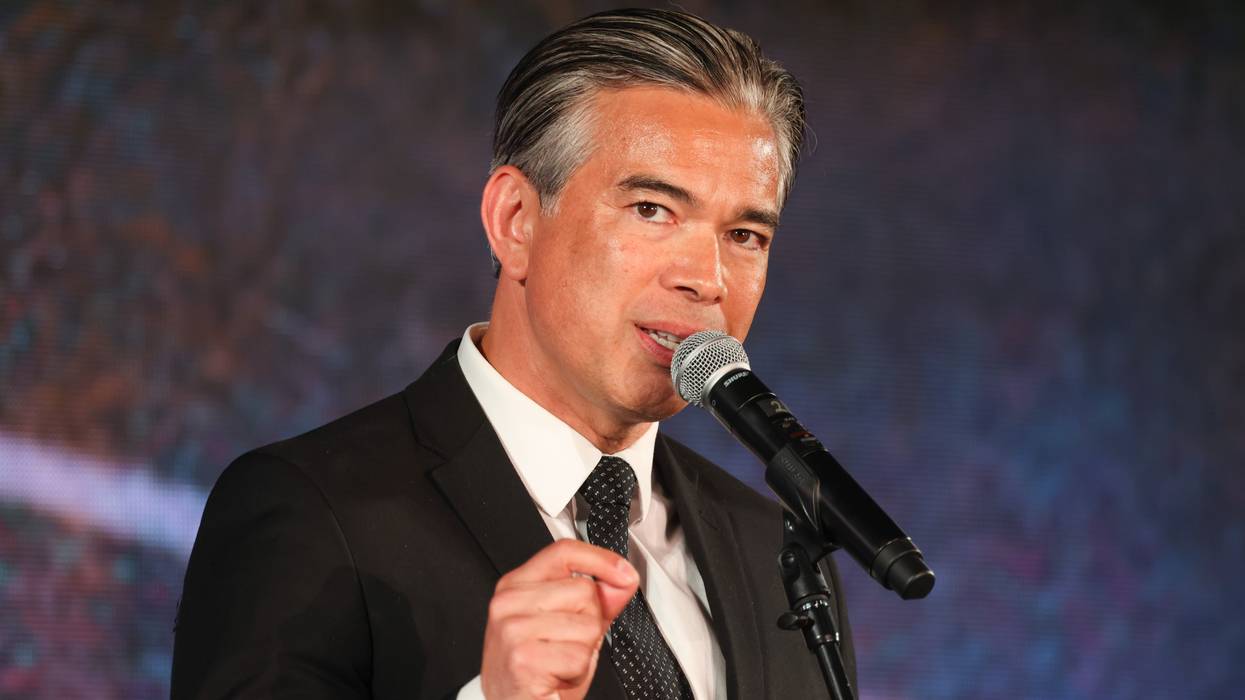
Meanwhile, Bonta said in a statement that "our argument against this illegal merger is straightforward: When too few corporations have too much power in markets central to American life, it makes things more expensive, and it makes things worse."
"Today's agreement is great news for audiences, movie theaters, and the many people who write, build, and create the art, news, and entertainment so many of us enjoy," he emphasized. "We are eager to continue to make our case in court and celebrate another tremendous win in our effort to ensure this unlawful merger never sees the light of day."
Joining Bonta in battle are the attorneys general of Arizona, Colorado, Connecticut, Massachusetts, Minnesota, Nevada, New Jersey, New Mexico, New York, Oregon, and Washington. They, too, celebrated on Friday.
"Stopping this merger while our case proceeds is a critical victory in our efforts to uphold the law and protect the film and television industries," New York's Letitia James stressed on social media. In a video, New Jersey's Jennifer Davenport also called the companies' decision "a huge win for consumers" and pledged to "continue to fight to block this merger for good."
Responding to one of Davenport's social media posts, actor and activist Mark Ruffalo declared: "Today's news is a repudiation of Paramount's strategy of currying favor with the Trump administration to grease the wheels on this illegal merger—from sham settlement payments to manipulating its own news coverage. Stay strong and #BlockTheMerger."
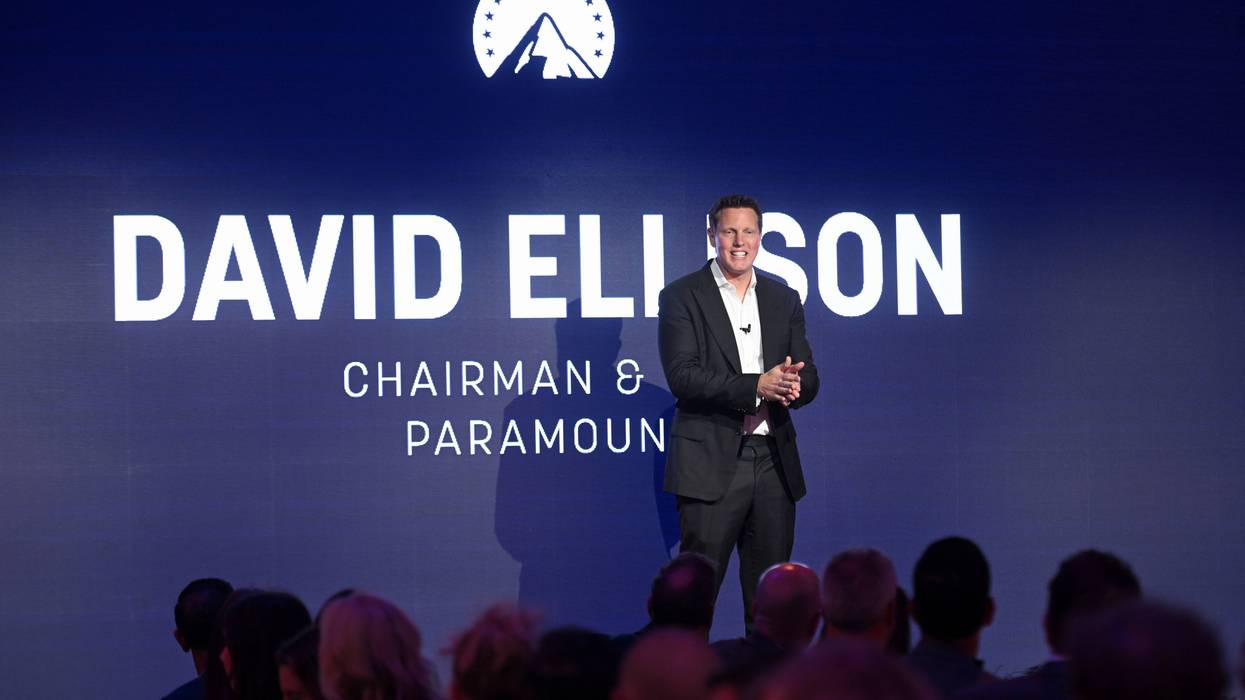
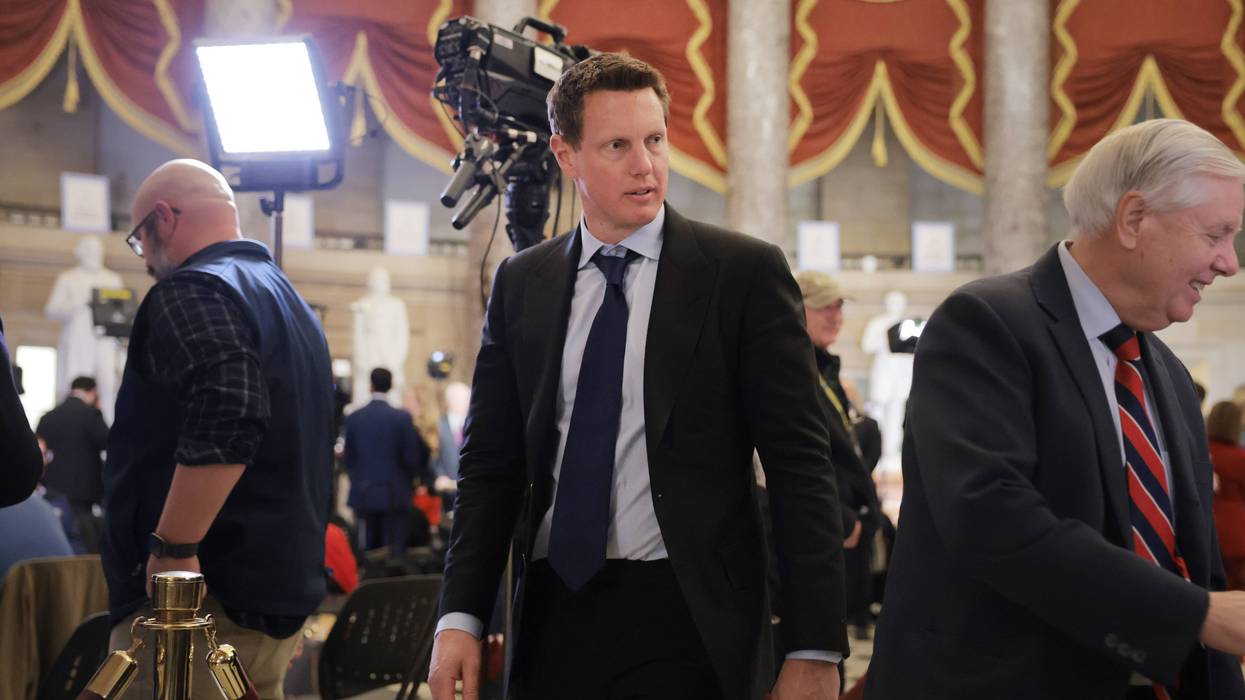
Some opposition to the deal is rooted in the fact that it would give Paramount CEO David Ellison—the son of billionaire Larry Ellison, a major donor to President Donald Trump—control of CNN, as he already faces mounting criticism for his and Bari Weiss' management of CBS News.
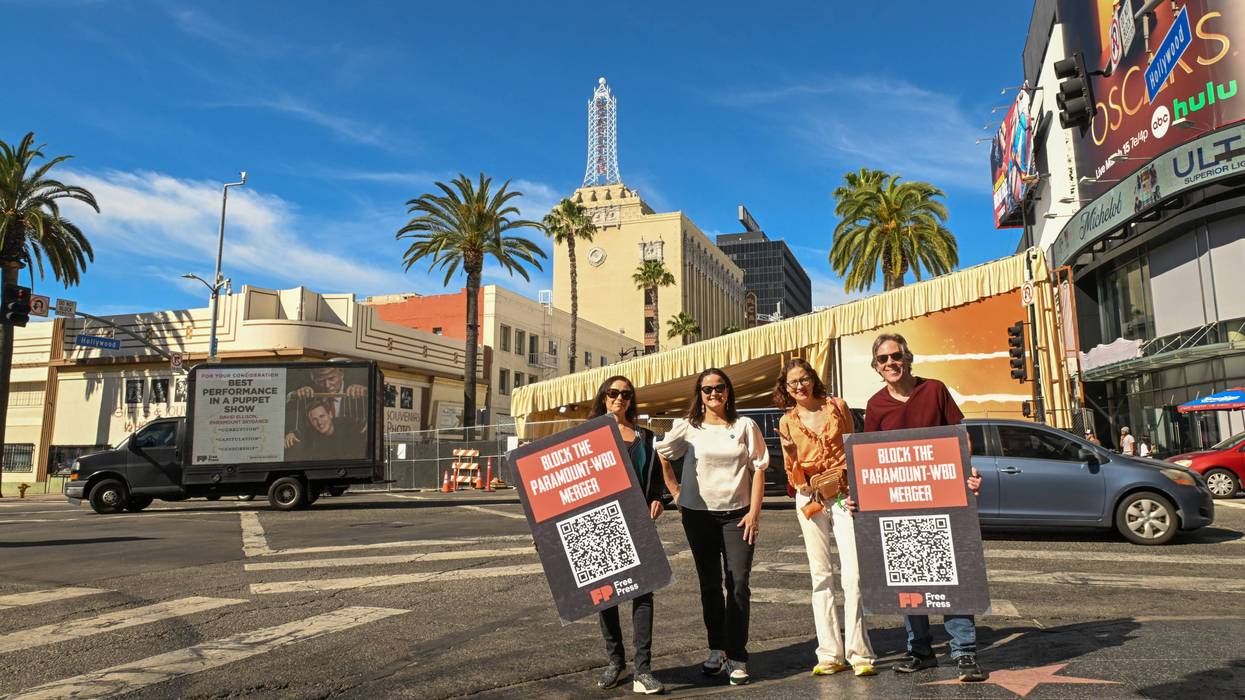
"The Ellisons believed their relationship with President Trump would help them push through a disastrous deal that threatened democracy, creative freedom, and independent journalism. We in the #BlocktheMerger campaign helped prove them wrong," said Norm Eisen, co-founder and executive chair of Democracy Defenders Fund, in a statement.
"Paramount's decision keeps two major studios competing instead of handing one company even more power over what Americans watch, what they pay, and where entertainment workers can earn a living," he continued. "The merger would have eliminated one of Hollywood's largest buyers of scripts and productions while placing Paramount+, HBO Max, CBS News, CNN, and dozens of local stations under the management of one company."
"This victory in putting the merger on hold belongs to the people who refused to treat the merger as inevitable," Eisen added. "Artists, journalists, filmmakers, and consumer advocates spoke out despite the risk of retaliation, more than 5,500 people signed our open letter, and Attorneys General Rob Bonta and Letitia James, along with 10 other attorneys general, acted. This collective resistance is turning the tide."
Craig Aaron, co-CEO of the advocacy group Free Press, said that "Paramount tried to tell us this deal was a slam-dunk, but it just shot an airball. Late in the game, Paramount's lawyers grasped what we've said all along: The states have a very solid case that this deal violates US antitrust law. For the broad and growing coalition against this corrupt and dangerous deal, this delay marks a significant victory."
"Instead of fighting against an injunction and possibly losing now, Paramount's lawyers have resigned themselves to waiting for a full antitrust trial in federal court," Aaron added. "Paramount can pretend all it wants that it looks forward to that test, but that’s just more bluster from company mouthpieces trying to spin a major setback. Now this deal will face its day in court, and we are confident the evidence will show this mega-merger should be blocked."
"History tells the tale of what happens when a few people have great power over markets that are central to Americans' lives: fewer opportunities for more people, worse products and services for all people," said California Attorney General Rob Bonta.
The $110 billion megamerger between Paramount and Warner Bros., widely criticized as a "disaster" by antitrust advocates, has been temporarily put on hold.
US District Judge Araceli Martínez-Olguín on Monday granted a temporary restraining order sought by several Democratic state attorneys general to pause the merger from going forward.
In her ruling, Martínez-Olguín found that the plaintiffs provided "compelling evidence that the combined firm resulting from the transaction will possess substantial market share in the wide-release theatrical distribution market," meaning that the merger between the two studios is "likely to violate antitrust laws."
The judge—appointed by former President Joe Biden—issued a 14-day restraining order on the merger, writing that "Paramount and Warner Bros. will continue to operate as separate, viable companies competing in the marketplace while they wait for the court to adjudicate this case."
The combination of Paramount and Warner Bros. has long been controversial because it would put control of CBS, CNN, HBO, TikTok, and other major media properties all under the control of David Ellison, the son of billionaire Larry Ellison, a major donor to President Donald Trump.
California Attorney General Rob Bonta, the lead plaintiff in the lawsuit against Paramount-Warner Bros. deal, hailed Martínez-Olguín's ruling as a "critical first win in our case to ensure this megamerger never sees the light of day."
"History tells the tale of what happens when a few people have great power over markets that are central to Americans' lives: fewer opportunities for more people, worse products and services for all people," he said. "With our lawsuit, we're fighting for a free and fair market and a thriving film and television industry that serves creatives and audiences alike."
New York Attorney General Letitia James, a co-plaintiff in the lawsuit, delivered a video statement calling the ruling "an important victory for consumers, for workers, and for fair competition."
"We are taking action to protect New Yorkers from the harms of unlawful corporate consolidation," James added, "and protecting democracy while we're at it."
We just won a court order stopping the merger of @ParamountPics and @warnerbros while our lawsuit continues.
We’re going to keep fighting to keep costs down for consumers, protect jobs, and stop this illegal merger. pic.twitter.com/yfcA0sOoLb
— NY AG James (@NewYorkStateAG) July 20, 2026
Sen. Elizabeth Warren (D-Mass.), a longtime critic of the merger, called the ruling "a WIN thanks to the state attorneys general who stood up and pushed back," and added, "Let's keep up the fight."
Rep. Becca Balint (D-Vt.) said the ruling was "welcome news," while warning that "we're not out of the woods yet."
"This merger would force prices up, bring wages down, and lead to people losing jobs—all to bring TikTok, CNN, and CBS under one roof," Balint observed. "Perhaps Paramount CEO David Ellison can't wine and dine his way through this one after all."
Attorney Norm Eisen, co-founder of Democracy Defenders Action, accused the Ellisons of trying to "rush" the merger over the finish line before courts could examine antitrust claims being made against it.
"Now the case gets decided on the merits," Eisen said.
"With this lawsuit, California and our sister states are fighting for free and fair markets, not rigged markets," said Attorney General Rob Bonta. "America has no kings in government or our economy.”
In filing an antitrust lawsuit against Paramount Skydance over its proposed $111 billion acquisition of Warner Bros. Discovery, 12 state attorneys general on Monday deployed a legal tactic successfully used in 2022 to block another megamerger pushed by book publisher Simon & Schuster.
States including California, New York, Colorado, and Washington argued in the lawsuit that should the merger be approved, just one massive corporation would control more than 30% of anticipated top-grossing blockbuster films with large budgets and audiences, while just four distributors—Paramount, Disney, Universal, and Sony—would control more than 90% of those films.
In 2022, the US Department of Justice (DOJ) argued successfully that Simon & Schuster's proposed acquisition of Penguin Random House would harm competition among book publishers as they vied for the rights to books anticipated to be bestsellers.
California Attorney General Rob Bonta, who is leading the coalition of states in the biggest legal challenge against the merger thus far, said that "the unlawful merger of these two entertainment behemoths would lead to higher prices, lower quality, and less content for film and television, harming movie theaters, basic cable distributors, and ultimately, audiences on every sofa and movie theater seat in the US."
The lawsuit also argues that after the proposed merger, just three distribution companies would control 75% of wide-release theatrical films and 27% of the market in licensing for basic cable television channels.
The merger, said the attorneys general in the US District Court for the Northern District of California, would violate Section 7 of the Clayton Act, which bars business mergers and acquisitions that substantially lessen competition or create a monopoly.
"In this country, no one is above the law," said Bonta. "With this lawsuit, California and our sister states are fighting for free and fair markets, not rigged markets. America has no kings in government or our economy.”
New York Mayor Zohran Mamadani expressed pride that his state was fighting the deal, which he said "is not a merger that serves the public."
The media advocacy group Free Press emphasized that along with reducing competition among film distribution companies, the merger would create a "media colossus" that would also include control over CBS—taken over by Skydance Media CEO David Ellison last year after his company merged with Paramount—and CNN.
The merger would give tech mogul Larry Ellison and his family—allies of President Donald Trump's administration—"the power to shape public discourse at the president’s direction in exchange for the administration’s regulatory approval," said Free Press. "That’s why administration officials like Secretary of Defense Pete Hegseth have openly rooted for the Ellisons to obtain CNN, based on their documented promises to make 'sweeping changes' to the network to please Trump."
Following the Ellisons' takeover of CBS, the leadership of newly appointed right-wing editor-in-chief Bari Weiss has been condemned by First Amendment advocates as Weiss has sought to remake CBS News—spiking a "60 Minutes" segment on Trump's mass deportations and firing the leadership of the flagship investigative news show.
“President Trump and his cronies want to rush this anti-competitive deal through because David Ellison has demonstrated time and again that he will leverage his control of his media empire to silence Trump’s critics and amplify MAGA propaganda," said Free Press co-CEO Jessica González, thanking the state attorneys general for their legal challenge. "That’s corruption, plain and simple. Any merger of this scale would diminish creativity and diversity in entertainment, weaken journalists’ ability to hold those in power accountable, and further endanger our democracy."
"This is especially true when the Ellisons are in charge," said González. "To win approval for their takeover of CBS News, the Ellisons promised to gut hard-hitting reporting across the network—and have gleefully followed through. And they’ll do the same to undermine editorial independence at CNN if they gain control of the global news network."
Although Paramount's proposed merger has already been approved by 20 countries and regions globally, and Trump's DOJ claimed the creation of an even larger media empire was "not likely to harm competition or American consumer,” regulators in the United Kingdom and the European Union have leaned toward looking more closely at the deal. The lawsuit, said González, "means that this corrupt merger is far from a done deal."
"While the administration won’t take a stand against the president’s billionaire cronies, we can still stop the Ellisons’ power grab," said González. "While Paramount is flaunting its corruption and toasting Trump officials, we’re standing with the workers and artists at the heart of the news and entertainment industries—and with the American people, who deserve a diverse and independent media system that works on their behalf, and against the self-interest of greedy billionaires and unethical politicians.”
The lawsuit also followed a series of town halls held in Los Angeles, New York, and Atlanta by the American Economic Liberties Project, titled "Main Street vs. the Merger." Anti-monopoly advocates heard from entertainment workers, small business owners, and others who would be impacted by the Paramount-Warner Bros. deal.
Comedian Adam Conover warned at one town hall that the merger would lead to higher streaming prices, and writers and other media workers shared fears that the deal would lead to mass layoffs.
"I spent the last month meeting with the workers and business owners who’d be hit with this deal,” said Alvaro Bedoya, senior adviser at American Economic Liberties Project, on Monday. “The rich guys who run Paramount can say what they want, but the people who actually work for them know that this will kill jobs and screw over the small businesses that are the lifeblood of this industry. I hope the states win and win fast, because these people need it.”
Lawsuits challenging mergers typically take at least several months and up to a year to be decided by a judge, and the states are asking the companies to freeze the proposed merger deal—which was set to close in the third quarter of 2026—which the case is being adjudicated. California also said it would seek a temporary restraining order if the companies did not agree to pause the deal.
Paramount has agreed to pay Warner Bros. Discovery shareholders $650 million for each quarter the deal isn't finalized, starting in October.
“This illegal merger would mean layoffs for artists and workers, higher prices for consumers, and the death of Hollywood,” said Matt Stoller, research director at American Economic Liberties Project. “State enforcers have done the right thing in seeking to block it. It is time to stop oligarchs from strip-mining our culture and selling America off for parts. Blocking this megamerger is the first step in doing so.”
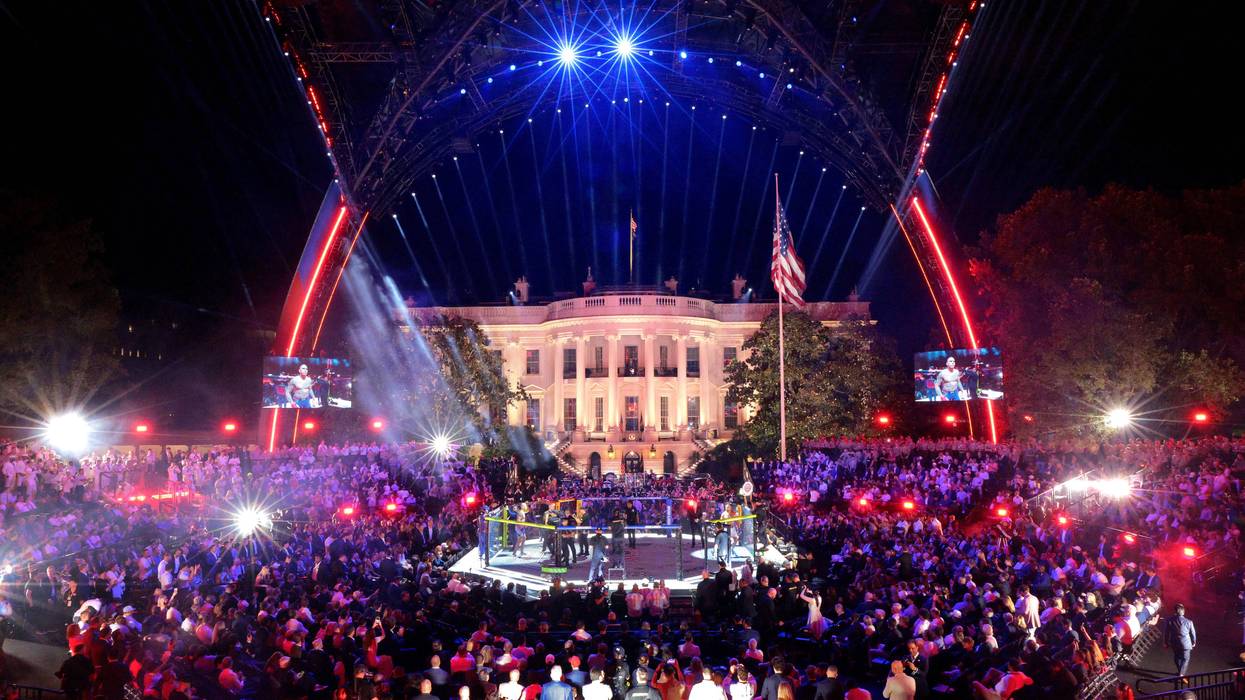
President Donald Trump used the White House lawn to host a 21st-century cockfighting match where the birds were human beings. Is this rock bottom?
On Sunday night, President Donald Trump brought the country to a new low. The question is whether the nation has finally bottomed out—and realizes it.
On the White House lawn, Trump hosted Ultimate Fighting Championship (UFC) mixed martial arts cage matches. Fighters attacked each other with their fists, feet, knees, and elbows. Blood spewed everywhere; that was the point.
It wasn’t boxing; the combatants wore gloves with much less padding. It wasn’t professional wrestling; the injuries inflicted were real. It was billed as a sporting event, but as commentators observed, it was really 21st-century cockfighting where the birds are human beings.
The UFC said that private funding totaling $60 million paid for the event. But it’s not clear that any private money covered the monumental work of the hundreds of staff from seven federal government agencies, or the estimated $10 to $12 million in supplemental security that the District of Columbia incurred (to be reimbursed from federally appropriated funds for federal events).
Fighters used the Executive Office Building and rooms in the White House as locker rooms. If not sacrilegious, it was something close.
Beyond the abuse of taxpayers’ dollars, Trump’s profiteering was pervasive.
In a post-fight interview, a UFC winner yelled: “Michelle Obama is a man. Am I right America?”
Worse than the event itself and Trump’s profiteering is the fact that it happened on White House grounds. While construction was underway, Marine One—the presidential helicopter—could not land on the South Lawn, its usual location. Fighters used the Executive Office Building and rooms in the White House as locker rooms. If not sacrilegious, it was something close.
President Thomas Jefferson first opened the White House lawn in 1801 when he invited the US Marine Corps Band to perform. Since then, it has been the scene of children’s Easter Egg Rolls (begun by President Rutherford B. Hayes in 1878), a tennis court (President Theodore Roosevelt in 1902), a performing arts venue (President Lyndon B. Johnson in 1965), Willie Nelson’s performance (President Jimmy Carter in 1980), the Beach Boys’ South Lawn Beach Party (President Ronald Reagan in 1983), youth T-ball games (President George H.W. Bush in 2001), and a collaborative arts festival (President Barack Obama in 2016).
The good news is that a recent Reuters poll revealed that only 16% of Americans—including one-third of Republicans—said that holding UFC events on the White House lawn was appropriate.
Determined to make his mark, Trump did not care that it would be an ugly blemish on White House history—or another reflection of how far the nation has descended into Trump’s abyss.
"The American people need to know if this merger was approved as a political favor," said Sen. Elizabeth Warren.
The leadership of President Donald Trump's Justice Department shut down an investigation into Paramount's widely criticized bid to acquire Warner Bros. Discovery and issued a statement supporting the merger before career antitrust attorneys could finish scrutinizing the proposal, The Wall Street Journal reported on Monday.
According to the Journal, which cited unnamed people familiar with the matter, "a team of career lawyers who had spent months scrutinizing the deal were leaning toward recommending a lawsuit challenging it on the grounds that the combination of the two movie studios would be anticompetitive and violate antitrust law." The newspaper reported that the antitrust staffers who investigated the $111 billion merger proposal "didn't participate in writing" the Justice Department statement greenlighting the deal.
“When we said this is what corruption looks like, this is what we meant," the Block the Merger coalition, an alliance of dozens of organizations opposed to the deal, said in a statement late Monday.
DOJ leadership's move to clear the deal was just the latest in a string of merger approvals that have drawn suspicion, given that the Justice Department has been accused of giving corporate lobbyists free rein over antitrust policy. The DOJ's antitrust section is currently headed by Associate Attorney General Stanley Woodward, who—according to a fired antitrust official—"perverted justice and acted inconsistent with the rule of law" during a separate merger investigation.
"The American people need to know if this merger was approved as a political favor," Sen. Elizabeth Warren (D-Mass.) wrote in response to the Journal's reporting. "This reeks of corruption."
Unreal. Justice Department staff were railroaded again by political interference in the Paramount-Warner Bros merger review.
None of the investigators on the deal had any role in writing the unprecedented clearance statement issued by DOJ last Friday. pic.twitter.com/yYcKUpuos3
— Lee Hepner (@LeeHepner) June 15, 2026
If finalized, Paramount Skydance's proposed acquisition of Warner Bros. would leave CBS, CNN, HBO, and other major media properties under the control of the son of billionaire Trump megadonor Larry Ellison, posing what one coalition called "an existential threat to the free press." David Ellison, the CEO of Paramount Skydance, dined with the president in April at an event "honoring the Trump White House."
The proposed merger is still facing antitrust scrutiny in Europe and from state attorneys general in the US.
The Journal reported that "some staffers" in the DOJ's antitrust division believe the Justice Department's statement backing the merger and getting it over a major regulatory hurdle "was designed to make it harder for state attorneys general to challenge the deal in court." In the statement, the DOJ declared that "the transaction is not likely to result in harm to competition or American consumers."
Rob Bonta, California's attorney general, said in response to the Justice Department's decision that "the merger of Warner Bros and Paramount is not a done deal and remains under investigation by my office."
"Now that the federal government has abandoned antitrust enforcement in favor of cronyism and runaway consolidation, state attorneys general must step in to block this deal," said one critic.
The US Department of Justice on Friday approved Paramount Skydance Corporation's megamerger with Warner Bros. Discovery, prompting opponents of the $110 billion deal to place their hopes of blocking it in the hands of Democratic state attorneys general.
The DOJ's Antitrust Division approved the merger without requiring divestitures or behavioral remedies—a significant win for billionaire Paramount CEO David Ellison. Analysts and critics had suggested the DOJ might require sales of some of the corporation's numerous cable networks, streaming services, film and television studios, sports programming rights, or media outlets.
The DOJ also reportedly declined to impose conduct restrictions on bundling, distribution, licensing commitments, and other areas.
“If we had an uncorrupted Department of Justice, Paramount would not even have tried to merge with Warner Bros. Discovery, in plain violation of the law," Robert Weissman, co-president of the consumer advocacy group Public Citizen, said in response to the news of the DOJ approval. "If it had, a Department of Justice that was doing its job would have rushed to court to block the merger the moment it was announced."
“Now, however, a compromised DOJ has rubber-stamped a merger that consolidates power for the Ellisons, one of [President Donald]Trump’s preferred oligarch families," Weissman added. “This merger will jack up prices for consumers, cost workers their jobs and, most importantly, limit the range of viewpoints permitted to air on the major media or appear in movies and creative outlets. Put simply, this is an anti-free speech merger."
This is terrible news for every American who doesn't want Trump-aligned billionaires to control what they watch and how much they pay.The Paramount-Warner Bros. deal has reeked of corruption and influence-peddling.This fight isn't over. State AGs must block this merger.
[image or embed]
— Elizabeth Warren (@warren.senate.gov) June 12, 2026 at 1:48 PM
Craig Aaron, co-CEO of the advocacy group Free Press, said in a statement: “Despite all the talk about conducting a thorough investigation, the fix was in at the Trump Justice Department from the start. Paramount Skydance has fêted, flattered, and promised sweeping changes to news coverage to win the administration’s approval, despite evidence that giving one corporation this much media power—all the movie studios, cable channels, and newsrooms—will undermine competition, destroy jobs, slant the news, and endanger our democracy."
“We've already seen how far Paramount and the Ellison family are willing to go to diminish a once-proud network and news organization like CBS, and they promise to do worse if they get their hands on Warner Bros., HBO, CNN, and all the rest," he added. "The Ellisons aren’t hiding their intentions, and no weak concessions will make this deal any better."
Congressman Jamie Raskin of Maryland, the top Democrat on the House Judiciary Committee, warned earlier this week that approval of the merger would result in "the same kind of unprecedented pro-MAGA editorial control we have seen at CBS News and '60 Minutes.'"
Raskin also contended that the merger could mean that "American consumers, who already pay an average $69 a month for streaming on top of $100 a month for cable and $78 for internet," will pay "even more for sports, news, and entertainment."
As Politico's Yasmin Khorram reported Friday:
The [DOJ] decision... paves the way for Paramount to combine with the entertainment and media company behind a vast film and television studio, CNN, and the HBO Max streaming service, which would be combined with Paramount+ to create a new offering boasting about 200 million subscribers. The deal, which would upend the Hollywood ecosystem by combining two historic rival studios, is opposed by many in the entertainment industry who fear it could lead to mass layoffs, among other concerns.
The DOJ's reported approval of the merger does not necessarily mean the deal is done. Several states are weighing antitrust challenges, most notably California, where the office of Democratic Attorney General Rob Bonta is conducting what he called a "vigorous" review of the proposed merger to determine how it would impact competition in entertainment, streaming, advertising, and labor markets. Reuters reported earlier this month that California, New York, and other states are preparing a lawsuit aimed at blocking the merger.
“The good news is, this is not the last word on the matter," Weissman said. "Competition authorities in the states and other countries can still follow the law and stand up for the public interest against this media consolidation. Now that the federal government has abandoned antitrust enforcement in favor of cronyism and runaway consolidation, state attorneys general must step in to block this deal."
Aaron said that states "have strong case for blocking this merger, and many brave journalists, filmmakers, and workers in the entertainment industry have spoken out against the dangers of this deal despite threats to their livelihoods."
"They are warning us what will happen if this deal goes through, and we must listen," he added. "The attorney generals have the evidence they need to stop this deal; now the public needs them to take action.”
Last year's merger between Paramount Global, Skydance Media, and National Amusements was itself opposed by critics who sounded similar alarms over corruption, antitrust issues, labor concerns, and attacks on editorial independence.
CBS, a Paramount Global company, announced the cancellation of "The Late Show with Stephen Colbert" during the merger review period. While Paramount claimed the cancellation was a financial decision, critics said its timing suggested at least indirect political pressure, given Colbert's vocal criticism of Trump and the need for merger approval from the Federal Communications Commission. FCC Chair Brendan Carr was appointed by Trump and has been dogged by allegations that he's more loyal to the president's agenda than to his agency's stated mission.
One of the biggest recurring flashpoints involves claims of corporate pressure and censorship at CBS' venerable "60 Minutes" weekly current affairs program. Numerous former "60 Minutes" journalists and others have accused Bari Weiss—the right-wing podcaster who became CBS News editor-in-chief after the merger—of political censorship.
Earlier this month, a coalition of press freedom groups warned that recent firings of "60 Minutes" journalists were a “grotesque effort taken straight from an authoritarian handbook” that posed a much wider threat to democracy, and highlighted that an approved Paramount Skydance-Warner Bros. Discovery merger would hand control of CNN, a Warner Bros. company, to the same billionaire family that now owns CBS.
The coalition argued that the merger “would open the door to improper political meddling in journalists’ editorial decisions" and "alter CNN’s editorial direction (not to mention meddle with HBO’s documentaries) to be more friendly to the [Trump] administration, threatening press freedom."
The pending Paramount-Warner Bros. Discovery merger "represents an existential threat to the free press, independent media, and free speech in this country and beyond," warned several press freedom groups.
A coalition of nine press freedom groups on Tuesday warned that last week's firings of top journalists at CBS News' "60 Minutes" were a "grotesque effort taken straight from an authoritarian handbook"—but emphasized that the dismissal of reporters who had pushed back against the Trump administration signaled danger for journalists across the media, particularly as a pending merger would hand control of CNN to the same billionaire family that how runs CBS.
The Coalition for Women in Journalism, Common Cause, Freedom of the Press Foundation, and Reporters Without Borders were among the groups that released a statement saying the firing of "60 Minutes" correspondents Sharyn Alfonsi and Cecilia Vega—as well as two top executives—were meant to "appease a sitting president and dismantle one of the loudest voices in investigative journalism."
But the groups emphasized that "this is only the beginning," considering the fact that Warner Bros. Discovery recently voted in support of a $110 billion proposed merger with Paramount Skydance, owned by David Ellison, the son of President Donald Trump megadonor Larry Ellison. The deal could be finalized as soon as July.
Warner Bros. Discovery owns CNN, and media critics have warned the network could be headed for the same loss of editorial independence that CBS has faced since right-wing former opinion columnist took the helm of the latter network last year following the Paramount Skydance merger.
Since then, newly appointed editor-in-chief Bari Weiss has pulled from the air a "60 Minutes" segment that questioned the Trump administration's explanation for the deportation of hundreds of immigrants to an El Salvador prison, personally booked guests for news programs, and called for programming that appeals to "centrist" viewers.
"Bari Weiss’ shameless actions fulfill the Ellisons’ commitment to President Trump to remake CBS to his liking," said the groups on Tuesday. "Larry Ellison has reportedly promised to do the same at CNN if allowed to take control through the pending Paramount-Warner Bros. Discovery merger. Not because it makes any business sense, but because they seek to control the public discourse."
"We have to make the story heard. It’s what '60 Minutes' would have done; it’s what the Fourth Estate is tasked with doing; it’s what Trump and the Ellisons want to prevent. Don’t let them.”
The groups noted that the firings of Alfonsi, Vega, executive producer Tanya Simon, and executive editor Draggan Mihailovich came as more than 200 journalists and documentarians signed an open letter opposing the Paramount-Warner Bros. merger, citing concerns that the deal "would open the door to improper political meddling in journalists’ editorial decisions," and noting that according to The Wall Street Journal, David Ellison has "promised President Donald Trump 'sweeping changes' at Warner-owned CNN—a frequent target of Trump’s ire."
"Ellison will likely alter CNN’s editorial direction (not to mention meddle with HBO’s documentaries) to be more friendly to the administration, threatening press freedom," said the signatories, including Wajahat Ali, Mehdi Hasan, and Alfonsi.
A separate letter organized by Democracy Defenders Fund has garnered signatures from over 1,000 actors, producers, directors, screenwriters, and other entertainment professionals.
"This transaction would further consolidate an already concentrated media landscape, reducing competition at a moment when our industries—and the audiences we serve—can least afford it," reads the letter, which calls for state attorneys general to block the merger. "The result will be fewer opportunities for creators, fewer jobs across the production ecosystem, higher costs, and less choice for audiences in the United States and around the world. Alarmingly, this merger would reduce the number of major US film studios to just four."
On Tuesday, the press freedom groups warned that the merger "represents an existential threat to the free press, independent media, and free speech in this country and beyond, and should not be allowed to move forward."
"We cannot let this blow to the bedrock of our democracy be lost in the constant barrage of scandal, corruption, and abuse of power," said the organizations. "We have to make the story heard. It’s what '60 Minutes' would have done; it’s what the Fourth Estate is tasked with doing; it’s what Trump and the Ellisons want to prevent. Don’t let them.”
"Tonight’s dinner appears to be nothing more than a transparent bid to flatter the Trump administration into rubber-stamping David Ellison’s proposed Paramount-Warner Bros. merger."
A coalition of free speech organizations, progressive lawmakers, and antitrust advocates gathered outside the US Institute of Peace in Washington, DC on Thursday to protest a private dinner hosted inside the building by Paramount Skydance CEO David Ellison, who is seeking regulatory approval from the Trump administration for a megamerger of his company and Warner Bros. Discovery.
The invite-only dinner was billed as an "intimate gathering in celebration of the First Amendment honoring the Trump White House"—which has waged war on press freedom—"and CBS White House correspondents." Norm Eisen, co-founder of Democracy Defenders Action, said during Thursday's protest that the dinner "resembles the First Amendment in the same way that a book burning is a celebration of the written word." President Donald Trump attended the dinner, which critics dubbed the "Paramount Corruption Gala."
Organizers of Thursday's demonstration warned that the proposed merger of Paramount and Warner Bros., the parent company of CNN, would be catastrophic for media and free expression. If the merger is approved, David Ellison—the son of Trump megadonor Larry Ellison—would control CBS, CNN, HBO, and other major media properties.
"Tonight’s dinner appears to be nothing more than a transparent bid to flatter the Trump administration into rubber-stamping David Ellison’s proposed Paramount-Warner Bros. merger, which would be a disaster for American news media and media consumers," said Robert Weissman, co-president of the watchdog group Public Citizen. "This proposed acquisition perfectly illustrates the domino effect of corporate and wealth concentration: David Ellison is only positioned to propose this merger because his father, Larry Ellison, the co-founder of Oracle, has become richer than any person should be allowed to be."
"This event should be an embarrassment to everyone involved," Weissman added, "including the attendees who have chosen to participate in this offensive charade."
Craig Aaron, co-CEO of the advocacy group Free Press, said that "no company should have this much media power, but especially not this company."
"We're here tonight to defend free speech. We're here tonight to defend press freedom," said Aaron. "We're here to stop government censorship. We're here to stop corruption and stop the Ellisons from trashing even more of our media."
Aaron called on those gathered to say it "loud so that state attorneys general" across the country can hear the message clearly.
"Stop the merger!" they shouted. "Stop the merger!"
Watch the full protest:
The dinner was held hours after Warner Bros. shareholders approved the proposed merger with Paramount, a company that just last summer received approval from the Trump administration to merge with Skydance—a decision that was widely viewed as corrupt. The proposed merger of Paramount Skydance and Warner Bros. has drawn vocal opposition from Hollywood actors, directors, and producers, who released an open letter earlier this month warning that the combination would "threaten the sustainability of the entire creative community."
Two members of Congress, Reps. Jamie Raskin (D-Md.) and Becca Balint (D-Vt.), spoke at Thursday's protest, decrying what they called Ellison and Trump's "corrupt merger scheme."
"We're here to say, 'Hell no,'" said Raskin, the top Democrat on the House Judiciary Committee. The Maryland lawmaker called Ellison's private event "a lavish oligarch’s dinner for Donald Trump."
Balint told protesters that as she spoke, Ellison was probably "raising a glass to his friend, his supporter, his patron, Donald Trump."
"That’s what they’re celebrating: power and corruption," said Balint. "And in this instance, the corruption is in plain sight."
"This megamerger will diminish creativity and diversity in entertainment, weaken journalists' ability to expose wrongdoing and hold those in power accountable, and further endanger our democracy," warned one expert.
Less than a year after the controversial marriage of Paramount and Skydance, the combined media company cleared another hurdle to growing even bigger, with Warner Bros. Discovery shareholders on Thursday "overwhelmingly" backing a proposed merger—which sparked fresh criticism of the $110 billion deal.
"Today, Warner Bros. Discovery shareholders voted for their short-term financial gains, not for the public good," declared Free Press co-CEO Craig Aaron. "While shareholders voted against fat pay packages for departing executives—a symbolic rebuke, since the board doesn't have to listen to them—they've opened the door to wholesale layoffs across the news and entertainment industry, more propaganda in news coverage, higher prices for consumers and fewer choices for audiences across the United States and around the world."
"But shareholders don't get the final word," Aaron continued. "That's why we have antitrust enforcers and courts of law."
The Paramount-Warner Bros. deal must be approved by US and international regulators. In an apparent bid to ease that process, Paramount CEO David Ellison—son of billionaire Republican megadonor Larry Ellison—is holding what opponents have dubbed a "corruption gala" honoring President Donald Trump on Thursday.
"With Trump officials cheering on this deal, state attorneys general must investigate this massive industry consolidation and step in to stop Paramount's takeover," Aaron argued. "This megamerger will diminish creativity and diversity in entertainment, weaken journalists' ability to expose wrongdoing and hold those in power accountable, and further endanger our democracy. It also concentrates far too much media power in the hands of one company and one family, the Ellisons."
"This corrupt merger is far from a done deal," he stressed. "Just because Paramount shareholders won't take a stand against billionaire and White House control of the media, it doesn't mean we can't. While Paramount is flaunting its corruption and fêting Trump officials, we're standing with the workers and artists at the heart of the news and entertainment industries—and with the American public, which deserves more than an ever-shrinking circle of control over what they see, hear and read."
Potentially impacted workers are also speaking out. Last week, a group of Hollywood actors, directors, and producers published an open letter blasting the proposed merger. As the Los Angeles Times reported, during a Wednesday press briefing organized by Free Press and other critical groups, Michele Mulroney, president of the Writers Guild of America West, also sounded the alarm.
"This is already an incredibly consolidated industry where writers have seen merger after merger leave fewer and fewer companies in control of what our members can get paid to write," Mulroney said. "A combined Warner Bros. and Paramount would create a media behemoth with tremendous leverage to reduce content, to raise prices, to increase control of production, to suppress member compensation, worsen working conditions, and silence the voices of our members."
As New York City Mayor Zohran Mamdani declared that "this merger should be stopped," Jane Fonda's Committee for the First Amendment led a rally outside Warner Bros.' Manhattan headquarters early Thursday. The group called the shareholder vote "a serious setback—for our industry, for the workers who sustain it, for consumers, and for the fundamental democratic values that depend on a diverse and independent media landscape."
"But this merger is not a done deal—and this fight is far from over," the committee emphasized. "We've seen time and again that sustained pressure works. Efforts to challenge consolidation, from the proposed Tegna-Nexstar Media Group deal to scrutiny of Live Nation Entertainment and Ticketmaster, have demonstrated that coordinated legal, political, and public advocacy can change outcomes, especially when state attorneys general step in to protect the public interest."
"We will continue pressing forward on every front," the group pledged. "A handful of powerful decision-makers should not be allowed to quietly reshape American media, culture, and creative life without accountability. We will keep speaking out for the workers and artists at the heart of this industry, and for the public, which deserves more than an ever-shrinking circle of control over what they see, hear, and read. This fight continues. And we fully intend to win."
Later Thursday, the committee, Free Press, and other organizations—including Common Cause, MoveOn, and Public Citizen—are planning to protest Ellison's dinner for Trump at the United States Institute of Peace in Washington, DC at 5:30 pm ET.
"If approved, this merger would give one family control over CBS, CNN, and TikTok—and the Ellisons have already promised President Trump that they would make sweeping changes to CNN."
A coalition of progressive organizations is organizing a protest against what they describe as a "corruption gala" being held by Paramount Skydance CEO David Ellison in honor of President Donald Trump.
According to a report published last week by Breaker Media, Ellison is planning to hold on "intimate gathering" this Thursday with the purpose of "honoring the Trump White House and CBS White House correspondents."
Ellison, who took over CBS in 2025 as part of the merger between Paramount and Skydance, is seeking approval for a $110 billion megamerger with Warner Bros. Discovery that would also give him control over CNN and has drawn opposition from antitrust advocates and Hollywood bigwigs.
In response to this event, seven progressive organizations—MoveOn, Common Cause, Committee for the First Amendment, Public Citizen, Free Press, Our Revolution, and Democracy Defenders Action—are planning demonstrations on April 23 outside the headquarters of the US Institute of Peace.
The groups said in a statement announcing the protest that Ellison's decision to honor Trump at an exclusive dinner is a "blatant conflict of interest" given that he is relying on the president's administration to sign off on the Warner Bros. Discovery deal.
In addition to protesting Ellison's dinner for Trump, the groups expressed opposition to further consolidation of the US media.
"The [Paramount-Warner Bros.] deal would further consolidate an already concentrated media landscape, narrowing the diversity of TV news and reducing the number of major US film studios to just four," they said. "If approved, this merger would give one family control over CBS, CNN, and TikTok—and the Ellisons have already promised President Trump that they would make sweeping changes to CNN."
Actor Mark Ruffalo announced in a Sunday social media post that he would be joining the demonstration against Ellison's Trump-honoring dinner, and he encouraged his followers to join him.
The Ellison dinner honoring Trump comes as many longtime journalists have been demanding the White House Correspondents' Association significantly change or even cancel its annual dinner that is set to feature Trump as a speaker on Saturday.