

SUBSCRIBE TO OUR FREE NEWSLETTER
Daily news & progressive opinion—funded by the people, not the corporations—delivered straight to your inbox.
5
#000000
#FFFFFF
To donate by check, phone, or other method, see our More Ways to Give page.
Daily news & progressive opinion—funded by the people, not the corporations—delivered straight to your inbox.
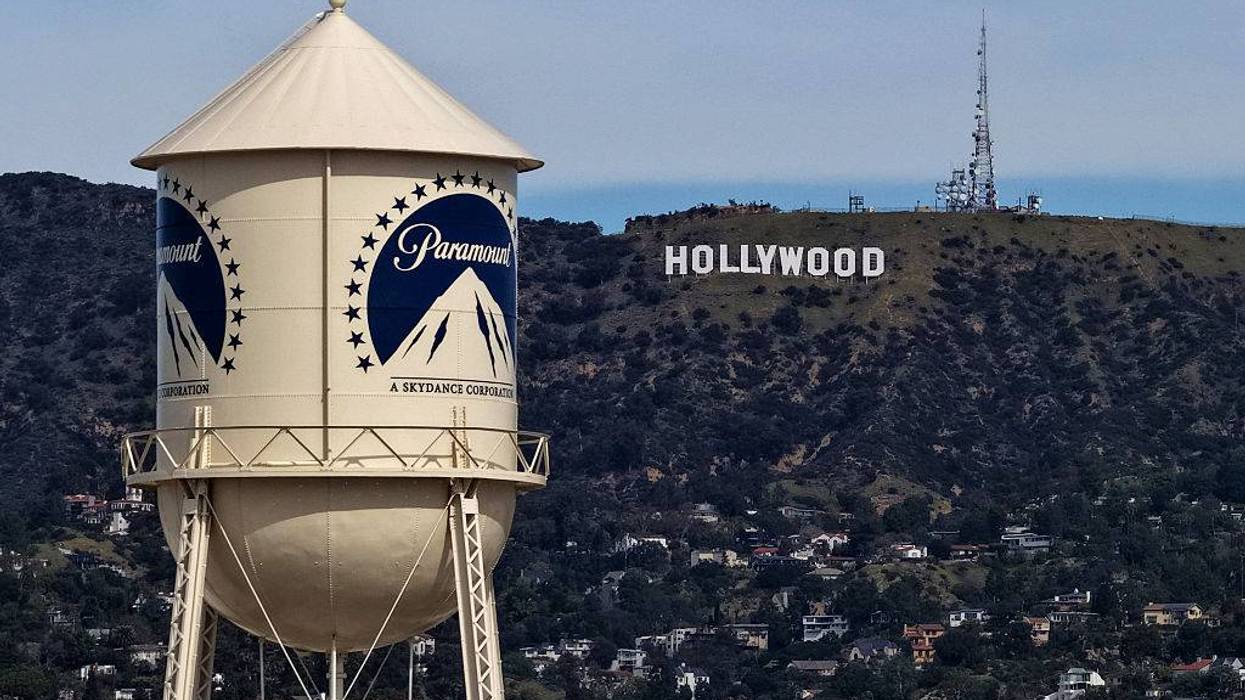
"Billionaires have yet again bribed, censored, and bullied their way to the top," said one critic.
"A settlement that promises less than nothing."
That's how one critic of Paramount Skydance's planned acquisition of Warner Bros. Discovery on Tuesday described the paltry concessions extracted by Democratic California Attorney General Rob Bonta and other state officials to enable the proposed $111 billion media megamerger.
Critics argue that the proposed settlement agreement lacks meaningful antitrust enforcement and hands control of major news and entertainment properties to a billionaire family closely aligned with President Donald Trump.
“Every! single! one! of these concessions is meaningless bullshit,” writer Cory Doctorow said Tuesday on Medium. “Bonta just handed the American movie and TV sector to two of the most odious creeps to draw breath, surrendering without firing a shot."
The settlement, which was announced Monday, clears a major roadblock to Paramount CEO David Ellison's takeover of Warner Bros. Discovery, which owns CNN, HBO, Warner Bros. Pictures, and numerous cable networks. The combined company would control nearly 30% of both US theatrical film distribution and basic cable channel licensing.
The agreement contains a pledge to distribute at least 30 films annually for the first two years, then 32 movies each year after, invest hundreds of millions of dollars in US film production, maintain existing theater rental terms for three years, not sell Paramount and Warner Bros. studio lots for five years, and create an editorial independence board for CBS News and CNN.
In a Monday Substack post, American Economic Liberties Project research director Matt Stoller pointed out an apparent loophole in the settlement's film distribution requirement.
“They only have to distribute that many films,” he wrote. “They can make half as many. And those can be co-produced. So in fact, if you add up the numbers, Ellison promised to make fewer films going forward than Paramount and Warner are putting out today."
The settlement's editorial oversight board for CBS News and CNN have also come under fire. The five-member board overseeing the two entities will be appointed and paid by the combined company. Reuters reported Tuesday that the board would have no explicit investigative authority and that the company would be empowered to fill vacancies.
“As we learned from the failed and widely panned Facebook oversight board, a fake bipartisan oversight committee won’t save CNN,” Jessica González, the co-chief executive of the advocacy organization Free Press, said Monday. “We have all the evidence we need from the Ellisons’ destruction of CBS about what they do to warp journalism at Donald Trump’s request.”
David Ellison's father, tech billionaire Larry Ellison, is a Republican megadonor.
Seth Stern, a media attorney and chief of advocacy at the Freedom of the Press Foundation, said that "it's unclear how the attorneys general or courts can constitutionally hold Paramount accountable for the board's actions or inaction without themselves interfering in content."
Stoller noted that the agreement's force-majeure clause, which would reportedly allow Paramount-Warner to dodge its commitments in the event of economic recessions, strikes, and other labor disruptions.
Other opponents of the proposed deal bristle at the Federal Communications Commission’s approval of Saudi and Emirati investment in the new company that would be created if the merger is approved.
Alvaro Bedoya, a senior adviser to the American Economic Liberties Project, lamented that “today, billionaires have yet again bribed, censored, and bullied their way to the top."
“Layoffs will follow. People from [Los Angeles] to Atlanta will lose their jobs, small businesses will lose their contracts, your cable bill and movie ticket will be even more expensive,” he continued. “Dissent against money and power will be even harder to find.”
“This did not have to happen," Bedoya stressed. "Thanks to an extraordinary outpouring of grassroots anger against the merger, a coalition of 12 state attorneys general sued to block it. They beat Paramount in court, winning a court-ordered pause on the merger, and beat them again at the negotiating table, getting the conglomerate to agree to pause the merger until as late as next June.”
“But the Ellison family does not care about the law. Instead, they loudly threatened to leave California if their merger did not go through immediately," he added. "[Gov.] Gavin Newsom caved to that pressure. So did [former state Attorney General] Xavier Becerra. And eventually, so did Attorney General Rob Bonta, agreeing to a weak settlement that will be exceedingly difficult to enforce.”
Stoller said that "there are a bunch of reasons they cleared the deal, such as threats to move the studio out of California, corruption, and general incompetence."
"I personally think CNN is terrible, and I’m glad it’s going to be discredited," Stoller wrote. "I also find it embarrassing that the Democratic AGs used antitrust law in an attempt to shade news coverage. But it’s downright comical they demanded that David Ellison not corrupt CNN by having David Ellison appoint a board ensuring that David Ellison not do that."
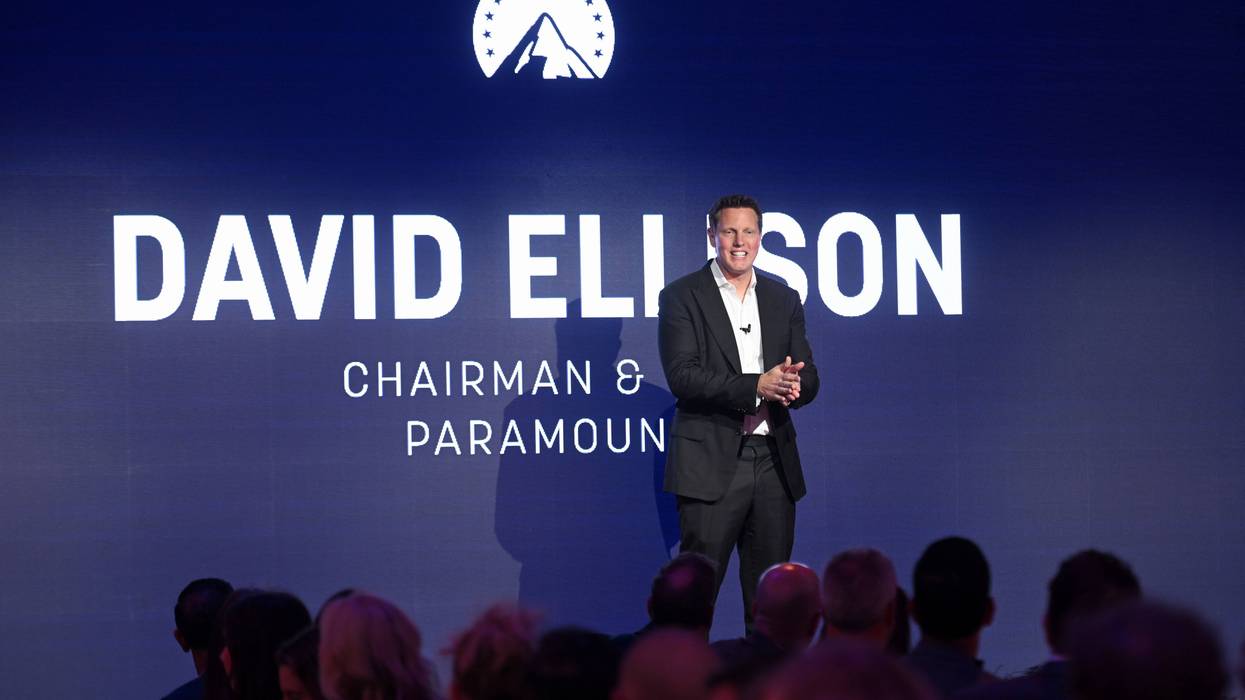
"If he doesn’t, then there can be no doubt that he is, and always will be, an enemy of the free press, just like his buddy in the White House."
A coalition of more than 100 journalists, press freedom campaigners, and advocacy organizations demanded Monday that Paramount Skydance CEO David Ellison fully and publicly back CNN, MS NOW, and Politico in their legal fight against President Donald Trump, who banned the outlets from the White House last week.
Ellison's company owns CBS and is currently on track to acquire CNN's parent firm, Warner Bros. Discovery. In a letter to Ellison, whose billionaire father is a megadonor to Trump and the Republican Party, the press freedom coalition urged the Paramount CEO to "publicly, harshly, and immediately condemn Trump’s unconstitutional ban on news outlets he dislikes, in violation of decades of precedent protecting the press from content-based punishment, including retaliatory restrictions on their access."
"We further call on you to publicly commit to fully backing any legal challenge to the illegal ban should you come to own CNN," the letter continues. "We need you to make clear that you stand with the reporters, photographers, camera operators, and other journalists you seek to employ, even when their reporting angers the president. If you fail to do so, the only logical conclusion is that your claims to value press freedom, editorial independence, and the First Amendment are empty talk and can’t be trusted."
The coalition's letter was spearheaded by the Freedom of the Press Foundation (FPF), a vocal opponent of Trump's assault on journalism and Paramount's megamerger with Warner Bros. The Committee to Protect Journalists, Free Press, and investigative journalist Laura Poitras were among the other signatories.
Seth Stern, FPF's chief of advocacy, said in a statement that "Ellison’s past actions, from trading away CBS News’ independence to throwing dinner parties for Trump and his censorial hangers-on, have convinced many that he’s all talk when it comes to press freedom."
"Can he instantly rebuild that broken trust by finally standing up for the First Amendment only now, after such an extreme and outrageous action by Trump? Of course not," said Stern. "But if he doesn’t, then there can be no doubt that he is, and always will be, an enemy of the free press, just like his buddy in the White House."
The coalition's letter came shortly after CNN, MS NOW, and Politico sued Trump in a federal district court in Washington, DC, arguing his decision to ban the three outlets from the White House "could not be a more direct assault on the First Amendment nor a more blatant violation of our most fundamental constitutional principles."
The call for Ellison to back the outlets' legal challenge also came amid news that state attorneys general reached a deal with Paramount that paves the way for the company to acquire Warner Bros., CNN's parent company.
"This moment is a test of your sincerity," the coalition wrote in its Monday letter to Ellison. "CNN, under its current ownership, has already released a statement, as have MS NOW and Politico, and they’ve announced they’ll file a lawsuit. Only one of those entities, however, has a parent company seeking to close a transaction in the near future that could steer control of its news operations to friends and political allies of the president."
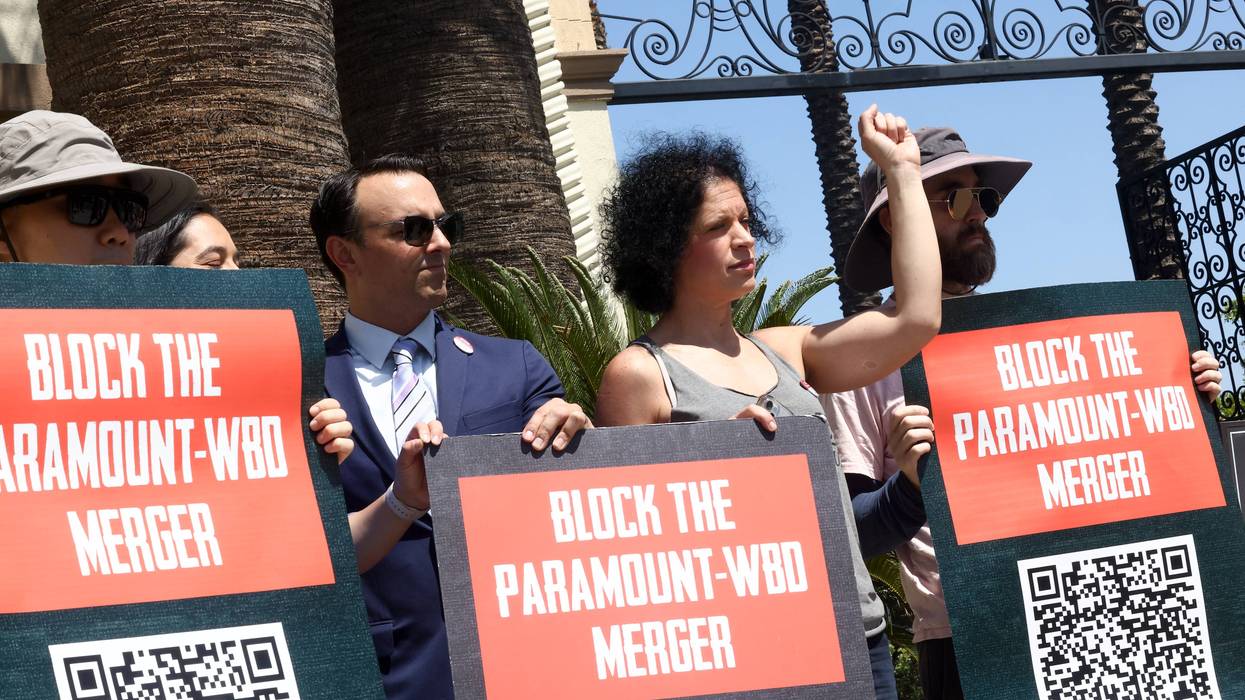
Lina Khan, former head of the Federal Trade Commission, called ongoing settlement talks "troubling."
Paramount and a coalition of state attorneys general led by California's Rob Bonta are reportedly in advanced talks to settle a high-stakes lawsuit and allow the media conglomerate's proposed merger with Warner Bros. Discovery to proceed.
The Wall Street Journal reported late Sunday that Bonta and Paramount executives have "discussed a series of potential concessions" as part of the ongoing settlement negotiations, "including a $1.5 billion investment by the company in production in California." The talks have also explored a potential promise by Paramount to stay in California and a requirement that the company sell off some cable channels and establish "a board to ensure that CNN retains editorial independence," according to the Journal. (Warner Bros. is CNN's parent company.)
Lina Khan, the former head of the Federal Trade Commission, was among those raising concerns about details trickling out of settlement talks between state attorneys general and Paramount, which is led by David Ellison—the son of billionaire Republican megadonor Larry Ellison. In a social media post, Khan wrote that the proposed megamerger "seems facially illegal, and the state AG lawsuit challenging it is very strong."
"It’s troubling to hear that the states may now settle for behavioral remedies, allowing the deal to go through subject to various promises from the firms," Khan wrote. "Behavioral remedies routinely fail, and the stakes here are particularly high given that a strong democracy requires open markets for sound journalism and creative expression."
"The states were right to step up," she added, "and I hope they keep fighting to protect this market, its workers, and the millions of Americans who value a free press and a vibrant film industry."
Matt Stoller, an antitrust researcher and author of the BIG newsletter, was more blunt, calling the settlement talks "fucking pathetic."
"Bonta's reputation will never recover," Stoller wrote.
The coalition of 12 state attorneys general sued to block the proposed merger in July after the Trump Justice Department shut down its antitrust investigation into the Paramount-Warner Bros. merger and backed the deal. The Writers Guild of America has also sued over the proposed merger, arguing it "violates federal antitrust law and would cause specific harm to writers."
The state AGs' lawsuit warned that the merger would "extinguish competition between Paramount and Warner Bros. and inflict substantial harm on movie theatres, basic cable distributors, and, ultimately, audiences nationwide," as well as "tens of thousands of workers across the production ecosystem."
Some attorneys general in the coalition are reportedly pushing back against some of the terms sought by Bonta and others. New York Attorney General Letitia James "has been resisting the deal terms and seeking additional protections for workers," according to CNN.
"Connecticut and at least two other states also have reservations about the settlement and are not currently on board," CNN added. "The holdouts are seeking additional remedies from Paramount."
Actor Mark Ruffalo, one of the most prominent opponents of the megamerger, implored the state attorneys general to reject a settlement deal and take the lawsuit to trial.
"Don't you dare," Ruffalo wrote in a message directed at Bonta. "Do not cave."
"You work for the people," he added, "the very people who will be hurt if you let this lousy deal filled with empty promises go forward."
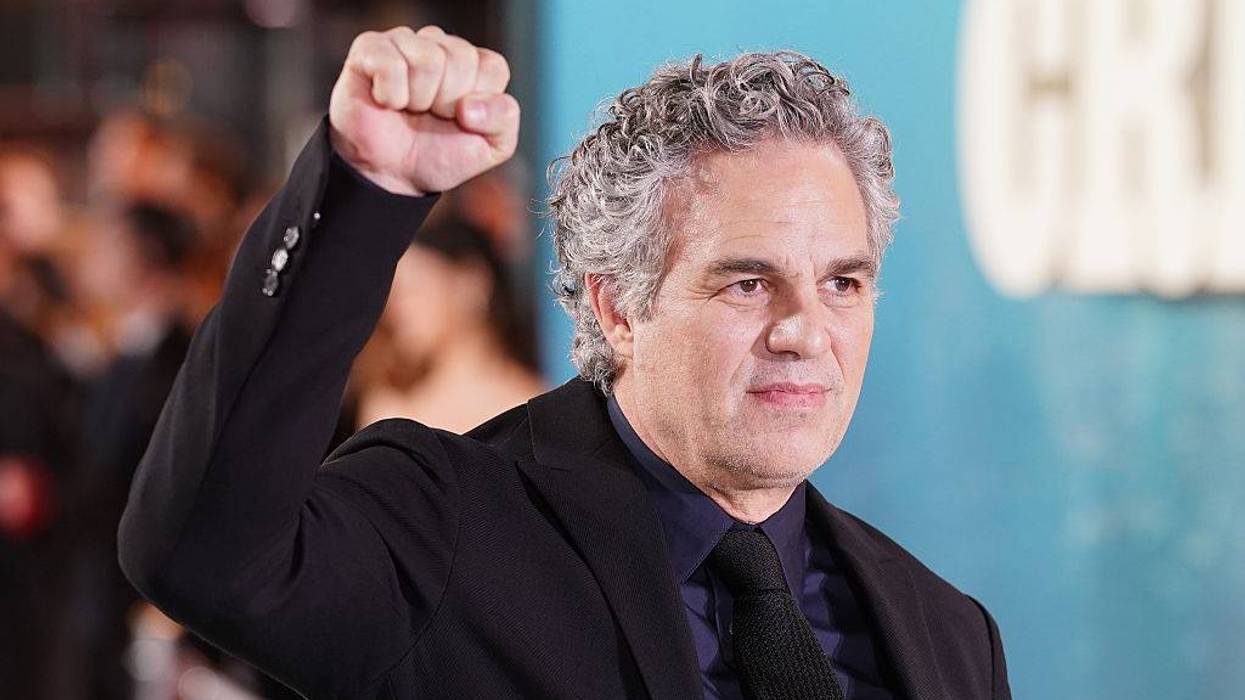
"The time is over for spurious charges of antisemitism to be trotted out, this time in the defense of war, oligarchy, and AI domination."
A group of over 170 Jewish figures, including many who work in the entertainment industry, have come to the defense of actor Mark Ruffalo as he faces antisemitism accusations from executives at Paramount for criticizing the Israeli government and its ties to powerful corporations.
In a letter released Tuesday, prominent Jewish figures—including filmmaker Joel Coen, director and author Miranda July, actress Debra Winger, actress and director Ilana Glazer, actress and comedian Hannah Einbinder, and playwright Tony Kushner—accused Paramount of waging a "smear campaign" to shield corporate interests from legitimate criticism.
"Enough with the false and dangerous weaponization of charges of antisemitism," the letter states, "against those who are brave enough to point out the obvious: that the assault on the Palestinian people and the assault on our liberties at home are deeply interconnected, and there is nothing antisemitic about recognizing that fact."
Ruffalo was accused of being an antisemite after he cited the work of Oracle founder Larry Ellison, father of Paramount CEO David Ellison, in helping the Israeli military carry out a years-long assault on Gaza that has left an estimated 73,500 Palestinians dead.
The actor specifically said that Oracle was powering "an apartheid system of oppression" in the Middle East, which he warned could be exported everywhere if "merged into one of the largest media conglomerates in the world," a reference to the proposed $110 billion megamerger between Paramount and Warner Bros. Discovery.
However, the Jewish figures' letter points out that there is nothing at all antisemitic about expressing concerns about corporate megamergers that could fuse the power of mass media with the power of a technology giant.
In particular, the letter says that the Paramount-Warner Bros. merger is part of "a larger project of tech-driven domination, a project Larry Ellison and his partners have never been shy about trumpeting—and one they themselves have explicitly linked to their support for the ongoing depredations being visited on the people of Palestine and their silencing of critics of those horrors."
The letter also slams Ellison for trying to create an "Orwellian world" as he "consolidates control over what we watch and how we watch it, knowing that as we watch he and his corrupt cohort will always be watching us."
"The time is over for spurious charges of antisemitism to be trotted out, this time in the defense of war, oligarchy, and [artificial intellignece] domination," the letter concludes. "That tired playbook has run its course. We stand proudly with Mark Ruffalo, and with all decent people who are bravely rising and speaking truth to power."
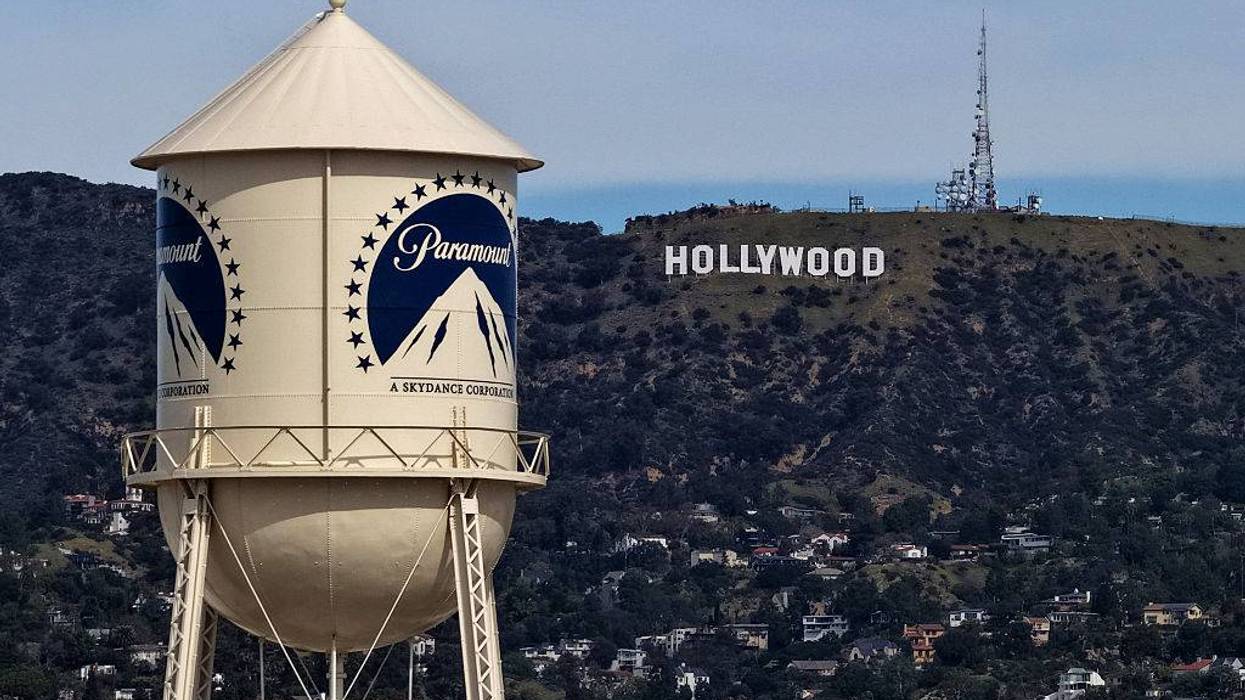
"We know what this merger will mean—one less buyer for our work, less demand for writing services, less leverage to negotiate deal terms that recognize our value, less creative latitude."
Top TV comedy writer Michael Schur, co-creator of hit shows such as Parks and Rec and The Good Place, is sounding the alarm about the "existential" dangers of allowing the proposed $110 billion megamerger between Paramount and Warner Bros. Discovery to go through.
In an op-ed published Monday in The Hollywood Reporter, Schur outlined the downsides of megamergers between major Hollywood studios, which he described as "bad for everyone except those at the very top" and "another potential broadsword blow to an already wounded industry, one that’s been gouged and squeezed and strangled by high-level corporate greed."
Focusing on the challenges faced by writers, Schur wrote that people in his profession "felt the walls closing in" when they first heard news of Paramount's proposed purchase of Warner Bros.
"We know what this merger will mean," wrote Schur, "one less buyer for our work, less demand for writing services, less leverage to negotiate deal terms that recognize our value, less creative latitude... The impact will be concrete, measurable, and serious."
Schur explained that writers and other workers in the entertainment industry personally understand how corporate consolidation affects their livelihoods.
"We don’t have to theorize any of these outcomes," Schur wrote. "Disney’s acquisition of 21st Century Fox in 2019 put them all on full display. After the merger, Fox’s television development operation was folded into Disney’s. Their studio’s priorities continued, Fox’s did not. Writers who had built relationships at Fox found themselves adrift... More than 4,000 Fox employees lost their jobs."
Schur concluded by encouraging opponents to the merger to "fight tooth and nail to sustain what is left of our struggling—but still breathing—creative industry" before it gets fully monopolized.
The combination of Paramount and Warner Bros. has long been controversial because it would put control of CBS, CNN, HBO, TikTok, and other major media properties all under the control of David Ellison, the son of billionaire Larry Ellison, a major donor to President Donald Trump.
The merger has been placed on hold amid multiple lawsuits seeking to block it, including one filed by 12 Democratic state attorneys general.
The New York Times reported on Monday that California Attorney General Rob Bonta, whose office has been leading the state AGs' antitrust complaint against the deal, called off a meeting that had been scheduled with Paramount executives to discuss a potential settlement.
In a statement, Bonta accused Paramount of leaking misleading information about settlement discussions between the parties, which he said demonstrated "a lack of good faith."
"As soon as Paramount stops playing games and engages sincerely," Bonta said, "my office is happy to meet again."
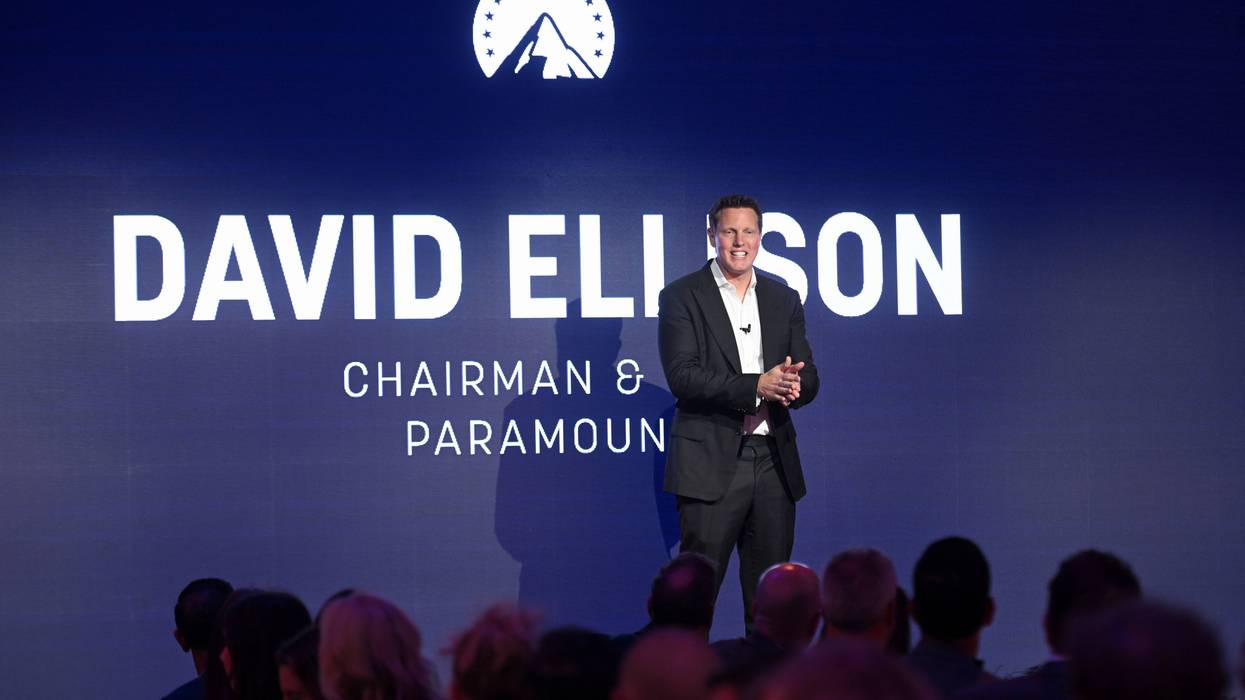
Wyden's claims about CBS came on the same day its parent company's CEO, David Ellison, defended the proposed megamerger between Paramount and Warner Bros.
Sen. Ron Wyden on Tuesday charged that the takeover of CBS by David Ellison, the son of right-wing billionaire Larry Ellison, helped President Donald Trump's White House cover up information about the late billionaire sex offender Jeffrey Epstein.
Wyden's (D-Ore.) claims about CBS came on the same day his office released a report alleging that top Wall Street banks "looked the other way and allowed Epstein to have ready access to the mountains of cash he used to lure, harbor, and transport his victims."
In a social media post, Wyden revealed that he was interviewed several months ago by former "60 Minutes" correspondent Sharyn Alfonsi, where he presented evidence his office had gathered about big banks' role in facilitating Epstein's illicit activities.
The interview never aired, Wyden said, because CBS "subsequently... pulled the segment and fired the reporter."
Wyden added that "the MAGA buyout of media has unquestionably aided the Trump administration’s cover up here."
David Ellison, whose father was a megadonor to Trump's 2024 campaign, assumed control of CBS last year after his media company Skydance merged with Paramount, the network's parent company.
Shortly afterward, Ellison hired right-wing commentator Bari Weiss to serve as CBS News' editor-in-chief, and she has since gone on a firing spree of several longtime "60 Minutes" producers and journalists, including Alfonsi, Scott Pelley, Tanya Simon, and Cecelia Vega.
The Paramount CEO's ambitions for controlling media properties extend well beyond CBS, as his company is currently in the process of acquiring Warner Bros. Discovery, the parent company of both CNN and HBO.
A federal judge last month paused the $110 billion megamerger between Paramount and Warner Bros., citing “compelling evidence that the combined firm resulting from the transaction will possess substantial market share in the wide-release theatrical distribution market,” making it “likely to violate antitrust laws.”
The New York Times on Tuesday published an editorial by Ellison in which he defended the merger and insisted that he could be trusted as a good steward of CNN, vowing to give its news team "independence."
"Our journalists will continue to answer to the facts and to all the people they serve—not to any party or cause," Ellison wrote. "These were founding principles for both CNN and CBS News, for legends like Ted Turner and Edward R. Murrow, and it is exactly that kind of independence that has always fueled the greatness of '60 Minutes.'"
However, CNN media reporter Brian Stelter noted in a Tuesday news analysis that Ellison's Times op-ed made no mention about "upheaval" that Weiss has caused at CBS News, which has led to a decline in ratings at both the network's evening news program and its morning show.
"His first year owning CBS News has been defined by ratings struggles, shakeups, and controversies, mostly stemming from his appointment of Weiss as editor-in-chief," Stelter explained. "I don't hear anyone making the case that CBS News has earned back a whole lot of trust... Ellison's op-ed sidesteps the debate altogether."
Former CNN anchor Jim Acosta similarly expressed skepticism of Ellison's claims in a social media post.
"Ellison appointed Bari Weiss to run CBS News and look at the damage done there," Acosta wrote. "Stands to reason he’ll do the same at CNN. Watch what they do. Not what they say or write."
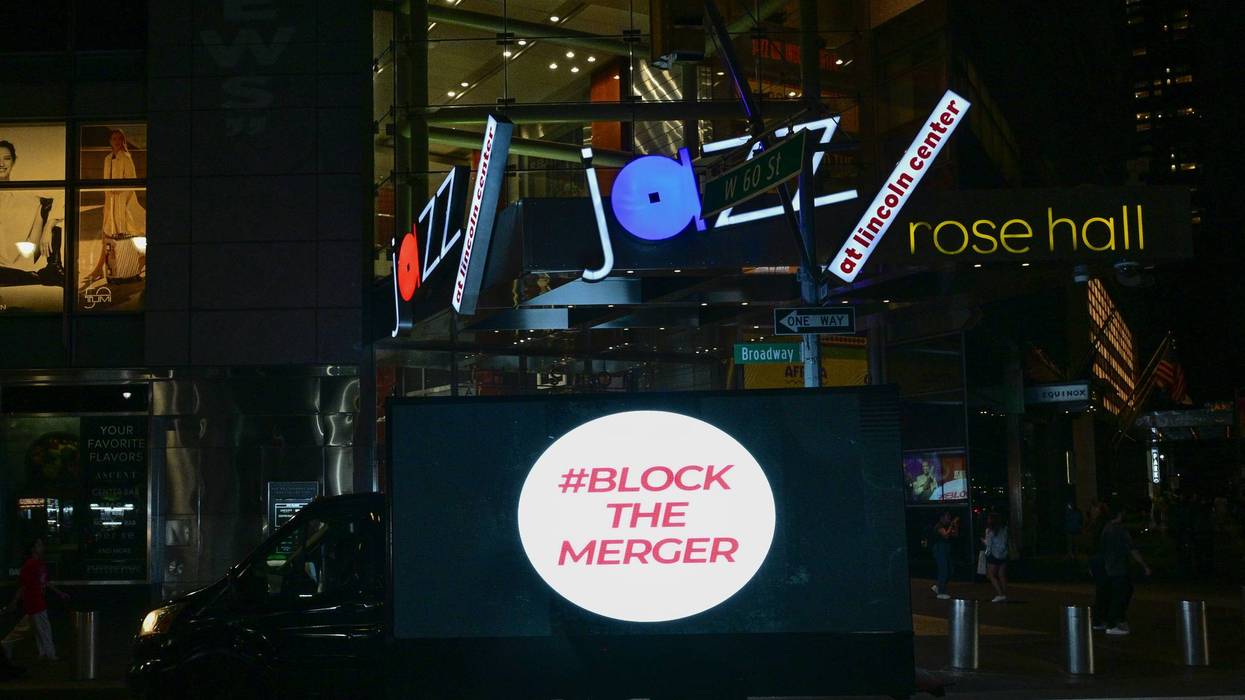
California's attorney general called the development "great news for audiences, movie theaters, and the many people who write, build, and create the art, news, and entertainment so many of us enjoy."
Paramount Skydance on Friday officially delayed its attempted acquisition of Warner Bros. Discovery after a federal judge in the Northern District of California temporarily blocked the $111 billion deal at the request of a dozen Democratic attorneys general.
US District Judge Araceli Martínez-Olguín granted the temporary restraining order on Monday after finding that the plaintiffs—led by California Attorney General Rob Bonta—provided "compelling evidence that the combined firm resulting from the transaction will possess substantial market share in the wide-release theatrical distribution market." She extended the order on Thursday.
The companies have now agreed not to close the deal—also the target of a Writers Guild of America lawsuit—until five days after a trial is held or June 1, 2027, whichever is sooner. While the attorneys general and their supporters framed the development as a victory for their side, a Paramount spokesperson similarly said that "today's agreement is a significant win because the result is exactly what we have sought from the outset: a direct path to a trial based on the evidence."
"This is the fastest and clearest way to prove that this transaction is good for competition, good for consumers, and good for creators, a conclusion dozens of competition authorities around the world have already reached," the spokesperson continued. "Plaintiffs' market definitions bear no relationship to the realities of today's marketplace and cannot withstand scrutiny. We look forward to proving our case at trial."
Meanwhile, Bonta said in a statement that "our argument against this illegal merger is straightforward: When too few corporations have too much power in markets central to American life, it makes things more expensive, and it makes things worse."
"Today's agreement is great news for audiences, movie theaters, and the many people who write, build, and create the art, news, and entertainment so many of us enjoy," he emphasized. "We are eager to continue to make our case in court and celebrate another tremendous win in our effort to ensure this unlawful merger never sees the light of day."
Joining Bonta in battle are the attorneys general of Arizona, Colorado, Connecticut, Massachusetts, Minnesota, Nevada, New Jersey, New Mexico, New York, Oregon, and Washington. They, too, celebrated on Friday.
"Stopping this merger while our case proceeds is a critical victory in our efforts to uphold the law and protect the film and television industries," New York's Letitia James stressed on social media. In a video, New Jersey's Jennifer Davenport also called the companies' decision "a huge win for consumers" and pledged to "continue to fight to block this merger for good."
Responding to one of Davenport's social media posts, actor and activist Mark Ruffalo declared: "Today's news is a repudiation of Paramount's strategy of currying favor with the Trump administration to grease the wheels on this illegal merger—from sham settlement payments to manipulating its own news coverage. Stay strong and #BlockTheMerger."
Some opposition to the deal is rooted in the fact that it would give Paramount CEO David Ellison—the son of billionaire Larry Ellison, a major donor to President Donald Trump—control of CNN, as he already faces mounting criticism for his and Bari Weiss' management of CBS News.
"The Ellisons believed their relationship with President Trump would help them push through a disastrous deal that threatened democracy, creative freedom, and independent journalism. We in the #BlocktheMerger campaign helped prove them wrong," said Norm Eisen, co-founder and executive chair of Democracy Defenders Fund, in a statement.
"Paramount's decision keeps two major studios competing instead of handing one company even more power over what Americans watch, what they pay, and where entertainment workers can earn a living," he continued. "The merger would have eliminated one of Hollywood's largest buyers of scripts and productions while placing Paramount+, HBO Max, CBS News, CNN, and dozens of local stations under the management of one company."
"This victory in putting the merger on hold belongs to the people who refused to treat the merger as inevitable," Eisen added. "Artists, journalists, filmmakers, and consumer advocates spoke out despite the risk of retaliation, more than 5,500 people signed our open letter, and Attorneys General Rob Bonta and Letitia James, along with 10 other attorneys general, acted. This collective resistance is turning the tide."
Craig Aaron, co-CEO of the advocacy group Free Press, said that "Paramount tried to tell us this deal was a slam-dunk, but it just shot an airball. Late in the game, Paramount's lawyers grasped what we've said all along: The states have a very solid case that this deal violates US antitrust law. For the broad and growing coalition against this corrupt and dangerous deal, this delay marks a significant victory."
"Instead of fighting against an injunction and possibly losing now, Paramount's lawyers have resigned themselves to waiting for a full antitrust trial in federal court," Aaron added. "Paramount can pretend all it wants that it looks forward to that test, but that’s just more bluster from company mouthpieces trying to spin a major setback. Now this deal will face its day in court, and we are confident the evidence will show this mega-merger should be blocked."
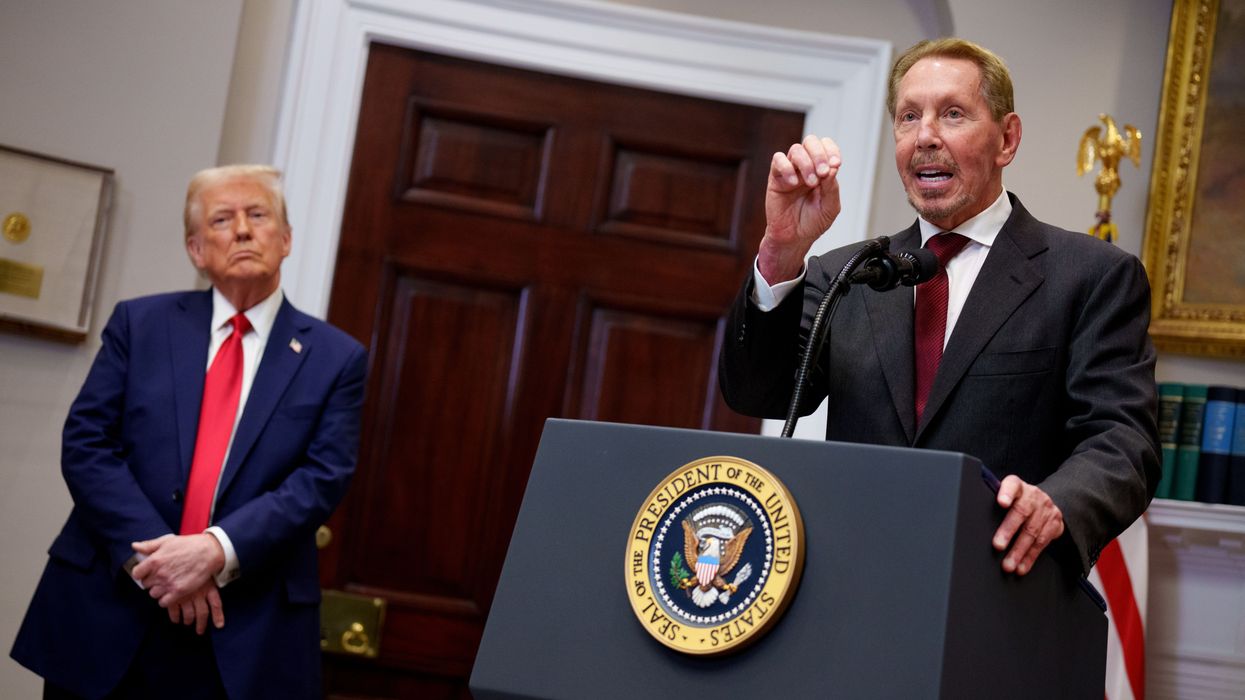
The merger would allow Paramount to merge CBS’ newsroom with Warner-owned CNN, which would presumably mean arch-Trumper Bari Weiss would be in charge of CNN.
Until a couple of months ago, we could get a dose of humor to help us get through the craziness, cruelty, and corruption of the Trump administration. But CBS pulled Stephen Colbert off the air, and not because of bad ratings—he had by far the most widely viewed network show at that hour.
The problem was President Donald Trump is too thin-skinned to put up with a comedian poking fun at him regularly. As a result, he had Brendan Carr, his chair of the Federal Communications Commission, imply that the Ellison family’s effort to take over Paramount, CBS’ parent company, would be blocked if Colbert wasn’t fired. The Elliot family includes prominent Trumper Larry Ellison, one of the richest people in the world, and David Ellison, his equally right-wing son who most immediately controls Paramount.
But taking over one of the country’s major broadcast networks wasn’t enough for the Ellisons. They also control TikTok, the fifth most widely used social media platform, which Trump wrestled away from a Chinese company and put in Larry Ellison’s hands.
And now, Paramount is looking to take over Warner Brothers. In addition to giving them control over two major Hollywood studios, the merger would allow Paramount to merge CBS’ newsroom with Warner-owned CNN. This would presumably mean arch-Trumper Bari Weiss would be in charge of CNN.
Stories about the upward redistribution of income over the last half-century, and anti-worker practices by businesses, tend to get short shrift. But there is no doubt they would get even less attention in a Trumper-controlled media universe.
David Ellison put Weiss, who has long-established right-wing credentials, in charge of CBS News soon after taking over the network. In this role, she has already fired or driven away many serious reporters and repeatedly censored "60 Minutes," its highly regarded and widely watched investigative news show. We can expect more of the same at CNN if Paramount’s takeover of Warner is allowed to go through.
While Trump’s Justice Department’s antitrust division has green-lighted the Paramount-Warner merger, there is still a possibility it can be stopped. California and 11 other states sued to stop the merger on antitrust grounds. In addition to merging two of the major news networks, it would also consolidate two massive Hollywood studios.
An analysis by the Media and Consolidation Research Organization Lab at the University of California San Diego found that the resulting reduction in competition would almost certainly mean fewer new movies are produced and less employment in the industry. It also would likely mean higher streaming prices for consumers. This is in addition to the problem of giving Trumpers even more control of the media.
There is at least some chance that the courts will block this merger on the merits. However, if it goes through the appellate process, the Republican Supreme Court may find the opportunity to provide another gift to Trump supporters irresistible. Still, the prospect of a years-long delay could persuade Paramount to compromise and offer at least partial divestment of some of Warner Brothers holdings to facilitate the merger. In any case, the antitrust lawsuit raises the possibility of blocking the merger in its current form.
While further consolidation of the media and placing ever more of it in the hands of Trumpers is definitely bad news, it would be wrong to imagine that we previously had a golden age of media. News outlets owned and run by rich people tend to present news in a manner that is acceptable to the bosses. Stories about the upward redistribution of income over the last half-century, and anti-worker practices by businesses, tend to get short shrift. But there is no doubt they would get even less attention in a Trumper-controlled media universe.
However, we should be looking for something better. One route is a system of individual tax credits, say $100 per person, to support a person’s favorite news outlet(s). This would be a credit, not a deduction, and fully refundable, so even the poorest person would get a $100 to support the news outlet of their choice.
The model is the tax deduction for charitable contributions, except that everyone would get the same amount. There are many design issues that would have to be ironed out, but such a system could create a large pool of money to support news reporting in various forms that is not controlled by rich people.
This system also has the advantage that it can be done at the state or even local level. That means that cities run by progressives, like New York and Seattle, could pave the way by putting this sort of system in place. (Seattle’s new mayor, Katie Wilson, is a big supporter of this sort of system.)
It is hugely important to do what we can to block further consolidation of the media in the hands of the Trumpers. We also need to do other things, like reforming Section 230 to take away the special protection it gives the huge social media platforms. But the most important longer-term measure to protect a free press is to set up an alternative funding mechanism. An individual tax credit system is a promising route, but we need to get these alternatives on the table and start moving forward with them.
"The American people need to know if this merger was approved as a political favor," said Sen. Elizabeth Warren.
The leadership of President Donald Trump's Justice Department shut down an investigation into Paramount's widely criticized bid to acquire Warner Bros. Discovery and issued a statement supporting the merger before career antitrust attorneys could finish scrutinizing the proposal, The Wall Street Journal reported on Monday.
According to the Journal, which cited unnamed people familiar with the matter, "a team of career lawyers who had spent months scrutinizing the deal were leaning toward recommending a lawsuit challenging it on the grounds that the combination of the two movie studios would be anticompetitive and violate antitrust law." The newspaper reported that the antitrust staffers who investigated the $111 billion merger proposal "didn't participate in writing" the Justice Department statement greenlighting the deal.
“When we said this is what corruption looks like, this is what we meant," the Block the Merger coalition, an alliance of dozens of organizations opposed to the deal, said in a statement late Monday.
DOJ leadership's move to clear the deal was just the latest in a string of merger approvals that have drawn suspicion, given that the Justice Department has been accused of giving corporate lobbyists free rein over antitrust policy. The DOJ's antitrust section is currently headed by Associate Attorney General Stanley Woodward, who—according to a fired antitrust official—"perverted justice and acted inconsistent with the rule of law" during a separate merger investigation.
"The American people need to know if this merger was approved as a political favor," Sen. Elizabeth Warren (D-Mass.) wrote in response to the Journal's reporting. "This reeks of corruption."
Unreal. Justice Department staff were railroaded again by political interference in the Paramount-Warner Bros merger review.
None of the investigators on the deal had any role in writing the unprecedented clearance statement issued by DOJ last Friday. pic.twitter.com/yYcKUpuos3
— Lee Hepner (@LeeHepner) June 15, 2026
If finalized, Paramount Skydance's proposed acquisition of Warner Bros. would leave CBS, CNN, HBO, and other major media properties under the control of the son of billionaire Trump megadonor Larry Ellison, posing what one coalition called "an existential threat to the free press." David Ellison, the CEO of Paramount Skydance, dined with the president in April at an event "honoring the Trump White House."
The proposed merger is still facing antitrust scrutiny in Europe and from state attorneys general in the US.
The Journal reported that "some staffers" in the DOJ's antitrust division believe the Justice Department's statement backing the merger and getting it over a major regulatory hurdle "was designed to make it harder for state attorneys general to challenge the deal in court." In the statement, the DOJ declared that "the transaction is not likely to result in harm to competition or American consumers."
Rob Bonta, California's attorney general, said in response to the Justice Department's decision that "the merger of Warner Bros and Paramount is not a done deal and remains under investigation by my office."
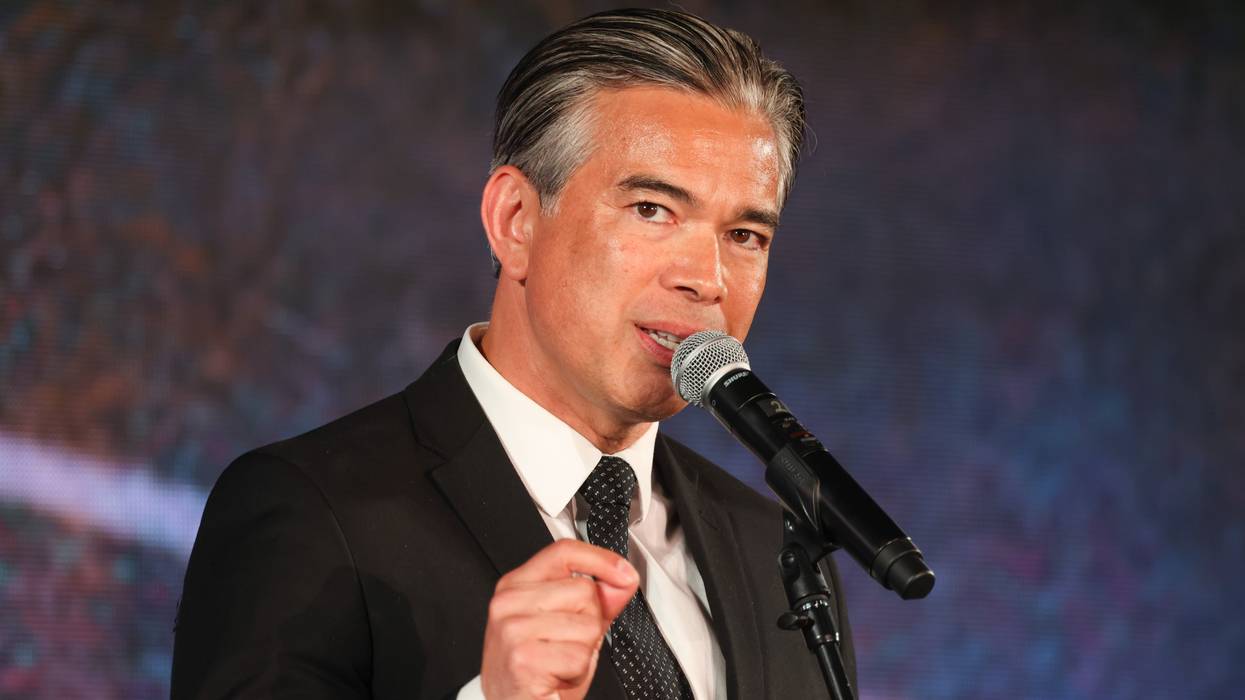
"Now that the federal government has abandoned antitrust enforcement in favor of cronyism and runaway consolidation, state attorneys general must step in to block this deal," said one critic.
The US Department of Justice on Friday approved Paramount Skydance Corporation's megamerger with Warner Bros. Discovery, prompting opponents of the $110 billion deal to place their hopes of blocking it in the hands of Democratic state attorneys general.
The DOJ's Antitrust Division approved the merger without requiring divestitures or behavioral remedies—a significant win for billionaire Paramount CEO David Ellison. Analysts and critics had suggested the DOJ might require sales of some of the corporation's numerous cable networks, streaming services, film and television studios, sports programming rights, or media outlets.
The DOJ also reportedly declined to impose conduct restrictions on bundling, distribution, licensing commitments, and other areas.
“If we had an uncorrupted Department of Justice, Paramount would not even have tried to merge with Warner Bros. Discovery, in plain violation of the law," Robert Weissman, co-president of the consumer advocacy group Public Citizen, said in response to the news of the DOJ approval. "If it had, a Department of Justice that was doing its job would have rushed to court to block the merger the moment it was announced."
“Now, however, a compromised DOJ has rubber-stamped a merger that consolidates power for the Ellisons, one of [President Donald]Trump’s preferred oligarch families," Weissman added. “This merger will jack up prices for consumers, cost workers their jobs and, most importantly, limit the range of viewpoints permitted to air on the major media or appear in movies and creative outlets. Put simply, this is an anti-free speech merger."
This is terrible news for every American who doesn't want Trump-aligned billionaires to control what they watch and how much they pay.The Paramount-Warner Bros. deal has reeked of corruption and influence-peddling.This fight isn't over. State AGs must block this merger.
[image or embed]
— Elizabeth Warren (@warren.senate.gov) June 12, 2026 at 1:48 PM
Craig Aaron, co-CEO of the advocacy group Free Press, said in a statement: “Despite all the talk about conducting a thorough investigation, the fix was in at the Trump Justice Department from the start. Paramount Skydance has fêted, flattered, and promised sweeping changes to news coverage to win the administration’s approval, despite evidence that giving one corporation this much media power—all the movie studios, cable channels, and newsrooms—will undermine competition, destroy jobs, slant the news, and endanger our democracy."
“We've already seen how far Paramount and the Ellison family are willing to go to diminish a once-proud network and news organization like CBS, and they promise to do worse if they get their hands on Warner Bros., HBO, CNN, and all the rest," he added. "The Ellisons aren’t hiding their intentions, and no weak concessions will make this deal any better."
Congressman Jamie Raskin of Maryland, the top Democrat on the House Judiciary Committee, warned earlier this week that approval of the merger would result in "the same kind of unprecedented pro-MAGA editorial control we have seen at CBS News and '60 Minutes.'"
Raskin also contended that the merger could mean that "American consumers, who already pay an average $69 a month for streaming on top of $100 a month for cable and $78 for internet," will pay "even more for sports, news, and entertainment."
As Politico's Yasmin Khorram reported Friday:
The [DOJ] decision... paves the way for Paramount to combine with the entertainment and media company behind a vast film and television studio, CNN, and the HBO Max streaming service, which would be combined with Paramount+ to create a new offering boasting about 200 million subscribers. The deal, which would upend the Hollywood ecosystem by combining two historic rival studios, is opposed by many in the entertainment industry who fear it could lead to mass layoffs, among other concerns.
The DOJ's reported approval of the merger does not necessarily mean the deal is done. Several states are weighing antitrust challenges, most notably California, where the office of Democratic Attorney General Rob Bonta is conducting what he called a "vigorous" review of the proposed merger to determine how it would impact competition in entertainment, streaming, advertising, and labor markets. Reuters reported earlier this month that California, New York, and other states are preparing a lawsuit aimed at blocking the merger.
“The good news is, this is not the last word on the matter," Weissman said. "Competition authorities in the states and other countries can still follow the law and stand up for the public interest against this media consolidation. Now that the federal government has abandoned antitrust enforcement in favor of cronyism and runaway consolidation, state attorneys general must step in to block this deal."
Aaron said that states "have strong case for blocking this merger, and many brave journalists, filmmakers, and workers in the entertainment industry have spoken out against the dangers of this deal despite threats to their livelihoods."
"They are warning us what will happen if this deal goes through, and we must listen," he added. "The attorney generals have the evidence they need to stop this deal; now the public needs them to take action.”
Last year's merger between Paramount Global, Skydance Media, and National Amusements was itself opposed by critics who sounded similar alarms over corruption, antitrust issues, labor concerns, and attacks on editorial independence.
CBS, a Paramount Global company, announced the cancellation of "The Late Show with Stephen Colbert" during the merger review period. While Paramount claimed the cancellation was a financial decision, critics said its timing suggested at least indirect political pressure, given Colbert's vocal criticism of Trump and the need for merger approval from the Federal Communications Commission. FCC Chair Brendan Carr was appointed by Trump and has been dogged by allegations that he's more loyal to the president's agenda than to his agency's stated mission.
One of the biggest recurring flashpoints involves claims of corporate pressure and censorship at CBS' venerable "60 Minutes" weekly current affairs program. Numerous former "60 Minutes" journalists and others have accused Bari Weiss—the right-wing podcaster who became CBS News editor-in-chief after the merger—of political censorship.
Earlier this month, a coalition of press freedom groups warned that recent firings of "60 Minutes" journalists were a “grotesque effort taken straight from an authoritarian handbook” that posed a much wider threat to democracy, and highlighted that an approved Paramount Skydance-Warner Bros. Discovery merger would hand control of CNN, a Warner Bros. company, to the same billionaire family that now owns CBS.
The coalition argued that the merger “would open the door to improper political meddling in journalists’ editorial decisions" and "alter CNN’s editorial direction (not to mention meddle with HBO’s documentaries) to be more friendly to the [Trump] administration, threatening press freedom."