SUBSCRIBE TO OUR FREE NEWSLETTER
Daily news & progressive opinion—funded by the people, not the corporations—delivered straight to your inbox.
5
#000000
#FFFFFF
To donate by check, phone, or other method, see our More Ways to Give page.


Daily news & progressive opinion—funded by the people, not the corporations—delivered straight to your inbox.
"The president’s tax on American families is simply making things more expensive.”
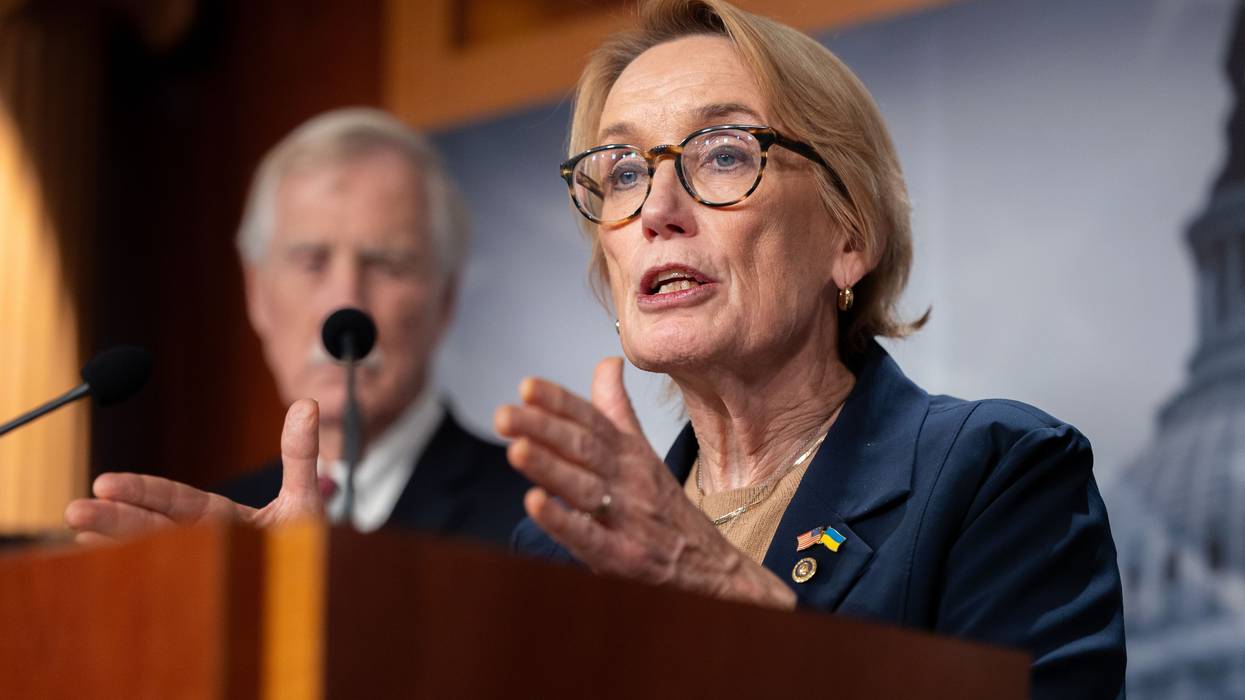
As President Donald Trump persistently claims the economy is working for Americans, Democrats in the US House and Senate on Thursday released an analysis that puts a number to the recent polling that's found many Americans feel squeezed by higher prices: $1,200.
That's how much the average household in the US has paid in tariff costs over the past 10 months, according to the Joint Economic Committee—and costs are expected to continue climbing.
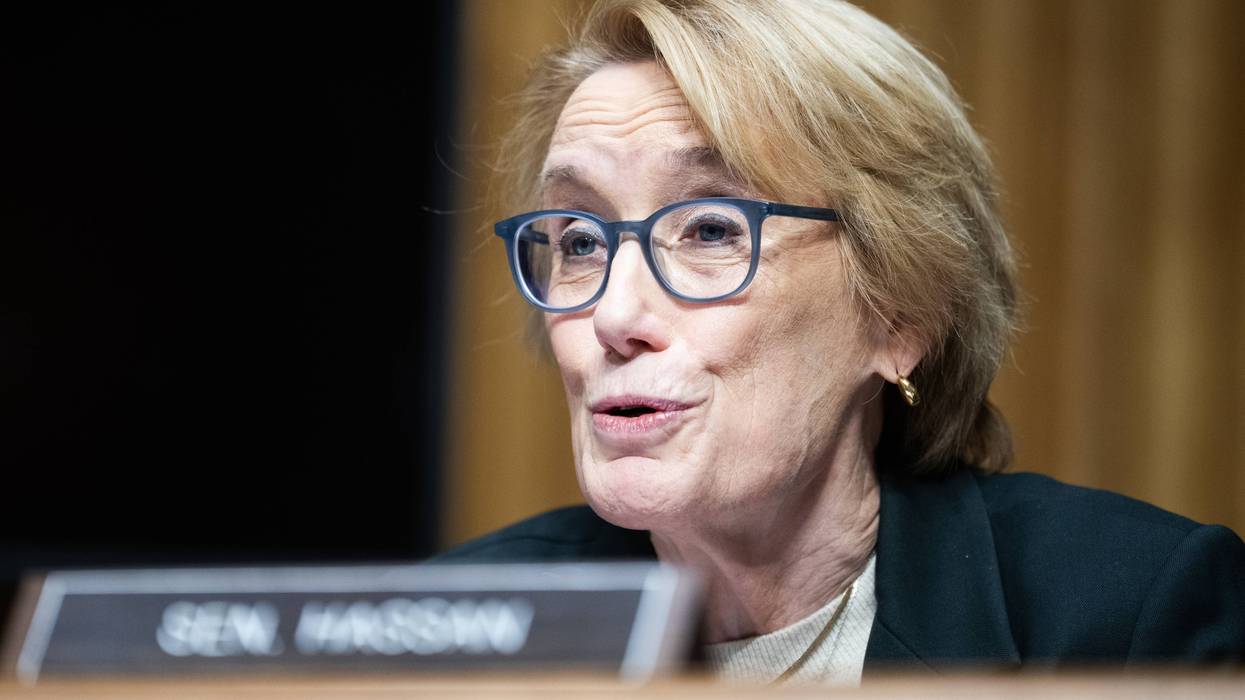
The Democrats, including Ranking Member Sen. Maggie Hassan (D-NH), Sen. Martin Heinrich (D-NM), and Rep. Sean Casten (D-Ill.), analyzed official US Treasury Department data on the amount of tariff revenue collected since the beginning of Trump's second term as he's imposed tariffs across the European Union and on dozens of other countries—some as high as 50%.
The White House has insisted the tariffs on imports will "pry open foreign markets" and force exporters overseas to pay more, resulting in lower prices for US consumers.
But the JEC combined the Treasury data with independent estimates of the percent of each tariff dollar that is paid by consumers, as companies pass along their higher import prices to them.
At first, US families were paying an average of less than $60 in tariff costs when Trump began the trade war in February and March.
But that amount shot up to more than $80 per family in April when he expanded the tariffs, and monthly costs have steadily increased since then.
In November, a total of $24.04 billion was paid by consumers in tariff costs—or $181.29 per family.
“While President Trump promised that he would lower costs, this report shows that his tariffs have done nothing but drive prices even higher for families."
From February-November, families have paid an average of $1,197.50 each, according to the JEC analysis.
“While President Trump promised that he would lower costs, this report shows that his tariffs have done nothing but drive prices even higher for families,” said Hassan.
If costs remain as high as they were over the next 12 months, families are projected to pay $2,100 per year as a result of Trump's tariffs.
The analysis comes a week after Republicans on a House Ways and Means subcommittee attempted to avoid the topic of tariffs—which have a 61% disapproval rating among the public, according to Pew Research—at a hearing on global competitiveness for workers and businesses.
"Rep. Jimmy Gomez [D-Calif.] read several quotes from [former Rep. Kevin] Brady [R-Texas] during his time in Congress stating that tariffs are taxes that impede economic growth. Brady, who chaired the Ways and Means Committee and drafted Trump’s first tax law in 2017 (and now works as a lobbyist), had no desire to discuss those quotes or the topic of tariffs," wrote Steve Warmhoff, federal policy director at the Institute on Taxation and Economic Policy. "Nor did Republicans address the point made by the Democrats’ witness, Kimberly Clausing, when she explained that Trump’s tariffs are the biggest tax increase on Americans (measured as a share of the economy) since 1982."
Clausing estimated that the tariffs will amount "to an annual tax increase of about $1,700 for an average household" if they stay at current levels, while Trump's decision to lower tariffs on goods such as meat, vegetables, fruits, and coffee last month amounted to just $35 in annual savings per household.
The JEC has also recently released analyses of annual household electricity costs under Trump, which were projected to go up by $100 for the average family despite the president's campaign pledge that "your energy bill within 12 months will be cut in half."
Last month the panel found that the average household is spending approximately $700 more per month on essentials like food, shelter, and energy since Trump took office.
“At a time when both parties should be working together to lower costs," said Hassan on Thursday, "the president’s tax on American families is simply making things more expensive.”
"This isn’t normal," said the president of the group behind the ad campaign. "If Senate Democrats don’t take a stand and strongly oppose these judicial nominees who have disqualified themselves—we will."
The progressive advocacy group Demand Justice on Wednesday launched a seven-figure advertising campaign targeting three members of the Senate Democratic caucus who have voted to confirm President Donald Trump's lifetime judicial nominees, enabling the ongoing right-wing takeover of the nation's courts.
The first series of ads will target Sens. Maggie Hassan (D-NH), John Fetterman (D-Pa.), and Angus King (D-Maine), three of the 16 members of the Senate Democratic caucus who have voted to confirm at least one Trump judge this year. Other Senate Democrats who have voted with Republicans in support of at least one Trump judicial pick include Sens. Dick Durbin of Illinois, Amy Klobuchar of Minnesota, Adam Schiff of California, and Chris Coons of Delaware.
"It is outrageous that Senate Democrats are voting to confirm Trump’s judicial nominees who refuse to tell the truth about January 6th and the 2020 election,” Josh Orton, the president of Demand Justice, said in a statement. “This isn’t normal. If Senate Democrats don’t take a stand and strongly oppose these judicial nominees who have disqualified themselves—we will. And we won’t let up.”
The group's campaign will also include a national cable TV ad buy and "coordinated digital rollout across key battleground states" naming and shaming Democrats who support "Trump loyalist judges" even as the lawmakers condemn the president's authoritarian assault on democracy.
Watch the Demand Justice ad targeting Maggie Hassan, who on Tuesday voted to confirm Lindsey Ann Freeman, Trump's nominee to the US District Court for the Middle District of North Carolina:
Freeman, like other Trump judicial picks, refused during her confirmation process to say directly that the president lost the 2020 election.
"President Biden was certified as the winner of the 2020 presidential election and served as the 46th President of the United States," Freeman wrote in response to questions from Durbin, who ultimately voted in favor of her confirmation.
In a report released last month, Demand Justice analyzed Trump judicial picks' written responses to senators' questions. The analysis shows that "nominees' responses appear nearly identical, with many nominees using verbatim phrasing, repeating key words, and, overall, using unusual and evasive language that’s almost entirely outside the normal, historical, and common lexicon used to describe such events."
"Every nominee provided near-identical phrasing to avoid a direct answer about the 2020 election, instead referencing the results of the congressional 'certification' process, or answering by noting that President Biden 'served' as president," the report notes. "And 21 of 27 nominees provided extremely similar responses in regard to January 6, often describing what transpired as a 'political issue' and refusing to comment further."
Orton of Demand Justice said that "it is unprecedented for lifetime nominees to the federal bench to provide dishonest and misleading answers about historical facts—and it is deeply concerning that Trump’s nominees are parroting such strikingly similar language, the president’s own language, to avoid telling the truth."
That more than a dozen Senate Democrats still voted to confirm at least one of those nominees is "simply unacceptable," said Orton.
"While President Trump claimed that he would bring down prices, the reality is that Americans have seen their costs soar even higher since he took office."
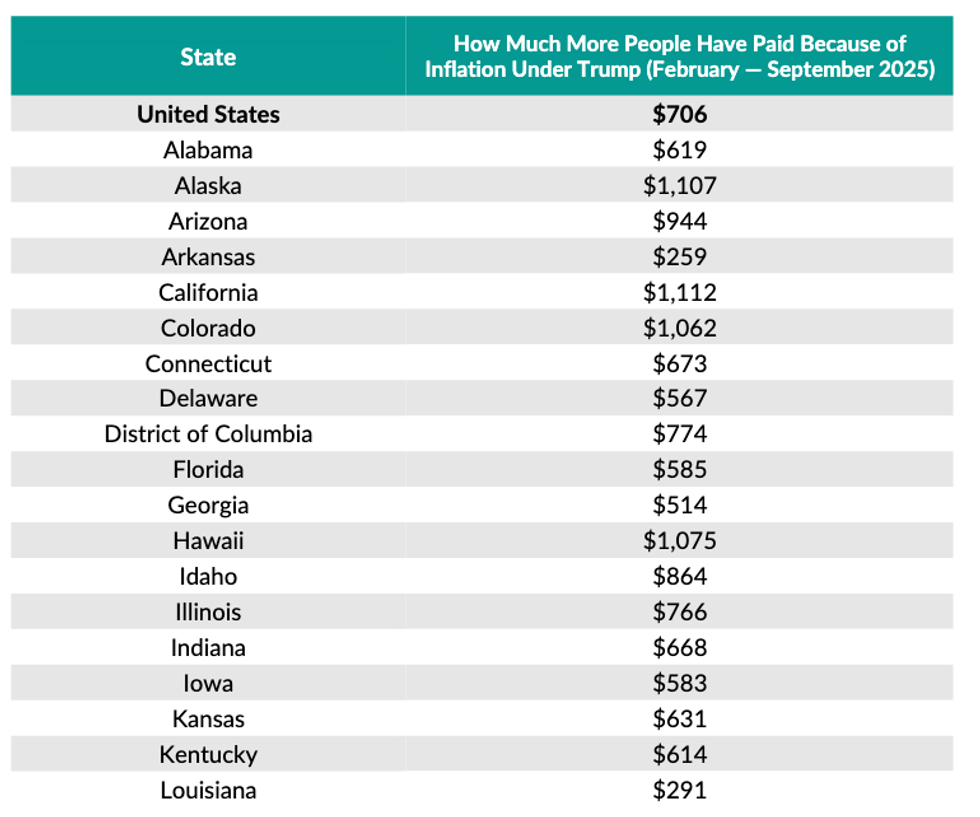
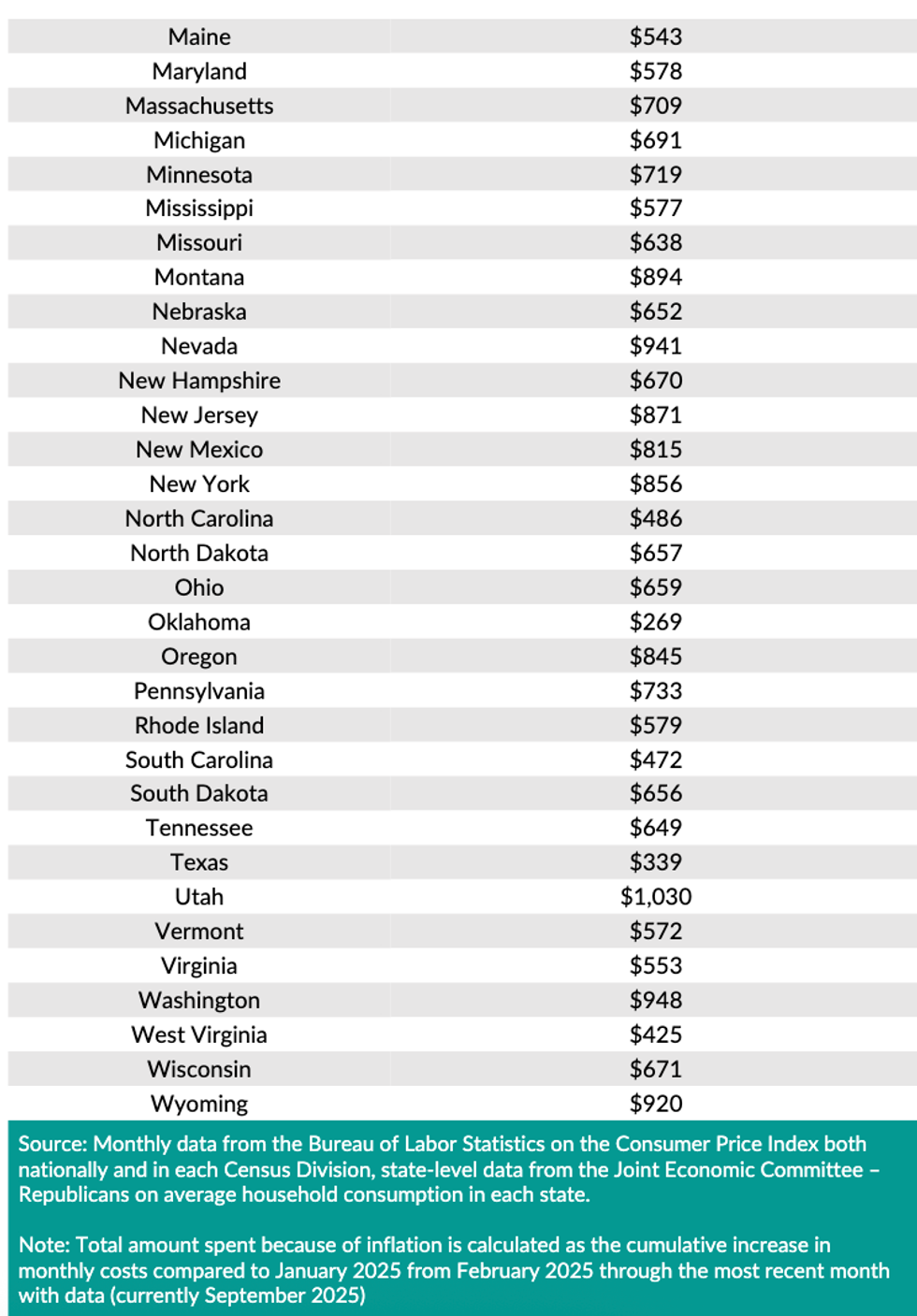
Democrats on the congressional Joint Economic Committee released a report Thursday detailing how much more the average American family in every US state is having to spend monthly to cover the rising costs of food, shelter, energy, and other necessities under the leadership of President Donald Trump.
The panel released its report on the same day the Trump administration was supposed to publish the October Consumer Price Index (CPI) data. The closely watched CPI report was delayed by the shutdown, and the Trump White House said Wednesday that it's likely the figures will never be released.
Deploying the same methodology that Republicans used to track cost increases under former President Joe Biden, JEC Democrats found that the average US family is spending roughly $700 more per month on basic items since Trump took office in January, pledging to bring prices "way down."
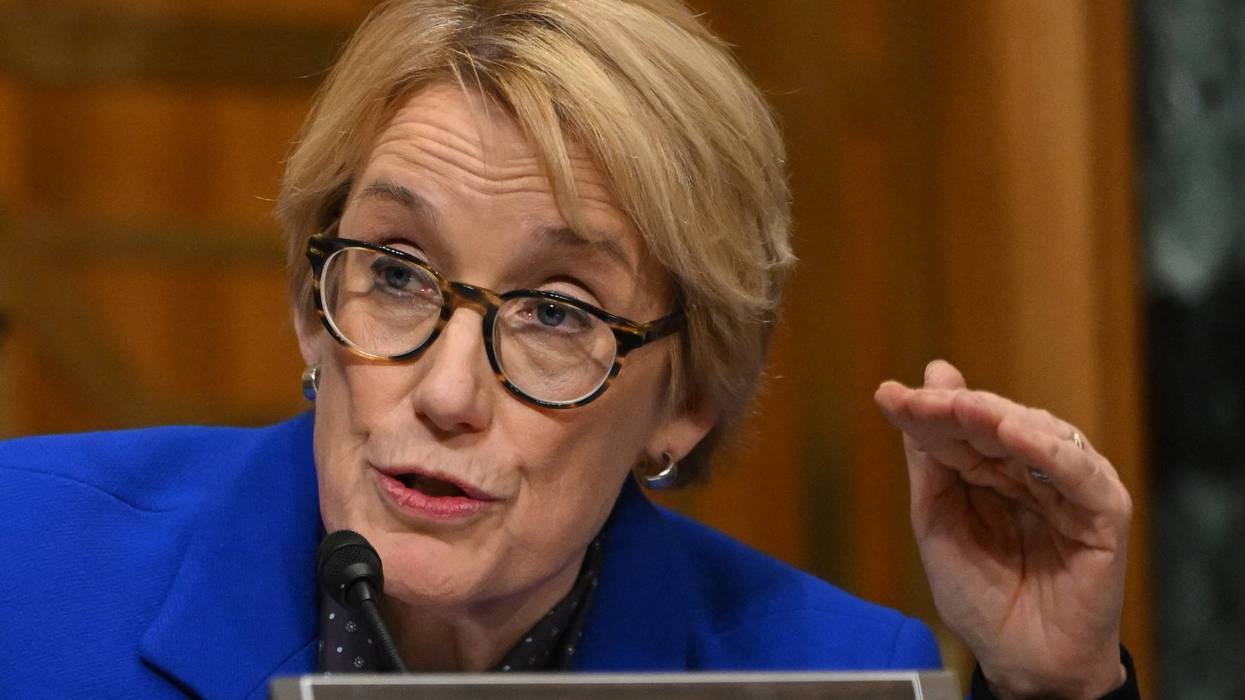
"While President Trump claimed that he would bring down prices, the reality is that Americans have seen their costs soar even higher since he took office," said Sen. Maggie Hassan (D-NH), the JEC's ranking member. "As families across the country spend more to pay their bills and put food on the table, Democrats and Republicans should be working together to lower costs. Instead, President Trump is pushing ahead with reckless tariffs that continue to fuel inflation and drive prices up even higher."
In some states—including Alaska, California, and Colorado—average families are spending over $1,000 more per month to maintain their living standards as costs continue to rise, in part due to Trump's erratic tariff regime.
The report's findings run directly counter to Trump's triumphant rhetoric on inflation and the US economy more broadly.
CNN's Daniel Dale noted earlier this week that Trump has been on a "lying spree about inflation," falsely claiming that "every price is down" and that "everybody knows that it's far less expensive under Trump than it was under Sleepy Joe Biden."
"None of that is true," Dale wrote. "Prices are up during this administration. Average prices were 1.7% higher in September than they were in January, according to the most recent figures from the federal Consumer Price Index, and 3% higher than they were in September 2024. There has been inflation every month of the term, and far more products have gotten costlier than cheaper."
"Inflation not only very much continues to exist but has been accelerating since the spring," Dale added. "As of September, the year-over-year inflation rate had increased for five consecutive months."