
SUBSCRIBE TO OUR FREE NEWSLETTER
Daily news & progressive opinion—funded by the people, not the corporations—delivered straight to your inbox.
5
#000000
#FFFFFF
To donate by check, phone, or other method, see our More Ways to Give page.


Daily news & progressive opinion—funded by the people, not the corporations—delivered straight to your inbox.
"She is on a shamelessness tour," journalist Jeremy Scahill said of American diplomat Linda Thomas-Greenfield.
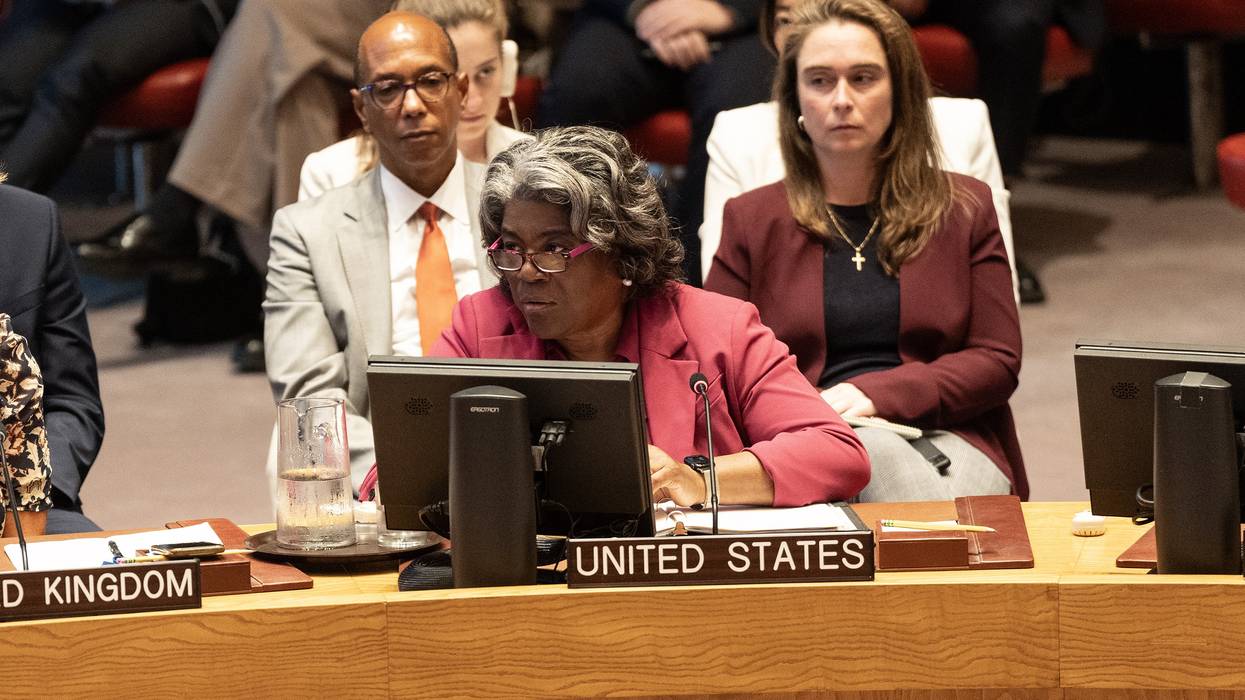
The U.S. ambassador to the United Nations is facing backlash after delivering a speech earlier this week touting the universal "right to food" as the Israeli military—armed to the teeth with American weaponry—fuels widespread and increasingly deadly hunger in the Gaza Strip.
In remarks Monday at a gathering of U.N. and civil society leaders focused on global food insecurity, Thomas-Greenfield called hunger, starvation, and famine "man-made tragedies" that "can be stopped by us."
"Let me be clear: Every human being, everywhere, has the right to food," she continued. "For the United States, this is a moral issue. And it's an economic and national security issue."
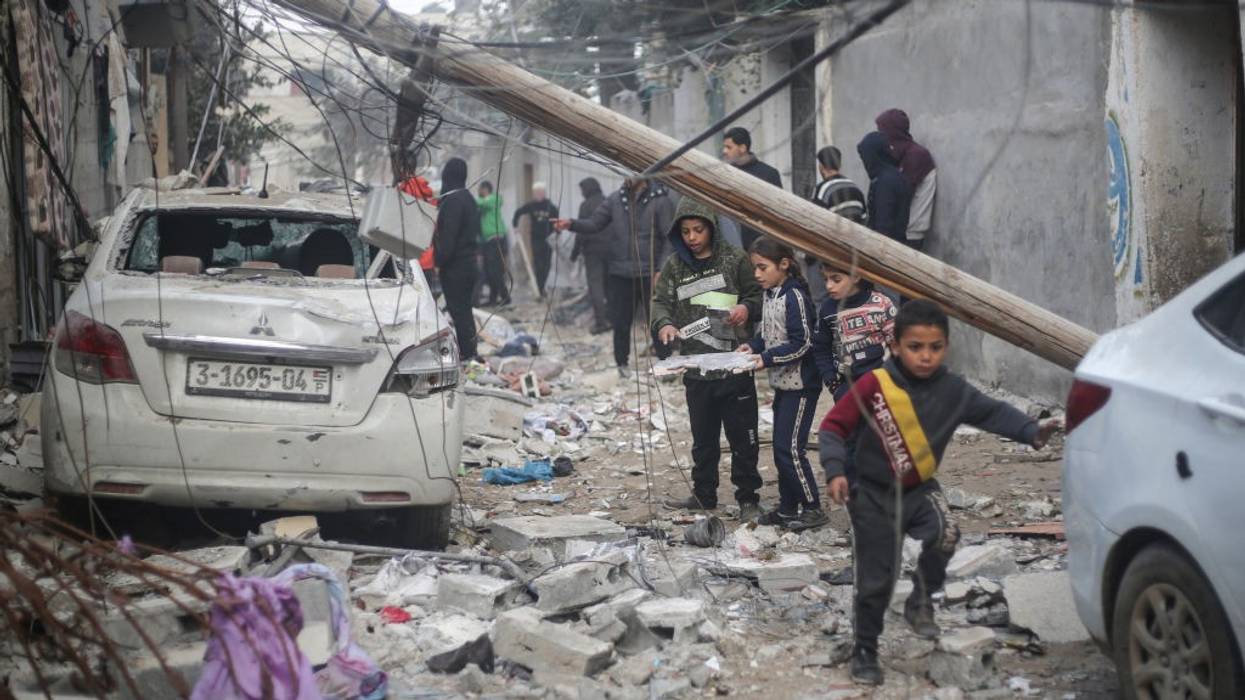
Thomas-Greenfield's speech sparked derision given the Biden administration's continued military support for an Israeli government that has been accused of wielding starvation as a weapon of war in Gaza, where—according to the latest U.N. Food and Agriculture Organization assessment—food aid has reached an all-time low under Israel's suffocating blockade.
"Hunger is a man-made tragedy that you helped make in Gaza."
Oxfam and other human rights groups have said that by arming the Israeli military as it obstructs humanitarian aid, the Biden administration is complicit in the starvation of Palestinians in Gaza and Israel's repeated attacks on aid workers attempting to feed the enclave's hungry.
"She is on a shamelessness tour in her final weeks as U.S. ambassador to the U.N.," journalist Jeremy Scahill wrote Wednesday in response to Thomas-Greenfield's speech. "She presided over numerous cease-fire vetoes as part of an administration that facilitated Israel's starvation policy against the Palestinians of Gaza. Listen to her remarks on 'hunger' in that context."
Yesterday, @USUN brought together humanitarian leaders to discuss solutions to the global food insecurity crisis.
Hunger is a man-made tragedy. But if it caused by man, that means it can be stopped by us, too.
Every human being, everywhere, has the right to food. pic.twitter.com/zczlerRHEc
— Ambassador Linda Thomas-Greenfield (@USAmbUN) December 10, 2024
Middle East scholar and analyst Assal Rad, wrote that Thomas-Greenfield's vetoes at the U.N. "have helped Israel continue its genocide and deliberately starving people."
"Hunger is a man-made tragedy that you helped make in Gaza," Rad added.
Despite Thomas-Greenfield's insistence that addressing global food insecurity has long been a priority for the world's wealthiest and most powerful nation, the U.S. and Israel were the only two countries to vote against a U.N. committee draft on the right to food in 2021.
On Tuesday, the Biden administration welcomed to the White House former Israeli Defense Minister Yoav Gallant, who—along with Prime Minister Benjamin Netanyahu—is facing an arrest warrant from the International Criminal Court for "the war crime of starvation as a method of warfare," among other crimes.
"Today is Human Rights Day—a date chosen to honor the UN’s adoption of the Universal Declaration of Human Rights in 1948," the Institute for Middle East Understanding Policy Project wrote Tuesday. "Biden's White House is dishonoring this day by hosting a confirmed war criminal who conducted a genocide, and starved and targeted Palestinian civilians."
The Chile-led effort warned that Israel's decision to ban U.N. Secretary-General António Guterres would "undermine the United Nations' ability to carry out its mandate."
The U.S. was not among the more than 100 United Nations member states that signed a new letter of support for U.N. Secretary-General António Guterres after Israel's foreign minister declared him "persona non grata" and barred him from entering the country.
The letter, spearheaded by Chile, said Israel's attack on Guterres would "undermine the United Nations' ability to carry out its mandate, which includes mediating conflicts and providing humanitarian support."
"In the Middle East, this could further delay an end to all hostilities and the establishment of a credible path towards the two-state solution, with the state of Palestine and Israel living side by side in peace and security," the letter continues. "We reaffirm our full support and confidence in the secretary-general and his work."
Signatories to the letter include France, China, Lebanon, Iran, Sweden, Switzerland, Finland, Brazil, and the African Union. Notably absent from the list were nations that have supplied Israel with arms during its yearlong assault on Gaza, including the U.S., Germany, Italy, the United Kingdom, and Canada.
104 #UN Member States and the African Union issue letter expressing support for #UNSG @antonioguterres in response to #Israel declaring him persona non grata. @ChileONU initiated the effort which "urges all parties to engage constructively with the United Nations to seek a… pic.twitter.com/ixNKquyDV0
— Rami Ayari (@Raminho) October 11, 2024
Earlier this month, Israeli Foreign Minister Israel Katz declared Guterres banned from entering Israel, falsely accusing the U.N. chief of failing to condemn Iran's ballistic missile barrage and the Hamas-led attack of October 7, 2023. Katz reiterated his position on Sunday, writing on social media that "Guterres can continue seeking support from U.N. member states, but the decision will not change."
Guterres, a persistent advocate of a cease-fire agreement in the region and critic of the United States' failure to exert pressure on its ally, did not respond directly to the Israeli foreign minister's statement, but a spokesperson for the U.N. chief called it "one more attack on the United Nations staff that we've seen from the government of Israel."
The letter of support for Guterres came after Israeli forces repeatedly fired on U.N. peacekeepers stationed in Lebanon, injuring at least four soldiers. Guterres called the attacks "intolerable."
On Saturday, dozens of nations that contribute troops to the U.N. Interim Peacekeeping Force in Lebanon (UNIFIL) issued a joint statement condemning "recent attacks on the UNIFIL peacekeepers" and calling for an international investigation of the Israeli attack last week.
"We urge the parties to the conflict to respect UNIFIL's presence, which entails the obligation to guarantee the safety and security of its personnel at all times, so that they can continue to implement its mandate and continue their work of mediation and support for peace and stability in Lebanon and the entire region," the statement added.
The U.S. does not contribute troops to UNIFIL. In a statement on Thursday, U.S. Ambassador to the U.N. Linda Thomas-Greenfield said the Biden administration is "deeply concerned about reports that Israeli forces fired on positions and a tower used by UNIFIL
peacekeepers in Lebanon."
Jameel Jaffer, director of the Knight First Amendment Institute at Columbia University, wrote in response, "I don't believe anymore that the Biden administration is 'concerned' about any of this—the killing of thousands of civilians, the targeting of journalists and aid workers and peacekeepers."
"What actual evidence is there of this supposed concern?" he asked.
"I think you know the answer," Linda Thomas-Greenfield said in a dismissive response to a question about whether the U.S. would abide by an ICC arrest warrant against the Israeli prime minister.
The Biden administration's envoy to the United Nations said Thursday that the U.S. would not abide by an International Criminal Court arrest warrant against Israeli Prime Minister Benjamin Netanyahu.
"I think you know the answer to the question about whether we will arrest [Prime Minister] Netanyahu," Linda Thomas-Greenfield said in response to Sarah Leah Whitson of Democracy for the Arab World Now (DAWN). "He was here in the United States a few weeks ago and he was not arrested."
When Whitson pointed out that ICC judges have not yet approved prosecutor Karim Khan's application for an arrest warrant against Netanyahu, Thomas-Greenfield said: "Okay, well, let me be clear: We will not arrest him."
Watch the exchange:
"Are you going to abide by the ICJ orders? Are you going to arrest Netanyahu... if he turns up in the US?" DAWN's @sarahleah1 asks @USAmbUN at @CFR_org, referencing ICJ opinion on illegality of Israel's occupation and pending ICC Netanyahu arrest warrant. pic.twitter.com/sxkUInyvFp
— DAWN MENA (@DAWNmenaorg) September 12, 2024
Thomas-Greenfield's remarks came days after Khan urged ICC judges to expedite their decision on his May request for arrest warrants against Netanyahu, Israeli Defense Minister Yoav Gallant, and Hamas leaders, citing "ongoing criminality" in the Gaza Strip.
Khan said earlier this week that the arrest warrants are needed to "prevent the continuing commission of the crimes alleged," including the starvation of civilians as a method of warfare and "extermination."
The Biden administration has opposed Khan's investigation of war crimes in the Palestinian territories and Israel since it began in 2021, arguing that the ICC does not have jurisdiction there. Israel, like the U.S., is not a party to the Rome Statute, which created the ICC.
Thomas-Greenfield reiterated U.S. opposition to ICC prosecutor's arrest warrant request on Thursday even after a key ally, the United Kingdom, dropped its objections to the proposed warrants against Israeli leaders in the face of Gaza's worsening humanitarian catastrophe. The U.S. has been accused of hypocrisy for opposing the arrest warrant request for Israeli leaders while readily supporting the ICC's arrest warrant for Russian President Vladimir Putin over war crimes in Ukraine, even though neither Russia nor Ukraine is a state party to the Rome Statute.
The U.S. envoy also said Thursday that she does "not believe the Palestinians, as they exist right now, have all the elements to give it statehood," a position that makes the U.S. an outlier in the international community.
US Ambassador to the United Nations Linda Thomas-Greenfield: "I do not believe the Palestinians as they exist right now have all of the elements to give it statehood."
(In April, the US vetoed a UN Security Council resolution that would’ve made Palestine a full member of the UN) pic.twitter.com/vvsruoo886
— Prem Thakker (@prem_thakker) September 12, 2024
Atrocities continued to mount across the Gaza Strip this week as the U.S.—Israel's leading arms supplier—doubled down on its rejection of efforts to hold Israeli leaders accountable.
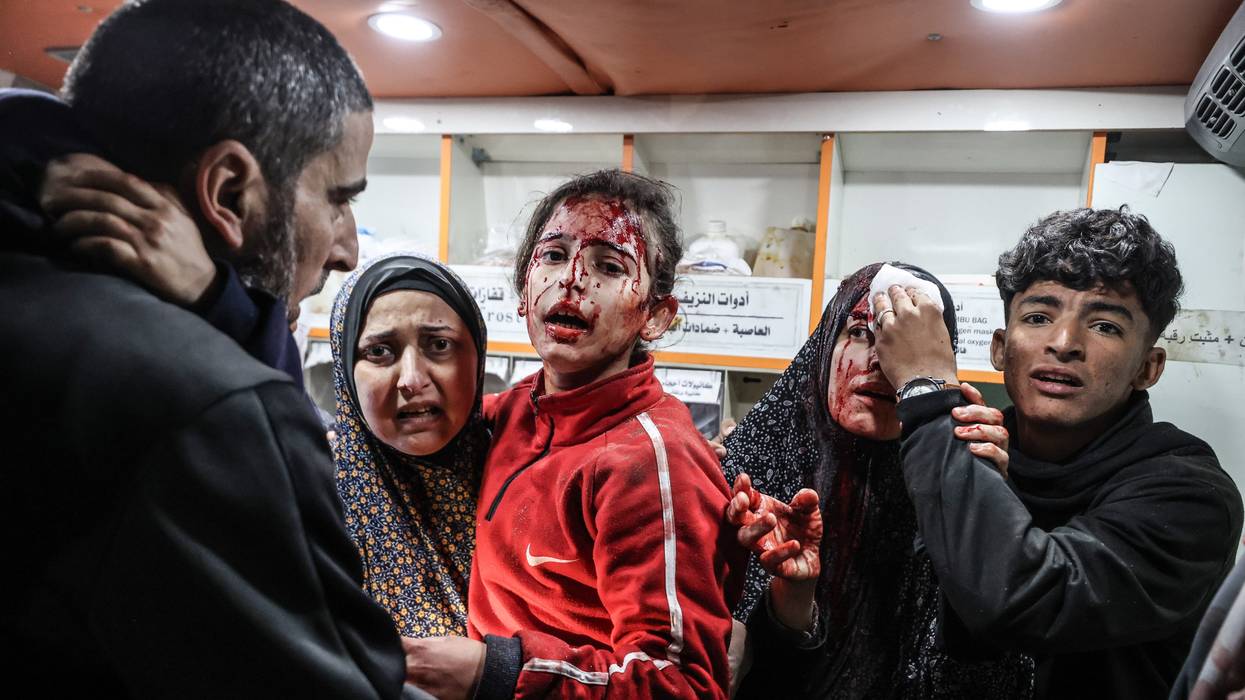
Citing medical sources in the Palestinian enclave, Al Jazeera reported Friday that "at least 16 Palestinians have been killed in Israeli attacks on Gaza since the early hours of this morning."
"This number includes five members of the same family who, according to the Palestinian Civil Defense, were killed in an attack on al-Mawasi in south Gaza this morning," the outlet added. "It said two children were among those killed."
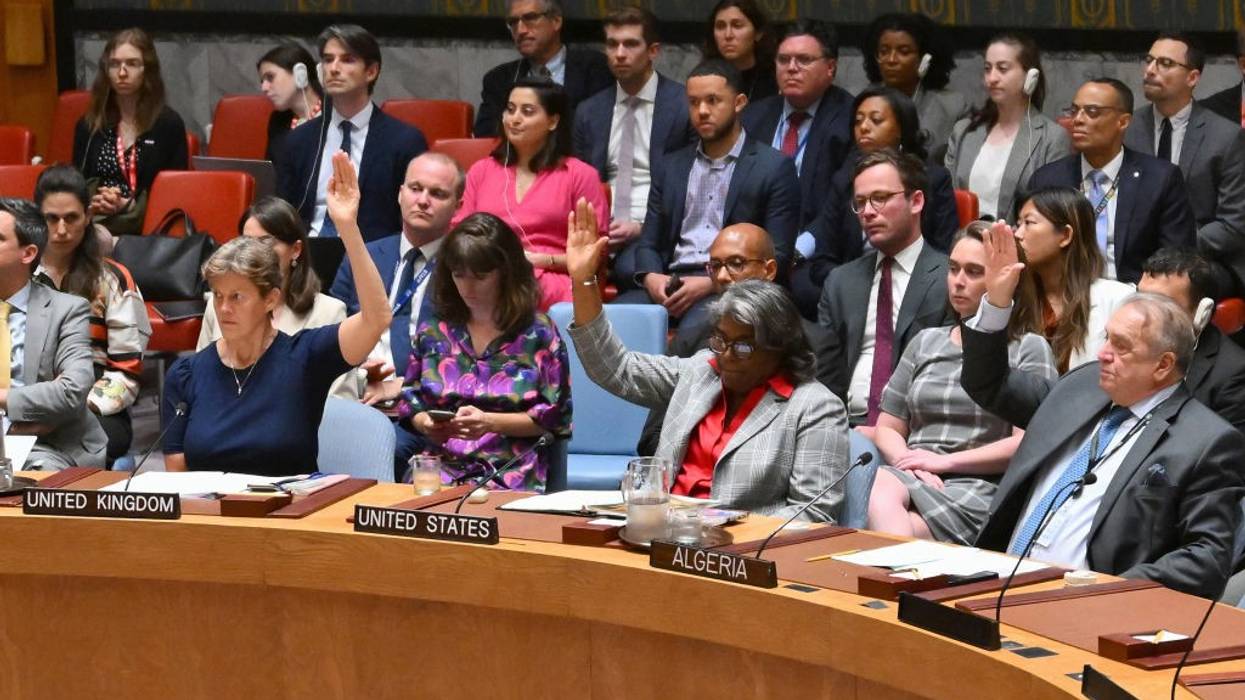
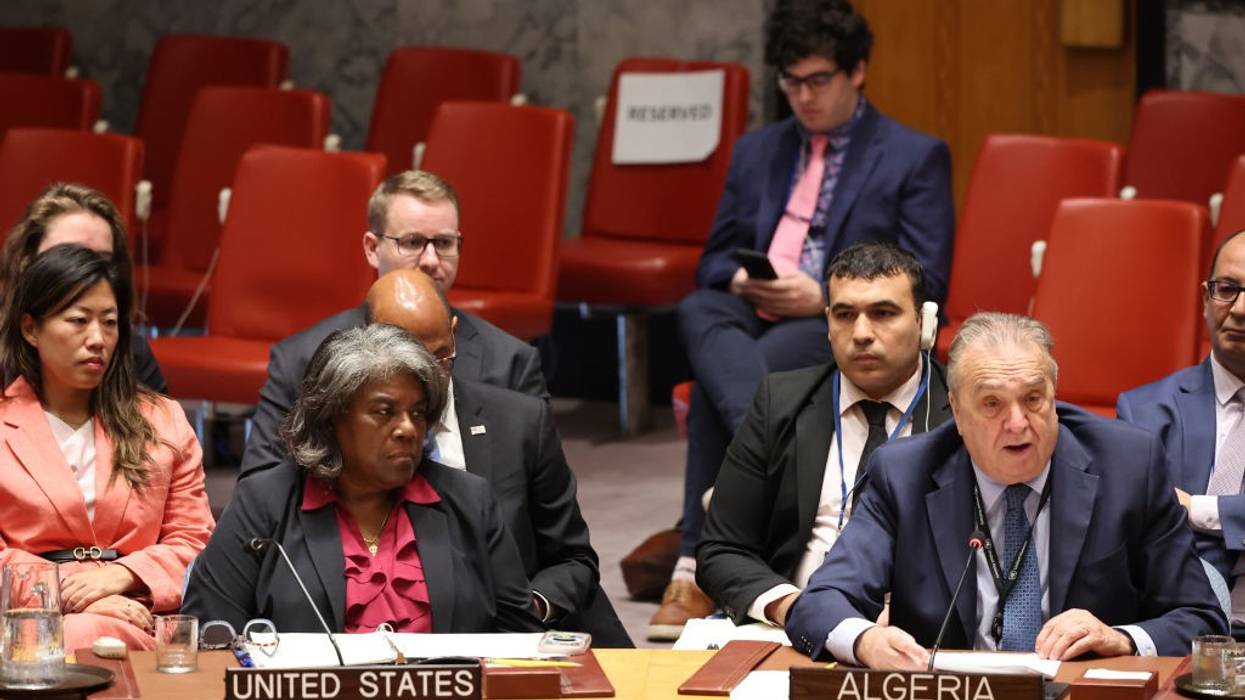
"We voted for this text to give diplomacy a chance," said Algeria's U.N. ambassador. "It is time to halt the killing."
In a move that boosts the three-phase plan announced by President Joe Biden late last month, the United Nations Security Council on Monday voted 14-0—with permanent member Russia abstaining—in favor of a U.S.-sponsored resolution for a cease-fire in Gaza.
Russia chose not to exercise its power to veto the resolution, which urges Israel and Hamas to "fully implement its terms without delay and without condition."
Responding to the vote, Nihad Awad, national executive director of the Council on American-Islamic Relations, said in a statement that "although the Biden administration should have allowed the U.N. Security Council to pass a permanent cease-fire resolution many months and many slaughtered Palestinians ago, we welcome today's development as a positive and long overdue step toward ending the genocide."
"The Biden administration must now use American leverage to force [Israeli Prime Minister Benjamin] Netanyahu to agree to a permanent cease-fire so that the massacres of Palestinian civilians can end, all hostages and political prisoners can safely go free, international tribunals can begin holding those responsible for war crimes accountable, and the world can finally begin pursuing a credible end to the illegal occupation of Palestine that has fomented decades of injustice and oppression."
As U.N. News explained:
Phase one includes an "immediate, full, and complete cease-fire with the release of hostages including women, the elderly and the wounded, the return of the remains of some hostages who have been killed, and the exchange of Palestinian prisoners."
It calls for the withdrawal of Israeli forces from "populated areas" of Gaza, the return of Palestinians to their homes and neighborhoods throughout the enclave, including in the north, as well as the safe and effective distribution of humanitarian assistance at scale.
Phase two would see a permanent end to hostilities "in exchange for the release of all other hostages still in Gaza, and a full withdrawal of Israeli forces from Gaza."
In phase three, "a major multi-year reconstruction plan for Gaza" would begin and the remains of any deceased hostages still in the strip would be returned to Israel."
The council also underlined the proposal's provision that if negotiations take longer than six weeks for phase one, the cease-fire will continue as long as negotiations continue.
"The only way to end this cycle of violence and build a durable peace is through a political settlement," U.S. Ambassador to the U.N. Linda Thomas-Greenfield—who vetoed several previous Security Council cease-fire resolutions— said following Monday's vote.
The Biden administration has provided Israel with billions of dollars in military aid, arms and ammunition sales, and diplomatic cover.
In a statement, Hamas—which led the October 7 attack on Israel that left more than 1,100 people dead and over 240 others taken hostage—welcomed the resolution's passage and affirmed its willingness "to enter into indirect negotiations on the implementation of these principles."
However, Reut Shapir Ben-Naftaly, Israel's representative at the U.N., said her country's objectives in the war have not changed and vowed to keep fighting "until all of the hostages are returned and Hamas' military capabilities are dismantled."
"Israel will not engage in meaningless and endless negotiations which can be exploited by Hamas as a means to stall for time," she added.
According to Palestinian and international agencies, at least 37,124 Palestinians—mostly women and children—have been killed by Israeli forces during the 248-day Gaza onslaught, which is the subject of an International Criminal Court genocide case brought by South Africa and supported by more than 30 nations and regional blocs. Nearly 85,000 Palestinians have also been injured. At least 11,000 other Palestinians are missing and believed buried beneath the rubble of hundreds of thousands of bombed-out buildings.
International Criminal Court Prosecutor Karim Khan is seeking arrest warrants for Netanyahu, Israeli Defense Minister Yoav Gallant, and three Hamas leaders for alleged crimes including extermination.
Algerian Ambassador Amar Bendjama said after Monday's vote that "as a free and dignified people, the Palestinians will never accept living under occupation. They will never abdicate their fight for liberation."
"This text is not perfect, but it offers a glimmer of hope to the Palestinians as the alternative is continued killing and suffering," he added. "We voted for this text to give diplomacy a chance. It is time to halt the killing."
The Security Council resolution's passage follows last month's vote by the U.N. General Assembly to recognize Palestinian statehood—a move supported by 143 members of the World Body but vehemently opposed by Israel and the U.S. Only nine nations voted against recognizing Palestine as an independent state.
The coming years shall prove that the crisis in international legitimacy, resulting from the abuse of power, will hardly be rectified with superficial changes and reforms.
In a conversation in 2020 with Princeton Professor Emeritus Richard Falk, he told me that historically, colonized nations that have won the legitimacy war have always won their freedom.
Palestine is unlikely to be the exception. The Gaza war, however, is confronting the world with an unprecedented challenge, specifically to governments’ relationship with international law and their obligations to international institutions, such as the United Nations, the International Court of Justice (ICJ), the International Criminal Court (ICC), and others.
“The government is not legitimate unless it is carried on with the consent of the governed,” English philosopher John Locke said in the 17th century. This is not a mere theory, and it will always be applicable.
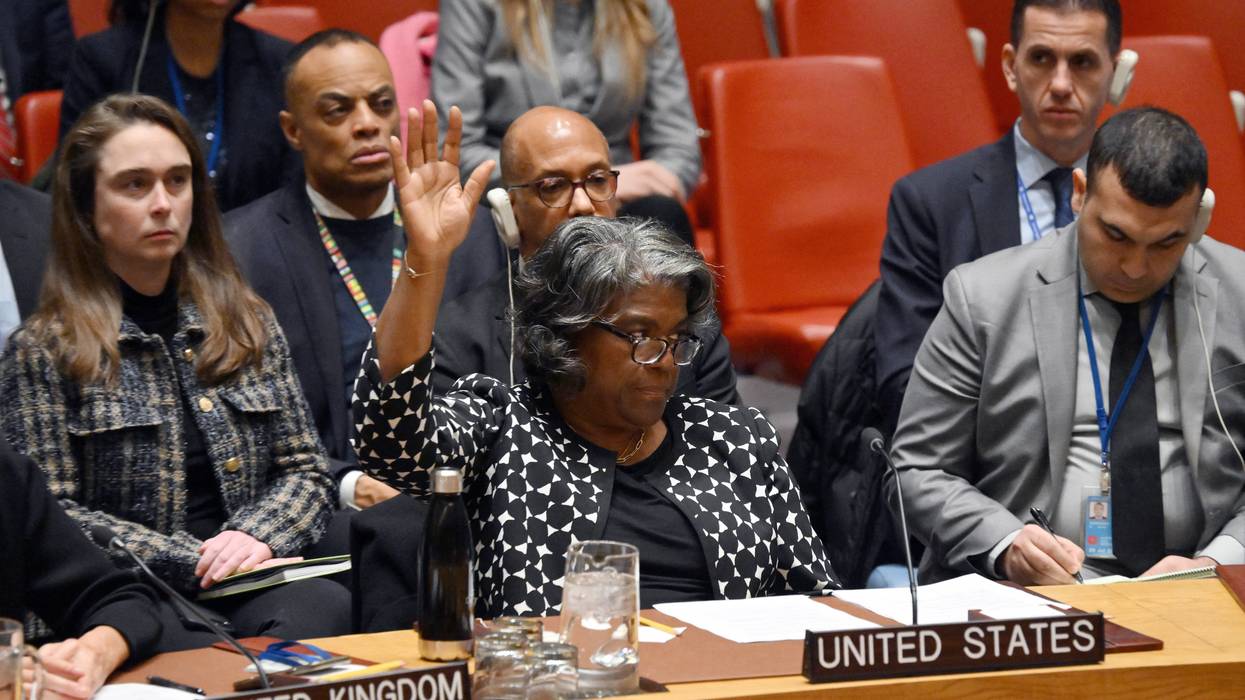
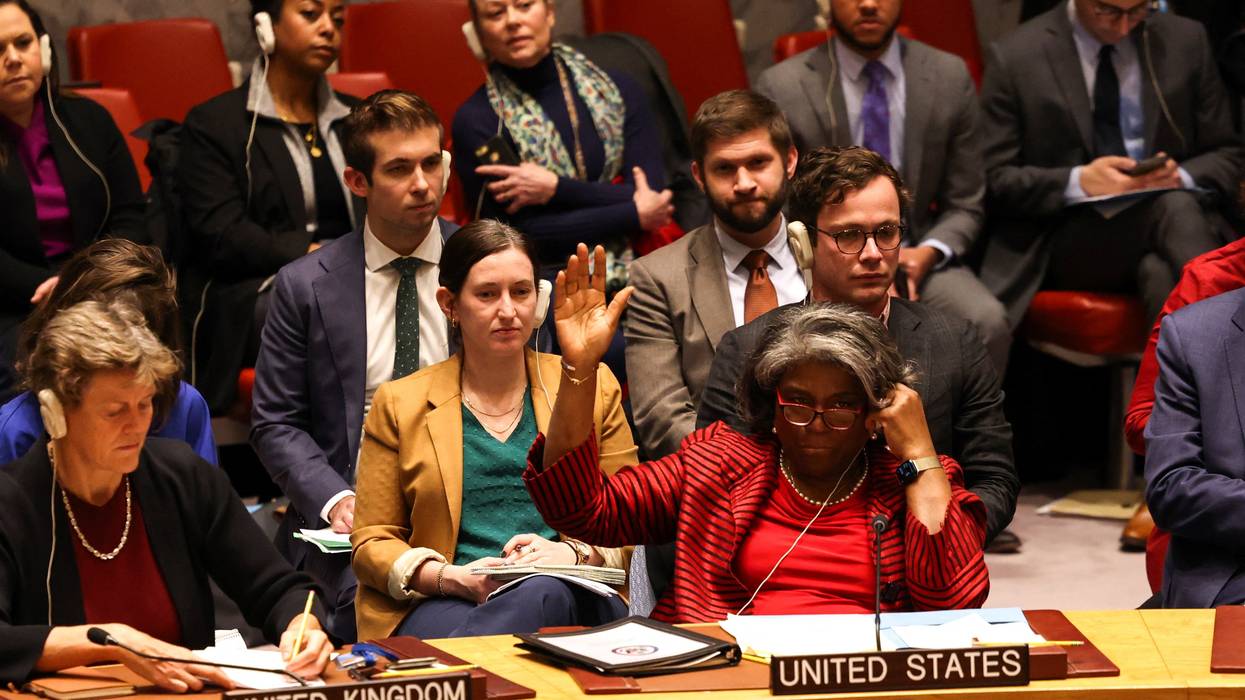
When U.S. Ambassador Linda Thomas-Greenfield raised her hand for the fourth time, on February 20, casting yet another veto, thus rejecting the Algerian call for an immediate humanitarian cease-fire in the Gaza Strip, another pillar of international legitimacy broke down.
Consent, however, does not always reflect itself in the form of transparent and democratic elections. Legitimacy and loyalty to governments can be expressed in other ways as well. Those who do not respect this maxim could easily find themselves embroiled in political upheavals and violent rebellions resulting from popular dissent.
To maintain a degree of international consensus, the United Nations was founded in 1945. It was obvious, from the very start, that the U.N. did not truly reflect the universal desires of all people. To the contrary, it was structured based on a hierarchical power paradigm, where the victors of World War II emerged as the masters, assigning themselves veto rights and permanent membership at the U.N. Security Council (UNSC). As for the serfs, they were assigned with far less consequential seats in the General Assembly.
The U.N. provided the absolute minimum platform of international legitimacy, but its unequal structure spurred yet another conflict, expressed in the words of British scholar Adam Groves, who described the “privileged status of the permanent five” in the UNSC not only “as a Western-centric relic of the past, but worse, a means for the status-quo powers to limit the influence and development of other states.”
To survive the inequality of the new international system, smaller countries worked together to create alternative, albeit smaller, political bodies within the larger institutions. They used their large numbers to overcome the concentrated power in the hands of the few. They exploited every margin to represent the rights of the world’s poorest and most oppressed nations.
The Non-Aligned Movement (NAM), founded in 1961, was one of several examples that served as, though in relative terms, a success story.
Throughout the years, the U.S. and its Western allies molded their own version of ‘legitimacy’ in the way they interpreted international law, in the way they vetoed U.N. resolutions whenever they did not serve their interests, and in the way they isolated defiant members.
During the Soviet era, the U.N. and its relevant institutions seemed nominally balanced, as the world was, indeed, divided between East and West, which gave NAM and other mostly Global South-based organizations and alliances greater political value.
Back then, China’s economic power did not allow it to impose its version of legitimacy on the rest of the world.
Things have changed. The Soviet front crashed in the early 1990s, breaking down a power paradigm that allowed Moscow to maintain a balancing act. On the other hand, China rose in power, slowly acquiring greater influence, thus legitimacy, from countries that grew reliant on the Chinese economic engine.
Another shift is underway. When one listens to the impassioned speeches of Russian, Chinese, Brazilian, South African, Irish, Egyptian, Saudi, and UAE representatives, one can see that international consensus is strongly coalescing around the legitimacy of international and humanitarian laws, not only regarding the ongoing war on Gaza, but in other matters of international peace and justice.
Yet, when U.S. Ambassador Linda Thomas-Greenfield raised her hand for the fourth time, on February 20, casting yet another veto, thus rejecting the Algerian call for an immediate humanitarian cease-fire in the Gaza Strip, another pillar of international legitimacy broke down.
Even at the ICJ, when the whole world made a case for Palestinian freedom, the U.S. opposed. “The Court should not find that Israel is legally obligated to immediately and unconditionally withdraw from occupied territory,” the acting legal adviser for the U.S. State Department, Richard Visek, said on February 21.
Ironically, the U.S. has resorted to these various institutions, including the ICC, of which the U.S. is not even a member, to rationalize its actions in Iraq, in Serbia, in Libya, in Ukraine, and many other areas of conflict.
There will be consequences to all of this, and the coming years shall prove that the crisis in international legitimacy, resulting from the abuse of power, will hardly be rectified with superficial changes and reforms. The problem is now much more profound and destructive, and the price is simply too high to bear.
Military might alone is hardly enough for any country to acquire and sustain its legitimacy. Neither does economic influence or clever diplomacy. For legitimacy to be maintained, it requires much more than this, starting with the very basic premise that the spirit of international law was not meant to prolong war, but to end it.
"We should ask ourselves: How many innocent lives must be sacrificed before the council deems it necessary to call for a cease-fire?" said the Algerian envoy to the United Nations.
As a United Nations agency halted aid deliveries in northern Gaza, where acute malnourishment is rampant among children, citing a "breakdown of social order" fueled by Israel's bombardment of and blockade on the enclave, the United States for a third time on Tuesday vetoed a cease-fire resolution at the U.N. Security Council—saying it was an inopportune time to demand that Israel end its massacre of Palestinians.
U.S. Ambassador to the U.N. Linda Thomas-Greenfield said the cease-fire resolution, proposed by Algeria, would "negatively impact" negotiations for a truce that are ongoing.
Amar Bendjama, Algeria's ambassador to the U.N., said the U.S. ambassador's lone vote against the resolution "implies an endorsement of the brutal violence and collective punishment inflicted upon" Palestinians in Gaza.
Thirteen countries supported the resolution, while the U.K.—which has veto power, like the U.S., China, France, and Russia—abstained from voting.
The vote marked the third time the U.S. has vetoed a cease-fire resolution at the U.N. Security Council (UNSC). Meanwhile, the Biden administration has approved weapons transfers to Israel without the oversight of the U.S. Congress since the assault began in October, and has vehemently defended the bombardment as being focused on defeating Hamas, even as Israel has killed more than 29,000 Palestinians including more than 11,500 children.
"We should ask ourselves: How many innocent lives must be sacrificed before the council deems it necessary to call for a cease-fire?" said Bendjama. "Palestinian lives matter. Each one of us decides where to stand in this tragic chapter of history."
As the U.S. rejected the cease-fire resolution, Al Jazeera reported on the chaos that has erupted in northern Gaza as Israel has blocked aid trucks from reaching starving civilians there.
The World Food Program (WFP) said Tuesday it was pausing deliveries after crowds of desperate people overwhelmed aid workers.
As Al Jazeera reported, children collected flour that spilled from an aid truck in Gaza City, before Israeli forces began firing on the crowd.
"We want to feed our children just like everyone else," one Palestinian man told Al Jazeera, "so we went to get some flour. But then we were shot at, shells were fired, and tanks advanced at us."
The WFP and the U.N. Children's Fund said Monday that starvation is particularly severe in northern Gaza, with 1 in 6 children under age two—more than 15%—acutely malnourished. An estimated 3% of children under two are experiencing a severe form of wasting—being underweight for their age and height.
In December, 15 agencies including the WFP warned that northern Gaza is at risk for a famine by May unless conditions significantly improve.
The United States' veto of Algeria's resolution on Tuesday, said Bendjama, should be understood as "approval of starvation as a means of war against hundreds of thousands of Palestinians."
The U.S. proposed its own resolution calling for a "temporary cease-fire as soon as practicable," and warning Israel not to conduct an expected ground operation in Rafah, where more than 1.5 million people—most of whom have been forcibly displaced from other parts of Gaza—are now sheltering.
The Permanent Mission of Liechtenstein to the U.N. called on the U.N. General Assembly (UNGA) to take action to protect Palestinians.
Under Section A of Resolution 377A of the U.N. Charter, also known as "Uniting for Peace," the UNGA can convene an emergency meeting and make recommendations for collective measures, if members of the UNSC can't reach an agreement and fail to exercise their "primary responsibility for the maintenance of international peace and security."
Hossam Baghat, executive director of the Egyptian Initiative for Personal Rights, suggested the U.S. veto should trigger "mass resignations of U.S. diplomats and public servants from the State Department and across the administration."
Al Jazeera reported that Palestinians in Gaza expressed anger over the United States' latest veto.
"There is a great deal of pessimism and frustration. Palestinians no longer trust the international community, as we have been hearing from locals here in Gaza," correspondent Tareq Abu Azzoum reported from Rafah. "During the Security Council meeting there have been more attacks on the ground here in Gaza. People here are completely frustrated."
While some welcomed the Biden administration's evolving stance, others decried the vague language of its proposal, which comes as Israeli forces kill and maim hundreds of Palestinians daily.
After signaling that it would block a United Nations Security Council demand for an immediate cessation of hostilities in Gaza, the United States on Monday proposed an alternate resolution calling for a "temporary cease-fire" in the besieged Palestinian enclave "as soon as practical."
A draft of the U.S. resolution seen by media outlets including Reuters and Al Jazeera also calls for "lifting all barriers to the provision of humanitarian assistance at scale" in Gaza while warning against Israel's planned invasion of Rafah, the southern city packed with 1.5 million residents and refugees who fled there from other parts of the embattled strip on orders from Israeli authorities.
The U.S. move follows a threat to veto a draft resolution by Algeria urging an immediate cessation of hostilities in Gaza. The measure is based on last month's provisional International Court of Justice ruling ordering Israel to "take all measures within its power" to prevent acts of genocide.
Algeria's resolution is scheduled for a Tuesday vote. However, U.S. Ambassador to the U.N. Linda Thomas-Greenfield said last Friday that the measure "could put sensitive negotiations in jeopardy, derailing the exhaustive, ongoing diplomatic efforts to secure the release of hostages, and secure an extended pause that Palestinian civilians and aid workers so desperately need."
The U.S. proposal follows remarks by President Joe Biden, who said last week that he has called for a "temporary cease-fire" during private phone calls with Israeli Prime Minister Benjamin Netanyahu.
It is not clear when—or even if—the U.S. resolution will be up for a Security Council vote.
While some observers praised the U.S. for finally endorsing a cease-fire, others wondered just how much longer Israel's 136-day war that's killed or wounded over 100,000 people must rage before a pause is considered "practical."
Still, as Al Jazeera diplomatic editor James Bays noted Monday: "For the first time, the U.S. is proposing the word cease-fire. That is significant because Israel did not want the word cease-fire in any resolution, and now it is the U.S. which is proposing it."
"So something very clearly has changed in Washington in the last 24 hours," Bays added. "They've decided to be tougher on Israel."
"Clearing Rafah is not war, it is not defense, it is an outright attack on the innocent," said Rep. Alexandria Ocasio-Cortez.
As Israeli forces prepare to launch a ground invasion of Rafah—the last refuge for over a million displaced Palestinians—progressive U.S. lawmakers on Sunday implored the Biden administration to do everything in its power to avert yet another catastrophic phase of Israel's Gaza genocide.
Israeli media reported Sunday that preparations for an assault on Gaza's southernmost city are ready, with the army awaiting orders to invade. Israeli airstrikes on the city of 150,000—whose population has swelled to well over 1 million amid an influx of refugees from throughout Gaza— killed dozens of Palestinians this weekend, including numerous women and children.
"Netanyahu's proposed assault on Rafah would be a clear effort to eliminate the Palestinian people," Congressional Progressive Caucus Chair Pramila Jayapal (D-Wash.) said Sunday, adding that "1.3 million Palestinians sheltering there have nowhere to go."
Rep. Alexandria Ocasio-Cortez (D-N.Y.) stressed that "there is no other place for Gazans to go."
"Clearing Rafah is not war, it is not defense, it is an outright attack on the innocent," she added. "This is the moment for the United States to act. We must exhaust the levers we have to prevent a humanitarian disaster in the making."
Israeli Prime Minister Benjamin Netanyahureportedly said during a 45-minute phone call with U.S. President Joe Biden Sunday that the goal of the imminent ground assault on Rafah is "nothing less than total victory" over Hamas, which led the October 7 attacks on Israel and the abduction of over 240 Israelis and others.
Netanyahu on Friday
ordered the Israel Defense Forces (IDF) to devise a plan to "evacuate" Rafah—a move human rights defenders condemned as a preparation for yet another Israeli ethnic cleansing of Palestinians. Most of Gaza's 2.3 million residents are descendants, and some are survivors, of the forced displacement of more than 750,000 Arabs from Palestine during the Nakba, or catastrophe during the establishment of Israel in 1948.
Rep. Rashida Tlaib (D-Mich.)—the only Palestinian American member of Congress—
noted that "over 1.5 million displaced Palestinians are sheltering in Rafah, and now they are being threatened with attacks."
"There is nowhere left for them to go," she added. "When will it be enough for [Biden] to end support for Netanyahu's genocide?"
U.S. Ambassador to the United Nations Linda Thomas-Greenfield
told NPR Saturday that Israel must protect civilians and that given the current situation in Rafah, Israel's planned invasion "cannot proceed."
"That would dramatically exacerbate the humanitarian emergency that we're all seeking to alleviate right now," she said. "Israel has an obligation to ensure that civilians, that their civilian population is safe and that they're secure and that they have access to humanitarian aid and to basic services."
Amal Asa'ad Baker al-Meinawi, an elderly Palestinian woman who fled to Rafah from the al-Shati refugee camp in northern Gaza, told The Palestine Chronicle that this is the second time in her life—she was a toddler during the Nakba—that she's been a refugee from Israeli attacks.
"We ran away under the shelling," al-Meinawi said. "I come from Shati and I am so tired. My sons kept moving me from one car to another. I arrived here using a donkey cart. I just couldn't walk. I am still alive, only God knows how."
"I just want to go home, to my home," she added. "I am very sad. I am tired here, physically, emotionally, and psychologically."
According to Palestinian officials, nearly 104,000 Gazans—mostly women and children—have been killed, wounded, or left missing by Israel's 128-day assault on Gaza.
"By striking the call for suspension of hostilities, the resolution will now ensure that Israel's slaughter in Gaza continues," said one analyst.
Anger at the Biden administration grew late Thursday after the United Arab Emirates circulated a draft U.N. Security Council resolution that omits an earlier version's call for a suspension of hostilities in the Gaza Strip, a change that could render the text's demand for an increase in humanitarian aid moot.
The U.S., Israel's chief ally and arms supplier, has repeatedly delayed a vote on the resolution as it has worked to gut several elements of the text, including an effort to put the U.N. in charge of monitoring humanitarian aid deliveries to the Gaza Strip with the goal of expediting shipments as hundreds of thousands of people starve.
Israel urged the United States—which has veto power at the U.N. Security Council (UNSC)—to oppose the language.
The latest draft requests that the U.N. secretary-general appoint an official "with responsibility for coordinating, monitoring, and verifying" humanitarian relief shipments to Gaza while "consulting all relevant parties."
The resolution that the Security Council is expected to consider on Friday—barring any last-minute objections—is a far cry from the initial draft, which demanded an "urgent and sustainable cessation of hostilities." After U.S. objections earlier this week, the text was amended to call for a "suspension" of hostilities.
The latest draft merely backs "urgent steps" to "create the conditions for a sustainable cessation of hostilities."
"This is disgraceful," Trita Parsi, executive vice president of the Quincy Institute for Responsible Statecraft, wrote on social media. "Biden has turned the latest UNSC resolution increasingly meaningless. By striking the call for suspension of hostilities, the resolution will now ensure that Israel's slaughter in Gaza continues."
U.S. President Joe Biden "is effectively running war crimes management for Israel," Parsi added.
"Surging aid without stopping the bombing is a fairytale. It's not clear whether this resolution will help achieve either."
Even with the text dramatically weakened, the U.S. would not commit to voting yes—though a veto seemed increasingly unlikely.
"I won't share how I will vote, but it will be a resolution—if the resolution is put forward as is—that we can support," Linda Thomas-Greenfield, the U.S. ambassador to the U.N., told reporters on Thursday after a closed-door Security Council meeting.
Asked whether the resolution would actually have much impact on the ground in Gaza after being so thoroughly watered down, Thomas-Greenfield said that the measure is "not watered down."
"The draft resolution is a very strong resolution that is fully supported by the Arab group that provides them what they feel is needed to get humanitarian assistance on the ground," she added.
But aid groups and other observers disputed that characterization and questioned how aid shipments can be increased while Israel continues to relentlessly bombard the Palestinian territory.
"Surging aid without stopping the bombing is a fairytale," an unnamed official at a humanitarian organization told HuffPost's Akbar Shahid Ahmed. "It's not clear whether this resolution will help achieve either."
Mohamed ElBaradei, an Egyptian legal scholar and former director-general of the International Atomic Energy Agency, said the "garbled language" on the U.N. role in aid deliveries and omission of a call to suspend hostilities "makes the draft resolution a travesty and not worth the paper it is written on."
The draft text emerged as the death toll in Gaza surpassed 20,000 and international horror over the territory's humanitarian crisis grew following the release of a new analysis showing that the risk of famine is growing by the day.
"This is irrefutable proof that Israel's attacks have decimated Gaza's already fragile food system so catastrophically that most people are no longer able to feed themselves and their families," Aleema Shivji, Oxfam's acting chief executive, said in a statement Thursday. "People are being starved in Gaza. Unless there is an immediate cease-fire and a massive scale-up of humanitarian aid, Gaza risks being pushed into a famine."
"Those within the international community who have refused to rein in Israel's military machine and its collective punishment of Palestinians in Gaza today stand shamed and complicit—this scandal is on your watch," Shivji added.