
SUBSCRIBE TO OUR FREE NEWSLETTER
Daily news & progressive opinion—funded by the people, not the corporations—delivered straight to your inbox.
5
#000000
#FFFFFF
To donate by check, phone, or other method, see our More Ways to Give page.


Daily news & progressive opinion—funded by the people, not the corporations—delivered straight to your inbox.
Dissenting Justice Sonia Sotomayor wrote that "there is no constitutional justification" for the decision, and access to gender-affirming care "can be a question of life or death."
LGBTQ+ advocates decried Wednesday's U.S. Supreme Court decision upholding Tennessee's prohibition on gender-affirming medical treatments for minors as a dangerous green light for states to violate personal privacy and ban healthcare that many transgender people say saved their lives.
Writing for the 6-3 majority in U.S. v. Skrmetti, Chief Justice John Roberts stated that S.B. 1, Tennessee's 2023 ban on gender-affirming care for people under age 18, does not violate the equal protection clause of the 14th Amendment. The majority concurred with a lower court's ruling that S.B. 1 is not subject to heightened scrutiny, a standard of judicial review also known as intermediate scrutiny used to determine a law's constitutionality, especially in cases involving classifications based on sex or gender.
"The Supreme Court is green-lighting the eradication of trans people from society."
"This case carries with it the weight of fierce scientific and policy debates about the safety, efficacy, and propriety of medical treatments in an evolving field," Roberts wrote. "The voices in these debates raise sincere concerns; the implications for all are profound. The equal protection clause does not resolve these disagreements. Nor does it afford us license to decide them as we see best."
"Our role is not 'to judge the wisdom, fairness, or logic' of the law before us... but only to ensure that it does not violate the equal protection guarantee of the 14th Amendment," the ruling adds. "Having concluded it does not, we leave questions regarding its policy to the people, their elected representatives, and the democratic process."
BREAKING: In a 6-3 Roberts decision, the Supreme Court has ruled that Tennessee's ban on gender affirming care is not subject to heightened scrutiny. This decision will strip millions of trans people off their constitutional rights.www.supremecourt.gov/opinions/24p...
[image or embed]
— Alejandra Caraballo (@esqueer.net) June 18, 2025 at 7:17 AM
Roberts was joined in the majority by right-wing Justices Clarence Thomas, Samuel Alito, Neil Gorsuch, Brett Kavanaugh, and Amy Coney Barrett. Liberal Justices Sonia Sotomayor, Elena Kagan, and Ketanji Brown Jackson dissented.
Sotomayor wrote in her dissent that "there is no constitutional justification" for the decision, which "does irrevocable damage to the equal protection clause and invites legislatures to engage in discrimination by hiding blatant sex classifications in plain sight. It also authorizes, without second thought, untold harm to transgender children and the parents and families who love them."
She continued:
Transgender adolescents' access to hormones and puberty blockers... is not a matter of mere cosmetic preference. To the contrary, access to care can be a question of life or death. Some transgender adolescents suffer from gender dysphoria, a medical condition characterized by clinically significant and persistent distress resulting from incongruence between a person's gender identity and sex identified at birth. If left untreated, gender dysphoria can lead to severe anxiety, depression, eating disorders, substance abuse, self-harm, and suicidality. Suicide, in particular, is a major concern for parents of transgender teenagers, as the lifetime prevalence of suicide attempts among transgender individuals may be as high as 40%. Tragically, studies suggest that as many as one-third of transgender high school students attempt suicide in any given year.
S.B. 1—introduced by Tennessee state Sen. Jack Johnson (R-23)—who was also behind the state's public drag ban—prohibits minors from undergoing hormone therapy or taking prescribed puberty blockers. Three transgender teens and their parents, as well as a Tennessee doctor who treats trans youth, challenged the law, claiming it violated the equal protection clause.
The plaintiffs were joined by the Biden administration along with the national and state ACLU, Lambda Legal, and the law firm Akin Gump Strauss Hauer & Feld LLP in asking the Supreme Court to review the ban after the 6th U.S. Circuit Court of Appeals upheld it in September 2023.
Responding to Wednesday's ruling, Allison Scott of the Campaign for Southern Equality—which manages the Trans Youth Emergency Project (TYEP)—said: "I am heartbroken today. No one should be forced to leave their home state to access healthcare—and it is outrageous to see the U.S. Supreme Court uphold these bans and continue to allow the government to interfere with the personal medical decisions of families."
Scott was alluding to the argument often made by proponents of bans on not only trans healthcare but also abortion and other reproductive rights that people seeking such care are free to go where it is legal—even as some states pass laws banning such travel.
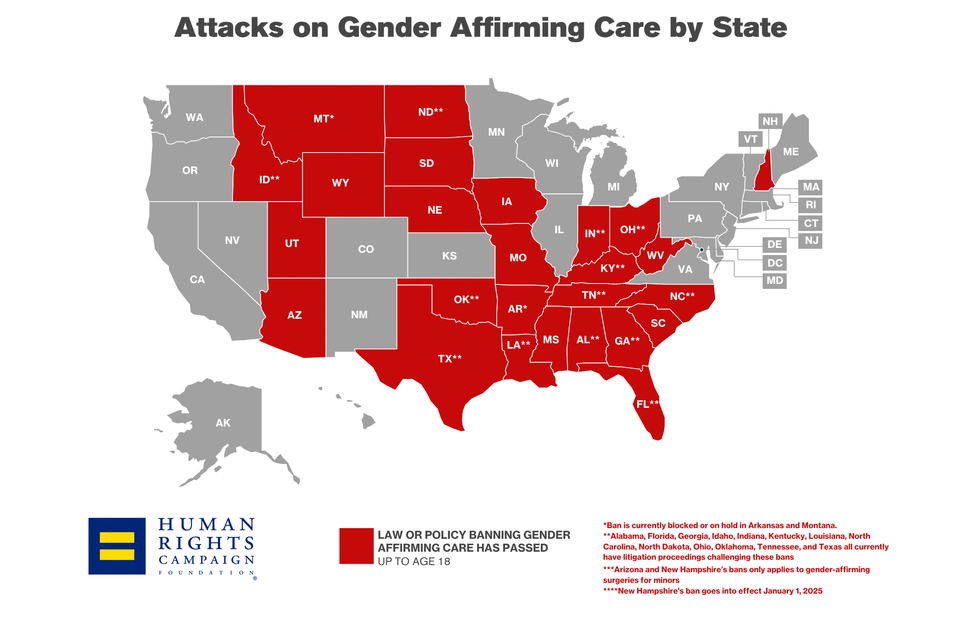
There are approximately 300,000 people aged 13-17 and 1.3 million adults in the United States who identify as transgender, according to the Williams Institute at the University of California, Los Angeles School of Law, which notes that more than two dozen states have passed laws similar to S.B. 1.
Transgender activist Alejandra Caraballo, a civil rights attorney and instructor at the Harvard Law School Cyberlaw Clinic, said on the social media site Bluesky, "I can't begin to tell you just how incredibly fucked trans people are here."
"This will pour gasoline on the Trump administration's attacks on trans people and they will get even harsher and more cruel," Caraballo added. "The Supreme Court is green-lighting the eradication of trans people from society."
Caraballo and others including the ACLU and trans rights activist Erin Reed noted that the decision is somewhat limited because it leaves previous rulings against anti-trans laws intact. However, Caraballo warned that "while the decision didn't explicitly say heightened scrutiny doesn't apply to all contexts involving trans people, it held that it was on the basis of medical diagnosis."
Therefore, "the government could just do whatever it wants to trans people based on gender dysphoria," she wrote. "For instance, they could strip everyone with gender dysphoria of security clearance in the government. Declare everyone with gender dysphoria a national security threat and purge them from the government entirely. The trans military ban will be upheld under this."
"Most importantly, states can now just ban gender-affirming care for everyone, including adults," Caraballo added. "We'll likely see that coming soon in addition to federal government efforts to eliminate access for all trans people."
"This will pour gasoline on the Trump administration's attacks on trans people."
U.S. President Donald Trump has renewed and expanded his first-term attacks on transgender people, including by issuing a day one executive order declaring that only two genders exist, another order advocating action against educators who "facilitate the social transition of a minor," and yet another directing the Department of Education—which he has vowed to abolish—to notify school districts that allowing transgender girls and women to compete on female teams violates Title IX, the federal law prohibiting discrimination on the basis of sex in education.
Trump also appointed a transphobe to head the Justice Department's civil rights office, ordered the removal transgender people and issues from federal agency websites, and reinstated his first-term ban on new military enlistment by trans people, who—according to the White House—cannot lead an "honorable, truthful, and disciplined lifestyle."
"Every day I speak with families of transgender youth who are worried about the future," TYEP patient navigator Van Bailey said after Wednesday's ruling. "Many are panicking, unsure of where or when they'll get the medicine that their child needs to continue leading a healthy, happy life. These laws are cruelly thrusting families into impossible choices, and it is deeply unfair."
As we wait for legal guidance from our partners at @aclu.org and @lambdalegal.org, we want to share what we already know:The Supreme Court’s decision in U.S. v. Skrmetti is devastating, and we will not stop fighting.
[image or embed]
— Christopher Street Project (@christopherstreet.bsky.social) June 18, 2025 at 8:34 AM
ACLU LGBTQ & HIV Project co-director Chase Strangio—the first openly trans attorney to argue before the Supreme Court—said that "today's ruling is a devastating loss for transgender people, our families, and everyone who cares about the Constitution."
However, Strangio also noted that "the court left undisturbed Supreme Court and lower court precedent that other examples of discrimination against transgender people are unlawful."
"We are as determined as ever to fight for the dignity and equality of every transgender person and we will continue to do so with defiant strength, a restless resolve, and a lasting commitment to our families, our communities, and the freedom we all deserve," he added.
Jennifer Levi, senior director of transgender and queer rights at GLAD Law, said in a statement that "the court today failed to do its job."
"When the political system breaks down and legislatures bow to popular hostility, the judiciary must be the Constitution's backbone," Levi added. "Instead, it chose to look away, abandoning both vulnerable children and the parents who love them. No parent should be forced to watch their child suffer while proven medical care sits beyond their reach because of politics."
"When the political system breaks down and legislatures bow to popular hostility, the judiciary must be the Constitution's backbone."
National Center for LGBTQ Rights legal director Shannon Minter asserted: "The court's ruling abandons transgender youth and their families to political attacks. It ignored clear discrimination and disregarded its own legal precedent by letting lawmakers target young people for being transgender."
"Healthcare decisions belong with families, not politicians," Minter added. "This decision will cause real harm."
Sasha Buchert, counsel and director of the Nonbinary and Transgender Rights Project at Lambda Legal, called the ruling "heartbreaking" and contended it will make it "more difficult for transgender youth to escape the danger and trauma of being denied their ability to live and thrive."
"But we will continue to fight fiercely to protect them," Buchert added. "Make no mistake, gender-affirming care is often lifesaving care, and all major medical associations have determined it to be safe, appropriate, and effective. This is a sad day, and the implications will reverberate for years and across the country, but it does not shake our resolve to continue fighting."
The Supreme Court’s Skrmetti decision is a pivotal moment in our fight for LGBTQ+ equality. Here are three ways to TAKE ACTION:
[image or embed]
— Human Rights Campaign (@hrc.org) June 18, 2025 at 9:26 AM
Human Rights Campaign (HRC), Lambda Legal, and other advocacy organizations are planning to hold a "decision day" rally at noon Wednesday outside the Supreme Court in Washington, D.C.
HRC lamented that Skrmetti "sets a dangerous precedent and threatens access to care for trans people across the country."
"We are showing up loud and clear: We will not go back," HRC said. "We will not be erased."
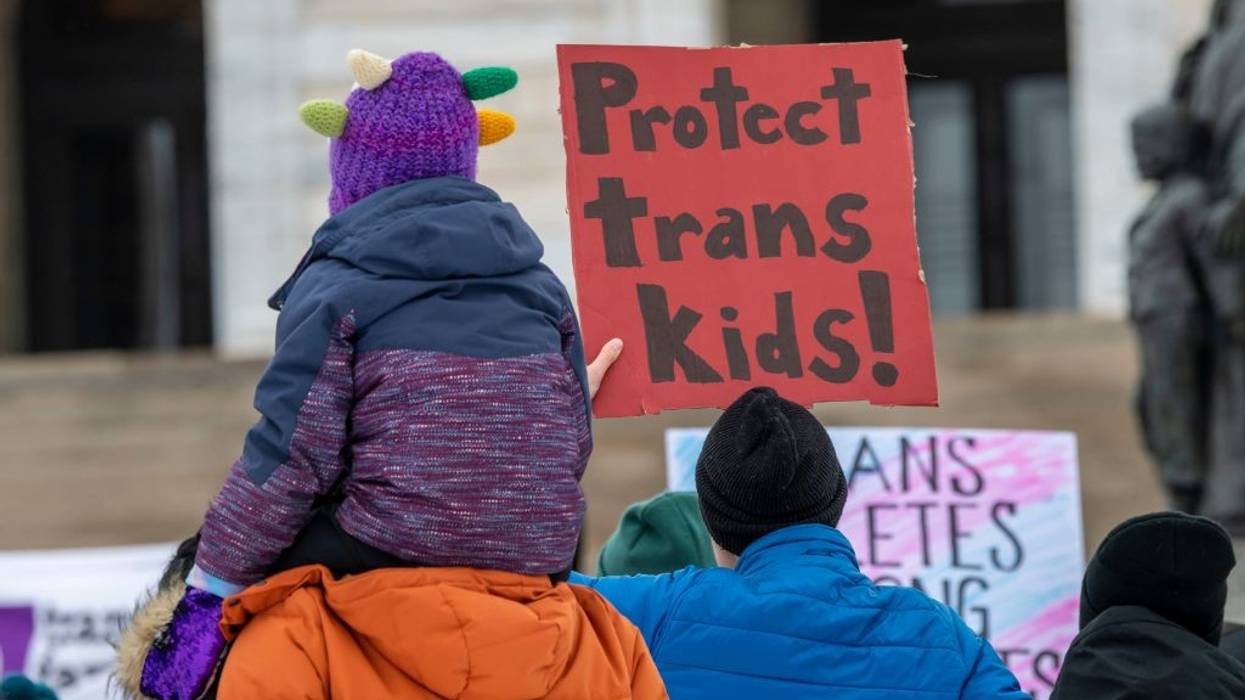
"It's crucial to recognize that for trans youth and their families, this isn't about politics—it's about the fundamental freedom to access vital, lifesaving healthcare," said one advocate.
The U.S. Supreme Court on Monday agreed to hear a challenge to Tennessee's March 2023 ban on gender-affirming healthcare for transgender youth—a development that LGBTQ+ rights advocates sought but which has them worried given the six right-wing justices.
The Biden administration along with the national and state ACLU, Lambda Legal, and the law firm Akin Gump Strauss Hauer & Feld LLP asked the justices to review the Tennessee ban after a September decision by the 6th Circuit Court of Appeals allowed it to stay in effect.
The justices granted certiorari in seven cases for the term beginning this fall, including United States v. Skrmetti, the administration's challenge to the Tennessee ban. Law Dork's Chris Geidner noted that they rejected local challenges to that law and a similar one in Kentucky, "which also raised a parental rights due process claim."
"These bans represent a dangerous and discriminatory affront to the well-being of transgender youth across the country."
Still, rights advocates cautiously welcomed the news and called on the justices to apply precedents including the Supreme Court's 2020 Bostock v. Clayton County ruling that it is illegal for employers to discriminate against a worker because of transgender status and sexual orientation. That majority opinion was written by right-wing Justice Neil Gorsuch, who was joined by Chief Justice John Roberts and the four left-leaning members of the court at that time. Now, there are just three liberal justices.
"This court has historically rejected efforts to uphold discriminatory laws, and without similar action here, these punitive, categorical bans on the provision of gender-affirming care will continue to wreak havoc on the lives of transgender youth and their families," Lambda Legal senior counsel Tara Borelli said Monday. "We are grateful that transgender youth and their families will have their day in the highest court, and we will not stop fighting to ensure access to this lifesaving, medically necessary care."
While 15 states plus Washington, D.C. have enacted shield laws protecting access to gender-affirming healthcare, over two dozen states have banned some or all of such care for trans youth, according to the Movement Advancement Project. Medical professionals and rights advocates across the country have warned that these bans endanger the lives of trans people.
"The future of countless transgender youth in this and future generations rests on this court adhering to the facts, the Constitution, and its own modern precedent," said Chase Strangio, deputy director for Transgender Justice at the ACLU's LGBTQ & HIV Project, in a statement after the justices agreed to take the case.
"These bans represent a dangerous and discriminatory affront to the well-being of transgender youth across the country and their constitutional right to equal protection under the law," Strangio continued. "They are the result of an openly political effort to wage war on a marginalized group and our most fundamental freedoms."
Lucas Cameron-Vaughn, staff attorney at the ACLU of Tennessee, stressed that "Tennesseans deserve the freedom to live their lives as their authentic selves without government interference, yet every day this law remains in place, it inflicts further pain and injustice on trans youth and their families."
"As politicians continue to fuel divisions for their own political gain, it's crucial to recognize that for trans youth and their families, this isn't about politics—it's about the fundamental freedom to access vital, lifesaving healthcare," the attorney added.
For now, the Tennessee ban remains in effect—and since its passage last year, the Campaign for Southern Equality has supported families of transgender youth through the Southern Trans Youth Emergency Project.
"This is a high-stakes moment for transgender youth and their families, and we're glad that trans youth and their families will have their day in court to make the case that the bans are unconstitutional, interfere with private medical decisions, and severely harm families," Allison Scott, the campaign's director of impact and innovation, said Monday. "Everyone who needs gender-affirming care should be able to access it affordably, and close to home, and our team will never stop working to make that happen."
"We deserve to be able to express ourselves safely at school and we deserve to see ourselves in media at school, especially in books," said an eighth grade student who joined one of the lawsuits.
A U.S. federal judge on Friday blocked key parts of what critics called a "sweeping Iowa law that seeks to silence LGBTQ+ students, erase any recognition of LGBTQ+ people from public schools, and bans books with sexual or LGBTQ+ content."
Judge Stephen Locher determined that none of the plaintiffs in a pair of cases filed against Senate File 496 has standing to challenge the provision requiring school districts to notify parents if a child seeks an accommodation relating to gender identity, including the use of pronouns that does not match registration records.
However, Locher issued a preliminary injunction blocking enforcement of a ban on any book containing "descriptions or visual depictions of a sex act"—except for the Bible—in all public school classrooms and libraries, and a prohibition on "any program, curriculum, test, survey, questionnaire, promotion, or instruction relating to gender identity or sexual orientation" in kindergarten through sixth grade.
"This decision sends a strong message to the state that efforts to ban books based on LGBTQ+ content, or target speech that sends a message of inclusion to Iowa LGBTQ+ students cannot stand."
The law—part of a national wave of GOP-led book bans and other policies targeting LGBTQ+ youth—was passed by the Iowa Legislature and signed by Republican Gov. Kim Reynolds this spring. The Associated Press noted Friday that it "was set to take effect January 1 but already had resulted in the removal of hundreds of books from Iowa schools."
The two lawsuits against S.F. 496 were filed last month. The Iowa State Education Association, Penguin Random House, and some popular authors partnered for one of the cases. The ACLU of Iowa, Lambda Legal, and the law firm Jenner & Block also sued on behalf of Iowa Safe Schools and several students and their families—including Berry Stevens, an eighth grader from West Des Moines.
"I've known since I was in third grade that I am a part of the LGBTQIA+ community," said Stevens—whose mother, Rev. Brigit Stevens, is also a plaintiff in the case—when the suit was launched in November. "In sixth grade, I first changed my name and started using they/them pronouns because I knew I wasn't a boy or a girl. I'm just a person. This is a concept that a lot of adults have trouble understanding."
The younger Stevens explained that "I am participating in this lawsuit because this new law hurts all kinds of kids and it hurts many of my friends. We deserve to be able to express ourselves safely at school and we deserve to see ourselves in media at school, especially in books. This law is trying to shut us down and make us be quiet and not openly discuss our lives, who we like, or who we truly are."
"I know what it's like to be bullied and harassed because of being in the LGBTQIA+ community. I wish my school would do something to actually prevent bullying before it happens, not just tell kids it's wrong after the fact," they added. "But because of this law, I feel like the school is too worried about getting in trouble with the state if they try to speak out. This law gets in the way of educators trying to make a safer, more inclusive space for all students."
Another plaintiff, high school senior Puck Carlson of Iowa City, said that "like it or not, sex and sexuality are parts of the teenage experience. Refusing to provide adolescents with information about it means they'll seek out their own information—from the Internet, or from others, in ways that are significantly less safe than books reviewed by teachers or librarians."
"Removing books that discuss queer topics or people from our schools tells our queer students that they do not belong there, that their existence is shameful. I am not shameful," they added. "School is one of the main places that children read, and being able to access literature in which you can see yourself can be instrumental to a student's discovery of themselves—it certainly was to me."
In response to the judge blocking Iowa's book ban and "don't say LGBTQ" provisions, Lambda Legal senior attorney Nathan Maxwell said that "we are glad our clients, Iowa families, and students will be able to continue the school year free from the harms caused by these parts of this unconstitutional law."
"This decision sends a strong message to the state that efforts to ban books based on LGBTQ+ content, or target speech that sends a message of inclusion to Iowa LGBTQ+ students cannot stand," Maxwell added. "Lambda Legal and the ACLU of Iowa will continue our fight to ensure Iowa schools are safe for LGBTQ+ students."
"Absolutely no reason for the Biden administration to do this," said Rep. Alexandria Ocasio-Cortez. "It is indefensible and embarrassing."
Rep. Alexandria Ocasio-Cortez on Thursday was among the progressives denouncing the Biden administration's newly proposed rules for transgender student athletes, which critics said would open the door to discrimination at all age levels despite the U.S. Department of Education's statement that "categorically" banning trans athletes from teams that align with their gender identity would be illegal under the rule.
Elementary age students would generally be permitted to play on sports teams according to their gender identity rather than their sex assigned at birth, but universities and K-12 schools would be given "flexibility to develop team eligibility criteria that serve important educational objectives, such as ensuring fairness in competition or preventing sports-related injury," according to the Education Department.
"Considerations may be different for competitive high school and college teams," which would be given discretion to limit participation of transgender students, the department said.
Ocasio-Cortez (D-N.Y.) called the proposed policy, a reversal of an executive order President Joe Biden signed on his first day in office in 2021, "indefensible and embarrassing," and urged the administration to promptly "walk this back."
Biden's earlier order said that under the U.S. Constitution children "should be able to learn without worrying about whether they will be denied access to the restroom, the locker room, or school sports," noting that Title IX of the Education Amendments of 1972 prohibits discrimination on the basis of gender identity or sexual orientation at schools that receive federal funding.
"To put it mildly, this is extraordinarily disappointing and a total reversal from a position the Biden administration has taken since Day One," said Slate journalist Mark Joseph Stern.
Some advocacy groups applauded the administration for prohibiting blanket bans on transgender athletes, with GLBTQ Legal Advocates and Defenders (GLAD) saying the rule "affirms the importance of giving transgender students the chance to play sports."
"The proposed rule prohibits the kind of categorical bans adopted in too many states that are hurting transgender students and that send a dangerous message to all students," said Jennifer Levi, senior director of transgender and queer rights at GLAD.
But Lambda Legal, which represented a transgender girl who the U.S. Supreme Court ruled Thursday should be permitted to play on her school's girls' cross country and track team for the time being, raised concerns that the so-called "flexibility" given to schools under the law would not "properly eliminate the discrimination that transgender students experience due to the pervasive bias and ignorance about who they are."
"These students must have full and equal chances to participate because participation in athletics provides many long-term benefits for young people, including important health benefits, and chances to develop leadership skills, discipline, and self-confidence," said Sasha Buchert, senior attorney at Lambda Legal. "Given the importance of the opportunity to participate in athletics to students' educational experience, we look forward to submitting comments and working with the administration to further remove those remaining bigotry-based barriers to full and equal participation by transgender youth."
Buchert told The New York Times that anti-transgender lawmakers "would absolutely seek to apply this across the board... whether we are talking about a 6-year-old playing soccer or someone playing varsity volleyball"—a fear that Florida Education Commissioner Manny Diaz confirmed as he told the newspaper, "This won't fly in Florida. We will never allow boys to play in girls' sports."
Emma Grasso Levine, Title IX policy and program manager for the Know Your IX project at Advocates for Youth, called on the Biden administration to ensure that, following a 30-day public comment period, "the final version of this Title IX regulation goes farther to eliminate discriminatory practices in schools."
"In alignment with Title IX's promise, it is the responsibility of the Biden administration to eliminate all transphobic, discriminatory barriers that are currently taking root in school policies," said Levine.
Alejandra Caraballo of the Harvard Law Cyberlaw Clinic said the proposed policy "is worse than [the Biden administration] doing nothing" about transgender sports bans.
The policy was proposed as at least 20 states have passed laws barring transgender students from playing on sports teams according to their gender identity, and right-wing lawmakers across the nation are seeking to bar transgender youths and adults from accessing gender-affirming healthcare, which medical experts say significantly reduces depression and suicidal ideation in transgender people.
"We will not allow this dangerous law to stand," the ACLU and Lambda Legal vowed after Republican Gov. Bill Lee signed the gender-affirming healthcare ban into law.
A trio of civil rights groups on Thursday said they will sue after Republican Tennessee Gov. Bill Lee ignored pleas from human rights and health experts and signed a bill banning gender-affirming healthcare for transgender youth—a move that came on the same day the governor also approved legislation criminalizing public drag shows.
Under S.B. 1—introduced by state Sen. Jack Johnson (R-23), the same lawmaker behind the public drag ban—transgender minors undergoing hormone therapy or taking prescribed puberty blockers as of July 1, 2023 will be cut off from such care in Tennessee after March 31, 2024. Trans youth not receiving gender-affirming care by July 1 will be barred from doing so in the state.
Tennessee joins Alabama, Arkansas, Arizona, South Dakota, Tennessee, and Utah in outlawing or restricting gender-affirming care for trans youth—and, in the case of Alabama, anyone under age 19. Federal judges have blocked Alabama and Arkansas from implementing their bans. Meanwhile this year, at least 24 states have introduced legislation to prohibit or restrict such care.
Lambda Legal—which along with the ACLU and ACLU of Tennessee announced its intent to sue—accused Lee and Republican lawmakers of "taking away the freedom of families of transgender youth to seek critical healthcare" and "putting the government in charge of making vital decisions traditionally reserved to parents in Tennessee."
"They've chosen fearmongering, misrepresentations, intimidation, and extremist politics over the rights of families and the lives of transgender youth in Tennessee."
"We will not allow this dangerous law to stand," the groups said in a joint statement. "Certain politicians and Gov. Lee have made no secret of their intent to discriminate against youth who are transgender or their willful ignorance about the lifesaving healthcare they seek to ban."
"Instead, they've chosen fearmongering, misrepresentations, intimidation, and extremist politics over the rights of families and the lives of transgender youth in Tennessee," the groups added. "We are dedicated to overturning this unconstitutional law and are confident the state will find itself completely incapable of defending it in court. We want transgender youth to know they are not alone and this fight is not over."
Ivy Hill, director of gender justice for the Campaign for Southern Equality, said in a statement after the bill passed that "my heart is breaking for transgender youth all across the country and throughout the South."
"We've known for years that it's never been easy to access gender-affirming care in states like Tennessee and the passage of this bill will only make it harder," they added. "But the trans and queer community across the South will do what we've always done: come together, support each other, and chart new systems that help people live authentic, thriving lives where they know they are loved and supported."
Dr. Allison Stiles, a Memphis physician, said that "this bill, I feel, was born out of fearmongering—out of false rhetoric that we are doing sex-change operations on our children."
"The hate has grown, and we now have a bill that could get parents arrested for taking their gender-dysphoric child to the physician, and their physicians for taking care of them," she asserted.
"There are at least four human beings that I have touched with my hands who are this side of the grave because of the gender-affirming care."
"Just to throw in a little science here... there are four independent aspects to our sexuality," Stiles added. "Our genetics—which could be XX, XO, XY, XXY, XYY—there is our outward appearance, our gender identity, and our sexual preference. The XX and XY fetus are identical, actually, until six weeks of gestation."
Proponents of gender-affirming care noted it saves lives.
"There are at least four human beings that I have touched with my hands who are this side of the grave because of the gender-affirming care," Rev. Dawn Bennett of the Table Nashville, a faith group that centers the LGBTQ+ community, recently asserted.
According to the ACLU, Republican lawmakers in more than 20 states are trying to ban gender-affirming care for trans youth—and in some cases, even adults.
Lee also signed a bill on Thursday making Tennessee the first state to criminalize public drag shows. The governor signed the measure amid allegations of hypocrisy following the revelation that he dressed in drag at least once while in high school in the 1970s.
"Drag is not a threat to anyone. It makes no sense to be criminalizing or vilifying drag in 2023," Lawrence La Fountain-Stokes, a professor of culture and gender studies at the University of Michigan who has performed in drag, told the Associated Press.
"It is a space where people explore their identities," La Fountain-Stokes continued. "But it is also a place where people simply make a living. Drag is a job. Drag is a legitimate artistic expression that brings people together, that entertains, that allows certain individuals to explore who they are and allows all of us to have a very nice time. So it makes literally no sense for legislators, for people in government, to try to ban drag."
Other GOP-run states—including Idaho, Kentucky, Montana, North Dakota, and Oklahoma—are considering similar drag bans.
"Enacting an ideological agenda driven by ignorance and prejudice, instead of science and compassion, is not the way forward."
Civil rights advocates on Thursday sharpened their focus on the Republican-controlled Oklahoma Legislature as lawmakers prepare to convene on February 6, beginning a session during which they're set to consider no fewer than 15 proposals attacking transgender people's right to obtain healthcare.
The state is at the forefront of a nationwide assault on transgender rights, with lawmakers planning to bring up for debate bills including the so-called Save Adolescents from Experimentation Act (S.B. 878), which would prohibit gender-affirming healthcare for adolescents; the Millstone Act of 2023 (S.B. 129), which would expand that proposed ban to transgender people up to age 26; and S.B. 250, which would threaten providers who accept Medicaid with a loss of reimbursement funds if they provide gender-affirming care.
According to the ACLU, Oklahoma currently has the most proposals to restrict healthcare for transgender people. Texas Republicans have put forward 10, and the Indiana Legislature has advanced nine.
The ACLU, Lambda Legal, and the ACLU of Oklahoma released a joint statement Thursday promising "swift legal action" if any of the legislation is passed.
"Access to healthcare is a human right, and our Constitution promises every person the right to be free from unwarranted governmental intrusion into their lives," said Omar Gonzalez-Pagan, counsel and healthcare strategist at Lambda Legal. "Targeting some of our most vulnerable youth—transgender young people who need love, support, and access to the medical care they need—for discrimination is wrong and dangerous. Enacting an ideological agenda driven by ignorance and prejudice, instead of science and compassion, is not the way forward."
"We will not hesitate to defend transgender Oklahomans' rights to equality, liberty, and nondiscriminatory access to the healthcare they need," Gonzalez-Pagan added.
As Common Dreams reported last month, transgender rights advocates were alarmed when the Millstone Act was introduced, marking the "startling new evolution" of anti-LGBTQ+ legislation as it waged an attack on the rights of transgender adults as well as adolescents—against long-standing guidance from the American Medical Association, the American Psychiatric Association, and the American Academy of Pediatrics.
"Gender-affirming care is lifesaving," said Harper Seldin, staff attorney at the ACLU's LGBTQ and HIV Project. "Every major medical association opposes bans on gender-affirming care, and these bills will push medical providers out of Oklahoma, which is already facing a shortage of doctors. These proposed bans do not protect anyone in Oklahoma... Oklahoma legislators have no business telling parents that they cannot seek lifesaving care for their transgender children, or stopping adults from accessing safe and effective care for themselves, just because they are transgender."
Last week Utah became the latest state to bar transgender adolescents from accessing gender-affirming healthcare. Arizona, Alabama, and Arkansas have also passed such bans into law, but a federal judge temporarily blocked Arkansas' law in 2021.