

SUBSCRIBE TO OUR FREE NEWSLETTER
Daily news & progressive opinion—funded by the people, not the corporations—delivered straight to your inbox.
5
#000000
#FFFFFF
To donate by check, phone, or other method, see our More Ways to Give page.
Daily news & progressive opinion—funded by the people, not the corporations—delivered straight to your inbox.
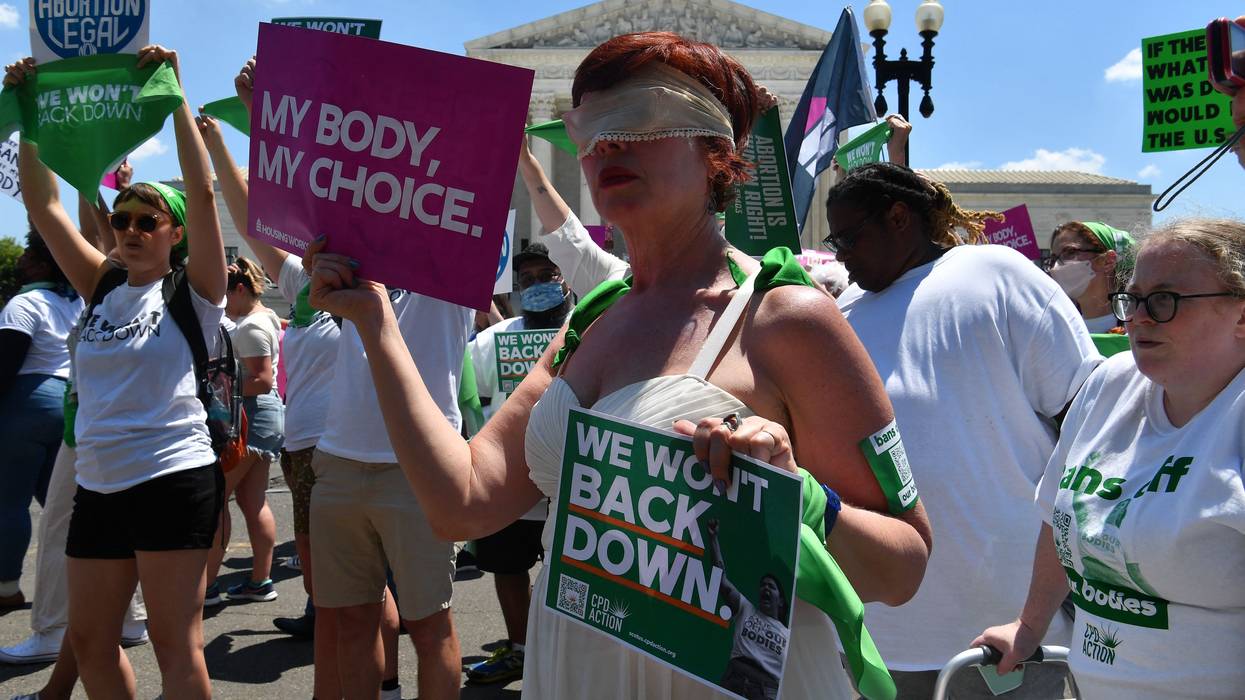
We must advocate for a society where women's autonomy, choices, and identities are respected and celebrated in all their diverse forms, irrespective of their maternal status.
I have yet to be a mother, but I froze my eggs a few years ago, and am thankful to have that choice to have a family of my own one day—that ability to have a choice was taken away from a woman in Georgia who was declared brain dead in February, yet kept on life support and forced to carry her fetus until she gave birth this June. This harrowing situation unfolded because hospital officials feared they'd violate Georgia's law banning most abortions after fetal cardiac activity.
A few years ago, after the overturning of Roe v. Wade, some anti-abortion advocates were taking issue with IVF procedures, citing that destroying unused embryos is equivalent to taking a life.
In May 2025, a car bomb exploded in the parking lot at a fertility clinic in Palm Springs. Upon hearing the news, I immediately felt concern for the individuals who kept their eggs and embryos at this clinic. While no individuals or reproductive materials were harmed, the fear was palpable for me, having stored my own eggs in a Massachusetts clinic. This incident was deemed an act of terrorism, carried out by the perpetrator because of his anti-natalist views—his belief that it is wrong to have children.
What all these stories have in common is the insidious attempt to control women—control our reproductive health, our bodies, whether we live or die. They are only the most recent examples of how women's choices are being systematically stripped away.
This societal obsession with motherhood as the pinnacle of female existence not only devalues women who choose not to have children or are unable to, but it also places undue pressure on those who do.
Even the way those in power respond shows a disturbing and deeply ingrained narrow view of women and their choices. In response to the Palm Springs incident, Attorney General Pam Bondi stated in a post on X, "Let me be clear: The Trump administration understands that women and mothers are the heartbeat of America. Violence against a fertility clinic is unforgivable." That sentence, though seemingly innocuous, reveals a troubling worldview. It implies that women are primarily valued as mothers, that our worth as women is intimately connected to our reproductive lives, and our health choices are directly tied to our ability to fulfill this singular role.
Yet, there are myriad valid reasons why a woman may never have children: health issues, infertility, personal choice, not finding a suitable partner, or socioeconomic instability, to name a few. Despite this, the current Trump administration and the conservative faction in our country seem fixated on justifying womanhood solely through the lens of motherhood. This reductive stance is evidenced by Vice President JD Vance's dismissive "childless cat lady" comment, where he questioned the stake of childless individuals in the nation's future, and further underscored by the Trump administration's proposals for 'baby bonuses' and tax-deferred investment accounts designed to incentivize childbirth.
Consider the ripple effects of this narrow perspective.
The overturning of Roe v. Wade has paved the way for states to make abortion illegal or incredibly restrictive, fundamentally stripping women of their agency and bodily autonomy. Once pregnant, in 41 states, a woman's body is now no longer entirely her own, but rather a vessel subject to state control.
The very act of bombing a fertility clinic, while deplorable, was deemed so primarily because a fertility clinic is associated with the creation of babies. The outrage stemmed from the perceived threat to potential motherhood, not necessarily the broader violation of individual liberty or the act of terrorism itself.
This singular focus extends to how women are perceived even in death. The Georgia case forces us to confront a horrifying reality: Even when a woman is brain dead, her bodily autonomy can be overridden in favor of a fetus. Her existence, in this context, is reduced to her reproductive capacity, even in her final moments. This legal and ethical quagmire highlights how deeply ingrained the concept of women as mere incubators has become in some interpretations of the law.
Individuals should be valued for more than their potential or actual role as mothers. I do not disagree that motherhood can be a profoundly important and vital aspect of life, and for many, it is. As someone who still hopes to be a mother, it is for me. Yet, I do not know the future, and there is a real possibility that I may never have children. Therefore, to define a woman's entire identity and worth by her reproductive capacity is a dangerous reduction, not to mention emotionally charged for individuals such as myself. Like any human, women are multifaceted beings with diverse aspirations, careers, contributions to society, and personal lives that extend far beyond the biological function of childbearing.
This societal obsession with motherhood as the pinnacle of female existence not only devalues women who choose not to have children or are unable to, but it also places undue pressure on those who do. It limits our collective imagination of what a woman can be and achieve. We must challenge this pervasive narrative and advocate for a society where women's autonomy, choices, and identities are respected and celebrated in all their diverse forms, irrespective of their maternal status. It is time to assert that a woman's life, and her death, should be her own.
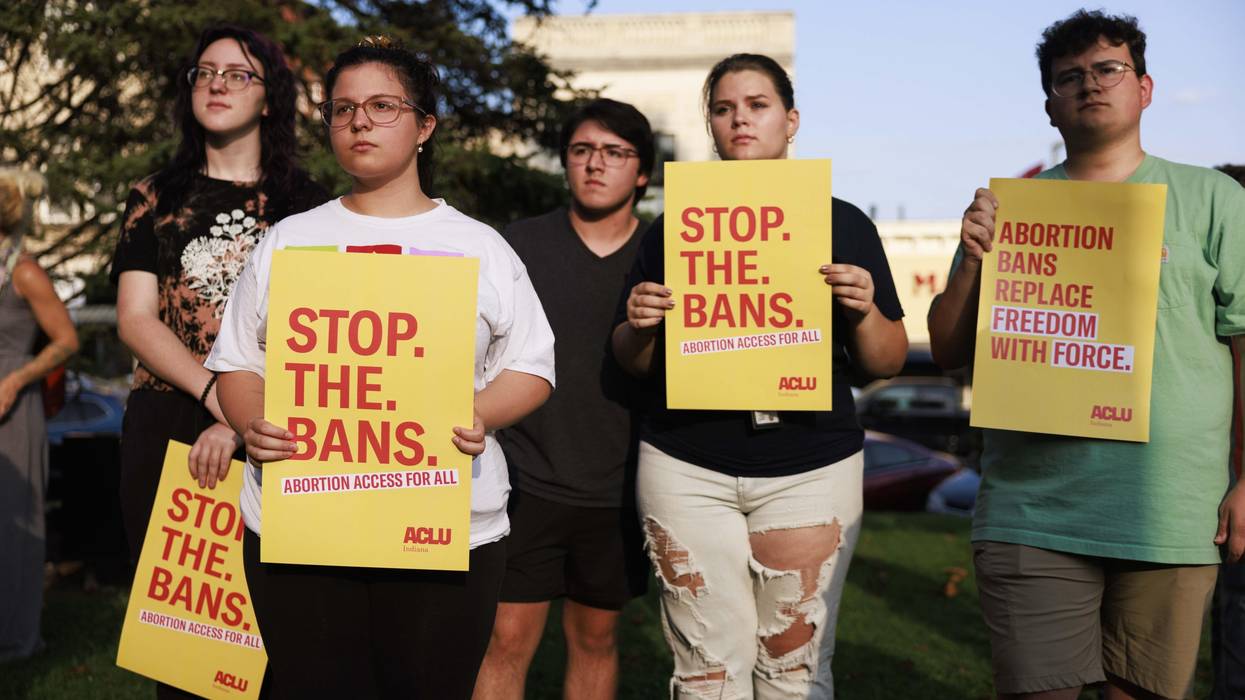
What far-right Republicans don’t seem to realize is that prohibition does not work.
Republican lawmakers across America are increasingly introducing bills that prohibit rights that many Americans assumed were enshrined in law. The laws introduced by the Republicans have a domino effect.
It started with the 2022 Dobbs v. Jackson Women's Health Organization decision, in which the Republican-dominated U.S. Supreme Court overturned Roe v. Wade, a landmark 1973 decision in which the court ruled that the Constitution of the United States generally protected a right to have an abortion. The decision struck down many state abortion laws. Republican legislators reacted by making prohibitions to abortion in their states. Fourteen Republican states invoked six-week term limits (most women do not know they are pregnant at six weeks) and often ignored provisions for incest and rape.
Thousands of American women, Republicans and Democrats, had their previous rights curtailed. There were conservatively 620,327 abortions in America in 2020, according to the CDC.
From climate change to the coronavirus pandemic, far-right Republicans consistently refuse to accept basic science and pan intellectualism as elitist or made-up.
Republican then extrapolated the Dobbs decision to all embryos, including those used in IVF (in vitro fertilization).
On February 16, Alabama's Republican dominated State Court ruled that frozen embryos have the same rights as children, and people can be held liable for destroying them ( Le Page/ Burdick-Aysenne v. The Center for Reproductive Medicine). While it did not completely ban IVF, it created a legal headache for clinics, and some pulled their services. Many Republicans nationwide, including leading Republican presidential candidate Donald Trump, quickly rushed to declare that this was not official GOP policy. Many falsely claimed this was not related to the Dobbs decision; however, the Alabama court repeatedly cited Dobbs in its ruling.
This coincided with their attacks on LGBTQ+ people.
On March 8, 2022, Republicans in Florida passed the Parental Rights in Education Act, commonly referred to as the "Don't Say Gay" law. The law contains sections which prohibit public schools from having "classroom discussion" or giving "classroom instruction" about sexual orientation or gender identity.
Originally it was to apply to children up to third grade, but Republicans increased this to grade 12 in a later amendment ( Florida House Bill 1069). Using deliberately vague and broad provisions it has the potential to undercut the equal dignity of LGBTQ+ people and have the effect of stigmatizing and silencing LGBTQ+ teachers and students.
It also runs afoul of the First Amendment, according to the American Bar Association. Twenty other Republican states introduced versions of the law.
This led to books being banned in Florida schools.
Books included the Harry Potter series, I Know Why the Caged Bird Sings, The Kite Runner, Anne Frank's Diary, Go Ask Alice, The Color Purple, and even the children's poetry collection A Light in the Attic. While these books may cause offence to some people, the schools that banned them cannot prove any identifiable harm. Schools and libraries in Mississippi, Arkansas, Ohio, and Tennessee started culling books. Several parents claim the books contain subjects such as incest, rape, and extreme violence—so does the Bible, but they have no plans to ban that.
The books banned are not just related to culture, but also to science.
From climate change to the coronavirus pandemic, far-right Republicans consistently refuse to accept basic science and pan intellectualism as elitist or made-up. Their attacks on vaccinations led to the first increase in measles outbreaks in decades. They consistently denigrate scientists, defund scientific research by organizations such as NASA, and edit bits they don't like out of textbooks and publish their own versions.
For example, former Arkansas Gov. Mike Huckabee published an educational magazine aimed at children titled "The Kids Guide to the Truth About Climate Change," which some education advocates denounced as ideological propaganda. The magazine asserts that climate change is occurring as part of the planet's natural cycle and ignores the scientific evidence that shows that temperatures warmed 10 times faster in the last century than they did in the previous 5,000 years—a trend change that corresponds with industrialization and fossil fuel use.
Books based on extensive scientific research on puberty, such as Where Did I Come From? and What's Happening to My Body? were also banned.
What far-right Republicans don't seem to realize is that prohibition does not work. Banning abortion doesn't stop people from getting them. It just stops women from getting safe abortions. LGBTQ+ people are not going away—they make up over 7% of the U.S. population. Banning a controversial book doesn't make its subject disappear. Banning books only makes them more sought after. For children about to face puberty, it is better to get information from a book rather than from other children, or online pornography.
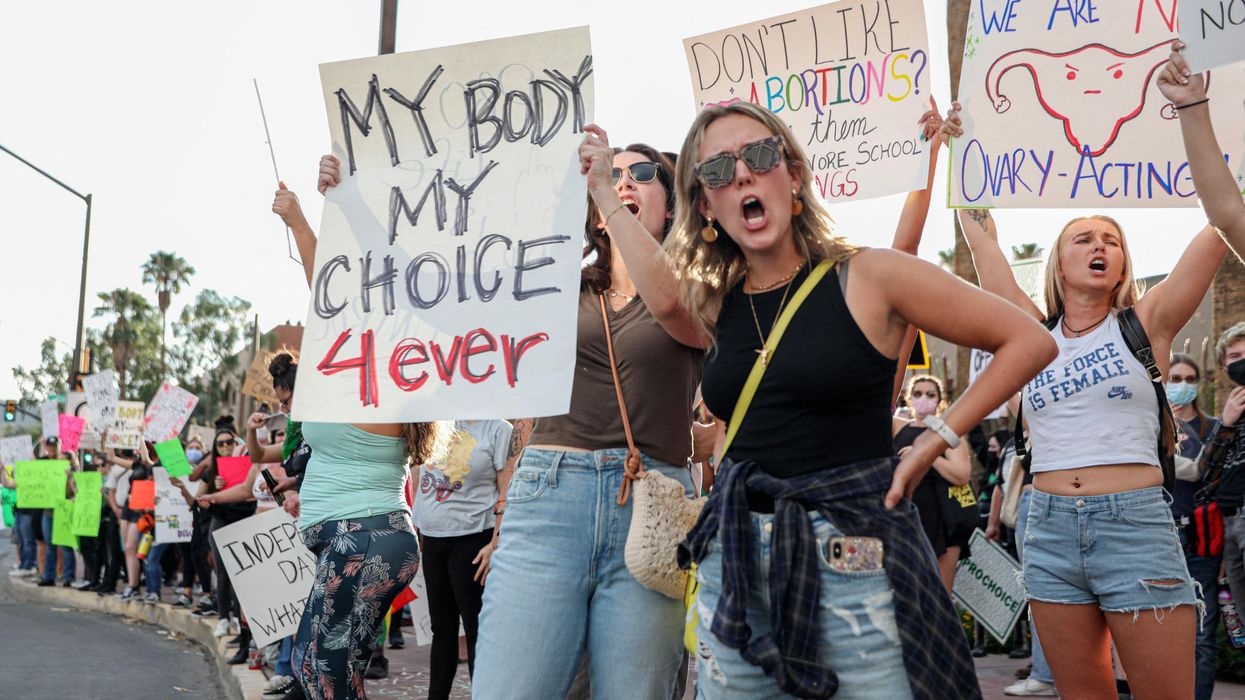
Women—both those who want abortion to be legal and those who want to become pregnant through in-vitro fertilization—are furious.
It’s 2024, but it feels like we’re back in 1991 this Women’s History Month.
Back then, President George H.W. Bush was following in the footsteps of his predecessor Ronald Reagan by continuing to appoint conservative judges to the federal bench, and Roe v. Wade was expected to fall.
Radical anti-abortion activism had gained prominence and strength. Popular media was awash with stories pushing the myth that women were dissatisfied and unhappy—and feminist ideals of women’s empowerment were to blame.
Then a blockbuster book hit the streets: Backlash by Susan Faludi.
There’s a new backlash, all right—but this time it’s not against women’s progress, but against the loss of women’s rights and their own personhood.
It came out just as the legal notion of “fetal personhood” was taking shape. Among other things, the book captured the horror of giving a fetus, even a hypothetical potential fetus, precedence over an actual living person. Backlash posited that any so-called women’s unhappiness was not the fault of feminism, but the fact that the struggle for equality was far from finished.
Faludi anticipated by over 20 years the deadly choices that women and their doctors are now being forced to make in a post-Roe world.
She was distressed at the prospect of backward momentum—of a world that treated women as vessels for childbearing above all. “What unites women is the blatant, ugly evidence of oppression,” she said at the time, “that will come with the inevitable demise of Roe vs. Wade.”
Faludi was right. There’s a new backlash, all right—but this time it’s not against women’s progress, but against the loss of women’s rights and their own personhood. Since Roe was overturned, at least three states have blocked new abortion bans, and 16 more have strengthened existing pro-statutes with new protections.
Safeguarding women’s autonomy was also front and center in last November’s midterm elections.
Ohio was the epicenter. Advocates put forth a bold ballot question on whether to amend the state constitution affirming the right of individuals to make their own reproductive health decisions—including abortion. The outcome? No contest. Voters opted to enshrine abortion rights by a margin of 57-43%.
Abortion was also on the ballot indirectly in Virginia. Anti-choice governor Glen Youngkin was pushing voters to flip the state Senate to Republicans while keeping the Republican majority in the House of Delegates.
That would have allowed the governor and his lackeys in the legislature to pass a 15-week abortion ban. That grand plan went down in flames—pro-choicers took full control of both houses of the General Assembly after two years of divided power.
The latest trend in the reproduction wars comes from Alabama. Another attack on women’s rights to self determination—but this time from the other end of the argument.
In a first-of-its-kind ruling, Alabama’s Supreme Court ruled that frozen embryos are children and anyone who destroys them can be held liable for wrongful death. At several facilities in the state, the decision has virtually stopped in-vitro fertilization in its tracks for women who are trying to conceive.
It’s reminiscent of struggles of the past. It took nearly a century and a half after independence for women to win the constitutional right to vote in 1919. Winning abortion rights took even longer—until 1973, when Roe guaranteed it under the 14th Amendment. But that ruling lasted only 49 years. One step forward, two steps back.
Women—both those who want abortion to be legal and those who want to become pregnant through in-vitro fertilization—are furious.
The upshot? Women are the majority of the population, the majority of registered voters, and the majority of those who actually show up at the polls. It’s a good bet they’ll remember in November.
Hell hath no fury like a woman deprived of her basic rights.
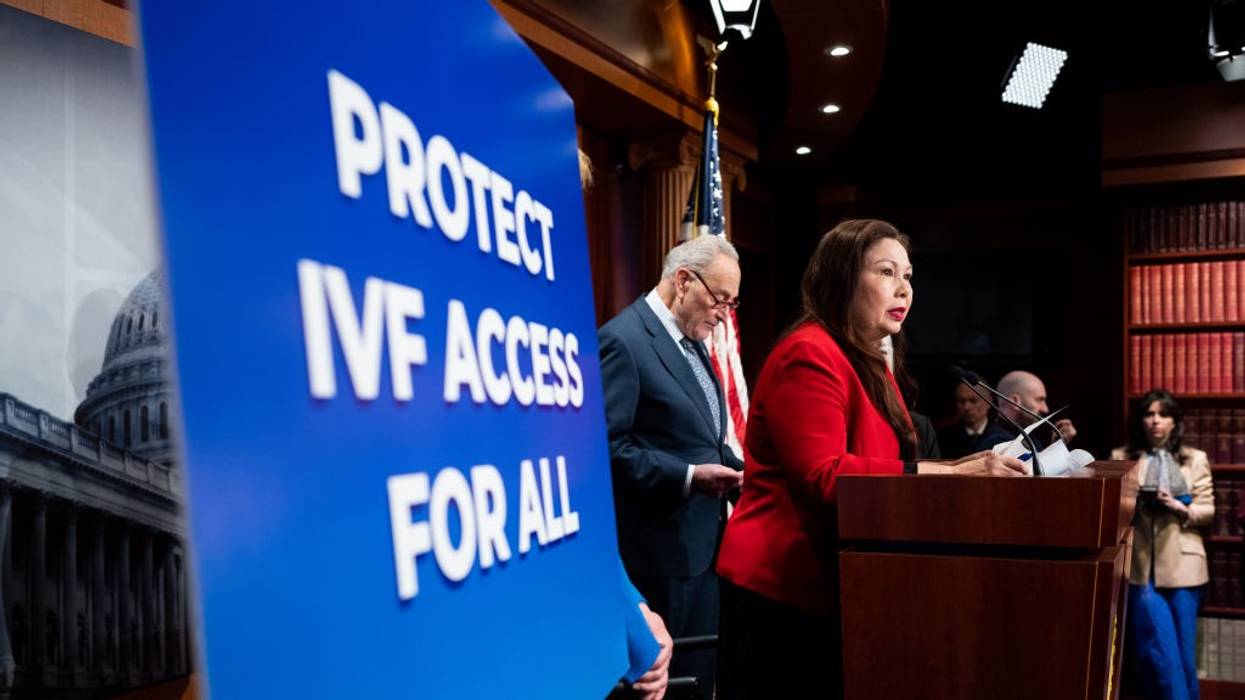
"Remember this the next time they claim to care about freedom and family," said one Democratic lawmaker.
Democratic U.S. lawmakers and reproductive rights defenders on Wednesday blasted congressional Republicans and former U.S. President Donald Trump after a GOP senator blocked a bill to protect access to in vitro fertilization a week after Alabama's right-wing Supreme Court ruled that frozen embryos are children.
Sen. Cindy Hyde-Smith (R-Miss.) objected to a request to pass by unanimous consent a bill introduced by Sens. Tammy Duckworth (D-Ill.) and Patty Murray (D-Wash.) to federally protect IVF access, claiming that the bill is "a vast overreach that is full of poison pills that go way too far."
Calling the bill "a vast overreach that is full of poison pills that go way too far," Hyde-Smith claimed it would legalize human cloning, gene-edited "designer babies," and commercial surrogacy, "including for young girls without parental involvement."
Duckworth accused her colleague of misreading the legislation, asserting that "it simply says you have a statutory right should you choose to pursue assisted reproductive technology."
Democratic lawmakers reacted angrily to Hyde-Smith's move—and to Republican attacks on reproductive freedom.
"Once again, Republicans have shown their true colors,"
said Sen. Mazie Hirono (D-Hawaii). "Republicans are claiming to support IVF while voting down the very bill that would do that. Actions speak louder than words."
Sen. Ron Wyden (D-Ore.)
said on social media: "I wish I could say I'm surprised. Senate Republicans just blocked our attempt to pass Sen. Duckworth's bill to protect nationwide access to IVF. Republicans will stop at nothing to deny women in America their fundamental rights and freedoms."
In the House, Rep. Katherine Clark (D-Mass.) lamented Republicans' attack on legislation that would "protect Americans' right to start a family through IVF."
"Remember this the next time they claim to care about freedom and family," Clark added.
Speaking on the Senate floor Wednesday, Duckworth said: "Let's be clear about what led to this moment. The overturning of Roe is what made last week's ruling even possible."
"Donald Trump is the one who bragged about taking down Roe v. Wade," she added. "Donald Trump acts as if that's something to be proud of."
Trump—the 2024 Republican presidential front-runner despite facing 91 federal and state criminal charges—appointed three right-wing anti-abortion justices to the U.S. Supreme Court. All three were part of the 6-3 majority in Dobbs v. Jackson Women's Health Organization, which voided half a century of federal abortion rights.
Following last week's Alabama ruling—which prompted multiple IVF clinics to suspend operations in the state—Trump and other Republicans scrambled to distance themselves from the deeply unpopular decision.
However, Duckworth said Wednesday that "while it may now be convenient" for Trump "to claim that he had nothing to do with what happened in Alabama, we know the truth: IVF is at risk because of him. He is to blame."
"Him and every other GOP official who shamelessly kisses his ring, proving with every word that they they that they care more about protecting his poll numbers than protecting Americans' freedoms," she added.
At the Center for American Progress, senior vice president for inclusive growth Emily Gee said that "Republicans have been on a relentless crusade to strip women of their fundamental freedom to control their own reproductive destinies and medical decisions—seeking to ban abortion, restrict contraception, and limit fertility options for Americans trying to grow their families."
"They have been emboldened and enabled by Donald Trump and his hand-picked U.S. Supreme Court justices, who have misinterpreted the Constitution to rip away Americans' rights and enforce their extreme MAGA ideology on all of us," she continued.
"Senate Republicans' decision to block legislation affirming Americans' ability to obtain IVF treatment is a moral abomination as well as an insult to families devastated by the Alabama Supreme Court's recent ruling," Gee added. "Today, they have made painstakingly clear that there's no limit to their agenda to intrude upon women's most personal decisions. That is an intrusion that Americans will continue to reject."
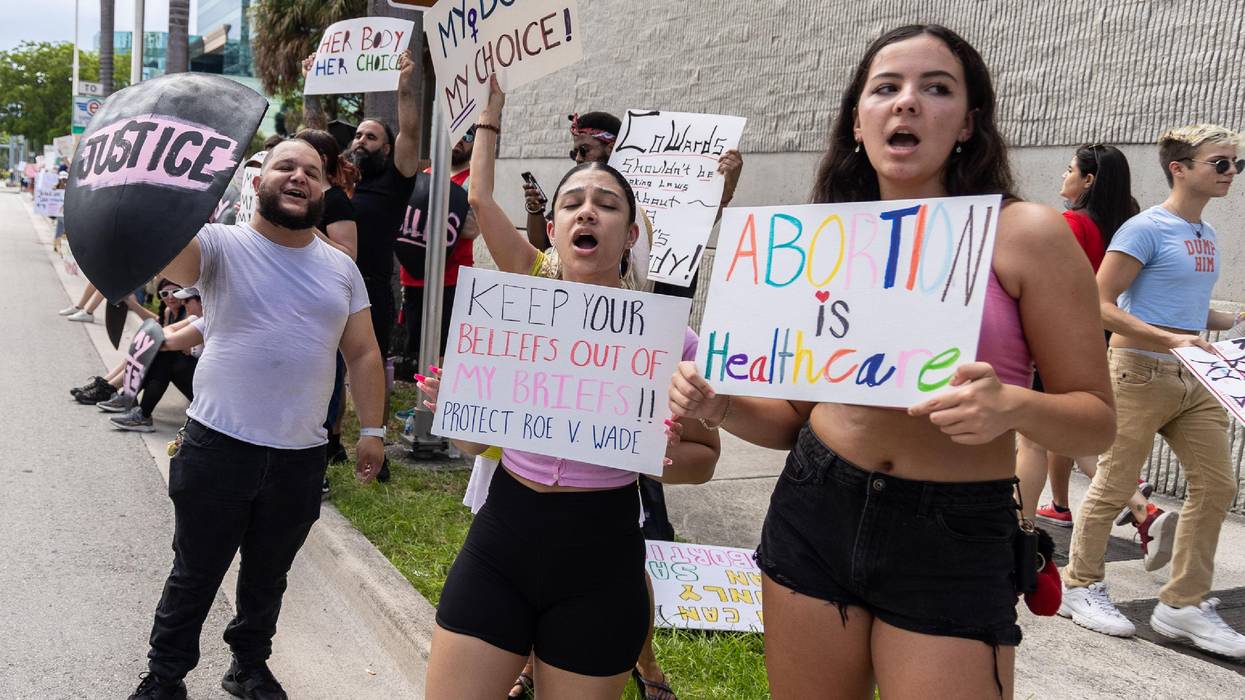
The bill would allow civil lawsuits over the "wrongful death" of an "unborn child," including in potential cases involving in vitro fertilization.
Florida Republicans are unlikely to pass a so-called "fetal personhood" bill during the current legislative session following a Senate committee's decision on Monday to postpone further consideration of the proposal, which had been approved by several committees before an Alabama Supreme Court ruling last week sparked a national uproar over the right-wing push to secure rights for "the unborn."
The panel said it was temporarily postponing Senate Bill 476, which would define a fetus as an "unborn child" with the protections of civil negligence laws. The proposal is aimed at making abortion providers and others who help secure abortion care for pregnant people liable in potential civil lawsuits.
Under the law, said opponents, prospective parents could also potentially seek damages in the "wrongful death" of an embryo, in the case of in vitro fertilization (IVF).
"Florida's legislature needs to really take a hard and careful look at what the unintended impacts to IVF in Florida could be going forward."
The proposal garnered national attention in recent days after the Alabama Supreme Court ruled that IVF patients could sue a clinic for the "wrongful death" of embryos that were accidentally destroyed, with the court claiming embryos have the same rights as children.
Republicans have backpedaled since the ruling was announced, claiming to support IVF—even though attacks on fertility treatments are hardly a rarity in the anti-abortion rights movement. During her confirmation hearing in 2020, U.S. Supreme Court Justice Amy Coney Barrett sparked rebuke by refusing to oppose criminalization of IVF.
Florida's legislative session ends March 8, and the Senate Rules Committee canceled a hearing for a companion bill that had been scheduled for Monday.
Florida Democratic Party Chair Nikki Fried said that the Alabama ruling—but not genuine concern for the fact that IVF could be implicated in the bill—forced Republicans to shelve the proposal for now.
"‘If the Alabama ruling didn't happen last week, Florida's fetal personhood bills would likely have passed during legislative session," said Fried.
The public backlash over the ruling, said the state Democrats, "set an important tone with Republican lawmakers and sent a strong message that banning abortion and limiting a full range of reproductive healthcare is deeply unpopular."
The ACLU of Florida urged lawmakers to completely "shut down" the bill to prevent IVF clinics from shutting down for fear of liability due to the loss of embryos that is inherent in the IVF process.
"What we know from this past month in Alabama and what we've seen so far in Florida, is that anti-abortion extremists are not going to stop at a six-week ban, they are not going to stop with allowing frivolous civil lawsuits against providers and friends, and families, they are not going to stop with banning IVF," said Kara Gross, legislative director and senior policy counsel for the group. "Their goal is complete government control over any individual reproductive freedoms and this is one more step that takes them closer to that goal. Enough is enough."
"What was unthinkable a year ago is now a reality in Alabama," Gross added. "IVF clinics are pausing their operations. Florida's legislature needs to really take a hard and careful look at what the unintended impacts to IVF in Florida could be going forward."
Gross pointed out that Florida residents who suffer pregnancy loss "due to the wrongful acts of another are permitted to recover money damages" already—making the bill "unnecessary for that purpose."
In addition to opening IVF clinics up to liability, the bill would pave the way for cases like that of Texas resident Marcus Silva, who filed a civil lawsuit last year against friends of his ex-wife who helped her secure an abortion.
"This bill would have a chilling effect on doctors providing necessary healthcare," said Gross, "on patients seeking the care they need, and on family members and friends who support their loved one seeking access to abortion care."
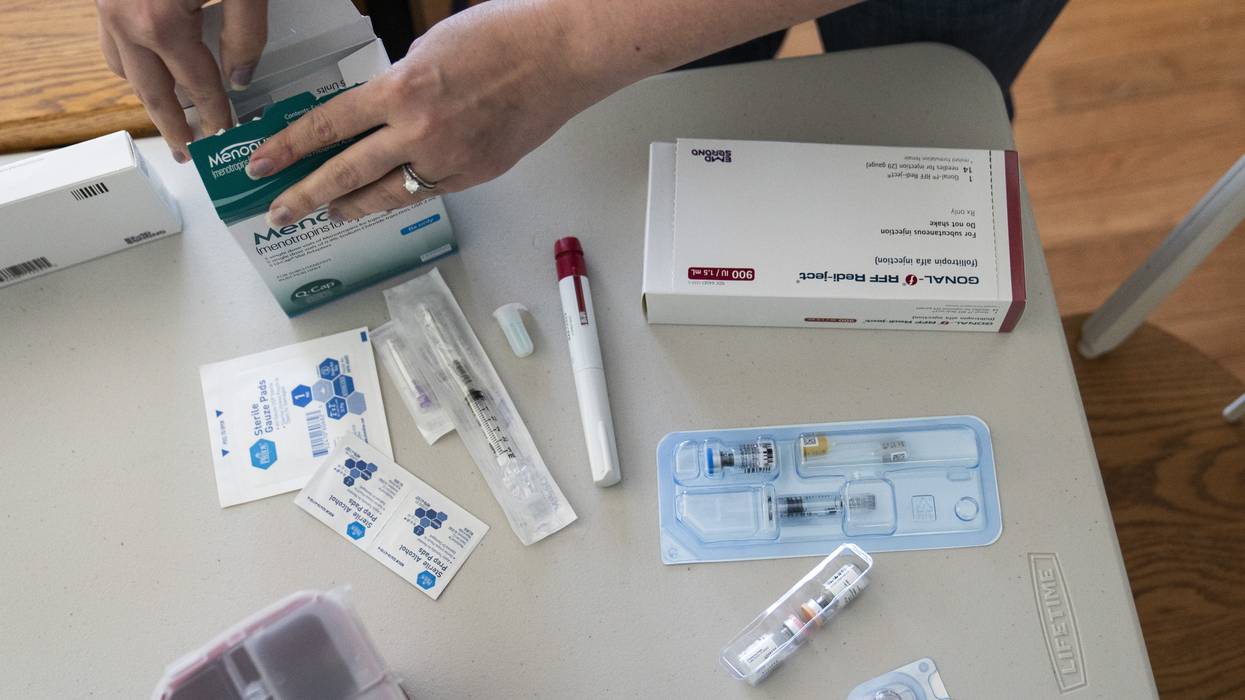
"I refuse to believe that Republican lawmakers who sponsored legislation that would restrict or ban IVF—and who now decry the Alabama ruling—didn't know exactly what they were doing," said one journalist.
Reproductive justice advocates on Friday rejected attempts by Republican lawmakers to distance themselves from an Alabama Supreme Court ruling that claimed embryos are "children"—a decision that critics said was a direct result of the U.S. Supreme Court's overturning of Roe v. Wade—as the far-reaching impact of the ruling became increasingly apparent.
In Alabama and across the country, Republican legislators in recent days have claimed they'll prioritize protections for in vitro fertilization (IVF) as clinics in the state have alerted patients they will not be able to proceed with their attempts to start or grow a family.
The clinics have cited what one critic called a "radically theocratic" state Supreme Court ruling this week that found couples have a right to sue a fertility center for "wrongful death" after their embryos were accidentally destroyed. The all-Republican court quoted the Bible as it ruled the embryos were classified as children.
The ruling, said the Center for Reproductive Medicine in Mobile on Thursday, "has sadly left us with no choice" but to halt all IVF treatment.
The clinic is one of just seven IVF facilities in the state and is the third to announce this week that it would have to suspend treatments because of the legal risk posed by the ruling. Because fertility doctors help prospective parents to conceive multiple embryos and the procedure has only a 50% success rate, numerous embryos are lost in the process—making clinics potentially liable for their "wrongful deaths" under the court ruling.
Alabama state lawmakers said Friday they were considering legislation to protect IVF, while the National Republican Senatorial Committee sent a memo to senators advising them to "clearly state your support for IVF and fertility-related services as blessings for those seeking to have children," warning that a failure to do so could risk alienating "a staggering 85%" of voters who support increasing access to fertility treatments.
Despite the GOP's attempt to distance itself from the ruling, said Slate journalist Mark Joseph Stern, "it is literally impossible to square these talking points with the Republican Party's position on 'equal rights' for 'the unborn' from 'the moment of fertilization!'"
Stern also pointed to U.S. Rep. Michelle Steel (R-Calif.), who on Thursday shared her own experience with infertility and said IVF helped her to start a family.
While Steel may have personally benefited from fertility treatment, said Stern, it didn't stop her from co-sponsoring the Life at Conception Act, which would grant "equal rights" to the "preborn," including embryos—clearing implicating the IVF process if it were passed into law.
"I refuse to believe that Republican lawmakers who sponsored legislation that would restrict or ban IVF—and who now decry the Alabama ruling—didn't know exactly what they were doing," said Stern.
Beyond the halting of fertility treatments in Alabama this week, on Friday RESOLVE: The National Infertility Association warned that nationwide embryo shipping services have announced that they will suspend transport of embryos to and from Alabama to avoid potential litigation.
"Since the court's ruling, doctors have been forced to deliver devastating news to their patients, who dream of becoming parents and whose plans are on hold indefinitely, all because of the court's disregard for science," said Barbara Collura, president and CEO of the organization. "And now, this slight window of hope for Alabamans currently undergoing IVF to continue their family-building treatment in other states just slammed shut. Thousands of Alabamans trying to build their families are being held hostage by this destructive ruling. IVF must be restored in the state immediately, without fear of criminal prosecution."
Along with current GOP lawmakers, former Republican President Donald Trump—who secured the right-wing majority on the Supreme Court that overturned Roe and who is the presumptive GOP presidential nominee in the November election—said Friday that he supports "the availability of fertility treatments like IVF in every state in America."
Democratic President Joe Biden's reelection campaign, however, laid the blame for the Alabama ruling with the former president, sending an email to supporters with a statement from Amanda Zurawski, who nearly died because doctors in Texas delayed providing her with abortion care when she faced pregnancy complications.
"If you're fortunate enough to have little to no experience with IVF, you don't know the layers of fear that are now compounding our ability to have a family," Zurawski told MSNBC on Friday. "This happened in Alabama and depending on what happens in November, this could be a nationwide situation. Trump has already said that he supports a nationwide abortion ban, and this is his fault."
"Because of the Supreme Court justices that he appointed and the fall of Roe, now states have the ability to pass these draconian laws," she added, "and we have no idea how far it's going to go, and that's what's absolutely terrifying."
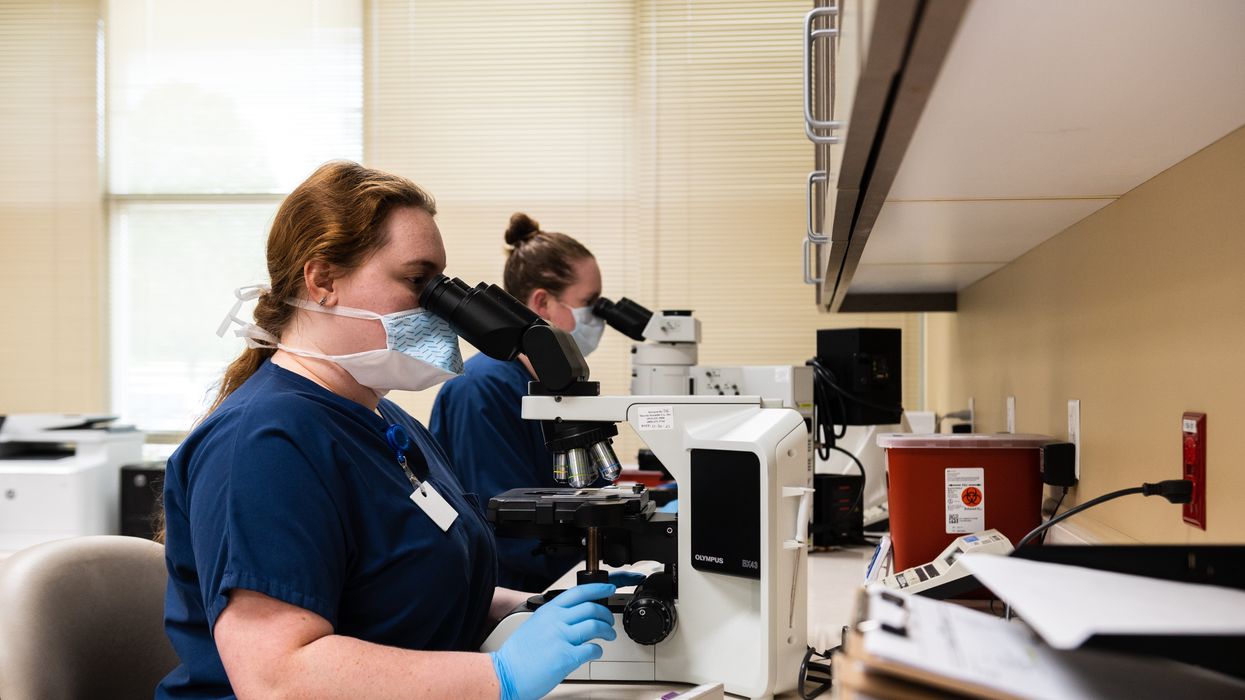
"The movement to confer personhood status to IVF embryos is long-standing and one example of the broad-reaching implications of anti-abortion politics," said one expert. "We can expect more cases like this one."
In a case brought by patients of a fertility clinic in Alabama, a Friday ruling by the state's Supreme Court flew largely under the national radar over the weekend, but legal experts and reproductive justice advocates warned Monday that the "radically theocratic" decision could have major implications for the U.S. abortion rights movement as well as people struggling with infertility.
In LePage v. Mobile Infirmary Clinic, Inc, the Alabama Supreme Court ruled 7-2 that a couple has the right to sue an in vitro fertilization (IVF) clinic for the "wrongful death" of their frozen embryos, which the court classified as children who must be protected by Alabama's Wrongful Death of a Minor Act.
The majority opinion quoted the Bible extensively, as well as citing Alabama Constitution Section 36.06, which despite being a government document states that a person's life "cannot be wrongfully destroyed without incurring the wrath of a holy God."
Alabama passed a Sanctity of Life Amendment in 2018, adding to its constitution language which says, "the public policy of this state to recognize and support the sanctity of unborn life and the rights of unborn children, including the right to life."
The case stems from the experience of several patients of an IVF clinic where a person allegedly entered the facility through an unlocked door and removed frozen embryos from a freezer and then accidentally dropped them on the floor, rendering them unusable for the patients who hoped to become parents.
Writing for the majority, Associate Justice Jay Mitchell said the state's Wrongful Death of a Minor Act "is sweeping and unqualified."
"It applies to all children, born and unborn, without limitation," Mitchell wrote. "It is not the role of this court to craft a new limitation based on our own view of what is or is not wise public policy. That is especially true where, as here, the people of this state have adopted a constitutional amendment directly aimed at stopping courts from excluding 'unborn life' from legal protection."
"It is as if the people of Alabama took what was spoken of the prophet Jeremiah and applied it to every unborn person in this state: 'Before I formed you in the womb I knew you, Before you were born I sanctified you,'" added Mitchell, quoting Jeremiah 1:5 in the Bible.
While the LePage case pertains to an alleged accident at one specific clinic, the loss or destruction of embryos is inherent to the IVF process. IVF has only a 50% success rate and embryos that don't implant and lead to a pregnancy are lost in the process, while the American Society for Reproductive Medicine estimates that between 1-24% of frozen embryos are abandoned by fertility clinic patients and are ultimately destroyed.
If all 1.5 million frozen embryos in the U.S. have the same rights as children, asked one critic, "who are they fixing to start charging with murder?"
In a court filing submitted by the Medical Association of the State of Alabama, the group warned that "the potential detrimental impact on IVF treatment in Alabama cannot be overstated" if embryos were to be classified as children covered under the state's wrongful death law.
"The increased exposure to wrongful death liability as advocated by the Appellants would—at best—substantially increase the costs associated with IVF," said the association. "More ominously, the increased risk of legal exposure might result in Alabama's fertility clinics shutting down and fertility specialists moving to other states to practice fertility medicine."
Abortion rights groups have warned that the U.S. Supreme Court's overturning of Roe v. Wade in 2022 could have implications for fertility treatments if right-wing courts begin to classify embryos as "children," as the pro-forced pregnancy movement has with fetuses.
"The movement to confer personhood status to IVF embryos is long-standing and one example of the broad-reaching implications of anti-abortion politics," said Risa Cromer, an anthropology professor at Purdue University. "We can expect more cases like this one from Alabama."
Dana Sussman, deputy executive director of the reproductive rights group Pregnancy Justice, told Rolling Stone that lawyers for the plaintiffs alluded to the U.S. Constitution's equal protection clause, suggesting that embryos created via IVF should be treated equally to those conceived without medical intervention.
"It leaves the door open wide enough to make this argument with a straight face the next time around... in the context of not just babies born through IVF, but fetuses or 'unborn life' as having these 14th Amendment rights," Sussman told the outlet.
Barbara Collura, president and CEO of Resolve: The National Infertility Association, called the ruling "a terrifying development for the 1 in 6 people impacted by infertility who need in vitro fertilization to build their families."
"This anti-family ruling will likely have devastating consequences, including impacting the standard of care provided by the state's five fertility clinics," Collura said. "This new legal framework may make it impossible to offer services like IVF, a standard medical treatment for infertility. It also remains unclear what this decision means for families who currently have embryos stored at these clinics."