

SUBSCRIBE TO OUR FREE NEWSLETTER
Daily news & progressive opinion—funded by the people, not the corporations—delivered straight to your inbox.
5
#000000
#FFFFFF
To donate by check, phone, or other method, see our More Ways to Give page.
Daily news & progressive opinion—funded by the people, not the corporations—delivered straight to your inbox.
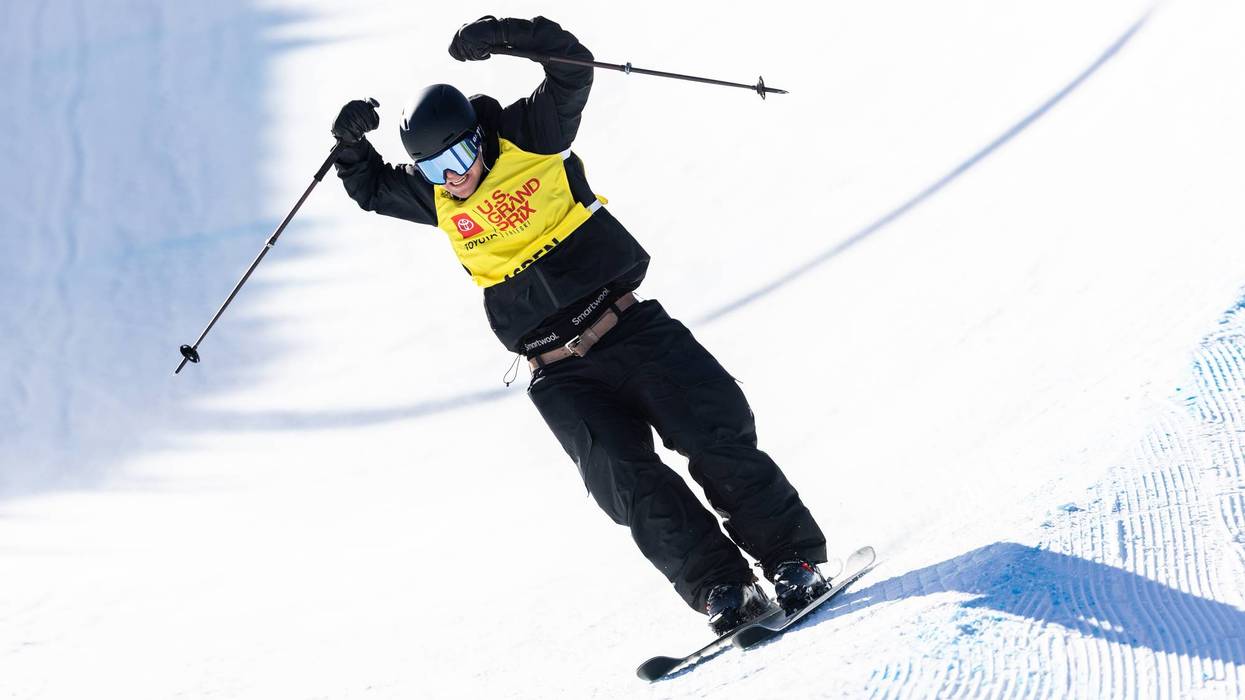
When Trump attacked one of their own for speaking his mind, Olympians stood up in support of their colleague.
US President Donald Trump has a long history of trashing athletes. So when he aimed his viciousness at US Olympians participating at the 2026 Milano Cortina Winter Olympics, perhaps it should not have been a surprise. The response from US athletes has been fierce and firm: They will not be intimidated by the petulant president.
When a journalist asked US freestyle skier Hunter Hess what it was like to represent the US in this particular political moment, Hess replied: “It’s a little hard. There’s obviously a lot going on that I’m not the biggest fan of, and I think a lot of people aren’t. Just because I’m wearing the flag doesn’t mean I represent everything that’s going on in the US.” The Olympian added that he had “mixed feelings” about representing the US.
In response, Trump hopped on Truth Social to attack the athlete, mangling the US skier’s actual words along the way. “U.S. Olympic Skier, Hunter Hess, a real Loser, says he doesn’t represent his country in the current Winter Olympics,” Trump punched out with his chubby little posting thumbs. “If that’s the case, he shouldn’t have tried out for the Team, and it’s too bad he’s on it. Very hard to root for someone like this.”
Not only did Trump misrepresent what Hess conveyed, but he cued his MAGA ghouls and powerful supporters that it was time to unleash their vitriol. Right-wing boxer wannabe Jake Paul posted: “Wow pls shut the fuck up. From all true Americans. If you don’t want to represent this country go live somewhere else.” US Sen. Rick Scott (R-Fla.) piled on, “Any person who goes to the Olympics to represent the United States and then says they don’t want to represent the United States should be immediately stripped of their Olympic uniform.”
The IOC just can’t seem to grasp the obvious reality that their thin veneer of institutional "neutrality" tends to benefit the already powerful at the expense of courageous upstarts.
To say this does not exactly embrace the goodwill that the Olympics are supposed to stand for is to make an enormous understatement. Trump wouldn’t recognize the Olympic spirit if it came up and kissed him on the cankle.
Meanwhile, Olympians have stood up in support of Hess and other athletes who are willing to embrace the political complexity of the moment. Chloe Kim, the superstar snowboarder from the United States, said, “It’s important in moments like these for us to unite and kind of stand up for one another with what’s going on.” She added, “I’m really proud to represent the United States. The US has given my family so much opportunity, but I also think we are allowed to voice our opinions on what’s going on.”
Eileen Gu, the two-time gold-medal-winning freestyle skier who herself experienced scorn and abuse when she decided to represent China, rather than the United States, at the 2022 Winter Olympics, said: “I’m sorry that the headline that is eclipsing the Olympics has to be something so unrelated to the spirit of the Games. It really runs contrary to everything the Olympics should be.”
After winning a silver medal in cross-country skiing, Ben Ogden said, “I choose to believe that I live in a country where people can express their opinions without backlash.” He added: “Certainly not... without backlash from the president. And that was really disappointing to see, but I hope it doesn’t continue like that.” Fellow US cross-country skier Zak Ketterson also pushed back: “I think it’s pretty childish to come at somebody for exercising their free speech, right, and considering that side of the political spectrum always champions free speech, it’s a little, I think, surprising to see them so triggered.”
US curler Rich Ruohonen, who is also an attorney from Minnesota, leaned on the law, noting, “We have a constitution, and it allows us freedom of speech.” He added: “What’s happening in Minnesota is wrong. There’s no shades of grey. It’s clear.” This follows fellow Minnesotan Kelly Pannek, a member of the US women’s hockey team, who said she drew inspiration from activists in her home state: “I think people have been asking a lot of us what it’s like to represent our state and our country. I think what I’m most proud to represent is the tens of thousands of people that show up on some of the coldest days of the year to stand [at protests] and fight for what they believe in.”
Meanwhile, the International Olympic Committee has remained conspicuously quiet. Rather than standing up for Olympic athletes and their free speech rights, the self-proclaimed “supreme authority” of the games has sat silent.
When asked about Trump’s behavior at a Milan Cortina 2026 press conference, IOC spokesman Mark Adams said, “I am not going to add to the discourse because I don’t think it’s very helpful to heat up any discourse like that.” So much for the IOC’s slogan “putting athletes first.” According to the IOC’s most recently available tax documents, Mr. Adams makes $528,615 in reportable compensation (and another $100,838 in additional compensation from the IOC and related organizations), but apparently that isn’t enough to inspire him to do his job right.
Perhaps the IOC is too busy clamping down on Ukrainian skeleton athlete Vladyslav Heraskevych for wearing a helmet commemorating athletes from his country who were killed in the war with Russia. Or maybe they are still admiring their handiwork from when they forced the Haitian delegation at the Milano Cortina Olympics to remove the Haitian revolutionary Toussaint Louverture—the former slave who led a revolution that created the world’s first Black republic in Haiti in 1804—from their uniforms, arguing that Louverture’s image violated Olympic rules barring political symbolism.
The IOC just can’t seem to grasp the obvious reality that their thin veneer of institutional "neutrality" tends to benefit the already powerful at the expense of courageous upstarts. In sitting silent in the face of Trump’s attacks on athletes, the IOC is facilitating the slide toward authoritarianism. With the Los Angeles 2028 Olympics on the horizon, it’s time for the IOC to wake up from its bumbling slumber.
Trump’s attacks on star US athletes is part of a larger pattern. After all, this was the grump who attacked Megan Rapinoe during the 2019 World Cup, tweeting, “Megan should never disrespect our Country, the White House, or our Flag, especially since so much has been done for her & the team.” Six years later, Trump is at it again. Rapinoe refused to back down. May these athletes continue to show the collective courage to do the same, to stand up to power.
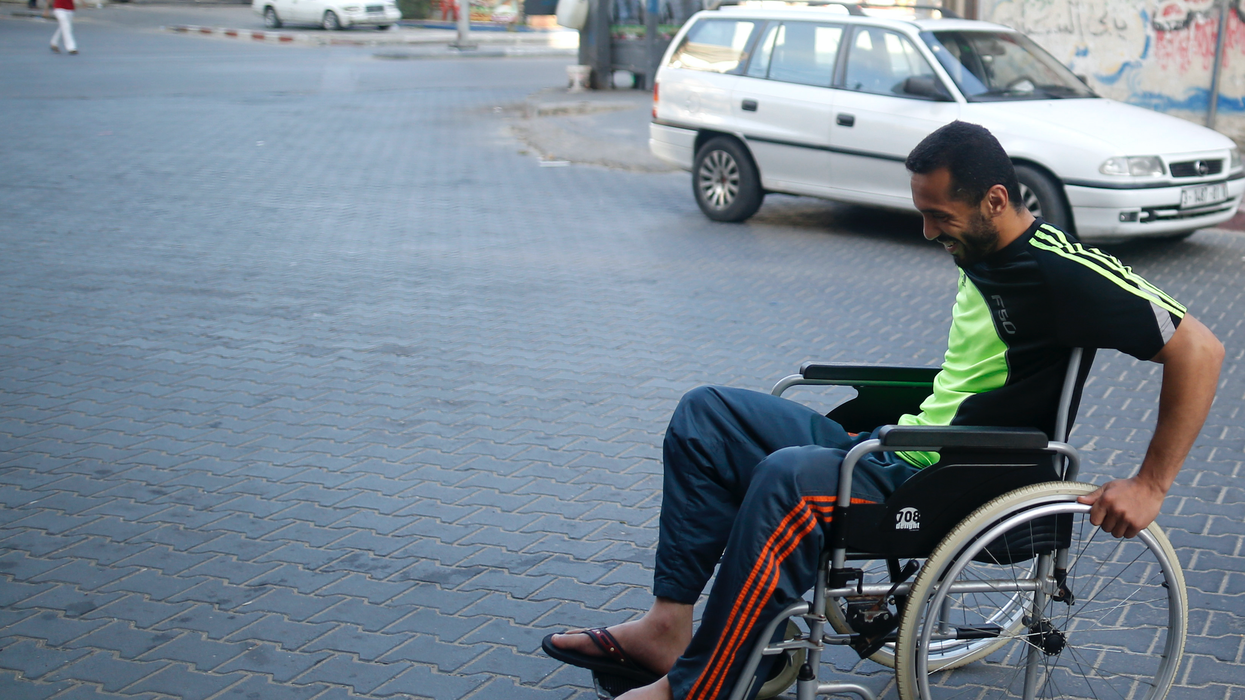
"I want to raise my country flag here in Paris and to show the people we are still here," said Fadi Deeb. "We're still alive—we have hopes, we have dreams, we have goals."
Following an Olympic Games that activists said was tainted by the participation Israeli athletes including a flag-bearer who signed bombs bound for Gaza, a shot putter who was disabled by an Israeli sniper and who lost at least 17 relatives to Israel's onslaught is set to be the sole Palestinian competitor at the upcoming Paralympics in Paris.
"I want to raise my country flag here in Paris and to show the people we are still here," 39-year-old Fadi Deeb said during a Monday interview with Democracy Now! ahead of the August 28 Paralympic Opening Ceremony. "We're still alive—we have hopes, we have dreams, we have goals."
"There is no safe place in Gaza... everyone is like a target for the killing machine."
Deeb, who is from Gaza City, was shot in the spine by an Israeli sniper in 2001 during the Second Intifada, or general Palestinian uprising.
"It's a very hard situation to... balance between my sport as an international player and one who is going to compete in the Paralympic Games, and... my family, all of my sisters, my brothers still in Gaza Strip," he explained.
"There is no safe place in Gaza... everyone is like a target for the killing machine," Deeb continued. "So, what is happening now... it's a genocide. It's not a war... I lost my brother on December 7, 2023 and two of my nephews... And for whole of my family members, I lost like more than, like, 17 persons. So, the situation is very hard."
The Palestinian death toll from Israel's 311-day bombardment, invasion, and siege of Gaza surged toward 40,000 on Monday, according to local and international officials, with at least an additional 103,000 people wounded or missing. Most of those killed have been women and children.
Almost all of Gaza's 2.3 million people have been forcibly displaced, while Israel's total blockade of the coastal enclave has forced the starvation of at least hundreds of thousands of Palestinians. Dozens of Gazans—almost all of them children—have died from malnutrition, dehydration, and lack of medical care.
Asked by Democracy Now! host Amy Goodman about the "amputation crisis" in Gaza—the charity Save the Children says an average of 10 children a day have lost one or more limbs during the war—Deeb said that it's "a very hard situation, because, as I told before, there's no difference... if you are children or women... everyone is a target."
According to the Palestine Olympic Committee and Palestine Football Association (PFA), at least 400 Palestinian athletes, including nearly 70 children, have been killed by Israeli forces since October as of July 26. Among the dead are Hany Al-Masry, a former player and general manager of the Palestinian Olympic soccer team.
Still, eight Palestinians managed to compete in the Paris Olympics, although they did not win any medals.
The International Olympic Committee has been accused of double standards for banning Russian athletes over their country's invasion of Ukraine but allowing Israeli athletes—including Israel Defense Forces veterans and an Olympic flag-bearer who recently signed bombs to be dropped on Gaza—to compete.
Last week, PFA president Jibril Rajub
called Israel's alleged deliberate targeting of Palestinian athletes a blatant violation of the Olympic Charter.
Despite all this, Deeb said he is hopeful.
"To be a player and to compete in this competition for the Paris 2024... gives me, like, too much responsibility to talk about my country, to show the people about Palestine," he said. "It's not just war. It's not just blood. There is life. There is hopes. There is goals. There is dreams."
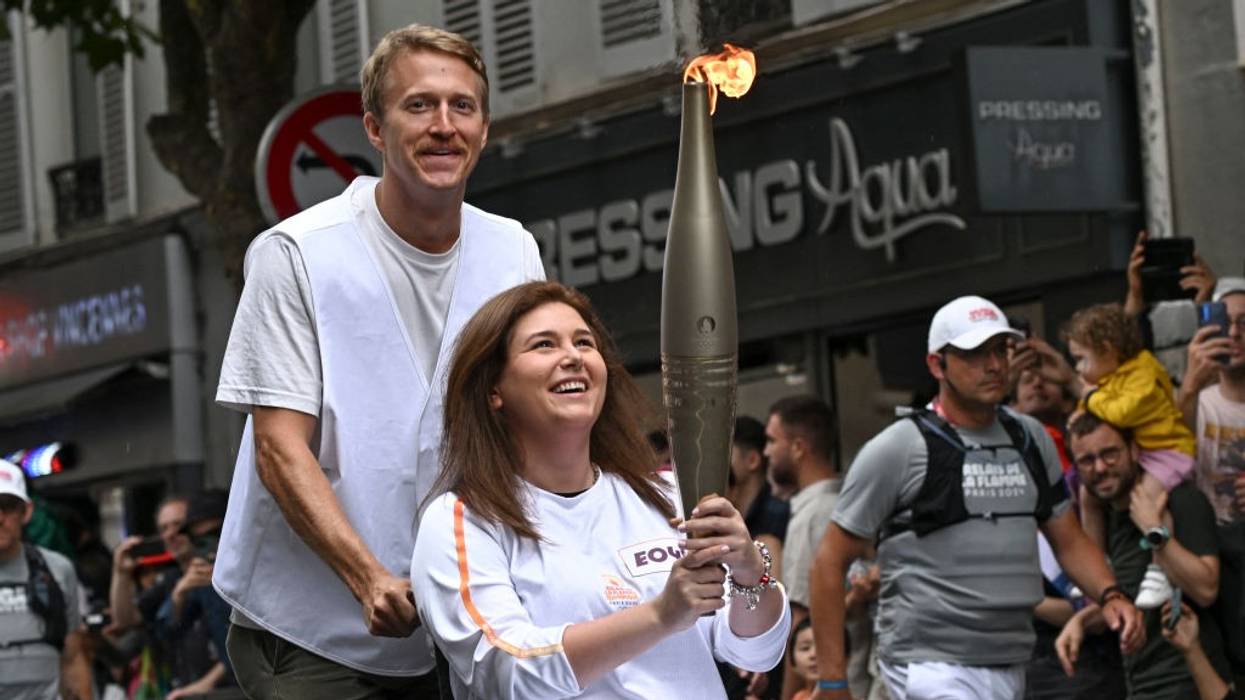
Meanwhile, calls to ban Israel from the 2024 Games are growing following the World Court's ruling against illegal Israeli occupation and apartheid in Palestine.
Lebanese photojournalist Christina Assi, who lost a leg in an Israeli tank strike while working in southern Lebanon last year, carried the Olympic torch through Paris on Sunday amid renewed calls to ban Israel from the 2024 Games following a World Court ruling against the illegal occupation of Palestine and the ongoing obliteration of Gaza.
Assi, who works for Agence France-Presse (AFP), carried the Olympic flame through Parisian streets in a wheelchair pushed by Dylan Collins, an American deputy editor at Al Jazeera English who was also wounded in the October 13 attack.
"This is all for my best friend, Issam Abdallah, and all the other journalists who we have lost this year," Assi said, according to Democracy Now! "This is all for them and to pay tribute and to honor them, to honor their memory. And I will keep Issam's memory alive in everything I do. It's all for him."
🏅JO-2024 : Christina Assi et Dylan Collins, journalistes de l'AFP blessés lors d'un reportage en octobre 2023 au Liban, ont porté la flamme olympique dimanche à Vincennes, en hommage "à tous les journalistes, à nos collègues et amis tués cette année" #AFPVertical ⤵️ pic.twitter.com/DvODwOUU6t
— Agence France-Presse (@afpfr) July 21, 2024
Abdallah, Assi, and Collins were part of an international group of journalists who were covering cross-border clashes between Israeli troops and Hezbollah fighters in southern Lebanon on October 13 when they came under Israel Defense Forces (IDF) tank fire. Abdallah, a 37-year-old Reuters videographer, was killed in the attack.
Noticing that Assi's leg was "blown off at the kneecap," Collins rushed to help his colleague and was wounded when a second Israeli shell exploded nearby, injuring him.
AFP, Al Jazeera, and Reuters all concluded that Israel deliberately targeted the journalists, who were clearly identifiable as members of the press. Groups including Amnesty International and Human Rights Watch also said the attack was "apparently deliberate" and demanded a war crimes investigation. Reporters Without Borders concluded that "it is unlikely that the journalists were mistaken for combatants."
"This is a chance to continue talking about justice, and the targeted attack on October 13 that needs to be investigated as a war crime," Collins told The Associated Press on Sunday.
At least 108 media professionals—nearly all of them Palestinian—have been killed in Gaza since October, according to the Committee to Protect Journalists. Israel's alleged deliberate targeting of journalists is part of the evidence presented in a South Africa-led genocide case against Israel being reviewed by the International Court of Justice (ICJ) in The Hague.
Since the Hamas-led October 7 attack on Israel, Israeli forces have killed or wounded more than 139,000 Palestinians in Gaza, including at least 11,000 people who are missing and believed to be dead and buried beneath the rubble of hundreds of thousands of homes and other buildings. Around 90% of Gaza's 2.3 million people have been forcibly displaced, and Israel's siege has caused widespread—and sometimes deadly—starvation.
In the wake of Friday's ICJ ruling that Israel's 57-year occupation of Palestine is an illegal form of apartheid that must end, the Palestine Olympic Committee (POC) called for a last-minute International Olympic Committee (IOC) ban on Israeli participation in the 2024 Paris Games, which are set to start Friday.
"We have requested a ban of Israel at the Olympics because we believe that such ethics don't reflect the spirit of the Olympics."
"We have requested a ban of Israel at the Olympics because we believe that such ethics don't reflect the spirit of the Olympics," POC deputy secretary-general Nader Jayousi told Kyodo News, pointing to evidence including Israeli athletes visiting IDF troops and posting pictures of signed bombs.
Jayousi said it "should be the concern of the IOC" that Israelis who are "proud of slaughtering people"—a clear violation of the Olympic spirit—are set to compete in Paris.
Activists also renewed calls for an IOC ban on Israeli participation in Paris.
"With ICJ confirming Israel is committing the crime of apartheid in the [occupied Palestinian territories], the IOC and FIFA must immediately suspend Israel from international sport," Francis Awaritefe, an attorney and former member of the Australian men's national soccer team, said on social media, referring to soccer's world governing body.
"Apartheid is incompatible with the values of sport and membership of the international sports community," he added.
Sophia Brooks, a California-based activist focused on the intersection of Palestine and sports, on Monday cited "ample evidence" of why Israel should be banned from the games, including the destruction of sports facilities in Gaza and the killing of hundreds of Palestinian athletes.
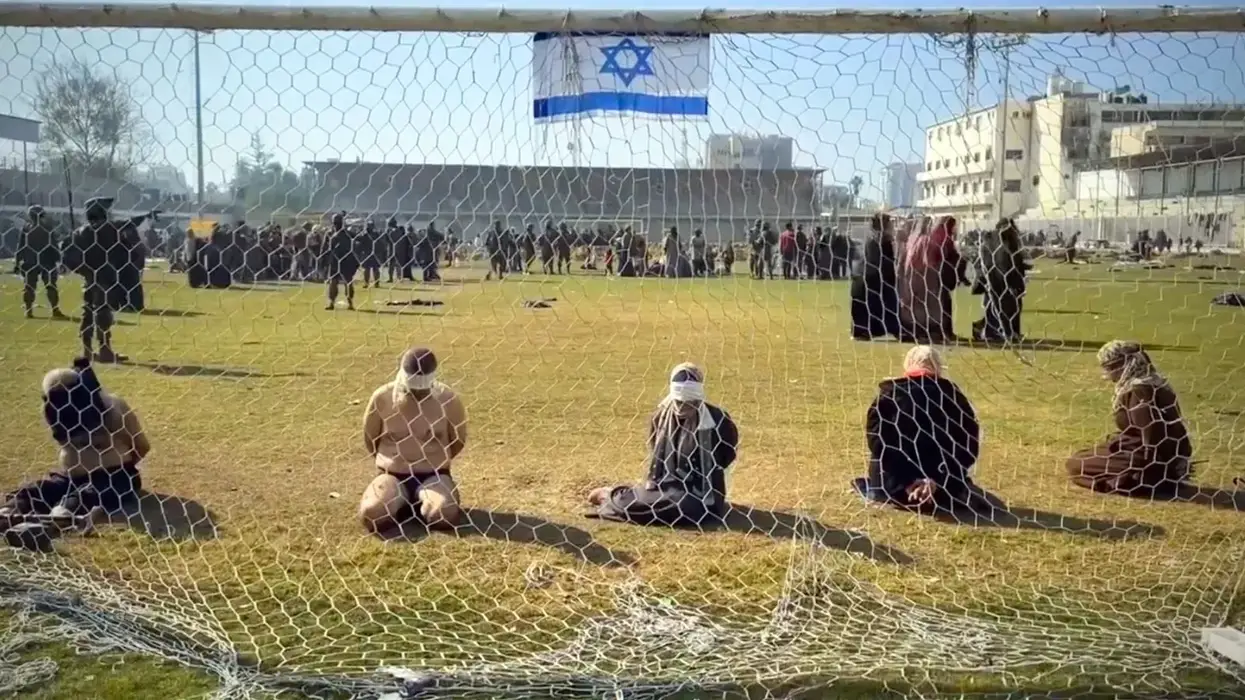
According to Jayousi, around 400 Palestinian athletes and coaches have been killed since October 7. Israeli forces have also used facilities including Yarmouk Stadium for the detention of Palestinian men, women, and children—many of whom have reported torture and other abuse at the hands of their captors.
Numerous social media accounts posted video footage of French police telling attendees at Sunday's Olympic flame procession that they cannot display Palestinian flags during the event, despite the participation of Palestinian athletes in the Paris Games.
“You cannot display that flag”
Macron's police were ordered to take down only Palestinian flags, while flags from other countries were allowed to be displayed freely during the Olympic flame procession in Vitry-sur-Seine, Paris. pic.twitter.com/fB2kEIWwg2
— PALESTINE ONLINE 🇵🇸 (@OnlinePalEng) July 22, 2024
The Palestine Chronicle reported Monday that a record eight Palestinian athletes are set to compete in six different Olympic sports.
"I'm very proud and happy to say to have made it this far," said Omar Yaser Ismail, an 18-year-old taekwondo athlete set to compete in Paris. "I've been dreaming of this moment since I was a little boy."
"I was very happy to imagine myself in Paris with the best athletes in the world," he said, adding that he would be "very happy to show my flag on the podium."
If the IOC has excluded Russia from the games for actions contrary to the Olympic ethos of peace, then consistency demands scrutiny of all participants.
An ancient adage states, "To kill is to invite punishment, except when done en masse." Despite the passage of over half a century since the United Nations Charter's inception and the centennial of the National Olympic Committee's founding in 1894 in Paris, the assertion that sports remain apolitical continues to present challenges.
In a notable September 2023 action, the International Olympic Committee (IOC) initiated legal proceedings against Russia, citing a violation of international peace, and subsequently barred its participation in the Olympic Games. This move echoed a prior decision that also excluded Russia's football team from the Qatar 2022 World Cup qualifiers.
Eligibility for Olympic participation hinges on the IOC's endorsement, which can be revoked at any discretion, often without justification. This authority was notably exercised during the war in Ukraine, where the eastern regions' occupation led to the seizure of Ukraine's National Olympic Committee offices. Concurrently, concerns arose over the politicization of the Olympics by nations like Russia, where athletic triumphs have been appropriated to fuel expansionist agendas and bolster nationalistic fervor. The athletes' intent notwithstanding, their achievements may inadvertently endorse these ideologies. This was exemplified when Russia, following its annexation of Crimea, invested an unprecedented $51 billion in the 2014 Sochi Winter Olympics—equivalent to the cumulative cost of all prior Winter Games—while the IOC maintained a conspicuous silence on both the annexation and calls for an Olympic boycott.
Given the IOC's stance that violators of international peace should not partake in global events like the Olympics, it begs the question: Why is Israel not subject to similar prohibitions? Historically, even in the absence of IOC intervention, host nations have exercised their right to impose sanctions on countries compromising global peace, often supported by international allies and civil society movements. The expectation for the IOC, and other nations, to prevent Israeli participation is rooted in historical actions.
Questions are being raised about the IOC's consistency in upholding its standards.
For example, Belgium, hosting the 1920 Olympics, excluded its geopolitical adversaries, including Germany, Austria, Bulgaria, Hungary, and Turkey, with Germany’s exclusion extending until 1928. Similarly, the 1928 London Olympics did not extend invitations to Japan and Germany. These decisions were autonomously made by the host countries. However, the IOC itself has taken decisive action, such as barring South Africa from the 1964 Tokyo Olympics and maintaining this exclusion through the 1968 Mexico City games until the apartheid regime's end in 1992. The IOC invoked a comparable rationale to exclude Afghan athletes during Taliban rule in 2000.
Recent reports suggest that Israel intends to send a substantial delegation to the upcoming Olympic Games. Amid this, there is a growing discourse on the IOC's impartiality and the potential for international advocacy to influence its policies. Questions are being raised about the IOC's consistency in upholding its standards, particularly in light of allegations regarding the repurposing of Gaza's Elimuk Stadium. Reports of the stadium's conversion into a detention and interrogation center have sparked calls for accountability and action. Furthermore, the reported destruction of the Gaza Olympic Committee's office and the killing of Palestinian athletes have intensified debates over Israel's participation in the Paris Olympics. In light of these events, organizations like Amnesty International have highlighted the urgency of investigating alleged Israeli war crimes in Gaza.
The crux of the debate lies in the absence of steadfast principles for upholding peace and countering aggression and occupation. The notion that nations breaching the sovereignty of others should be excluded from the Olympics and global sporting events, as a reflection of the "community of nations," remains contentious. While some argue that, based on this principle, the United States might have faced Olympic bans for its involvement in the Vietnam, Iraq, and Afghanistan wars, the reality is that the idea of "sports transcending politics" and the exclusion of "the wrong country" from the Olympics is more aspirational than actualized. Moreover, it's noteworthy that the IOC has even penalized athletes for expressing moral and humanitarian support for Palestinians, indicating a complex interplay between sports, politics, and ethics.
If the IOC has excluded Russia from the games for actions contrary to the Olympic ethos of peace, then consistency demands scrutiny of all participants. It raises the question of whether it is appropriate for any nation, if condemned by the International Court of Justice for grave violations, to compete without addressing its international obligations
"To allow Israel, in the midst of a genocide, to participate in the upcoming Olympic Games would signal to the international community that the IOC approves of the gravest of war crimes."
As the executive board of the International Olympic Committee met Thursday in Gangneung, South Korea, more than 300 Palestinian sports clubs and civil society groups launched a campaign to ban Israel from the 2024 Paris Olympics.
Athletic clubs participating in the #BanIsrael campaign—organized by the Palestinian Campaign for the Academic and Cultural Boycott of Israel—include men's and women's soccer, basketball, and volleyball teams, some of whose members have been killed during or even before Israel's current war on Gaza.
Participants are urging the International Olympic Committee (IOC) to "apply its principles and fulfill its obligations by banning Israel from the next Olympic Games to be held in Paris in July 2024, until it ends its grave violations of international law, particularly its system of apartheid and its ongoing genocide in Gaza."
According to Palestinian and United Nations officials, more than 24,600 Palestinians have been killed—most of them women, children, and elders—during Israel's 104-day Gaza assault in response to the Hamas-led attacks of October 7. Nearly 62,000 others have been wounded, and over 7,000 Gazans are missing and presumed dead and buried beneath rubble.
"There is no place in the Olympics for genocide perpetrators."
A recent report published by the Palestine Football Association stated that at least 85 Palestinian athletes, including 55 soccer players, have been killed by Israeli bombs and bullets. Those figures include 55 youth.
Among the dead are Hany Al-Masry, a former player and general manager of the Palestinian Olympic soccer team.
The campaign noted that Israel has been brought before the International Court of Justice on allegations of genocide in a case led by South Africa and supported by numerous nations, groups, scholars, and artists.
"To allow Israel, in the midst of a genocide, to participate in the upcoming Olympic Games would signal to the international community that the IOC approves of the gravest of war crimes," the campaign asserted.
The campaign compared the IOC's imposition of comprehensive sanctions on Russia and Belarus in response to the ongoing invasion of Ukraine with its inaction in the face of Israeli crimes. Russian officials bristle at what they say is the IOC's unequal treatment, with Foreign Minister Sergey Lavrov calling the body's stance "outrageous."
"Once again we see an example of the bias and ineptitude of the International Olympic Committee, which time and again proves its political bent," Lavrov said on social media last year.
In an opinion piece published Thursday in The Guardian, Karim Zidan, who writes about the intersection of sports and politics, contented that "the glaring disparity in the treatment of Israel and Russia by the IOC... sends a troubling message regarding the perceived value of human rights and dignity, particularly in the context of the Israeli-Palestinian conflict."
"By refraining from applying the same standards to Israel as they did to Russia, these sporting organizations appear to suggest that Palestine, as a member state and participant in major international events, is not deserving of the same level of sympathy, dignity, or the commitment required to uphold their fundamental human rights," Zidan added.
Not only has the IOC treated Israel differently, the campaign said, it has punished teams and athletes who have taken principled stands for Palestine or against Israeli crimes.
Palestinian athletes underscored the intimate cost of Israel's onslaught.
"Israel's attacks on Palestinian sports are personal for us," said Balata Youth Center, a soccer club whose 16-year-old player Said Yousef Mohammad Odeh was shot dead by Israeli occupation forces in the West Bank village of Odala in 2021.
"He is among dozens and dozens of Palestinian athletes killed by Israel, including in its genocidal assault on Gaza," the club continued. "It's time to put an end to Western-dominated sporting bodies' shameful business-as-usual approach with genocidal Israel."
"Creative global campaigns to exclude apartheid South Africa made a significant contribution to dismantling that country's oppressive regime," Balata Youth Center added. "We need to employ the same level of pressure, from the boardrooms to the streets, to force the IOC to end its hypocrisy and ban Israel. We need your support to peacefully disrupt the road to the Paris Games."
The Boycott, Divestment, and Sanctions movement for Palestinian human rights notes "growing calls for Israel to be excluded from international sports."
Tens of thousands of people have signed a petition launched by the Democracy in Europe Movement 2025 demanding "an immediate suspension of Israel from participation in all international sports until it fully complies with international law and sports regulations."
Hundreds of Irish athletes across various sports are urging an investigation into potential Israeli violations of the Olympic Charter, which states that the "practice of sport is a human right."