

SUBSCRIBE TO OUR FREE NEWSLETTER
Daily news & progressive opinion—funded by the people, not the corporations—delivered straight to your inbox.
5
#000000
#FFFFFF
To donate by check, phone, or other method, see our More Ways to Give page.
Daily news & progressive opinion—funded by the people, not the corporations—delivered straight to your inbox.

“This morally bankrupt bill will only lead to dirtier air, more toxic water, and countless species shoved over the extinction cliff," said one wildlife defender.
Congressional Republicans on Wednesday approved an appropriations bill containing massive cuts to Environmental Protection Agency funding, more than 20 riders undermining the Endangered Species Act, and other provisions harmful to the environment and wildlife—while boosting mining on federal lands.
Republicans on the House Appropriations Committee advanced the fiscal year 2027 Interior, Environment, and Related Agencies funding bill, which slashes total expenditures for the EPA by 20% and reduces its enforcement budget by $169 million—or nearly half, compared to last year’s levels. GOP lawmakers claim the dramatic reduction in EPA funding "safeguards American taxpayer dollars."
The bill also cuts the US Fish and Wildlife Service's listing budget nearly in half, "effectively dismantling the program in charge of determining which animals and plants deserve protection under the Endangered Species Act," according to a letter sent by a coalition of 80 conservation groups to House Appropriations Committee Chair Tom Cole (R-Okla.) and Ranking Member Rosa DeLauro (D-Conn.).
"The legislation also contains a total of at least 21 anti-wildlife poison pill riders—the largest number of policy riders that has ever been included in the base bill in the history of the Endangered Species Act," the groups' letter notes. "These riders would cause irreparable harm by undoing decades of progress to stabilize and recover some of our most iconic species."
The riders include measures blocking or weakening protections for imperiled species including the greater sage-grouse, lesser prairie chicken, northern long-eared bat, northern spotted owl, Canada lynx, and seven species of freshwater mussels.
Provisions in the bill also prohibit the federal government from banning or restricting lead in ammunition or fishing gear, block the reintroduction of grizzly bears in the North Cascades and Bitterroot ecosystems, and revive Florida’s illegal wetland destruction permitting program that harms species, including the Florida panther and frosted flatwoods salamander.
The Center for Biological Diversity (CBD), one of the groups leading the letter to House Appropriations Committee leaders, noted Thursday that the legislation also codifies climate denialism into law "by exempting federal land management agencies from updating their plans when new information shows endangered species are being harmed or killed on public lands."
Meanwhile, the bill contains provisions intended to expand mining on federal lands, including reinstating certain mineral leases and limiting some land withdrawals.
"Instead of lowering the cost of living and confronting the climate crisis, House Republicans are raising utility bills and energy prices," the office of House Interior, Environment, and Related Agencies Subcommittee Ranking Member Chellie Pingree (D-Maine) said in a statement Wednesday.
"The legislation takes an aggressive anti-environment, pro-corporate polluter stance with cuts to the EPA and policy provisions that endanger public health and fail to confront the climate crisis," Pingree's office added. "The bill also guts resources for the arts and museums while failing to prevent the administration from misusing funds to build President [Donald] Trump’s Garden of Heroes and Triumphal Arch."
The Republicans’ spending bill for Interior + Environment is a disaster:🚨 20% cut to EPA🚨 Free passes to polluters🚨 Rollbacks on PFAS regulations🚨 Millions for Trump’s vanity projectsThey care more about the president’s ego than the health of people and our planet.We're in for a FIGHT.
[image or embed]
— Congresswoman Chellie Pingree (@pingree.house.gov) June 3, 2026 at 9:32 AM
Pingree's office said the bill:
Democrats offered amendments to the bill during full committee markup, including measures to remove all the poison pills from the legislation, promote renewable energy, ban coastal oil drilling in California and Florida, provide funding for environmental justice initiatives, and prevent the construction of Trump vanity projects including his White House ballroom and bunker. Republicans rejected all of the amendments.
"This bill is a gift to corporate polluters, who would poison our communities in pursuit of even greater profits," DeLauro said in a statement Wednesday. "It saddles cities, towns, and working families with higher utility bills. And it allows President Trump to continue raiding public funds to pay for his own vanity projects."
"At a time when the American people are struggling to make ends meet, this bill makes the problem worse," she added. "It does nothing to bring down costs, while allowing the billionaires and big corporations, who have profited by polluting our communities, to get even richer. Meanwhile, the air we breathe and the water we drink gets less and less safe.”
CBD director of government affairs Stephanie Kurose said Thursday that "it's a disgrace that House Republicans want to dismantle decades of environmental progress and hand polluters unprecedented power over the health of our communities, public lands, and wildlife."
“This morally bankrupt bill will only lead to dirtier air, more toxic water, and countless species shoved over the extinction cliff," Kurose added. "Future generations will pay the price for this staggering level of political irresponsibility.”
“We need a strong, unflinching opposition party that is united against the president’s personal paramilitary force," said Justice Democrats.
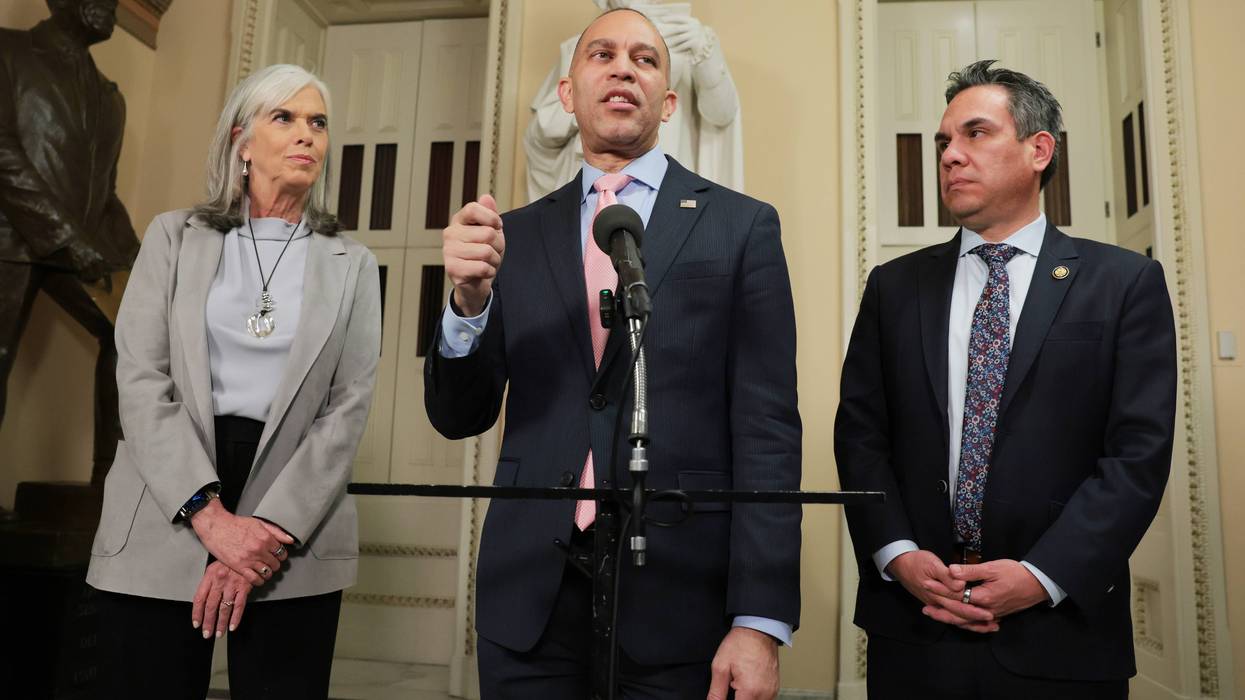
Even as opposition to US Immigration and Customs Enforcement reaches a fever pitch among voters and within the Democratic caucus amid report after report of abject lawlessness by the agency, House Minority Leader Hakeem Jeffries is refusing to whip the votes that would be necessary to stop the funding bill from passing as it heads to a vote on Thursday.
Democratic negotiators on the House Appropriations Committee have pushed their colleagues to accept a "compromise" bill that keeps agency funding flat while supposedly adding new "guardrails" on the agency's actions.
However, as David Dayen explained on Wednesday for the American Prospect, the bill "falls short of imposing true accountability on ICE in the wake of the murder of Renee Good in Minneapolis."
It “flat-funds” ICE at current levels for the fiscal year, although in real terms it’s an increase to the budget, because the previous year included a one-time “anomaly” of additional spending. It restricts spending on detention that could theoretically lower capacity to 41,500 beds from a proposed 50,000. And there are some limitations on what DHS can shift from other agencies into ICE. But because the bill includes no penalties or enforcing mechanisms to ensure that its funding directives are actually adhered to, these funding boundaries are not terribly meaningful.
Democratic lawmakers forced other “guardrails” into the bill, like funding for oversight of detention facilities and mandatory body cameras for ICE agents. And additional training is mandated for agents who interact with the public. But other measures, like blocking the detention and deportation of U.S. citizens or borrowing enforcement personnel from other agencies, weren’t added to the bill. And the funding, once again, is not guaranteed, given that the Trump administration has routinely withheld or shifted around funding without pushback from Congress.
Rep. Rosa DeLauro (D-Conn.), the ranking Democrat on the House Appropriations Committee, who served as the chief negotiator for the bill, has struggled to defend it in the face of reports that ICE is abducting young children, harassing and detaining US citizens, and has been directed to break into homes without a warrant in violation of the Fourth Amendment as a matter of policy.
“It is complicated,” DeLauro admitted during a meeting of the House Rules Committee, “when you’re both trying to govern, and you’re trying to resist what may be infringements, to thread that needle and try to be able to move forward.”
However, heading into Thursday's vote, she has maintained that a government shutdown affecting other critical agencies would be more damaging.
“I understand that many of my Democratic colleagues may be dissatisfied with any bill that funds ICE,” she said. “I share their frustration with the out-of-control agency. I encourage my colleagues to review the bill and determine what is best for their constituents and communities.”
Sen. Chris Murphy (D-Conn.), who has been one of Congress' most outspoken opponents of the bill from the beginning, said that while he understands his colleagues' objections, he believes that "the political police force Trump is building at DHS—and their daily violation of the law—threatens to unwind our republic."
"It's not just Minnesota. DHS is ignoring the law everywhere," he wrote in a lengthy post on social media. "I'm just back from Texas, where DHS is thumbing their nose at the law, disappearing legal residents and kids. Why? Because there are no consequences, they think they will get a bipartisan vote to fund their illegality."
He said Democrats should be demanding more for their votes, including "stopping DHS from moving personnel—e.g. [Customs and Border Protection]—out of their budgeted missions; requiring warrants for arrests; restoring training and identification protocols." While he acknowledged that the party “had a hard job,” he said, “there are no meaningful new restraints in this bill.”
Rep. Jim Himes (D-Conn.) joined in, saying, "I will not facilitate the lawlessness of an agency that is murdering young mothers, threatening peaceful protestors with assault rifles, and kidnapping elderly Americans out of their homes."
Rep. Ro Khanna (D-Calif.), who said he was "leading the opposition" to the bill, explained in a video posted to social media that "the ICE budget under [former President Joe Biden] was $10 billion a year. Donald Trump's Big Ugly Bill increased it by $18 billion a year for the next four years. Today, they want to memorialize that and triple ICE's budget."
"No Democrat should vote yes on this bill," he continued. "Frankly, we need to tear down the ICE agency and have a new federal agency to enforce immigration law under the Justice Department."
Acknowledging that there is not yet sufficient support on Capitol Hill to outright abolish or defund the agency, the Congressional Progressive Caucus (CPC) has also called for blocking the funds and introduced its own legislation that would limit the use of force by agents.
According to the Guardian, the majority of the 213 Democratic members of the House are expected to vote against the funding bill. But for it to stand any chance of being blocked, total party unity would be necessary, and some of the 218 Republicans would either need to defect or fail to show up for the vote.
Jeffries has personally stated that he will vote against the bill, and according to two congressional sources who spoke to the Prospect, has "recommended" that other members vote against it. However, the party whip, Rep. Katherine Clark (D-Mass.) and her deputies have not been directed to bring the rest of the caucus into line with that position.
In a statement issued Thursday, Jeffries, Clark, and Democratic Caucus Chair Pete Aguilar (D-Calif.) again said they personally planned to vote no on the appropriations bill but gave no guidance to their colleagues.
A source tracking the legislation on Capitol Hill told the Prospect that many Democrats in swing districts are planning to vote for the legislation because "they’re terrified of being labeled anti-law enforcement" and "want this to go away so they can talk about the cost of living more. Problem is, it’s not going away.”
Their hesitation comes despite public outrage toward ICE reaching an all-time high, with more of the public now wanting to abolish the agency outright than to keep it, according to a poll conducted earlier this month by YouGov.
Murphy has contended that "the public wants us to make a real fight to stop Trump's abuse of power and to restore humanity and legality to ICE operations," adding, "I don't think a no vote would be out of step with the public. In fact, it's what they demand: accountability for what's happening."
New Republic editor Aaron Regunberg echoed this, encouraging Democrats to "pick the goddamn fight!"
"Americans don’t like what ICE is doing," he said. "This is clearly the kind of playing field in which a fight—which drives further attention towards ICE’s abuses—is advantageous.
In a statement to Common Dreams, the progressive political action committee Justice Democrats described Jeffries' refusal to push against the bill as "cowardice in the face of fascism."
"We need a strong, unflinching opposition party that is united against the president’s personal paramilitary force," the group said. "Instead, Jeffries is willing to let multiple Democrats vote with Republicans to pass this funding, funneling even more of our tax dollars into state-sponsored terrorism."
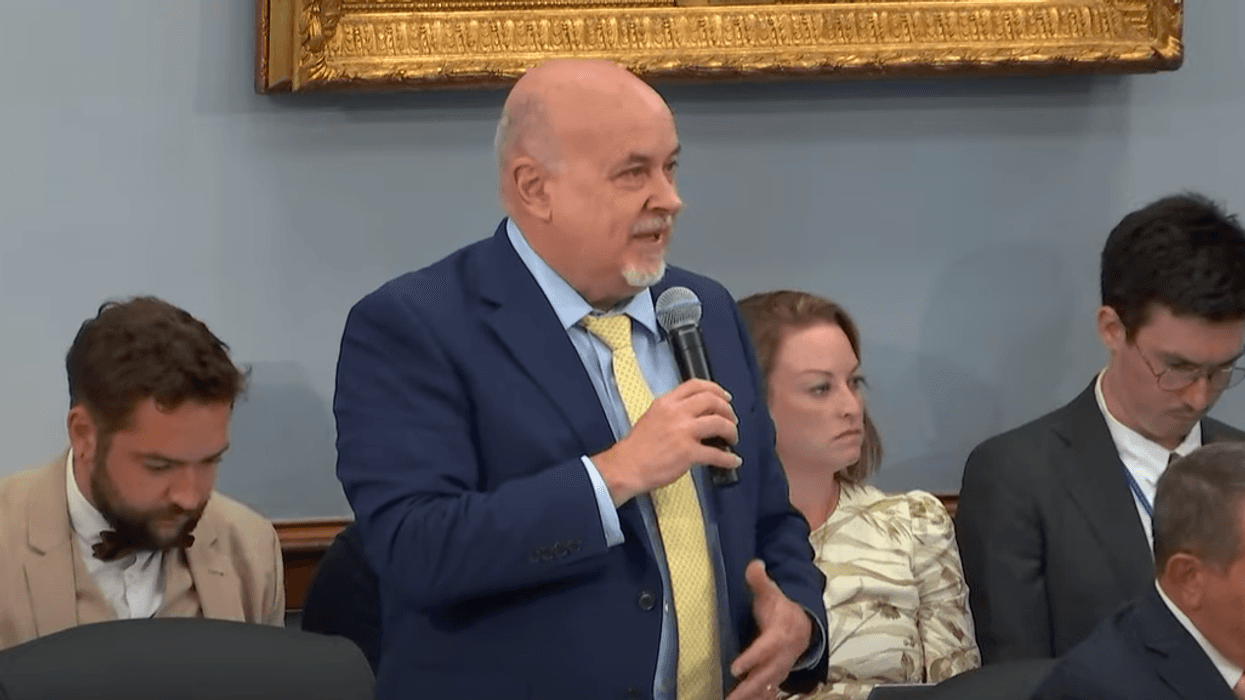
"They're happy to give even more to the wealthiest with giant tax breaks," said Rep. Mark Pocan, "but when it comes to helping people in need, there's never enough to go around."
House Republicans have struck down a pair of amendments to fully fund the Meals on Wheels program and AIDS prevention as part of this week's markup process for the fiscal year 2026 US Department of Health and Human Services (HHS) budget.
The amendments were proposed by Rep. Mark Pocan (D-Wis.) to the bill recently released by the House Appropriations Committee, which proposes to cut HHS funding by 6%.
Part of that funding comes from Meals on Wheels, the charity that provides an estimated 250 million meals each year to senior citizens unable to cook for themselves. The charity says that 9 in 10 of its providers receive some amount of federal funding and that for 60% of them, it represents more than half their operating budget.
According to Pocan, who spoke Monday on the House floor, the Republican bill underfunds the food assistance program by $600 million, which he says is likely to cost 1.9 million people their access to food.
" Republicans in the appropriations process are leaving seniors to starve," Pocan said.
Combined with the $187 billion already cut from the Supplemental Nutrition Assistance Program (SNAP) by the "One Big Beautiful Bill Act," which Republicans passed in July, Pocan said it amounts to "the largest cut to food assistance in our nation's history."
Pocan juxtaposed these cuts with the "extravagant dinner" hosted this weekend at Trump's new, private White House "Rose Garden Club," which White House social media shows featured "steak and a fudge-filled seven-layer cake."
"I guess the theme of the White House event was 'let them eat cake,'" Pocan joked.
When he proposed the amendment as part of the markup process on Tuesday, Pocan spoke about his elderly mother's experience relying on the Meals on Wheels program when she dealt with mobility issues.
"I would hope that this is something where we could get together and say, 'Yeah, this should be a priority... We respect our seniors and we're going to show that through Meals on Wheels," Pocan said before his House colleagues.
Every single Republican on the Appropriations Committee voted against the amendment.
Republicans also unanimously struck down Pocan's amendment to restore nearly $2 billion for AIDS prevention cut from the House GOP bill, which makes up 25% of the total budget cuts to HHS.
In June, the Foundation for AIDS Research projected that Trump's proposal to cut $1.3 billion worth of HIV prevention funds "could cause an additional 144,000 new HIV diagnoses, 15,000 deaths, and 128,000 more people living with HIV in the US by 2030."
The Appropriations Committee budget goes even further than Trump's proposed budget released earlier this year, cutting over $1.7 billion worth of AIDS prevention funding.
It calls for the total elimination of Centers for Disease Control and Prevention funding to combat HIV and cuts $220 million allocated to Trump's own Ending the HIV Epidemic (EHE) initiative. It also eliminates $525 million from the Ryan White Program, which provides grants to over 400 HIV/AIDS clinics providing care and treatment.
"This is not a bill for making America healthy again, but a disastrous bill that will reignite HIV in the United States," said Carl Schmid, executive director of the HIV+Hepatitis Policy Institute. "Eliminating all HIV prevention means the end of state and local testing and surveillance programs, educational programs, and linkage to lifesaving care and treatment, along with PrEP. It will translate into an increased number of new HIV infections, which will be costlier to treat in the long run."
After Republicans voted down his amendment to reverse these "devastating" cuts, Pocan wrote on X, "They're happy to give even more to the wealthiest with giant tax breaks, but when it comes to helping people in need, there's never enough to go around."
"Now that Vought is officially running the show, he'll be able to unleash his radical agenda across the federal government. And if the courts stop him, he's got a billionaire friend with the government's keys and checkbook: Elon Musk."
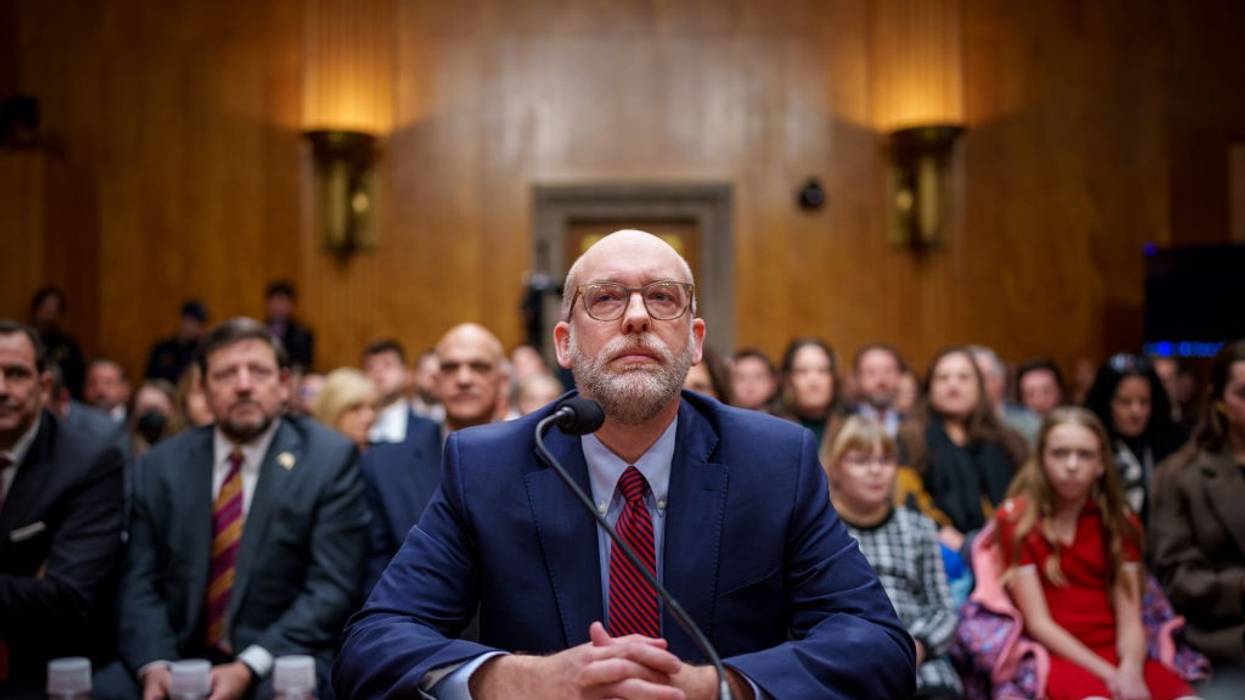
In a party-line vote late Thursday, the U.S. Senate confirmed right-wing extremist and Project 2025 architect Russell Vought to lead the White House budget office as the Trump administration works to unilaterally dismantle entire federal agencies and choke off funding already approved by Congress.
Vought's confirmation, backed only by Republican votes in the Senate, comes after the chamber's Democrats used up all 30 hours of debate on his nomination to warn of the damage he could inflict as director of the Office of Management and Budget.
Lawmakers and progressive activists echoed those warnings in the wake of his confirmation. Alex Jacquez, chief of policy and advocacy at the Groundwork Collaborative, said in a statement that "Vought's fingerprints are all over last week's illegal funding freeze."
"Halting funding for Americans' healthcare, childcare, and food assistance wasn't a bug," said Jacquez. "It was by design, and Project 2025 is the blueprint. Now that Vought is officially running the show, he'll be able to unleash his radical agenda across the federal government. And if the courts stop him, he's got a billionaire friend with the government's keys and checkbook: Elon Musk."
During his confirmation process, Vought expressed agreement with Trump's view that the 1974 Congressional Budget and Impoundment Control Act (ICA)—a law passed in response to former President Richard Nixon's refusal to spend congressionally approved funds on programs he opposed—is unconstitutional, a view that Musk has also expressed.
Politico reported Thursday that Vought "is expected to soon press his theory on impoundments, the idea that the president can ignore congressional spending edicts." Analysts have argued that even without the ICA, unilateral impoundments of the kind the Trump White House is expected to pursue in the coming months and years would still be unconstitutional.
Rep. Rosa DeLauro (D-Conn.), the top Democrat on the House Appropriations Committee, said in a statement Thursday that "in confirming Vought, Republicans have put their stamp of approval on ending American democracy—built on three co-equal branches of government—and on creating a government of billionaires, by billionaires."
"Our nation is facing an extraordinary crisis," said DeLauro. "Donald Trump is attempting to claim absolute power for the presidency. The chaos, confusion, and flagrantly unconstitutional actions of the early days of this administration are largely of Vought's design and doing. With Vought's encouragement, the administration has taken the groundless position—and demonstrated—that they believe the White House has the absolute power to determine spending, and that they can choose to simply not fund programs and services that Congress has promised to the American people. This could not be further from the truth."
"The Constitution empowers Congress, not the president, with the power of the purse," DeLauro continued. "The president is not a king who can pick and choose which laws to follow and which laws to ignore. But the president is relying on the guidance and counsel of Russ Vought to do just that."
In one of his appearances before the Senate last month, Vought told lawmakers that he views the Clinton-era welfare reform law that doubled extreme poverty as a crowning achievement and declared that "we need to go after the mandatory programs," which include Social Security, Medicare, and Medicaid.
"Vought is an extremist who has made clear he'll ignore our nation's laws, cut funding that helps people across the country, and give Trump unprecedented and unconstitutional power," warned Sen. Patty Murray (D-Wash.), the top Democrat on the Senate Appropriations Committee, following Vought's confirmation. "There will be consequences."

Rep. Rosa DeLauro said Republicans' newly proposed funding cuts threaten "the future of an entire generation."
The top Democrat on the House Appropriations Committee on Wednesday accused her Republican colleagues of working to completely decimate U.S. public education by proposing steep cuts to key programs in a newly released funding bill.
Republicans on the appropriations panel, chaired by Rep. Tom Cole (R-Okla.), weren't shy about the expansive spending cuts they're pursuing: In a statement, the committee's GOP majority noted that its fiscal year 2025 funding legislation for the Departments of Labor, Health and Human Services, Education, and other related agencies would fully eliminate 57 programs, slash 48 more, and reduce spending on K-12 education grants.
An appropriations subcommittee is scheduled to mark up the bill on Thursday morning.
Rep. Rosa DeLauro (D-Conn.), the ranking member of the House Appropriations Committee, said in response to the majority's legislation that "Republicans are in the midst of a full-scale attempt to eliminate public education that makes the American Dream possible," noting that the proposal gashes "support for children in K-12 elementary schools, threatening the future of an entire generation."
According to a fact sheet released by Democrats on the House Appropriations Committee, the proposed GOP funding levels would cut the Department of Education by $11 billion, or 14% below 2024 levels. Specifically, the measure would slash Title I Grants to local educational agencies by roughly $5 billion, reducing assistance for school districts with a large number of students from low-income families.
Additionally, Democrats on the committee warned the bill would cut "mental health support in schools while children struggle to access the services they need" and eliminate "funding for English Language Acquisition and teacher training opportunities used to increase the number and improve the quality and effectiveness of teachers and school leader," while also targeting programs aimed at helping students access higher education.
On top of its education cuts, the bill would zero out "funding for Title X Family planning," "block funding for Planned Parenthood health centers," slash the Social Security Administration's operating budget, and curb spending on worker protections, according to the Democratic lawmakers' summary.
"This bill is dangerous and threatens programs and services that Americans depend on at every stage of their life," DeLauro said Wednesday.
Republicans' proposed cuts offer a glimpse of the GOP's plans for federal education funding should the party win full control of Congress and the presidency in November.
During a rally in Philadelphia this past weekend, presumptive Republican presidential nominee Donald Trump said he would attempt to cut federal education funding in half if he's elected to another White House term.
Trump claimed such a cut would result in "much better education in some of the states."
"Some won't do as well," added the former president, who has also expressed support for eliminating the Department of Education altogether—a position aligned with that of Project 2025.
Trump's comments and congressional Republicans' latest push for deep funding cuts came as billionaire-funded organizations across the United States continued their effort to privatize U.S. public education by promoting voucher programs that subsidize private schools with taxpayer dollars.
As Common Dreams reported, an analysis released by Sen. Bernie Sanders (I-Vt.) on Tuesday highlighted the role that Betsy DeVos—who served as Trump's education secretary—and other billionaires in working to "undermine, dismantle, and sabotage our nation's public schools and to privatize our education system."
"We can no longer tolerate billionaires and multinational corporations receiving massive tax breaks and subsidies while children in America are forced to go to understaffed, underresourced, and underfunded public schools," Sanders said Tuesday.

"House Republicans had a bad day," said one reporter, listing challenges and changes to leadership as a government shutdown looms.
The U.S. House of Representatives started a two-week recess on Friday, but not before a series of events that provoked fresh declarations of what has become a familiar phrase over the past few years: "Republicans in disarray."
Before leaving Capitol Hill, House members passed a spending package intended to prevent a partial government shutdown that could still occur unless the Senate acts. Fewer than two dozen Democrats and over 100 Republicans opposed the bill. Democratic opposition was largely related to Israel's war on the Gaza Strip.
Meanwhile, far-right Republicans like Texas Congressman Chip Roy have made comments like, "Everyone that I know and trust about the border, about overall spending, see it as a complete and total failure and a capitulation by Republicans. And leadership worked the deal, so it's on leadership."
Congresswoman Marjorie Taylor Greene (R-Ga.) not only opposed the package but also filed a motion to vacate, hoping to remove House Speaker Mike Johnson (R-La.)—which would only require a simple majority if it came up for a vote.
House Republicans elected Johnson to the leadership role in late October, after ousting former Speaker Kevin McCarthy (R-Calif.)—who then opted to leave office at the end of last year—and rejecting three other candidates for the post: Reps. Tom Emmer (D-Minn.), Steve Scalise (R-La.), and Jim Jordan (R-Ohio).
Noting that Greene filed a regular motion rather than a privileged one, meaning it could be referred to a committee, "where it would likely languish," NBC News reported Friday:
Greene told reporters that her motion to vacate was "more of a warning than a pink slip," saying she does not want to "throw the House into chaos," like the three and a half weeks that the chamber was without a speaker when McCarthy, her close ally, was ousted.
"I'm not saying that it won't happen in two weeks or it won't happen in a month or who knows when. But I am saying the clock has started. It's time for our conference to choose a new speaker," she said.
Johnson's October election led Rep. Matt Gaetz (R-Fla.)—who filed the motion to vacate targeting McCarthy—to declare that "MAGA is ascendant," a reference to the "Make America Great Again" campaign slogan of former President Donald Trump, the presumptive GOP nominee for the November election.
While Gaetz voted against the spending package on Friday, he also said that "if we vacated this speaker we'd end up with a Democrat. You know, when I vacated the last one, I made a promise to the country that we would not end up with a Democrat speaker and I was right. I couldn't make that promise again today."
Asked if he thinks Johnson's job is safe, Gaetz responded, "It is."
House Minority Leader Hakeem Jeffries (D-N.Y.) also responded dismissively when questioned about Greene's motion on Friday, telling Punchbowl News, "She's a joke."
A spokesperson for Johnson, Raj Shah, told Politico that the speaker "always listens to the concerns of members, but is focused on governing. He will continue to push conservative legislation that secures our border, strengthens our national defense, and demonstrates how we'll grow our majority."
However, Johnson's limited control over the House is dwindling. Congressman Mike Gallagher (R-Wis.), who backed the spending bill, revealed that he is resigning from his seat effective April 19 after previously saying that he would not seek reelection. Friday was also the last day of Rep. Ken Buck (R-Colo.), who announced earlier this month that he would step down from his seat.
The Washington Post noted Friday that "Buck and Gallagher are the sixth and seventh members of the House who are quitting midterm simply to leave for the private sector, a trend we dubbed 'the Great Resignation' last weekend. It's also the highest number of lawmakers quitting public service altogether in at least 40 years."
Responding to Gallager's announcement on social media, HuffPost's Jennifer Bendery said that "House Republicans are imploding in plain sight."
In yet another disruption to the chamber's GOP leadership, Rep. Kay Granger (R-Texas)—who announced last year that she wouldn't seek reelection—wrote in a Friday letter to Johnson that she plans to step down as chair of the House Appropriations Committee.
Granger told the speaker she would stay in the post until the Republican Steering Committee chooses her replacement and then remain on the panel through the end of her term to offer "advice and counsel for my colleagues when it is needed."
The Texas Tribune pointed out that "the Appropriations Committee will need to pass another set of federal funding bills before the end of September to keep the government funded. Congress has failed to meet that deadline for nearly 30 years, and Granger acknowledged in her letter that election years in particular often distract Congress from passing spending bills on time."
GOP members of the upper chamber were also accused of sowing chaos on Friday, as the midnight shutdown deadline loomed.
Senate Budget Committee Chair Sheldon Whitehouse (D-R.I.) said on social media, "Well, it looks like we're headed for a shutdown at the hands of Senate Republican gremlins who (1) know that amendments can't pass because there's no House to send an amended bill back to (they adjourned) and (2) want amendments anyway."
"And (3) can't decide amongst themselves what won't-pass amendments they want," Whitehouse added. "I sure hope I'm wrong. But the Republican Senate caucus is a rudderless ship right now, so the gremlins are running the show."

The House bills are highly partisan and deviate sharply from the levels set in the bipartisan agreement to raise the federal debt limit in May.
The fiscal year 2024 appropriations bills approved by the House Appropriations Committee make major cuts in a wide range of domestic priorities. Among those hardest hit are programs crucial to the well-being of families with low incomes and their children, to public health, to job training and protection of workers’ rights, to a clean environment, and to fair administration of tax laws. The House bills are highly partisan and deviate sharply from the levels set in the bipartisan agreement to raise the federal debt limit in May.
In contrast, the Senate-passed appropriations bills are lean but include substantially fewer cuts and rescissions (which take back already enacted funding), are largely consistent with agreed-on levels, and have strong bipartisan support. They offer a better path toward funding that meets national needs, although there are some programmatic areas where the Senate levels are too low to meet those needs, such as with WIC (the Special Supplemental Nutrition Program for Women, Infants, and Children) and housing assistance.
As part of the debt limit deal, the House, Senate, and Biden administration agreed on defense and non-defense appropriations totals for 2024, calling for regular 2024 non-defense appropriations to be held to the same dollar total as in 2023. Reaching the 2023 non-defense level in 2024 requires not only setting appropriations at the cap established in the debt limit legislation but also adhering to the agreements negotiators had signed off on that provide offsets to accommodate additional funding. Such a freeze at last year’s level is fairly austere. It requires any increases that are necessary to meet rising costs, increasing needs, or new situations to be offset by cuts in other areas.
This report describes some of the serious cuts and shortfalls in the House appropriations bills.
While the Senate’s 2024 appropriations bills generally adhere to that approach (with small deviations agreed to on a bipartisan basis), the House’s Republican majority began writing non-defense appropriations bills with severe cuts to vital programs, at a total that is roughly $153 billion lower than had been agreed on. In the bills drafted by the House Appropriations Committee, the House Republicans achieve those cuts in two basic ways: by reducing many 2024 appropriations by about $59 billion (7%) below the 2023 levels, and by rescinding $94 billion of already enacted funding, almost all from the 2022 Inflation Reduction Act.
This report describes some of the serious cuts and shortfalls in the House appropriations bills, affecting areas such as education, child care, housing, job training, public health, medical research, nutrition assistance, environmental protection, renewable energy, enforcement of civil rights and worker protection laws, and operation of the Social Security system. It also describes the proposed rescissions of previously enacted funding, which include amounts that had been provided to fairly enforce tax laws and make sure that wealthy individuals and corporations pay their share, and to combat climate change, promote clean energy, and assist farmers.
The House bills shortchange the needs of pregnant people and families with young children who need help affording healthy food, of school children in low-income communities, of families needing help with child care costs or an affordable place to live, and of college students seeking financial aid.
The House bills would:
Take away food assistance from hundreds of thousands of new parents and young children by underfunding WIC. This Agriculture Department program supports millions of people in low-income families in important life stages—during and after pregnancy, and from birth until a child’s fifth birthday—by providing nutritious foods, nutrition education, referrals to healthcare, and other services. The House Agriculture bill’s WIC funding is well below the level needed to serve all eligible families who wish to participate, and would result in an estimated 600,000 new parents, toddlers, and preschoolers being turned away. The House bill would also cut WIC’s science-based fruit and vegetable benefit by between 58% and 71% (depending on the recipient’s age) for 4.7 million of the remaining participants.
Cut more than $15.6 billion in funding that schools use to help students in low-income communities learn and to help students whose first language is not English. The bills:
Make it harder for students to afford college by eliminating some forms of help, including federal work-study funding, and by freezing Pell Grants, which provide tuition assistance. The bills withdraw more than $2 billion in college assistance, straining families’ budgets and making it harder for many students to go to college. The bills:
Make it harder for families to afford child care, reduce the number of children who can participate in Head Start, and cut funding that supports state efforts to improve preschool offerings. Compared to the Senate bills, the House bills provide some $2.0 billion less for three main early learning programs—child care, Head Start, and Preschool Development Grants—on top of cuts to Title I (described above), which also funds early learning. These cuts undercut support for the early learning and child care that families and children need, at a time when Covid-related funding has expired, which is also threatening the stability of many providers. The bills would:
Cut the number of households that receive rental assistance and make it harder for households struggling with the rising cost of rent. The bills would:
The House bills cut back federal support for public health workers who detect disease outbreaks, vaccinate people against dangerous diseases, and promote disease prevention. They also cut back funding for medical research into better treatment and cures for diseases, as well as support for family planning clinics and care for people with HIV, among other healthcare needs.
The House bills would:
Reduce the nation’s preparedness for disease outbreaks and cut disease prevention efforts through an 18% ($1.6 billion) cut to the Centers for Disease Control and Prevention. CDC tracks and responds to disease outbreaks, fosters disease prevention, and supports the work of state and local public health agencies. Examples of cuts to CDC’s budget include a 16% reduction in funding for prevention of HIV, viral hepatitis, sexually transmitted infections, and tuberculosis; a 21% cut in chronic disease prevention programs; and a 17% cut in public health preparedness.
Reduce the nation’s commitment to groundbreaking medical research by cutting funding for the National Institutes of Health (NIH) by 8% ($3.8 billion). NIH is a major source of support for medical research, both conducting its own in-house research and funding the work of medical researchers throughout the country. The biggest dollar cut within this part of the legislation is a $1.5 billion (23%) reduction to the NIH institute that studies infectious diseases—this following a major pandemic with severe impacts on people’s health and the nation’s economy. The legislation also includes a two-thirds cut, from $1.5 billion to $500 million, to ARPA-H (Advanced Research Projects Agency for Health). ARPA-H’s purpose is to undertake long-shot but potentially high-reward projects not readily accomplished through traditional federal biomedical research, including participation in the Cancer Moonshot initiative seeking a cure for that disease.
Make it harder for people to access family planning services by eliminating funding for Title X grants to public and private nonprofit agencies that support family planning services for people with modest incomes. In 2021, this program provided contraceptive, infertility, and other family planning services to more than 1.6 million clients at more than 3,200 sites nationwide. Established 53 years ago, Title X received appropriations totaling $286 million in 2023. Fees are charged on a sliding scale based on clients’ ability to pay.
Cut care to people with HIV by reducing the Ryan White HIV/AIDS program by 9% ($239 million). This HHS program provides funding to state and local governments and local clinics and organizations to deliver care, treatment, and support to low-income people with HIV.
The House bills sharply scale back funding for job training for people seeking to learn new skills and boost their employment prospects. They also make big cuts to agencies that protect workers’ rights, including rights to minimum wages and overtime pay, to safe workplaces, and to engage in union activity.
The House bills would:
Eliminate federal job training funding for adults and youth provided through the Workforce Innovation and Opportunity Act, a major source of job training funding. These programs received $1.8 billion in 2023, which is expected to support training for more than 420,000 adults and youth.
Leave workers less protected against illegal employer behavior by cutting efforts to enforce the right to unionize and basic health and safety standards. The bills would:
The House bills make big cuts to environmental protection, including enforcement of environmental laws, programs to clean up pollution, and investments in safe drinking water, wastewater treatment, and other infrastructure. The House bills also make big cuts and rescissions to programs that promote clean energy and otherwise address climate change.
The House bills would:
Leave communities and people more vulnerable to water and air pollution, unsafe drinking water, toxic wastes, hazardous chemicals, and other threats to human health by cutting funding for the Environmental Protection Agency (EPA) by 39% ($4.0 billion). This cut would bring EPA funding to the lowest level since 1991, before adjusting for inflation. Cuts include 26% in Environmental Programs and Management (which funds activities such as development and enforcement of environmental protection rules and standards), 30% in Science and Technology (which performs scientific research and laboratory analysis to inform EPA’s work), and 42% in State and Tribal Assistance Grants (which include funding for wastewater treatment and drinking water facilities, water pollution control, and other environmental grant programs).
Take less care of our national parks with a 13% ($436 million) cut to the National Park Service budget. This includes a 9% cut in funds for operating the national parks and a 52% cut in the national parks construction budget.
Reduce efforts to facilitate our transition to clean energy by cutting funding for the Energy Department’s Energy Efficiency and Renewable Energy programs by 42% ($1.5 billion). This appropriations account supports research, development, demonstration, and deployment of technologies to enable transition to a net-zero greenhouse gas emissions economy. It gives special attention to the needs of workers and communities impacted by the energy transition and to those historically overburdened by pollution, who are disproportionately people of color due to policies like redlining that promoted exposure to industrial areas.
Shred multi-year efforts to promote clean energy and combat climate change by rescinding more than $29 billion in multi-year funding that had been provided in the 2022 Inflation Reduction Act to further those goals. The House bills would cut:
Scale back assistance to farmers and rural communities by rescinding approximately $5.8 billion in multi-year funding that had been provided in the 2022 Inflation Reduction Act for those purposes. Included in the House bills’ cuts:
The House bills make several cuts to transportation infrastructure, including funding for mass transit improvement projects, support for Amtrak, and grants to improve freight rail safety and reliability.
The House bills would:
Let bus, subway, and passenger rail service deteriorate by slashing federal support:
Do less to upgrade transportation infrastructure, including railroad safety:
The House bills worsen the underfunding of agencies that directly serve the public in critical ways, including the IRS and the Social Security Administration (SSA), leading to longer waits to get questions answered or for decisions about benefits. This will also continue to leave the IRS short of the staffing and expertise it needs to audit complex tax returns and make sure that corporations and wealthy people are paying their fair share—reversing an agency rebuilding process that is already seeing improvements in customer service and in revenue collected in the face of tax avoidance by some wealthy taxpayers.
The House bills would:
Gut efforts to improve customer service at the IRS and ensure that high-income households and corporations pay the taxes they legally owe by rescinding the vast majority of the multi-year funding provided for the long-term rebuilding of IRS capacity to enforce tax laws and serve taxpayers, while also cutting regular annual IRS funding by 9% ($1.1 billion). The Inflation Reduction Act of 2022 provided multi-year funding to counteract long-term underfunding that left the IRS with greatly diminished capacity to reduce tax cheating by properly auditing complex tax returns of wealthy taxpayers, or to respond to ordinary taxpayers’ questions. But of the $80 billion in ten-year funding that law provided, the House bills rescind $67 billion, devastating the rebuilding effort. The House bills compound this problem by cutting the regular annual IRS appropriation by $1.1 billion (or 9%), thus further reducing IRS capacity instead of rebuilding it.
Further erode customer service at the SSA by cutting the agency’s customer service budget by 2% ($250 million), when funding increases are needed to boost staffing and invest in IT as the number of beneficiaries grows. The House bills’ cuts would come on top of more than a decade of cuts that have forced the agency to face serving millions more beneficiaries at its lowest staffing level in over 25 years. Between 2010 and 2023, customer service funding at the SSA fell by 17% (adjusted for inflation), and the number of staff fell by 16%, while the number of beneficiaries rose by 22%. Wait times for disability decisions are at a record high, and hold times on the phone are now around 40 minutes. Flat funding under the current continuing resolution has led to a hiring freeze and suspension of IT investments.
Undermine enforcement of civil rights laws that ensure people can access public services without facing unlawful discrimination. The House bills cut funding for agency Offices of Civil Rights, which enforce civil rights requirements related to their agency’s mission and programs. Cuts include 39% at the Agriculture Department, 25% at the Education Department, and 20% at HHS.
The bills produced by the House majority are also replete with partisan legislative provisions or “riders,” mostly pursuing what have become common targets of Republican culture wars.
Examples of such riders include provisions in multiple bills that would stymie racial equity initiatives, such as prohibiting the use of funds to carry out the president’s executive orders on diversity, equity, and inclusion or for agency offices dedicated to furthering those goals, and prohibiting the use of funds to promote or advance critical race theory.
Other riders include anti-LGBTQ policies that would prohibit the use of funds for surgical procedures or hormone therapy for purposes of gender-affirming care, prohibit implementation of an executive order on combatting discrimination based on gender identity or sexual orientation, and prohibit flying LGBTQ pride flags at federal facilities.
The Republican bills also seek to further restrict abortion rights, including by overturning a decision by the Food and Drug Administration that facilitates access to the medication abortion drug mifepristone; blocking a Defense Department policy to cover travel costs of service members and members of their families to obtain abortions if they are stationed in states restricting abortion services; prohibiting clinics affiliated with Planned Parenthood from receiving funds appropriated in the Labor-HHS-Education bill unless they stop performing legally permissible abortions; and blocking the use of funds in the bills to implement two executive orders related to access to reproductive healthcare services.

"More cuts to SSA will result in a rapid increase of wait times, force SSA offices to close in many communities, and reduce service hours to the public."
A union representing more than 750,000 federal employees warned Wednesday that the House GOP's proposed cuts to the Social Security Administration for the coming fiscal year would deeply harm the already strained and understaffed agency, potentially forcing it to close offices and slash service hours.
Such impacts would "devastate the agency's ability to serve the American public," Julie Tippens, legislative director of the American Federation of Government Employees (AFGE), wrote in a letter to the top members of the House Appropriations Committee.
Last week, a Republican-controlled appropriations subcommittee approved legislation that would cut the Social Security Administration's (SSA) budget for fiscal year 2024 by $183 million below the currently enacted level. President Joe Biden's 2024 budget proposal, by contrast, called for a $1.4 billion increase for the agency.
The full House Appropriations Committee still must approve the measure, one of a dozen government funding bills that Congress is looking to pass by September 30 to avert a government shutdown.
Tippens noted that "seniors and disabled individuals already face long lines to get help at field offices"—conditions that would only worsen under the GOP proposal.
"Someone calling SSA's helpline faces an antiquated phone system that frequently drops their calls and where the average wait time is 35 minutes," Tippens wrote. "A worker with disabilities trying to claim their earned disability benefit faces a wait time of over seven months to get an initial decision and up to two years or longer to schedule a disability hearing. More than 10,000 Americans die, and another 5,000 Americans are forced to declare bankruptcy, every year while waiting for their disability hearing."
"More cuts to SSA will result in a rapid increase of wait times, force SSA offices to close in many communities, and reduce service hours to the public," she added, urging lawmakers to reject the funding reduction.
"Social Security is one thing the American people should be able to count on, yet the House Republican bill would disrupt access to those earned benefits."
The GOP's proposed cuts to the Social Security Administration come after House Speaker Kevin McCarthy (R-Calif.) announced plans to establish a bipartisan "commission" to examine ways to cut Social Security.
Two weeks after McCarthy's remarks, the 175-member Republican Study Committee released a proposal that would raise Social Security's full retirement age to 69, a change that would cut benefits across the board.
Rep. John Larson (D-Conn.), a leading proponent of Social Security expansion in the House, warned last week that Republicans' attack on the Social Security Administration is their "first step" toward cutting benefits.
"Social Security is one thing the American people should be able to count on, yet the House Republican bill would disrupt access to those earned benefits," said Larson. "Already, years of underfunding, combined with the Covid-19 pandemic, have significantly worsened Social Security Administration's service, and led to lengthy delays during a time of rising need."
"The House Republican bill will only pile onto this problem, making it harder and harder for Americans to access their earned benefits," Larson continued. "I will continue to fight for the Social Security Administration to have the funding and staffing it needs to improve customer service to the American people."

Legislation that the Republican-controlled House Appropriations Committee is set to mark up on Wednesday would take an axe to U.S. climate spending, cutting the Environmental Protection Agency's budget by a staggering 39% while promoting fossil fuel development as huge swaths of the planet face devastating heatwaves.
Kyle Jones, director of federal affairs with the Center for Policy Advocacy at the Natural Resources Defense Council (NRDC), said in a statement Tuesday that the Republican bill is "historically bad... the worst of its kind we've ever seen."
Jones went on to say that the legislation—one of a dozen appropriations bills currently moving through the House—"reads like a 'how-to' manual for destroying the planet."
"While Americans take refuge from record-setting extreme heat and suffer from wildfire smoke, the House majority proposes slashing environmental funding to the lowest level in 30 years," said Jones. "This is a non-starter, based on galling scientific ignorance and reactionary politics."
Made public last week amid record-shattering heat and other extreme weather across the U.S., the GOP's Interior, Environment, and Related Agencies funding bill calls for $4 billion in total cuts to the EPA budget—slashing the agency's clean water funds, emissions-reduction grants, and other programs.
The bill would also cut the Interior Department's budget by $721 million, remove the Gray Wolf from the list of endangered and threatened wildlife, and prevent the EPA from considering the social cost of carbon in any regulatory action.
Meanwhile, the Republican legislation aims to bolster the industry fueling climate chaos by requiring the Interior Department to hold at least two offshore oil and gas lease sales in both the Gulf of Mexico and Alaska each year.
"The bill includes an exhaustive list of anti-environment riders that seek to derail any effort to combat climate change and undermine clean water and clean air protections," Rep. Chellie Pingree (D-Maine), the top Democrat on the House Interior, Environment, and Related Agencies Subcommittee, said during a hearing on the measure last week.
Republicans "give an open invitation to exploitative oil, gas, and mineral leasing by blocking environmental regulations and even overriding judicial review," Pingree added. "At the same time, the bill suppresses clean energy production."
"This effort by the Republican House majority is a slap in the face to the millions of Americans suffering through weeks-long heatwaves and devastating floods."
The NRDC's Josh Axelrod and Valerie Cleland wrote in a blog post that the legislation marks "the Republican majority's latest in a series of attempts to hand over our public lands and waters to Big Oil."
"To say these provisions would have devasting impacts on both climate and communities would be an understatement," Axelrod and Cleland added. "This effort by the Republican House majority is a slap in the face to the millions of Americans suffering through weeks-long heatwaves and devastating floods and who are looking to Congress for solutions to meet this historic and challenging moment."
As their appropriations bills make clear, House Republicans are looking to enact painful cuts across the federal government, drawing vocal opposition from congressional Democrats and increasing the likelihood of a shutdown.
Late last week, as Common Dreams reported, a GOP-controlled subcommittee advanced an agency funding bill that would cut the Department of Education's budget to below the 2006 level and slash programs that help employ hundreds of thousands of teachers nationwide.
Additionally, as The Washington Post noted Tuesday, "a series of GOP bills to finance the federal government in 2024 would wipe out billions of dollars meant to repair the nation's aging infrastructure, potentially undercutting a 2021 law that was one of Washington's rare recent bipartisan achievements."
"The proposed cuts could hamstring some of the most urgently needed public-works projects across the country, from improving rail safety to reducing lead contamination at schools," the Post added.