

SUBSCRIBE TO OUR FREE NEWSLETTER
Daily news & progressive opinion—funded by the people, not the corporations—delivered straight to your inbox.
5
#000000
#FFFFFF
To donate by check, phone, or other method, see our More Ways to Give page.
Daily news & progressive opinion—funded by the people, not the corporations—delivered straight to your inbox.
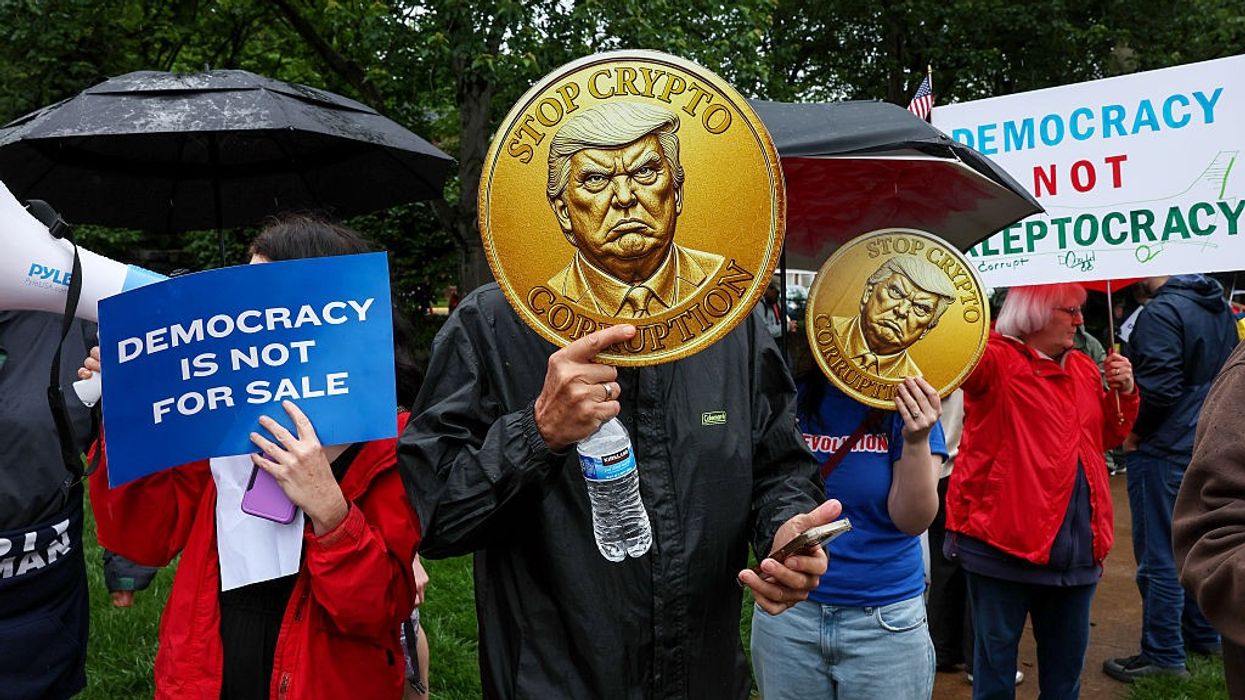
"Your family gets higher energy prices and cuts to healthcare. His family gets billions," said Rep. Greg Casar.
In what Public Citizen called "the greatest corruption in presidential history," US President Donald Trump and his family added $5 billion in cash to their fortunes this Labor Day as his new cryptocurrency was opened to the public market.
The currency, known as WLFI, is owned by World Liberty Financial, a company founded by the president's sons, Donald Trump, Jr., and Eric Trump. A Trump business entity owns 60% of the company and is entitled to 75% of the revenue from coin sales.
As the Wall Street Journal reported Monday:
The trading debut was most likely the biggest financial success for the president's family since the inauguration...
WLFI is likely now the Trumps' most valuable asset, exceeding their decades-old property portfolio. While the president's family has continued to pursue property deals around the world since taking office, the fast-moving crypto business has had the biggest early impact.
Crypto is now the dominant source of Trump's wealth. As an investigation by the anti-corruption group Accountable.US found last month, "President Trump's net worth could roughly be $15.9 billion, with about $11.6 billion in uncounted crypto assets," meaning that the digital currencies now make up 73% of his total net worth.
In addition to the tokens owned by World Liberty Financial, it found that two Trump-affiliated companies owned 80% of the $TRUMP meme coin as of May and had collected over $324 million in fees since Trump took office in January.
Meanwhile, Trump Media, which owns his online platform Truth Social, bought $2 billion worth of Bitcoin in July and reserved another $300 million in Bitcoin options.
As America's self-proclaimed "first crypto president," Trump has sought to curb regulations against the volatile financial assets.
In July, Trump signed the GENIUS Act, which purports to establish the US's first regulatory framework for crypto. However, critics noted that the law designated so-called "stablecoins," of which Trump owns many, as "commodities" rather than "securities," allowing them to face much looser oversight.
Though the bill passed with support from over 100 Democrats, Rep. Maxine Waters (Calif.), the ranking Democrat on the House Financial Services Committee, warned that the bill "legitimizes Trump actively building the most corrupt self-dealing crypto environment this country has ever seen."
Rep. Ayanna Pressley (D-Mass.) described Trump's latest $5 billion windfall as "blatantly corrupt and a brazen abuse of power."
"The current occupant of the White House," she said, "is putting personal profit above the people, using his power to illegally line the pockets of his family and billionaire friends while hanging everyday families out to dry by ripping away their healthcare, food assistance, raising the cost of consumer goods, gutting the Consumer Financial Protection Bureau, and more."
While cryptocurrency is often billed as an asset available to everyone that levels the playing field of the finance world, in practice, its ownership is largely concentrated among the wealthiest Americans. According to a Harris poll published in April, nearly half of all crypto owners have a yearly income of over $150,000, putting them in the wealthiest 10% of the country.
"Your family gets higher energy prices and cuts to healthcare. [Trump's] family gets billions," said Rep. Greg Casar (D-Texas), the chair of the Congressional Progressive Caucus. "Corruption, plain and simple."
Sen. Patty Murray (D-Wash), a strong advocate for crypto regulation, said that such blatant profiting from the presidency makes Trump "easily the most corrupt president in our country's history," and emphasized that "Republicans in Congress are not lifting a single finger to exercise basic oversight."
According to data from OpenSecrets, just three crypto industry-backed political action committees (PACs) poured over $133 million into the 2024 election. Though they spent the majority of that money supporting Republicans, nearly 40% of it went to Democrats.
But although all this money helped to buy what Coinbase CEO Brian Armstrong called "America's most pro-crypto Congress ever," according to Reuters, just 3% of legislators in the US House of Representatives and Senate own these assets themselves, including Sens. Dave McCormick (R-Pa.) and Tim Sheehy (R-Mon.), as well as Reps. Nick Begich (R-Ark.) and Mike Collins (R-Ga.).
But Trump's profiteering far exceeds the crypto holdings of every congressperson put together.
"We have only seen the tip of the iceberg when it comes to the damage that this corruption will inflict on the American people," said Bartlett Naylor, a financial reform advocate with Public Citizen. "The impact of attempts by the Trump family and others to buy and sell politics and politicians will continue to ricochet."

According to an investigation by Accountable.US, 73% of Trump's net worth may now come from crypto, which his administration is working to dramatically deregulate.
Over his nearly seven months as president, the administration of U.S. President Donald Trump has been taking a sledgehammer to regulations on cryptocurrency. A new report sheds further light on the reasons why.
The president may be profiting far more from his "rapidly-growing crypto empire" than was previously known and has used it to dramatically increase his net worth, according to an investigation released Thursday by the anti-corruption group Accountable.US.
While a report from Bloomberg on July 2 estimated the billionaire president's crypto holdings to total about $620 million of his nearly $7 billion net worth, Accountable examined other investments that had not previously been reported.
"President Trump's net worth," the group estimated, "could roughly be $15.9 billion, with about $11.6 billion in uncounted crypto assets." This would mean crypto accounts for 73% of his net worth.
Accountable reached this number by including investments that either had not yet occurred or were not public at the time of previous reporting.
These included roughly 22.5 billion tokens issued by Trump-owned WorldLiberty Financial Inc., which are estimated to be worth about $2 billion in value, but had not yet become tradable.
Other analyses, it said, also excluded the $7 billion in value of the new $TRUMP memecoins released in late July 2025.
"Two Trump-affiliated companies owned 80% of the $TRUMP venture as of May 2025 and were estimated to have collected over $324 million just in fees since January 2025," the report said.
Accountable also factored the holdings of Trump Media—the company that owns the president's social media app Truth Social. In July, the company bought $2 billion in Bitcoin and reserved another $300 million for Bitcoin options, and also announced the launch of its own set of NFTs.
As part of what they called "Crypto Week," Republicans passed multiple industry-friendly pieces of crypto legislation in July, the GENIUS Act and the CLARITY Act, which Accountable says allow Trump to directly profit.
The GENIUS Act purported to create a regulatory framework for so-called "stablecoins," which are pegged to existing financial assets like the U.S. dollar and are poised to become part of the portfolios of increasing numbers of companies. However, as Nikki McCann Ramirez wrote for Rolling Stone in June:
One of Trump's priorities has been the normalization of these so-called stablecoins — a type of asset that his family is now hawking.
Despite the moniker, stablecoins can be extremely unstable. A 2023 study published by the Bank for International Settlements found that of 60 stablecoins analyzed in their review, all of them had become de-pegged from their underlying asset at least once.
The 2022 crypto crash was triggered by the failure of Terraform Lab's Terra/Luna "algorithmic" stablecoin—the collapse of which saw $45 billion erased in the span of a week.
The bill places only very light regulations on stablecoins, and Sen. Elizabeth Warren (D-Mass.) has warned that since he controls such a large percentage of the stablecoin market, their uptake into the broader economy could "create a superhighway for Donald Trump's corruption."
"As soon as the players understand that Trump's intervention is a real possibility, then the stablecoin market is no longer about a careful review of whether there are adequate dollars to back up a particular stablecoin, or whether the stablecoin issuer has an AAA rating," Warren said.
"Instead, the whole game becomes one of trying to engage the president to weigh the end and make one set of coins more valuable, and therefore another set of coins less valuable," she added. "It's corruption, but it's also a market manipulation that ultimately drains away any development...It undermines all the markets at that point."
But the CLARITY Act, which has been passed by the House and now awaits consideration in the Senate, is "the real prize" for the industry. It would dramatically narrow the Securities and Exchange Commission's (SEC) ability to regulate cryptocurrencies—most notably by recategorizing many assets as commodities instead of securities, which places them under the much smaller and less-resourced Commodity Futures Trading Commission (CFTC).
Trump would be one of the foremost beneficiaries of this bill, which would exclude digital assets like his $TRUMP and $MELANIA "meme coins" from SEC regulation.
It would also likely affect the classification of Bitcoin, which Trump Media has explicitly acknowledged would benefit the president. "If Bitcoin is determined to constitute a security," the company said in a June SEC filing, it could "adversely affect" the price of Bitcoin and the price of Trump Media's holdings.
Not only does this benefit Trump, said Accountable.US executive director Tony Carrk, but the legitimization and entrenchment of these unstable assets has the potential to make the whole economy less stable.
"Eerily reminiscent of the risky behavior that gave us the 2008 financial collapse, Donald Trump is ushering in a new era of casino-like speculation on Wall Street with highly volatile crypto trading in retirement accounts," Carrk said.
"While the Trump family stands to win either way with crypto investment product fees," Carrk added, "throwing such a wild card into the financial system with little to no guardrails could lead to history repeating itself—with everyday Americans footing the bill when things inevitably go south."
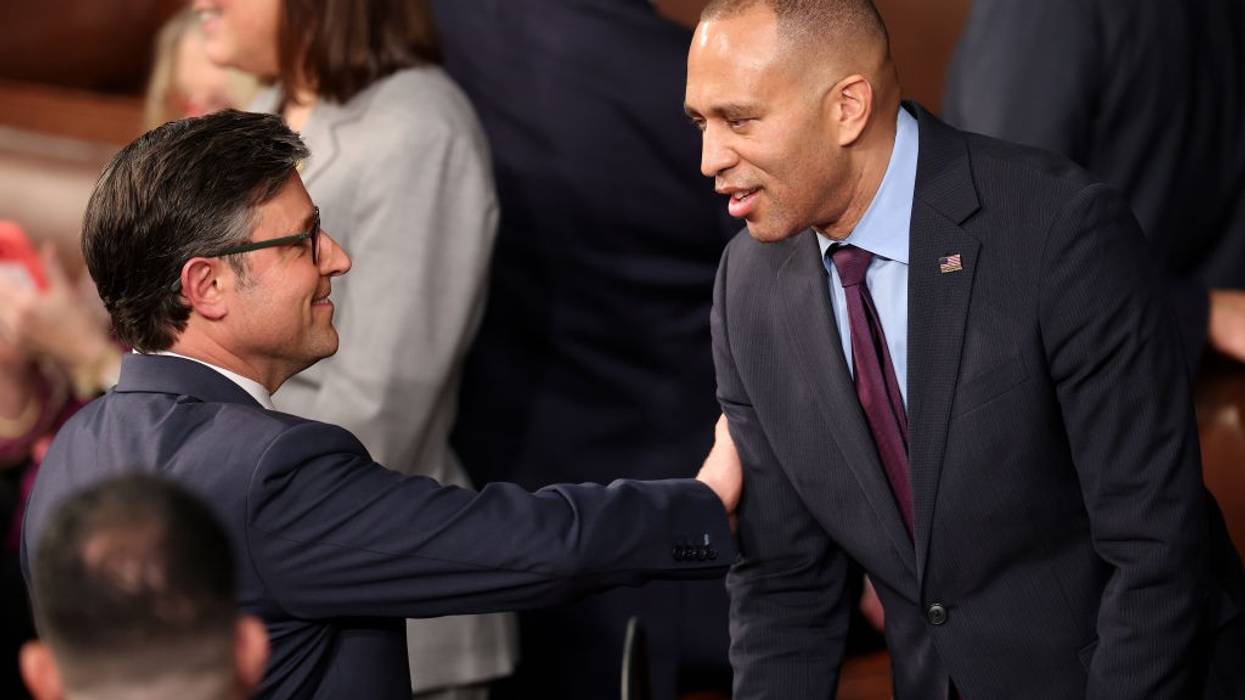
"Congress surrendered to the onslaught of crypto political spending and legitimized the world's biggest Ponzi scheme," said one GENIUS Act critic. "They also forfeited an opportunity to stop Trump's massive crypto grift."
More than 100 Democrats in the U.S. House of Representatives helped Republicans send what would be the country's first major cryptocurrency law to the desk of President Donald Trump, despite warnings that the legislation would not only further his corruption, but also "expose our financial stability, national security, and consumer protections to greater risk."
All but a dozen voting Republicans and 102 Democrats—including House Minority Leader Hakeem Jeffries (N.Y.)—supported the Guiding and Establishing National Innovation for U.S. Stablecoins (GENIUS) Act, which last month passed the Senate 68-30, with support from 18 Democrats.
If signed by the president, as is expected, the bill would create a regulatory framework for stablecoins, which are pegged to the value of existing assets such as the U.S. dollar. The Trump family's World Liberty Financial has issued the stablecoin USD1.
@housedemocrats.bsky.social Shame on all of you. You have no foresight and no backbone.
[image or embed]
— Jodi Jacobson (@jljacobson.bsky.social) July 17, 2025 at 5:52 PM
Advocacy groups and Democrats critical of the GENIUS Act, and other bills making their way through Congress during "Crypto Week," have highlighted how the legislation would "bolster Trump's business empire while putting American interests at risk."
Leading House Democratic opposition to the GOP's package is Financial Services Committee Ranking Member Maxine Waters (D-Calif.), who warned last week that "these bills would make Congress complicit in Trump's unprecedented crypto scam."
As Politico detailed Thursday:
Waters and other Democrats called for presidential ethics provisions to be added to the bills, pointing to the Trump family's business entanglements in the crypto industry. Trump and his sons have stakes in several crypto ventures, including a company they launched last year that issues a stablecoin and could benefit from the GENIUS bill that is now awaiting the president's signature.
But a growing bloc of the party has joined Republicans in lining up behind the digital asset industry's Washington agenda, a sign of crypto firms' ascendance as a political force. Companies in the crypto sector have poured hundreds of millions of dollars into influence efforts, and a mountain of super [political action committee] money is threatening to target lawmakers who stand in the way of the industry's goals.
After Thursday's vote, Bartlett Naylor, a financial policy advocate for the consumer advocacy group Public Citizen, declared that "today, House members piled venality onto perversion onto corruption. In approving this crypto-enabling bill, Congress surrendered to the onslaught of crypto political spending and legitimized the world's biggest Ponzi scheme."
"To add insult to injury," Naylor added, "they also forfeited an opportunity to stop Trump's massive crypto grift, some of the most heinous and flagrant corruption in American presidential history."
RM @repmaxinewaters.bsky.social slams Republicans’ UNSTABLE Act:“The UNSTABLE Act creates the appearance of a federal framework for #stablecoins, but it does not provide the Federal government with the full authority it needs.” | tinyurl.com/5t2skxvnWATCH: www.youtube.com/watch?v=BQWy...
[image or embed]
— U.S. House Committee on Financial Services - Democrats (@ushousefsc.bsky.social) July 17, 2025 at 1:23 PM
In addition to sending the GENIUS Act to Trump, the House advanced two other crypto bills on Thursday: the Digital Asset Market Clarity (CLARITY) Act, which would create a regulatory framework for digital asset markets, and the Anti-CBDC Surveillance State Act, which would prevent the Federal Reserve from issuing a central bank digital currency (CBDC).
All Republicans present and 78 Democrats backed the CLARITY Act, while just Democratic Reps. Jared Golden (Maine) and Shri Thanedar (Mich.) voted alongside the GOP to pass the CBDC ban. Both of those bills still need Senate approval.
Passing any bill that lets the president "enrich himself from deeper in the shadows is a recipe for American workers getting sold out to the highest bidder," warned the head of Accountable.US.
A new analysis details precisely how a slate of proposed cryptocurrency bills making their way through Congress this week, if passed, will enrich U.S. President Donald Trump and members of his family who are heavily invested in the crypto markets.
Republican leaders in the House of Representatives continued their fight to pass the GOP's cryptocurrency bills on Thursday, despite warnings from Democratic lawmakers and advocacy groups that the legislation would personally benefit Trump.
As right-wing hard-liners on Wednesday thwarted Trump and House Speaker Mike Johnson's (R-La.) effort to advance the trio of bills, the watchdog Accountable.US released an analysis highlighting how the industry-backed package would "bolster Trump's business empire while putting American interests at risk."
The bills that the House is considering during "Crypto Week" are:
The Accountable analysis focuses on the first two bills. The group's executive director, Tony Carrk, said in a statement that "the so-called GENIUS and CLARITY acts ironically do nothing to lift the cloak of mystery and unaccountability that shrouds the Trump family crypto interests around the world, leaving American interests at high risk."
"The president has already demonstrated he'll seemingly take money from anyone, even possible criminal elements and foreign adversaries," he noted. "So to pass a bill that lets Trump... enrich himself from deeper in the shadows is a recipe for American workers getting sold out to the highest bidder. The real clarity we have about this president is he fights to give his billionaire buddies a tax break and profit from his office while betraying the working Americans he claims to represent."
The CLARITY Act would "significantly" limit the regulatory role of the U.S. Securities and Exchange Commission (SEC), "which already has been severely weakened under Trump and has oversight over many Trump crypto products," the analysis details. It would also "put the less robust Commodity Futures Trading Commission (CFTC) 'at the center' of digital asset regulation."
According to Accountable:
A coalition of over 80 groups—including Accountable.US, Americans for Financial Reform, and Demand Progress—wrote to Johnson and House Minority Leader Hakeem Jeffries (D-N.Y.) on Tuesday that the CLARITY Act "creates loopholes or confusing legal questions that crypto and non-crypto firms will exploit in order to evade existing regulatory standards, causing more damage."
"The legislation gives the shady practices and endemic fraud in the crypto industry a government imprimatur without adequate guardrails to protect investors and the financial system and unleashes and rewards the administration's crypto corruption," the coalition warned, urging members of the chamber to vote against the bil.
Meanwhile, the GENIUS Act would let banks and private entities issue stablecoins—which are pegged to the value of existing assets such as the U.S. dollar—with "light oversight" and could "enable corruption, screw over taxpayers, and potentially destabilize the economy," warns Accountable's new report.
The publication points out that the Trump family's WLFI has launched its own "USD1" stablecoin, which was used in a $2 billion transaction between MGX, a fund backed by the United Arab Emirates, and the crypto exchange Binance, "just weeks before the Trump administration dropped a securities case" against Binance and its founder, Changpeng Zhao.
WLFI also announced on social media Wednesday that investors in its token voted to make the crypto tradable on public exchanges. Sludge reported that "the decision could boost the token's price and directly benefit President Trump and his family, who hold billions of the tokens and have already reaped hundreds of millions from its early sales."
Warren, the report notes, has warned that the GENIUS Act would "create a superhighway for Donald Trump's corruption."
They’re calling it the GENIUS Act—but @repmaxinewaters.bsky.social isn’t buying it.She lays it out: Trump’s billionaire donors get richer, 17 million Americans lose health care, and now Congress wants to bless digital money that benefits his inner circle.
[image or embed]
— Accountable.US (@accountable.us) July 17, 2025 at 12:35 PM
After a handful of hard-line Republicans tanked a procedural vote on the crypto package Tuesday, Trump hosted a meeting at the White House and later announced a deal had been reached to pass the legislation.
However, when Wednesday came, "committee chairs pushed back at hard-liners' demands to attach a central bank digital currency ban" to the CLARITY Act, Politico reported. "The impasse kept the House rule vote open for nine hours until GOP leaders finally cut a late-night deal to include a CBDC ban in the National Defense Authorization Act."
Now, Johnson has to juggle the defense and crypto legislation with a Trump rescission package that Senate Republicans passed overnight. As Politico put it: "If something's got to give, watch to see whether all three cryptocurrency bills end up getting a vote this week as planned. One possibility under discussion is passing only the Senate-approved stablecoin bill, which Trump wants to sign as soon as possible, and punting the other votes."
Congressional Democrats are divided on the GOP package, and leadership is not whipping for or against it. Politico obtained a Monday notice from the office of House Minority Whip Katherine Clark (D-Mass.) that, according to the outlet, "sharply criticized both a crypto market structure bill and a Senate stablecoin measure that the lower chamber is slated to vote on, but did not tell members how to vote."
Reps. Angie Craig (D-Minn.), Don Davis (D-N.C.), and Ritchie Torres (D-NY) are original co-sponsors of the CLARITY Act. Craig still wants Democrats to support the legislation, Semafor reported Tuesday, and both Davis and Torres joined Rep. Josh Gottheimer (D-N.J.) in a Monday letter urging their Democratic colleagues to vote for it, arguing that "although this bill is not without its shortcomings and may still be improved, inaction is not a viable option."
More Perfect Union on Tuesday published a report detailing how Davis, Torres, and Gottheimer have collectively taken millions from cryptocurrency industry executives and political groups. Responding to the findings on social media, Sen. Chris Murphy (D-Conn.) said that "it's a terrible bill that basically endorses Trump's massive crypto corruption scheme. Democrats will regret voting for it."
It's not just Trump and his family who could benefit from the bills. A separate Washington Post analysis published Thursday found that "nearly 70 Trump administration officials and nominees held cryptocurrency or investments in blockchain or digital-asset companies at the time of their selection, with stakes ranging from small to more than $120 million."
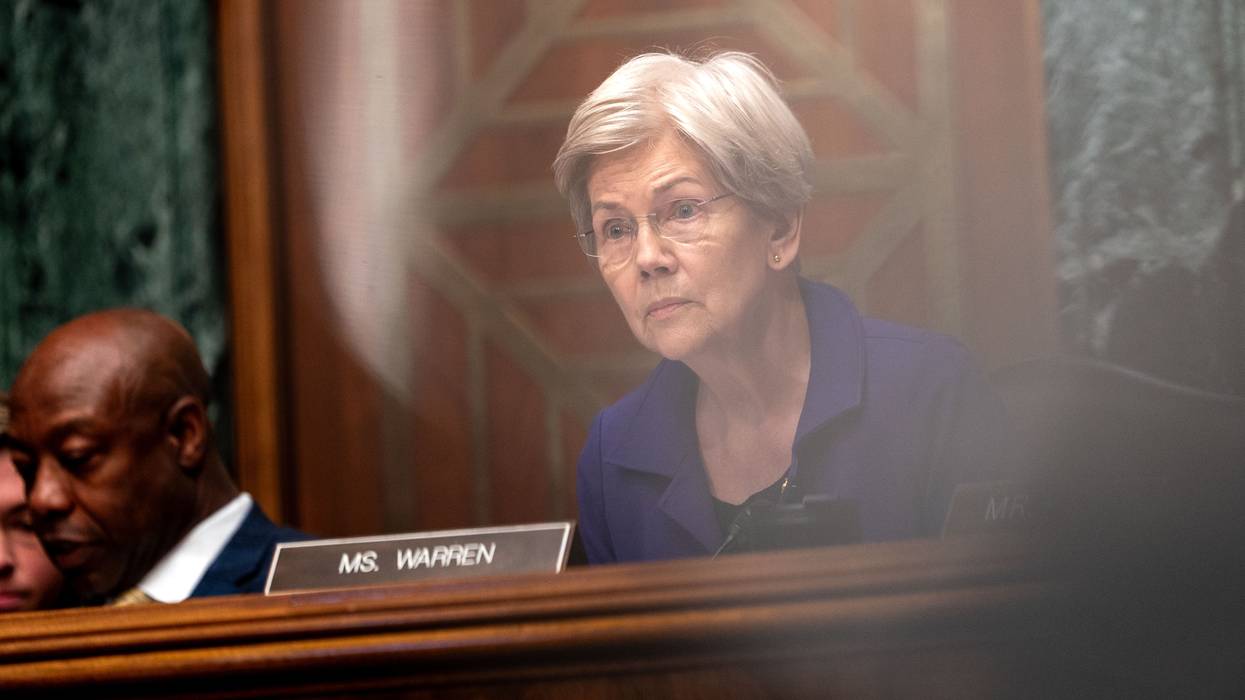
"Nobody wants weak crypto rules more than the president of the United States," said the senator.
As the U.S. House prepares to vote on the latest proposal claiming to regulate the cryptocurrency industry—one that critics say is actually a "cash grab" that will harm consumers—Sen. Elizabeth Warren on Wednesday took the opportunity of a hearing on digital assets to outline her five main priorities for any legislation aimed at regulating crypto.
Along with protecting consumers within the crypto market, she said, Congress must pass legislation that safeguards the country from public officials—including President Donald Trump—who want to personally profit from the burgeoning industry.
Those priorities haven't been addressed, she suggested, in proposals like the Guiding and Establishing National Innovation for U.S. Stablecoins (GENIUS) Act and the Digital Asset Market Clarity (CLARITY) Act, which lawmakers are expected to vote on in the coming days.
"I'm concerned that what my Republican colleagues are aiming for is another industry handout that gives the crypto lobby exactly its wish list: the blessing of the government's approval, combined with crypto rules that are weaker than the rules every other financial actor must follow," said Warren (D-Mass.).
Any regulatory framework for the crypto industry, in which investors can use real money to purchase virtual or digital assets and trade them on decentralized, unregulated blockchain technology, must include the framework set up by "the securities laws that have served as the bedrock of our capital markets for nearly 100 years," said Warren—but the CLARITY Act includes language that would allow "non-crypto companies to tokenize their assets to evade the SEC's [Security and Exchange Commission] regulations."
"If we're going to provide rules of the road for crypto, we need to shut down this superhighway for presidential corruption at the same time."
"Under the House bill, a publicly traded company like Meta or Tesla could simply decide to put its stock on the blockchain and POOF! it would escape all SEC regulation," said Warren.
Americans for Financial Reform (AFR) also spoke out against the CLARITY Act's provision on Tuesday, saying the bill would "create a race to the bottom and fuel fraud and financial instability."
With the crypto market growing 15-fold over the last five years, with a $3 trillion market capitalization in 2024, risks to "investors, our financial system, and our national security have also sharply increased," Warren warned in the hearing.
She pointed to FBI findings that Americans lost more than $9 billion to fraud in the unregulated crypto market last year—a 66% increase from 2023‚ and a Chainalysis report that hackers from North Korea were able to steal $1.3 billion from crypto platforms in 2024 as well as $1.5 billion earlier this year.
"Crypto investors should have the same protections from getting scammed or cheated as investors in any other asset," said Warren. "For example, there is no reason that the rules prohibiting stock exchanges from simultaneously serving as brokers and giving preferential treatment to their own trades over their customers' can't be applied to the crypto market too."
Warren also called for legislation that ensures instability in the crypto market won't "infect" the larger financial system by guaranteeing that taxpayers are not on the hook for "risky crypto bets," and that includes commonsense rules to protect national security and fight crime within the industry.
The GENIUS Act, which 18 Democrats joined the vast majority of Senate Republicans in passing last month, did not include anti-money laundering rules or sufficiently close sanctions loopholes, said Warren, with Republicans saying the issues could be addressed in a future bill regarding crypto market structure.
"So this is it. No more kicking the can down the road. Now is the time to solve that problem," said Warren.
Finally, Warren said any bill addressing regulations in the crypto market must "shut down the president's crypto corruption" by prohibiting all public officials from issuing, sponsoring, or profiting from crypto tokens.
Warren's comments came weeks after Trump held a dinner with the top 220 investors in his own $TRUMP meme coin and offered a VIP White House tour to the top 25 mostly anonymous investors—an event that progressive organizers said was "corruption embodied."
"Nobody wants weak crypto rules more than the president of the United States," said Warren, noting that $7 billion of Trump's wealth now comes from his own stablecoin and meme coin, a bitcoin mining company, a "huge portfolio of crypto investments," and includes more than $320 million in fees from the $TRUMP coin—even as the majority of investors in the token lost money.
"If we're going to provide rules of the road for crypto, we need to shut down this superhighway for presidential corruption at the same time," said Warren.
Urging Congress to vote against the CLARITY Act this week, AFR also warned that the "massive deregulatory bill" is backed by "a gusher of campaign cash and lobbying muscle from ultrawealthy venture capital firms and crypto billionaires," with Trump set to "gain the most from this giveaway" after making $1.2 billion in crypto just in the past few months."
"CLARITY (along with related crypto bills being considered) is a custom-built framework that gives him and his billionaire allies a green light to manipulate financial markets," said the group, "while working families are left holding the bag."
Democrats "need to win the next election, which means we can not afford to alienate a very vocal and wealthy group of donors," wrote one lawyer who works with crypto clients.
Over the objections of critics who say a landmark cryptocurrency bill lacks adequate consumer and financial system protections, among other concerns, several Senate Democrats voted with Republicans on Tuesday to pass the legislation that would establish a regulatory framework for a type of crypto called stablecoin.
The Senate voted 68-30 to pass the bill, which is backed by the crypto industry, with two Republicans senators voting no. The bill's journey to Senate passage—which at one point seemed in doubt—comes after crypto groups spent tens of millions in support of candidates for federal office in the 2024 election cycle. The bill now heads to the House of Representatives.
Among the Democrats who voted for the Guiding and Establishing National Innovation for U.S. Stablecoins, or GENIUS, Act are Sen. Ruben Gallego (D-Ariz.) and the bill's co-sponsor Kirsten Gillibrand (D-N.Y.), both of whom received support from pro-crypto entities last year.
The full list of Democrats who voted in favor of the bill is: Angela Alsobrooks (D-Md.); Cory Booker (D-N.J.); Catherine Cortez Masto (D-Nev.); John Fetterman (D-Penn.); Ruben Gallego (D-Ariz.); Kirsten Gillibrand (D-N.Y.); Maggie Hassan (D-N.H.); Martin Heinrich (D-N.M.); John Hickenlooper (D-Colo.); Andy Kim (D-N.J.); Ben Ray Luján (D-N.M.); Jon Ossoff (D-Ga.); Alex Padilla (D-Calif.); Jacky Rosen (D-Nev.); Adam Schiff (D-Calif.); Elissa Slotkin (D-Mich.); Mark Warner (D-Va.); and Raphael Warnock (D-Ga.).
Acting CEO and president of the Crypto Council for Innovation, Ji Kim, called the Senate's passage of the bill a "historic step forward for the digital asset industry," in a prepared statement shared in advance of the vote, according to the outlet CoinDesk.
The Senate's passage of the bill came one day after the outlet The Lever reported that "a private group chat of Democratic Party operatives and crypto industry advocates has been secretly coordinating to push Democratic senators" to support the bill.
The Lever reviewed the contents of a Signal chat which contained messages from venture capitalists, lobbyists, lawyers for crypto firms, former staffers on Capitol Hill, and others. Participants in the chat expressed the need for the Democrats to pass the bill in order to avoid alienating the crypto industry.
Avichal Garg, a managing partner at a venture capital firm that focuses on digital asset technology like cryptocurrency, said in the chat that "if Dems bail on this [bill], they will get 0 dollars going forward," according to The Lever.
"It would be political suicide for them not to support it," he added.
Jason Gottlieb, a lawyer who works for the law firm Morrison Cohen and defends cryptocurrency companies, wrote in the chat that regardless of concerns about the shortcomings of the bill, Democrats "need to win the next election, which means we can not afford to alienate a very vocal and wealthy group of donors," The Lever reported.
Last year, the industry pumped more than $40 million into a successful effort to topple former Democratic Sen. Sherrod Brown of Ohio in favor of his Republican challenger luxury car dealer Bernie Moreno.
No one has been a bigger critic of the GENIUS Act than Sen. Elizabeth Warren (D-Mass.), the ranking member on the U.S. Senate Committee on Banking, Housing, and Urban Affairs, who has warned that in addition to weak protections for consumers and financial stability, the bill allows tech companies to issue their own private currencies and "take control over the money supply."
She also said that the GENIUS Act mirrors the passage of the 2000 passage of the Commodity Futures Modernization Act (CFMA), which deregulated derivatives and helped the product proliferate in the lead-up to the financial crisis of 2008.
"It all sounds very similar. But there is one big difference between the GENIUS Act and the CFMA," said Warren on the Senate floor earlier in June, according to a copy of her remarks. "President [Bill] Clinton did not own a derivatives company. President [Donald] Trump does own a stablecoin company."
Warren told Rolling Stone ahead of key votes that the GENIUS ACT would "create a superhighway for Donald Trump's corruption."
Earlier this year, the Trump family's crypto company, World Liberty Financial, launched its own stablecoin called USD1.
In May, it was announced that USD1 would be used for a $2 billion deal between an investment firm established by the government of Abu Dhabi, MGX, and the world's largest crypto exchange, Binance.
The GENIUS Act bars executive branch officials and lawmakers from issuing stablecoins, but according to the Wall Street Journal, "it isn't clear how that would affect the Trump family's World Liberty Financial crypto firm because regulators would have to interpret the company's ownership structure."
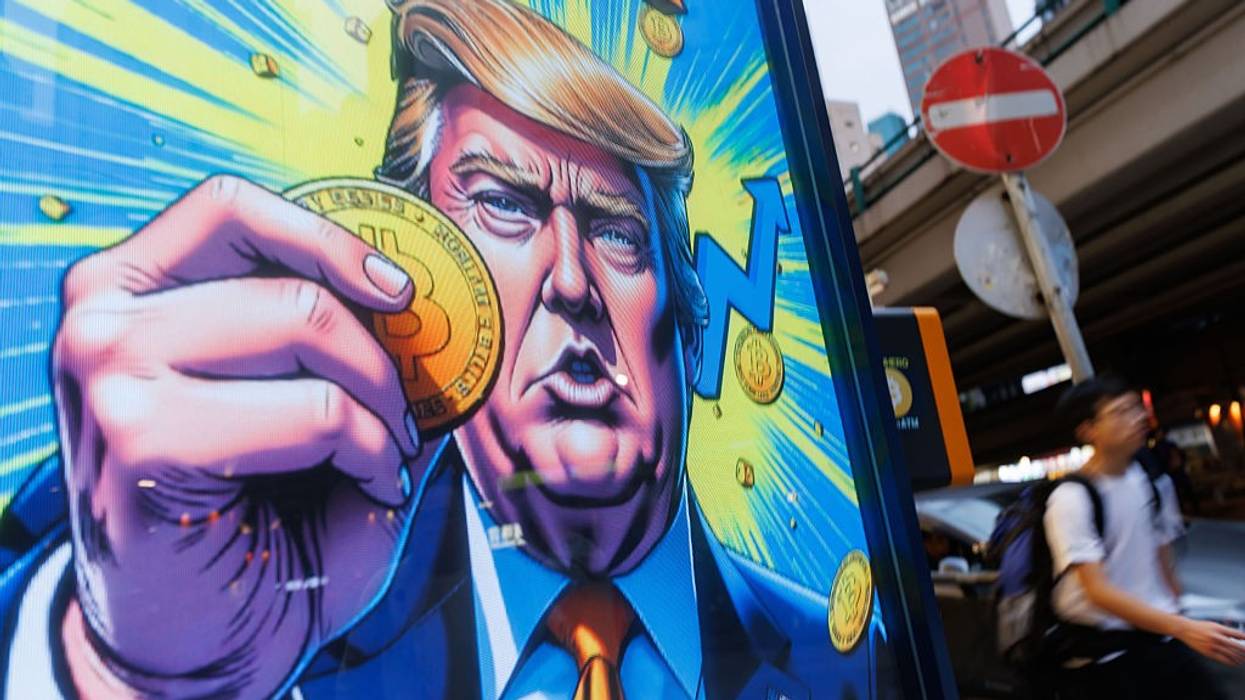
"Democrats held firm against this corporate power grab. We're fighting for fairness, not billionaire greed!" said Our Revolution said—though the effort to pass the bill is not over.
In a win for progressive groups and lawmakers who have been sounding the alarm about legislation that would create a regulatory framework for stablecoins, the U.S. Senate Democratic Caucus—along with a couple of Republicans—blocked the cryptocurrency bill from advancing on Thursday in a 49-48 procedural vote.
A stablecoin is a digital asset whose value is tied to traditional currency, such as the U.S. dollar, or a commodity like gold. Sen. Kirsten Gillibrand (D-N.Y.) co-sponsored the Guiding and Establishing National Innovation for U.S. Stablecoins (GENIUS) Act, which advanced out of the Senate Banking Committee in March with support from five other Democrats.
Meanwhile, the committee's ranking member, Sen. Elizabeth Warren (D-Mass.), has blasted the bill—as has Sen. Bernie Sanders (I-Vt.), who caucuses with Democrats and warned this week that the GENIUS Act would make it easier for President Donald Trump "and his family to continue to engage in corrupt dealmaking enabled through their cryptocurrency."
Our Revolution, a group formed as a continuation of Sanders' 2016 presidential campaign, has similarly panned the legislation, with executive director Joseph Geevarghese calling it a "laughably weak and toothless regulatory bill—a sham crafted by cryptocurrency giants that is certain to line the pockets of the Trump family's crypto empire."
Concern over the bill has grown since the revelation last week that a stablecoin developed by the Trump family crypto firm, World Liberty Financial, would be used for a $2 billion deal between an investment firm established by the government of Abu Dhabi, MGX, and the world's largest crypto exchange, Binance.
In recent days, several crypto-friendly Democrats said they couldn't support the GENIUS Act in its current form, and ultimately, no members of the party's caucus voted for it. Thursday's vote was welcomed by Our Revolution, which said on social media that "Democrats held firm against this corporate power grab. We're fighting for fairness, not billionaire greed!"
Gillibrand, a key target of Our Revolution ahead of the vote, said in a statement that "I believe it is essential to the future of the U.S. economy and to everyday Americans that we enact strict stablecoin regulations and consumer protections where none currently exist. Over the past few years, I have worked in good faith with Republicans to author robust stablecoin legislation that protects consumers, enables innovation to thrive, and maintains the dominance of the U.S. dollar."
"The bipartisanship of this effort was on display when the bill passed out of the Banking Committee with strong support from Democrats and Republicans," she continued. "However, developments over the past week made it clear that there were a number of outstanding issues that needed to be addressed before this bill could pass the full Senate."
"I fully support my colleagues' efforts," Gillibrand said, specifically applauding Sen. Bill Hagerty (R-Tenn.) "for his tireless work across the aisle to improve and strengthen this bill." She added that "I remain extremely confident and hopeful that very soon we can finish the job."
According to Axios: "Key Senate players have been meeting all week, trying to land a deal to appease Democrats. Senate Republicans reviewed Democrats' proposed changes to the GENIUS Act, with Majority Leader John Thune (R-S.D.) and Sen. Mark Warner (D-Va.) negotiating up until the last minute."
Warner, one of the Democrats who voted the bill out of committee in March, said in a Thursday statement that "while we've made meaningful progress on the GENIUS Act, the work is not yet complete, and I simply cannot in good conscience ask my colleagues to vote for this legislation when the text isn't yet finished."
"I remain fully committed to getting this right," he said. "I plan to continue working with my colleagues to strengthen this legislation and move it forward in a way that promotes innovation while protecting the interests of the American people. It is my sincere hope that we can start floor consideration next week after we have finalized our work and given our colleagues adequate time to review."
While Thune reposted social media statements from his GOP colleagues expressing disappointment over the result and accusing Democrats of "hypocrisy," he also signaled that the effort to pass a stablecoin bill will continue by changing his vote from yes to no, which enables him to bring up the GENIUS Act at a later date.
Given expectations that the fight for the bill will go on, Democrats are still pushing for key reforms and additions. Citing recent reporting about Trump agreeing to attend a dinner with major investors in his cryptocurrency, Sen. Jeff Merkley (D-Ore.) said on social media Friday that "access to the White House shouldn't be up for sale to the highest bidder!!"
"This kind of blatant corruption takes a sledgehammer to public trust—we need to add my End Crypto Corruption Act to the GENIUS Act NOW!" added Merkley, pushing
legislation that would ban the president, vice president, top executive branch officials, members of Congress, and their immediate families from issuing, endorsing, or sponsoring crypto assets.
The head of Our Revolution called the GENIUS Act "a sham crafted by cryptocurrency giants that is certain to line the pockets of the Trump family's crypto empire."
As the Senate is reportedly poised to hold a Thursday procedural vote on legislation that would create a regulatory framework for a type of cryptocurrency called stablecoin, the group Our Revolution released a statement Wednesday denouncing Democrats for being "complicit" in the bill, which they say will likely enrich U.S. President Donald Trump.
Joseph Geevarghese, executive director of Our Revolution, said in a Wednesday statement that the Guiding and Establishing National Innovation for U.S. Stablecoins (GENIUS) Act is a "laughably weak and toothless regulatory bill—a sham crafted by cryptocurrency giants that is certain to line the pockets of the Trump family's crypto empire." Our Revolution is a progressive political organizing group launched as a continuation of Sen. Bernie Sanders' (I-Vt.) 2016 presidential campaign.
"Let's be clear," Geevarghese continued, "Democrats are fully complicit in the grift, with Sen. Kirsten Gillibrand (D-N.Y.) leading the charge as the bill's original sponsor. We call on every senator who still gives a damn about democracy to shut down this outright sellout to the cryptocurrency industry."
Common Dreams reached out to Gillibrand's office for comment.
The bipartisan bill was originally co-sponsored by Sen. Tim Scott (R-S.C.), Sen. Cynthia Lummis (R-Wyo.), and Gillibrand. Later, Sen. Angela Alsobooks (D-Md.) became a co-sponsor as well.
The GENIUS Act, which is backed by the crypto industry, would make it easier for U.S. firms to do business in stablecoin, according to the The New York Times.
Several other crypto-friendly Democrats in the Senate had backed the GENIUS Act, but over the weekend pulled their support, citing a desire for stronger provisions on anti-money laundering, national security, and other issues. "While we are eager to continue working with our colleagues to address these issues, we would be unable to vote for cloture should the current version of the bill come to the floor," wrote the group, which did not include Alsobrooks and Gillibrand, in a statement on Saturday.
A spokesperson for Alsobrooks told The American Prospect on Monday that at the Senate Banking Committee markup, "Democrats received commitments to address concerns about the bill. Those commitments should be honored, and she supports her colleagues in their efforts to further improve the bill."
The bill may need as many as 10 Democrats to clear a procedural vote due to potential defections on the GOP side, according to Axios.
Meanwhile, on Tuesday, Sen. Jeff Merkley (D-Ore.) and Senate Minority Leader Chuck Schumer (D-N.Y.) unveiled the End Crypto Corruption Act, a proposal that would bar the president, vice president, members of Congress, and their immediate families from issuing digital assets, like stablecoins. Gillibrand has joined that bill as a co-sponsor.
Critics of the GENIUS Act, like Sanders and Sen. Elizabeth Warren (D-Mass.), warn it would facilitate illicit activity and undermine consumer protection. Sanders warned on Tuesday that the GENIUS Act "makes it easier for President Trump and his family to continue to engage in corrupt dealmaking enabled through their cryptocurrency, to the great benefit of themselves and their tech oligarch backers."
Democratic lawmakers have voiced concern about a recent Trump crypto revelation—that a stablecoin created by the Trump-affiliated World Liberty Financial crypto venture will be used to complete a $2 billion transaction by an Emirati-state owned investment firm.
And while some reporting suggests that Trump's crypto maneuvers are actually harming the chances that the GENIUS Act will pass, Public Citizen co-president Lisa Gilbert said Wednesday that "all available signs point to Donald Trump trading deregulation of the crypto industry in exchange for personal and political enrichment."
"Crypto helped elect Trump, and now they are helping him add millions to his personal bank account," Gilbert added.