SUBSCRIBE TO OUR FREE NEWSLETTER
Daily news & progressive opinion—funded by the people, not the corporations—delivered straight to your inbox.
5
#000000
#FFFFFF
To donate by check, phone, or other method, see our More Ways to Give page.


Daily news & progressive opinion—funded by the people, not the corporations—delivered straight to your inbox.
Ford's tariff troubles are notable because it "manufactures the most cars in the U.S. of any automaker," and yet is still "being squeezed by new trade barriers imposed by the White House," reported Bloomberg.
American automaker Ford on Wednesday followed in the steps of General Motors in warning that U.S. President Donald Trump's tariffs are going to take a hammer to its bottom line.
As reported by Bloomberg, Ford said that its profit could plunge by up to 36% this year as it expects to take a $2 billion hit from the president's tariffs on key inputs such as steel and aluminum, as well as taxes on car components manufactured in Canada and Mexico. News of Ford's guidance sent its stock shares diving by more than 2% in after-hours trading on Wednesday.
Bloomberg wrote that Ford's tariff troubles are notable because it "manufactures the most cars in the U.S. of any automaker," and yet is still "being squeezed by new trade barriers imposed by the White House."
Ford CFO Sherry House informed reporters during the company's quarterly earnings call that the White House was aware of the troubles the tariffs are causing U.S. automakers and she said that it "is working with us to get this right."
General Motors earlier this month also cited the Trump tariffs as a major reason why its profits fell by $3 billion the previous quarter. Making matters worse, GM said that the impact of the tariffs would be even more significant in the coming quarter when its profits could tumble by as much as $5 billion.
GM's warning came shortly after Jeep manufacturer Stellantis projected that the Trump tariffs would directly lead to $350 million in losses in the first half of 2025.
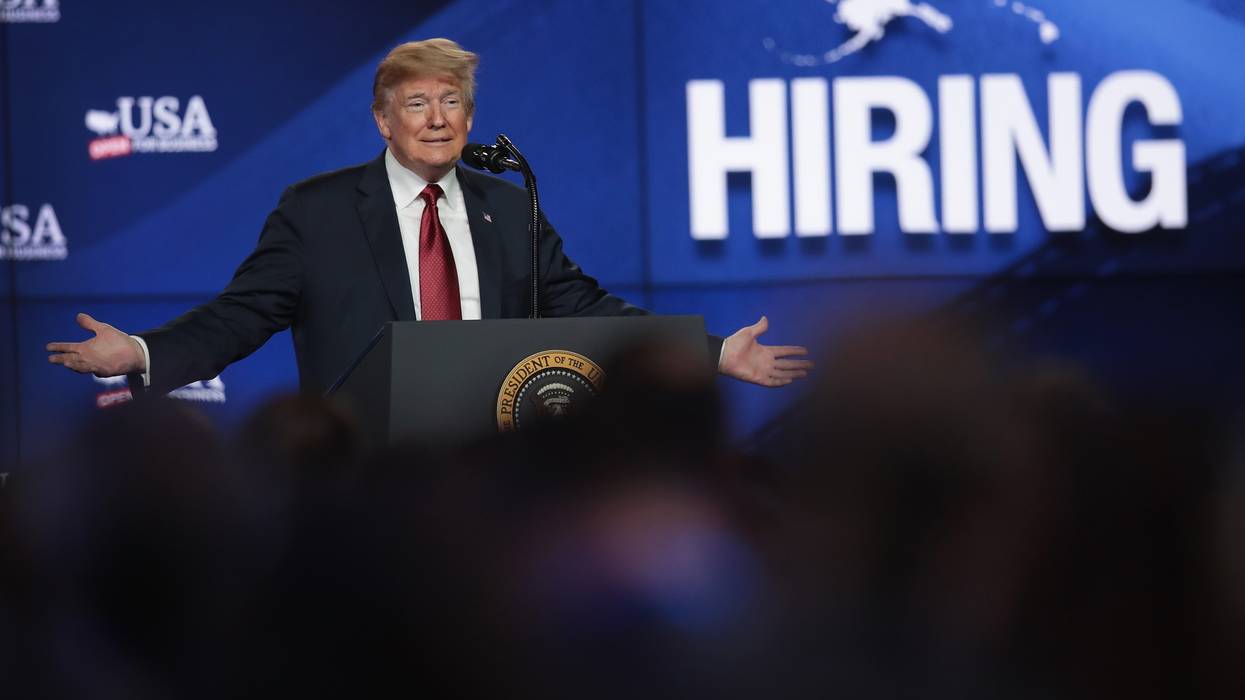
Trump made raising tariffs on foreign products a key plank of his 2024 election campaign despite the fact that he also ran on lowering inflation, and tariffs historically have led to higher, rather than lower, prices.
Experts had expected a key manufacturing index number to tick upward, which makes the massive drop in July a significant and unpleasant surprise.
A key manufacturing activity indicator unexpectedly plunged over the last month amid warnings from American automobile giant General Motors that U.S. President Donald Trump's tariffs are swallowing its profits.
The Wall Street Journal reports that the Fifth District Survey of Manufacturing Activity's index "sank sharply" in July and fell to -20, which was a drop from the -8 number posted by the index in June. Experts surveyed by the Journal had actually expected the index number to tick upward to -6, which makes the massive drop in July a significant and unpleasant surprise.
The index is a survey of more than five dozen manufacturing firms located in the mid-Atlantic region of the United States that asks them to report activities including shipments, new orders, and employment. A monthly number below zero indicates that activity in these realms has shrunk rather than grown over the last month, and the Journal notes that the index has been registering negative numbers for five months straight.
And the month-over-month dive in manufacturing activity isn't the only signal of trouble ahead for domestic manufacturing. General Motors revealed on Tuesday that its profits took a significant dent in the past quarter thanks in part to the Trump tariffs on vital components such as steel.
In all, GM's core profits fell by $3 billion on the quarter and it projected that its third-quarter profits could drop by as much as $5 billion as more tariffs take effect. Although GM is expanding some of its manufacturing in the U.S. to mitigate some of the impact of Trump's tariffs, that likely can only go so far when big tariffs are still being levied on the imported raw materials that the company needs to build cars.
GM's warning about tariffs comes just a day after Jeep manufacturer Stellantis projected that the Trump tariffs would directly lead to $350 million in losses in the first half of 2025.
Trump made raising tariffs on foreign products a key plank of his 2024 election campaign despite the fact that he also ran on lowering inflation, as tariffs historically have led to higher, rather than lower, prices.
The union blasted them for "threatening the $500 million investment the Biden-Harris administration made in the General Motors Grand River Assembly Plant and the union jobs that investment would provide."
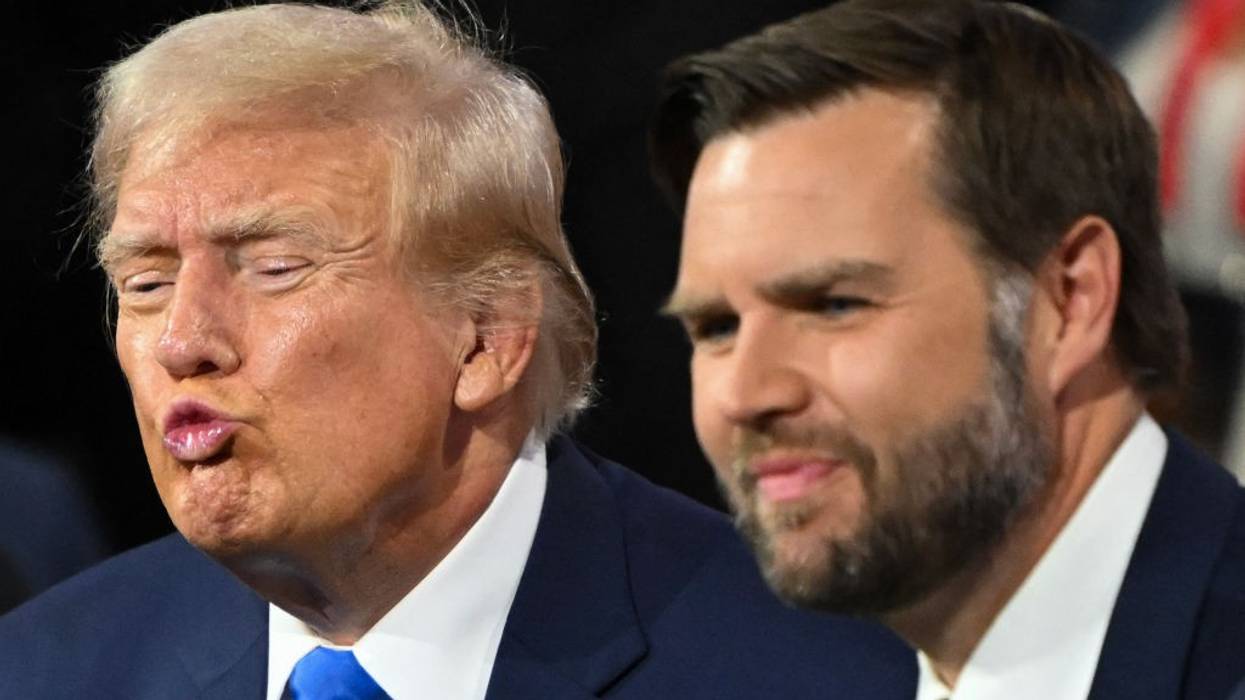
The United Auto Workers this week reiterated its warning that the Republican presidential ticket of Donald Trump and JD Vance is a threat to working-class Americans in response to a refusal by Vance to commit to honoring a $500 million federal grant for an electric vehicle plant in Michigan.
Both Trump and Vance—a venture capitalist turned U.S. senator from Ohio who often postures as a working-class ally—are campaigning in Michigan, a key swing state, this week.
The Detroit News reported Wednesday that on the campaign trail, Vance was "noncommittal" about the promised funding, part of $1.7 billion distributed by the Biden administration. The $500 million grant would help General Motors convert its Lansing Grand River Assembly Plant into an EV facility.
The UAW, one of several labor unions that have endorsed Democratic Vice President Kamala Harris and Minnesota Gov. Tim Walz, fired back Thursday, echoing its previous criticism of Trump and Vance.
"Donald Trump was the job-killer-in-chief while in the White House," the powerful union said in a statement. "His failed United States-Mexico-Canada trade agreement—or Trump's NAFTA as we prefer to call it—has led to the mass exodus of good, blue-collar jobs from the United States. In sharp contrast, the Biden-Harris administration has bet on the American worker and thanks to their policies, hundreds of thousands of good manufacturing jobs are returning to the United States."
"Now, Trump and JD Vance are invading Michigan and threatening the $500 million investment the Biden-Harris administration made in the General Motors Grand River Assembly Plant and the union jobs that investment would provide," the UAW continued. "The bottom line is that Donald Trump and JD Vance are a menace to the working class and are openly threatening to double down on Trump's legacy of job destruction."
In a potential boost to Democrats ahead of November 5, the Bureau of Labor Statistics announced Friday that in September federal unemployment hit 4.1% and the U.S. economy added 254,000 jobs, over 100,000 more than economists projected.
UAW president Shawn Fain, who led a major strike against Big Three auto companies last year, is set to join U.S. Sen. Bernie Sanders (I-Vt.) for weekend events in Michigan to support Harris. The pair plans to visit Warren, Grand Rapids, and East Lansing to discuss "the American healthcare system, the fight against corporate greed, and shoring up Michigan's manufacturing future."
Harris was in Michigan on Friday for events in Detroit and Flint, where she was set to "meet with leaders from the Arab American community," according to Reuters. "Meeting participants include leaders from the Muslim advocacy group Emgage, which recently endorsed Harris, the American Task Force on Lebanon, and a long-standing friend of Harris, Hala Hijazi, who has lost dozens of family members in Gaza."
"Other such as Jim Zogby, founder of the Arab American Institute and a longtime member of the Democratic National Committee, said he declined the invitation,"
Reuters reported. "Leaders from the Uncommitted National Movement protest campaign said they have not been invited to the meeting."
One Ultium worker said the new contract—under which production workers will get $35 by late 2027—"enables me to just go ahead and move forward in life rather than living from paycheck to paycheck."
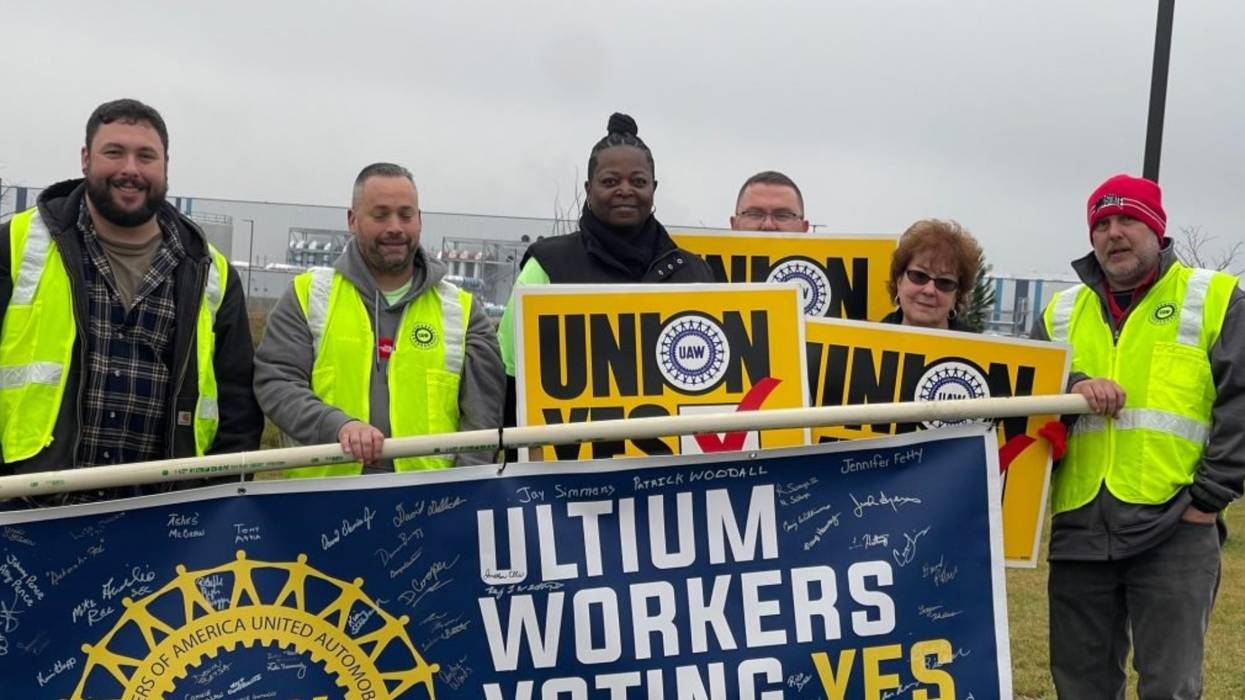
United Auto Workers members at an Ohio plant that produces battery cells for General Motors electric vehicles on Monday celebrated their overwhelming ratification of a contract that the union said "sets a new standard for the EV industry with strong wages and benefits and historic health and safety protections."
UAW Local 1112 members at Ultium Cells' Lordstown, Ohio facility approved their new local contract by 98% on Sunday. Under the contract, production workers will be paid $35 an hour by October 2027. Sunday's vote came after the workers at the plant—a joint venture between GM and South Korea-based LG Energy Solution—voted in December to unionize.
"This is setting a precedent that can be built on," said Ultium worker Chris Wyatt. "This is a guideline that every other EV plant can follow through with."
Another worker at the plant, Donald Bevly, said the new contract "enables me to just go ahead and move forward in life rather than living from paycheck to paycheck."
UAW president Shawn Fain said in a statement following the contract's tentative approval last week that "18 months ago, this company was on a low road path to poverty wages, unsafe conditions, and a dark future for battery workers in America."
"Ultium workers said, 'Hell no,' got organized, and fought back," Fain added. "Now they've more than doubled their wages by the end of this contract, won record health and safety language, and showed the world what it means to win a just transition."
As UAW noted:
When Ultium opened in 2021, the workers were nonunion, they made just $16.50 an hour, and the EV industry was in a race to the bottom. But the Ultium workers organized with the UAW in late 2022 and during the Stand Up Strike, they were brought under the GM national agreement.
In addition to $35 an hour, the new contract includes an immediate $3,000 bonus, four full-time on-site union health and safety representatives, and a full-time union industrial hygienist at the Lordstown plant.
In August 2022, U.S. President Joe Bidensigned his signature climate and jobs law, the Inflation Reduction Act, which includes incentives for automakers to ramp up EV manufacturing. Fain has pressed Biden—who touts himself as the "most pro-union president in American history"—to ensure that workers can earn a decent living as part of a just transition from fossil fuel-powered to electric vehicles.
Referring to her new contract, Lordstown Ultium worker Lori Lovitz said that "the benefits are just the best benefits I've had in my life."
"Paid hospitalization, holiday pay," she added. "I've never had this many paid holidays. Job security."
Another worker at the plant, Janine Hooks, summed up her feelings about the new contract with a raised fist, saying, "UAW all the way!"
"For decades, corporations have taken advantage of inadequate trade laws to offshore thousands of U.S. manufacturing jobs to Mexico, where worker wages and conditions have long been suppressed."
Thirty years after the North American Free Trade Agreement went into effect, the largest U.S. autoworkers union on Friday announced the establishment of a solidarity initiative to support industry workers in Mexico "fighting for economic justice and improved working conditions."
United Auto Workers (UAW) said the new project "will provide resources to Mexican workers and independent unions in Mexico, and aims to strengthen cross-border solidarity between U.S. and Mexican workers."
"Under NAFTA, Mexico's automotive workforce has grown sevenfold, while wages, benefits, and working conditions continue to fall behind."
Signed in 1993 and taking effect the following year, NAFTA eliminated virtually all tariffs and trade restrictions between the United States, Mexico, and Canada. The leaders of the three nations, including then-U.S. President Bill Clinton, promised the pact would create millions of new jobs and lift living standards.
But while U.S. trade with Mexico has more than tripled in the decades since the treaty went into effect, the income gap between the two countries is wider today than when the treaty was signed, while American and multinational corporations have profited tremendously from lower trade barriers and labor costs as production has shifted south of the border.
"Under NAFTA, Mexico's automotive workforce has grown sevenfold, while wages, benefits, and working conditions continue to fall behind," the UAW said on Friday.
Wages for U.S. workers have also suffered as automakers cite the need to remain competitive with their own Mexican operations.
"For decades, corporations have taken advantage of inadequate trade laws to offshore thousands of U.S. manufacturing jobs to Mexico where worker wages and conditions have long been suppressed," the UAW said.
Meanwhile, the union noted that "corporations use the threat of offshoring jobs as a cudgel to beat back worker discontent and organizing efforts in the U.S."
Cross-border solidarity was a key component of last year's six-week UAW strike at the Big Three U.S. automakers. Rank-and-file workers at General Motors' plant in Silao, Guanajuato organized to block corporate efforts to shift production to Mexico as a strikebreaking tactic.
The strike ended with the UAW and the Big Three agreeing to a new contract widely hailed by union members.
"It's a good contract, you just can't get around that," said one UAW local president. "You look at the investment we got in 2019 compared to now, it's not rocket science. It's just better."
As voting wrapped up on Friday, United Auto Workers members at Ford, General Motors, and Stellantis were all on track to approve contracts finalized during a six-week UAW strike demanding improved pay, benefits, and working conditions from the "Big Three."
The union's online trackers had the ratification vote results as 68.2% to 31.8% at Ford, 54.7% to 45.3% at GM, and 69.6% to 30.4% at Stellantis as of press time. The UAW and companies have not yet commented on the results.
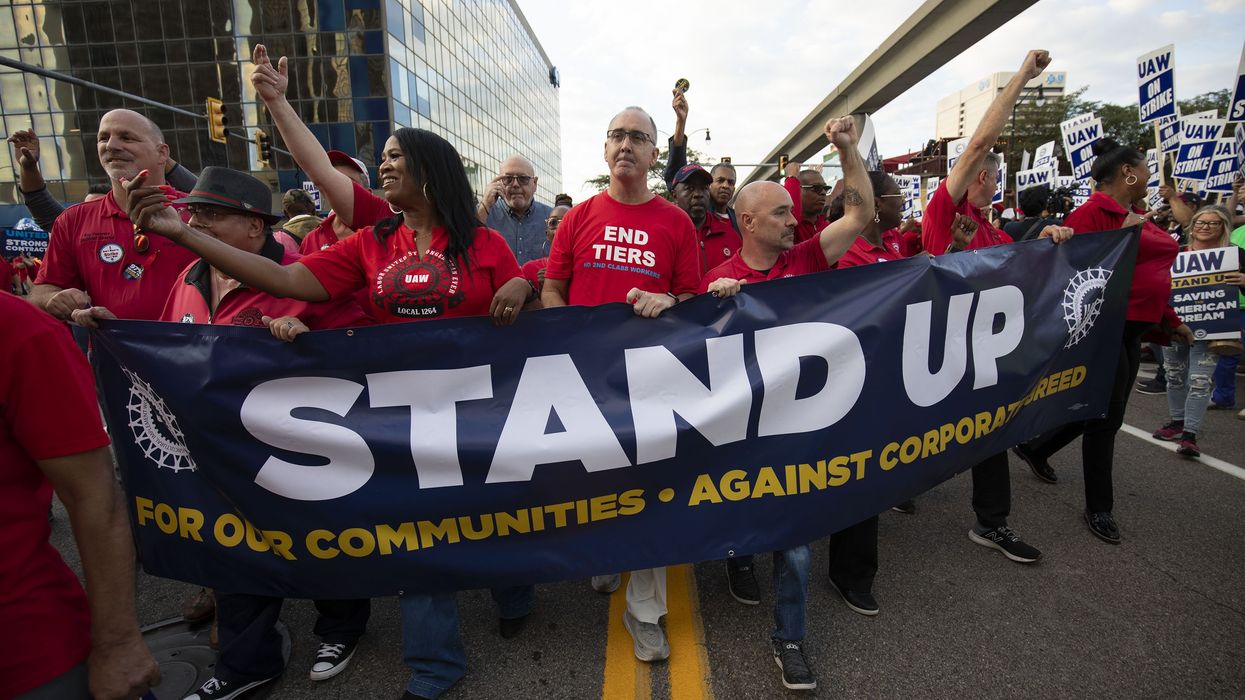
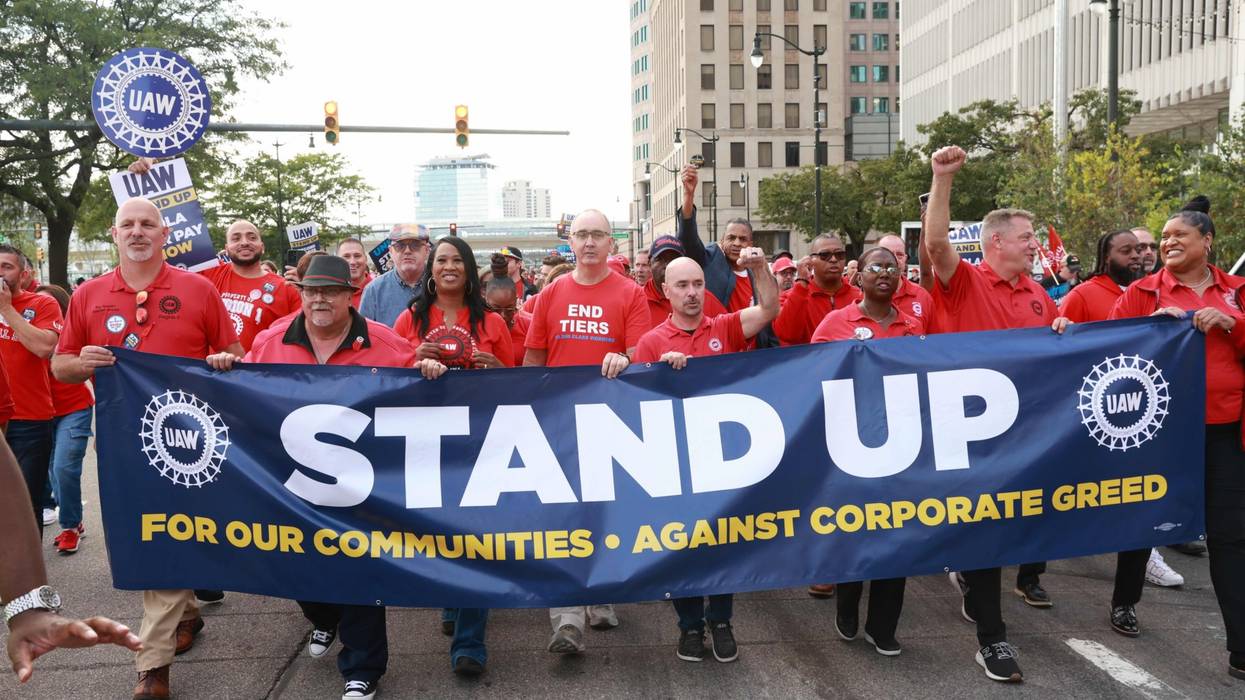
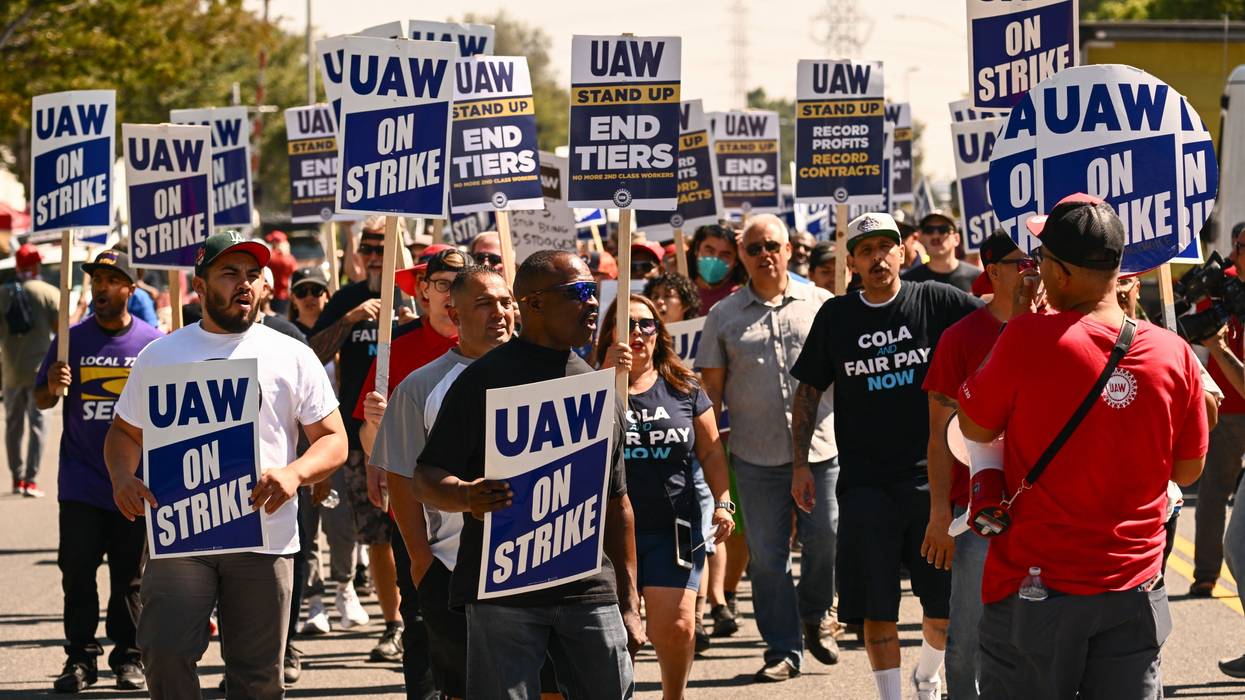
The UAW launched its "Stand Up Strike" in mid-September, and increased walkouts at various U.S. locations throughout the talks. Rutgers University labor studies professor Rebecca Givan told The New York Times that the strategy "really upended a lot of conventional wisdom" in the labor movement and helped reverse some concessions the union had previously accepted, showing that "if workers build enough power, they can win things back."
The pending agreements, which were reached over a few days at the end of last month, don't deliver on all worker demands but celebrated provisions include 25% wage increases and cost-of-living adjustments through April 30, 2028.
As Bloomberg reported:
Workers at Ford's Dearborn, Michigan, truck plant voted 78% in favor of ratifying the agreement Friday, putting Ford over the top, according to UAW Local 600 President Nick Kottalis.
"It's a good contract, you just can't get around that," Kottalis said. "You look at the investment we got in 2019 compared to now, it's not rocket science. It's just better."
The contracts' expiration date sets up a possible mass action around International Workers' Day on May 1, 2028. The UAW said last month that "we invite unions around the country to align your contract expirations with our own so that together we can begin to flex our collective muscles."
Also framing the Big Three battle as part of a bigger effort, UAW president Shawn Fain declared last month that "if we are going to truly take on the billionaire class and rebuild the economy so that it starts to work for the benefit of the many and not the few, then it's important that we not only strike, but that we strike together."
Fain on Tuesday testified at U.S. Senate Health, Education, Labor, and Pensions Committee Chair Bernie Sanders' (I-Vt.) hearing about how unions raise up working families and take on corporate greed. The UAW leader stressed the "essential role" of federal lawmakers, calling on them to not only support "our fights and other fights like ours," but also "finish the job for economic and social justice for the entire working class."
Already, the historic Big Three deals are leading to "UAW bumps" at other automakers including Honda, Hyundai, Subaru, and Toyota. The union is also aiming to help organize workers at Telsa, the electric vehicle company of billionaire Elon Musk.
Democratic U.S. President Joe Biden, who is seeking reelection next year, became the first sitting president to join striking workers on a picket line in late September, when he rallied with UAW members outside a GM plant in Belleville, Michigan.
The Biden campaign's Ammar Moussa said in a statement Friday that "Joe Biden isn't just saying that he'll always have workers' backs—he's proving it. After President Biden made history by standing with striking autoworkers, unions have notched historic wins and even nonunionized auto companies are taking note, increasing workers' wages.
"This is what happens when you have a president who cares about working people," added Moussa. "Workers win."
If May 1, 2028, arrives without signed contracts for America’s unionized auto workers, UAW president Shawn Fain has now made plain, these workers don’t plan on walking out alone.
The folks at the U.S. Coast Guard know “mayday” as well as anyone. Every year they handle thousands of “mayday” distress calls. Their counterparts worldwide handle thousands more. Overall, the number of “mayday” calls since the 1920s—when “mayday” became the international go-to for declaring emergency situations—now runs well into the millions.
But we’ve never had a “mayday” more socially consequential than the “mayday” that U.S. auto workers have just thrust upon our global calendar. This potential “mayday” just happens to impact only our world’s richest—and has suddenly become a much more real possibility than a crash of any one of their outrageously deluxe private jets.
What have U.S. auto workers done? They’ve successfully bargained a set of watershed contracts that establish May 1, 2028, as the day the workers of our world may actually unite, for the first time ever, against our world’s super wealthy.
The greatest significance of the new UAW auto industry contracts may be the impact these bargaining triumphs will have on the future. These agreements could become the single most important step to a more equal world that any of us have ever seen.
The new contracts the United Auto Workers union is now signing with Detroit’s Big Three—Ford, GM, and Stellantis—all set April 30, 2028 as their expiration date. That would make May 1 the day the workers the three new contracts cover walk out on strike if no new deal materializes.
This May 1 date, of course, holds enormous global significance. Working people the world over have been celebrating the first of May as “International Labor Day” for generations, in a tradition that began back in 1886 when workers in the United States struggling for an eight-hour day staged a May 1 national protest.
If May 1, 2028, arrives without signed contracts for America’s unionized auto workers, UAW president Shawn Fain has now made plain, these workers don’t plan on walking out alone.
“We invite unions around the country to align your contract expirations with our own so that together we can begin to flex our collective muscles,” says Fain. “If we’re going to truly take on the billionaire class and rebuild the economy so that it starts to work for the benefit of the many and not the few, then it’s important that we not only strike but that we strike together.”
And by aligning the UAW’s next big contract deadline with International Labor Day, the union is clearly inviting coordination beyond the national level. The May Day that workers worldwide have so long honored, as Fain notes, has always been “more than just a day of commemoration, it’s a call to action.” And the labor movement worldwide, as the latest headlines remind us, is showing real signs of acting more in strategic concert.
Within the global auto industry, for instance, no corporation more embodies the inequality our corporate world order has spread so aggressively than the non-union Tesla. Under CEO Elon Musk, the world’s richest single individual, Tesla pays wages that run substantially below the hourly rates at Detroit’s Big Three, and that gap will only widen after the new UAW contracts go into full effect.
This shortchanging of workers has sped the growth of Musk’s fabulous fortune and helped boost Tesla’s share of the global electrical vehicle market to about 60%. The new UAW contracts, predicts German Bender of the Swedish think-tank Arena, could well “boost union interest among Tesla workers.”
That interest already seems to be growing. On the final Friday of the UAW walkout in the United States, workers at Tesla-owned servicing shops in Sweden went out on strike—after five years of fruitless attempts to get Tesla’s Swedish subsidiary to reach a bargaining agreement. That strike has now spread to all auto shops in Sweden that do work on Tesla cars.
This Swedish walkout, the global union confederation IndustriALL has announced, represents the first formal strike against Tesla anywhere in the world. And the challenge to Tesla may soon be spreading beyond Sweden. Germany’s largest union, Bloomberg reports, is hoping to organize a 12,000-worker Tesla plant near Berlin.
Tesla’s over 120,000 workers worldwide will certainly see plenty to like in the new UAW contracts in the United States. At Ford, workers who started as temps making $16.67 an hour will be automatically moving to permanent status and an hourly wage rate of at least $24.91. That rate will hit $40.82 an hour by the contract’s end, and any inflation between now and then will kick that rate still higher.
Workers in major American industries haven’t seen gains that stunning since the middle of the 20th century, a time when the chief execs of America’s largest corporations averaged only just over 20 times the compensation of their workers. That gap today, the Economic Policy Institutecalculates, is now running nearly 350 times.
But the greatest significance of the new UAW auto industry contracts may be the impact these bargaining triumphs will have on the future. These agreements could become the single most important step to a more equal world that any of us have ever seen.
The giants of American auto manufacturing, as Fain puts it, “underestimated” their own workers’ capacity to unite and fight together.
“We have shown the companies, the American public, and the whole world that the working class is not done fighting,” he adds. “In fact, we’re just getting started.”
"They did it now because the company knows we're coming for them," UAW president Shawn Fain said in response to the news.
Days after the United Auto Workers announced tentative deals with the Big Three carmakers, Toyota confirmed this week that it would offer raises to its nonunion U.S. factory workers.
The Japanese automaker said Wednesday that hourly manufacturers at the top of the pay scale would see a 9% raise beginning January 1, Reuters reported. UAW president Shawn Fain, who is attempting to use the union's victory to bolster the wider labor movement, said that the timing of Toyota's announcement was no coincidence.
"Toyota isn't giving out raises out of the goodness of their heart," he said in a video statement shared by More Perfect Union on Friday. "Toyota is the largest and most profitable auto company in the world. They could have just as easily raised wages a month ago or a year ago. They did it now because the company knows we're coming for them."
In the deals struck with Ford, Stellantis, and General Motors, the UAW secured a 25% pay raise over the life of the contracts. The tentative agreements brought an end to a historic six-week strike, as members return to work while they vote on whether or not to ratify the deals.
The UAW has negotiated for the three contracts to expire on April 30, 2028, a slightly longer lifespan than usual, according to Labor Notes. In a speech Sunday, Fain said part of the reason for the longer contracts was to give the labor movement time to build toward a potential strike on May Day 2028. Fain also said the UAW planned to spend the next four-and-a-half years organizing workers at nonunion plants owned by companies including Tesla, Volkswagen, Mercedes, BMW, Honda, Nissan, and Toyota.
"When we return to the bargaining table in 2028, it won't just be with the Big Three. It will be the Big Five or Big Six," Fain said.
"UAW. That stands for, 'You are welcome.'"
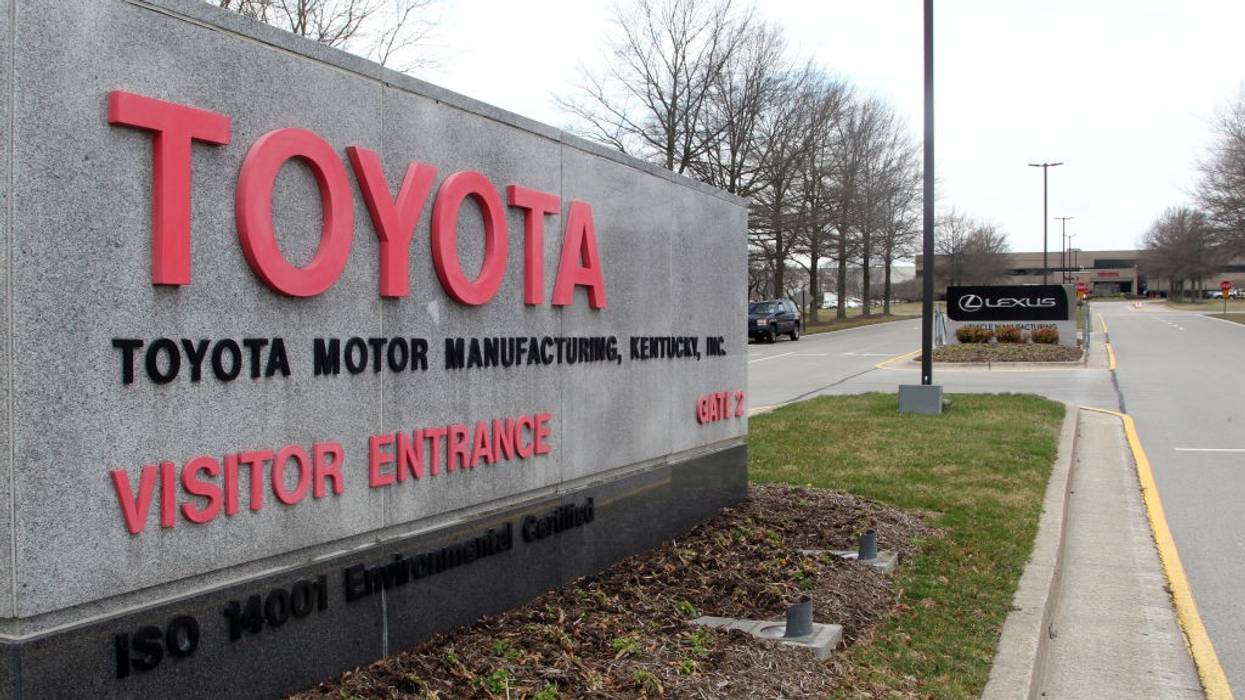
On Monday, a Toyota employee at a plant in Alabama told Labor Notes that management had called workers into an emergency meeting offering to raise top pay to $32 an hour and to scale up workers to that level in four years instead of eight. Another employee at a Kentucky plant said the top rate for production workers there had been raised by $2.94 to $34.80 and skilled trades workers saw a $3.70 boost to $43.20.
Toyota confirmed it was offering raises to news outlets Wednesday. It also said it was halving the time needed to reach top pay across the board and expanding paid time off.
"We value our employees and their contributions, and we show it by offering robust compensation packages that we continually review to ensure that we remain competitive within the automotive industry," Chris Reynolds, Toyota Motor North America's executive vice president, said in a statement reported by Reuters.
Toyota's actions are in keeping with findings that a strong union movement benefits nonunion workers as well. During the 1950s, when union membership peaked at one-third of U.S. workers, income inequality was at its lowest since the Great Depression spike, according to figures shared by the Department of the Treasury. By 2022, only 10% of U.S. workers were in a union, and the top 1% took home almost 20% of total income. If private sector union membership increases by just 1%, nonunion workers see a 0.3% wage increase.
"Even though you're not yet members of our union, that pay raise Toyota's giving you is the UAW bump," Fain addressed Toyota workers in his statement. "UAW. That stands for, 'You are welcome.'"
"You are welcome to join our Stand Up movement," he continued. "If this is what Toyota gives you when the Big Three stand up and fight, imagine what you could accomplish if you join the UAW and stand up and fight for yourselves."
The tentative agreement reportedly includes a general wage increase of 25% over four years and cost-of-living adjustments.
The United Auto Workers on Monday secured a tentative agreement with General Motors that reportedly includes a 25% general wage increase over the life of the four-and-a-half-year contract as well as cost-of-living adjustments.
According to Bloomberg, the UAW's agreement with GM has similar economic terms as the historic tentative deal the union reached with Ford last week and a subsequent agreement with Stellantis over the weekend.
With the GM deal, the UAW has now reached a tentative contract agreement with each of the Big Three U.S. automakers, putting an end—at least for now—to the union's historic six-week strike that involved nearly 50,000 workers. UAW members still must ratify the agreements, but they are set to return to work during the voting process.
All three of the tentative agreements include 25% wage boosts, nearly three times the size of the 9% raises that GM and Ford offered when contract negotiations began in July. Stellantis initially offered union members a 14.5% raise.
The UAW originally demanded 46% wage increases, citing the automakers' massive profits over the past 10 years and surging CEO pay. Under the Ford and Stellantis deals, many workers would see raises well beyond 25% due to cost-of-living increases.
The UAW's deal with GM comes less than 48 hours after the union launched a surprise expansion of its strike against the major automaker, calling on workers to walk off the job at the company's major Spring Hill Assembly plant in Tennessee.
Last week, GM reported record-breaking third-quarter revenue of $44.1 billion—and the UAW responded by striking at the company's most profitable plant in North America.
"We not only secured a record contract, we have begun to turn the tide on the war on the American working class," UAW President Shawn Fain said.
The United Auto Workers has reached a tentative deal with Stellantis, the union announced on Saturday.
The news comes three days after the UAW announced a tentative agreement with Ford. The union has been on strike against the Big Three U.S. automakers since September 15 in its first ever work stoppage targeting all three companies at once. General Motors is now the only one of the three that has not agreed to a tentative deal.
"We've achieved what just weeks ago we were told was impossible," UAW President Shawn Fain said in a video posted on social media. "The power of the Stand-Up Strike cannot be understated."
Over the course of the strike, Stellantis raised the value of its proposals by 103%, Fain said.
"At Stellantis, we not only secured a record contract, we have begun to turn the tide on the war on the American working class," he continued. "And we truly are saving the American Dream."
In one of the most notable aspects of the deal, Stellantis promised to add new products to the Belvidere Assembly Plant in Illinois, which it had idled eight months ago, putting 1,200 UAW members out of work.
"UAW members across the country just showed the entire world the power that workers have when they go on strike."
"UAW family, it is my great honor to announce that we saved Belvidere," UAW Vice President Rich Boyer said in the video.
Stellantis agreed both to add a new vehicle to the existing plant and to add more than 1,000 jobs to a new battery plant in the community.
"They told us for years that the electric vehicle transition was a death sentence for good auto jobs in this country," Fain said. "We stood up and said, 'No.' With this agreement, we're proving them all wrong."
Other highlights of the deal include
"UAW members across the country just showed the entire world the power that workers have when they go on strike, and we have our most powerful tool at the ready to protect our jobs, protect our communities, and save the American Dream," Fain said.
Next, the UAW Stellantis Council will vote Thursday, November 2 on whether or not to send the agreement to members. If they vote yes, the membership will then vote on whether or not to ratify it. In the meantime, the approximately 14,000 Stellantis workers on strike will return to work, according to The Associated Press.
Bruce Baumhower, who is the president of a local union at a Toledo, Ohio, Stellantis Jeep factory, told AP he thought it would pass.
"Eleven percent is right on the hood," Baumhower said. "It's a historic agreement as far as I'm concerned."
The UAW has so far seen success with its strategy of calling walkouts at targeted plants controlled by the Big Three, instead of calling all of its members off the job at once.
"Congratulations to the UAW for standing up to corporate greed," Sen. Bernie Sanders (I-Vt.) tweeted in response to the news. "The strong pro-worker contracts negotiated with Ford and Stellantis are helping to rebuild the American middle class. GM. You’re next."
GM will now feel greater pressure to reach an deal as well, Rebecca Givan, associate professor at the School of Management and Labor Relations at Rutgers University, told the Detroit Free Press.
"They're in a race to the finish line now," Givan said. "GM does not want to be more than a few hours behind Stellantis. They know what they have to do and any waiting is dragging it out for no reason. GM loses money by waiting to get to what's likely a clear contract at this point."