
SUBSCRIBE TO OUR FREE NEWSLETTER
Daily news & progressive opinion—funded by the people, not the corporations—delivered straight to your inbox.
5
#000000
#FFFFFF
To donate by check, phone, or other method, see our More Ways to Give page.


Daily news & progressive opinion—funded by the people, not the corporations—delivered straight to your inbox.
Medicaid Covers 80 Million Americans and Serves as the Backbone for the Health System We All Rely O
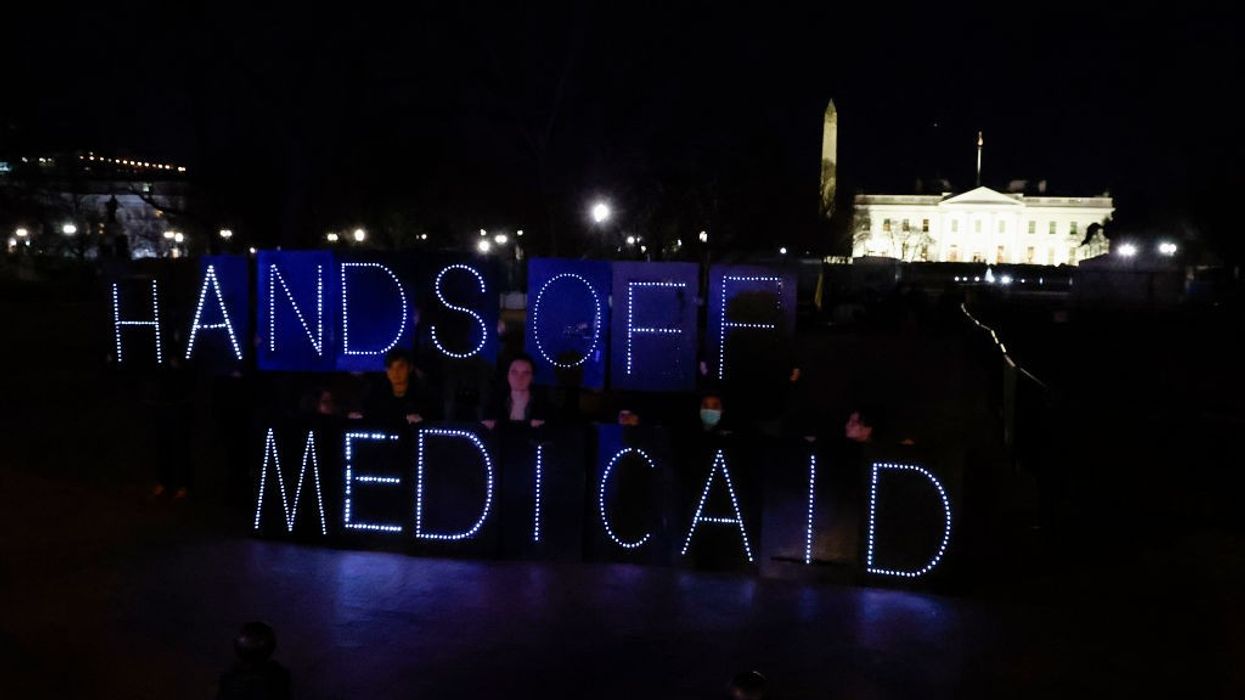
As the 119th Congress is sworn in today, 334 national, state and local organizations called on Congressional leadership to protect, preserve and strengthen Medicaid, which covers 80 million Americans and is the backbone of the health system on which we all rely. While President-elect Trump said, including in an NBC interview last month and elsewhere, that he would not cut entitlements like Medicaid, Medicare or Social Security, the consumer advocacy organization Families USA spearheaded the letter in response to some House and Senate Republicans proposing to restrict, cut or cap Medicaid coverage in order to pay for extending tax cuts.
After an election where Americans sent a clear message to lower costs — for groceries, rent and health care, the letter argues that the last thing Congress should do is to cut or cap Medicaid, which would raise costs and limit access to health care for the millions of Americans who need it.
“During the 2024 election cycle, cutting Medicaid was not a budget solution that American families asked for — and doing so now would betray your constituents of all political affiliations who are seeking more economic security, not less,” stated the organizations in their letter. “Cutting Medicaid would shift costs and administrative burdens onto working class families, states and health systems.”
They continued, “Proposals to cap funding, reduce the federal share of Medicaid spending, establish block grants, institute work reporting and community engagement requirements, cut state revenue from provider taxes or otherwise undermine the fundamental structure of the Medicaid program all have the same effect: If instituted, Americans will lose access to lifesaving services, states will be strapped with massive budget holes, hospitals and clinics will lose revenues and be forced to scale back services, and American families and workers will be unable to afford essential care and get sicker — leading to a loss in productivity and the economy suffering as a result.”
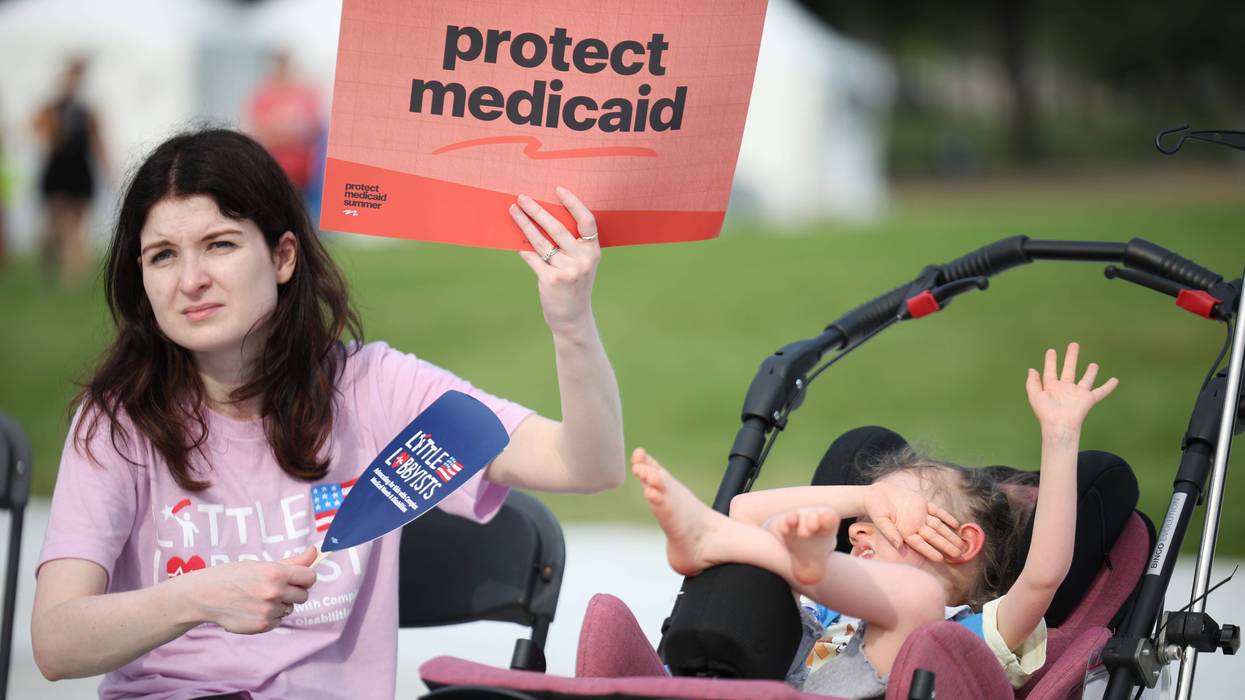
Medicaid serves nearly 80 million Americans, including 37 million children, and covers 40% of all births. Medicaid provides health and economic security for patients, families, and communities. Ensuring continuous coverage through Medicaid keeps people healthy, enabling them to work and contribute to their communities and to the overall economy. Medicaid is also a major funding source for hospitals and clinics that we all rely on.
Families USA along with the undersigned stand ready to work together on those solutions that will provide relief to those struggling with health costs, but shredding the health care safety-net would have the opposite impact on American families.
Families USA executive director Frederick Isasi released the following statement regarding the Centers for Medicare and Medicaid Services' guidance for block-granting Medicaid.
"Families USA vehemently opposes the Trump Administration's Medicaid guidance that would allow states to block grant their programs for potentially large cuts in federal Medicaid support. The concept is very clear: Tempt governors with extra-funding or minor flexibilities upfront and then years later, perhaps under a different governor, "cash the check" and slash federal support for the Medicaid program. Having spent many years working with governors and Medicaid programs, block grants are possibly the worst Medicaid idea ever presented to states by a federal Administration. They would allow the federal government to off-load shared Medicaid responsibility at the expense of deep cuts to state budgets, vital programs supported by states, and the people who rely on those programs.
Today's announcement about the so-called, "Healthy Adult Opportunity," essentially gives states the green light to indiscriminately (or discriminately) cut the Medicaid program, with no oversight and no consequences.
Here is what we know about it:
Despite the pretty picture the Trump administration is trying to sketch about putting forth a more patient-centered approach for Medicaid, the truth is this proposal does not put the patient first or strengthen Medicaid. With state budgets already stretched thin, accepting Medicaid block grants could likely amount to willful fiscal malpractice and blatant disregard for the needs and interests of states and families. Any governor or state legislature that accepts this nonsensical offer from the Trump administration could not only hurt the millions of families that rely on Medicaid, they could be pouring gasoline on state budget crises that are already ablaze with cuts and program closures.
In my years of work with governors, Medicaid program directors, and legislatures, their number one Medicaid concern is that the federal government might reduce federal support for their programs. Why in the world would states ever agree to block grants, which could guarantee that such cuts would occur? It is concerning that governors of states where Medicaid expansion has been debated will feel pressure to follow this guidance. One example is Oklahoma, where Medicaid expansion will appear as a ballot initiative this November. Other examples are Alaska and Georgia.
Beyond being morally reprehensible, this guidance is illegal. Period. The Trump administration does not have jurisdiction to waive Medicaid's financing structure by fiat -- that must be done through Congress. Further, block-granting Medicaid fails to promote the fundamental objective of the program, which is to serve low-income and working individuals and families. When President Trump and Republican leaders in Congress tried this in 2017, millions of Americans lifted their voices in opposition. The President lost. Now he is attempting an illegal end-run around his failed political effort and trying to take health care away from millions.
While today's announcement applies directly to non-elderly adults, the Trump administration has proposed mandatory caps on federal Medicaid financing for all Medicaid populations. The 72 million people who depend on Medicaid will suffer because of this terrible vision for Medicaid: parents, children with complex health care needs, pregnant woman, and the elderly in nursing homes. And research indicates that when parents have difficulty accessing healthcare insurance, coverage for their children also becomes difficult. If states allow the federal government to off-load its responsibilities for these people, they are putting wrongheaded ideology ahead of the people's needs. Is this really who we are as a nation?"
Eliot Fishman, Families USA senior director of health policy, added, "Any state taking this offer is engaging in fiscal malpractice. Furthermore the Administration is acting lawlessly. None of the statute regarding Medicaid match rates can be waived administratively."
We are better than this, and we--the American people--must hold the Trump administration and Republican members of Congress accountable."
The United States' prescription drug pricing crisis is forcing consumers to gamble with their health, and jeopardize their financial security. Many health care consumers and families cannot take their medicines as directed or worse, are not filling their prescriptions at all due to high and rising prescription drug prices. Nearly 3 in 10 people across the country skip doses or forgo filling prescriptions altogether due to high costs. While Congressional committees have advanced initial measures to address prescription drug costs, the Coalition for Fair Drug Prices contends their work to date has not focused on the significant policy changes needed to meaningfully lower drug prices. The Coalition, which launched last March, represents one of the broadest and most politically connected consumer groups working on this issue. It is comprised of 12 organizations representing health care consumers, labor, and health care providers who want to encourage policies that will reduce prescription drug costs for America's families.
To address the drivers of America's drug pricing crisis, Congress must enact meaningful policies that leverage the federal government's power to negotiate drug prices. It is this key point the Coalition cites in a new paper titled, "Reining in High Prescription Drug Prices: What Families Need from Congress."
Endorsing members of the coalition include Families USA, the AFL-CIO, the Center for American Progress, Community Catalyst, Doctors for America, the Medicare Rights Center, the National Partnership for Women and Families, Public Citizen, SEIU, and state-based organizations Health Access California, Maryland Citizens' Health Initiative, and the Universal Health Care Foundation of Connecticut. The paper underscores how the country's out-of-control prescription drug prices are putting families' health at risk and eroding their financial footing.
Reining in High Prescription Drug Prices: What Families Need from Congress makes the case for the integral role Congress should play in reining in abusive pricing of prescription drugs. To be able to take advantage of the federal government's purchasing power to lower prescription drug prices, current statutory barriers to negotiation must be removed so that the federal government has the authority to negotiate with drug manufacturers, and this authority needs to be coupled with an effective enforcement mechanism. This mechanism must create a strong incentive for manufactures to agree to fair and reasonable prices. This mechanism must, therefore, allow for the establishment of reasonable prices if a manufacturer refuses to agree to them.
The Coalition's paper offers policymakers recommendations for how to implement a system that allows the government to negotiate lower drug prices for all America's families, coupled with a strong enforcement mechanism. Coalition members have varied preferences with regard to the approach included in legislation but share the ultimate priority of getting legislation across the finish line.
A February 2019 Kaiser poll shows that 90 percent of Americans want the federal government to have the ability to negotiate drug prices in Medicare. However, Medicare is currently barred from negotiating drug prices.
"We appreciate Congress's work this year on drug pricing, but their work to date has not addressed the core issue of federal authority to negotiate drug prices. The issue that will have the most impact on lowering prices. We strongly urge them to consider bolder, broader options in order to help their constituents - America's families-- avoid medical bankruptcy in return for buying life-saving medicine," said Frederick Isasi, Families USA executive director.
"As our paper states, the central goal of drug pricing policy is to incentivize innovations that serve the needs of the public and to ensure that these treatments are affordable to consumers. It is critical that legislation be crafted that takes this to heart by putting the health of families first, not the profits of drug companies," Isasi added.
"Congress has an unprecedented opportunity to make medicines affordable, but we have passed the hundred-day mark and have yet to see serious action. Many of the measures under congressional consideration are far too weak to make the difference people need. The Coalition urges congressional leadership to go big and bold. This paper reflects a consensus of national organizations representing health care consumers, labor unions and health care providers, calling for public drug price negotiation power that applies to all drugs and gives the government real leverage. If Congress picks up these ideas, we can make a transformative difference in the lives of millions of American families," said Peter Maybarduk, Director of Public Citizen's Access to Medicines Program.
"Over 80 percent of Americans want Congress to take bold action to lower drug prices," said Topher Spiro, Vice President of Health Policy at the Center for American Progress. "Negotiation and tough enforcement are critical to lowering costs for all Americans, reducing overall health spending, and improving outcomes for patients. It is time to act."
The Trump administration announced today it was cutting Affordable Care Act (ACA) Navigator Grants by almost $30 million - from $62.5 million to $36 million. Navigators help people enroll in plans through health insurance marketplaces, with the next open enrollment period running from Nov. 1 to Dec. 15. The administration also announced it is cutting advertising promoting ACA enrollment from $100 million to $10 million.
Following is the statement of Craig Obey, deputy executive director for Families USA, on the administration's actions:
The Trump administration announced today it was cutting Affordable Care Act (ACA) Navigator Grants by almost $30 million - from $62.5 million to $36 million. Navigators help people enroll in plans through health insurance marketplaces, with the next open enrollment period running from Nov. 1 to Dec. 15. The administration also announced it is cutting advertising promoting ACA enrollment from $100 million to $10 million.
Following is the statement of Craig Obey, deputy executive director for Families USA, on the administration's actions:
"This is - pure and simple - a part of this administration's ongoing attempt to sabotage the Affordable Care Act. The President has made no secret of the fact that he wants the ACA to fail and with this action the administration is making this a self-fulfilling prophecy.
"Both the Navigators and advertising promoting open enrollment have shown they are effective, so by gutting these programs the administration will likely drive down enrollment and poison the ACA marketplaces. It will be important in the weeks and months ahead to come to get the word out that the health insurance marketplaces will still be open for business and ready to provide the affordable, comprehensive health coverage that America's families want and need.
"Congress should take quick bipartisan action to provide adequate funding to support marketplace enrollment and put a stop to this destructive policy shift."