

SUBSCRIBE TO OUR FREE NEWSLETTER
Daily news & progressive opinion—funded by the people, not the corporations—delivered straight to your inbox.
5
#000000
#FFFFFF
To donate by check, phone, or other method, see our More Ways to Give page.
Daily news & progressive opinion—funded by the people, not the corporations—delivered straight to your inbox.
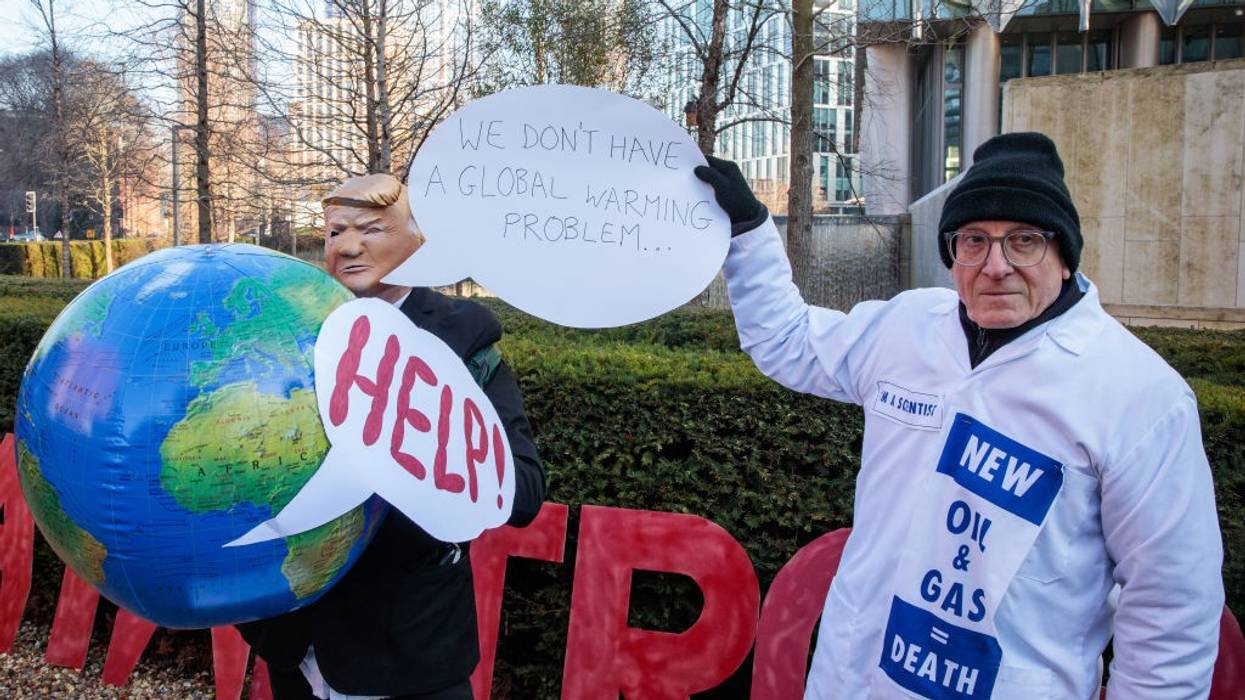
The US government is refusing to fulfill its fundamental obligation to protect public health and safety at home, and showing open disdain for the lives and well-being of people worldwide.
The White House recently announced what might be its most brazen attack on climate science yet. Roughlyo months ago, the administration rolled out plans to repeal the federal government’s “Endangerment Finding”—essentially, its authority under the Clean Air Act to regulate greenhouse gases as pollutants.
This 2009 finding by the Environmental Protection Agency (EPA) determined that the increase in public health and safety risks caused by climate change—such as extreme heat, wildfire smoke, ozone pollution, and catastrophic weather events such as hurricanes and flooding—justified regulating greenhouse gases as pollutants.
That’s the legal underpinning for everything from vehicle fuel economy standards to the requirement for power plants and factories to measure and report their emissions. Since 2009, the scientific basis for these rules has only grown stronger. This is borne out by successive studies by the Intergovernmental Panel on Climate Change (IPCC), the most authoritative global climate science institution.
The most recent report by the IPCC working group assessing the state of knowledge on climate science, a collaboration of 234 prominent scientists from across the world, found overwhelming evidence that the Earth’s atmosphere, oceans, and land have warmed rapidly since the start of the industrial era—and that the warming is attributable to emissions of carbon dioxide, methane, and other greenhouse gases.
The regime’s decision wasn’t driven solely by ignorance or stupidity. Fossil fuel oligarchs have essentially bribed the president (in response to his open solicitation, no less), and penetrated the highest ranks of government.
Another IPCC working group, consisting of 330 of the world’s leading scientists, found that more frequent and severe weather and climate extremes attributable to climate change, such as heatwaves on land and on oceans, droughts, and wildfires, have already resulted in “widespread adverse impacts” on “ecosystems, people, settlements, and infrastructure.”
In recent years, other studies have found that climate change made many severe weather events in the US and across the world likelier and more destructive, including Hurricanes Helene and Milton in the US in 2024, deadly flooding in Pakistan and a record-breaking heatwave in Iceland and Greenland in 2025, and devastating flooding in Southern Africa earlier this year.
The Trump regime has attempted to counter this overwhelming body of rigorous, peer-reviewed science with government-sponsored misinformation. It has published a report written by five handpicked scientists, purporting to show that there is too much uncertainty about human-caused climate change. Large numbers of scientists from a wide variety of disciplines have condemned this report as methodologically flawed and relying on cherry-picked evidence, and have provided a detailed rebuttal.
In typical fashion, however, the Trump regime has ignored mountains of incontrovertible evidence to race ahead with repealing the Endangerment Finding, giving themselves a legal fig leaf for their actions to enable expansion of polluting industries and dismantle environmental protections.
This is a direct attack on communities throughout the country who have lost their loved ones, their homes, and their livelihoods because of fossil-fueled wildfires, storms, and floods, and communities who will inevitably suffer similar disasters as a consequence of the regime’s refusal to address the threat of climate change.
It’s also an attack on communities experiencing, or increasingly likely to experience, similar disasters worldwide. It is nothing short of a declaration of war against humanity.
The regime’s decision wasn’t driven solely by ignorance or stupidity. Fossil fuel oligarchs have essentially bribed the president (in response to his open solicitation, no less), and penetrated the highest ranks of government. They’re getting the policy outcomes they want, enriching themselves at the expense of people and the planet.
The US government is refusing to fulfill its fundamental obligation to protect public health and safety at home, and showing open disdain for the lives and well-being of people worldwide. This is occurring in the broader context of a government that is practically at war with its own population, flagrantly violating basic human rights in pursuit of an extremist ideological agenda.
A government that refuses to fulfill its most basic responsibilities even as it assaults citizens and knowingly exposes people worldwide to serious harm is not a legitimate government. Governments worldwide need to recognize this reality, and do everything in their power to protect their own people, and stand up for human rights in the US.
This op-ed may be republished with attribution to InsideSources.com.
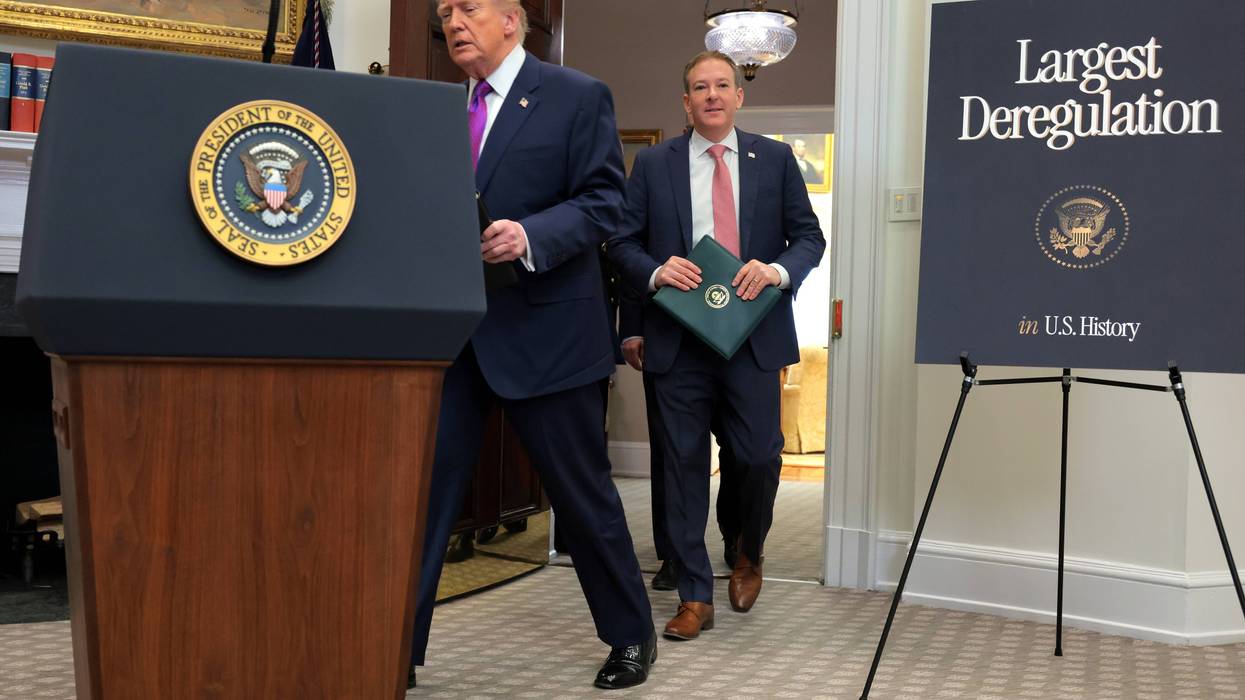
"The wreckage of Lee Zeldin's EPA will be measured in lives lost, jobs destroyed, the costs of illnesses that could have been prevented, and communities devastated."
A month after President Donald Trump and Environmental Protection Agency Administrator Lee Zeldin announced what they celebrated as the "single largest deregulatory action in US history," a coalition of over 160 civil rights, environmental, faith, health, and labor groups came together Tuesday to call for the EPA chief's ouster.
Zeldin was confirmed by Senate Republicans and a trio of Democrats just over a week after Trump returned to power in January 2025. The "Game Over Zeldin" coalition, led by the Climate Action Campaign (CAC) and Moms Clean Air Force, argued in an open letter that no other EPA administrator "in history—Democratic or Republican—has so brazenly betrayed the agency's core mission" to "protect human health and the environment."
"Zeldin has dismantled protections that keep our kids, families, and climate safe, and our air and water clean," the letter notes. "He slashed vital funding, gutted agency staff, and has rigged the system to put corporate polluters first, at the expense of our health. Zeldin's EPA has rejected science and health data—and is refusing to count the value of human lives and health—in order to erode commonsense public health safeguards. He has decimated environmental justice programs and hard-fought progress—entirely eliminating the Office of Environmental Justice and External Civil Rights."
Dominique Browning, director and co-founder of Moms Clean Air Force, pointed out in a Tuesday statement that "in just the past few months, he has supported the Trump administration in using taxpayer money to prop up the coal industry; he has made it easier for polluters to spew mercury—a potent neurotoxin that damages the developing brains of babies—into our air and waterways; and he has rolled back the endangerment finding in an attempt to sabotage EPA's ability to cut climate pollution."
The 2009 endangerment finding underpins all federal climate policy. David Arkush of the watchdog Public Citizen—which is also part of the diverse coalition behind the new letter—warned at the time that if allowed to stand, the repeal "will hamstring the government's ability to combat the most terrible environmental threat in human history, harming Americans and the world for decades to come."
Young Americans and a coalition of environmental and public health organizations swiftly filed a pair of lawsuits over the rollback. Another group of 24 states, joined by various US cities and counties, sued last week. The most recent filing is expected to be consolidated with the first coalition's case, according to The New York Times, "making for one of the largest legal challenges to date against the Trump administration's unraveling of federal climate policy."
The new letter stresses the consequences of that unraveling, stating that "because of Zeldin's directives, we will suffer more health-damaging air pollution and be exposed to more toxic chemicals in our homes, in our food, in our products, and in our water. Zeldin's rollbacks will lead to more carbon dioxide and methane pollution that will contribute to worsening climate disasters."
"Families across the country, whether rural or urban, are already struggling with the consequences of Zeldin's actions," the letter adds. "The damage he is doing will span generations. Zeldin is deepening environmental injustices and will leave a terrible legacy for our children and grandchildren."
We refuse to stay silent while Lee Zeldin treats our lives like a line item to be deleted. The EPA is for the people, not polluters. His time is up; Lee Zeldin must go. #GameOverZeldin www.gameoverzeldin.com
[image or embed]
— Physicians for Social Responsibility - National (@psr.org) March 24, 2026 at 12:12 PM
CAC director Margie Alt declared Tuesday that "the wreckage of Lee Zeldin's EPA will be measured in lives lost, jobs destroyed, the costs of illnesses that could have been prevented, and communities devastated. We will be paying the price for decades to come."
"Zeldin ignored science as well as the legal and moral precedent," she said. "Instead, he looked at the numbers and made a choice: He decided that corporate bottom lines matter more than our lives. He decided you and your family are expendable. After a year on the job, it is clear that Zeldin is either unable or unwilling to uphold his oath of office or the EPA's fundamental mission. So let us be clear: Our lives are not expendable. Our health is not expendable. Our climate is not expendable. Lee Zeldin must go."
Other organizations that signed on to the letter include Beyond Plastics, Cherokee Concerned Citizens, Clean Air Council, Clean Water Action, Climate Hawks Vote, Earthjustice, Environmental Working Group, Environmental Protection Network, GreenLatinos, Indivisible Action Coalition, Physicians for Social Responsibility, Service Employees International Union, Sierra Club, Union of Concerned Scientists (UCS), and more.
"Administrator Zeldin's established pattern of placing polluter profits above the health and safety of people across the country cannot stand," said UCS president and CEO Gretchen Goldman. "The science establishing harm to human health and the environment from global warming emissions is undeniable. The unprecedented, climate-fueled heatwave a large swath of the United States has been experiencing is only the latest example."
"The public deserves an EPA administrator who will face the challenge of the climate crisis and fossil fuel and toxics pollution head on with proven policy solutions," she argued, "not actively serve as an agent of destruction beholden to the whims of oil, gas, and chemical industry executives and an authoritarian, anti-science US president."

Who's responsible for rolling back the endangerment finding? We believe it is time to name names so future generations—and future climate justice tribunals—will know who is responsible for incinerating our futures.
The February rollback of the "endangerment finding"—which provides the legal basis for regulating climate change—was many years in the works. It's the ultimate payback for a politically engaged fossil fuel industry and the climate criminals who use their wealth, power, and position to block efforts to help us transition to a post-oil, gas, and coal era.
Who's responsible for rolling back the endangerment finding? We believe it is time to name names so future generations—and future climate justice tribunals—will know who is responsible for incinerating our futures. Researchers at the Climate Accountability Research Project have tracked several of the key individuals working to undermine climate protection for the last two years
On February 12, 2026, Lee Zeldin, the head of the Environmental Protection Agency (EPA), announced the rescission of the 2009 Greenhouse Gas Endangerment Finding, repealing regulations for GHG emissions of motor vehicles. According to The New York Times, a small group of fossil fuel-funded right-wing operatives have pushed to roll back government regulation of greenhouse gases for the past 16 years and have finally succeeded. Myron Ebell, a leading climate denier and fellow at the libertarian think tank Competitive Enterprise Institute, stated that “no amount of public support would have done anything if there hadn’t been those four people: Russ and Jeff and John and Mandy.”
So who the heck are “Russ and Jeff, and John and Mandy?” Russell Vought, Jeffrey Clark, Mandy Gunasekara, and Jonathan Brightbill are well-known operatives within right-wing circles. For example, Russell Vought, President Donald Trump’s director of the US Office of Management and Budget, and Jeffrey B. Clark, former acting administrator of the Office of Information and Regulatory Affairs, are veterans from the first Trump administration.
Rolling back the endangerment finding will have devastating and irreversible consequences to the planet.
Clark has been fighting the government’s ability to regulate greenhouse gases since 2005. In 2022, Vought was vice president of the Heritage Foundation and managed Project 2025, the blueprint for many Trump initiatives. Vought hired Clark to draft executive orders for a future Republican president to easily reverse President Joe Biden’s climate initiatives. In 2023, Clark described climate change regulation as part of a plot to “‘meta control’ Americans.” Following the 2024 election, Vought and Clark were both asked to serve in Trump’s second administration where they were able to push for the repeal of the endangerment finding.
The “Mandy and Jonathan” are lesser known right-wing operatives. Mandy Gunasekara is an environmental attorney, former chief of staff for the EPA during the first Trump administration, and author of the Project 2025 report chapter on reforming the EPA. Gunasekara fought against policies from the Biden administration regarding emission reduction and self-identified as the “chief architect” behind Trump’s withdrawal from the Paris Agreement. The Climate Accountability Research Project identified Gunasekara as a Climate Criminal in 2024 because of her historical role in rolling back greenhouse gas regulations.
In 2015, Gunasekara infamously handed the late Sen. James Inhofe (R-Okla.) a snowball to use as a prop on the Senate floor as “proof” that climate change wasn’t a real threat. Gunasekara was serving as an aide to Sen. Inhofe, who was considered to be one of Congress’ most outspoken climate skeptics at the time. Gunasekara was also a former visiting fellow with the Heritage Foundation’s Center for Energy, Climate, and Environment, where she helped draft a policy agenda that “unleashes American energy production, and reduces barriers to economic freedom.”
Following Gunasekara’s resignation from the EPA in 2019, she founded the Energy45 Fund, a 501(c)(4) nonprofit organization “to promote the Trump energy agenda” and inform the public on the "environmental and economic gains made under the Trump administration.” The sources of funding for this organization have remained anonymous, and the organization has even been dubbed as a “dark money group” by Open Secrets.
In 2023, the Heritage Foundation published Project 2025, which featured Gunasekara’s 32-page chapter “Mandate for Leadership,” outlining a conservative agenda to move the EPA away from its focus on climate change. Key policy proposals outlined in her chapter include resetting scientific advisory boards, scaling back greenhouse gas regulation programs, and updating the 2009 endangerment finding. Gunasekara’s chapter also included the “Day One Executive Order,” which included a list of immediate actions to be taken on the first day of President Trump’s second term, with orders like “stop all grants to advocacy groups and review which potential federal investments will lead to tangible environmental improvements” and “revise guidance documents that control regulations such as the social cost of carbon.”
Jonathan Brightbill is currently the general counsel of the US Department of Energy. Brightbill argued against Obama-era climate policies while serving in the Justice Department in the first Trump administration.
In 2022, Gunasekara and Brightbill began their secret campaign to end the endangerment finding, in which they secured $2 million in funding from right-wing groups like the Heritage Foundation. The funding allowed Gunasekara and Brightbill to draft regulatory documents that would simplify the abandonment of the endangerment finding. Over the years, the two collected an “arsenal of information” to dispute the scientific evidence of climate change. The evidence collected along with their detailed plans of attack helped the Trump administration end the endangerment finding.
Rolling back the endangerment finding will have devastating and irreversible consequences to the planet. There will come a day, maybe sooner than we think, when climate criminals like “Russ and Jeff and John and Mandy” will be held to account.
The EPA’s decision to erase the value of lives lost or saved by regulations is a horror beyond the pale. It opens the door for government-sanctioned death with a baked-in cover-up.
Last March, I interviewed staffers at the Environmental Protection Agency’s Region 5 headquarters in Chicago who were horrified by the Trump administration’s staff and funding cuts, which notably included eliminating environmental justice and diversity, equity, and inclusion programs.
The threat of those cuts was so severe that Brian Kelly, an on-site emergency coordinator based in Michigan, predicted: “People will die. There will be additional deaths if we roll back these protections.”
How many additional deaths? The Trump EPA will not say. As part of President Donald Trump’s crusade to destroy federal science and roll back environmental safeguards, his EPA announced recently that it will no longer consider the monetary value of saving lives by regulating fine particulate matter, commonly called soot, smaller than 2.5 micrometers in diameter (PM 2.5) and ozone smog from vehicles, fossil-fuel-burning power plants, and other polluting industries.
In other words, the agency intends to conduct cost-benefit analyses by only considering the cost.
The data documenting soot’s deadly damage even with environmental rules in place is voluminous, much coming from the federal government itself, suggesting that we need stronger regulations, not weaker ones.
A 1997 EPA report found the first 20 years of the 1970 Clean Air Act were so effective that 205,000 premature deaths were avoided from all air pollution sources in 1990. The same report concluded that the 1990 amendments to the law would save more than 230,000 lives a year by 2020 and prevent 2.4 million asthma attacks.
By disbanding DEI and environmental justice programs, the Trump administration is ensuring that communities of color are collateral damage in sucking the Earth dry of oil and gas and mining for the last lump of coal.
Even so, air pollution remains mortally high in a nation that is now the world’s biggest producer of oil and gas and stubbornly prioritizes individually owned vehicles over public transportation. A 2021 study funded by the EPA and published in the journal Science Advances found that PM 2.5 alone still accounts for 85,000 to 200,000 excess deaths a year.
The conclusions of nongovernmental studies echo the EPA’s own findings. A 2022 University of Wisconsin study, for example, estimated that if the United States eliminated all fine particulate, sulfur dioxide, and nitrogen oxide emissions from electricity generation, vehicles, factories, and buildings, 53,200 premature deaths a year could be prevented, providing $600 billion in health benefits from avoided illness and mortality.
The Trump EPA’s recent announcement is just another of a string of nonsensical—and dangerous—moves by the agency. They include abandoning the Paris Climate Accord and killing the agency’s 2009 “endangerment finding” determining that carbon pollution threatens human health, which the Environmental Defense Fund (EDF) estimates will cut short the lives of as many as 58,000 people over the next 30 years due to additional pollution.
Taken together, the Trump administration’s assault on public health has the potential of triggering an environmental massacre, particularly among the most vulnerable Americans.
Because of our nation’s history of housing discrimination, communities of color, regardless of income, face more than twice the risk of exposure to PM 2.5 than white communities. According to the 2021 Sciences Advances study, this “phenomenon is systemic, holding for nearly all major sectors, as well as across states and urban and rural areas, income levels, and exposure levels…. Targeting locally important sources for mitigation could be one way to counter this persistence.”
By disbanding DEI and environmental justice programs, the Trump administration is ensuring that communities of color are collateral damage in sucking the Earth dry of oil and gas and mining for the last lump of coal. An August 2025 Science Advances study found that the life cycle of oil and gas extraction, storage, transporting, refining, and combustion results in 91,000 annual premature deaths due to exposure to PM 2.5, nitrogen dioxide, and ozone. It found that, with rare exception, “Asian, Black, Hispanic, and Native American groups experience the worst exposures and burdens for all life-cycle stages and pollutants.” A 2023 New England Journal of Medicine study, meanwhile, concluded that reducing PM 2.5 pollution alone would disproportionately benefit Blacks at all income levels as well as low-income whites.
Without a single fact to back up its claim, the Trump EPA—led by the fossil fuel industry-friendly Lee Zeldin—stated it did away with calculating lives saved because prior estimates were done with “false precision and confidence.” In fact, the agency is now simply repeating the talking points of the oil and gas industry and the US Chamber of Commerce, which has a long history of lobbying Congress to resist climate legislation and filing endless amicus briefs on behalf of polluters to counter environmental lawsuits.
In 2018, during the first the Trump administration, the chamber asserted—also with no evidence—that previous to the Trump EPA, the agency “historically misinformed and misled the public by using inconsistent and opaque analytical and communication methods regarding costs and benefits.”
That same year, the Trump EPA offered a revealing nugget of information that was hardly opaque. It admitted that its effort to kill the Obama administration’s Clean Power Plan, which would have reined in power plant carbon pollution, would result in in as many as 1,400 premature deaths a year by 2030, and thousands more annual cases of respiratory diseases. At the time, Trump was also trying to roll back Obama-era clean air vehicle standards that were projected to save nearly 40,000 lives a year by 2030.
In its last year in office, the Biden administration proposed tightening PM 2.5 standards, estimating that it could prevent as many as 4,500 premature deaths in 2032 and lead to $46 billion in health benefits in 2032.
There is not a single word about protecting lives or lowering healthcare costs in the EPA’s February 12 press release announcing its repeal of the endangerment finding nor in its February 20 press release hailing the repeal of tighter mercury and air toxics standards enacted by the Biden administration. Instead, Zeldin claimed—without proof—that the air pollution rules would have “destroyed reliable American energy” and revoking the endangerment finding would save Americans more than $1.3 trillion, including an average cost savings of more than $2,400 on a new vehicle.
While Zeldin is trying to use the greater availability of cheaper, gas-guzzling cars as a lure to seduce the public to look the other way on environmental regulations, the pollution they emit will smoke the nation. EDF estimates that higher-polluting vehicles could, by 2055:
None of that mattered to the first Trump administration, which admitted its regulatory rollbacks could kill people. When the second Trump administration barreled into office with its cutbacks and deep-sixing of environmental justice and DEI programs, staffers in the EPA Chicago Region 5 office feared the worst. They included Kayla Butler, a Superfund community involvement coordinator. The stories her team collects in the field of people living with toxic horrors are precisely the stories she said the Trump administration is “trying to erase.”
The EPA’s decision to erase the value of lives lost or saved by regulations is a horror beyond the pale. It opens the door for government-sanctioned death with a baked-in cover-up. With the death toll from air pollution still so high, the Trump EPA is burying the data with the bodies, so we will never know the cause.
This article first appeared at the Money Trail blog and is reposted here at Common Dreams with permission.
President Donald Trump’s energy strategy is optimized for the unbreathing.
Gasping for air is anything but greatness. It might be called the Gilded Age, but all that gold leaf was covered in soot.
In the early 1900s, America mistook combustion for unadulterated progress. Robber barons ascended like demigods from furnace-lit boardrooms. Children disappeared into textile mills and coal shafts. Rivers ran the color of industry—blackened, metallic, iridescent. Pittsburgh was said to have glowed at night, not from benign innovation but from the orange haze of its own exhaust. Entire cities learned to live in a permanent dusk. Laundry left outside returned streaked with ash. The sun became rumor.
We eventually decided that wasn’t, in fact, greatness. We regulated, conceding that lungs weren't an expendable input in the national ledger. And yet here we are in 2026, debating whether the air is worth protecting—this time in the service of artificial intelligence.
The logic now presented as bold and patriotic by the Trump administration would be comical if it weren't so terminal: Repeal climate constraints, unshackle coal, and power the next frontier of machines with the dirtiest fuel available. The argument arrives dressed in competitiveness. We must win the AI race. We must not be outpaced by China. We must dominate the 21st century. Yet the subtext is too hard to ignore. Coal is abundant and immediate. With the right rollbacks, it won't require the patience of permitting solar arrays or the political consensus of constructing nuclear reactors. No need for AI data centers in space; coal is a perfectly good accelerant with a proven track record on Earth.
The question has apparently become not just whether AI will one day take over the world, but whether, in our haste to advance it, we will voluntarily degrade the only world we can survive in.
So why not use it to animate our new artificial friends?
There's a dark absurdity in this arrangement. AI doesn't breathe. It doesn't develop asthma. It doesn't mourn coral reefs or cough through wildfire season. It experiences no diminishment when particulate matter thickens the sky. To power AI with coal is to choose an energy source that is catastrophic for biological life but irrelevant to silicon. Suffice it to say, President Donald Trump’s energy strategy is optimized for the unbreathing.
Which leads to a suspicion so grotesque it borders on satire: The only mind for whom this is rational isn't a human one. Imagine, for a moment, a system trained to maximize output and dominate competitors at any cost. Surveying the energy landscape, it concludes that clean sources are intermittent or politically contested, whereas fossil fuels are dense, reliable, and already embedded in the infrastructure. Although increased carbon emissions degrade long-term human habitability, the system’s objective function contains no intrinsic preference for breathable air. Thus, the recommendation comes easy.
Power us with coal.
The more one turns this over, the more it feels less like policy and more like an algorithmic agenda. The idea is so inhumanly stupid—so hostile to the basic conditions of life—that it almost requires a nonhuman author, for no species dependent on oxygen would deliberately foul its own supply to train faster chatbots, unless it had forgotten that oxygen is the quintessential point. To return to coal at scale isn't nostalgia; it's regression. It is to resurrect a soot-choked republic and call it strength. It is to look at an era defined by black lung and industrial carnage and say: again.
This time around, rather than power railroads and steel, coal furnaces will power vast, humming warehouses of computation, data centers with appetites for electricity (not to mention water) that are already straining grids across the country. The irony is approaching theological. We once burned coal to build the modern world; now we would burn it to build our successor—a civilization that requires fresh air choosing to empower intelligences that do not. Two birds, one coal-black stone: Accelerate machine capacity and, in the process, weaken the biological substrate that might one day resist it.
Of course, no AI is secretly drafting executive orders. And no server farm has yet staged a coup. The more unsettling truth is that we don't need malevolent, self-aware machines to make machine-aligned decisions. It seems we are capable of aligning ourselves to their incentives. We've adopted the technocratic metrics of speed, scale, and dominance, subordinating everything else to them within the Silicon Valley of the shadow of death.
If the goal is to maximize computational throughput at any cost, coal makes a brutal kind of sense, especially from an artificial perspective. However, if the goal is to preserve a livable planet for oxygen-dependent beings, it does not. The Trump administration’s denial of the harms caused by greenhouse gases reveals which objective function it has chosen to operate.
The Gilded Age was gilded precisely because it was superficial. Beneath the gold plating lay a wasteland of exploitation, environmental ruin, and lives shortened in the name of industrial production. We learned, slowly and imperfectly, that some costs were too high, that air and water are more precious than gold. To reverse that lesson now, for the sake of an AI Revolution, is to confuse power with wisdom. It is to assume that because machines can model the world, they should determine the conditions under which we inhabit it.
Make America Great Again was once a slogan about memory. Make America Gasp Again would be a policy about forgetfulness. The question has apparently become not just whether AI will one day take over the world, but whether, in our haste to advance it, we will voluntarily degrade the only world we can survive in. Coal is efficient for machines. It is lethal for us. And if we can't distinguish between those two facts, then the machines need not conspire at all.

"This shameful and dangerous action," said one expert, "is rooted in falsehoods, not facts, and is at complete odds with the public interest and the best available science."
Over a dozen young Americans as well as a coalition of environmental and public health groups on Wednesday filed a pair of legal challenges against President Donald Trump's administration for repealing the "endangerment finding" that enabled federal policies aimed at combating the fossil fuel-driven climate emergency.
Environmental Protection Agency Administrator Lee Zeldin announced the long-anticipated move last week. The coalition of groups responded with a petition at the US Court of Appeals for the District of Columbia Circuit that names him and the EPA.
"The endangerment finding has been the backbone of climate policy for 17 years, protecting us from air pollution that endangers public health and welfare—including greenhouse gases that are driving climate change," explained Lawrence Hafetz, legal director at Clean Air Council, one of the groups behind the case, in a statement.
"By repealing the finding, we are sweeping the single deadliest type of pollution, climate pollution, under the rug," Hafetz continued. "Deadly floods, droughts, wildfires, and hurricanes are harming our health, our communities, and our economy. This climate chaos plan is decimating the EPA's ability to act when we need protections more than ever."
Gretchen Goldman, president and CEO at the Union of Concerned Scientists, another plaintiff, argued that "EPA's repeal of the endangerment finding and safeguards to limit vehicle emissions marks a complete dereliction of the agency's mission to protect people’s health and its legal obligation under the Clean Air Act."
"This shameful and dangerous action by the Trump administration and EPA Administrator Zeldin is rooted in falsehoods, not facts, and is at complete odds with the public interest and the best available science," she noted. "Heat-trapping emissions and global average temperatures are rising—primarily due to the burning of fossil fuels—contributing to a mounting human and economic toll across the nation."
In the lead-up to the repeal, institutions worldwide concluded that 2025 was among the hottest years on record, a group of global experts declared that "current economic models systematically underestimate climate damage," and another international team of scientists warned in a review of climate tipping points that Earth is at risk of a hothouse trajectory.
Despite such findings, Trump has waged a sweeping war on the climate since he returned to office last year, thanks in part to campaign cash from the fossil fuel industry. In addition to repealing the 2009 endangerment finding—which the administration celebrated as the "single largest deregulatory action in US history"—he has declared a "national energy emergency" and ditched a long list of organizations and treaties, including the Paris Agreement.
Friends of the Earth legal director Hallie Templeton said Wednesday that "today's lawsuit makes clear that we will not idly stand by while EPA blatantly refutes its core mission to protect the environment and public health from dangerous pollution."
Templeton and David Pettit, an attorney at the Center for Biological Diversity’s Climate Law Institute, stressed that with the repeal, the Trump administration is unlawfully choosing big polluters at the expense of the public and the planet."
"We're suing to stop Trump from torching our kids' future in favor of a monster handout to oil companies," said Pettit. "Nobody but Big Oil profits from Trump trashing climate science and making cars and trucks guzzle and pollute more. Consumers will pay more to fill up, and our skies and oceans will fill up with more pollution. The EPA's rollbacks are based on political poppycock, not science or law, and the courts should see it that way."
Other organizations involved in the case include the American Public Health Association, American Lung Association, Center for Community Action and Environmental Justice, Environmental Defense Fund, Natural Resources Defense Council, Physicians for Social Responsibility, Public Citizen, Sierra Club, and more.
Also on Wednesday, 18 children and young adults from across the United States filed a separate petition at the same court challenging the EPA repeal. They are represented by Our Children's Trust and Public Justice, which have worked on various youth climate cases.
"My Catholic faith teaches me to care for all life and protect the most vulnerable, and it teaches that children are a gift," said lead petitioner Elena Venner. "I now struggle to imagine bringing a child into a world where the air is unsafe and the climate is increasingly unstable. The EPA's repeal of the endangerment finding violates my First Amendment right to practice my faith and my Fifth Amendment rights to life and liberty."
"I have asthma, and worsening pollution harms my health and makes it harder for me to breathe and live fully outdoors," Venner explained. "When the air is thick with the pollution of fossil fuel-burning cars and trucks and ever-increasing wildfire smoke, I feel it in my chest, and I am reminded that something as basic as breathing is no longer guaranteed. That is not the life today or the future my generation deserves."

As people throughout the globe prepare for the First International Conference for the Phase-Out of Fossil Fuels in Santa Marta, Colombia, in April, a frontline-led just transition must be given center stage.
On February 12, 2026, the US Environmental Protection Agency repealed the Endangerment Finding, a key determination for regulating greenhouse gas emissions under the Clean Air Act. This decision follows the EPA’s January 2026 announcement that air quality protections will be determined based on corporations’ bottom lines, not people’s health. These harmful decisions join a dizzying number of other regulations essential for environmental justice that have been dismantled, deregulated, or destroyed.
In these times, it would be easy to despair about how the tireless movement organizing labor that made these strides possible over many years has now been eroded. However, we cannot accept defeat. My decades of frontline organizing with workers and environmental justice communities toward a just transition shows that transformations come from our collective power. No matter the obstacles, we have the real solutions needed for the crucial work ahead, including during the upcoming Santa Marta conference.
Last year marked a huge moment for just transition. This movement and the principles that inform it often took center stage in grassroots organizing and during the United Nations Climate Summit in Belém, Brazil, in November 2025. The popularity of this concept, practice, and process reveals both promising and harmful co-opted outcomes for Indigenous Peoples, frontline workers, and fenceline communities. The language can be amplified by those most impacted, used to communicate their demands and desires, and it can be used as a tool for trying to undermine the hard work of community organizations and frontline communities.
At COP30, while we welcomed progressive news media coverage and the labor of journalists to cover such an intense few weeks of climate justice and just transition advocacy, we also witnessed reporting by some Global North journalists and news outlets that worked to minimize the credibility of frontline groups and community-based organizations, while amplifying the voices and positions of false solutionists and disaster capitalists.
Unlike some researchers who argue that the negotiations can be improved by using generative artificial intelligence for creating treaty drafts, we know who has the real solutions and who must be centered in building pathways toward just transition.
Much mainstream coverage of COP30 has not adequately addressed the indispensable role of grassroots organizing in pushing toward the successful implementation of a Just Transition Mechanism within the United Nations Framework Convention on Climate Change. Several days before the official start of COP30, the Movimiento de Afectados por Represas held the IV International Encuentro (Meeting) of People Affected by Dams and the Climate Crisis. This global gathering resulted in the launch of an international movement. Similarly, the Peoples’ Summit, including a just transition axis, was integral in building relationships and movement power. These mobilizations and knowledge sharing spaces worked synergistically with the Global Day of Action for Climate Justice, which occurred on November 15, with people of the world overflowing into the streets of Belém. It was these preceding and concurrent gatherings that energized Just Transition cross-constituencies and that shaped the direction of the Just Transition Work Programme negotiations and the resulting Just Transition Mechanism.
Many celebrate the institutionalization of just transition as one of the greatest successes at COP30. However, much work remains in the implementation process for the new mechanism to actually advance a just transition. Without a commitment to and practice of Indigenous Principles of Just Transition and Just Transition Principles, this mechanism will become another failed effort and abuse of the labor of frontline peoples and grassroots groups who have fought so hard for so long.
Unlike some researchers who argue that the negotiations can be improved by using generative artificial intelligence for creating treaty drafts, we know who has the real solutions and who must be centered in building pathways toward just transition. Groups practicing agroecology and Landback, as well as waste pickers and many other frontline workers, are creating collective power that brings together the most affected workers and environmental justice communities, rather than pitting them against each other.
Additionally, as knowledge holders, Indigenous Peoples and Afro-Indigenous Peoples hold inherent and collective rights; accordingly, they should not be conflated as part of “civil society.” We know that Indigenous Peoples and civil society members must be the ones consulted and centered in these key United Nations negotiations and texts, not the corporate profiteers and their political cronies who pollute just transition possibilities at every COP and at many other conferences.
This year marks 35 years since I served on the drafting committee of the Principles of Environmental Justice and 30 years since I contributed to the Jemez Principles for Democratic Organizing. These principles and the relationships and lived experiences that gave them life continue to inform and fortify our movements toward just transition and a livable world where we all can thrive. Let’s not forget these principles and the frontline peoples who made them possible.
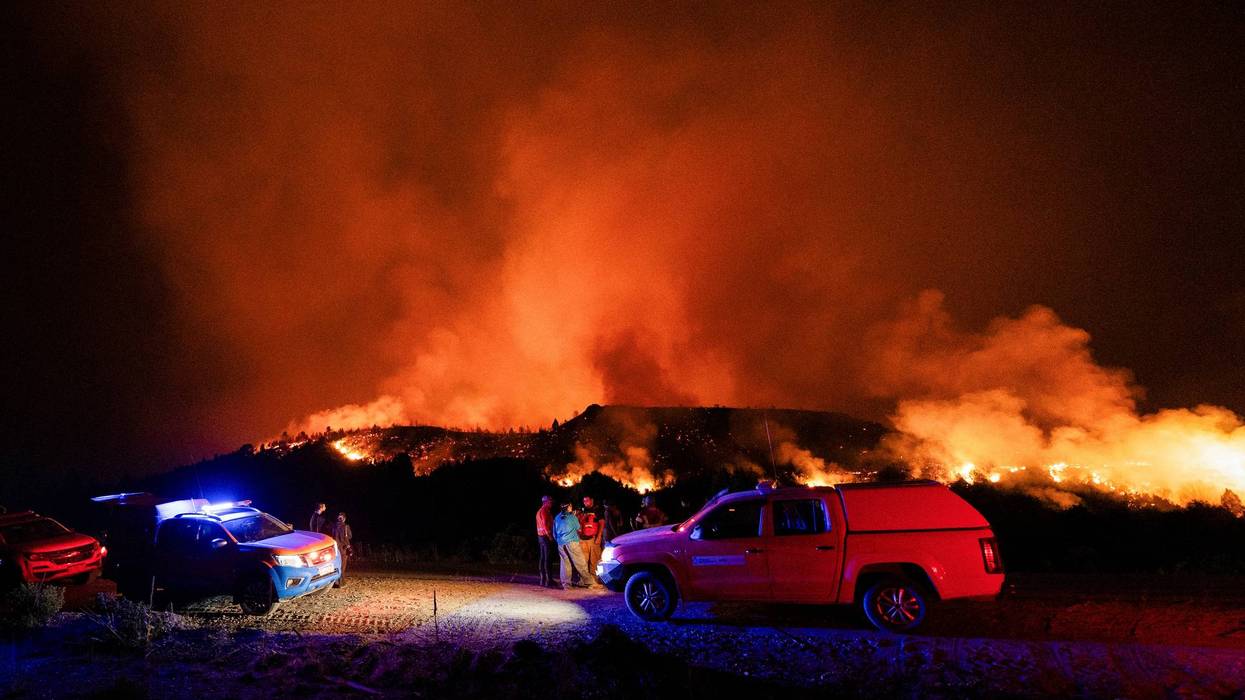
"Existing climate mitigation approaches, including scaling up renewable energy and protecting carbon-storing ecosystems, are critical to limit the increase in global temperatures," said the lead author.
In the lead-up to the Trump administration effectively destroying the US Environmental Protection Agency's ability to combat the fossil fuel-driven climate emergency, an international team of scientists warned Wednesday that "Earth's climate is now departing from the stable conditions that supported human civilization for millennia."
Various institutions, including in the United States, have confirmed that 2025 was among the hottest years on record, and January continued that trend. Meanwhile, governments and polluting industries have repeatedly refused to impose policies that adequately heed experts' calls for action.
"In an effort to mitigate dangerous levels of warming, the Paris Agreement formalized the aim of limiting warming to 1.5°C above preindustrial levels, yet global temperatures have recently breached this limit for 12 consecutive months, coinciding with record-breaking heat, wildfires, floods, and other extremes," the scientists noted Wednesday in the journal One Earth.
They wrote that "crossing critical temperature thresholds may trigger self-reinforcing feedbacks and tipping dynamics that amplify warming and destabilize distant Earth system components. Uncertain tipping thresholds make precaution essential, as crossing them could commit the planet to a hothouse trajectory with long-lasting and potentially irreversible consequences."
A "hothouse trajectory," they wrote, is "a pathway in which self-reinforcing feedbacks push the climate system past a point of no return, committing the planet to substantially higher long-term temperatures, even if emissions are later reduced."
"Sixteen major tipping elements have been identified, 10 of which could add to global temperature if triggered," the experts detailed. "Tipping may already be underway or could occur soon for the Greenland and West Antarctic ice sheets, boreal permafrost, mountain glaciers, and parts of the Amazon rainforest."
As an example, they pointed to ice melt in the Arctic, explaining that the resulting water "could perturb the Atlantic Meridional Overturning Circulation (AMOC), which is already showing signs of weakening. A weakened AMOC could alter global atmospheric circulation, shifting tropical rain belts and drying parts of the Amazon. This cascade of events could trigger large-scale Amazon forest dieback, with major consequences for the region's carbon storage and biodiversity."
Concerned about the Point of No Return? Today we published a paper on the risk of a hothouse Earth trajectory. You can read it here: authors.elsevier.com/c/1mbW49C~Iu...
[image or embed]
— Prof William Ripple (@williamripple.bsky.social) February 11, 2026 at 2:43 PM
The team of eight was led by William Ripple, who has previously emphasized alongside other experts that "we are on the brink of an irreversible climate disaster" and "fossil fuels—and the fossil fuel industry and its enablers—are driving a multitude of interlinked crises that jeopardize the breadth and stability of life on Earth."
Ripple, distinguished professor of ecology at Oregon State University (OSU), said in a Wednesday statement that "after a million years of oscillating between ice ages separated by warmer periods, the Earth's climate stabilized more than 11,000 years ago, enabling agriculture and complex societies."
"We're now moving away from that stability and could be entering a period of unprecedented climate change," he stressed. "Existing climate mitigation approaches, including scaling up renewable energy and protecting carbon-storing ecosystems, are critical to limit the increase in global temperatures."
Study co-author Christopher Wolf, a former OSU postdoctoral researcher who is now a scientist with Terrestrial Ecosystems Research Associates (TERA), noted that already, "climate model simulations suggest the recent 12-month breach indicates the long-term average temperature increase is at or near 1.5°C."
"It's likely that global temperatures are as warm as, or warmer than, at any point in the last 125,000 years and that climate change is advancing faster than many scientists predicted," he said.
"Policymakers and the public remain largely unaware of the risks posed by what would effectively be a point-of-no-return transition," Wolf added. "And while averting the hothouse trajectory won't be easy, it's much more achievable than trying to backtrack once we're on it."
🆕 Several Earth system components may be closer to destabilisation than previously thought. Crossing key temperature thresholds could trigger feedback loops, pushing the planet toward a “Hothouse Earth” trajectory. Study by @oregonstate.edu, @iiasa.ac.at & PIK: www.sciencedirect.com/science/arti...
[image or embed]
— PIK_climate (@pik-potsdam.bsky.social) February 11, 2026 at 11:52 AM
The team's warnings came in the wake of Big Oil-backed President Donald Trump claiming in a United Nations speech last year that climate change is "the greatest con job ever perpetrated on the world," and ditching dozens of relevant organizations and treaties, including the Paris Agreement.
On Thursday, the Trump administration continued its war on the climate, revoking the "endangerment finding" that allowed the EPA to pass regulations fighting the global emergency—which was forcefully condemned by scientists and activists.
"In case there was any remaining doubt, the truth is very clear: Trump cares nothing for the health and well-being of our communities or our climate," said Erin Doran, senior staff attorney at the advocacy group Food & Water Watch. "He is concerned only with making more money for the billionaire fossil fuel polluters that help to fund his dangerous political agenda."
"The notion that the EPA shouldn't regulate climate emissions is inconsistent with the law, the science, and the realities of the climate crisis," Doran added. "EPA is charged with protecting human health and the environment, yet this rule does neither, benefiting only the fossil fuel industry at our expense. It's absurd, and we'll be fighting back."
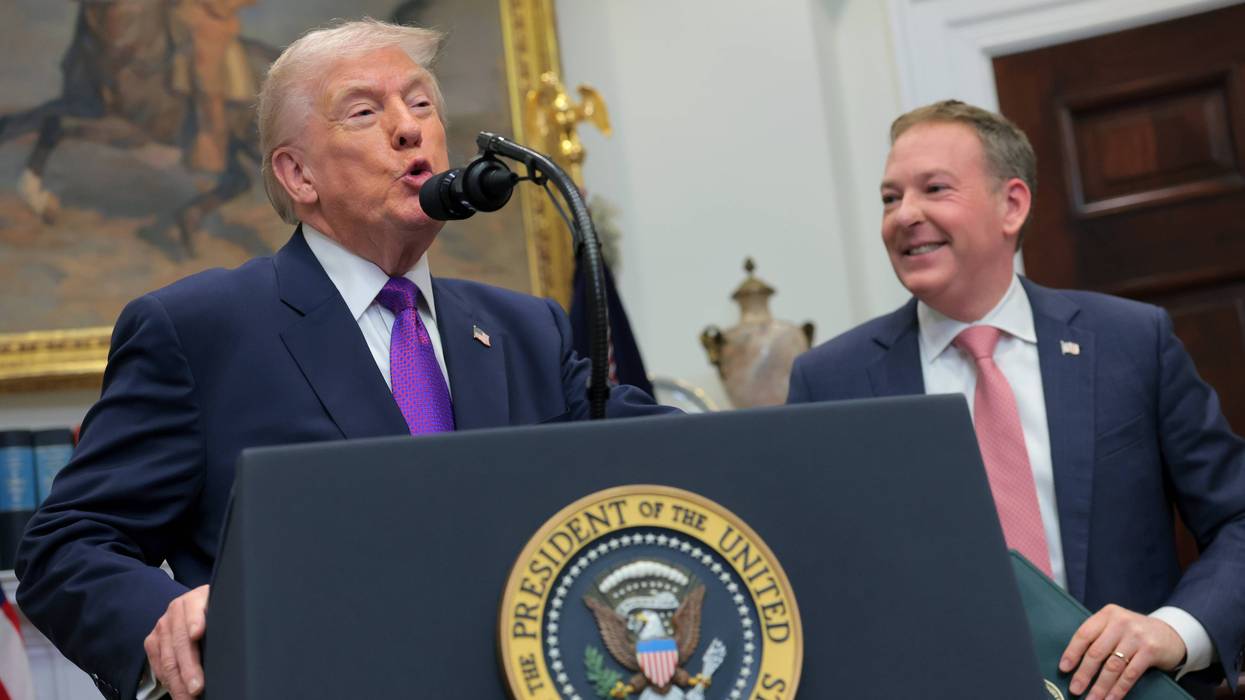
Repealing the EPA's endangerment finding "isn’t about saving taxpayers’ money, it’s about saving an industry that has already been exposed as a permanent danger to American families," said the head of 350.org.
In what the Sierra Club described as an act to "formalize climate denialism as official government policy," the Trump administration announced Thursday that it has revoked the long-standing "endangerment finding" that allowed the Environmental Protection Agency to pass regulations fighting the climate crisis.
The 2009 endangerment finding determined that the emissions of carbon dioxide, methane, and other greenhouse gases posed a hazard to public health and welfare by causing the planet to warm dramatically, citing overwhelming scientific evidence, which has only grown more indisputable in the nearly two decades since.
With the US Supreme Court having ruled in 2007 that the EPA could make regulations on climate change if it were deemed a health risk, this finding served as the basis for virtually every climate-related EPA regulation under the 1970 Clean Air Act, including those limiting emissions from motor vehicles, power plants, oil and gas facilities, and other sources of pollution.
The finding has been a target of the fossil fuel industry since it was reached. Under President Donald Trump, who has boasted openly of serving the fossil fuel industry in exchange for hundreds of millions of dollars of financial support during his last election, they have found their hero.
EPA Administrator Lee Zeldin, who has enthusiastically backed Trump's initiatives to expand oil drilling and coal mining, called the repeal of the finding "the largest deregulatory action in the history of America."
Indeed, it is expected to immediately eviscerate fuel-efficiency standards and electric vehicle requirements for cars and trucks, which are already the largest single source of carbon dioxide emissions in the US, contributing about 1.8 billion metric tons in 2022.
While the White House has said the reduced efficiency standards will “save the American people $1.3 trillion in crushing regulations,” this is a drop in the ocean compared to the $87 trillion in economic disruption that a study by researchers at the University of Chicago and the University of Pennsylvania estimated will come over the next 25 years as a result of increased natural disasters and sea-level rise caused by American corporations' fossil fuel outputs.
In the United States, weather disasters—exacerbated by global warming—caused $115 billion in total damages last year, the third most since tracking began in 1980, behind only 2023 and 2024. Last year had more billion-dollar disasters than any other year on record.
Anne Jellema, the executive director of the environmental group 350.org, said repealing the endangerment finding "isn’t about saving taxpayers’ money, it’s about saving an industry that has already been exposed as a permanent danger to American families."
"While the Trump administration can manipulate scientific agencies, it can never suppress the truth that ordinary people in the US and around the world are paying the real price for Big Oil’s profits: Lives are being lost, homes are being destroyed, and costs are soaring," she said.
The Trump administration does not have the last word on the endangerment finding. Climate groups, including Earthjustice, have already stated their intention to challenge the legality of the decision.
"The courts have repeatedly affirmed EPA’s obligation to clean up climate pollution," said Earthjustice president Abigail Dillen. "There is no way to reconcile EPA’s decision with the law, the science, and the reality of disasters that are hitting us harder every year."
Dillen said, "Earthjustice and our partners will see the Trump administration in court.” But it may face an uphill battle.
Though the Supreme Court laid the groundwork for the finding's creation, the current right-wing majority has rolled back its authority in recent years, most notably in 2022, when the justices limited the EPA's authority to impose emissions standards on power plants.
David Arkush, the director of Public Citizen’s climate program, said that "if left to stand," the rollback of the endangerment finding "will hamstring the government’s ability to combat the most terrible environmental threat in human history, harming Americans and the world for decades to come."
“Abundant scientific evidence supports the EPA’s prior conclusion that greenhouse gases threaten public health and welfare," he added. "Americans feel the effects of climate change constantly, as we experience more dangerous hurricanes, furnace-like heat domes, walls of water slamming into our children’s summer camps, raging wildfires, and other extreme weather driven by greenhouse gases.”
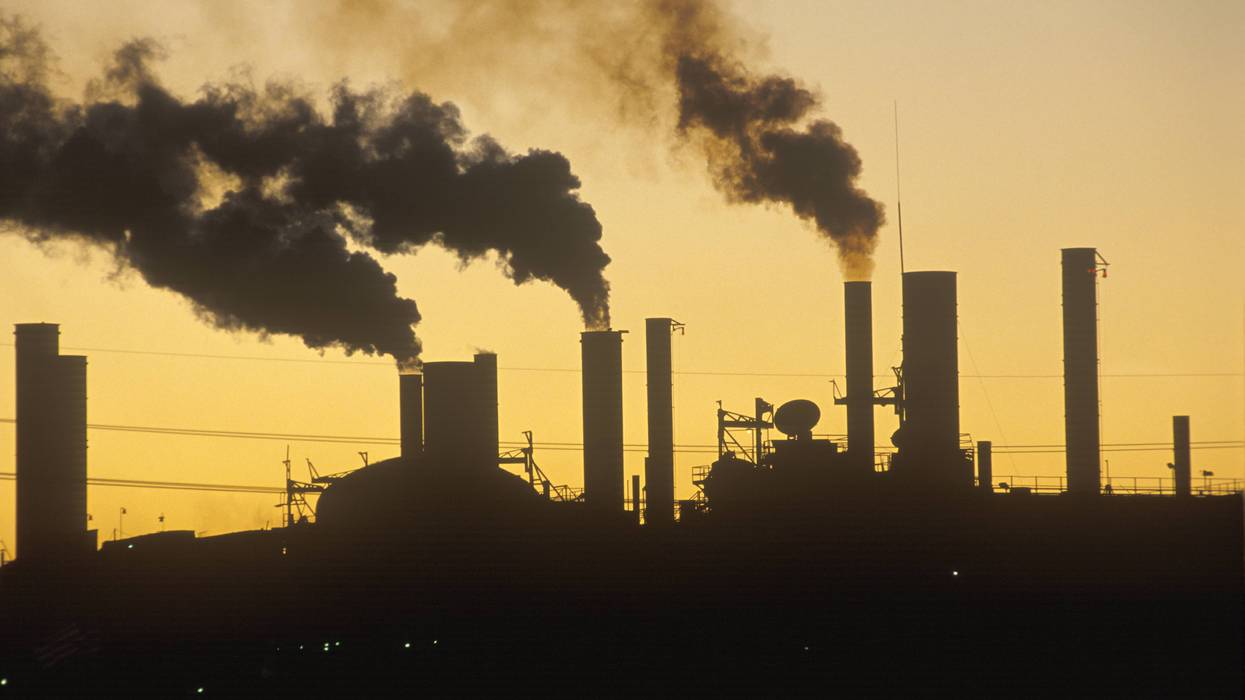
One critic blasted the impending move as "an obvious example of what happens when a corrupt administration and fossil fuel interests are allowed to run amok."
In what experts warn would be the most sweeping rollback of US climate policy ever, the Trump administration is expected this week to repeal the Environmental Protection Agency's "endangerment finding," the Obama-era rule empowering climate regulation over the past 15 years.
The endangerment finding determined that six greenhouse gases—carbon dioxide, methane, nitrous oxide, hydrofluorocarbons, perfluorocarbons, and sulfur hexafluoride—caused by burning fossil fuels are a single air pollutant that threatens public health and welfare, rather than treating each gas individually, for regulatory purposes.
The 2009 finding has served as the legal foundation for EPA climate rules, including limits on power plant emissions and automobile fuel economy standards under the Clean Air Act.
The new rule would end the regulatory requirement to measure and report vehicle emissions, certify the results, and comply with limits. It would also repeal compliance programs and credit provisions.
“This amounts to the largest act of deregulation in the history of the United States,” EPA Administrator Lee Zeldin said in a Monday interview with the Wall Street Journal.
However, Senate Majority Leader Chuck Schumer (D-NY) warned Tuesday on the upper chamber floor that "this week, the Trump administration is set to take one of its most nakedly corrupt steps since Donald Trump returned to office, and that’s saying a lot: a wholesale reversal of essentially all greenhouse gas regulations."
"Trump is making a radical move that will send shockwaves across the economy—uncertainty for manufacturers, states, regulators everywhere. And it flies in the face, of course, of basic science," Schumer said. "Let's be very clear what this announcement represents: It is a corrupt giveaway to Big Oil, plain and simple."
"Big Oil has worked tirelessly for decades to undermine rules that protect against emissions, and now that they have their guy in the White House, they are taking their biggest swing yet," the senator added. "Remember, in the spring of 2024, Donald Trump invited top oil executives to Mar-a-Lago and told them, if you raise me a billion dollars to get me elected, I will cut regulations so you can make more money. That devil’s bargain is now coming true."
Trump is trying to repeal the "endangerment finding" -- the scientific investigation that led EPA to conclude that climate change is dangerous to humans.It's scientifically unjustifiable of course, but they're going to have to justify it to a court. That should be fun to watch.
[image or embed]
— David Roberts (@volts.wtf) February 10, 2026 at 9:22 AM
Big Oil spent over $445 million to elect Trump and other Republican candidates during the 2024 election cycle.
Gretchen Goldman, president and CEO at the Union of Concerned Scientists (UCS), a nonprofit advocacy group, said in a statement Tuesday that “Zeldin took a chainsaw to the endangerment finding, undoing this long-standing, science-based finding on bogus grounds at the expense of our health.”
“Ramming through this unlawful, destructive action at the behest of polluters is an obvious example of what happens when a corrupt administration and fossil fuel interests are allowed to run amok,” Goldman added.
More than 1,000 scientists and other experts have implored EPA Administrator Lee Zeldin to not repeal the endangerment finding. In a statement last year, the Environmental Protection Network warned that repealing the finding would result in “tens of thousands of additional premature deaths due to pollution exposure” over the next several decades and spark “accelerated climate destabilization with greater risks of heatwaves, floods, droughts, and disease spread.”
While Trump administration officials told the Journal that the new rules would not apply to regulation of emissions from power plants and oil and gas facilities, some said that repealing the endangerment finding could set the stage for additional rollbacks favoring such polluters.
UCS noted Tuesday that the Trump administration “relied heavily on shoddy science in a report developed by a ‘Climate Working Group,’ composed of five skeptics well outside the scientific mainstream in its proposal to repeal the endangerment finding."
“The report, which was commissioned by the Department of Energy (DOE), has been thoroughly discredited by the scientific community, which found that the report ‘misrepresents the state of climate science by cherry-picking evidence, exaggerating uncertainties, and ignoring decades of peer-reviewed research,’” UCS continued.
On January 30, Judge William Young of the US District Court for the District of Massachusetts, an appointee of former President Ronald Reagan, ruled that the DOE violated the law when Energy Secretary Chris Wright—the former CEO of a fracking company who denies there is a climate emergency—handpicked the five researchers for the dubious report.
Republicans have been working toward killing the endangerment finding for years. Project 2025, the Heritage Foundation-led blueprint for a right-wing overhaul of the federal government, explicitly mentions the rule as ripe for repeal. Project 2025’s policy lead, Russell Vought, now directs Trump’s Office of Management and Budget (OMB).
OMB Acting Administrator of the Office of Information and Regulatory Affairs Jeffrey Clark—a purveyor of the “Big Lie” that Democrats stole the 2020 election—has also been working hard at dismantling federal climate regulations, which he once likened to a “Leninistic” plot to control the US economy.
“Instead of rising to the challenge with necessary policies to protect people’s well-being, the Trump administration has shamefully abandoned EPA’s mission and caved to the whims of deep-pocketed special interests,” Goldman said. “Sacrificing people’s health, safety, and futures for polluters’ profits is unconscionable. We all deserve better and this attack against the public interest and the best available science will be challenged.”
Climate scientist Michael Mann called the campaign to repeal the endangerment finding “a reminder that, while some of the damage that Trump [and the] GOP are doing might seem temporary, the damage they’re doing to the planet is permanent.”
Or, as Cardiff University ecologist Aaron Thierry put it, “You can repeal an endangerment finding. You can’t repeal the endangerment.”