
SUBSCRIBE TO OUR FREE NEWSLETTER
Daily news & progressive opinion—funded by the people, not the corporations—delivered straight to your inbox.
5
#000000
#FFFFFF
To donate by check, phone, or other method, see our More Ways to Give page.


Daily news & progressive opinion—funded by the people, not the corporations—delivered straight to your inbox.
The threat of election-denying candidates is particularly acute in Arizona, where they are running for governor, secretary of state, and attorney general.
As President Donald Trump continues to push Republicans to aggressively gerrymander ahead of the 2026 midterm elections, a new analysis has found more than 50 candidates running for key offices who have in the past engaged in efforts to nullify election results.
As reported by NPR on Monday, election watchdog States United Action has released a report showing that election-denying candidates are running for offices in 23 states where, if victorious, they would have a direct role in certifying future elections.
States United classifies election deniers as candidates who meet one of five criteria: Falsely claiming that Trump won the 2020 election, spreading conspiracy theories about the election results, refusing to certify the 2020 election, supporting litigation to overturn election results, and refusing to concede a race after being defeated.
In total, States United found at least 53 such candidates running for positions this year, including secretaries of state and governorships, that would put them in position to try to block or impede the certification of elections.
The threat is particularly acute in Arizona, where election deniers are running for governor, secretary of state, and attorney general.
This prospective Arizona election denial ticket is headlined by MAGA hardliner Andy Biggs, who voted against certification of the 2020 election results as a US congressman and who is running to unseat incumbent Democratic Gov. Katie Hobbs.
States United CEO Joanna Lydgate told NPR that her organization is tracking election deniers running for office to "provide voters with the most accurate information possible" and "understand exactly what these candidates stand for and whether they fundamentally believe in free and fair elections in this country."
As election deniers are trying to win key offices throughout the US, the Trump administration is working to get more directly involved in purging voter rolls ahead of the midterms.
According to a Monday report from CNN, "Republicans and the Trump administration are now testing the scope of the federal law that imposes that ban on 'systematic' removal programs within three months of an election, as President Donald Trump pushes for more aggressive reviews of voter rolls for non-citizens and other ineligible voters."
What this means is that states could in theory purge voter rolls just weeks ahead of elections, giving people removed from the rolls almost no time to file challenges.
Wren Orey, director of the Bipartisan Policy Center’s Elections Project, told CNN that purging voter rolls less than three months before an election means there's a high risk that "voters won’t have adequate time or notice to be able to provide the documents that they’ll need ahead of the election."
"Maybe their birth certificate doesn’t meet the requirements," Orey explained. "Maybe they don’t have one handy, maybe they don’t have a passport. That could take months to get."
Brent Ferguson, the senior director of strategic litigation at Campaign Legal Center, told CNN that he was particularly disturbed by the Trump White House's involvement in this effort to manage voter rolls.
"It sets up a situation where the federal government itself is the actor trying to purge voters from the rolls in the days before the election," Ferguson said, "which is clearly illegal."
"It's a federal strategy to control elections and rig our democracy," said a spokesperson for Fair Fight Action.
Voting rights advocates are raising fears that the Trump administration may attempt to "hijack" the 2026 election after a new report revealed that a top election integrity official suggested invoking a "national emergency" to justify a federal takeover of state-run election processes.
The New York Times reported on Wednesday that during a call in March with right-wing activists, the woman who has since been appointed to President Donald Trump's newly created "election integrity" position within the Department of Homeland Security (DHS) had suggested that the president could declare a "national emergency" to give his government new authority to dictate election rules typically decided by state and local governments.
Heather Honey, formerly a Pennsylvania-based private investigator who came to prominence as a leading proponent of Trump's efforts to overturn his 2020 loss to former President Joe Biden, said this authority would come from "an actual investigation" of the loss, which she has baselessly argued was marred by widespread fraud.
In the US, elections are administered by states, with the president having no legal authority over how they are carried out. But Honey suggested that the Trump administration has "some additional powers that don't exist right now," and that by using the investigation as a pretext, "we can take these other steps without Congress and we can mandate that states do things and so on."
Seeming to recognize the extreme step she was proposing, Honey added: "I don't know if that's really feasible and if the people around the president would let him test that theory."
The 2020 election was subject to numerous state-level recounts and audits and over 60 failed court challenges in state and federal jurisdictions—many of which were dismissed by Republican and Trump-appointed judges for lack of merit and credible evidence.
An investigation by the Associated Press last year found that across the six battleground states Trump claimed were beset by widespread fraud, only 475 individual ballots out of millions of votes cast were flagged by election officials as "potentially" affected by fraud. Even if every single one of the ballots had been proven fraudulent, it would not have been nearly enough to swing the election result in Trump's favor.
Meanwhile, several aides and officials who served Trump during the waning days of his first administration testified before the January 6 commission that the president was well aware he'd lost the election, but continued to push false claims of fraud in an effort to cling to power.
Matt Crane, a former Republican election official who served until earlier this year as a consultant for the Cybersecurity and Infrastructure Security Agency (CISA)—which Trump recently purged of election experts—told the Times that officials who have roposed relitigating the 2020 election "are not coming with an objective frame of mind to say, 'Let's look at the facts and see where that takes us.'"
"They have their destination in mind and cherry-pick facts to help stand up their crazy theories, so there's nothing objective about it," he said.
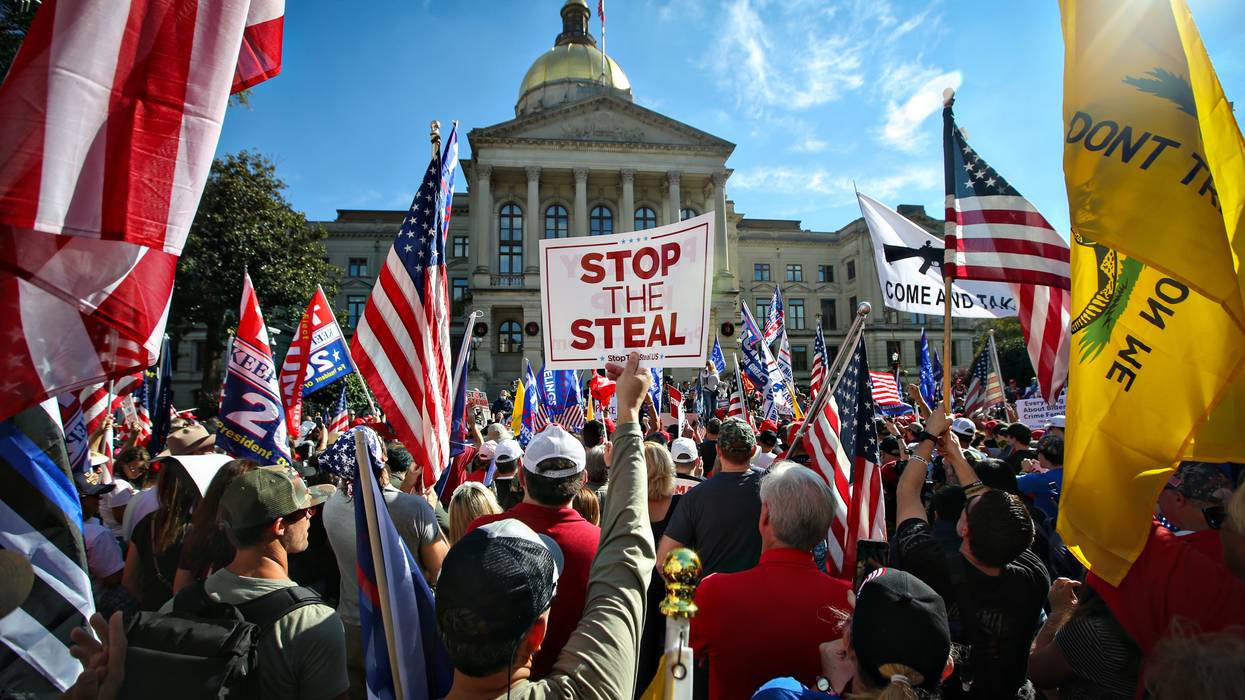
Last week, the Wall Street Journal reported that the administration had begun this effort to reboot the election fraud narrative, with Trump tapping former campaign lawyer and "Stop the Steal" proponent Kurt Olsen as a "special government employee" tasked with reinvestigating 2020. Olsen has reportedly already begun asking intelligence agencies for information about the 2020 election and has also suggested he wants to purge government employees who are disloyal to Trump.
Trump has also sought to implement many of the proposals from the "US Citizens Elections Bill of Rights," proposed by the Election Integrity Network (EIN), a group of pro-Trump election deniers, of which Honey is a member. The group has become deeply influential during Trump's second term, receiving a briefing from the DHS in June on how a database run by the department can be used to verify the citizenship status of registered voters, according to a report from Democracy Docket.
The group has called for new restrictions on mail-in ballots, early voting, and to make it easier for voter rolls to be scrubbed and for election results to be challenged. Many of these proposals have made it in some form or another into Trump's executive order on elections and the SAVE Act, which Republicans passed through the House earlier this year, that would require all voters to show passports or birth certificates in order to register to vote, which voting rights groups have denounced as a "modern-day poll tax."
As Max Flugrath, the communications director for the voting rights group Fair Fight Action, noted, "Judges have blocked Trump's March executive order on elections—a move courts called an overreach that belongs to the states, not the White House."
"Despite the rulings, Trump allies are pressing ahead," Flugrath said. "The DOJ is collecting massive voter roll data, DHS is pressuring states to upload files, and Honey is spreading false claims and framing the directives as 'best practices.' It's election disinformation rebranded as policy." Those actions, he said, are being urged on by the EIN, which has promoted Trump "pushing the limits of executive power."
Honey is just one of many EIN members with a direct line of communication to Trump.
Trump has also elevated a leading EIN operative, Marcy McCarthy—who also pushed debunked theories of widespread illegal voting in Georgia—to be CISA's director of public affairs.
EIN's founder, Cleta Mitchell, was notably one of the lawyers present on Trump's phone call in January 2021 in which he attempted to pressure Georgia election officials to "find" him enough votes to be declared the winner of the state, which resulted in him being indicted three years later.
On a podcast with a Christian nationalist influencer last month, Mitchell likewise pushed the idea that Trump could use emergency powers to assert control over the election.
"The president's authority is limited in his role with regard to elections except where there is a threat to the national sovereignty of the United States—as I think that we can establish with the porous system that we have," she said.
She seemed to suggest Trump was on board with the idea, saying, "I think maybe the president is thinking that he will exercise some emergency powers to protect the federal elections going forward."
Flugrath said these statements, and those reported by the Times, "should be a five-alarm fire," as they suggest Trump will use past false claims of voter fraud as "a cover to hijack elections" in the future.
He noted that in April, Trump himself seemed to echo EIN's theories of sweeping authority, saying during a speech that "we're gonna get good elections pretty soon" because "the states are just an agent of the federal government."
"Trump is embedding EIN operatives into the government to push his election takeover agenda, all built on lies about his 2020 loss," Flugrath said. "EIN seems to be using a playbook to decimate the independence and fairness of elections: Sow doubt in elections, install loyalists in government, use doubt sowed to push an 'emergency,' and change election rules."
"It's a federal strategy to control elections and rig our democracy," he continued. "Independent elections are the foundation of freedom. If Trump can control our elections, he can dismantle other checks on power. Protecting free, state-run elections is the firewall between democracy and authoritarianism."
"The U.S. Attorney General should be the American people's lawyer—not a corporate lobbyist with a closet full of conflicted clients," said the head of the watchdog Accountable.US.
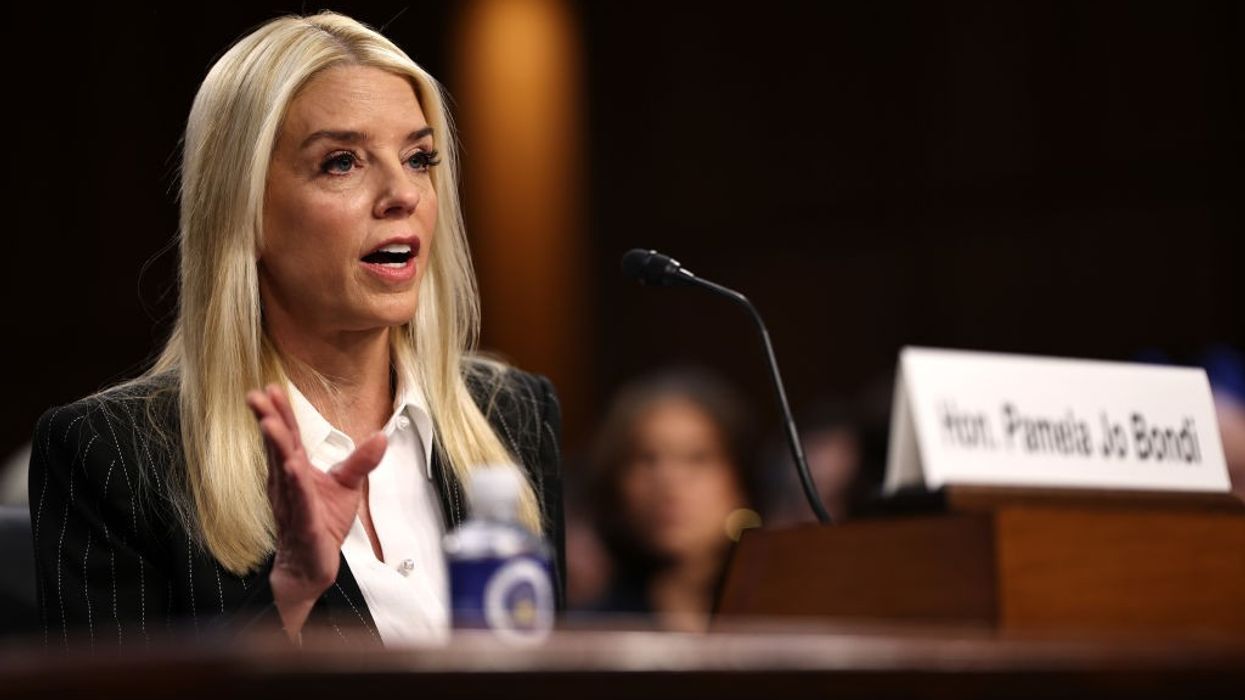
As President-elect Donald Trump's attorney general pick Pam Bondi faced Senate questioning on Wednesday, progressive critics opposed to her nomination cited her record as a lobbyist, her role in amplifying Trump's claims of election fraud in 2020, and her history of catering to corporate interests to argue she is unfit to lead the U.S. Justice Department.
Bondi, for her part, told senators in the first of two scheduled hearings that her Justice Department would not be used to target people based on their politics—though she stopped short of saying that the agency would not investigate foes of Trump. She also spent much of her confirmation answering questions about Kash Patel, Trump's controversial pick for FBI director whom she repeatedly defended, according to Politico.
Jon Golinger, democracy advocate for the watchdog group Public Citizen, was among Bondi's detractors who argued Wednesday that she is deeply unqualified to be the nation's top law enforcement officer.
"The U.S. Attorney General should be the American people's lawyer—not a corporate lobbyist with a closet full of conflicted clients, many of whom seek government contracts or are being investigated by the very Justice Department Bondi now seeks to lead," Golinger said in a statement.
After eight years as Florida's attorney general, Pam Bondi left that post in 2019 and joined Ballard Partners, a corporate lobbying firm that has also employed Trump's pick for White House chief of staff, Susie Wiles. At Ballard Partners, Bondi worked on behalf of numerous corporate clients, including the private prison firm the Geo Group, Uber, and Amazon.
Bondi also served as a lawyer for Trump during his first impeachment trial and pushed Trump's claims of election fraud in 2020.
Tony Carrk, the executive director of the watchdog Accountable.US, went after Bondi's time as Florida Attorney General, writing that she "frequently played favorites with big corporate donors and political insiders at the expense of everyday consumers, patients, and the public good" while she held that office and that "nothing indicates Bondi would change her office-peddling modus operandi as America's top justice official."
Public Citizen co-president Lisa Gilbert, who will testify as an outside witness Thursday at day two of Bondi's hearing, said Wednesday that Bondi's record could lead to a politicization of the agency and called her "unsuitable" for the role given her ties to powerful corporations.
Meanwhile, the civil rights coalition the Leadership Conference on Civil and Human Rights, joined the pile on in a statement submitted Wednesday to the Senate Judiciary Committee. "Ms. Bondi lacks the commitment to defending the core tenets of our democracy and the civil and human rights of all people. Indeed, her active participation in and support of Trump's efforts to overturn the 2020 election ought to be disqualifying in itself," the group wrote.
But Bondi—who "acquitted herself coolly," according to press account—appears on track for likely confirmation.
Raising the specter of the pressure Trump has placed on his Department of Justice in the past, Sen. Chris Coons (D-Del.) asked, "let's imagine Trump issues a directive or order to you or to the FBI director that is outside the boundaries of ethics or law. What will you do?"
"I will never speak on a hypothetical, especially one saying that the president would do something illegal. What I can tell you is my duty, if confirmed as the Attorney General, will be to the Constitution and the United States," said Bondi.
Bondi would not answer directly when asked whether Trump lost the election in 2020 and also would not denounce some of the former president's extreme stances, like calling those arrested for participating in the January 6 insurrection "hostages" or "patriots."