

SUBSCRIBE TO OUR FREE NEWSLETTER
Daily news & progressive opinion—funded by the people, not the corporations—delivered straight to your inbox.
5
#000000
#FFFFFF
To donate by check, phone, or other method, see our More Ways to Give page.
Daily news & progressive opinion—funded by the people, not the corporations—delivered straight to your inbox.

“May we not remain silent at a time of injustice and what feels like a quiet genocide on the Cuban people. We will end this blockade. It’s the responsibility of Congress to do its darn job to end it,” said Rep. Delia Ramirez. It is also the responsibility of all people of conscience
On September 2, 2026, Democratic Congresswomen Delia Ramírez of Illinois and Ilhan Omar of Minnesota hosted a shadow hearing in Congress on “Breaking the Blockade: Reassessing the Moral and Legal Failures of US-Cuba Policy.” A shadow hearing, called by the minority party, has all the formalities of an official hearing of Congress. Four distinguished witnesses gave testimony about the current state of life in Cuba under the oil blockade imposed by the Trump administration in January, and additional coercive measures that have been steadily imposed since then.
Dr. Tania Zakrison of the University of Chicago Medical Center described a “humanitarian catastrophe” due to cumbersome licensing and state overcompliance with sanctions, which mean that supplies are not available to prevent loss of limbs in diabetes patients, for example, and that children and cancer patients are dying due to lack of medicines. The lack of oil to fuel the electrical grid and pump water has caused a severe water shortage. “One-third of the population now has no water at all and are digging into the ground to drink muddy, untreated water,” said Dr. Zakrison. This, coupled with a lack of supplies such as IV fluid bags, is contributing to the recent doubling of infant mortality; research clearly attributes the causality of thousands of excess child deaths to the blockade. Food production is down 60% since January. Doctors “are bearing witness to the preventable deaths that we in the US are causing.”
Rev. Dr. Robert Turner of Empowerment Temple in Baltimore, Maryland visited Cuba in July: “What I found was not a hostile, defeated, nor broken people. I found peaceful, loving, resilient, ingenious people surviving decades of a US embargo and now a blockade that has turned survival itself into a daily act of will.” Our government “has decided that disagreement over the political and economic system justifies collective punishment. That is more than reprehensible,” said Rev. Turner. “It is sinfully wicked and an abuse of the power God has allowed America to possess… What I saw was a constructed crisis, suffering manufactured by policy—our policy.”
Attorney Suzanne Adely, president of the National Lawyer’s Guild, listed several ways in which the US blockade of Cuba violates international law and is repeatedly condemned by the international community. Yet it escalates and is now accompanied by threats of illegal US military aggression. She stated: “The US justification—that Cuba poses an ‘extraordinary threat’ to national security—is legally untenable. A small island subjected to six decades of economic warfare cannot credibly threaten the United States. Likewise, Cuba’s designation as a 'State Sponsor of Terrorism' is arbitrary and politically motivated. It contradicts objective counter-terrorism criteria and ignores documented violations by other states, undermining the credibility of the list itself.”
“We have to talk about Cuba every single day until it becomes part of our algorithm."
Ms. Adely indicated that while Cuba is under siege and being denied the right to sovereignty, the US is arguably committing crimes against humanity and possibly even genocide.
Felix Sharpe Caballero, a Cuban-American living in Detroit who frequently visits family on the island, said: “I testify at great peril. There is a lot of patent hostility in the Cuban-American community. But to be silent, would be a betrayal.”
Caballero continued: “The injustices perpetrated on the Cuban people today have reached the point, quite frankly, of genocide. We are using hunger, lack of medicine, electricity to cook and draw water, food, and basic hygiene products… on the Cuban people to achieve the economic overthrow of the Cuban government. There are 7,000 containers sitting across the world that are not being delivered to Cuba because of State Department activity. The United States of America has been fighting a proxy war on behalf of the Cuban American aristocracy in South Florida.”
Mr. Caballero has learned from his physician cousin in Havana what happens to babies in the NICU when the power goes out. As his voice cracked, he indicated that “some of those babies are not going to recover when the power comes back on.”
With six other members of her Progressive Caucus in attendance, including Reps. Pramila Jayapal (D-Wash.), Maxine Dexter (D-Ore.), Jonathan Jackson (D-Ore.), Chuy Garcia (D-Ill.), Rashida Tlaib (D-Mich.), and Omar, Congresswoman Ramírez concluded the session by saying, “This shadow hearing is just the beginning.” She urged the American people to raise the profile of this issue. “We have to talk about Cuba every single day until it becomes part of our algorithm.” Ramírez vowed to keep pressuring her colleagues to pass three key pieces of legislation:
Congresswoman Ramírez’s concluding words were: “May we not remain silent at a time of injustice and what feels like a quiet genocide on the Cuban people. We will end this blockade. It’s the responsibility of Congress to do its darn job to end it.”
It is also the responsibility of all people of conscience to make sure that happens.
A video recording of the shadow hearing can be found here.
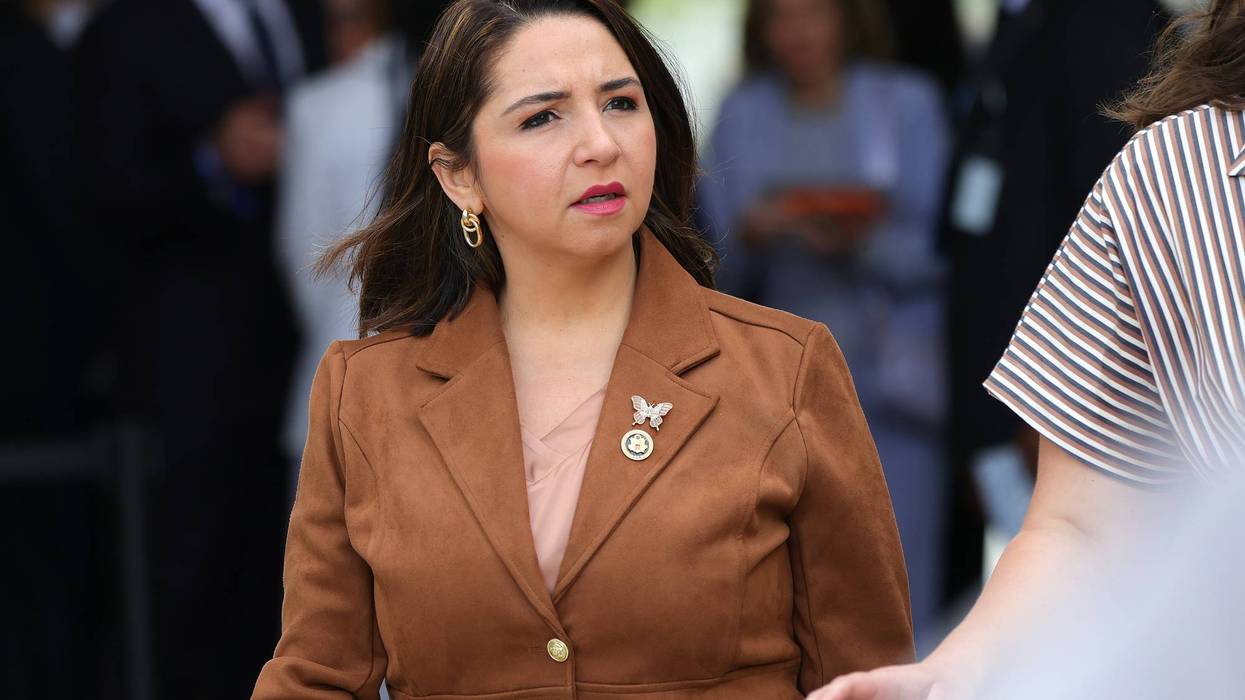
"They're afraid to get honest about who they really work for here. Spoiler alert: It's not working people."
Rep. Delia Ramirez on Tuesday hit back at colleagues in the US House of Representatives who voted for a resolution condemning socialism "in all its forms."
During a speech on the House floor, Ramirez (D-Ill.) slammed the anti-socialism resolution, which passed with the support of eight Democrats joining all Republicans, as a meaningless distraction.
"Today my colleagues thought it was a good use of people's time... to come after a working people's platform and the people working to make that platform a reality," Ramirez said. "You know why? Because they're afraid to get honest about who they really work for here. Spoiler alert: It's not working people."
Whether it’s “socialism”, a Twitch streamer, working-class candidates, or immigrants, my colleagues always have a boogeyman to condemn… Why? They're afraid to be honest about who they really work for and spoiler alert: it's not working people.
I call on my colleagues to put… pic.twitter.com/r4k4KWZg2S
— Congresswoman Delia C. Ramirez (@repdeliaramirez) September 1, 2026
The Illinois Democrat rattled off a list of Republican policies that benefit big corporations and the wealthy at the expense of working people, including cuts to Medicaid and support for President Donald Trump's illegal war with Iran.
Ramirez then accused Republicans of pushing the resolution "because you're so afraid of working-class people coming into the next Congress" after the 2026 midterm elections.
"So let me be clear," she concluded. "Not only do I call on my colleagues to vote against this stupid resolution... but also to put this much energy into creating a world, a system that actually works for working people."
Ramirez was far from the only Democrat to rip the anti-socialism resolution.
Rep. Mark Pocan (D-Wis.) likewise condemned the "stupid resolution," which he said "ignores Americans who are more concerned about the cost of living than obsessing about socialism."
Rep. Valerie Foushee (D-NC) suggested that a better use of Congress' time would be to "condemn the 34-count felon in the White House, not a bunch of people who just want universal healthcare."
Darializa Avila Chevalier, the Democratic nominee for the US House seat in New York's 13th congressional district, slammed the eight Democrats who voted with Republicans to pass the resolution.
"Democrats love talking about a 'big tent,' but then they vote in line with Republicans hell-bent on destroying our democracy," she wrote. "This resolution was aimed squarely at democratic socialists like me."

"Introducing low-visibility electric shock weapons into our immigration enforcement system is an unacceptable escalation."
A group of House Democrats on Monday demanded the immediate cancellation of a nearly $17 million federal contract to provide electric shock gloves to Immigration and Customs Enforcement agents, who have been unleashed on American cities under the second Trump administration and enabled to commit horrific—and, in some cases, deadly—abuses against undocumented immigrants and American citizens.
The Democratic lawmakers, led by Rep. Delia Ramirez of Illinois, expressed "profound alarm" over the contract in a new letter to Department of Homeland Security (DHS) Secretary Markwayne Mullin, whose agency oversees ICE. The letter's 50 signatories wrote that the devices, known as Generated Low Output Voltage Emitters (GLOVE), are "designed to inflict severe pain without leaving physical evidence or visible optics," making them "a uniquely dangerous tool for unaccountable abuse."
"We demand the immediate cancellation of this contract and a total ban on the deployment of these abusive devices across all immigration enforcement and detention operations," the lawmakers continued. "The rollout of these weapons to thousands of field agents across ICE’s Enforcement and Removal Operations and Homeland Security Investigations contributes to a DHS environment already under widespread scrutiny for state-sanctioned abuse, torture, and arbitrary cruelty."
The Democrats sent their letter days after ICE granted a $16.7 million no-bid contract to the Kentucky-based firm Compliant Technologies for 6,000 pairs of electric shock gloves, ignoring the protests of lawmakers and human rights groups.
The ACLU, Physicians for Human Rights, and the Center for Victims of Torture (CVT) are among the advocacy organizations that have decried ICE plans to equip its agents with the gloves. CVT has described the devices as "inherently abusive equipment that facilitates torture."
In their Monday letter, the group of House Democrats warned that the "dangers of these 'less-lethal' weapons are not theoretical," pointing to the case of a 43-year-old man in Kentucky who died after corrections officers shocked him dozens of times with electric gloves.
More than 50 people have died in ICE custody during President Donald Trump's second term.
"This administration continues to outfit ICE and [Customs and Border Protection] with the tools of an occupying paramilitary force—despite widespread human rights violations carried out by its agents during immigration enforcement actions," the lawmakers wrote. "Introducing low-visibility electric shock weapons into our immigration enforcement system is an unacceptable escalation that prioritizes physical intimidation and unaccountable force over human safety and administrative accountability.
On top of calling for cancellation of the contract, the House Democrats demanded information on any threat assessments ICE conducted before awarding the contract, whether the agency has trained its officers with electric shock gloves, and whether DHS intends to implement any productions to "prevent officers from using them for punitive measures, retaliation, or against non-threatening individuals."
"We reiterate our demand that you immediately halt the acquisition and deployment of electric shock gloves, cancel the contract, and refocus the Department’s resources on accountability and humanitarian standards rather than expanding a paramilitary apparatus," the lawmakers wrote.
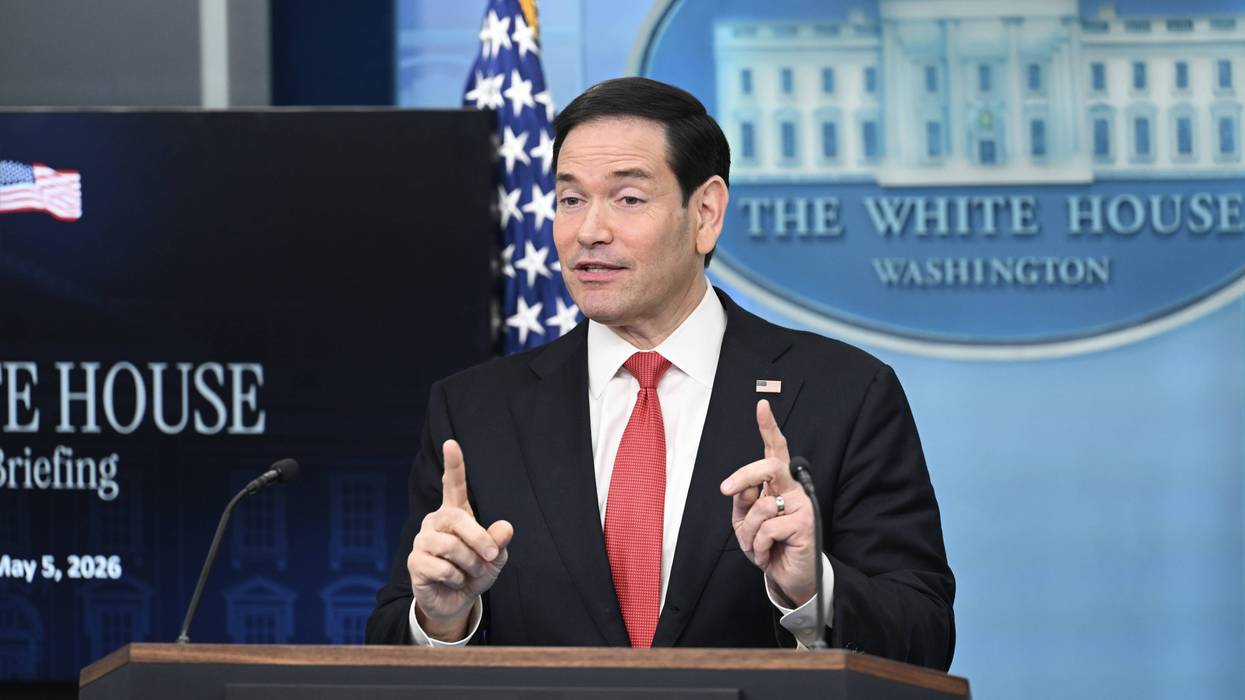
"We are deeply troubled by public commitments to deploy the full force of the State and Treasury departments against loosely defined 'far-left networks' and their alleged 'enablers.'"
Dozens of Democrats in the US House of Representatives this week announced a congressional inquiry into the use of a widely decried memo from President Donald Trump to persecute "political dissent" and target "left-leaning political groups."
Democratic Reps. Jim McGovern (Mass.), Ayanna Pressley (Mass.), and Delia Ramirez (Ill.) revealed Tuesday that they, along with over 20 others, wrote to Secretary of State Marco Rubio and Treasury Secretary Scott Bessent earlier this month to demand answers about the recent "Ministerial on the Resurgence of Political Terrorism" and directives under National Security Presidential Memorandum 7 (NSPM-7).
"Specifically, we are alarmed by the Department of State's new ideologically driven visa restriction policy and the Department of Treasury's pledged financial enforcement mechanisms directed against civil society," they wrote. "These policies dramatically escalate the administration's deliberate and targeted attempts to silence any person, organization, or institution critical of its policies and abuses of power on a global scale."
"We are deeply troubled by public commitments to deploy the full force of the State and Treasury departments against loosely defined 'far-left networks' and their alleged 'enablers' and urge you to immediately reverse course," the lawmakers continued. "Rather than relying on law enforcement data—which consistently identifies right-wing violent extremists and white supremacist organizations as the predominant domestic terrorism threat—this administration has instead taken actions that manufacture an ideological enemy."
The visa policy "bars foreign nationals from entry who 'finance, recruit, incite, or otherwise enable terrorist, violent, and criminal far-left terrorist networks' and defines 'far-left terrorist networks' as those with explicit aims to 'undermine the political foundations of free and self-governing societies,'" the letter details. "This rhetoric and policy embody the core characteristics of fascist statecraft—using the security apparatus of the state to repress and criminalize political opponents and dissenters rather than specific violent acts."
The letter notes the impacts of the administration's policies beyond the United States, warning that "seeking to export an ideological mandate to more than 65 countries creates a dangerous precedent that authoritarian governments will eagerly exploit to delegitimize and criminalize political dissent and justify their own crackdowns on peaceful opposition."
"Foreign nationals fleeing political persecution abroad—including persecution by governments that label peaceful dissidents 'leftist terrorists' to discredit them—may find themselves barred from the United States under the very same vague and subjective standard," the lawmakers wrote. "Expanding transnational intelligence-sharing under this ill-defined and hyper-politicized definition of violent extremism opens the door to transnational repression—including cross-border monitoring and harassment—of international activists, researchers, and political dissidents, as well as potentially any individual within their networks."
"We also risk fracturing critical alliances with governments whose own laws strictly protect political speech, civil liberties, and human rights—protections that these very policies are undermining here at home," the Democrats stressed.
The letter also calls out White House Deputy Chief of Staff Stephen Miller's description of leftists as "the enemies of civilization" and a "cancer" that can "destroy a society," as well as Bessent's comparison of leftists to the Islamic State and al-Qaeda—when he said that "the unified front between international Marxism and the radical Islamic movement need not share the same ultimate vision to share the same immediate enemy of free and self-governing societies."
Rubio has similarly called leftists "the enemies of civilization" and recently faced criticism for a "McCarthyite" State Department report claiming that the Cuban government has, for decades, "infiltrated the highest reaches of the US government, recruited and cultivated generations of American activists, backed an unprecedented wave of left-wing terrorism on American soil, and carried out one of the most durable and damaging foreign intelligence penetrations in American history." The document is seen as a signal that Trump may deliver on his threat to try to take over the island nation by force.
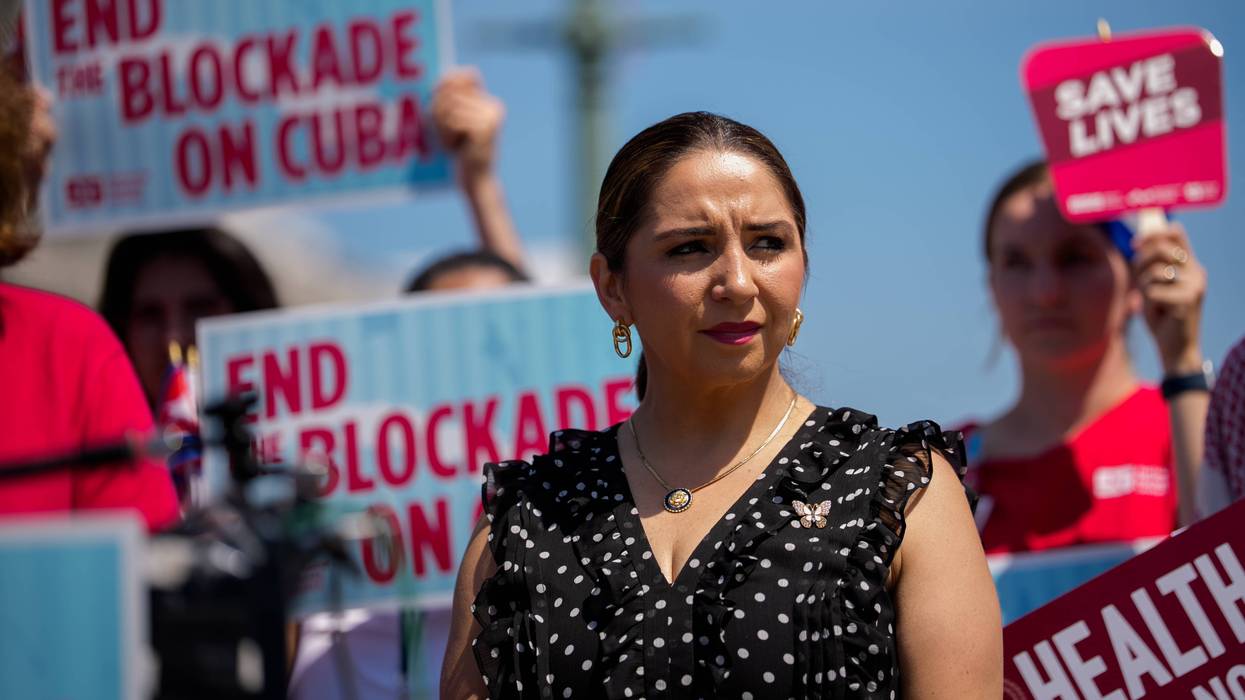
Four members of Congress returned Monday from an oversight trip to Cuba, which they described as a "silent Gaza."
As the Trump administration announced a new round of sanctions on Cuba's tourism ministry, energy companies, and other entities on Monday, four Democratic members of Congress returned from a trip to the island and described how the oil blockade the US has imposed there for nearly six months "is producing indiscriminate pain for the most vulnerable Cubans."
"As elected lawmakers tasked with oversight of US foreign policy, we traveled to Havana to meet with Cubans of all walks of life and political perspectives to hear about the hardships the Trump administration’s maximum pressure policies are creating for Cuban citizens," said Reps. Delia Ramírez (D-Ill.), Teresa Leger-Fernández (D-NM), Mark Pocan, (D-Wis.), and Maxine Dexter (D-Ore.). “In our meetings with religious leaders, entrepreneurs, civil society organizations, humanitarian groups, medical professionals, and farmers, everybody we heard from... agreed on one thing: that they are being strangled to death under the current executive orders and longstanding economic blockade."
The four Democrats traveled to Cuba last Thursday and spent several days meeting with local leaders, touring the streets of Havana, and speaking with President Miguel Díaz-Canel as the country grapples with the effects of President Donald Trump's January executive order that baselessly claimed Cuba poses an "extraordinary" threat to US national security and threatened tariffs against any country that provides oil to the communist country.
The president had already cut off Cuba's main energy supply by invading Venezuela, abducting its president and charging him with drug trafficking, and taking control of its vast oil reserves.
The lawmakers described how the energy blockade is "contributing to nationwide electrical blackouts—including one during our trip—buildups of trash on street corners; severe shortages of food, medicine, and public transportation; and widening inequality on the island."
Dexter, a physician, noted that Cuba's lauded healthcare system "is buckling under sanctions that the White House has unleashed on the Cuban people. This is creating a humanitarian catastrophe."
“Cuba created a free, universal healthcare system that millions of Cubans and others around the world have come to expect and depend on,” said Dexter. "I will be using all the tools at my disposal to remove the barriers to delivering healthcare to the Cuban people.”
As Common Dreams has reported, the blockade has left hospitals struggling to provide care, with 96,000 people, including 11,000 children, on waitlists for surgeries.
"Over 300 pediatric surgeries per week are compromised by shortages of drugs, oxygen, anesthetics, and consumables," wrote more than 8,000 Italian medical and scientific professionals in an open letter in June.
Leger-Fernández called Trump's policy in Cuba, which has intensified sanctions that have been in place for years, "a siege."
“We’re blocking medical supplies, fuel, and other essential inputs, leading its infant mortality rate to rise nearly 150% in recent years, from 4 to 9.9 per 1,000 live births," said the congresswoman. "I doubt any American wants innocent Cuban babies to die due to our policies.”
Pocan told The Associated Press that one person he spoke to in Cuba called the crisis a "silent Gaza."
“There may not be bombings, but there are certainly conditions that prevent people from going about their daily lives," said Pocan. "They can’t go to work, they can’t preserve their food, they can’t access medical supplies, or live as they did before."
Since imposing the blockade, Trump has repeatedly expressed a desire to take over the island by force and has doubled down on claims that Cuba poses a national security threat to the US.
On Sunday, United Nations Ambassador Michael Waltz claimed in a Fox News interview that China and Russia are "collecting information around our military bases in Cuba." In May, an anonymous White House official told Axios that Cubans were “discussing plans” to launch drones at the US—even as the reporting acknowledged the country was thought to be preparing defensive, not offensive, capabilities.
As the members of Congress returned to the US and reported on the suffering they witnessed in Cuba on Monday, the administration announced a new round of sanctions on the country's Ministry of Tourism, energy firms, a state-owned financial services company, a major foreign trade firm, and a maritime transportation company. Foreign banks, insurers, and companies will be exposed to potential penalties if they work with the entities under the sanctions.
The Trump administration, said Cuban Foreign Affairs Minister Bruno Rodríguez Parrilla, "continues to intensify the war against the people of Cuba, their living conditions, and their sources of livelihood."
"The announcement on July 13 of additional coercive measures is a clear manifestation of the criminal and genocidal intent with which US rulers are determined to punish the entire population of the country," he said.
The sanctions demonstrated the Trump administration's "zeal to strangle our economy," added Díaz-Canel. "They reinforce the aggression in search of greater harm to the people. We are facing a genocidal design plan."

"The fact that 'Democratic leadership' hides behind blind quotes is evidence they know how unpopular their opposition is," said one foreign policy critic.
Rep. Delia Ramirez called on her fellow Democrats to "stop making excuses and act" to stop a war in Lebanon, as many refuse to go on the record about whether they'll support a war powers resolution that would halt US military participation in Israel's escalating occupation of the country.
Axios reported on Wednesday that some Democrats are "fuming" about having to take a vote on a resolution introduced by Rep. Rashida Tlaib (D-Mich.), which would require the US to end unauthorized military cooperation with Israel in Lebanon within seven days of being passed. The resolution would need Republican support to pass the GOP-controlled House.
Israel's assault on Lebanon, which began in March, has resulted in the deaths of more than 3,500 people. With forced evacuation orders that have led to the expulsion of more than 1.2 million people from their homes, Israel has systematically razed dozens of villages across the south of the country where leaders have expanded their military "combat zone" further north to the Zahrani River.
"Every day that we do not act to stop the assault on Lebanon, we enable another genocide," Ramirez (D-Ill.) said. "The War Powers Resolution is targeted to end Netanyahu and Trump's war crimes."
Anti-war activists supporting Tlaib’s measure—which has 17 Democratic cosponsors—have described it as a way to force Democratic legislators skittish about their party’s growing anger toward Israel to go on the record about where they stand on the country's actions in Lebanon.
One unnamed House Democrat told Axios that "people are not happy" that Tlaib "is making people take this vote."
Citing multiple unnamed sources, the outlet reported that the top Democrats on the House Foreign Affairs, Armed Services and Intelligence Committees—Reps. Greg Meeks (D-NY), Adam Smith (D-Wash.), and Jim Himes (D-Conn.)—are also "on the fence." Another unnamed House Democrat was quoted as saying that their hesitation will likely make others in the party reluctant to jump on board.
House Minority Leader Hakeem Jeffries (D-NY) said of the two-page resolution that he hadn't "taken a look at it yet."
Axios quotes other anonymous Democrats—one of whom said they are “probably a ‘no’” and another who angrily remarked that the resolution “does nothing to advance a solution.”
The outlet described Democrats’ hesitation as stemming in part from the fact that “there is no indication the US is planning imminent, large-scale ground operations in Lebanon.”
But anti-war groups demanding passage of the resolution have made the point that even without boots on the ground, the US is still intimately involved in Israel's decision-making, with President Donald Trump reportedly giving the "green light" on major operations: These have included Israel's decision to invade Lebanon in March as well as its assault on Beirut in April which killed over 250 people and tanked US negotiations with Iran.
A policy roundup published Tuesday by the Institute for Middle East Understanding, urging the House to pass the resolution, said "Israel is using US-provided weapons and bulldozers to flatten the southern part of the country and to potentially permanently displace 600,000 people. Israel has already used bulldozers, likely provided by the US, to destroy homes and infrastructure in the area."
Aside from continuing to provide direct military aid to Israel, the US is also closely involved in intelligence sharing and coordination that has led to Israeli strikes on specific targets. In a letter sent to Adm. Bradley Cooper last month, some senators raised the possibility that, without approval from Congress, these actions could violate the War Powers Act.
In an email sent to Democratic staffers Tuesday, obtained by Common Dreams, the anti-war group Just Foreign Policy said that Trump's reported intervention to tell Israeli Prime Minister Benjamin Netanyahu to call off strikes on Beirut earlier this week was the latest example demonstrating "how Trump is engaged in an unprecedented, high-level command and coordination over the Israeli offensive in Lebanon" in violation of the War Powers Resolution of 1973.
The email also pointed out that "a ceasefire in Lebanon is key to peace with Iran" because "Iranian officials have made clear that a full ceasefire in Lebanon is a necessary precondition for diplomacy with the US to advance."
Note the sources who oppose it
"numerous lawmakers and aides"
"one senior House Democrat"
"Dem leadership"
"second senior House Democrat"
"another House Democrat"
"a fourth House Democrat"
ALL anonymous.
Everyone FOR it put their name on their quotes. What does this tell you? https://t.co/XIIHkvF2hF
— Adam Johnson (@adamjohnsonCHI) June 3, 2026
Polling from the Arab American Institute in April found that by about a two-to-one margin, American voters believe the US should do more to pressure Israel to stop bombing and leave southern Lebanon. Sixty-five percent of Democrats said the US should pressure Israel to accept a ceasefire, while just 17% said no and 18% were unsure.
Adam Johnson, a journalist and prominent US foreign policy critic, noted on social media that while Ramirez and Tlaib went on the record to voice their support for the measure, the Democrats in opposition were doing so under a shroud of anonymity.
"The fact that 'Democratic leadership' hides behind blind quotes is evidence they know how unpopular their opposition is," he said.
"If...leadership has objections to the Lebanon war powers resolution, then they can openly come out against it," he added. "Instead they're laundering their 'reservations' through anonymous leaks. Curious!"
While the Axios report portrays Tlaib as the cause of a rift in the Democratic Party, Johnson emphasized that "Tlaib's bill is the overwhelming majority position among Dems by almost 4-to-1," adding that "the 'division' is between Dem voters and pro-Israel party leaders."
Janet Abou-Elias, a researcher at the Democratizing Foreign Policy Project at the Quincy Institute for Responsible Statecraft, said that the Democrats "hedging" on the war powers vote were still taking a side.
"You'd be going on record enabling an unauthorized war that has killed over 3,433 Lebanese people," she said. "US weapons. US intelligence. Zero congressional approval."

Dozens of House Democrats wrote that the US "must not respond to a crisis it is creating with policies that deepen suffering."
A group of more than 30 Democratic lawmakers in the US House is imploring the Trump administration to abandon any plans for a military assault on Cuba and end the decades-old blockade that has deprived the island nation of fuel and sparked a grave humanitarian crisis.
In a letter dated May 12 and addressed to top Trump administration officials, Rep. Delia Ramirez (D-Ill.) and other House Democrats wrote that the US "must not respond to a crisis it is creating with policies that deepen suffering, undermine the rule of law, and repeat the gravest failures of its past."
The members of Congress demanded that the Trump administration immediately end its use of the notorious Guantanamo Bay military prison for migrant detention, lift all "coercive economic measures" currently strangling Cuba, and "abandon reported plans for US military action against Cuba."
"Such action," the lawmakers warned, "would be unlawful, deeply destabilizing, and catastrophic for the Cuban population, while further increasing displacement, exacerbating mass suffering, and undermining US interests in the region."
"It must be unequivocally rejected," they added.
Through sanctions and unlawful threats of military action, the Trump administration is deepening the humanitarian crisis in Cuba. At the same time, they are once again threatening to use the Guantanamo Base, a prison with a history of dehumanizing and abusing people, to detain… pic.twitter.com/cXbCFfds4W
— Congresswoman Delia C. Ramirez (@repdeliaramirez) May 13, 2026
The House Democrats' letter was released shortly before Cuba's energy minister said the country has "absolutely no fuel" and "absolutely no diesel," blaming the oil blockade that the Trump administration imposed earlier this year after kidnapping the president of Venezuela—previously Cuba's primary supplier of oil.
"This dramatic worsening has a single cause: the genocidal energy blockade to which the United States subjects our country, threatening irrational tariffs against any nation that supplies us with fuel," Cuban President Miguel Díaz-Canel wrote Wednesday on social media. "What the spokespeople of the U.S. regime try to portray to the world as the direct consequence of poor management by the Cuban government is, in reality, the result of a perverse plan aimed at driving the people’s shortages and hardships to extreme levels."
US President Donald Trump has said publicly that his next military target is Cuba, which he has threatened to "take" by force.
Bruno Rodríguez Parrilla, Cuba's foreign affairs minister, posted the House Democrats' letter to social media on Thursday, writing that "the government that claims to defend democracy should listen to the majority voices that oppose the current escalation of threats, aggressions, tightening of the blockade, and energy siege against our country."
Last month, nearly every Republican senator and one Democrat—Sen. John Fetterman of Pennsylvania—voted down a legislative effort to prevent Trump from launching an attack on Cuba without congressional authorization.
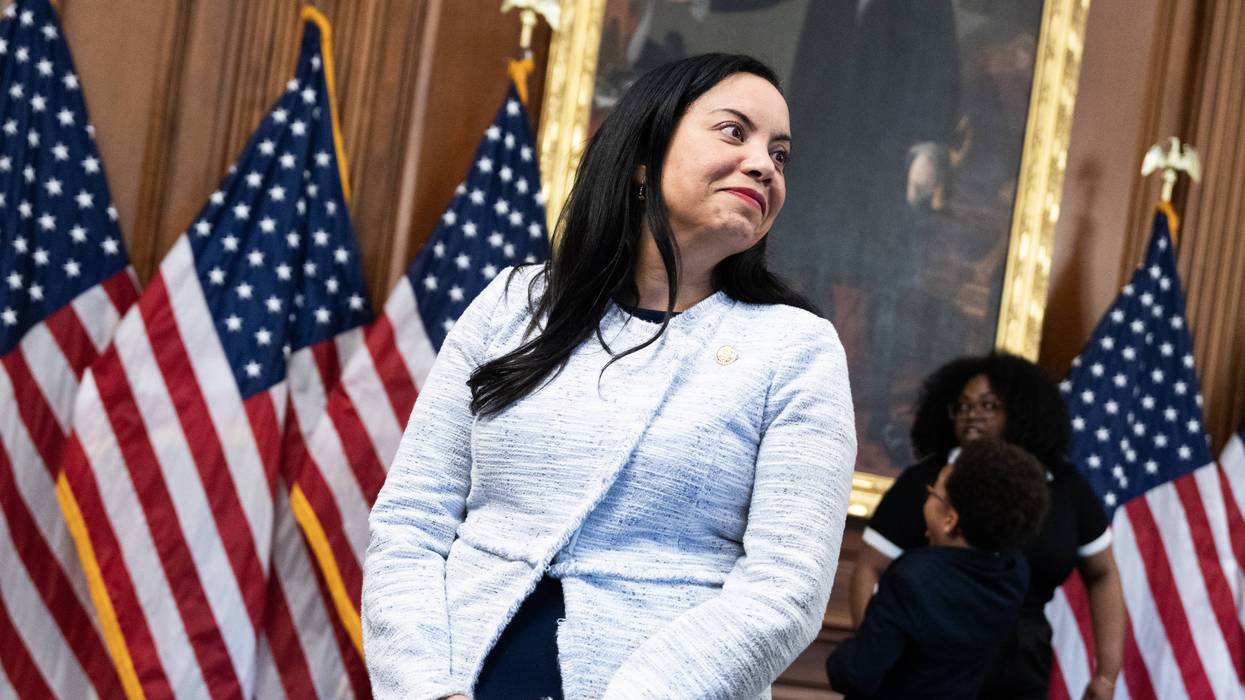
"We need an economy that reflects the realities of 2026, not one stuck over a decade ago," said the newly sworn-in Rep. Analilia Mejía, who helped lead the campaign to raise wages in her home state of New Jersey.
A pair of progressive Democrats unveiled a bill on Tuesday that would raise the federal minimum wage to $25 per hour, considered the bare minimum a single adult needs to meet the cost of living in much of the US.
The Living Wage For All Act is the first bill to be introduced by the newly sworn-in Rep. Analilia Mejía (D-NJ), who won a special election earlier this month after helping to lead the fight for a $15 minimum wage in her home state of New Jersey.
Citing data from MIT's Living Wage Calculator, the Living Wage For All campaign backing the legislation argues that $25/hour is needed for a single adult in most parts of the country to afford basic necessities like housing, food, and healthcare.
As the cost of living has skyrocketed over the past decade and a half, the federal minimum wage has remained frozen at $7.25 and hour since 2009.
"This is unacceptable," Mejía said. "We need an economy that reflects the realities of 2026, not one stuck over a decade ago."
The bill is cosponsored by Rep. Delia Ramirez (D-Ill.), the daughter of Guatemalan immigrants who, she said, worked multiple minimum-wage jobs just to get by.
“I remember being in the fourth grade, and my mom talked about her job, and she was getting paid $4.75 an hour,” the 42-year-old congresswoman said during a press conference on Capitol Hill Tuesday. “Yet the federal minimum wage is barely $7.25, many years later.”
"Today, as we think about companies reporting record high earnings, working people are still struggling to survive," she said. "People are working full-time jobs and still cannot afford to live."
A USA TODAY survey from January found that around 40% of workers say their paychecks have not grown enough to meet the rising cost of living, which has been further exacerbated by spiking inflation caused by President Donald Trump's erratic tariff regime and war in Iran. Another survey conducted by Resume Now in April found that about half of workers fear their wages will never catch up to the cost of living.
While some states and cities have gradually raised their minimum wages above the federal level and have seen modest declines in poverty as a result, none have been raised to the point of being considered a living wage.
The bill introduced by Mejía and Ramirez would similarly phase in its increase to the federal minimum wage over more than a decade, with larger employers leading the transition.
Companies with more than $1 billion gross revenue or more than 500 employees would be scheduled to increase their minimum pay to $25/hour by 2031, while smaller employers would be on a longer timeline to reach $25/hour by 2038.
To ensure wages don’t lag again in the following years, the bill also requires the minimum wage to automatically grow each year to reach the equivalent of two-thirds the national median hourly wage. It also eliminates the subminimum wage, which is paid to tipped workers, youth workers, and workers with disabilities.
The bill is almost certainly dead on arrival in a Republican-controlled Congress. Even if Democrats retake both chambers come November, it would likely face an uphill battle to pass.
In 2021, the last time Democrats had a governing trifecta, eight centrist members of the Democratic caucus killed an amendment by Sen. Bernie Sanders (I-Vt.) to include a $15/hour minimum wage in then-President Joe Biden's post-Covid budget reconciliation package, the American Rescue Plan.
But as Democrats seek to address rising fears about America's "affordability" crisis, Saru Jayaraman, the president of One Fair Wage, said politics are starting "to catch up to reality."
"Across the country—from California to the Midwest to the East Coast—workers are organizing for $25 and $30 because that is what it takes to live," she said. "The polling shows this is not just popular, it is necessary."
“We cannot talk about affordability without talking about what people are paid,” added Stuart Appelbaum, the president of the Retail, Wholesale, and Department Store Union.
More than 20 Democrats have signed onto the bill as cosponsors, including Congressional Progressive Caucus Chair Greg Casar (D-Texas) and Rep. Ro Khanna (D-Calif.).
The effort is being spearheaded by the Living Wage For All Coalition, a national collective of labor unions, civil rights groups, and other economic justice organizations that are simultaneously pushing legislation to adopt a living wage in states like New York, Illinois, and Maryland, and municipalities such as Los Angeles and Washington, DC.
April Verrett, the international president of the Service Employees International Union, which has more than 2 million members across North America, said that “the introduction of the Living Wage for All Act is a powerful testament to the worker-led movement that is forcing a new baseline for livable wages.”
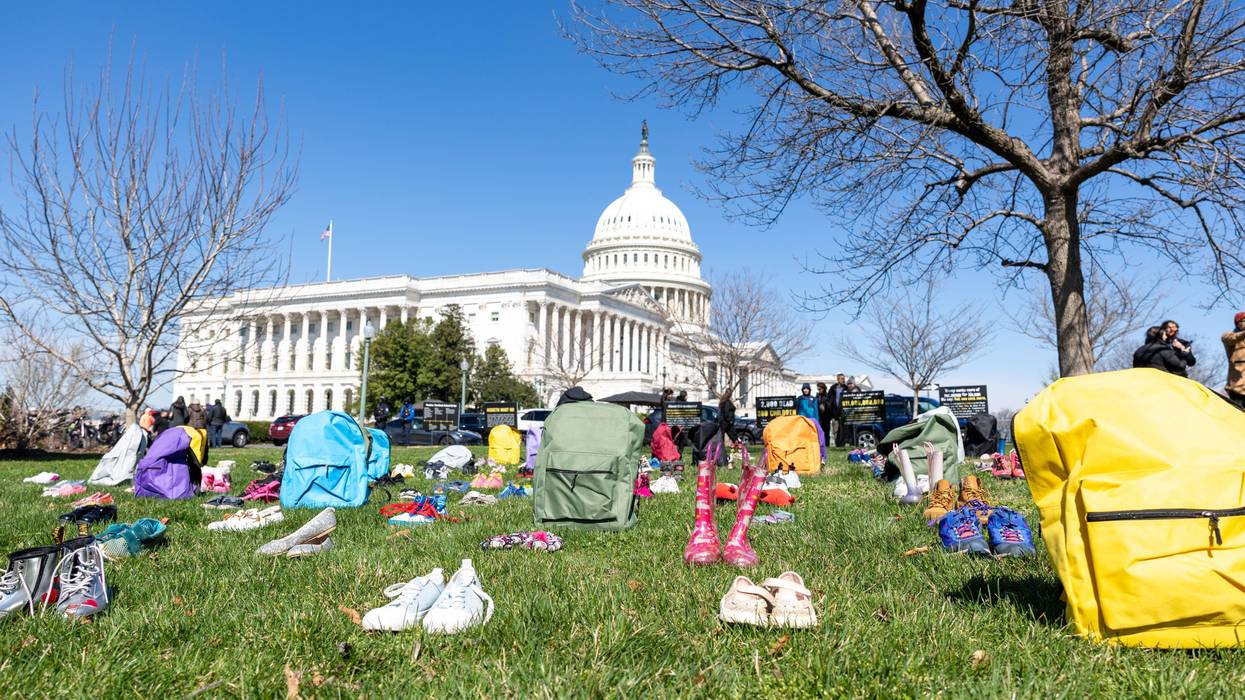
"Our dollars are advancing the pain of our global neighbors," said Rep. Delia Ramirez. "We here today are saying 'enough.'"
The lawn outside the US Capitol building was strewn with colorful backpacks and children's shoes on Wednesday afternoon as progressive members of Congress called for an end to President Donald Trump's "illegal" war with Iran.
They were there to memorialize the 168 children, mostly girls aged 7-12, who were killed when the United States bombed an elementary school in Minab on February 28 in the opening salvo of a war that has gone on to claim the lives of more than 2,000 people, including more than 300 children, according to reports from Iranian and Lebanese health authorities.
Sen. Chris Van Hollen (D-Md.) said each backpack and pair of shoes represented "an Iranian child who should still be with us today... but they were struck down by a Tomahawk missile."
Van Hollen described it as a consequence of Defense Secretary Pete Hegseth's crusade against what he's derided as "stupid rules of engagement."
"Those rules of engagement are designed to prevent civilian harm," the senator said. "They're designed to prevent a war crime."
The lawmakers described Trump's attack on Iran as a "war of choice" and an act of aggression that violated international law.
"There was no imminent threat" from Iran, said Rep. Pramila Jayapal (D-Wash.). "There is certainly no plan for this war, and most importantly, there is no authorization from Congress."
Shortly after the war was launched, War Powers Resolutions seeking to rein in Trump's ability to use force without authorization narrowly failed in both the House and the Senate, with a handful of Democrats joining Republicans to kill the measure.
The White House is reportedly preparing to ask Congress for an additional $50 billion in supplemental funding to cover the cost of the Iran war on top of the more than $990 billion Congress has already authorized in last summer's GOP budget bill and the latest funding package.
Most Democrats have taken a firm line against more funding, which would require seven of their votes to pass the 60-vote threshold in the Senate, though some pro-war Democrats have signaled a willingness to fund the war, according to reporting earlier this month.
"Civilians in Iran aren't the only ones who are paying the price," said Rep. Sarah Jacobs (D-Calif.). "Our service members and the American people are too."
She noted that 13 members of the US military have been killed since the war was launched less than two weeks ago, saying, "I fear that this number will grow."
Based on Pentagon estimates provided to Congress earlier this month, the war is projected to have already cost US taxpayers more than $24 billion as of Wednesday.
Jacobs said she would oppose "any defense supplemental package" because "every dollar Congress spends on this war without ever authorizing it tells this president and every future president that they can drag this country into any conflict they want and dare us to defund the troops."
"From Palestine to Iran, our bombs are killing women, they're killing children... our dollars are advancing the pain of our global neighbors," said Rep. Delia Ramirez (D-Ill.) "We here today are saying 'enough.'"
She called for Congress to pass her Block the Bombs Act, which would cut off "offensive" US military funding to Israel, and to pass a war powers resolution limiting Trump's authority to continue striking Iran.
"Not one more dollar for a war with Iran," Ramirez said. "Not one more excuse, not one more bomb."
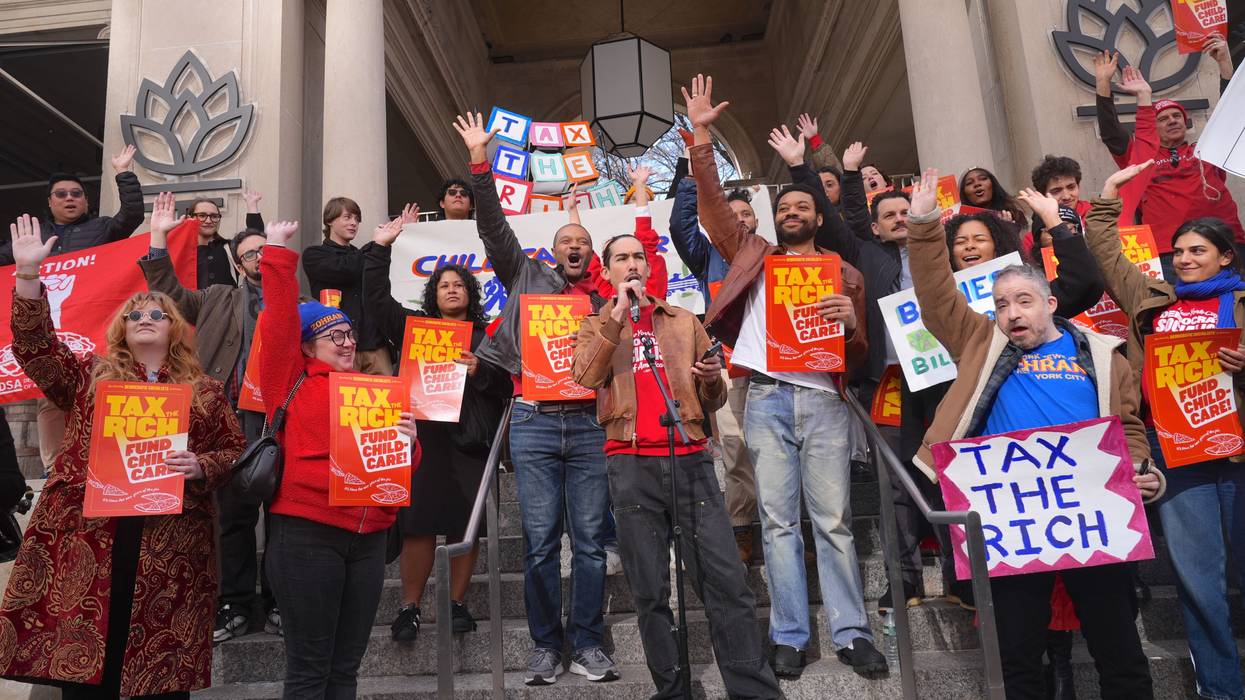
One advocate called the bill an "important step forward in reducing historic, extreme, and democracy-destabilizing levels of economic inequality in America."
In a move cheered by economic justice advocates, US Sen. Ed Markey on Tuesday introduced the Senate version of the bicameral Equal Tax Act, a bill that would "create equal tax rates for all forms of income for individuals with incomes over $1 million."
"The wealthiest individuals in our society use loopholes and tax dodging schemes to avoid paying their fair share," Markey (D-Mass.) said in an introduction to the bill. "They get away with it because our tax code rewards wealth over work—giving breaks to those that trade stocks over those that punch clocks."
The legislation—which was first introduced in the House of Representatives last year by Rep. Delia Ramirez (D-Ill.)—seeks to make the tax code more fair by making billionaires and multimillionaires pay income tax on passive investments, as if they earned their money through labor, by raising the top marginal rate from the current 20% to 37%.
Right now, billionaires can pay less in taxes on their stock trades than teachers or nurses that educate our children and care for us in emergencies. My Equal Tax Act would stop rewarding wealth more than work by making the ultra-wealthy pay taxes like millions of working people.
[image or embed]
— Senator Ed Markey (@markey.senate.gov) March 17, 2026 at 2:54 PM
Specifically, the Equal Tax Act would:
"Teachers, nurses, and millions of working people are the ones who keep our country running, but our tax code rewards wealth over work,” said Markey. “The Equal Tax Act brings fairness to our tax code by requiring millionaires and billionaires to pay taxes on investment income the same way working people pay taxes on income from their labor."
Ramirez noted how plutocrats like President Donald Trump and tech titans Elon Musk, Jeff Bezos, and Mark Zuckerberg "have extorted tax benefits from the American people."
"For far too long, they have exploited an unfair tax system that makes the rich richer at the expense of working families," the congresswoman added. "It is time we ensure that the ultrawealthy pay their fair share. I am excited to work with Sen. Markey in the bicameral introduction of the Equal Tax Act to build a fairer tax system that ensures working families have everything they need to thrive."
Morris Pearl, chair of the fair taxation advocacy group Patriotic Millionaires, said in a statement, “For decades, we have been playing a game of economic Jenga where we pull from the bottom and the middle, load it all on top, and then wonder why the whole thing is about to fall down."
"We end up with an unfair system that allows for oligarchic wealth to concentrate in the hands of a few individuals," Pearl continued. "That’s because right now in America, our tax code makes people who have jobs and work for a living pay far higher tax rates than people who make money from investments or inheritances."
"The money that investors like me make passively from our wealth should not be taxed any less than the money millions of Americans make through their sweat," he asserted. "By closing major loopholes, the Equal Tax Act would ensure that the ultrarich pay income taxes just like all Americans who work for a living and have taxes deducted from their paychecks every week."
"The Patriotic Millionaires are thrilled to see Sen. Markey take this important step forward in reducing historic, extreme, and democracy-destabilizing levels of economic inequality in America," Pearl added.