

SUBSCRIBE TO OUR FREE NEWSLETTER
Daily news & progressive opinion—funded by the people, not the corporations—delivered straight to your inbox.
5
#000000
#FFFFFF
To donate by check, phone, or other method, see our More Ways to Give page.
Daily news & progressive opinion—funded by the people, not the corporations—delivered straight to your inbox.
"In one stroke, Trump is worsening three of our nation’s most vexing problems," said one critic.
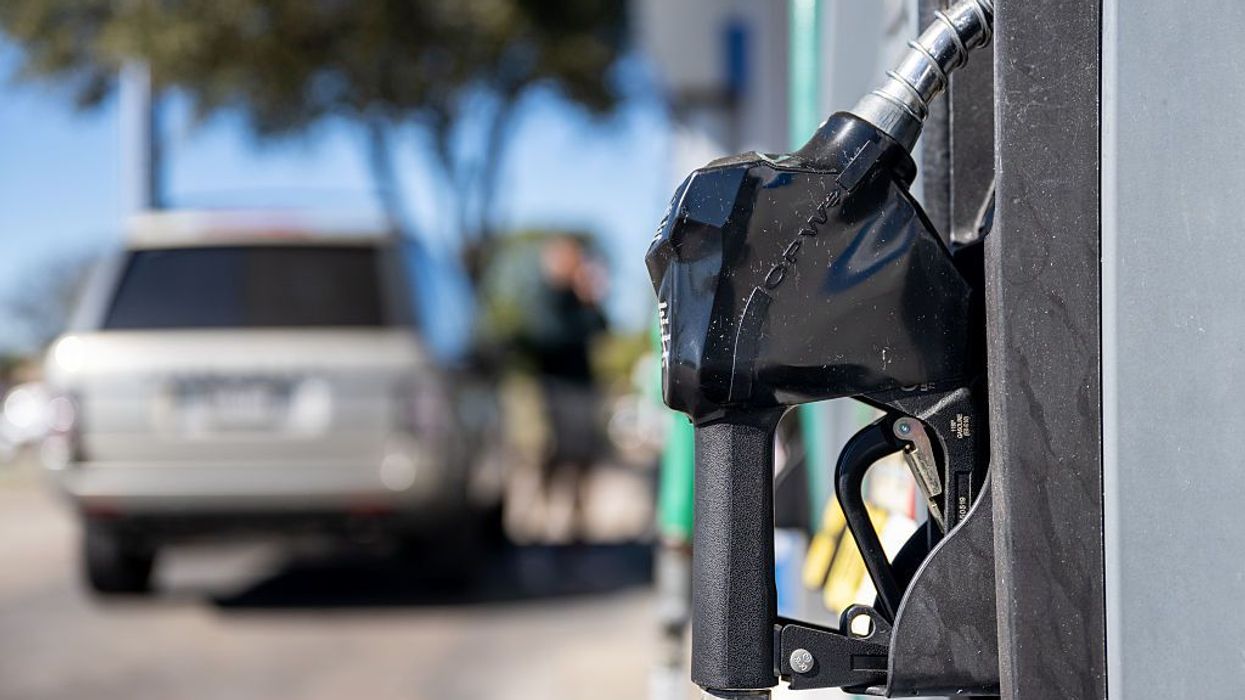
President Donald Trump's administration drew criticism from climate advocates on Wednesday for taking a hatchet to fuel efficiency standards aimed at reducing US gas consumption and mitigating the damage done by human-made climate change.
The National Highway Traffic Safety Administration (NHTSA) has proposed slashing former President Joe Biden's fuel economy requirements for new cars down from 50.4 miles per gallon down to just 34.5 miles per gallon on average by 2031.
NHTSA claims that the change in fuel-efficiency standards would slash up-front costs to cars by roughly $900, although it acknowledges that this would also increase US gasoline consumption, which could mean higher prices at the gas pump.
The move has the support of America's major automobile manufacturers, who said the new rules would give them more flexibility. Ford CEO Jim Farley, for instance, told the Washington Post that the rule change means that the auto industry "can make real progress on carbon emissions and energy efficiency while still giving customers choice and affordability."
Many environmental advocates were quick to hammer Trump for making what they described as a shortsighted policy decision that cost Americans more over the long run in terms of both higher gas prices and carbon emissions.
Kathy Harris, director of clean vehicles at the Natural Resources Defense Council, said that Trump is "sticking drivers with higher costs at the pump, all to benefit the oil industry" and predicted that "drivers will be paying hundreds of dollars more at the pump every year if these rules are put in place."
The rule change also drew a scathing review from Dan Becker, director of the Center for Biological Diversity's Safe Climate Transport Campaign, who said that the Trump administration's actions were self-destructive on a number of levels.
"In one stroke, Trump is worsening three of our nation’s most vexing problems: the thirst for oil, high gas pump costs, and global warming," he said. "Trump’s action will feed America’s destructive use of oil, while hamstringing us in the green tech race against Chinese and other foreign carmakers. The auto industry will use this rule to drive itself back into a familiar ditch, failing to compete."
The move on fuel-efficiency standards wasn't the only climate-related policy move the administration made this week, as Bloomberg reported on Tuesday that the US Department of Energy also began unwinding a Biden-era program aimed at decarbonizing the building sector by allowing for the certification of "zero emissions" buildings.
Amneh Minkara, deputy director of Sierra Club's Clean Heat Campaign, said that repealing this program was particularly nonsensical since it was a voluntary standard that "did not place any additional burden on builders or owners," and instead represented "a clear way to meet consumer demand for pollution-free buildings."
"Defining what makes a building ‘zero emissions’ gives consumers certainty that when builders or sellers say a building is clean that it actually meets a specific set of criteria," Minkara emphasized. "It also would reduce energy waste, at a time when energy demand is at an all-time high, and lead to lower utility bills."
"When workers stand together in the fight for economic justice there is nothing they cannot accomplish," said Sen. Bernie Sanders.
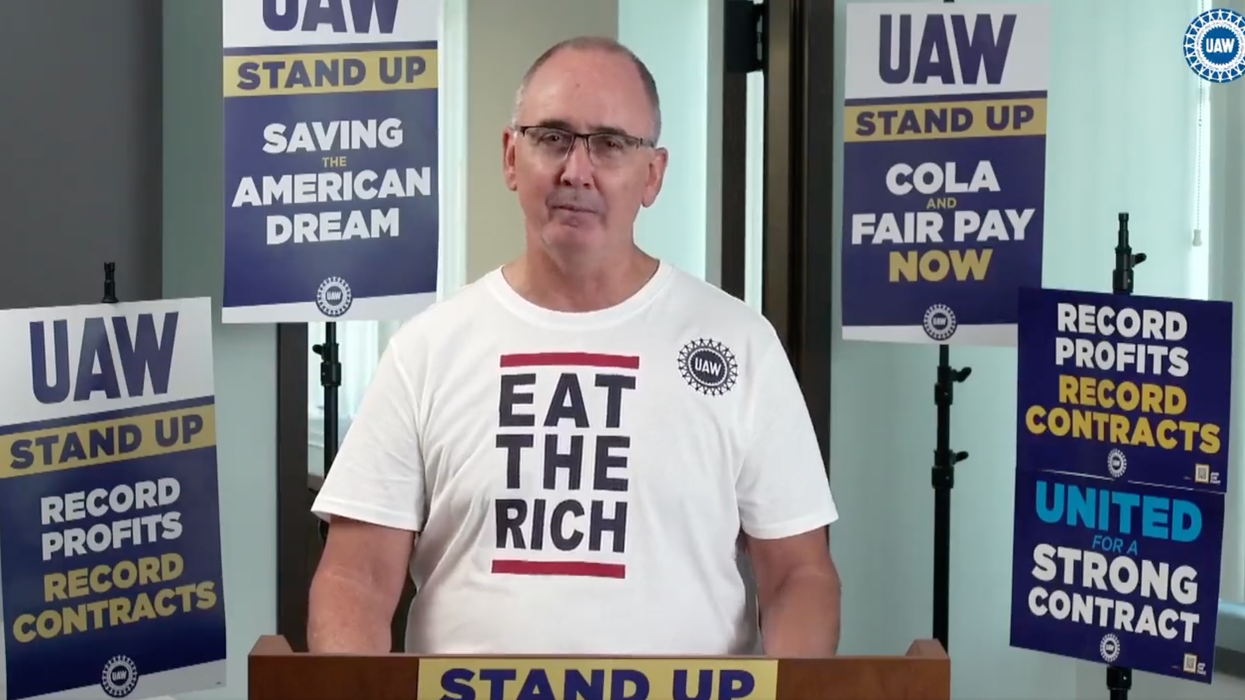
Wearing a t-shirt emblazoned with the words, "Eat the Rich" in his latest online broadcast Friday afternoon, United Auto Workers president Shawn Fain told the union's 145,000 members that brand-new progress made in contract negotiations with the Big Three automakers made one thing clear: "We are winning."
Fain addressed the union as thousands of its members concluded the third week of a "stand-up" strike, in which autoworkers have been gradually called to join the work stoppage to build pressure on the companies—Ford, General Motors (GM), and Stellantis—to provide a fair contract commensurate with their record-breaking profits and including a just transition to renewable energy.
Just minutes before Fain was planning to announce that workers at GM's assembly plant in Arlington, Texas were being called on to join the strike, the automaker told UAW negotiators it would include workers at its electric vehicle factories to be covered under the union's national agreement.
The Big Three have previously said their battery plants are being set up through joint ventures with other companies and shouldn't be a factor in negotiations—a position the UAW said would harm its ability to secure a just transition.
The threat of expanding the walkout to Arlington, where some of GM's top-selling cars are manufactured by 5,300 workers, "provided a transformative win," said Fain as he explained that the strike would hold off on further expansion for now.
"We've been told for months that this is impossible... and now we’ve called their bluff," he said. "Today, because of our power, GM has agreed to lay the foundation for a just transition."
The announcement made this week the first since the strike began that more workers were not called to join the work stoppage.
About 17% of UAW members—25,200 workers—are currently on strike. GM said this week that the work stoppage has cost the company $200 million so far, while the UAW has been able to preserve its $825 million strike fund and pay striking members $500 per week.
In his address, Fain rallied UAW members for the continued strike.
"The billionaires and company executives think us autoworkers are just dumb," he said. "They think we only understand the power of a supervisor yelling at us or an assembly line coming at us. They look at me and they see some redneck from Indiana. They look at you and see someone they would never have over for dinner or let ride on their yacht or fly on their private jet. They think they know us, but us autoworkers know better."
Sara Nelson, president of the President of the Association of Flight Attendants-CWA, applauded the UAW's securing of "major movement" from GM.
"The pressure of smart, creative tactics backed up by unbreakable solidarity is working," she said.
U.S. Sen. Bernie Sanders (I-Vt.) also congratulated Fain and the union and called on Stellantis and Ford to provide their own guarantees that workers making EV batteries at their plants would be covered by the UAW agreement.
"The power of the strike was made evident today," added Jobs With Justice. "It's now up to Ford and Stellantis to listen to the chorus of workers demanding a just transition."
Watch Fain's entire address below:
With the victory, Rep. Alexandria Ocasio-Cortez (D-N.Y.) said, Fain and the UAW are showing "how union power can lead the economy in tackling the climate crisis and making a better world for workers."
"We've been available 24/7 to bargain a deal that recognizes our members' sacrifices and contributions to these record profits," said UAW President Shawn Fain.
Days into a historic "Stand-Up Strike" at all three of the major U.S. car manufacturers, United Auto Workers President Shawn Fain said Monday evening that the union is getting ready to move into the next phase of its work stoppage strategy as the Big Three have made little progress in working to reach a fair deal with the bargaining unit's 145,000 members.
Fain, whose demands for wage increases to match the record profits of Ford, Stellantis, and General Motors (GM) have been deemed "frightening" by at least one corporate news anchor, addressed the union's members in a video posted to social media days after turning down an offer from Stellantis which would have provided a 21% raise for workers.
The company's offer amounted to less than half of what the UAW has demanded—a 36% raise% over course of the contract to reflect the rising cost of living and to match the raises that auto company CEOs have gotten over the last four years "while the companies have poured billions into stock buybacks and special dividends to enrich Wall Street," as Fain said.
"In the past four years the average price of a new car is up 34%," said the UAW leader. "You think UAW wages are driving that increase? Think again. Our pay has risen a mere 6% over the last four years. Due to inflation an autoworker today is making less in real wages than we made 20 years ago. That's why we have chosen to stand up... We told the Big Three that September 14 was a deadline and we meant it."
After about 12,700 workers at a GM plant in Missouri, a Stellantis facility in Ohio, and a Ford factory in Michigan started off the strike late last week, Fain said, the three companies now have a new deadline: Friday, September 22, after which more workers will be called to walk off the job and increase pressure on the Big Three unless executives make "serious progress."
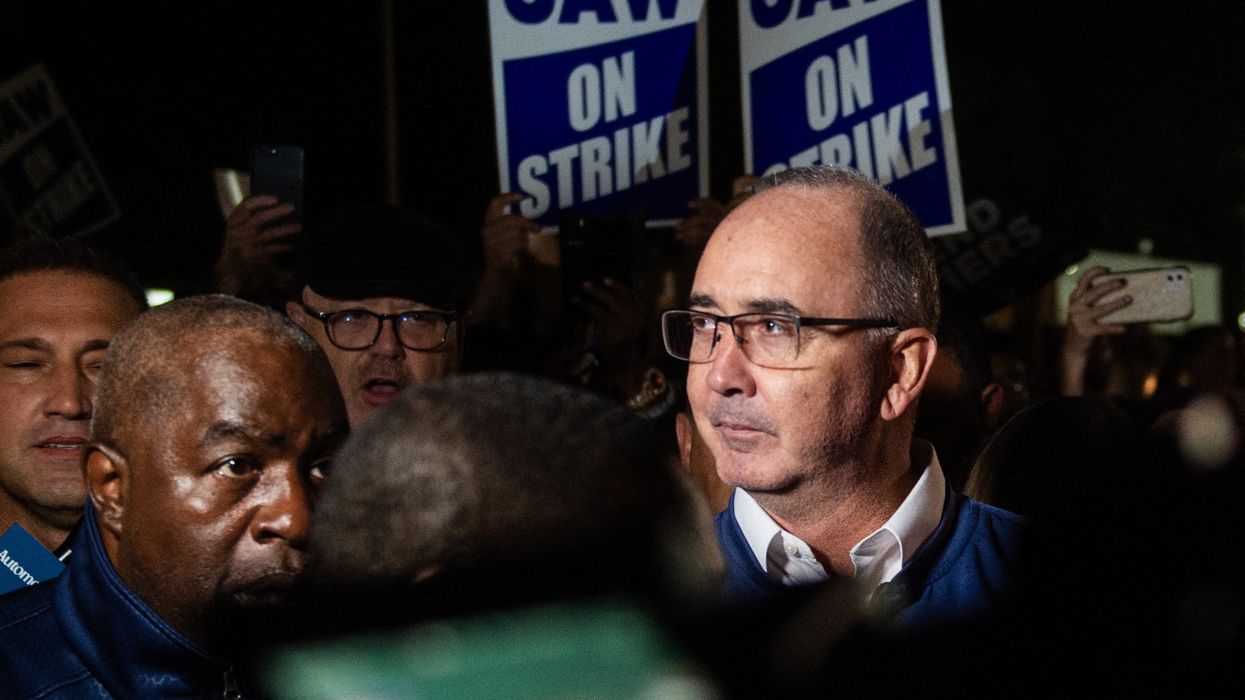
"We've been available 24/7 to bargain a deal that recognizes our members' sacrifices and contributions to these record profits," said Fain, noting the companies have already earned over a quarter of a trillion dollars in North American profits in 2023 so far. "I have been clear with the Big Three every step of the way and I'm going to be crystal clear again right now... Autoworkers have waited long enough to make things right at the Big Three. We're not waiting around and we're not messing around."
Calling up local union chapters piecemeal instead of shutting down plants across the Big Three en masse "is the only way this strategy works," Fain added. "We're going to keep hitting the company where we need to when we need to."
The strategy could help preserve the UAW's $825 million strike fund, University of Michigan-Flint economics professor Chris Douglas told WSMH in Flint on Monday, while affecting the Big Three's profits rapidly, since assembly plants are being targeted.
In addition to paying striking workers $500 per week, the union is now paying 2,600 workers at non-striking plants who were temporarily laid off last week by GM and Ford.
Fain did not say which locals may be called to join the strike on Friday, but urged all UAW members to "keep showing the companies that you are ready to join the strike if necessary."
In addition to a pay raise that reflects company profits, the union has demanded better retirement benefits, a four-day workweek, and an end to a tiered pay structure in which new employees earn less.
"This is our generation's defining moment," he told members, "so be ready to stand up."

United Auto Workers president Shawn Fain accused the companies of "trying to put the squeeze on our members to settle for less."
The president of the United Auto Workers condemned Ford and General Motors on Saturday after the companies said they plan to temporarily lay off thousands of nonstriking employees, blaming the union's walkouts at two plants in Michigan and Ohio.
Ford said in a statement Friday that it is laying off roughly 600 workers at its Michigan Assembly Plant, pointing to "knock-on effects" from the UAW's walkouts at the facility's final assembly and paint departments.
General Motors, meanwhile, said it expects 2,000 workers at its Fairfax Assembly plant in Kansas "to be idled as soon as next week," a decision the company called "a negative ripple effect" of the UAW's historic strike.
But UAW president Shawn Fain argued the layoffs are completely unnecessary—and an obvious attempt by Ford and General Motors to "put the squeeze on our members to settle for less."
"With their record profits, they don't have to lay off a single employee. In fact, they could double every autoworker's pay, not raise car prices, and still rake in billions of dollars," said Fain. "Their plan won't work. The UAW will make sure any worker laid off in the Big Three's latest attack will not go without an income. We'll organize one day longer than they can, and go the distance to win economic and social justice at the Big Three."
The UAW's response to the layoffs came as union negotiators and the Big Three automakers returned to the bargaining table to continue negotiating over a new contract.
More than 12,000 UAW autoworkers are currently on strike at three plants, and—as part of its "stand-up strike" strategy—the union is expected to call on additional locals to strike in the coming days if the car manufacturers don't make a sufficient contract offer.
The UAW says a gradual wave of strikes at select plants will give its negotiators maximal leverage—and keep the Big Three guessing—as the union attempts to win significant benefit and wage improvements. Fain has said an "all-out" strike is still on the table.
Reuters reported Saturday morning that Stellantis has increased its wage-hike offer to nearly 21% over the life of the contract—the biggest total wage boost proposed by a Big Three automaker thus far, but still well shy of the union's demand for a 36% raise.
Ford and General Motors have proposed raises of 20% and 18%, respectively.
Ford CEO Jim Farley, whose compensation package totaled nearly $21 million last year, faced backlash from the UAW and lawmakers for claiming earlier this week that the union's wage demands would "bankrupt" the company.
"There's no way you can continue wasting hundreds of millions of dollars on stock buybacks to manipulate prices, jack up CEO pay to ludicrous levels, all while starving the workers who actually make the product you sell," Rep. Alexandria Ocasio-Cortez (D-N.Y.) replied on social media. "THAT is what is unsustainable. Pay your workers."
Fain, for his part, called Farley's claim "a lie like everything else that comes out of their mouths."
As Fortune reported on Friday, Morgan Stanley's auto analyst estimated in a recent note that a 40% pay raise for autoworkers would result in $2.6 billion in additional labor costs for Ford, which expects to bring in $168 billion in total revenue this year.
The company spent nearly $500 million on stock buybacks last year.
"They could double our wages and not raise the prices of vehicles, and they would still make billions of dollars," Fain said from the picket line on Friday.

"This transition must center workers and communities," said advocates, "especially those who have powered our economy through the fossil fuel era, and be a vehicle for economic and racial justice."
On the eve of the expiration of the United Auto Workers union's contract and a potential strike Wednesday, climate action groups were among more than 100 civil society organizations on Wednesday calling on the "Big Three" automakers to ensure that a new contract protects workers as the U.S. transitions toward making electric vehicles.
Groups including the Center for Biological Diversity, Public Citizen, Sierra Club, and Earthjustice were among those expressing solidarity with nearly 150,000 union autoworkers who are demanding that employees of electric vehicle battery plants being developed by Stellantis, Ford, and General Motors are paid fairly—reflecting the record profits the automakers have reported in recent years.
"Within the next few years—the span of this next contract—lies humanity's last chance to navigate a transition away from fossil fuels, including away from combustion engines," wrote the groups in an open letter. "With that shift comes an opportunity for workers in the United States to benefit from a revival of new manufacturing, including electric vehicles (EVs) and collective transportation like buses and trains, as a part of the renewable energy revolution."
"This transition must center workers and communities, especially those who have powered our economy through the fossil fuel era, and be a vehicle for economic and racial justice," they added. "We are putting you on notice: Corporate greed and shareholder profits must never again be put before safe, good-paying union jobs, clean air and water, and a livable future."
"Corporate titans will try to split our movement by presenting us with a false choice. They'll try to argue that building more clean cars is more important than supporting workers. But we know better."
With the Biden administration—under the Inflation Reduction Act—poised to invest billions of taxpayer dollars "to boost your companies' transition to electric vehicle manufacturing and component production," the letter reads, the companies must "do right by the workers who have sacrificed to keep your companies profitable."
Without meeting the demands of the UAW, the organizations said, the Big Three will be embarking on a "race to the bottom" that continues to exploit workers.
"We do not have to choose between good jobs and green jobs," Trevor Dolan, industry and workforce policy lead at Evergreen Action, said Wednesday. "Corporate titans will try to split our movement by presenting us with a false choice. They'll try to argue that building more clean cars is more important than supporting workers. But we know better. Our collective movement can only succeed if workers directly benefit from climate action."
The groups highlighted the demands of the union, including:
Fain has led the union in demanding a 40% wage increase over four years—noting that compensation for General Motors CEO Mary Barra grew by more than 32% from 2018-22 while the median worker got only a 2.8% raise—cost-of-living increases, and a workweek shortened to 32 hours.
"The revival of domestic manufacturing of electric vehicles must also deliver on the promise of safe, dependable, good-paying UNION jobs across the entire supply chain," said Ben Smith, senior campaigner with Greenpeace USA. "In addition, we call on the Biden administration and all those in government at the federal, state, and local level to use every tool at their disposal to ensure strong labor standards are deployed alongside any support that taxpayers provide for EV automakers."
"It's time for the Big Three CEOs to deliver what these workers have demanded," Smith added, "a fair contract and a just transition now!"
Workers at Tesla plants all labor without union contracts, earning per hour about one-third less than what workers at Detroit’s unionized auto makers are making.
Elon Musk, the world’s single richest individual, believes in sharing the wealth. Or so Tesla chief financial officer Zachary Kirkhorn can certainly attest.
Kirkhorn announced earlier this month that he’s stepping down after four years as Tesla’s CFO. Over those four years, Kirkhorn has pocketed some $590 million, a tidy sum that averages out to an annual take-home not all that far from $150 million.
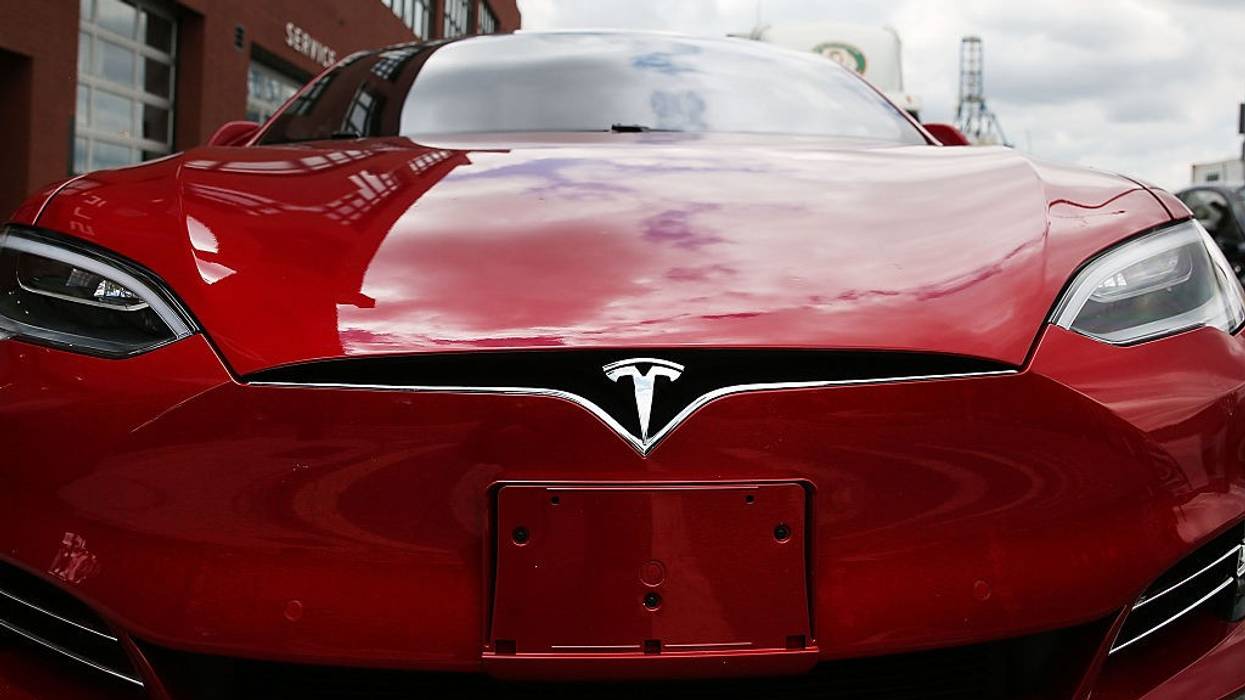
But Musk’s share-the-wealth inclinations, Tesla workers can attest, don’t extend much beyond Tesla’s executive suites. Workers at Tesla plants all labor without union contracts. They earn per hour from Tesla about one-third less than what workers at Detroit’s unionized Big Three auto makers are making.
UAW President Shawn Fain has tagged this auto industry got-to-be-more-competitive pitch “nothing more” than a prescription for “a continued race to the bottom in a quest to follow the lowest bidder to pay poverty wages.”
Workers at those Big Three firms―General Motors, Ford, and Chrysler, now part of the new auto group Stellantis―are now feeling Tesla’s low-wage pressure. Their union, the United Auto Workers, has begun bargaining a new Big Three contract, and those negotiations, a Reuters analysis noted last month, most definitely have Musk’s Tesla as a shadow participant.
Tesla’s shadow, adds Reuters, has essentially replaced the looming presence of the “Japanese automaker Toyota and its lean production system.”
That analogy between today’s Testa and yesterday’s Toyota only goes so far. The Tesla and Toyota shadows have impacted Detroit’s top auto execs in strikingly different ways. Toyota posed a personal threat to Detroit auto execs. Tesla offers those execs a personal opportunity.
Toyota’s threat came on the executive compensation front. Japanese corporate chiefs have over recent decades consistently made substantially less than their U.S. counterparts. In 2012, for instance, Toyota’s top exec pocketed $1.8 million. Ford’s CEO that same year took home nearly $21 million.
This past June, Toyota’s top-paid exec, Akio Toyoda, saw his annual compensation rise to an all-time Toyota executive pay record. His take-home: $6.9 million. The 2022 total take-home of GM’s CEO: $29 million.
The mega millions that go to Tesla’s top execs, by contrast, provide top execs at America’s unionized auto companies a much more personally useful payday benchmark. The UAW, these execs are now demanding, must allow their companies to be “competitive” with the likes of Tesla.
UAW President Shawn Fain has tagged this auto industry got-to-be-more-competitive pitch “nothing more” than a prescription for “a continued race to the bottom in a quest to follow the lowest bidder to pay poverty wages.”
The UAW has a counter proposal for this summer’s bargaining. Detroit’s auto CEOs, the union points out, have seen their compensation rise 40% over the past four years. The UAW is now calling for a 40% raise for Big Three auto workers over the next four years.
A new contract that incorporates that notion would bring significant gains for auto workers. But even more significant gains―for all U.S. workers―could start flowing if U.S. lawmakers started linking the massive subsidies currently flowing to Corporate America to the stunningly wide pay gaps between U.S. workers and corporate top execs.
Tesla’s exiting chief financial officer Zach Kirkhorn earlier this year told reporters his company was expecting federal tax credits ranging up to $250 million per quarter in 2023, as much as $1 billion for the entire year. All those subsidy dollars, as matters now stand, will be disproportionately enriching the already rich. That doesn’t have to be the case.
In the quarter-century after World War II, the vast majority of major U.S. corporations paid their top execs no more than 20 or 30 times what their workers were taking home. Today’s top corporate execs routinely make more in a day than their workers can make in a year.
We could help change that if we pressed our lawmakers―at all levels―to limit corporate eligibility for government subsidies to companies that maintained modest gaps between executive and worker compensation. Corporations that can afford to pay their top execs hundreds of times more than what they pay their workers, we need to make politically clear, can afford to do without our tax dollars.
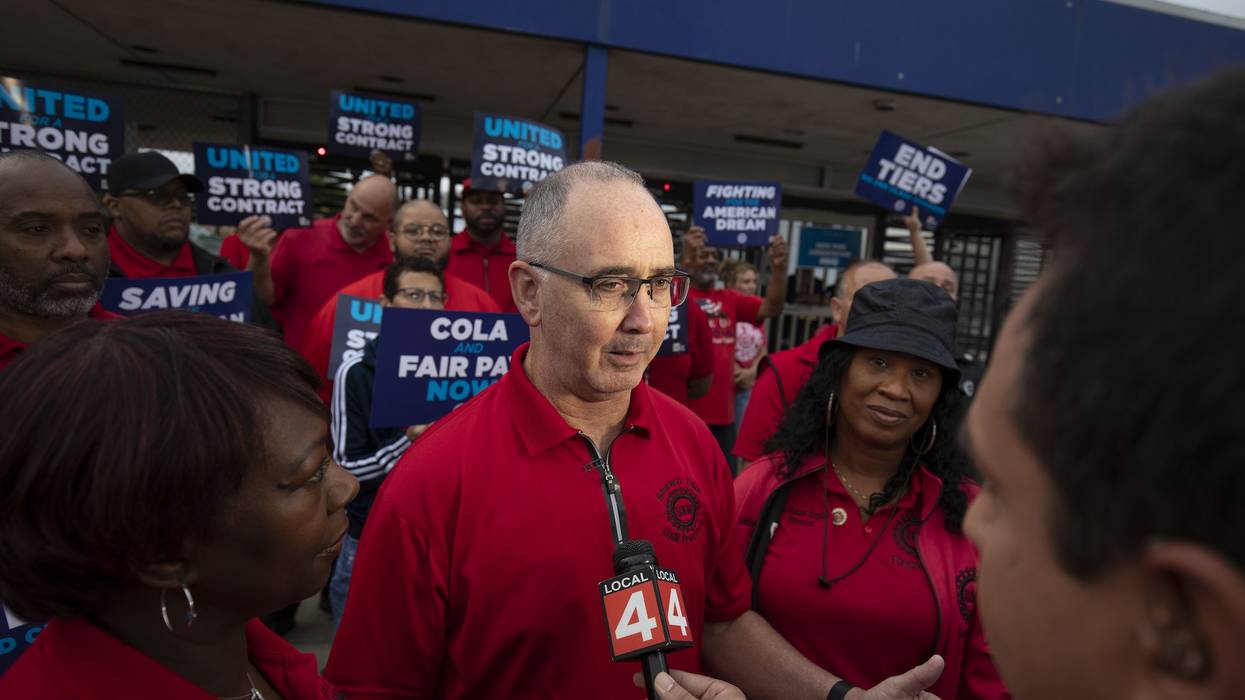
"The government should invest in U.S. manufacturing but money can't go to companies with no strings attached," said United Auto Workers President Shawn Fain. "There should be labor standards built in, this is the future of the car industry at stake."
The president of the United Auto Workers on Tuesday called on U.S. President Joe Biden to use his position of power to help ensure a just transition to electric vehicles—pushing for a major investment in green technology that would also guarantee that workers in the U.S. can earn a decent living in the evolving auto industry.
Biden's actions on the electric vehicle (EV) front, Shawn Fain told The Guardian, have been "disappointing."
It has been a year since the president signed his signature climate and jobs law, the Inflation Reduction Act, which includes incentives for car companies to ramp up manufacturing of EVs and for consumers to purchase them.
The law has paved the way for the "Big Three" automakers—Ford, Stellantis, and General Motors (GM)—to build EV battery plants in joint ventures with companies such as Samsung, SK On, and LG Energy Solution, but the federal incentives and loans have been given to the firms without the guarantee of fair pay and working conditions for the people who will work in the plants.
"We have to make sure endorsements are earned and not freely given. Politicians have to prove they are in the fight with us, which is the only way to win back the working class in the Midwest. We don't have to endorse anyone at all."
A $9.2 billion loan given to Ford and SK On last month for the construction of battery plants in Kentucky and Tennessee, for example, has left the UAW questioning Biden's self-identification as a "union man," considering the states' union protections are not among the nation's strongest.
If Biden hands out incentives and subsidies to automakers who pay "poverty wages," like Fain has accused one joint venture plant built by GM and LG Energy Solutions of doing, the president will miss "our generation's defining moment with electric vehicles," the UAW president said.
"If the IRA continues to bring sweatshops and a continued race to the bottom it will be a tragedy,” Fain told The Guardian. "The government should invest in U.S. manufacturing but money can't go to companies with no strings attached. Labor needs a seat at the table. There should be labor standards built in, this is the future of the car industry at stake."
"You have workers at Ultium on $16.50 an hour, which is less than what you'd get working for Waffle House," he added, referring to the GM joint venture plant in Lordstown, Ohio. "It's criminal."
On Monday, the workers' rights-focused media organization More Perfect Union released a video detailing the conditions Ultium employees have worked in without the protections the UAW has called on the Biden administration to require at EV battery plants.
"It is not a great place to work if you are on the floor producing the product that they so rave about, that's so great and is the future," one worker named Tony told More Perfect Union. "There's a dirty, dirty behind-the-scenes that's going on here at Ultium to get to that future."
The video detailed worker injuries and illnesses suffered by nearly two dozen workers, air quality problems, and retaliation against employees who raise concerns about safety hazards.
"The electric vehicle revolution promised thousands of good union jobs. So far, that hasn't happened," said the outlet. "But now the UAW is calling on Biden to make this promise a reality."
The UAW is in the midst of contract negotiations with the Big Three manufacturers, and Fain has demanded significant wage increases for union auto workers that would reflect the companies' record profits and match the raises CEOs have gotten in recent years.
On Monday, Biden called on the two parties to reach an agreement that will "enable workers to make good wages and benefits to support their families, while leading us into a future where America is leading the way in reducing vehicle emissions."
"I'm asking all sides to work together to forge a fair agreement," said the president. "I support a fair transition to a clean energy future. That means ensuring that Big Three auto jobs are good jobs that can support a family; that auto companies should honor the right to organize; take every possible step to avoid painful plant closings; and ensure that when transitions are needed, the transitions are fair and look to retool, reboot, and rehire in the same factories and communities at comparable wages."
"The UAW deserves a contract that sustains the middle class," he added.
Fain told Politico that the union agrees "with the president that the Big Three's joint venture battery plants should have the same strong pay and safety standards that generations of UAW members have fought for," but the outlet noted that Biden did not speak about labor conditions and pay at the joint venture plants.
The UAW has so far withheld its endorsement of Biden, four months after he officially announced his campaign for reelection, and Fain made clear Tuesday that the union intends to use its strength in numbers to continue pressuring the president to push for fair wages and conditions in the burgeoning EV sector.
"I do believe the president's heart is in the right place but we have to make sure endorsements are earned and not freely given," Fain told The Guardian. "Politicians have to prove they are in the fight with us, which is the only way to win back the working class in the Midwest. We don't have to endorse anyone at all."
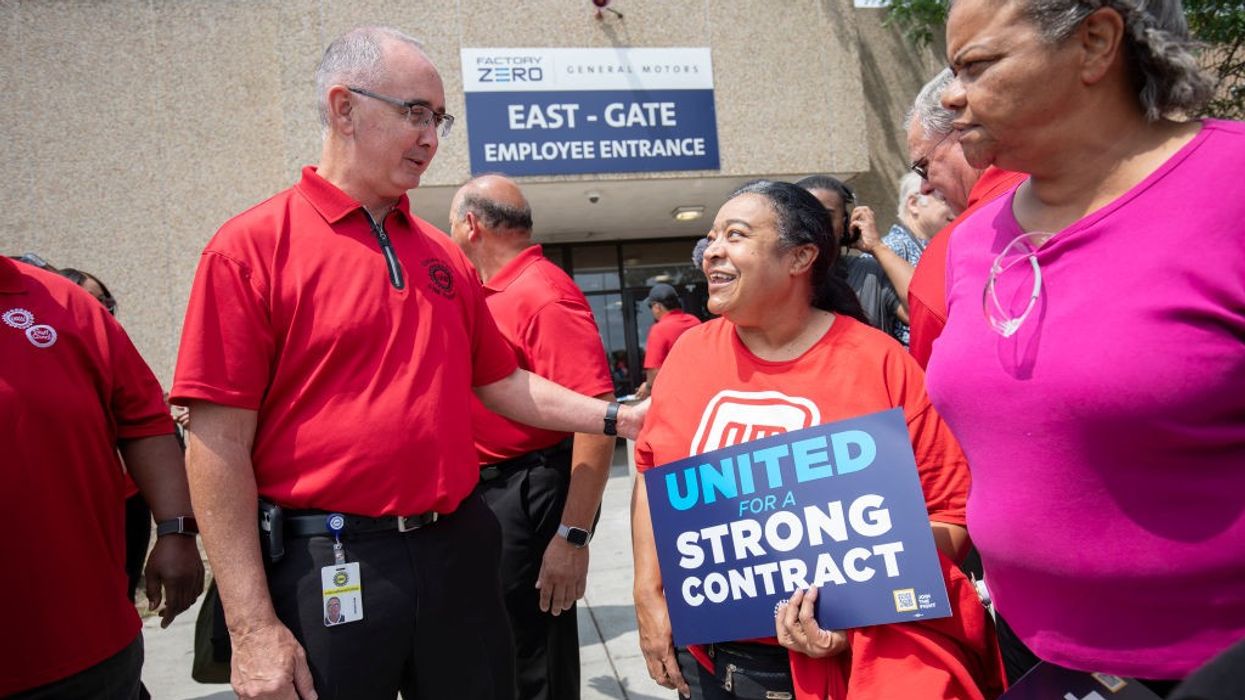
"Record profits mean record contracts," said United Auto Workers Shawn Fain. "They've been competitive on our backs and it's time they pay up."
Labor advocates said Thursday that United Auto Workers president Shawn Fain is clearly "doing something right" after CNBC anchor Jim Cramer unleashed a diatribe targeting the labor leader over his ambitious demands for a new contract and his stark assessment of the "corporate greed" that's left union members struggling to make ends meet.
Cramer has spoken multiple times on CNBC in recent days about the ongoing negotiations between the UAW and the Big Three automakers—Ford, General Motors, and Stellantis—and has called Fain "frightening" for advocating for a wage increase to reflect the record profits the companies have reported in recent years.
Fain has been "talking about capitalism and the nature of capitalism and how it's really hurt workers," said Cramer, who compared him to influential former UAW leader and civil rights activist Walter Reuther—"as if it's a bad thing," noted one journalist.
Fain, who was elected to lead the union earlier this year, announced members' demands earlier this week in a speech broadcast on Facebook Live, highlighting the need for a significant pay raise to make up for years of concessions by the union following the Great Recession, the rising cost of living and inflation, and to match pay increases enjoyed by the CEOs of the Big Three.
"Big Three CEOS saw their pay spike 40% on average over the last four years," said Fain. "We know our members are worth the same and more."
Ahead of a September 14 deadline, after which the UAW could go on strike, the union is demanding an immediate 20% pay raise followed by an additional 5% raise in each year of the four-year contract.
According to the union, most new workers start out making $16 per hour, but if cost-of-living increases had been maintained since the Great Recession, the starting wage would be $28.68—about $21,000 more per year.
The union is also calling for a return of the defined benefit pension, which would give retired workers a set amount of money each month; the right to strike if a company threatens to close a plant; more paid time off; restored cost-of-living allowance increases; and other provisions.
Fain also spoke about the potential to shift to a 32-hour workweek to allow workers to spend more time with their families.
"Our members are working 60, 70, even 80 hours a week just to make ends meet—that's not a living," Fain said. "We have to work longer and harder to maintain the same standard of living... That means missing Little League games and family reunions."
"That's barely surviving, and it needs to stop," he said.
Cramer took issue with Fain's suggestion that Big Three shareholders and CEOs have been "overly rewarded" and scoffed at the notion that shareholders are "fat cats."
"That's class warfare and it's very shocking to hear class warfare," said Cramer.
In his address earlier this week, Fain said the automakers can "easily" afford to substantially increase workers' wages. The companies have made a quarter of a trillion dollars in North American profits over the past 10 years, and reported a combined $21 billion in profits in the first half of this year.
"Record profits mean record contracts," said Fain. "They've been competitive on our backs and it's time they pay up."