

SUBSCRIBE TO OUR FREE NEWSLETTER
Daily news & progressive opinion—funded by the people, not the corporations—delivered straight to your inbox.
5
#000000
#FFFFFF
To donate by check, phone, or other method, see our More Ways to Give page.
Daily news & progressive opinion—funded by the people, not the corporations—delivered straight to your inbox.

New reporting shows the EPA was warned over 20 years ago that sewage sludge contained high levels of so-called "forever chemicals."
The U.S. Environmental Protection Agency continues to promote a commonly used commercial fertilizer despite being informed over 20 years ago that its key component contained high levels of so-called "forever chemicals," a New York Times investigation revealed Friday.
The
Times' Hiroko Tabuchi reviewed thousands of pages of decades-old documents and found that scientists at chemical giant 3M discovered high levels of per- and polyfluoroalkyl substances (PFAS) in U.S. sewage during the early 2000s. Sewage sludge is in widespread use as farm fertilizer. PFAS are called forever chemicals because they do not biodegrade and accumulate in the environment and the human body. They have myriad uses, from nonstick cookware and waterproof clothing to firefighting foam and pesticides.
Officials at 3M—whose researchers had already linked PFAS to cancer, birth defects, and other ailments—informed the Environmental Protection Agency (EPA) of its findings in 2003.
"The EPA continues to promote sewage sludge as fertilizer and doesn't require testing for PFAS."
However, as Tabuchi noted, "the EPA continues to promote sewage sludge as fertilizer and doesn't require testing for PFAS, despite the fact that whistleblowers, academics, state officials, and the agency's internal studies over the years have also raised contamination concerns."
According to the U.S. Agency for Toxic Substances and Disease Registry, PFAS are linked to cancers of the kidneys and testicles, low infant weight, suppressed immune function, and other adverse health effects. They are found in the blood of around 99% of people around the world. EPA data show there's PFAS in the drinking water of tens of millions of Americans.
According to Tabuchi, EPA experts raised concerns about PFAS as far back as the 1990s, but their warnings went unheeded.
The
Times investigation follows reporting earlier this month led by Prism's Rebecca Barglowski showing that EPA and state officials in New Jersey have known about PFAS-contaminated water for nearly two decades.
Tabuchi noted that "the country is starting to wake up to the consequences" of PFAS' ubiquity. However, only one state—Maine—has begun systematically testing farms for PFAS. It has also banned the use of sewage sludge to fertilize fields.
At the federal level, the Biden administration in 2021 published its first "PFAS Strategic Roadmap" and designated forever chemicals "an urgent public health and environmental issue." Earlier this year, the EPA finalized a new Superfund rule meant to "help ensure that polluters pay to clean up their contamination" across the nation.
However, the chemical industry is fighting efforts to tackle PFAS, including through the use of research experts have called biased. Experts have also warned that the incoming administration of Republican President-elect Donald Trump will roll back Biden-era regulations, disempower agency specialists, and let political appointees make crucial regulatory decisions.
Even under Biden, the EPA is arguing that it cannot be sued for taking inadequate action to protect the public from PFAS contamination.
In June, Public Employees for Environmental Responsibility (PEER)
sued the EPA on behalf of a group of farmers, ranchers, and green groups "for failing to perform its nondiscretionary duty to identify and regulate toxic pollutants in sewage sludge" used as fertilizer. In September, the EPA moved to dismiss the lawsuit, arguing that it has complete discretion regarding the identification and listing of pollutants.
"EPA seems to have lost any sense of its legal and moral obligation to protect public health," attorney and former EPA scientist Kyla Bennett said at the time. "Under the plain language of the Clean Water Act, EPA has a mandatory duty to identify and regulate substances that are a threat to human health and the environment—not just to issue a report about it."

"They're trying to undermine the EPA's science, make it sound like there's uncertainty where there isn't, and make it sound like there's disagreement within the scientific community where there's not," an expert said.
An industry-friendly research group has set forth plans to bolster legal challenges to the Environmental Protection Agency's PFAS regulations for drinking water by conducting what experts say is biased research, The Guardian reported Tuesday.
Documents obtained by the newspaper show that the Ohio-based research group Toxicology Excellence for Risk Assessment (TERA), led by controversial toxicologist Michael Dourson, aims to publish peer-reviewed papers by the end of 2024 that can help industry legal challenges to drinking water rules that the EPA finalized in April.
Dourson, some of whose research funding comes from industry groups, sent a fundraising email in July laying out his plans. "Can we count on your group to make a tax-deductible donation to get our team to publish a set of papers by the end of 2024?" he asked.
TERA organized a conference in October at which a pro-industry plan for challenging the EPA's PFAS regulations was laid out—to attack the statistical methods used by the agency and emphasize scientific uncertainty—a conference document obtained by The Guardian shows.
Current and former EPA experts who viewed the email and the conference document sharply criticized Dourson's approach to research on PFAS, which are a set of roughly 16,000 synthetic compounds linked to cancer and a wide range of other serious health conditions.
Maria Doa, a former EPA risk assessment manager who's now a director at the Environmental Defense Fund, told The Guardian that TERA's plans were "not a valid approach to science."
"They're trying to undermine the EPA's science, make it sound like there's uncertainty where there isn't, and make it sound like there's disagreement within the scientific community where there's not," she said.
Experts compared the effort to undermine PFAS regulations with industry-funded science to similar efforts used by the tobacco industry in decades past.
"This is out of the playbook and it's a lot of the same quote-unquote scientists and same hired guns," Erik Olson, a director at the National Resources Defense Council, told The Guardian.
Penny Fenner-Crisp, a former EPA water division manager who worked with Dourson, told The Guardian that she was astounded by the straightforward bias on display in the documents.
"In my 22 years spent in three regulatory programs I came to understand the games [the industry] plays, but this one astonished me because it's unusual to be so blatant," she said.
The EPA regulations set a limit of 4 parts per trillion on two of the main types of PFAS, and up to 10 ppt for other types. Gourson, who previously worked for the EPA but has since shifted his approach and, as he puts it, learned to "honor industry's knowledge," has argued that the limits should be far higher. He and other scientists, some of whom have industry ties, published a study in December that supports a higher limit for a main type of PFAS.
The legal challenges to the EPA's water regulations come from water utilities and chemical manufacturers. At least one lawsuit was brought in part by the American Chemistry Council (ACC), a lobby group that represents companies such as 3M and DuPont, which developed PFAS in the mid-20th century for use in consumer and industrial products, and reportedly hid knowledge of its toxic impacts and widespread distribution.
In the leaked email, Dourson said his forthcoming papers will be published in the first issue of a new journal that aims to "support" the legal challenges to PFAS regulations.
The stakes of the legal cases against the EPA's water rules are extremely high, and not just because of the direct impact they will have on hundreds of millions of Americans who may already have toxic PFAS in their drinking water. A victory for industry could also discourage further regulation of chemicals in drinking water.
"This is pivotal," Betsy Southerland, a former director of science and technology at the EPA's water division, told The Guardian, speaking about the legal defense of the PFAS rules established in April. "If a court strikes this down… then the EPA will say the bar is too high to ever regulate using the Safe Drinking Water Act."
Southerland told The Wall Street Journal in May that Dourson "produces biased science that cherry picks data."
Dourson was named to lead the EPA's chemical safety division in 2017 by then-President Donald Trump but withdrew himself from consideration for the position following criticism over his ties to industry. The New York Times at the time published emails Dourson had exchanged with the ACC that showed a close relationship.

"Basically the entire infrastructure of how the EPA considers science and develops rules is very much under attack," a nonprofit director said.
A second Trump administration would cripple the U.S. Environmental Protection Agency's ability to protect the public from toxic "forever chemicals," The Guardian reported Sunday, citing experts inside and outside the agency.
Per- and polyfluoroalkyl substances (PFAS), a class of about 16,000 synthetic compounds that break down only very slowly, have been linked to a wide array of serious medical conditions including cancer. The EPA under the Biden administration has instituted limits on PFAS levels in drinking water and other PFAS regulations that industry groups oppose.
Experts warn that allies of Republican nominee Donald Trump aim not just to roll back Biden-era regulations but fundamentally reshape the agency.
"Basically the entire infrastructure of how [the] EPA considers science and develops rules is very much under attack," Erik Olson, legislative director at the Natural Resource Defense Council, told The Guardian.
An unnamed EPA employee told the newspaper that a second Trump administration would seek to disempower agency experts and let political appointees make key regulatory decisions.
"They want a small group of 20 people making the rules, and the rest of the agency can go to hell as far as they care," said the EPA employee, who spoke on the condition of anonymity.
Project 2025, a roadmap for Republican governance produced by the right-wing Heritage Foundation, proposes deregulation of PFAS, narrowing the definition of the class of toxic compounds, and elimination of the EPA office that assesses chemicals' toxicity.
Project 2025, to the extent that it's known about, has proven unpopular with the American public, and Trump has tried to distance himself from the plan, but has close links to its authors, at least 140 of whom worked in the former president's administration.
Project 2025's proposals on forever chemicals are aligned with the aims of the American Chemistry Council, the fourth largest lobbying group in the country. During his first term, Trump appointed ACC leaders to key positions in the EPA, and critics of the former president argue that his second administration would be even more unabashedly pro-industry.
"The Trump administration learned some lessons and would be much more surgical and effective at affixation next time," the NRDC's Olson said.
The unnamed EPA employee said a Trump victory might even mean the abolishment of the EPA's entire Office of Research and Development.
ACC members 3M and DuPont developed PFAS in the mid-20th century and used them in a wide range of products, even with knowledge of their toxicity and the way that the accumulate in the human body, according to a series of exposés in recent years, notably by the journalist Sharon Lerner in her work at ProPublica and The Intercept. A recent article of Lerner's in The New Yorker showed that 3M long concealed the dangers of PFAS.
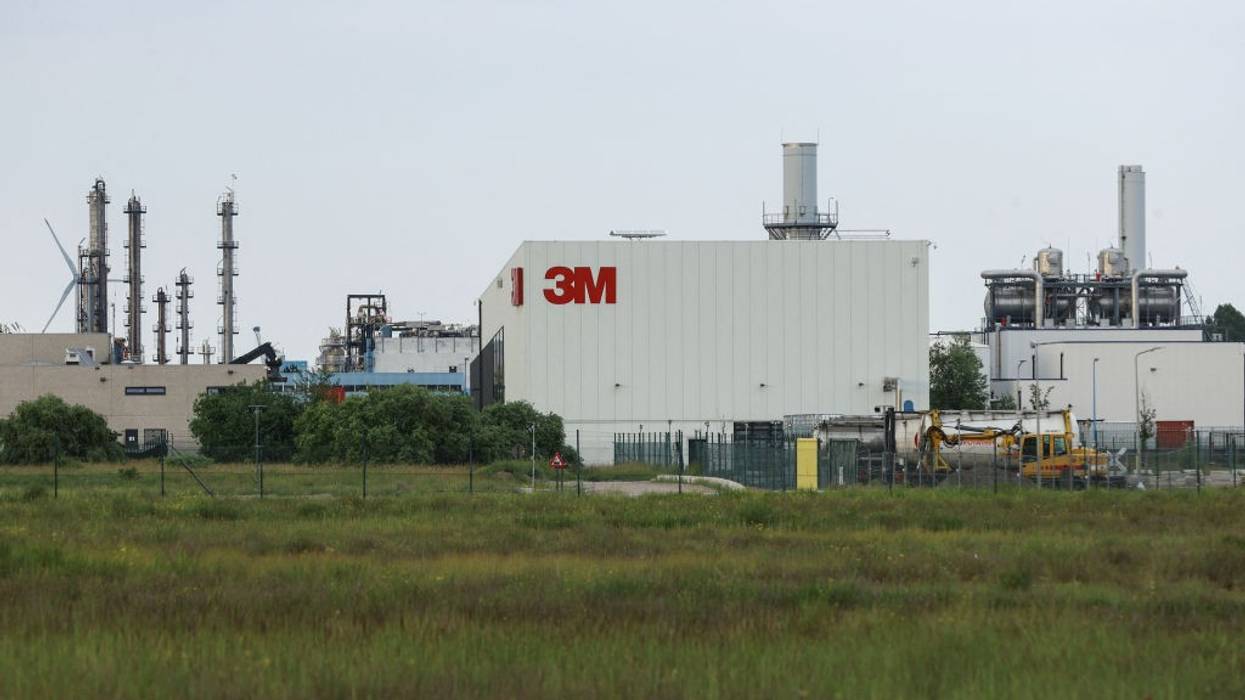
Results from a new study "definitely point toward the need for environmental stewardship, and keeping PFAS out of the environment and food chain," a co-author said.
Common foods including white rice and eggs are linked to higher levels of "forever chemicals" in the body, new research from scientists at the Geisel School of Medicine at Dartmouth shows.
The researchers also found elevated levels of per- and polyfluoroalkyl substances (PFAS) in people who consumed coffee, red meat, and seafood, based on plasma and breast milk samples of 3,000 pregnant people. The findings, published in Science of the Total Environment, add to the mounting evidence of the accumulation of PFAS, which were developed by chemical companies in the mid-20th century, in the natural environment and the body.
"The results definitely point toward the need for environmental stewardship, and keeping PFAS out of the environment and food chain," Megan Romano, a Dartmouth epidemiologist and co-author of the paper, told The Guardian. “Now we're in a situation where they're everywhere and are going to stick around even if we do aggressive remediation."
PFAS are a class of 16,000 compounds linked to a wide range of adverse health conditions including cancer, with research ongoing. The chemicals' development and production went effectively unregulated for decades, but has received significant attention in recent years, with alarming studies coming out regularly.
3M, a consumer goods multinational that developed and manufactured many PFAS compounds, knew that they were accumulating dangerously in the blood of the general public, but concealed it, according to a recent investigation co-published by ProPublica and The New Yorker; the article was written by journalist Sharon Lerner, who previously reported on PFAS-related deception by 3M and Dupont for The Intercept.
Such corporations may yet face unprecedented legal action. As Steven Shapin wrote in the London Review of Books on Thursday, "It is thought that the monetary scale of American lawsuits against companies responsible for PFAS water pollution may eventually dwarf those involving asbestos and tobacco, considering that people are in a position to decide whether or not to smoke cigarettes but everybody has to drink water."
While much of the concern about PFAS has rightly centered on drinking water—in which they're found worldwide—that is just one of the ways the chemicals can get into the human body. A new study this week showed they can be absorbed through the skin.
Food intake is also a primary means of accumulation in the body, and the new Dartmouth study indicates which foods are the worst. The study doesn't explore why, though Romano discussed some possible reasons with The Guardian. Rice is likely contaminated because of PFAS in soil or agricultural water, while coffee could have PFAS because of various factors including filters. Animal products can be contaminated if, among other reasons, the ground that the animals lived off was treated with PFAS-fouled toxic sludge, which is used by farmers as a cheap alternative to fertilizer.
Even consumption of backyard chicken eggs lead to elevated levels of PFAS, and that could be because of the table scraps the chickens are often fed, Romano said.
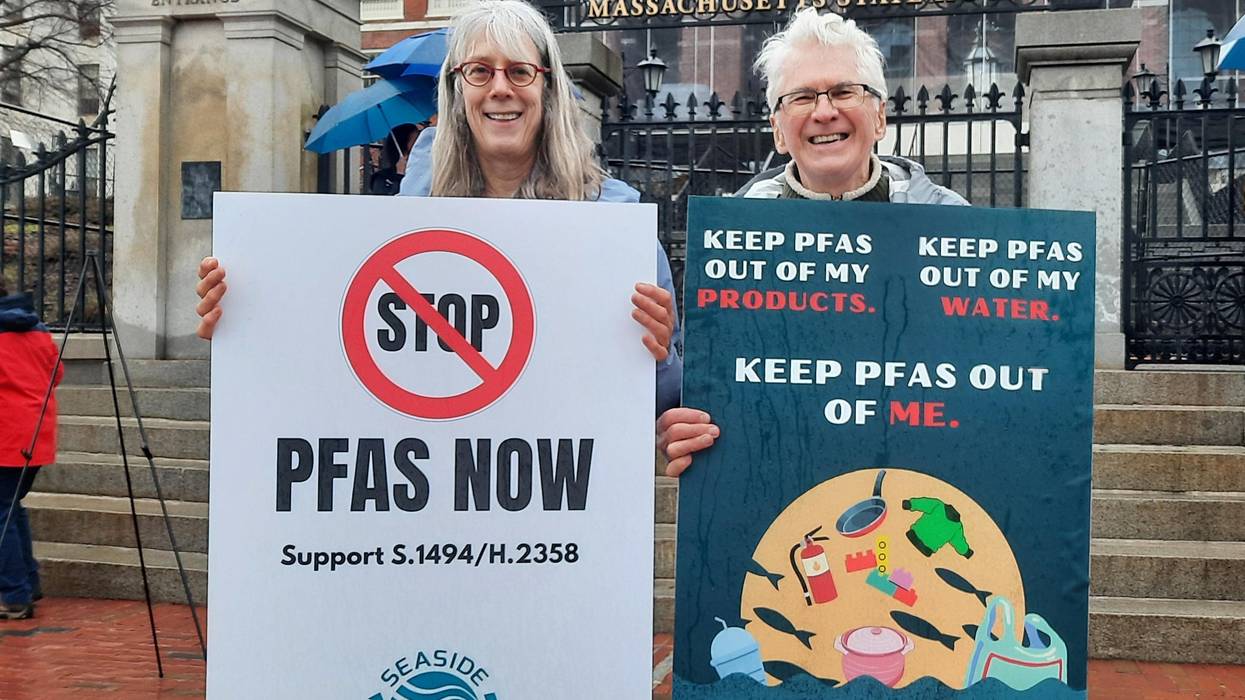
"These documents reveal clear evidence that the chemical industry knew about the dangers of PFAS and failed to let the public, regulators, and even their own employees know the risks."
An analysis of previously secret documents published Wednesday sheds new light on how chemical corporations aped Big Tobacco by conspiring to conceal the extreme toxicity of a class of synthetic compounds contaminating the Earth's air, water, soil, plants, and animals—including most of the world's people.
Commonly called "forever chemicals" because they do not biodegrade and accumulate in the human body, per- and polyfluoroalkyl substances (PFAS)—which include PFOS, PFOA, and GenX—have myriad uses, from nonstick cookware to waterproof clothing to firefighting foam. According to the U.S. Agency for Toxic Substances and Disease Registry, PFAS is linked to cancers of the kidneys and testicles, low infant weight, suppressed immune function, and other adverse health effects. It is found in the blood of 99% of Americans and a similar percentage of people around the world.
"The industry used several strategies that have been shown common to tobacco, pharmaceutical, and other industries to influence science and regulation—most notably, suppressing unfavorable research and distorting public discourse."
But that wasn't known until recently. Scientists and public health officials were some of the first to understand the dangers of PFAS, and in recent years, exposés like Stephanie Soechtig and Jeremy Seifer's 2018 documentary feature The Devil We Know and a 2022 episode of HBO's "Last Week Tonight" in which host John Oliver called PFAS "the devil's piss" raised awareness of the "forever chemicals." In 2018, Congress held its first hearing, and around that time it emerged that chemical giants DuPont and 3M understood—and covered up—the dangers of PFAS.
The Devil They Knew: Chemical Documents Analysis of Industry Influence on PFAS Science—a new paper published in the peer-reviewed journal Annals of Global Health—enriches understanding of the chemical industry's role in concealing the dangers of PFAS. It includes documents like a 1970 DuPont internal memo stating the PFOA C8—used to make the nonstick surface Teflon—is "highly toxic when inhaled and moderately toxic when injected."
"These documents reveal clear evidence that the chemical industry knew about the dangers of PFAS and failed to let the public, regulators, and even their own employees know the risks," Tracey J. Woodruff—who wrote the paper with Nadia Gaber and Lisa Bero—told Phys.org.
One 1979 DuPont report describes a range of highly toxic effects from testing PFAS on animals, including two beagles who died after being administered a single 450 mg dose of ammonium perfluorooctanoate, and rats that suffered enlarged livers and eye ulcers.
Another document, from 1980, shows DuPont and 3M learned that two out of eight pregnant employees who worked making C8 had babies with birth defects, but then lied the following year in a memo declaring that "we know of no evidence of birth defects" caused by C8.
"Further, the industry used several strategies that have been shown common to tobacco, pharmaceutical, and other industries to influence science and regulation—most notably, suppressing unfavorable research and distorting public discourse," the paper states.
The paper's authors did not find "evidence in this archive of funding favorable research or targeted dissemination of those results."
Among the paper's key findings:
"The lack of transparency in industry-driven research on industrial chemicals has significant legal, political, and public health consequences," the paper's authors concluded. "Industry strategies to suppress scientific research findings or early warnings about the hazards of industrial chemicals can be analyzed and exposed, in order to guide prevention."
Recent years have seen an exponential proliferation of PFAS-related litigation, sometimes resulting in verdicts like the $40 million awarded by an Ohio jury to a man who claimed exposure to PFOA in his drinking water gave him testicular cancer twice.
In recent days, states including Arizona, Maryland, Rhode Island, and Washington have sued companies that manufacture PFAS.
"These companies have known for decades that so-called 'forever chemicals' would contaminate water supplies for generations to come but chose to sell their products anyway," said Arizona Attorney General Kris Mayes, a Democrat. "The failure by these polluters to inform the state about the risks associated with these chemicals has harmed our environment and the health of Arizonans—and they must be held accountable."
Last week, Common Dreams reported that Minnesota Gov. Tim Walz, also a Democrat, signed into law the nation's broadest PFAS ban. The legislation gradually phases out most PFAS use until "forever chemicals" will be prohibited in all products not essential for public health by 2032.
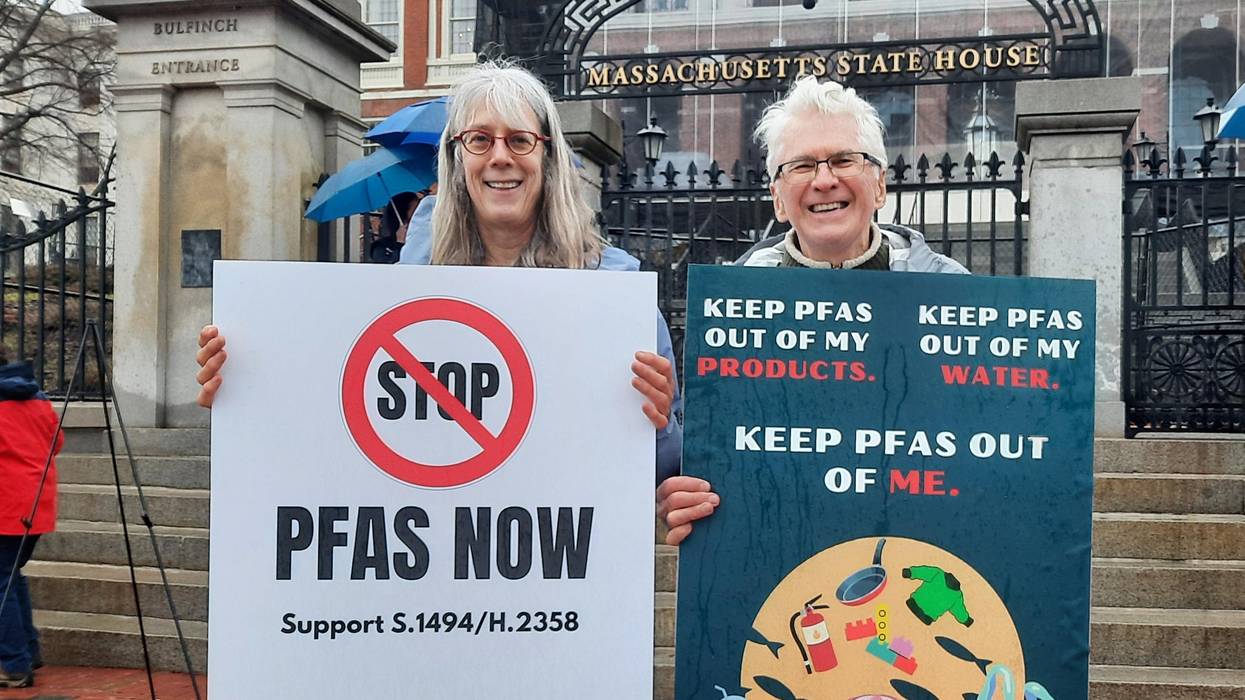
"These PFAS-laden containers present an ongoing danger to workers, consumers, and the environment," said one campaigner.
A pair of nonprofit advocacy groups on Tuesday sued a Texas company in a bid to stop it from generating so-called "forever chemicals" while manufacturing plastic containers.
The Center for Environmental Health (CEH) and Public Employees for Environmental Responsibility (PEER) filed the federal environmental lawsuit in Washington, D.C. alleging Houston-based Inhance Technologies USA is violating the Toxic Substances Control Act (TSCA) during the fluorination of plastic containers used to hold food, personal care items, and many other products.
"We are acting now because EPA has dragged its feet in ensuring that Inhance comes immediately into compliance with the law and stopping TSCA violations that represent a serious and ongoing threat to human health."
Fluorination involves the high-temperature application of fluorine gas to plastic containers. Inhance, which fluorinates containers at several U.S. plants, is the nation's top supplier of post-mold fluorination services.
The suit claims fluorinated products made by Inhance contain perfluorooctanoic acid (PFOA) and other per- and polyfluoroalkyl substances (PFAS), which are "often called 'forever chemicals' because they do not break down or degrade over time." PFAS are found in drinking water, soil, wildlife—and people—around the world.
"EPA and other authorities have generally found that PFAS have properties of high persistence, significant bio-accumulation, and severe toxicity to human health," the complaint notes.
Used in a sweeping range of products from clothing to nonstick cookware to firefighting foam, PFAS have been linked to cancers of the kidneys and testicles, low infant weight, suppressed immune function, and other adverse health effects.
"These PFAS-laden containers present an ongoing danger to workers, consumers, and the environment," CEH petrochemicals, plastics, and climate program director Sarah Packer asserted in a statement. "The fluorination process contributes to the overall prevalence of this already-ubiquitous class of chemicals and could be introducing FPAS into the recycling stream, as many of these containers bear recycling symbols."
"Inhance, the company that performs most of the fluorination in the U.S., has refused to comply with TSCA and must be ordered to stop this unsafe practice."
"Inhance, the company that performs most of the fluorination in the U.S., has refused to comply with TSCA and must be ordered to stop this unsafe practice for the health of workers, nearby communities, consumers, and all who encounter these commonly used containers or the products stored in them," Packer added.
PEER executive director Tim Whitehouse—who is also a former U.S. Environmental Protection Agency (EPA) enforcement lawyer—said that "the leaching of PFAS from packaging and containers threatens our food supply and exposes all of us to harmful toxic chemicals."
"We are acting now because EPA has dragged its feet in ensuring that Inhance comes immediately into compliance with the law and stopping TSCA violations that represent a serious and ongoing threat to human health," he added.
In a statement last week, Inhance Technologies said the company "believes we have been, and continue to be, in full compliance with all relevant regulations and regulatory guidance, and are operating safely, responsibly and lawfully," while claiming it "embraces" EPA efforts "to ensure science-based decision-making as it relates" to PFAS.
The new lawsuit came six weeks after the state of California sued 18 manufacturers including 3M—one of the world's largest chemical companies—for harming human health and the environment, and for deceptive practices. The California suit is one of more than 6,000 PFAS-related lawsuits filed in U.S. federal courts alone since 2005.
Increased activism and lawsuits targeting PFAS have raised public awareness of the dangers of "forever chemicals," resulting in the U.S. military announcing it will stop using PFAS in firefighting foam by 2024 and 3M committing to ending PFAS production by the end of the following year.