SUBSCRIBE TO OUR FREE NEWSLETTER
Daily news & progressive opinion—funded by the people, not the corporations—delivered straight to your inbox.
5
#000000
#FFFFFF
To donate by check, phone, or other method, see our More Ways to Give page.
Daily news & progressive opinion—funded by the people, not the corporations—delivered straight to your inbox.
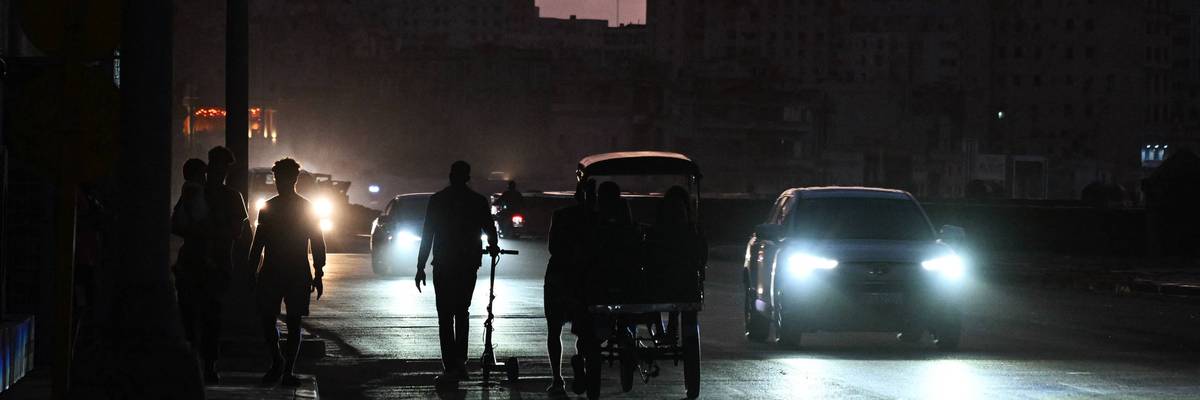
People transit on a street without power during a nationwide blackout in Havana on March 21, 2026.
What the United States is doing to Cubans is equivalent to waterboarding them into submission, and all CBS could seem to talk about is Castro.
The CBS Sunday Morning program, “Next: Cuba?” which aired on April 26, presented a discussion of the recent intensification of sanctions on and threats against Cuba. I am disappointed that this program, and several other shorter recent segments on CBS News, did not cover some essential points that must be stated about what is happening in Cuba now. My own experience in Cuba, including the recent delivery of humanitarian aid directly to Cubans, contradicts some perspectives presented by CBS.
Fidel Castro is dead. And, he has been dead for a while. He was a fascinating character who still inspires polemic discussions. Stories of Fidel are legendary on the scale of Paul Bunyan. But we think the choice of focus of these eight minutes on Fidel’s legacy is unjust to the Cuban people. The news of the moment is that Cuba is underwater. The CBS Sunday Morning program, instead of engaging in a discussion of a crisis on the island, entertained us with old, mostly obsolete stories about Castro.
Cubans are suffering currently. The US sanctions on Cuba are enormous, by any measure. We find it remarkable that Cuba has withstood for decades sanctions that would bring down any other country of its size and reach within weeks. The recent fossil fuel blockade on the island, however, has placed the people of the island in a choke hold. Cuba’s economy, like those around the world, is dependent on petroleum products for most of its electricity generation, vehicle use, and cooking. Food is rotting in the fields because of a lack of fuel to connect products to markets, and it is rotting in homes because the refrigerators are disconnected.
The recent military blockade prohibiting oil shipments disrupted Cuba’s economy on a level that frightened people, in a way that we would compare to drowning; If something is not done quickly, disaster will occur. The blockade was challenged successfully by a Russian oil tanker, but the sabers from the US State Department continue to rattle loudly.
Cuba deserves to make its path without undue pressure from the US.
A health crisis is happening in real time. The impacts of the sanctions on health are huge. Cubans are accustomed to excellent health services, but hospitals are less able to provide services than ever. Infants who were once saved from preventable risks are now dying, even in the best hospitals. Surgeries are postponed, simply because there are not sufficient provisions, made acute by the recent oil blockade. Let’s be clear: The oil blockade has provoked an epidemiological disaster.
The current suffering has a psychological dimension. A refrigerator that won’t keep food fresh, a stove that won’t cook, darkness all day and night, no transport to the workplace or market, overflowing trash piles every few blocks because the garbage trucks have no fuel, no running water, are not the same as a fun camping trip. Cubans are humiliated as the system they depend on spiraled downward from weakly working to a horror show. The people of Cuba are frightened, in our opinion, not only by the capacity of the US government to cause mayhem, but by their own vulnerability. All Cubans heard President Donald Trump say that he will “take Cuba." Cubans know what happened in Iran, Gaza, and Venezuela, and these words are designed to make them think they are next. The psychological impact of this pressure compounds the physical hardship.
The intent of the current administration can’t be missing the mark—the effect of the fuel blockade, on top of so many, layered, sanctions and complications, is the same as waterboarding a person. By strengthening the intensity and increasing the duration, a waterboarded subject will eventually stop resisting and walk calmly to the next waterboarding session. That waterboarding may have occurred in Guantánamo, on the same island as the 10 million victims of these sanctions, is ironic. Even now, with a Russian tanker arriving to provide only a portion of the Cuban needs, the US government continues the horror of a tightened blockade to convert Cuba into a compliant state.
Cuban voices should be heard. The positions of Cuban Americans regarding the US sanctions on the island are not unanimous, as the news segment might lead one to believe. Americans should realize that Cuban Americans hold diverse positions on how representative the Cuban government is and how responsive it is to the changing situations regarding the needs of Cubans. This is not reflected in the mentioned segment.
More importantly, not a single Cuban citizen on the island spoke in the CBS Sunday Morning program. Even when including the other recent CBS News segments, very little expression of sentiment on the island is found. The viewers may be surprised, not only by the diversity of positions held among Cubans, but also by their sophistication in the analysis of the role of the Cuban government and the US government in their lives. Cubans don’t need to be represented by a few voices from inside Miami: They can speak for themselves, but the mentioned news item definitely cut them out of the conversation.
Cuba deserves sovereignty. The mentioned program made no mention of the overwhelming castigation of the US sanctions against Cuba that have occurred around the world. The United Nations votes against US sanctions have been occurring yearly for a few decades. Numerous countries are pushing back against the US line on Cuba. Russia dared the US to stop its fuel tankers from supplying the island. Small and large countries alike, ranging from Sri Lanka to Brazil, from Belgium to China, are speaking out against the US sanctions against Cuba. Many are putting their money where their mouth is, with donations and technical assistance, including many organizations and individuals from the US. Their message is simple: Cuba deserves self-determination, not intervention from abroad. They do not deserve the web of financial, travel, commercial, and diplomatic punishments imposed on Cuba and on any business or country that dares to conduct some kinds of business with Cuba.
Cuba is not a threat to any other country or people. It is amply evident that Cuba is not a danger to any group or people or nation outside its country. Even the most stridently anti-communist Cuban Americans travel to Cuba freely. The State Sponsor of Terrorism designation of Cuba, one of the pillars justifying US sanctions, is neither accurate nor helpful. Discussion of this was absent from the mentioned news article, leaving the viewer with a deficient view of why Cubans and their government face our collective wrath.
There are problems inside the country. There are serious problems in both Cuba and the US, both of which need sober, thoughtful discussions. Let’s all be clear: Discontent rages in the US, too. However, no yardstick exists that makes Cuba look like an outlier in either internal human rights or international threats. What does exist is the cry of “but they are communists,” coming from South Florida, and this has no place as a criterion for US foreign policy any longer. And recently, the Cuban government has called for frank discussions with the US government, hopefully, where all issues could be discussed in a framework of sovereignty and the intentions of being good neighbors.
Cubans are capable of handling their own problems, with our cooperation instead of imposition. We all would like to see Cubans happier. We have varying levels of knowledge about Cuba, ranging from first-time visitors to Cuba to citizens and former residents of the island. Our political opinions vary along a wide range, but we are unanimous in one aspect that was left out of the CBS Sunday Morning program: Cuba needs and deserves an end to the US-imposed sanctions.
Cuba deserves to make its path without undue pressure from the US. The CBS Sunday Morning article left out the voices of Cubans, which would have expressed their anxious desire for what now seems impossible: that Cubans be able to conduct their business without undue pressure from the US. Practically no Cuban alive is old enough to know what normal diplomacy from the US is. Let’s give them the most revolutionary present of all—a decent, respectful foreign policy, just like all the rest of the countries in the world.
Dear Common Dreams reader, It’s been nearly 30 years since I co-founded Common Dreams with my late wife, Lina Newhouser. We had the radical notion that journalism should serve the public good, not corporate profits. It was clear to us from the outset what it would take to build such a project. No paid advertisements. No corporate sponsors. No millionaire publisher telling us what to think or do. Many people said we wouldn't last a year, but we proved those doubters wrong. Together with a tremendous team of journalists and dedicated staff, we built an independent media outlet free from the constraints of profits and corporate control. Our mission has always been simple: To inform. To inspire. To ignite change for the common good. Building Common Dreams was not easy. Our survival was never guaranteed. When you take on the most powerful forces—Wall Street greed, fossil fuel industry destruction, Big Tech lobbyists, and uber-rich oligarchs who have spent billions upon billions rigging the economy and democracy in their favor—the only bulwark you have is supporters who believe in your work. But here’s the urgent message from me today. It's never been this bad out there. And it's never been this hard to keep us going. At the very moment Common Dreams is most needed, the threats we face are intensifying. We need your support now more than ever. We don't accept corporate advertising and never will. We don't have a paywall because we don't think people should be blocked from critical news based on their ability to pay. Everything we do is funded by the donations of readers like you. When everyone does the little they can afford, we are strong. But if that support retreats or dries up, so do we. Will you donate now to make sure Common Dreams not only survives but thrives? —Craig Brown, Co-founder |
The CBS Sunday Morning program, “Next: Cuba?” which aired on April 26, presented a discussion of the recent intensification of sanctions on and threats against Cuba. I am disappointed that this program, and several other shorter recent segments on CBS News, did not cover some essential points that must be stated about what is happening in Cuba now. My own experience in Cuba, including the recent delivery of humanitarian aid directly to Cubans, contradicts some perspectives presented by CBS.
Fidel Castro is dead. And, he has been dead for a while. He was a fascinating character who still inspires polemic discussions. Stories of Fidel are legendary on the scale of Paul Bunyan. But we think the choice of focus of these eight minutes on Fidel’s legacy is unjust to the Cuban people. The news of the moment is that Cuba is underwater. The CBS Sunday Morning program, instead of engaging in a discussion of a crisis on the island, entertained us with old, mostly obsolete stories about Castro.
Cubans are suffering currently. The US sanctions on Cuba are enormous, by any measure. We find it remarkable that Cuba has withstood for decades sanctions that would bring down any other country of its size and reach within weeks. The recent fossil fuel blockade on the island, however, has placed the people of the island in a choke hold. Cuba’s economy, like those around the world, is dependent on petroleum products for most of its electricity generation, vehicle use, and cooking. Food is rotting in the fields because of a lack of fuel to connect products to markets, and it is rotting in homes because the refrigerators are disconnected.
The recent military blockade prohibiting oil shipments disrupted Cuba’s economy on a level that frightened people, in a way that we would compare to drowning; If something is not done quickly, disaster will occur. The blockade was challenged successfully by a Russian oil tanker, but the sabers from the US State Department continue to rattle loudly.
Cuba deserves to make its path without undue pressure from the US.
A health crisis is happening in real time. The impacts of the sanctions on health are huge. Cubans are accustomed to excellent health services, but hospitals are less able to provide services than ever. Infants who were once saved from preventable risks are now dying, even in the best hospitals. Surgeries are postponed, simply because there are not sufficient provisions, made acute by the recent oil blockade. Let’s be clear: The oil blockade has provoked an epidemiological disaster.
The current suffering has a psychological dimension. A refrigerator that won’t keep food fresh, a stove that won’t cook, darkness all day and night, no transport to the workplace or market, overflowing trash piles every few blocks because the garbage trucks have no fuel, no running water, are not the same as a fun camping trip. Cubans are humiliated as the system they depend on spiraled downward from weakly working to a horror show. The people of Cuba are frightened, in our opinion, not only by the capacity of the US government to cause mayhem, but by their own vulnerability. All Cubans heard President Donald Trump say that he will “take Cuba." Cubans know what happened in Iran, Gaza, and Venezuela, and these words are designed to make them think they are next. The psychological impact of this pressure compounds the physical hardship.
The intent of the current administration can’t be missing the mark—the effect of the fuel blockade, on top of so many, layered, sanctions and complications, is the same as waterboarding a person. By strengthening the intensity and increasing the duration, a waterboarded subject will eventually stop resisting and walk calmly to the next waterboarding session. That waterboarding may have occurred in Guantánamo, on the same island as the 10 million victims of these sanctions, is ironic. Even now, with a Russian tanker arriving to provide only a portion of the Cuban needs, the US government continues the horror of a tightened blockade to convert Cuba into a compliant state.
Cuban voices should be heard. The positions of Cuban Americans regarding the US sanctions on the island are not unanimous, as the news segment might lead one to believe. Americans should realize that Cuban Americans hold diverse positions on how representative the Cuban government is and how responsive it is to the changing situations regarding the needs of Cubans. This is not reflected in the mentioned segment.
More importantly, not a single Cuban citizen on the island spoke in the CBS Sunday Morning program. Even when including the other recent CBS News segments, very little expression of sentiment on the island is found. The viewers may be surprised, not only by the diversity of positions held among Cubans, but also by their sophistication in the analysis of the role of the Cuban government and the US government in their lives. Cubans don’t need to be represented by a few voices from inside Miami: They can speak for themselves, but the mentioned news item definitely cut them out of the conversation.
Cuba deserves sovereignty. The mentioned program made no mention of the overwhelming castigation of the US sanctions against Cuba that have occurred around the world. The United Nations votes against US sanctions have been occurring yearly for a few decades. Numerous countries are pushing back against the US line on Cuba. Russia dared the US to stop its fuel tankers from supplying the island. Small and large countries alike, ranging from Sri Lanka to Brazil, from Belgium to China, are speaking out against the US sanctions against Cuba. Many are putting their money where their mouth is, with donations and technical assistance, including many organizations and individuals from the US. Their message is simple: Cuba deserves self-determination, not intervention from abroad. They do not deserve the web of financial, travel, commercial, and diplomatic punishments imposed on Cuba and on any business or country that dares to conduct some kinds of business with Cuba.
Cuba is not a threat to any other country or people. It is amply evident that Cuba is not a danger to any group or people or nation outside its country. Even the most stridently anti-communist Cuban Americans travel to Cuba freely. The State Sponsor of Terrorism designation of Cuba, one of the pillars justifying US sanctions, is neither accurate nor helpful. Discussion of this was absent from the mentioned news article, leaving the viewer with a deficient view of why Cubans and their government face our collective wrath.
There are problems inside the country. There are serious problems in both Cuba and the US, both of which need sober, thoughtful discussions. Let’s all be clear: Discontent rages in the US, too. However, no yardstick exists that makes Cuba look like an outlier in either internal human rights or international threats. What does exist is the cry of “but they are communists,” coming from South Florida, and this has no place as a criterion for US foreign policy any longer. And recently, the Cuban government has called for frank discussions with the US government, hopefully, where all issues could be discussed in a framework of sovereignty and the intentions of being good neighbors.
Cubans are capable of handling their own problems, with our cooperation instead of imposition. We all would like to see Cubans happier. We have varying levels of knowledge about Cuba, ranging from first-time visitors to Cuba to citizens and former residents of the island. Our political opinions vary along a wide range, but we are unanimous in one aspect that was left out of the CBS Sunday Morning program: Cuba needs and deserves an end to the US-imposed sanctions.
Cuba deserves to make its path without undue pressure from the US. The CBS Sunday Morning article left out the voices of Cubans, which would have expressed their anxious desire for what now seems impossible: that Cubans be able to conduct their business without undue pressure from the US. Practically no Cuban alive is old enough to know what normal diplomacy from the US is. Let’s give them the most revolutionary present of all—a decent, respectful foreign policy, just like all the rest of the countries in the world.
The CBS Sunday Morning program, “Next: Cuba?” which aired on April 26, presented a discussion of the recent intensification of sanctions on and threats against Cuba. I am disappointed that this program, and several other shorter recent segments on CBS News, did not cover some essential points that must be stated about what is happening in Cuba now. My own experience in Cuba, including the recent delivery of humanitarian aid directly to Cubans, contradicts some perspectives presented by CBS.
Fidel Castro is dead. And, he has been dead for a while. He was a fascinating character who still inspires polemic discussions. Stories of Fidel are legendary on the scale of Paul Bunyan. But we think the choice of focus of these eight minutes on Fidel’s legacy is unjust to the Cuban people. The news of the moment is that Cuba is underwater. The CBS Sunday Morning program, instead of engaging in a discussion of a crisis on the island, entertained us with old, mostly obsolete stories about Castro.
Cubans are suffering currently. The US sanctions on Cuba are enormous, by any measure. We find it remarkable that Cuba has withstood for decades sanctions that would bring down any other country of its size and reach within weeks. The recent fossil fuel blockade on the island, however, has placed the people of the island in a choke hold. Cuba’s economy, like those around the world, is dependent on petroleum products for most of its electricity generation, vehicle use, and cooking. Food is rotting in the fields because of a lack of fuel to connect products to markets, and it is rotting in homes because the refrigerators are disconnected.
The recent military blockade prohibiting oil shipments disrupted Cuba’s economy on a level that frightened people, in a way that we would compare to drowning; If something is not done quickly, disaster will occur. The blockade was challenged successfully by a Russian oil tanker, but the sabers from the US State Department continue to rattle loudly.
Cuba deserves to make its path without undue pressure from the US.
A health crisis is happening in real time. The impacts of the sanctions on health are huge. Cubans are accustomed to excellent health services, but hospitals are less able to provide services than ever. Infants who were once saved from preventable risks are now dying, even in the best hospitals. Surgeries are postponed, simply because there are not sufficient provisions, made acute by the recent oil blockade. Let’s be clear: The oil blockade has provoked an epidemiological disaster.
The current suffering has a psychological dimension. A refrigerator that won’t keep food fresh, a stove that won’t cook, darkness all day and night, no transport to the workplace or market, overflowing trash piles every few blocks because the garbage trucks have no fuel, no running water, are not the same as a fun camping trip. Cubans are humiliated as the system they depend on spiraled downward from weakly working to a horror show. The people of Cuba are frightened, in our opinion, not only by the capacity of the US government to cause mayhem, but by their own vulnerability. All Cubans heard President Donald Trump say that he will “take Cuba." Cubans know what happened in Iran, Gaza, and Venezuela, and these words are designed to make them think they are next. The psychological impact of this pressure compounds the physical hardship.
The intent of the current administration can’t be missing the mark—the effect of the fuel blockade, on top of so many, layered, sanctions and complications, is the same as waterboarding a person. By strengthening the intensity and increasing the duration, a waterboarded subject will eventually stop resisting and walk calmly to the next waterboarding session. That waterboarding may have occurred in Guantánamo, on the same island as the 10 million victims of these sanctions, is ironic. Even now, with a Russian tanker arriving to provide only a portion of the Cuban needs, the US government continues the horror of a tightened blockade to convert Cuba into a compliant state.
Cuban voices should be heard. The positions of Cuban Americans regarding the US sanctions on the island are not unanimous, as the news segment might lead one to believe. Americans should realize that Cuban Americans hold diverse positions on how representative the Cuban government is and how responsive it is to the changing situations regarding the needs of Cubans. This is not reflected in the mentioned segment.
More importantly, not a single Cuban citizen on the island spoke in the CBS Sunday Morning program. Even when including the other recent CBS News segments, very little expression of sentiment on the island is found. The viewers may be surprised, not only by the diversity of positions held among Cubans, but also by their sophistication in the analysis of the role of the Cuban government and the US government in their lives. Cubans don’t need to be represented by a few voices from inside Miami: They can speak for themselves, but the mentioned news item definitely cut them out of the conversation.
Cuba deserves sovereignty. The mentioned program made no mention of the overwhelming castigation of the US sanctions against Cuba that have occurred around the world. The United Nations votes against US sanctions have been occurring yearly for a few decades. Numerous countries are pushing back against the US line on Cuba. Russia dared the US to stop its fuel tankers from supplying the island. Small and large countries alike, ranging from Sri Lanka to Brazil, from Belgium to China, are speaking out against the US sanctions against Cuba. Many are putting their money where their mouth is, with donations and technical assistance, including many organizations and individuals from the US. Their message is simple: Cuba deserves self-determination, not intervention from abroad. They do not deserve the web of financial, travel, commercial, and diplomatic punishments imposed on Cuba and on any business or country that dares to conduct some kinds of business with Cuba.
Cuba is not a threat to any other country or people. It is amply evident that Cuba is not a danger to any group or people or nation outside its country. Even the most stridently anti-communist Cuban Americans travel to Cuba freely. The State Sponsor of Terrorism designation of Cuba, one of the pillars justifying US sanctions, is neither accurate nor helpful. Discussion of this was absent from the mentioned news article, leaving the viewer with a deficient view of why Cubans and their government face our collective wrath.
There are problems inside the country. There are serious problems in both Cuba and the US, both of which need sober, thoughtful discussions. Let’s all be clear: Discontent rages in the US, too. However, no yardstick exists that makes Cuba look like an outlier in either internal human rights or international threats. What does exist is the cry of “but they are communists,” coming from South Florida, and this has no place as a criterion for US foreign policy any longer. And recently, the Cuban government has called for frank discussions with the US government, hopefully, where all issues could be discussed in a framework of sovereignty and the intentions of being good neighbors.
Cubans are capable of handling their own problems, with our cooperation instead of imposition. We all would like to see Cubans happier. We have varying levels of knowledge about Cuba, ranging from first-time visitors to Cuba to citizens and former residents of the island. Our political opinions vary along a wide range, but we are unanimous in one aspect that was left out of the CBS Sunday Morning program: Cuba needs and deserves an end to the US-imposed sanctions.
Cuba deserves to make its path without undue pressure from the US. The CBS Sunday Morning article left out the voices of Cubans, which would have expressed their anxious desire for what now seems impossible: that Cubans be able to conduct their business without undue pressure from the US. Practically no Cuban alive is old enough to know what normal diplomacy from the US is. Let’s give them the most revolutionary present of all—a decent, respectful foreign policy, just like all the rest of the countries in the world.