
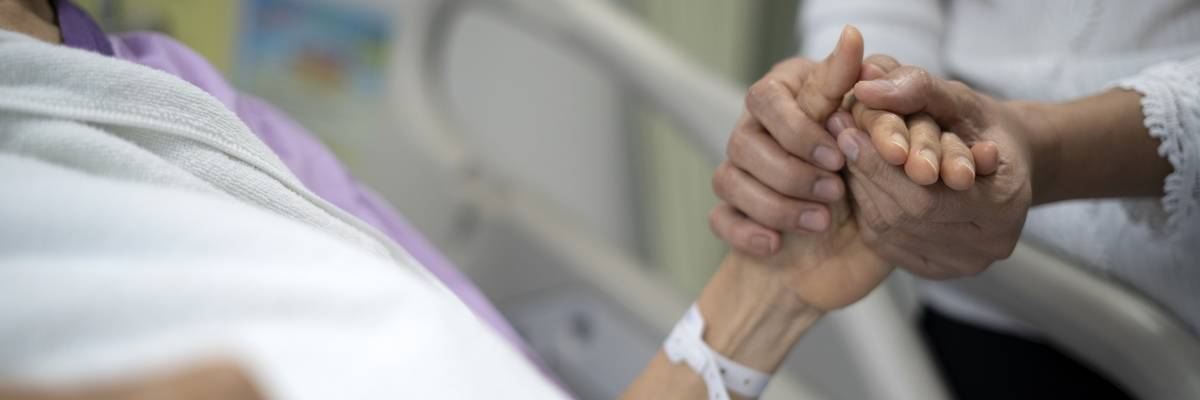
"Imagine a world where every family has the time to care for each other in moments of crisis," writes Iovieno.
Why Every American Worker Deserves Paid Family Leave
I’m sad that we lost my brother Dave, but I’m also angry that when tragedy hits, our policies make life harder for families. I’m angry that for most of us, going back to work is a necessity, not a choice.
Millions of working American families are facing a crisis: how to care for loved ones.
We all need to give or get care at some point in our lives, but all too often this can be incredibly burdensome or even impossible. Too many Americans simply cannot afford their own care or are unable to take time off work for the birth of a child, a loved one falling ill, or an aging parent.
Most of us have no access to any sort of paid leave, and few employers provide leave to employees. This leaves more than 1 in 5 Americans, or 53 million people, working as unpaid family caregivers and providing more than $600 billion in unpaid care annually.
My family is among the millions who struggle with this every day.
A few months ago, my life changed in an instant. My brother Dave, his wife Katie, and their child Mikey were involved in a terrible car accident. We lost my brother that night, and Katie was severely injured, but thankfully Mikey survived unscathed.
This isn’t just about my family. This is about all of our families. It’s about the kind of country we want to live in. A country where reality is acknowledged, care is valued, families are supported, and where no one faces tragedy alone.
And as if that weren’t enough, we discovered that Katie was pregnant. She’d planned to surprise our family with the news the next week. Instead, we were left grieving the loss of a husband, a father, and a brother, while trying to support a family that was suddenly in crisis.
Our family came together as best we could. Katie and Mikey needed care, and we all needed time to process our grief. But time wasn’t something we had the luxury of affording.
Why? Because work beckoned.
Like many Americans, most of my family doesn’t have paid leave in the event of an emergency. In fact, I’m the only one in my family with access to a paid leave program. My mother-in-law had to take unpaid leave under the federal Family and Medical Leave Act to care for Katie.
Imagine going weeks, even months, without a paycheck while trying to care for your family. Most people can’t afford that.
The rest of my family — farmers, preschool teachers, nursing assistants, small business owners — also don’t have paid leave. These are the same people we applauded and called “essential” during the pandemic. But we don’t treat them as essential when it comes to supporting them through life’s hardest moments. Where is their paid leave?
I’m sad that we lost Dave, but I’m also angry that when tragedy hits, our policies make life harder for families. I’m angry that for most of us, going back to work is a necessity, not a choice.
This is a policy failure. There is no federal rule that provides paid family leave or sick days for all workers. Only a small minority of workers receive dedicated paid family leave through their jobs. Most aren’t so fortunate. Millions of workers don’t even have a single paid sick day.
That’s why we need paid family leave for all.
Imagine a world where every family has the time to care for each other in moments of crisis. Where a parent doesn’t have to choose between being there for their child and keeping a roof over their head. Where we treat each other with the dignity and respect we all deserve.
This isn’t just about my family. This is about all of our families. It’s about the kind of country we want to live in. A country where reality is acknowledged, care is valued, families are supported, and where no one faces tragedy alone. No wonder paid leave has massive support from voters across party lines.
It’s time we ask every politician running for office if they support paid family leave. And if they don’t, we need to hold them accountable.
And then in 2025, let’s pass paid leave for all. For Dave. For Katie. For Mikey. And for every family like mine that’s faced a moment of crisis.
We are at a crossroads
This country and this world are at a monumental crossroads. In a few short weeks, US voters will have an opportunity to beat back the forces of fascism and confront the billionaires who are rigging the economy, our media system, and our democracy, making it increasingly impossible for ordinary people to get by. We’re not just talking about the election. We’re talking about what must be done once these fascist elements are vanquished from power. We need a bolder set of solutions than what either major party has so far been willing to offer and a working-class movement ready to fight like hell for it. Trump didn't emerge from nowhere. The conditions that fueled MAGA authoritarianism were created by decades of radical neoliberal economic policies and a corrupt political system dominated by corporate interests. They slashed taxes on the super-rich, promising that the benefits would trickle down. They said giveaways to the corporate titans would make life more affordable for the rest of us. It was all bullshit. And when a bitter, betrayed populace searches for someone to blame, right-wing demagogues have little trouble finding scapegoats. People know when they're being lied to, but you won't hear any of this from the corporate media. Only independent journalism—powered and funded by people who believe in building a better world—can deliver truly trustworthy daily news. Our Fall Campaign is underway, and we need your help. To power our newsroom through the rest of the year, we need to raise $125,000 by midnight on October 31. So if you share our vision, please contribute whatever you can to sustain our work. |
Millions of working American families are facing a crisis: how to care for loved ones.
We all need to give or get care at some point in our lives, but all too often this can be incredibly burdensome or even impossible. Too many Americans simply cannot afford their own care or are unable to take time off work for the birth of a child, a loved one falling ill, or an aging parent.
Most of us have no access to any sort of paid leave, and few employers provide leave to employees. This leaves more than 1 in 5 Americans, or 53 million people, working as unpaid family caregivers and providing more than $600 billion in unpaid care annually.
My family is among the millions who struggle with this every day.
A few months ago, my life changed in an instant. My brother Dave, his wife Katie, and their child Mikey were involved in a terrible car accident. We lost my brother that night, and Katie was severely injured, but thankfully Mikey survived unscathed.
This isn’t just about my family. This is about all of our families. It’s about the kind of country we want to live in. A country where reality is acknowledged, care is valued, families are supported, and where no one faces tragedy alone.
And as if that weren’t enough, we discovered that Katie was pregnant. She’d planned to surprise our family with the news the next week. Instead, we were left grieving the loss of a husband, a father, and a brother, while trying to support a family that was suddenly in crisis.
Our family came together as best we could. Katie and Mikey needed care, and we all needed time to process our grief. But time wasn’t something we had the luxury of affording.
Why? Because work beckoned.
Like many Americans, most of my family doesn’t have paid leave in the event of an emergency. In fact, I’m the only one in my family with access to a paid leave program. My mother-in-law had to take unpaid leave under the federal Family and Medical Leave Act to care for Katie.
Imagine going weeks, even months, without a paycheck while trying to care for your family. Most people can’t afford that.
The rest of my family — farmers, preschool teachers, nursing assistants, small business owners — also don’t have paid leave. These are the same people we applauded and called “essential” during the pandemic. But we don’t treat them as essential when it comes to supporting them through life’s hardest moments. Where is their paid leave?
I’m sad that we lost Dave, but I’m also angry that when tragedy hits, our policies make life harder for families. I’m angry that for most of us, going back to work is a necessity, not a choice.
This is a policy failure. There is no federal rule that provides paid family leave or sick days for all workers. Only a small minority of workers receive dedicated paid family leave through their jobs. Most aren’t so fortunate. Millions of workers don’t even have a single paid sick day.
That’s why we need paid family leave for all.
Imagine a world where every family has the time to care for each other in moments of crisis. Where a parent doesn’t have to choose between being there for their child and keeping a roof over their head. Where we treat each other with the dignity and respect we all deserve.
This isn’t just about my family. This is about all of our families. It’s about the kind of country we want to live in. A country where reality is acknowledged, care is valued, families are supported, and where no one faces tragedy alone. No wonder paid leave has massive support from voters across party lines.
It’s time we ask every politician running for office if they support paid family leave. And if they don’t, we need to hold them accountable.
And then in 2025, let’s pass paid leave for all. For Dave. For Katie. For Mikey. And for every family like mine that’s faced a moment of crisis.
Millions of working American families are facing a crisis: how to care for loved ones.
We all need to give or get care at some point in our lives, but all too often this can be incredibly burdensome or even impossible. Too many Americans simply cannot afford their own care or are unable to take time off work for the birth of a child, a loved one falling ill, or an aging parent.
Most of us have no access to any sort of paid leave, and few employers provide leave to employees. This leaves more than 1 in 5 Americans, or 53 million people, working as unpaid family caregivers and providing more than $600 billion in unpaid care annually.
My family is among the millions who struggle with this every day.
A few months ago, my life changed in an instant. My brother Dave, his wife Katie, and their child Mikey were involved in a terrible car accident. We lost my brother that night, and Katie was severely injured, but thankfully Mikey survived unscathed.
This isn’t just about my family. This is about all of our families. It’s about the kind of country we want to live in. A country where reality is acknowledged, care is valued, families are supported, and where no one faces tragedy alone.
And as if that weren’t enough, we discovered that Katie was pregnant. She’d planned to surprise our family with the news the next week. Instead, we were left grieving the loss of a husband, a father, and a brother, while trying to support a family that was suddenly in crisis.
Our family came together as best we could. Katie and Mikey needed care, and we all needed time to process our grief. But time wasn’t something we had the luxury of affording.
Why? Because work beckoned.
Like many Americans, most of my family doesn’t have paid leave in the event of an emergency. In fact, I’m the only one in my family with access to a paid leave program. My mother-in-law had to take unpaid leave under the federal Family and Medical Leave Act to care for Katie.
Imagine going weeks, even months, without a paycheck while trying to care for your family. Most people can’t afford that.
The rest of my family — farmers, preschool teachers, nursing assistants, small business owners — also don’t have paid leave. These are the same people we applauded and called “essential” during the pandemic. But we don’t treat them as essential when it comes to supporting them through life’s hardest moments. Where is their paid leave?
I’m sad that we lost Dave, but I’m also angry that when tragedy hits, our policies make life harder for families. I’m angry that for most of us, going back to work is a necessity, not a choice.
This is a policy failure. There is no federal rule that provides paid family leave or sick days for all workers. Only a small minority of workers receive dedicated paid family leave through their jobs. Most aren’t so fortunate. Millions of workers don’t even have a single paid sick day.
That’s why we need paid family leave for all.
Imagine a world where every family has the time to care for each other in moments of crisis. Where a parent doesn’t have to choose between being there for their child and keeping a roof over their head. Where we treat each other with the dignity and respect we all deserve.
This isn’t just about my family. This is about all of our families. It’s about the kind of country we want to live in. A country where reality is acknowledged, care is valued, families are supported, and where no one faces tragedy alone. No wonder paid leave has massive support from voters across party lines.
It’s time we ask every politician running for office if they support paid family leave. And if they don’t, we need to hold them accountable.
And then in 2025, let’s pass paid leave for all. For Dave. For Katie. For Mikey. And for every family like mine that’s faced a moment of crisis.