SUBSCRIBE TO OUR FREE NEWSLETTER
Daily news & progressive opinion—funded by the people, not the corporations—delivered straight to your inbox.
5
#000000
#FFFFFF
To donate by check, phone, or other method, see our More Ways to Give page.
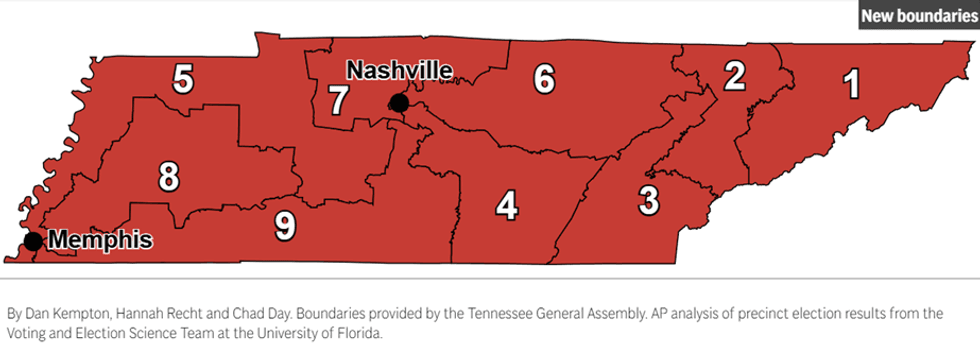
On May 7, the Republican-controlled Tennessee legislature passed new redistricting maps that dismantled the Memphis-based 9th District and split the city’s 63% Black population across three conservative, white-majority districts:
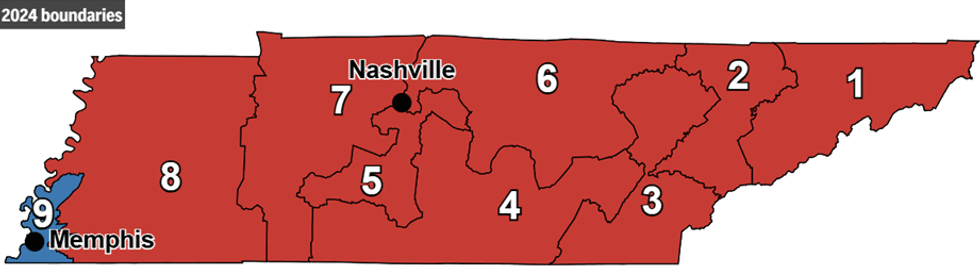
This hyper-partisan and blatantly racist gerrymander will have devastating effects for Memphians. Here, I’ll focus on one: the city’s struggles against AI data centers.
Memphis serves as the headquarters of xAI’s “Colossus” facilities. The Elon Musk-owned company brags that Colossus 1 is “the world’s biggest AI supercomputer.” It is the power source behind X-Twitter’s Grok, the deep-fake generating, misinformation superspreading chatbot.
The massive data center lies one mile away from Boxtown—a neighborhood in South Memphis founded by formerly enslaved Black people in the aftermath of the Civil War. Today, 95% of its residents are Black, the median income is less than $37,000, and the poverty rate is more than 31%. Like many Black communities in the South, Boxtown has been subject to decades of environmental racism. This refers to the disproportionate exposure of communities of colors to toxic waste, pollution, and other environmental hazards.
That is, of course, the entire point of this gerrymander: to render Memphis’ Black vote politically irrelevant; to undermine the power of Black communities to band together to fight against a common struggle.
Including Colossus 1, more than 17 polluting facilities are in or near Boxtown. This includes: an oil refinery, a steel mill, a wastewater treatment center, a gas-burning power plant (which burned coal from 1959 to 2018), and an abandoned military base designated by the Environmental Protection Agency (EPA) as a contaminated site.
This has had devastating effects on the health and well-being of Boxtown’s residents. Cancer rates are four times higher than the national advantage. Shelby county, which includes Boxtown, has an “F” rating in air quality for ground-level ozone (smog) from the American Lung Association. It also has the highest rate of children hospitalized for asthma across the entire state.
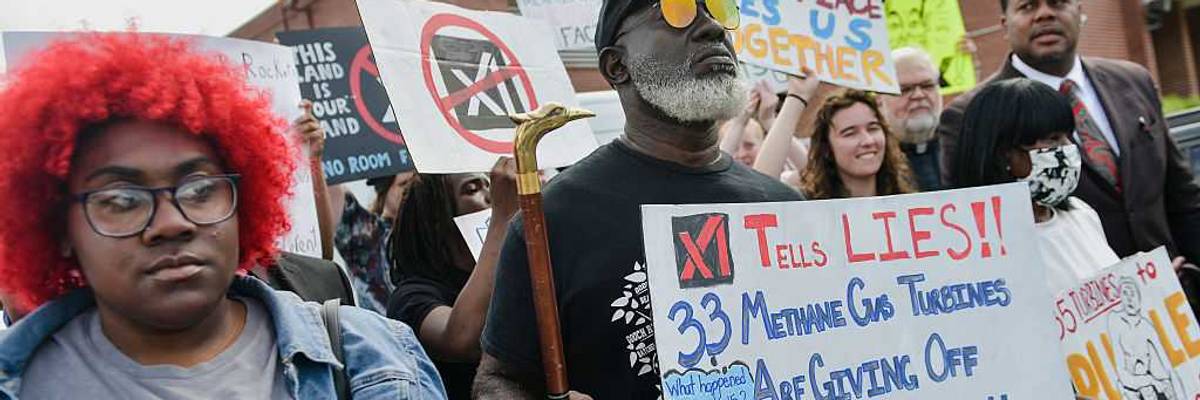
Colossus 1 worsens these problems. The Southern Environmental Law Center reports that xAI is deploying at least 35 methane gas turbines to power the data center. This is “far more than previously known and more than the company has submitted permit applications for.” These turbines emit enormous quantities of smog-forming pollutants, soot, nitrogen oxides (NOx), and formaldehyde, which are tied to increases in asthma, respiratory diseases, health problems, and various kinds of cancer.
Under Tennessee’s new congressional map, Boxtown is shoved into the state’s 5th Congressional District. This is Rep. Andrew Ogles’ (R-Tenn.) district. Ogles decries “climate tyranny” and the “woke energy elitists.” He advocates for returning “to producing and exporting American oil and natural gas, restoring the drilling and pipeline developments that [President] Biden blocked, and pursuing rational, common sense energy policies.”
Such policies include repealing the Inflation Reduction Act, the largest federal investment in clean energy and climate action, as well as dismantling the Electric Vehicle Working Group, which offers recommendations regarding the development, adoption, and integration of electric vehicles (EVs) into the country’s transportation and energy systems. He also co-sponsored a joint resolution challenging the Biden administration’s “Clean Power Plan 2.0,” which sought to significantly cut emissions from coal and gas-burning power plants.
With regards to AI and data centers, his concerns are solely about national security. Ogles remarks, “If a major data center is attacked, disrupted, or taken offline, the consequences can reach far beyond one company or one sector.” In a hearing on advanced technologies and cybersecurity, he notes that AI is “now woven into how Federal, State, and local governments operate, how intelligence is collected and analyzed, how critical infrastructure functions, and how American companies compete in a global economy.” He continues, protecting these technologies and crucial infrastructure is vital for ensuring America’s “prosperity for years to come” and “our role as the, quite frankly, sole superpower.”
Ogles’s anti-environmentalist, pro-AI politics does not represent the interests and desires of the people of Boxtown. Yet, unfortunately, he is the representative that Tennessee state legislators elected for them. To make matters worse, because of the Supreme Court, Boxtown’s situation will be far from unique.
xAI’s Colossus 2 became fully operational in 2026. This data center, which is larger than Colossus 1, is located in Whitehaven—another predominately Black and poor South Memphis neighborhood.
Like Boxtown, Whitehaven is in Shelby County. However, under the new gerrymandered map, it is part of the state’s newly reconfigured 9th District. Its current representative, Steven Cohen (D-Tenn.), is among the most consistent advocates for protecting the environment and public health. However, in light of the state’s efforts to disenfranchise Memphians, Cohen has decided not to run for reelection.
Whitehaven’s future is in serious jeopardy. Minutes after the Tennessee General Assembly approved the state’s gerrymander, Tennessee state Sen. Brent Taylor (R-31) announced his candidacy for the representative seat.
Taylor praises xAI as “a great asset for Memphis.” When asked about the environmental concerns raised by residents, he responded: Tthose “environmental concerns predate xAI’s arrival in Memphis and the efforts to address them thus far seem to be misguided.” He explains: “The way I would address the concerns is not to attempt to close xAI or browbeat them to leave Memphis, but I would engage with them and local government to enter into conversations about potential buyout of nearby homes… This would seem to be a much more constructive way to address the environmental concerns of the neighbors.”
He praises how “xAI has worked to overcome every environmental concern raised.” This includes using “water that has been trucked in” to cool its systems (which is contributing to more pollution), and “purchasing a decommissioned energy plant in nearby Mississippi to generate a portion of their own energy.”
That Mississippi site is in Southaven, 5 miles away from Whitehaven. It is currently the subject of a National Association for the Advancement of Colored People (NAACP) lawsuit alleging that xAI is violating the Clean Air Act by operating 27 gas turbines without any permits.
If Taylor replaces Cohen, it is clear he would put xAI over Memphians. Given that the new 9th District spans nearly 300 miles from southern Memphis to the suburbs of Nashville, their diluted votes would be easy to ignore. That is, of course, the entire point of this gerrymander: to render Memphis’ Black vote politically irrelevant; to undermine the power of Black communities to band together to fight against a common struggle. Importantly, Boxtown and Whitehaven—communities that are less than six miles apart—are now burdened with having to secure two congressional seats to have their voices and interests represented.
Similar redistricting efforts are being pushed by Republicans in Alabama, Louisiana, Mississippi, Georgia, and South Carolina. Like Memphis, Black and poor communities in those states are also under threat by AI data centers. This includes: the recently green-lit Project Marvel in Bessemer, Alabama; the 20 data centers being planned across southern Fulton County in Georgia; a $27 billion data center being built by Meta in Richland Parish in Louisiana; and a proposed data center complex the size of 1,200 football fields being planned for the Walterboro area in South Carolina. These are just a few of the more than 3,000 operational data centers across the US.
The South’s Black communities are being disenfranchised by their state legislators and poisoned by AI data centers—a lethal combination that strips them of their political voice, while subjecting them to a slow death.
In both instances, their rights, health, and livelihoods are jeopardized by bad faith appeals to “progress.” On the one hand, the Supreme Court justifies dismantling the Voting Right Act because of the “great strides [made] in ending entrenched racial discrimination” across the US and “particularly in the South.” Here, decades of hard-won social progress become the pretext for erasing the Black vote.
On the other hand, Elon Musk touts that, as AI and robotics develop, “Everyone will have access to medical care that is better than what the president receives right now.” Here, the promise of progress and a richer, healthier future becomes the pretext for callously exposing the most vulnerable communities to the most harmful toxins.
The path forward will be difficult, but two things are clear: We must put an end to these partisan and racist gerrymanderings. We must put a moratorium on AI data centers. Just as we cannot allow elected officials to steal our votes, we cannot permit a handful of tech companies to sacrifice our bodies for their profits. Now is the time to fight back—to defend the progress that we have made as a nation; to defend the vulnerable and give voice to those who are being silenced; and to bring about the future that we desire for ourselves.
As the Memphis-born civil rights leader Dr. Benjamin Hooks put it: “If anyone thinks that we are going to stop agitating, they had better think again. If anyone thinks that we are going to stop litigating, they had better close the courts. If anyone thinks that we are not going to demonstrate and protest, they had better roll up the sidewalks.”
On May 7, the Republican-controlled Tennessee legislature passed new redistricting maps that dismantled the Memphis-based 9th District and split the city’s 63% Black population across three conservative, white-majority districts:
This hyper-partisan and blatantly racist gerrymander will have devastating effects for Memphians. Here, I’ll focus on one: the city’s struggles against AI data centers.
Memphis serves as the headquarters of xAI’s “Colossus” facilities. The Elon Musk-owned company brags that Colossus 1 is “the world’s biggest AI supercomputer.” It is the power source behind X-Twitter’s Grok, the deep-fake generating, misinformation superspreading chatbot.
The massive data center lies one mile away from Boxtown—a neighborhood in South Memphis founded by formerly enslaved Black people in the aftermath of the Civil War. Today, 95% of its residents are Black, the median income is less than $37,000, and the poverty rate is more than 31%. Like many Black communities in the South, Boxtown has been subject to decades of environmental racism. This refers to the disproportionate exposure of communities of colors to toxic waste, pollution, and other environmental hazards.
That is, of course, the entire point of this gerrymander: to render Memphis’ Black vote politically irrelevant; to undermine the power of Black communities to band together to fight against a common struggle.
Including Colossus 1, more than 17 polluting facilities are in or near Boxtown. This includes: an oil refinery, a steel mill, a wastewater treatment center, a gas-burning power plant (which burned coal from 1959 to 2018), and an abandoned military base designated by the Environmental Protection Agency (EPA) as a contaminated site.
This has had devastating effects on the health and well-being of Boxtown’s residents. Cancer rates are four times higher than the national advantage. Shelby county, which includes Boxtown, has an “F” rating in air quality for ground-level ozone (smog) from the American Lung Association. It also has the highest rate of children hospitalized for asthma across the entire state.
Colossus 1 worsens these problems. The Southern Environmental Law Center reports that xAI is deploying at least 35 methane gas turbines to power the data center. This is “far more than previously known and more than the company has submitted permit applications for.” These turbines emit enormous quantities of smog-forming pollutants, soot, nitrogen oxides (NOx), and formaldehyde, which are tied to increases in asthma, respiratory diseases, health problems, and various kinds of cancer.
Under Tennessee’s new congressional map, Boxtown is shoved into the state’s 5th Congressional District. This is Rep. Andrew Ogles’ (R-Tenn.) district. Ogles decries “climate tyranny” and the “woke energy elitists.” He advocates for returning “to producing and exporting American oil and natural gas, restoring the drilling and pipeline developments that [President] Biden blocked, and pursuing rational, common sense energy policies.”
Such policies include repealing the Inflation Reduction Act, the largest federal investment in clean energy and climate action, as well as dismantling the Electric Vehicle Working Group, which offers recommendations regarding the development, adoption, and integration of electric vehicles (EVs) into the country’s transportation and energy systems. He also co-sponsored a joint resolution challenging the Biden administration’s “Clean Power Plan 2.0,” which sought to significantly cut emissions from coal and gas-burning power plants.
With regards to AI and data centers, his concerns are solely about national security. Ogles remarks, “If a major data center is attacked, disrupted, or taken offline, the consequences can reach far beyond one company or one sector.” In a hearing on advanced technologies and cybersecurity, he notes that AI is “now woven into how Federal, State, and local governments operate, how intelligence is collected and analyzed, how critical infrastructure functions, and how American companies compete in a global economy.” He continues, protecting these technologies and crucial infrastructure is vital for ensuring America’s “prosperity for years to come” and “our role as the, quite frankly, sole superpower.”
Ogles’s anti-environmentalist, pro-AI politics does not represent the interests and desires of the people of Boxtown. Yet, unfortunately, he is the representative that Tennessee state legislators elected for them. To make matters worse, because of the Supreme Court, Boxtown’s situation will be far from unique.
xAI’s Colossus 2 became fully operational in 2026. This data center, which is larger than Colossus 1, is located in Whitehaven—another predominately Black and poor South Memphis neighborhood.
Like Boxtown, Whitehaven is in Shelby County. However, under the new gerrymandered map, it is part of the state’s newly reconfigured 9th District. Its current representative, Steven Cohen (D-Tenn.), is among the most consistent advocates for protecting the environment and public health. However, in light of the state’s efforts to disenfranchise Memphians, Cohen has decided not to run for reelection.
Whitehaven’s future is in serious jeopardy. Minutes after the Tennessee General Assembly approved the state’s gerrymander, Tennessee state Sen. Brent Taylor (R-31) announced his candidacy for the representative seat.
Taylor praises xAI as “a great asset for Memphis.” When asked about the environmental concerns raised by residents, he responded: Tthose “environmental concerns predate xAI’s arrival in Memphis and the efforts to address them thus far seem to be misguided.” He explains: “The way I would address the concerns is not to attempt to close xAI or browbeat them to leave Memphis, but I would engage with them and local government to enter into conversations about potential buyout of nearby homes… This would seem to be a much more constructive way to address the environmental concerns of the neighbors.”
He praises how “xAI has worked to overcome every environmental concern raised.” This includes using “water that has been trucked in” to cool its systems (which is contributing to more pollution), and “purchasing a decommissioned energy plant in nearby Mississippi to generate a portion of their own energy.”
That Mississippi site is in Southaven, 5 miles away from Whitehaven. It is currently the subject of a National Association for the Advancement of Colored People (NAACP) lawsuit alleging that xAI is violating the Clean Air Act by operating 27 gas turbines without any permits.
If Taylor replaces Cohen, it is clear he would put xAI over Memphians. Given that the new 9th District spans nearly 300 miles from southern Memphis to the suburbs of Nashville, their diluted votes would be easy to ignore. That is, of course, the entire point of this gerrymander: to render Memphis’ Black vote politically irrelevant; to undermine the power of Black communities to band together to fight against a common struggle. Importantly, Boxtown and Whitehaven—communities that are less than six miles apart—are now burdened with having to secure two congressional seats to have their voices and interests represented.
Similar redistricting efforts are being pushed by Republicans in Alabama, Louisiana, Mississippi, Georgia, and South Carolina. Like Memphis, Black and poor communities in those states are also under threat by AI data centers. This includes: the recently green-lit Project Marvel in Bessemer, Alabama; the 20 data centers being planned across southern Fulton County in Georgia; a $27 billion data center being built by Meta in Richland Parish in Louisiana; and a proposed data center complex the size of 1,200 football fields being planned for the Walterboro area in South Carolina. These are just a few of the more than 3,000 operational data centers across the US.
The South’s Black communities are being disenfranchised by their state legislators and poisoned by AI data centers—a lethal combination that strips them of their political voice, while subjecting them to a slow death.
In both instances, their rights, health, and livelihoods are jeopardized by bad faith appeals to “progress.” On the one hand, the Supreme Court justifies dismantling the Voting Right Act because of the “great strides [made] in ending entrenched racial discrimination” across the US and “particularly in the South.” Here, decades of hard-won social progress become the pretext for erasing the Black vote.
On the other hand, Elon Musk touts that, as AI and robotics develop, “Everyone will have access to medical care that is better than what the president receives right now.” Here, the promise of progress and a richer, healthier future becomes the pretext for callously exposing the most vulnerable communities to the most harmful toxins.
The path forward will be difficult, but two things are clear: We must put an end to these partisan and racist gerrymanderings. We must put a moratorium on AI data centers. Just as we cannot allow elected officials to steal our votes, we cannot permit a handful of tech companies to sacrifice our bodies for their profits. Now is the time to fight back—to defend the progress that we have made as a nation; to defend the vulnerable and give voice to those who are being silenced; and to bring about the future that we desire for ourselves.
As the Memphis-born civil rights leader Dr. Benjamin Hooks put it: “If anyone thinks that we are going to stop agitating, they had better think again. If anyone thinks that we are going to stop litigating, they had better close the courts. If anyone thinks that we are not going to demonstrate and protest, they had better roll up the sidewalks.”
On May 7, the Republican-controlled Tennessee legislature passed new redistricting maps that dismantled the Memphis-based 9th District and split the city’s 63% Black population across three conservative, white-majority districts:
This hyper-partisan and blatantly racist gerrymander will have devastating effects for Memphians. Here, I’ll focus on one: the city’s struggles against AI data centers.
Memphis serves as the headquarters of xAI’s “Colossus” facilities. The Elon Musk-owned company brags that Colossus 1 is “the world’s biggest AI supercomputer.” It is the power source behind X-Twitter’s Grok, the deep-fake generating, misinformation superspreading chatbot.
The massive data center lies one mile away from Boxtown—a neighborhood in South Memphis founded by formerly enslaved Black people in the aftermath of the Civil War. Today, 95% of its residents are Black, the median income is less than $37,000, and the poverty rate is more than 31%. Like many Black communities in the South, Boxtown has been subject to decades of environmental racism. This refers to the disproportionate exposure of communities of colors to toxic waste, pollution, and other environmental hazards.
That is, of course, the entire point of this gerrymander: to render Memphis’ Black vote politically irrelevant; to undermine the power of Black communities to band together to fight against a common struggle.
Including Colossus 1, more than 17 polluting facilities are in or near Boxtown. This includes: an oil refinery, a steel mill, a wastewater treatment center, a gas-burning power plant (which burned coal from 1959 to 2018), and an abandoned military base designated by the Environmental Protection Agency (EPA) as a contaminated site.
This has had devastating effects on the health and well-being of Boxtown’s residents. Cancer rates are four times higher than the national advantage. Shelby county, which includes Boxtown, has an “F” rating in air quality for ground-level ozone (smog) from the American Lung Association. It also has the highest rate of children hospitalized for asthma across the entire state.
Colossus 1 worsens these problems. The Southern Environmental Law Center reports that xAI is deploying at least 35 methane gas turbines to power the data center. This is “far more than previously known and more than the company has submitted permit applications for.” These turbines emit enormous quantities of smog-forming pollutants, soot, nitrogen oxides (NOx), and formaldehyde, which are tied to increases in asthma, respiratory diseases, health problems, and various kinds of cancer.
Under Tennessee’s new congressional map, Boxtown is shoved into the state’s 5th Congressional District. This is Rep. Andrew Ogles’ (R-Tenn.) district. Ogles decries “climate tyranny” and the “woke energy elitists.” He advocates for returning “to producing and exporting American oil and natural gas, restoring the drilling and pipeline developments that [President] Biden blocked, and pursuing rational, common sense energy policies.”
Such policies include repealing the Inflation Reduction Act, the largest federal investment in clean energy and climate action, as well as dismantling the Electric Vehicle Working Group, which offers recommendations regarding the development, adoption, and integration of electric vehicles (EVs) into the country’s transportation and energy systems. He also co-sponsored a joint resolution challenging the Biden administration’s “Clean Power Plan 2.0,” which sought to significantly cut emissions from coal and gas-burning power plants.
With regards to AI and data centers, his concerns are solely about national security. Ogles remarks, “If a major data center is attacked, disrupted, or taken offline, the consequences can reach far beyond one company or one sector.” In a hearing on advanced technologies and cybersecurity, he notes that AI is “now woven into how Federal, State, and local governments operate, how intelligence is collected and analyzed, how critical infrastructure functions, and how American companies compete in a global economy.” He continues, protecting these technologies and crucial infrastructure is vital for ensuring America’s “prosperity for years to come” and “our role as the, quite frankly, sole superpower.”
Ogles’s anti-environmentalist, pro-AI politics does not represent the interests and desires of the people of Boxtown. Yet, unfortunately, he is the representative that Tennessee state legislators elected for them. To make matters worse, because of the Supreme Court, Boxtown’s situation will be far from unique.
xAI’s Colossus 2 became fully operational in 2026. This data center, which is larger than Colossus 1, is located in Whitehaven—another predominately Black and poor South Memphis neighborhood.
Like Boxtown, Whitehaven is in Shelby County. However, under the new gerrymandered map, it is part of the state’s newly reconfigured 9th District. Its current representative, Steven Cohen (D-Tenn.), is among the most consistent advocates for protecting the environment and public health. However, in light of the state’s efforts to disenfranchise Memphians, Cohen has decided not to run for reelection.
Whitehaven’s future is in serious jeopardy. Minutes after the Tennessee General Assembly approved the state’s gerrymander, Tennessee state Sen. Brent Taylor (R-31) announced his candidacy for the representative seat.
Taylor praises xAI as “a great asset for Memphis.” When asked about the environmental concerns raised by residents, he responded: Tthose “environmental concerns predate xAI’s arrival in Memphis and the efforts to address them thus far seem to be misguided.” He explains: “The way I would address the concerns is not to attempt to close xAI or browbeat them to leave Memphis, but I would engage with them and local government to enter into conversations about potential buyout of nearby homes… This would seem to be a much more constructive way to address the environmental concerns of the neighbors.”
He praises how “xAI has worked to overcome every environmental concern raised.” This includes using “water that has been trucked in” to cool its systems (which is contributing to more pollution), and “purchasing a decommissioned energy plant in nearby Mississippi to generate a portion of their own energy.”
That Mississippi site is in Southaven, 5 miles away from Whitehaven. It is currently the subject of a National Association for the Advancement of Colored People (NAACP) lawsuit alleging that xAI is violating the Clean Air Act by operating 27 gas turbines without any permits.
If Taylor replaces Cohen, it is clear he would put xAI over Memphians. Given that the new 9th District spans nearly 300 miles from southern Memphis to the suburbs of Nashville, their diluted votes would be easy to ignore. That is, of course, the entire point of this gerrymander: to render Memphis’ Black vote politically irrelevant; to undermine the power of Black communities to band together to fight against a common struggle. Importantly, Boxtown and Whitehaven—communities that are less than six miles apart—are now burdened with having to secure two congressional seats to have their voices and interests represented.
Similar redistricting efforts are being pushed by Republicans in Alabama, Louisiana, Mississippi, Georgia, and South Carolina. Like Memphis, Black and poor communities in those states are also under threat by AI data centers. This includes: the recently green-lit Project Marvel in Bessemer, Alabama; the 20 data centers being planned across southern Fulton County in Georgia; a $27 billion data center being built by Meta in Richland Parish in Louisiana; and a proposed data center complex the size of 1,200 football fields being planned for the Walterboro area in South Carolina. These are just a few of the more than 3,000 operational data centers across the US.
The South’s Black communities are being disenfranchised by their state legislators and poisoned by AI data centers—a lethal combination that strips them of their political voice, while subjecting them to a slow death.
In both instances, their rights, health, and livelihoods are jeopardized by bad faith appeals to “progress.” On the one hand, the Supreme Court justifies dismantling the Voting Right Act because of the “great strides [made] in ending entrenched racial discrimination” across the US and “particularly in the South.” Here, decades of hard-won social progress become the pretext for erasing the Black vote.
On the other hand, Elon Musk touts that, as AI and robotics develop, “Everyone will have access to medical care that is better than what the president receives right now.” Here, the promise of progress and a richer, healthier future becomes the pretext for callously exposing the most vulnerable communities to the most harmful toxins.
The path forward will be difficult, but two things are clear: We must put an end to these partisan and racist gerrymanderings. We must put a moratorium on AI data centers. Just as we cannot allow elected officials to steal our votes, we cannot permit a handful of tech companies to sacrifice our bodies for their profits. Now is the time to fight back—to defend the progress that we have made as a nation; to defend the vulnerable and give voice to those who are being silenced; and to bring about the future that we desire for ourselves.
As the Memphis-born civil rights leader Dr. Benjamin Hooks put it: “If anyone thinks that we are going to stop agitating, they had better think again. If anyone thinks that we are going to stop litigating, they had better close the courts. If anyone thinks that we are not going to demonstrate and protest, they had better roll up the sidewalks.”