

SUBSCRIBE TO OUR FREE NEWSLETTER
Daily news & progressive opinion—funded by the people, not the corporations—delivered straight to your inbox.
5
#000000
#FFFFFF
To donate by check, phone, or other method, see our More Ways to Give page.
Daily news & progressive opinion—funded by the people, not the corporations—delivered straight to your inbox.
Sam Husseini, (202) 347-0020; or David Zupan, (541) 484-9167
SHARON KUFELDT
Kufeldt is the vice-president of Veterans for Peace. She said today:
"More than 100,000 people reside for a month or longer at Department of
Veterans Affairs facilities nationally. Instead of working hard to
enable veterans to register to vote, the VA is obstructing nonpartisan
groups who are working to register these people. Even though the VA has
claimed to have reversed its policies blocking access, we are still
being given the runaround and not being allowed access. They keep
putting bureaucratic roadblocks in our way. There are very few weeks
left to register voters and all this obstruction is costing time."
Kufeldt added: "On September 12, me and other members of the local
Veterans for Peace chapter inquired with the VA if we could register
voters at a San Francisco VA facility. We were not allowed access and
were told we could do so only after a process that could take two
weeks. We are filing an emergency motion to enforce a court mandate
that would allow groups access to the facilities for the purpose of
registering voters."
More Information
PAUL SULLIVAN
Sullivan is the executive director of Veterans for Common Sense. He
said today: "When a veteran moves into a VA facility, the veteran's old
registration becomes invalid. The veteran must re-register before he or
she can vote again. On May 5, 2008, VA issued a ban on nonpartisan
voter registration drives at VA facilities. On September 8, VA lifted
the ban after Congress and veterans expressed their outrage at this
injustice. VA now says it will allow voting assistance for the
estimated 100,000 veterans who can no longer vote since they moved into
VA facilities. While we are pleased that VA has changed course, we are
not confident that they will follow through, because they have taken no
action to date."
Sullivan added: "The clock is running out. Veterans for Common
Sense urges all citizens to vote, and we urge VA to make a strong
effort to provide voter registration and voting assistance to as many
veterans as possible. Every VA facility should have already contacted
state and local voting officials for assistance. And if volunteers are
needed to sign up veterans in VA nursing homes, then VA should have
already contacted reputable nonpartisan charities such as the League of
Women Voters."
More Information
MARY G. WILSON
Wilson is the president of League of Women Voters. The League of Women
Voters issued the following statement: "The Department of Veterans
Affairs' latest directive, which modifies its misguided policy barring
voter registration activities in VA facilities, is not enough. ...
First, the directive imposes no affirmative obligation on VA facilities
and agencies to register veterans. ... Second, the VA's directive makes
voter registration services available only to patients residing in VA
facilities, and not to veterans availing themselves of VA services on
an out-patient basis or otherwise obtaining services from the VA. ...
Third, under the VA's directive it is unclear whether and to what
extent outside groups -- which are responsible for millions of voter
registrations every election -- will actually be permitted to conduct
voter registration activities. ... Finally, the VA's directive will not
guarantee prompt services so veterans are able to register and vote
this November."
More Information
A nationwide consortium, the Institute for Public Accuracy (IPA) represents an unprecedented effort to bring other voices to the mass-media table often dominated by a few major think tanks. IPA works to broaden public discourse in mainstream media, while building communication with alternative media outlets and grassroots activists.
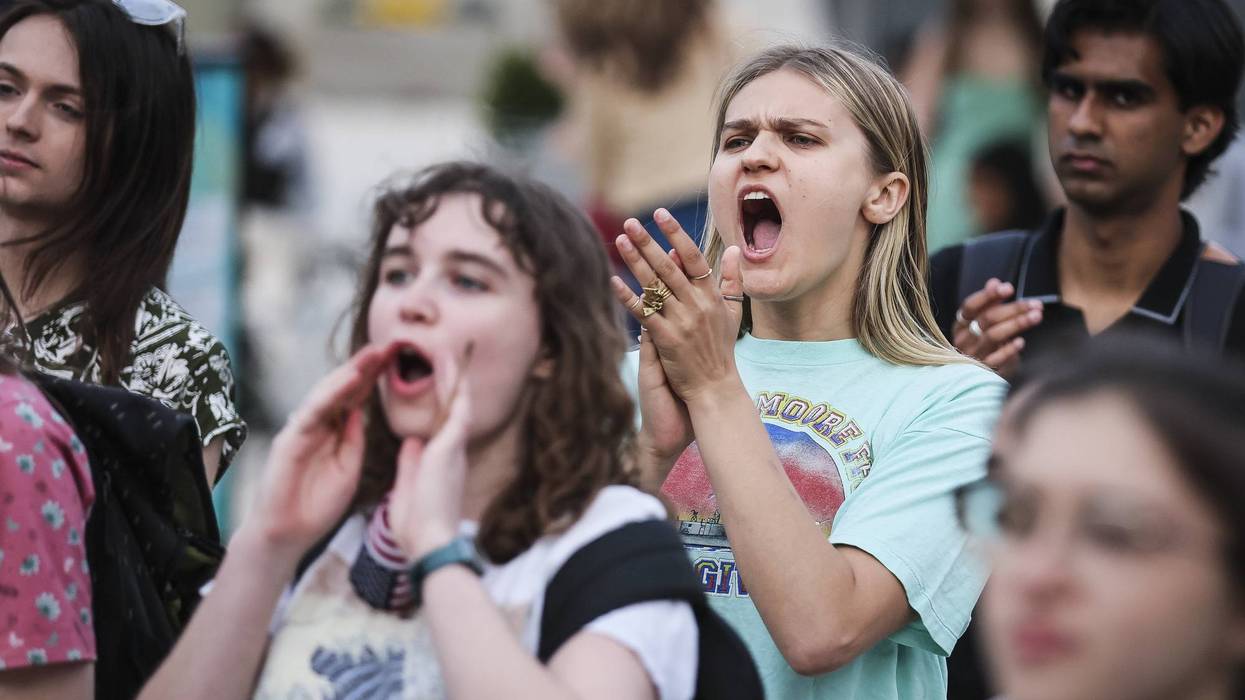
"Only by coming together and flexing our collective power as students, workers, tenants, and community members will we build a world for the 99%."
Gen Z's rightward shift in the 2024 election and the influence of Turning Point USA, the right-wing college organization co-founded by assassinated activist Charlie Kirk, have garnered considerable attention in the press—but a new project launched Wednesday by the labor-focused media group More Perfect Union makes the case that young voters across the country want an opportunity to strengthen "our collective power as the 99%."
While Turning Point USA has cast itself as an antidote to liberal viewpoints and "wokeness" on college campuses, Elise Joshi, who is leading the More Perfect University initiative, emphasized in The New York Times that Turning Point has demonstrated a steadfast “refusal to champion working-class issues.”
More Perfect University aims to mobilize young people in a movement centered on economic populism—turning their attention to the outsized power of corporations and ultrarich political donors while Turning Point USA is holding conventions where CEO Erika Kirk implores 20-something women to focus on finding a husband and condemns pro-immigration protesters as "demonic."
“The same corporations that are rigging the economy against young people are bankrolling the right’s campus operation,” Joshi told the Times.
In More Perfect University's launch video, released on Wednesday, Joshi said today's college students are "being robbed by Big... Everything."
From oil companies to private equity firms buying up housing, said Joshi, "elites have rigged the entire game. While they get billions in handouts, they squeeze us for profit, track our every move, and keep us too divided and exhausted to fight back."
NEW: More Perfect Union is opening up our newsroom, connecting with students everywhere, and equipping them with the tools needed to unrig our broken economic system. pic.twitter.com/oQT6sRqKC8
— MPUniversity (@MPUniversityUS) April 15, 2026
According to the group's website, More Perfect University will hold campus events that bring "all corners of campus life together" to build community and organize around efforts to fight for working people, offer virtual trainings where students can "connect with organizers already building power and winning," and open up More Perfect Union's newsroom to students, training them "to tell local stories that take on unchecked power."
"Mainstream media and establishment politicians are captured by corporate interests," said Joshi. "It's up to us to cover the issues our communities are facing and how everyday people are coming together to combat them.
The "student storytellers" with whom More Perfect University works, Joshi told the Times, will “understand our economy is not broken by accident.”
On April 20, US Sen. Bernie Sanders (I-Vt.) is set to co-host a virtual launch party for More Perfect University with journalist John Russell. The group is also planning an online event with former Federal Trade Commission chair Lina Khan, an outspoken critic of corporate monopolies and corruption.
The initiative comes as young voters express growing dissatisfaction with President Donald Trump's administration, less than a year and a half after voters ages 18-29 voted for former Democratic Vice President Kamala Harris by only four percentage points, signifying a major shift to the right following the 2020 election. Former President Joe Biden won the demographic by a 25-point margin in 2020.
The Yale Youth Poll, released on Wednesday, found that the views of voters ages 18-34 are heavily impacting Trump's overall sinking approval ratings. Sixty-eight percent of voters ages 18-22 disapprove of the president, according to the poll, as well as 72% of 23- to 29-year-olds.
More Perfect University is also launching as the Trump administration wages attacks on academic freedom on college campuses. Last month the US Department of Justice filed a lawsuit against Harvard University, alleging the school has "allowed antisemitism to flourish on campus."
Universities including Columbia and Northwestern have been criticized by students and faculty for capitulating to Trump, striking deals and agreeing to policy changes in order to restore federal funding that was cut.
"Mainstream media, politicians, and universities are capitulating to the 1%," reads More Perfect University's website. "The responsibility to tackle authoritarianism and corporate greed falls on us. We cannot do that scattered and isolated. Only by coming together and flexing our collective power as students, workers, tenants, and community members will we build a world for the 99%."

"The enemy does not want us to succeed or have development and progress, but all our universities are united now by these attacks," said the president of Tehran's prestigious Sharif University of Technology.
At least 60 students and 10 professors have been killed in US-Israeli attacks on universities, according to an Iranian government official, while other university officials report even higher death tolls.
Standing outside the bombed-out ruins of Iran's Aerospace Research Institute, which was targeted twice earlier this month, Minister of Science, Research, and Technology, Hossein Simaei, said on Wednesday that attacks on the facility and other universities were “scientific crimes."
“This was a center where researchers worked on civilian sectors, including biology, agriculture, and surveying,” Simaei said. “Unfortunately, it has fallen victim to the enemy’s brutal attacks.”
The institute was one of at least 32 universities and 857 schools that have been attacked by US and Israeli forces since the US and Israel launched the war at the end of February, according to a report by the Iranian Red Crescent on April 10.
Bijan Ranjbar, the president of the Islamic Azad University system—one of the largest in the world—has confirmed that at least 110 students at his institution have been killed and 21 university branches have been damaged.
On April 6, the Sharif University of Technology in Tehran, which has been described as the "MIT of Iran," was also bombed, severely damaging its High-Performance Computing Center, which serves more than 3,000 artificial intelligence and computer science researchers.
The Pasteur Institute, one of the oldest research and health institutes in Iran, was also hit earlier this month, rendering it "unable to continue delivering health services," according to the World Health Organization.
"The enemy does not want us to succeed or have development and progress, but all our universities are united now by these attacks," said Sharif University president Masoud Tajrishi.
Israel has justified attacking these institutions on the grounds that they are closely linked to the Iranian military, similar to its claim that universities in Gaza are used by Hamas.
But following promises by US President Donald Trump and Defense Secretary Pete Hegseth to bomb Iran "back to the Stone Ages," attacks on civilian infrastructure have gone far beyond those with any discernible military purpose.
The WHO reported on April 8 that since the beginning of the war, at least 23 healthcare institutions were attacked by US and Israeli forces. Attacks have also been reported on several oil and energy facilities.
Though the US and Israel often frame these attacks as inseparable from their objective of weakening Iran militarily, Eskandar Sadeghi-Boroujerdi, an assistant professor of the international relations of the Middle East at the University of St. Andrews, argues that they function as attacks on the whole of Iranian society.
"Whatever role the state played in constructing refineries, pharmaceutical plants, and research institutions, it is Iranian workers, engineers, scientists, and patients who depend on them, who built their careers inside them, and who will suffer most from their destruction," he wrote in Jacobin earlier this week. "Bombing a country’s industrial and scientific base is an act of violence against its people, regardless of what one thinks of its government."
He said: “The systematic killing of scientists and engineers, the destruction of centrifuges and computer networks, the bombing of research universities and pharmaceutical facilities: All of it reflects a coherent strategic objective, which is to erase the embodied knowledge, the accumulated expertise, and the institutional memory that make Iranian technological development possible.”
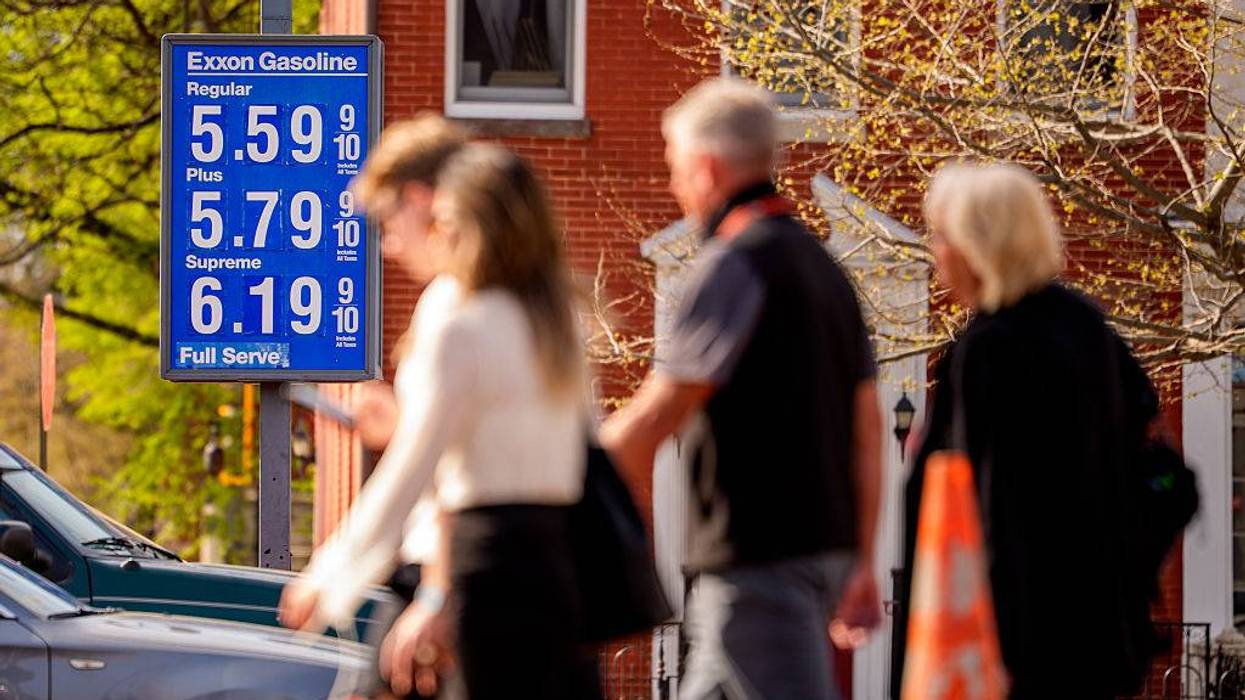
“Moments of global crisis continue to translate into bumper profits for oil majors while ordinary people pay the price."
US President Donald Trump's unprovoked war of choice in Iran has been a goldmine for the fossil fuels industry, which is earning massive windfall profits thanks to the rise in the price of petroleum.
An analysis published by The Guardian on Wednesday estimated that the 100 biggest oil and gas companies have collectively raked in an extra $30 million per hour since Trump launched his war with Iran without any congressional authorization in late February.
In just the first month of the conflict, The Guardian reported, Big Oil made $23 billion in windfall profits, and the industry is projected to haul in an additional $234 billion in windfall profits by the end of the year if the price of oil stays in the $100 range.
The top beneficiaries of the Iran conflict are Saudi Aramco, which is projected to earn $25.5 billion in windfall profits by the end of the year; Kuwait Petroleum Corp., which is projected to earn $12.1 billion; and ExxonMobil, which is projected to earn $11 billion.
"The excess profits come from the pockets of ordinary people as they pay high prices to fill up their vehicles and power their homes, as well as from businesses incurring higher energy bills," The Guardian noted. "Dozens of countries have cut fuel taxes to help struggling consumers, meaning those nations, including Australia, South Africa, Italy, Brazil and Zambia, are raising less money for public services."
The Guardian's analysis was conducted by climate watchdog Global Witness, using data from intelligence provider Rystad Energy.
Patrick Galey, head of news investigations at Global Witness, told The Guardian that Big Oil's windfall profits should be a wakeup call to the world about the dangers of relying on fossil fuels.
"Moments of global crisis continue to translate into bumper profits for oil majors while ordinary people pay the price," Galey said. "Until governments kick their fossil fuel addiction, all of our spending power will be held hostage to the whims of strongmen."
Climate advocates have for months been calling for a windfall profits tax on Big Oil during the Iran War as a way to retrieve some of the money consumers have lost during the conflict.
Earlier this month, the climate advocacy organization 350.org renewed its previous call to slap fossil fuel companies with a windfall profits tax, and then invest the revenue into renewable energy sources to provide real long-term relief to global consumers.
Beth Walker, an energy policy expert at climate change think tank E3G, also recommended a windfall profits tax with the aim of ending reliance on dirty energy sources.
"Governments should use taxes on windfall profits to accelerate the transition to green energy," said Walker, "rather than deepen dependence on fossil fuels.”