

SUBSCRIBE TO OUR FREE NEWSLETTER
Daily news & progressive opinion—funded by the people, not the corporations—delivered straight to your inbox.
5
#000000
#FFFFFF
To donate by check, phone, or other method, see our More Ways to Give page.
Daily news & progressive opinion—funded by the people, not the corporations—delivered straight to your inbox.
"This is chaos by design, and voters are the ones who will pay for it," warned the ACLU's Voting Rights Project director.
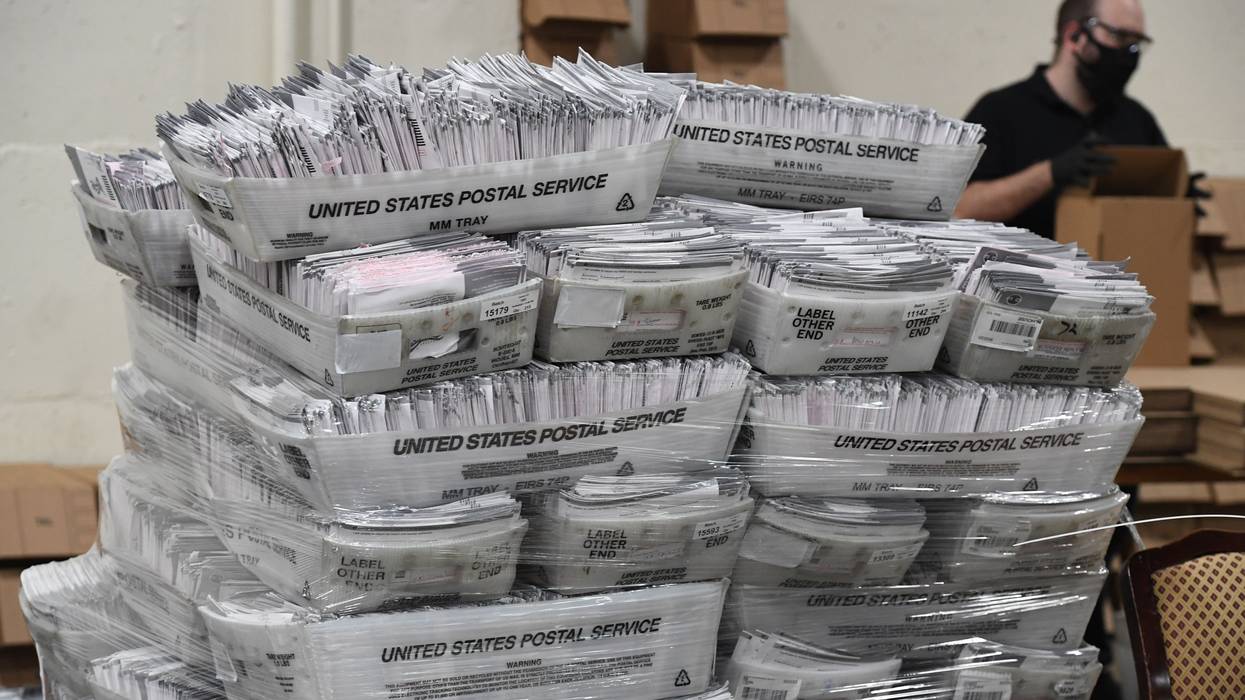
The battle over President Donald Trump's attack on voting by mail continued on Wednesday, as a federal judge in Massachusetts lifted her injunction on the Republican's March executive order and the coalition behind that case took action against a related US Postal Service rule.
Despite repeatedly voting by mail himself, Trump ordered various federal actions to restrict participation in elections, including the creation of the rule that the USPS finalized last week amid various ongoing legal fights. Among them is the case in Boston, under US District Judge Indira Talwani, an appointee of former Democratic President Barack Obama.
Talwani on Tuesday found that the Trump administration violated her injunction by finalizing the Postal Service rule, but she declined to take any action. Then, on Wednesday, she lifted her injunction—which, as MS NOW noted, "was the only remaining roadblock to implementing the executive order."
The judge cited the US Supreme Court's Monday ruling in a separate case brought by Democratic state attorneys general. Rather than weighing the constitutionality of Trump's order, the six right-wing justices ruled that AGs had filed their lawsuit prematurely and lifted another lower court's injunction.
Refusing to back down, the Democratic AGs on Wednesday filed a lawsuit against the newly finalized USPS rule—following in the footsteps of other Democratic Party leaders and a "pro-voter" coalition that filed separate challenges to the policy on Tuesday.
The coalition that had compelled Talwani to issue her injunction also took aim at the USPS rule on Wednesday, submitting to her court a supplemental complaint as well as a request for a new injunction blocking the policy for the November midterms.
Voting rights organizations today supplemented the complaint in their lawsuit challenging President Trump’s executive order restricting mail voting to add claims against the US Postal Service’s (USPS) newly-finalized mail ballot rule Full statement: https://bit.ly/4cd8nDq
[image or embed]
— League of Women Voters of the US (@lwv.org) August 26, 2026 at 4:50 PM
"The court has already found that the executive order unconstitutionally usurps the authority of the states and Congress to regulate elections, and the newly finalized rule eliminates any doubt about the harms stemming from these unlawful acts," the groups and their attorneys said in a joint statement.
"Implementing the newly finalized rule less than 70 days before the general election would dramatically impair plaintiffs' core voter engagement work and pose a grave risk of disenfranchisement," they added. "We are asking the court for emergency relief to prevent this harm and to affirm the public’s confidence in the systems voters rely on to conduct our elections."
The plaintiffs are the Association of Americans Resident Overseas, Delta Sigma Theta Sorority, League of Women Voters, LWV of Massachusetts, OCA - Asian Pacific American Advocates, and US Vote Foundation. They are represented by the state and national ACLU, Asian Americans Advancing Justice, Brennan Center for Justice, LatinoJustice PRLDEF, and Legal Defense Fund.
"USPS's decision to rush this blatantly unconstitutional rule into effect just weeks before an election is the latest step in a rollout that has sown confusion at every turn and now threatens to disenfranchise voters who did everything right. This is chaos by design, and voters are the ones who will pay for it," declared Sophia Lin Lakin, director of the ACLU's Voting Rights Project.
"No administration should be able to manufacture confusion around how we vote and undermine confidence in our elections in the process," she added. "Rather than serving voters, this rule threatens access to the ballot and treats voters as collateral damage. We will continue to use every legal tool available to block this illegal power grab and ensure voters can cast mail ballots with the confidence that their votes will be counted."
"The bill threatens a system of checks and balances that is crucial to ensuring our government serves the people—not the president's personal goals and interests."
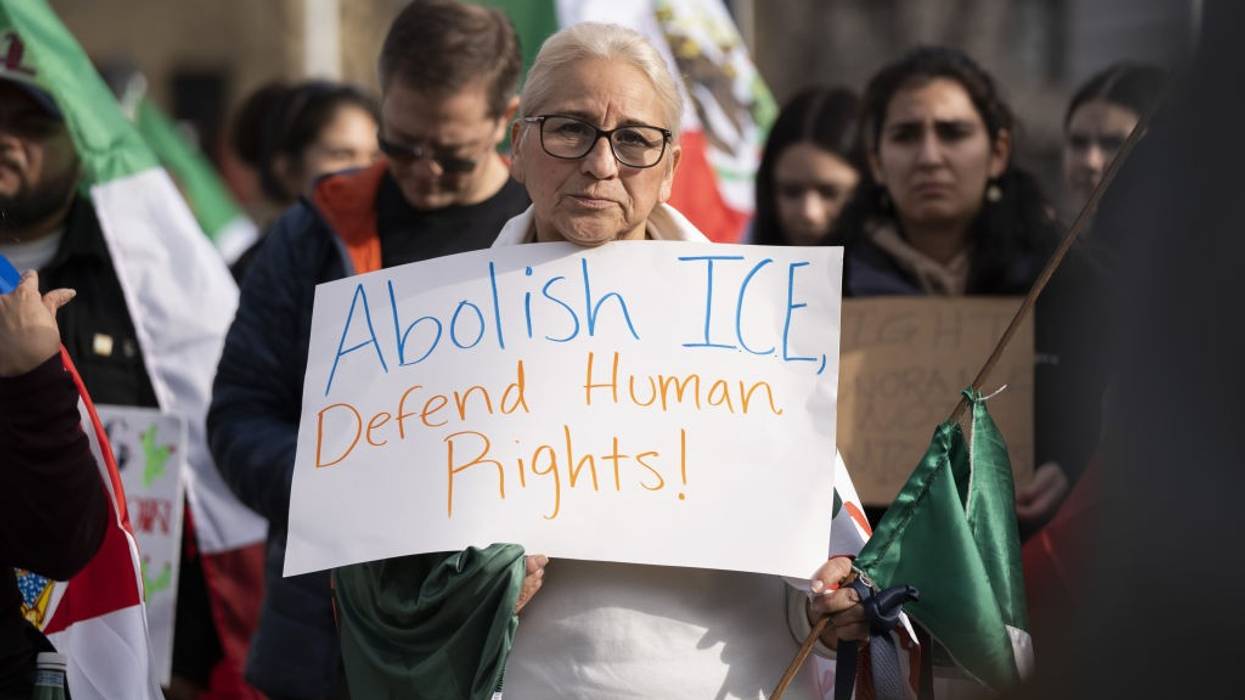
More than 160 civil society groups on Wednesday urged U.S. congressional leaders to vote against proposed legislation that would "cut critical funding to hundreds of communities in 32 states across the country for programs that American communities depend on," if their officials refuse to cooperate with the Trump administration's mass deportation and detention program.
The groups—including the ACLU, American Federation of Teachers, League of Women Voters, MoveOn, NAACP, National Education Association (NEA), Planned Parenthood, Service Employees International Union, and others—are united in opposition to H.R. 32, which would withhold federal funding from municipalities that don't help with immigration enforcement.
The bill's Republican sponsors call it the "No Bailout for Sanctuary Cities Act." The rights groups have dubbed it the "Defund Our Communities Act."
"Congress should not pass legislation handing the Trump administration vast and vaguely worded authority it may use to further intimidate, coerce, and inflict chaos on schools, hospitals, local police, and other institutions that our communities rely on," the groups wrote in a letter to House Speaker Mike Johnson (R-La.) and House Minority Leader Hakeem Jeffries (D-N.Y.).
"Nor should Congress, through this legislation, concede its 'power of the purse'—a vital aspect of our constitutional balance of powers that is perhaps more important than ever," the groups added.
This bill would blackmail sanctuary cities and states into carrying out Trump's mass deportations or risk losing funding for schools, hospitals, and housing. Tell your representatives to vote NO on the Defund Our Communities Act.
[image or embed]
— ACLU (@aclu.org) February 19, 2025 at 1:49 PM
The letter continues:
H.R. 32 would allow the administration to strip a state or local government of federal funds it "intends to use for the benefit" of undocumented immigrants. While couched in terms of immigration, we fear the actual result of this bill would be a funding cut off across the board, putting critical services to all our community members at risk. As you well know, state and local agencies do not generally segregate their funding allocations for citizens versus noncitizens, let alone noncitizens without legal status versus all others...
The Trump administration could weaponize H.R. 32 to freeze vast amounts of federal funding to hundreds of cities and dozens of states—simply because state and local agencies choose or are legally obligated not to fully participate in President [Donald] Trump's unprecedented mass deportation drive, or because they lack the resources to do so and are unable to meet the Trump administration's latest demands. Congress should not put the vast array of services that your constituents rely on at the whim and mercy of the Trump administration.
"This bill would undermine our constitutional balance of powers in two ways: escalating federal intimidation of state and local governments; and undermining Congress' power of the purse," the letter's signers argued. "In both cases, the bill threatens a system of checks and balances that is crucial to ensuring our government serves the people—not the president's personal goals and interests."
Deirdre Schifeling, the ACLU's chief political and advocacy officer, said in a statement Wednesday that "the 'Defund Our Communities Act' is a gross violation of the constitutional balance of powers that our democracy depends on."
"Congress should not hand the Trump administration the authority to threaten, intimidate, and coerce local governments across the country—doing so would set a dangerous precedent," Schifeling added.
NEA president Becky Pringle said that "most of us believe every student deserves the opportunity, resources, and support to reach their full potential no matter where they live, the color of their skin, or place of birth."
"As educators, we have accepted the sacred responsibility to protect students—regardless of their immigration status—and to protect families, schools, and communities," she continued. "The 'Defund Our Communities Act' would trample on these basic principles and, devastatingly, have a lasting, harmful effect on our most vulnerable students by taking away critical funding for school breakfast, lunch programs, and other essential services."
"All across America," Pringle added, "as educators encounter students terrified by threats of mass deportation, we will continue to protect students from the reckless agenda and actions from politicians who want to play dangerous games with the lives of our students."
The groups' letter comes as local officials, school districts, healthcare professionals, religious institutions, and others across the United States vow to resist Trump's anti-immigrant agenda, including his order allowing Immigration and Customs Enforcement agents to arrest undocumented immigrants in or around "sensitive" locations like schools, places of worship, hospitals, and shelters.
"This ruling strengthens our democracy by safeguarding access to the ballot for all eligible voters including naturalized citizens who were unfairly targeted and removed from the rolls," said one case litigant.
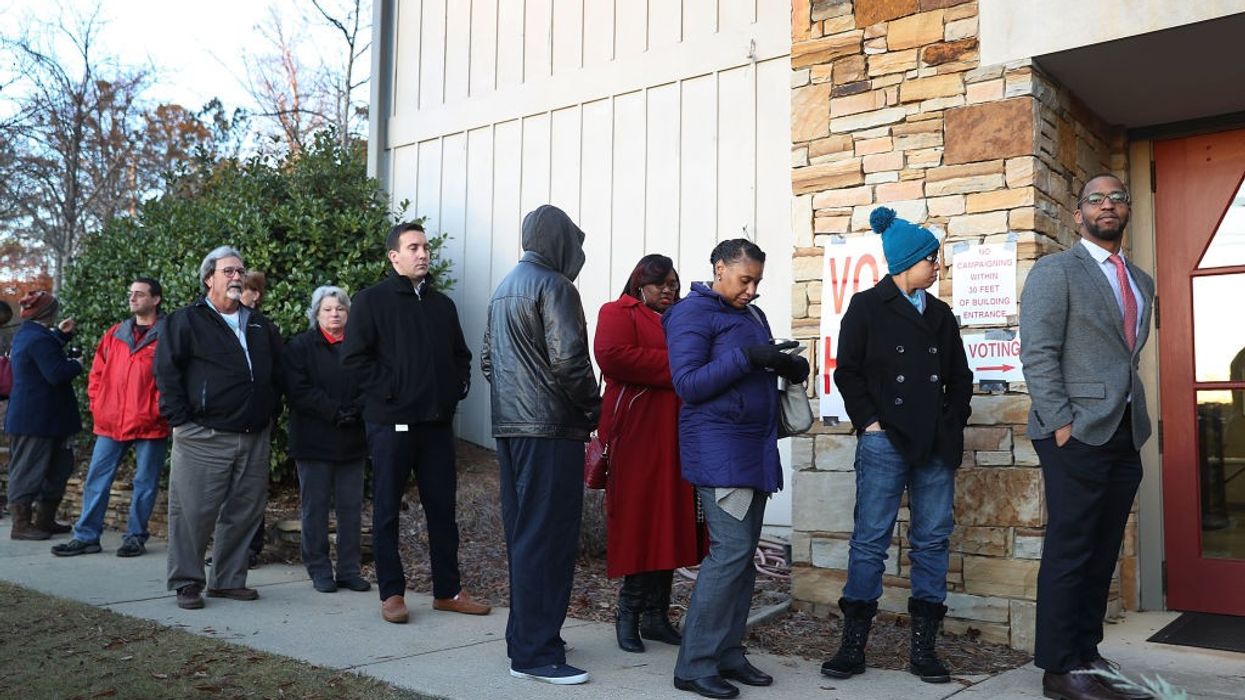
Citing a U.S. law prohibiting states from removing people from their registered voter lists within 90 days of an election, a U.S. federal judge on Wednesday ordered Alabama officials to pause a controversial voter roll purge until after next month's contest.
U.S. District Judge Anna Manasco—an appointee of former President Donald Trump, the 2024 Republican nominee—wrote in her preliminary injunction that GOP Alabama Secretary of State Wes Allen violated the National Voter Registration Act (NVRA) by launching a campaign purportedly targeting "noncitizens registered to vote."
"Allen blew the [NVRA] deadline when he announced a purge program to begin 84 days before the 2024 general election," Manasco said, adding that the secretary of state "later admitted that his purge list included thousands of United States citizens (in addition to far fewer noncitizens, who are ineligible to vote), and in any event, referred everyone on the purge list to the Alabama attorney general for criminal investigation."
The Biden administration's Department of Justice, along with civil and voting rights groups, last month sued Allen and the state of Alabama over the policy's timing. Individual Alabama voters also filed suit claiming the purge targeted naturalized U.S. citizens.
Allen's program removed more than 3,000 people from Alabama's voter rolls and referred them for criminal prosecution. However, more than 2,000 targeted individuals have since been deemed eligible to vote. Manasco's ruling gave Alabama officials three days to restore the active status of all wrongfully purged voters.
Responding to the decision, U.S. Assistant Attorney General Kristen Clarke of the Justice Department's Civil Rights Division said that "this action sends a clear message that the Justice Department will work to ensure that the rights of eligible voters are protected."
"The National Voter Registration Act's 90-day 'quiet period provision' is an important safeguard to prevent erroneous eleventh-hour efforts that stand to disenfranchise eligible voters," Clarke added. "The Justice Department remains steadfast in our resolve to protect voters from unlawful removal from the registration rolls and to ensure that states comply with the mandate of federal law."
Litigants in the challenge to Allen's voter removal program also welcomed Wednesday's ruling.
"We are pleased with the court's swift action to protect Alabama voters from an unlawful purge and ensure they can fully participate in the upcoming elections," League of Women Voters of Alabama president Kathy Jones said in a statement following Manasco's decision. "This ruling strengthens our democracy by safeguarding access to the ballot for all eligible voters including naturalized citizens who were unfairly targeted and removed from the rolls."
Campaign Legal Center senior legal counsel Kate Huddleston said: "No U.S. citizen should be afraid to vote, and we are proud to have defended Alabamians ahead of the upcoming election. Today's court decision helps protect Alabama citizens' freedom to register and vote without concerns about government interference or intimidation."
Janette McCarthy Wallace, general counsel at the NAACP, noted that "for over 115 years, the NAACP has been fighting for the right to vote," and while "the suppression tactics may look different... the intent remains the same—silencing Black and other vulnerable voices."
"Fraudulently made robocalls have the potential to devastate voter turnout by flooding thousands of voters with intimidating, threatening, or coercive messages in a matter of hours."
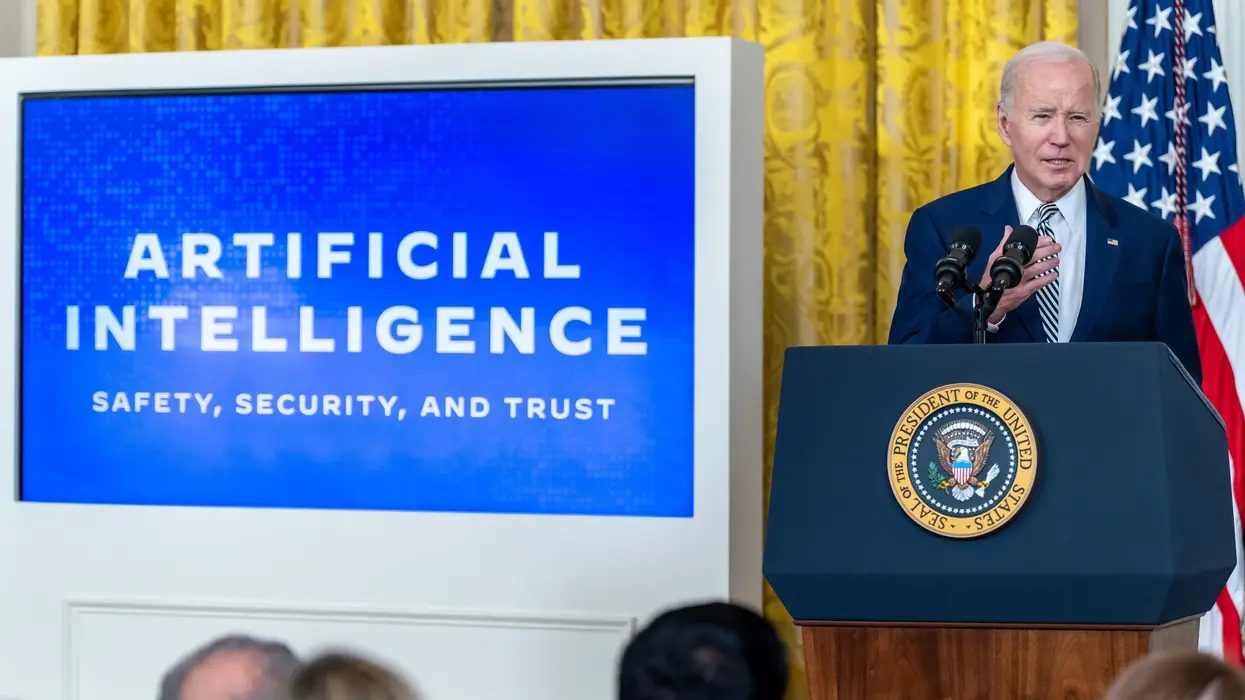
New Hampshire residents and voting rights groups on Thursday launched a federal lawsuit against a Democratic consultant and two companies behind January robocalls featuring audio that mimicked Democratic U.S. President Joe Biden's voice using artificial intelligence to discourage recipients from participating in the state's primary election.
"These types of voter suppression tactics have no place in our democracy," declared Celina Stewart, chief counsel at the League of Women Voters (LWV) of the United States. "Voters deserve to make their voices heard freely and without intimidation."
"For over 100 years, the League of Women Voters has worked to protect voters from these unlawful crimes and will continue to fight back against bad-faith actors who aim to disrupt our democratic system," added Stewart, whose group is part of the case.
The complaint—filed by the nonprofit Free Speech for People (FSFP) and a pair of law firms on behalf of three voters as well as the state and national arms of the LWV—accuses consultant Steve Kramer, Life Corporation, and Lingo Telecom of violating New Hampshire election laws along with the federal Telephone Consumer Protection Act and Voting Rights Act with the robocalls.
"These deceptive robocalls attempted to cause widespread confusion among New Hampshire voters," noted Liz Tentarelli, president of the state's LWV. "As a nonpartisan organization, the League of Women Voters works to ensure that all voters, regardless of their party affiliation, have the most accurate election information to make their voices heard. We will continue to advocate for New Hampshire voters and fight against malicious schemes to suppress the vote."
NBC reports that NH voters are getting robocalls with a deepfake of Biden’s voice telling them to not vote tomorrow.
“it’s important that you save your vote for the November election.”https://t.co/LAOKRtDanK pic.twitter.com/wzm0PcaN6H
— Alex Thompson (@AlexThomp) January 22, 2024
Looking toward a November election in which Biden is expected to face Republican former President Donald Trump, voting rights advocates and artificial intelligence experts are sounding the alarm about the potential impact of AI, especially deepfakes—audio or video that convincingly appears to show someone doing or saying something they never did.
"Fraudulently made robocalls have the potential to devastate voter turnout by flooding thousands of voters with intimidating, threatening, or coercive messages in a matter of hours," warned FSFP senior counsel Courtney Hostetler. "No one should abuse technology to make lawful voters think that they should not, or cannot safely, vote in the primaries or in any election. It is an honor to represent the League of Women Voters and the other plaintiffs in this important case to protect the right to vote."
The complaint asks the U.S. District Court for the District of New Hampshire for a permanent, nationwide injunction to prevent Kramer and both companies "from producing, generating, or distributing AI-generated robocalls impersonating any person, without that person's express, prior written consent," as well as monetary and punitive damages.
The Associated Press reported that "a spokesperson for Kramer declined to comment on the lawsuit, saying his attorneys had not yet received it. Lingo Telecom and Life Corporation did not immediately respond to messages requesting comment."
After the New Hampshire robocalls started getting national media coverage, the state Attorney General's Office and Federal Communications Commission began investigating, which resulted in cease-and-desist orders. The FCC also announced last month a rule declaring such calls are illegal under the Telephone Consumer Protection Act.
While welcoming the move, Robert Weissman, president of the consumer advocacy group Public Citizen, noted that "the act's prohibition on use of 'an artificial or prerecorded voice' generally does not apply to noncommercial calls and nonprofits. So the FCC's new rule will not cure the problem of AI voice-generated calls related to elections."
Public Citizen and other critics of influencing elections with artificial intelligence have demanded action from Congress and the Federal Election Commission‚ whose chair, Sean Cooksey, said in January the FEC "will resolve the AI rulemaking by early summer."
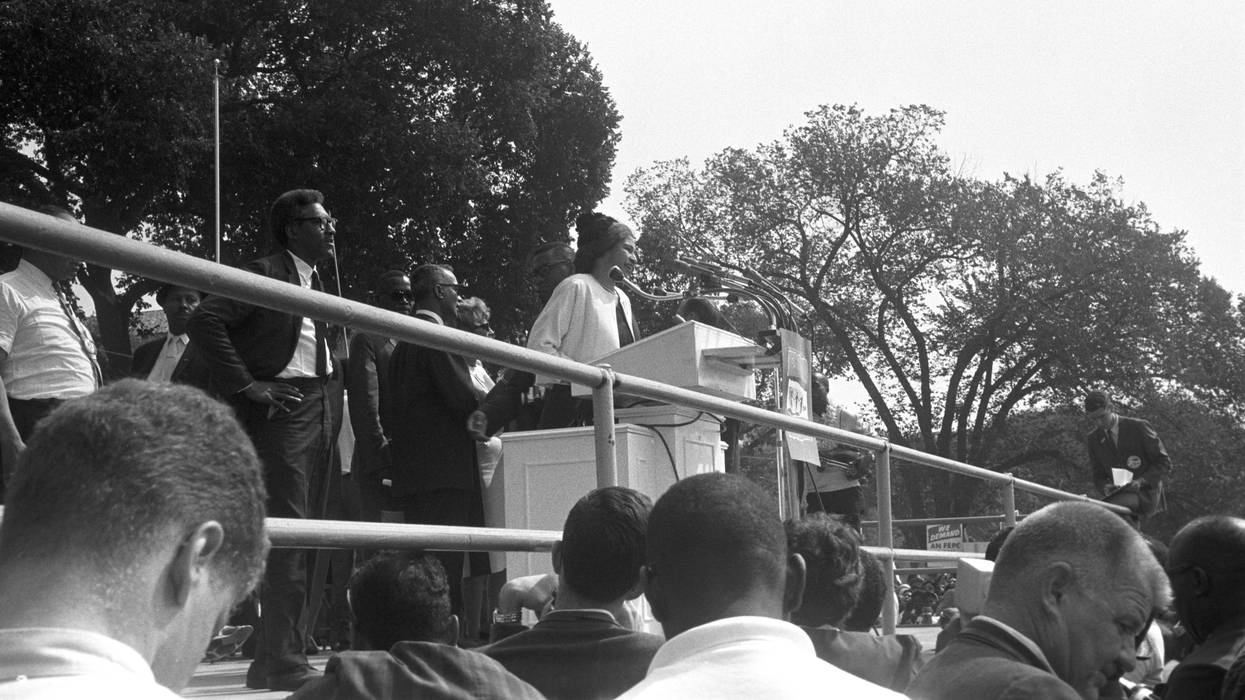
"Extremist lawmakers are using state capitols to subvert our democracy and erode voting rights, denying living wages, and suppressing access to healthcare, all while concentrating this rich nation's wealth," said Hanna Broome of AME Zion Church.
Six decades after civil rights and labor groups held the March on Washington for Jobs and Freedom, women from across the country plan to come together Monday evening for a virtual "She Speaks" mass assembly to honor female leaders from 1963 and draw attention to issues that persist today.
"While numerous brave and brilliant women—including Rosa Parks, Dorothy Day, Fannie Lou Hamer, Anna Arnold Hedgeman, Diane Nash, Dorothy Height, and Mahalia Jackson—were central voices behind the March on Washington, they were not given the chance to speak," organizers said in a statement. "Sixty years later, thousands of women are joining together at the Lincoln Memorial and speaking out to ensure not another anniversary goes by where women's voices aren't central to the conversation."
As Meghan Weaver of Stanford University's Martin Luther King Jr. Research and Education Institute detailed last year, Parks said a quick "hello" and "thank you" to the 1963 crowd, the NAACP's Daisy Bates delivered a couple of brief remarks, and actress and activist Lena Horne shouted "Freedom!" into the microphone. According to the researcher, activist and entertainer Josephine Baker "spoke for just over two minutes, in the longest address that day by a woman."
Speakers for Monday's event include Hanna Broome of AME Zion Church; Rev. Kazimir Brown of Repairers of the Breach; Mary Kay Henry of the Service Employees International Union; Rabbi Sheila Katz of the National Council of Jewish Women; Roz Pelles of the Center for Public Theology & Public Policy at Yale Divinity School; Ai-Jen Poo of the National Domestic Workers Alliance; Joy Reid of MSNBC; Karen Georgia A. Thompson of United Church of Christ; and members of Black Voters Matter, Beloved Community, and the League of Women Voters.
"Women refuse to stay silent as we fight back against the most pressing issues harming our communities today," declared Broome. "Right now across the country, extremist lawmakers are using state capitols to subvert our democracy and erode voting rights, denying living wages, and suppressing access to healthcare, all while concentrating this rich nation's wealth into fewer and fewer hands."
"Until the systemic injustices that have been plaguing our communities end," she vowed, "we will continue to make our voices heard across the nation."
During the assembly—set to be livestreamed at 6:00 ET—speakers plan to "demand a lifesaving agenda that includes living wages, voting rights, reproductive healthcare, and more," according to organizers.
"Sixty years ago, the agenda of the March on Washington was to raise the minimum wage 75% to a living wage, expand and protect voting rights, secure healthcare for all, and expand the Labor Standards Act to end racial discrimination," noted Bishop William Barber, who is expected to speak at the event. "Today, we are not finished with that agenda."
"Right now, 73 million women make up our nation's poor and low-wealth population. And millions of these women continue to be impacted by voter suppression," he added. "At a time when poverty is the fourth leading cause of death in our nation, these women are calling on all people of moral conscience—regardless of race, gender, or political affiliation—to join the fight for the moral soul of our nation and call out these attacks on our rights. We need all voices in this movement. This 60th anniversary is not an occasion just for nostalgia, it is a moment for action."

"We can't disregard, given recent history, that the Legislature's unspoken intent, once again, is to impose barriers and confuse voters," the Miami Herald's editors wrote.
Voting rights defenders on Friday condemned the Republican-controlled Florida Legislature's passage of a bill that critics said will make it harder to register Black and Latino voters while easing the way for Gov. Ron DeSantis to seek the 2024 GOP presidential nomination.
The Florida House of Representatives passed S.B. 7050 by a 76-34 party-line vote after the state Senate approved the measure—which DeSantis is expected to sign into law—earlier this week.
S.B. 7050 would boost the power of Florida's Office of Election Crimes and Security to review and conduct preliminary investigations into "any alleged election irregularity" and "make referrals for further legal action."
Under the proposal, voter registration groups could be fined up to $250,000 per year—penalties are currently capped at $50,000— for failing to submit completed registration applications to officials within 10 days.
"We can't disregard, given recent history, that the Legislature's unspoken intent, once again, is to impose barriers and confuse voters," the Miami Herald's editorial board wrote in response to the legislation.
An amendment to the bill allows Florida's governor to run for federal office without having to resign, a measure largely seen as opening the door for DeSantis to run for president.
In a letter sent Tuesday to Florida legislative leaders, officials from dozens of civil and voting rights groups warned that S.B. 7050 would "make it harder for Floridians to register and vote, and undermine Florida's election administration."
Mary Kay Rosinski, co-president of the League of Women Voters Villages/Tri-County, noted that the bill would:
According to the progressive advocacy group Common Cause, one of the letter's signers:
Provisions within the bill specifically target community-based voter registration groups with enormous fines and draconian new restrictions. These groups have made it possible for many Floridians to exercise their right to vote: One out of every 10 Black and Latino voters and one out of every 50 white voters in Florida have registered with the support of these organizations. These groups are especially important for Floridians who do not possess a Florida driver's license or Florida state ID, making them unable to use the state's online voter registration system.
In a particularly egregious restriction, this discriminatory legislation prohibits legal immigrants, Green Card holders, and people who are in the process of becoming U.S. citizens from helping register voters with community-based groups under threat of a $50,000 fine per person. These individuals make up a big part of the workforce to connect with eligible voters who face language barriers.
"This is the third year in a row Florida's lawmakers have changed our voting rules, attacked community-based groups who support voters, and implemented unnecessary and confusing barriers for Floridians looking to participate in our democracy, while making no investment in voter education at all," Common Cause Florida program director Amy Keith said in a statement.
"This makes clear their real aim: to suppress our voting rights and silence the voices of eligible Florida voters who want a more inclusive future for our state," Keith added. "We need a democracy that works for everyone, and our Florida leaders should be targeting the wealthy special interests that dominate our politics, not everyday Floridians who deserve to exercise their right to vote without barriers."
S.B. 7050's passage by Florida lawmakers comes a day after a federal appeals court handed DeSantis a victory by overturning a lower judge's ruling blocking provisions of S.B. 90, a massive attack on voting rights signed by the governor in 2021. The law empowers partisan poll watchers, imposes strict voter ID requirements, criminalizes so-called "ballot harvesting," limits ballot drop boxes, and bans advocacy groups from handing out food or water to voters waiting in long lines.
Progressives also condemned DeSantis' February signing of S.B. 4, a so-called "election crimes" law described by the Brennan Center for Justice as "an unnecessary and wasteful expansion of state prosecutorial power that could intimidate eligible voters with past convictions from exercising their right to vote."
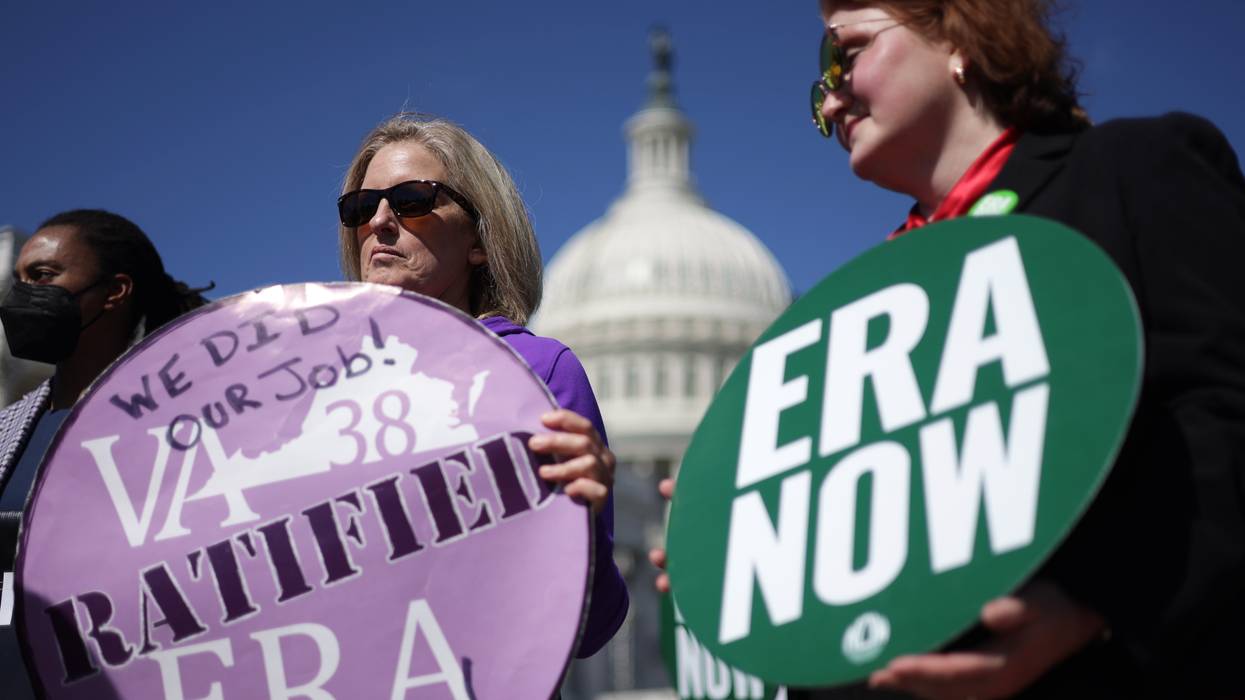
"It is shameful that despite the significant advances made in recent history, Americans continue to face discrimination on the basis of sex and lack equal rights in the Constitution," said the League of Women Voters CEO.
Equal Rights Amendment supporters on Thursday slammed the vast majority of U.S. Senate Republicans for filibustering a resolution that would make the 100-year-old measure the 28th Amendment to the Constitution.
The 51-47 vote to invoke cloture was short of the 60 needed for final consideration of the resolution. Sens. Susan Collins (R-Maine) and Lisa Murkowski (R-Alaska) were the only Republicans to join all Democrats present in supporting a vote on the ERA. Sen. Dianne Feinstein (D-Calif.) remains absent from the chamber, recovering from shingles.
"Today is a disappointing day for women," declared League of Women Voters of the United States CEO Virginia Kase Solomón. "Our nation's elected leaders have failed yet again to see us as equal members of this democracy."
"It is shameful that despite the significant advances made in recent history, Americans continue to face discrimination on the basis of sex and lack equal rights in the Constitution," she said. "Inequality hurts everyone, and we must not continue to be a nation that harmfully excludes and marginalizes women."
“We believe in the power of women to create a more perfect democracy, and that includes equal rights under the law, first and foremost," Kase Solomón added. "A strong democracy doesn't discriminate against women but empowers women. We will keep fighting, and we will keep showing up to hold our legislators accountable. Equality is essential to our democracy."
Kristin Rowe-Finkbeiner, executive director and CEO of MomsRising, agreed the vote was "a real disappointment," adding that "at this time when moms and women—and especially moms and women of color—face devastating wage discrimination, when our country has failed to adopt the programs and policies that would help parents and all caregivers achieve economic security, and when our bodily autonomy and access to reproductive healthcare is being gutted, all lawmakers from both political parties should support enshrining equal rights for women into our constitution."
"Still, we are encouraged by the fact that this vote took place today; it is evidence that this essential constitutional amendment remains on lawmakers' agenda," she said. "We will build from here. Moms want Congress to pass the Equal Rights Amendment, so states can ratify it at last."
First introduced in 1923, the ERA states:
Section 1: Equality of rights under the law shall not be denied or abridged by the United States or by any state on account of sex.
Section 2: The Congress shall have the power to enforce, by appropriate legislation, the provisions of this article.
Section 3: This amendment shall take effect two years after the date of ratification.
While the amendment passed both chambers of Congress in 1972, it must also be ratified by three-quarters of all state legislatures, or 38 states—a quota that wasn't hit until a 2020 vote in Virginia, decades after the 1982 ratification deadline.
The resolution blocked in the Senate on Thursday—led by Murkowski and Sen. Ben Cardin (D-Md.)—would have eliminated that deadline so the ERA could take effect.
Some amendment supporters in the U.S. House of Representatives marched through the Capitol to the Senate Chamber on Thursday chanting "ERA now!"
Among them was Rep. Ayanna Pressley (D-Mass.)—co-chair of the Congressional ERA Caucus with Rep. Cori Bush (D-Mo.)—who said after the vote that "once again, Senate Republicans have failed to do the bare minimum to protect our rights and equality."
Signaling that ERA supporters in the upper chamber aren't ready to give up, Senate Majority Leader Chuck Schumer (D-N.Y.) switched his vote to "no" so that he can bring up the resolution again.
The White House said ahead of the vote that the Biden administration supports the resolution, adding that "in the United States of America, no one's rights should be denied on account of their sex. It is long past time to definitively enshrine the principle of gender equality in the Constitution. Gender equality is not only a moral issue: The full participation of women and girls across all aspects of our society is essential to our economic prosperity, our security, and the health of our democracy."
This post has been updated with comment from MomsRising.

The League of Women Voters of Missouri and state arm of the NAACP on Friday celebrated after the Cole County Circuit Court granted a preliminary injunction blocking parts of a new law intended to restrict activities of groups encouraging Missourians to vote.
"With today's ruling, we will uplift our voices loud and strong to protect the right to vote heading into next week's critical elections."
"We are gratified that the court has yet again sided with the rights of the NAACP and voters who work to protect the right to vote," said Nimrod Chapel Jr., president of the Missouri arm, just days before the crucial midterm elections.
"The NAACP has long led the fight for African-American voting rights," Chapel continued. "In these Jim Crow provisions, lawmakers stripped us of critical ways to engage our communities by criminalizing our ability to encourage voting and good citizenship. Black voters have been disproportionately harmed by these restrictions."
"With today's ruling, we will uplift our voices loud and strong to protect the right to vote heading into next week's critical elections," he declared.
Republican Gov. Mike Parson signed House Bill 1878 in late June. The two plaintiff groups challenged four provisions: prohibitions on anyone being paid for soliciting voter registration applications and soliciting a voter into obtaining an absentee ballot application, as well as requirements that individuals who solicit more than 10 applications to register with the secretary of state and solicitors be at least 18 years old and a registered Missouri voter.
The court concluded that the plaintiffs have "a fair chance of prevailing" on the merits of their case and that they face a "threat of irreparable harm" absent an injunction that temporarily halts the challenged provisions.
"We applaud the court's ruling, which blocks enforcement of H.B. 1878's restrictions on what civic engagement organizations like the League of Women Voters of Missouri and the Missouri NAACP can do to educate and engage with voters," said Danielle Lang, senior director of voting rights at Campaign Legal Center--which represented the plaintiffs alongside the state ACLU and Missouri Voter Protection Coalition (MOVPC).
"Instead of making our elections any safer, the law criminalizes the very organizations that work around the clock to make our democracy stronger and more accessible," Lang stressed. "Voter engagement is political speech. While the 2022 election is only a few days away, this ruling means that civic engagement organizations will be able to engage with voters over the weekend and in future elections, so every Missourian can make their voice heard."
Marilyn McLeod, president of the League of Women Voters of Missouri, confirmed leading up to the November 8 election--which will determine which party controls Congress and various key state seats--the groups will continue working to get voters to participate.
"We're delighted that the court recognized the league's essential role in encouraging and enabling all eligible Missourians to participate in our democracy," McLeod said. "Although we only have a few days before the 2022 general election, this preliminary injunction lets the league's paid staff and volunteers breathe easier as we continue our work to help voters."
While welcoming the court's decision, some of the involved legal groups also highlighted the danger of laws like H.B. 1878--which Republicans have increasingly worked to force through state legislatures since former President Donald Trump lost reelection in 2020.
"While we remain disappointed that the Missouri Legislature passed these provisions in H.B. 1878 that violate free speech in the first place, we are grateful that the court has recognized the harm they have caused and has issued a decision to prevent future harm," explained Gillian Wilcox, deputy director for litigation at the ACLU of Missouri.
Denise Lieberman, director and general counsel of MOVPC, said that "it is unfortunate that the measures chilled voter engagement activity as long as they did, but after today's ruling, Missouri's civic engagement organizations can rest assured that they can go about their critical work in the days leading into next week's elections without fear of criminal prosecution."
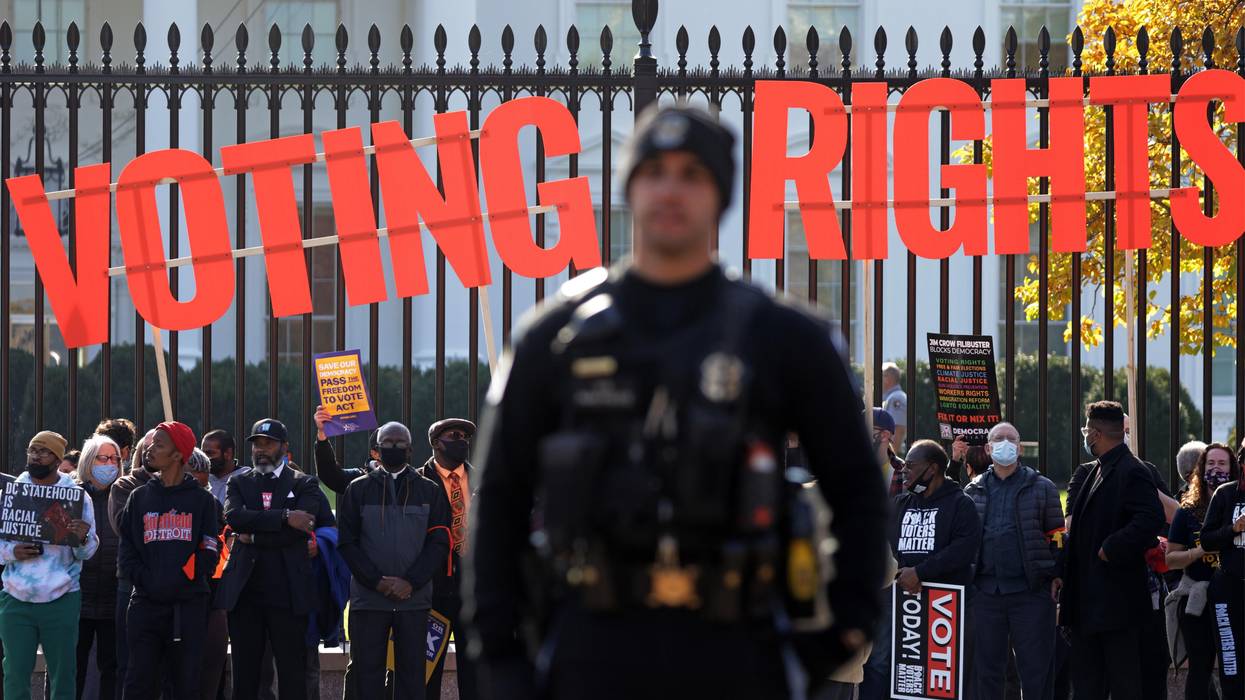
Activists on Wednesday took to the streets of Washington, D.C., where organizers said around 200 people were arrested while demanding the passage of key voting rights legislation, an end to the filibuster, and bold action from President Joe Biden in defense of an imperiled democracy.
"This movement is about ensuring that the arc of the moral universe continues to bend toward justice."
"This movement is about ensuring that the arc of the moral universe continues to bend toward justice," People for the American Way president Ben Jealous said in a reference to a famous Martin Luther King Jr. quote as he spoke outside the White House prior to his arrest.
Demonstrators called for the passage of the Freedom to Vote Act and the John Lewis Voting Rights Advancement Act--both of which were recently sunk by Senate Republicans via the filibuster--as well as statehood for Washington, D.C., an end to partisan gerrymandering, and other democratic reforms.
The League of Women Voters (LWV), one of the demonstrator's organizers, said "roughly 200" activists were arrested at the event.
Speaking of Biden, LWV president Deborah Ann Turner told protesters, "We helped get you into office, and now you need to make good on your promise."
"Redistricting is underway without the full protection of the Voting Rights Act and the midterm elections are around the corner," said Turner, who was arrested at the demonstration. "We are here today to send a message that President Biden must take action now to ensure the promise of our democracy and protect our freedom to vote."
Speaking at the event before his arrest, Rev. Dr. William Barber II, co-chair of the Poor People's Campaign: A National Call for Moral Revival and president of Repairers of the Breach, called on Biden to "fight against the filibuster because the filibuster is being used to fight against us and to bring down democracy."
Barber asserted that "Republican extremists" including Senate Minority Leader Mitch McConnell (R-Ky.) "changed the filibuster to put Supreme Court justices on the bench for life."
"Now they... and two Democrats are using the filibuster to destroy and undermine the life of this democracy and the daily lives of people," he added, a reference to obstructionist Sens. Joe Manchin (D-W.Va.) and Kyrsten Sinema (D-Ariz.).
Robert Weissman, president of the consumer advocacy group Public Citizen and another arrestee on Wednesday, said in a statement ahead of the demonstration that "our democracy is facing an existential crisis."
"We need political leaders to do everything they can to head off that existential threat," he continued. "And that means we need to do everything we can do, as well."
"We are witnessing before our eyes the coming together of a proto-fascist movement that has a categorically different disdain for democracy than anything we've seen in generations," Weissman warned. "This is connected with [former President Donald] Trump, to be sure, but it runs deeper than Trump. It is evidenced not just by the January 6 insurrection, but by the entire effort to promote the Big Lie."
"There's a lot we have to do to counter this rising fascistic strain," Weissman stressed. "The first and most important thing is to strengthen and firm up our democracy. That's why it's imperative that we win passage of the Freedom to Vote Act and the John Lewis Voting Rights Advancement Act."

Donald J. Trump's presidential ambition has simmered for decades. He was and is a regular TV watcher and saw the changing political landscape. One by one, previous presidents diminished the integrity of the presidency and violated the rule of law, paving the way for Trump's candidacy.
Bill Clinton was exposed for serial adulteries and abuses of women and lied under oath. This perjury led to him being impeached in the House (though he was acquitted in the Senate). "Hmm," thought Donald, a serial abuser of women, "Clinton got away with it and was elected twice." One potentially career-ending violation no longer had the weight it once did.
Then came George W. Bush - selected by the Electoral College and a Republican Supreme Court. "Hmm," thought Donald to himself, "Even though Gore won the popular vote, Bush won because of Electors in swing states." Despite Gore's crushing loss, the Democratic Party refused to support ongoing Electoral College reform (see nationalpopularvote.com). Once in office, George W. Bush and Dick Cheney lied repeatedly to start an unconstitutional illegal war with Iraq, which caused huge Iraqi and U.S. casualties and wreaked havoc on the U.S. budget. Bush and Cheney not only got away with these atrocities, but were reelected. A majority of voters believed their lies. Violating the laws did not matter. "Hmm," thought Donald to himself, "The President is above the law." Positions of power and the trampling of laws appealed to Trump, a lawless, failed gambling czar.
Then along came Obama. He too got away with all kinds of slaughter abroad without authority of the Constitution, statutes, or international treaties. He too was reelected. Domestically, Obama did not prosecute any of the big Wall Street crooks that brought down our economy in 2008-2009, even though a vast majority of the population loathed these reckless financiers. With all of these misdeeds and violations of law on full display, Trump a big business crook himself, must have thought that he would not be held accountable. Even better, he knew how to use television to manipulate the media to his advantage. These examples are just some of the major ways that past presidents, Democrats especially, handed Trump his opportunity. I describe these and other presidential abuses of power in my recent book, To the Ramparts: How Bush and Obama Paved the Way for the Trump Presidency, and Why It Isn't Too Late to Reverse Course.
Given these inoculations for breaking social norms and laws, Trump felt he could break additional norms and laws and still secure the Presidency. It almost didn't work - Hillary Clinton's campaign bungling lost three key states, which provided Trump a path to the White House. The crazy, antiquated Electoral College sealed the deal.
Trump has always known how to use power to get more power. He went after his opponents with harsh nicknames, repeated verbatim by a supine press. The name calling stuck and influenced voters. Democrats did not reciprocate with nicknames like "cheating Donald," "corrupt Donald," "Dangerous Donald," etc.
Emboldened, Trump, with his television knowhow, grasped that many people prefer fiction to non-fiction. Fantasy is big business and it can serve to distract from grim real-life injustices. Day after day, the mass media proved this point by giving huge time to entertainment compared to news and civic engagements locally and nationally.
Donald, through his daily tweets and assertions, shaped a story - true or not, that would help him win the White House. Reporters have collected over 10,000 of Trumps lies and seriously misleading statements since he became President (see the complete list here via the Washington Post).
But Trump, with his 50 million Twitter followers, has his own media machine, which grows because the mass media replays so many of his fictions as if they were real.
Still, the Democrats should have defeated him handily and, failing that, should have since driven his poll numbers below 40 or 42 percent, where they hover.
Democrats having lost the crucial election of 2010 in Congress, most state legislatures and governorships, Democrats lost the gerrymandering battle. This set the stage for Republicans to seriously suppress the vote in many ways documented by the League of Women Voters and the Brennan Center. Some of this suppression occurred in key swing states like Wisconsin.
Today, Trump seems impervious to the many accurate accusations of corruptions and impeachable offenses. He ruthlessly scuttles lifesaving health/safety protections for the American people, undermines law enforcement, and breaks his repeated promises to provide "great" health insurance, "pure" clean air, and jobs for workers displaced by globalization. The norms that restrain politicians and their constitutional duty to "faithfully execute the laws" have been deeply eroded.
Trump is undeterred by the hundreds of syndicated columns and the regular television commentary by leading conservatives who despise him. George Will, Michael Gerson, Max Boot, David Brooks, Bret Stephens, and others have gone after Trump repeatedly. The attacks on the Prevaricator in Chief are like water off a duck's back. Even Trump's trail of broken campaign promises is routinely overlooked by the press and the Trump base.
Next week my column will address what to do to make Trump a one-term President. Only a landslide defeat in 2020 will keep Trump from tweeting "fake election" and demanding a recount.