SUBSCRIBE TO OUR FREE NEWSLETTER
Daily news & progressive opinion—funded by the people, not the corporations—delivered straight to your inbox.
5
#000000
#FFFFFF
To donate by check, phone, or other method, see our More Ways to Give page.
Daily news & progressive opinion—funded by the people, not the corporations—delivered straight to your inbox.
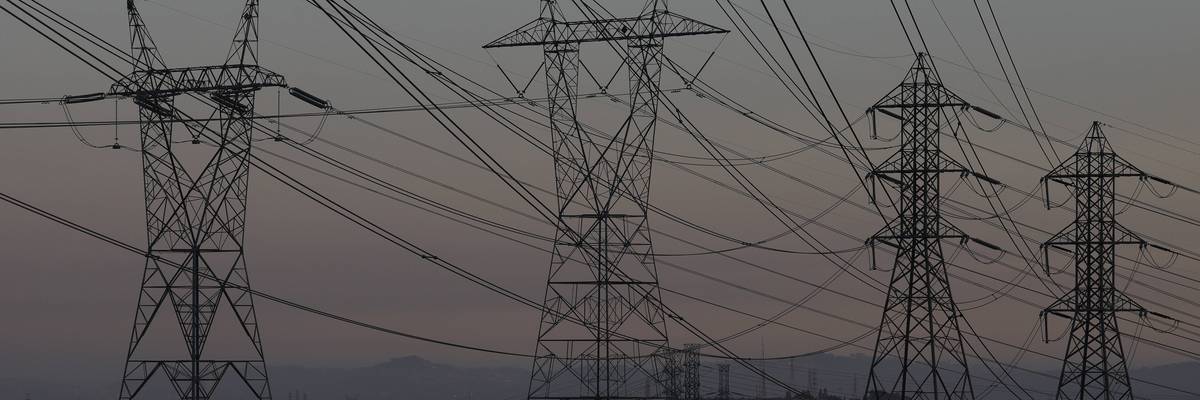
A view of electrical transmission towers on March 24, 2026, in Sylmar, California.
Electricity costs increased by nearly 7% last year, more than twice the rate of overall inflation, and cost Americans $123 more on average.
President Donald Trump ran on promises to cut energy prices "in half" within his first year in office. But according to a report released Wednesday, he's done the exact opposite, and it's expected to get much worse as oil prices soar from his war with Iran.
Electricity prices increased more than twice as fast as overall inflation in 2025, according to a fact sheet by the Groundwork Collaborative.
According to data from the Bureau of Labor Statistics, electricity costs increased by nearly 7% last year, compared with an overall consumer price index increase of 2.7%.
In January, a report by Sen. Elizabeth Warren (D-Mass.), the ranking member of the Senate Banking Committee, found that Americans spent an extra $2,120 in 2025 due to inflation across the economy. Electricity cost the average family an additional $123.
Groundwork's report attributed these price increases to Trump's aggressive tariffs, which the group said have raised the costs of building and maintaining electric grids—costs that energy companies pass directly to consumers.
It also noted the Trump administration's support for the swift build-out of artificial intelligence data centers, which have dramatically increased energy demand in places where they've been constructed.
Costs for consumers connected to America's largest power grid, PJM, for example, increased by a collective $9.4 billion last year—more than a 180% increase. Meanwhile, Bloomberg found that in areas near data centers, wholesale electricity costs had jumped by as much as 267% over the past five years.
That pinch is being felt by consumers, 66% of whom said their electricity bills increased over the past year, compared with just 5% who said they decreased, according to a poll earlier this month from Data for Progress.
Groundwork found that "rising energy prices hit working families the hardest," with those earning under $50,000 spending nearly 7% of their annual income on energy, compared with just 1.2% for those earning above $150,000, according to a 2025 report from the Bank of America Institute.
Rising costs have been a growing source of anger among voters who elected Trump to bring them down, but now give him just a 29% approval rating on the economy, according to a Reuters/Ipsos poll released Tuesday.
It's a historic low that Trump hit for the first time this month as gas prices in the US have soared to an average of $3.98 per gallon as a result of oil price hikes caused by Trump's war with Iran, which resulted in Iran closing the Strait of Hormuz, a critical global shipping route.
Groundwork noted that the pain of the war goes far beyond the pump: The price of residential heating oil is already up 35% since the war began. Meanwhile, rising diesel costs for trucks and disruptions to the global shipment of fertilizer are expected to jack up food prices.
Short of ending the war altogether, the group pointed out that Trump has options to reduce energy costs by tapping into increasingly cheap and abundant wind and solar energy.
Instead, however, the president has delayed hundreds of solar projects by introducing new review requirements that have slowed construction and backed lawsuits to gut efficiency standards.
Earlier this month, at the Trump administration's urging, a federal judge sided with 15 red states to strike down Biden administration energy standards, which were estimated to reduce costs by more than $950 per year for families living in federally funded housing.
While Trump has taken actions aimed at curbing the global fuel shock, including tapping the Strategic Petroleum Reserve and pausing the federal gas tax, a poll from Groundwork and Data for Progress this week found that more than half of Americans, 52%, would prefer to simply see the war end rather than these emergency measures.
Dear Common Dreams reader, It’s been nearly 30 years since I co-founded Common Dreams with my late wife, Lina Newhouser. We had the radical notion that journalism should serve the public good, not corporate profits. It was clear to us from the outset what it would take to build such a project. No paid advertisements. No corporate sponsors. No millionaire publisher telling us what to think or do. Many people said we wouldn't last a year, but we proved those doubters wrong. Together with a tremendous team of journalists and dedicated staff, we built an independent media outlet free from the constraints of profits and corporate control. Our mission has always been simple: To inform. To inspire. To ignite change for the common good. Building Common Dreams was not easy. Our survival was never guaranteed. When you take on the most powerful forces—Wall Street greed, fossil fuel industry destruction, Big Tech lobbyists, and uber-rich oligarchs who have spent billions upon billions rigging the economy and democracy in their favor—the only bulwark you have is supporters who believe in your work. But here’s the urgent message from me today. It's never been this bad out there. And it's never been this hard to keep us going. At the very moment Common Dreams is most needed, the threats we face are intensifying. We need your support now more than ever. We don't accept corporate advertising and never will. We don't have a paywall because we don't think people should be blocked from critical news based on their ability to pay. Everything we do is funded by the donations of readers like you. When everyone does the little they can afford, we are strong. But if that support retreats or dries up, so do we. Will you donate now to make sure Common Dreams not only survives but thrives? —Craig Brown, Co-founder |
President Donald Trump ran on promises to cut energy prices "in half" within his first year in office. But according to a report released Wednesday, he's done the exact opposite, and it's expected to get much worse as oil prices soar from his war with Iran.
Electricity prices increased more than twice as fast as overall inflation in 2025, according to a fact sheet by the Groundwork Collaborative.
According to data from the Bureau of Labor Statistics, electricity costs increased by nearly 7% last year, compared with an overall consumer price index increase of 2.7%.
In January, a report by Sen. Elizabeth Warren (D-Mass.), the ranking member of the Senate Banking Committee, found that Americans spent an extra $2,120 in 2025 due to inflation across the economy. Electricity cost the average family an additional $123.
Groundwork's report attributed these price increases to Trump's aggressive tariffs, which the group said have raised the costs of building and maintaining electric grids—costs that energy companies pass directly to consumers.
It also noted the Trump administration's support for the swift build-out of artificial intelligence data centers, which have dramatically increased energy demand in places where they've been constructed.
Costs for consumers connected to America's largest power grid, PJM, for example, increased by a collective $9.4 billion last year—more than a 180% increase. Meanwhile, Bloomberg found that in areas near data centers, wholesale electricity costs had jumped by as much as 267% over the past five years.
That pinch is being felt by consumers, 66% of whom said their electricity bills increased over the past year, compared with just 5% who said they decreased, according to a poll earlier this month from Data for Progress.
Groundwork found that "rising energy prices hit working families the hardest," with those earning under $50,000 spending nearly 7% of their annual income on energy, compared with just 1.2% for those earning above $150,000, according to a 2025 report from the Bank of America Institute.
Rising costs have been a growing source of anger among voters who elected Trump to bring them down, but now give him just a 29% approval rating on the economy, according to a Reuters/Ipsos poll released Tuesday.
It's a historic low that Trump hit for the first time this month as gas prices in the US have soared to an average of $3.98 per gallon as a result of oil price hikes caused by Trump's war with Iran, which resulted in Iran closing the Strait of Hormuz, a critical global shipping route.
Groundwork noted that the pain of the war goes far beyond the pump: The price of residential heating oil is already up 35% since the war began. Meanwhile, rising diesel costs for trucks and disruptions to the global shipment of fertilizer are expected to jack up food prices.
Short of ending the war altogether, the group pointed out that Trump has options to reduce energy costs by tapping into increasingly cheap and abundant wind and solar energy.
Instead, however, the president has delayed hundreds of solar projects by introducing new review requirements that have slowed construction and backed lawsuits to gut efficiency standards.
Earlier this month, at the Trump administration's urging, a federal judge sided with 15 red states to strike down Biden administration energy standards, which were estimated to reduce costs by more than $950 per year for families living in federally funded housing.
While Trump has taken actions aimed at curbing the global fuel shock, including tapping the Strategic Petroleum Reserve and pausing the federal gas tax, a poll from Groundwork and Data for Progress this week found that more than half of Americans, 52%, would prefer to simply see the war end rather than these emergency measures.
President Donald Trump ran on promises to cut energy prices "in half" within his first year in office. But according to a report released Wednesday, he's done the exact opposite, and it's expected to get much worse as oil prices soar from his war with Iran.
Electricity prices increased more than twice as fast as overall inflation in 2025, according to a fact sheet by the Groundwork Collaborative.
According to data from the Bureau of Labor Statistics, electricity costs increased by nearly 7% last year, compared with an overall consumer price index increase of 2.7%.
In January, a report by Sen. Elizabeth Warren (D-Mass.), the ranking member of the Senate Banking Committee, found that Americans spent an extra $2,120 in 2025 due to inflation across the economy. Electricity cost the average family an additional $123.
Groundwork's report attributed these price increases to Trump's aggressive tariffs, which the group said have raised the costs of building and maintaining electric grids—costs that energy companies pass directly to consumers.
It also noted the Trump administration's support for the swift build-out of artificial intelligence data centers, which have dramatically increased energy demand in places where they've been constructed.
Costs for consumers connected to America's largest power grid, PJM, for example, increased by a collective $9.4 billion last year—more than a 180% increase. Meanwhile, Bloomberg found that in areas near data centers, wholesale electricity costs had jumped by as much as 267% over the past five years.
That pinch is being felt by consumers, 66% of whom said their electricity bills increased over the past year, compared with just 5% who said they decreased, according to a poll earlier this month from Data for Progress.
Groundwork found that "rising energy prices hit working families the hardest," with those earning under $50,000 spending nearly 7% of their annual income on energy, compared with just 1.2% for those earning above $150,000, according to a 2025 report from the Bank of America Institute.
Rising costs have been a growing source of anger among voters who elected Trump to bring them down, but now give him just a 29% approval rating on the economy, according to a Reuters/Ipsos poll released Tuesday.
It's a historic low that Trump hit for the first time this month as gas prices in the US have soared to an average of $3.98 per gallon as a result of oil price hikes caused by Trump's war with Iran, which resulted in Iran closing the Strait of Hormuz, a critical global shipping route.
Groundwork noted that the pain of the war goes far beyond the pump: The price of residential heating oil is already up 35% since the war began. Meanwhile, rising diesel costs for trucks and disruptions to the global shipment of fertilizer are expected to jack up food prices.
Short of ending the war altogether, the group pointed out that Trump has options to reduce energy costs by tapping into increasingly cheap and abundant wind and solar energy.
Instead, however, the president has delayed hundreds of solar projects by introducing new review requirements that have slowed construction and backed lawsuits to gut efficiency standards.
Earlier this month, at the Trump administration's urging, a federal judge sided with 15 red states to strike down Biden administration energy standards, which were estimated to reduce costs by more than $950 per year for families living in federally funded housing.
While Trump has taken actions aimed at curbing the global fuel shock, including tapping the Strategic Petroleum Reserve and pausing the federal gas tax, a poll from Groundwork and Data for Progress this week found that more than half of Americans, 52%, would prefer to simply see the war end rather than these emergency measures.