SUBSCRIBE TO OUR FREE NEWSLETTER
Daily news & progressive opinion—funded by the people, not the corporations—delivered straight to your inbox.
5
#000000
#FFFFFF
To donate by check, phone, or other method, see our More Ways to Give page.
Daily news & progressive opinion—funded by the people, not the corporations—delivered straight to your inbox.
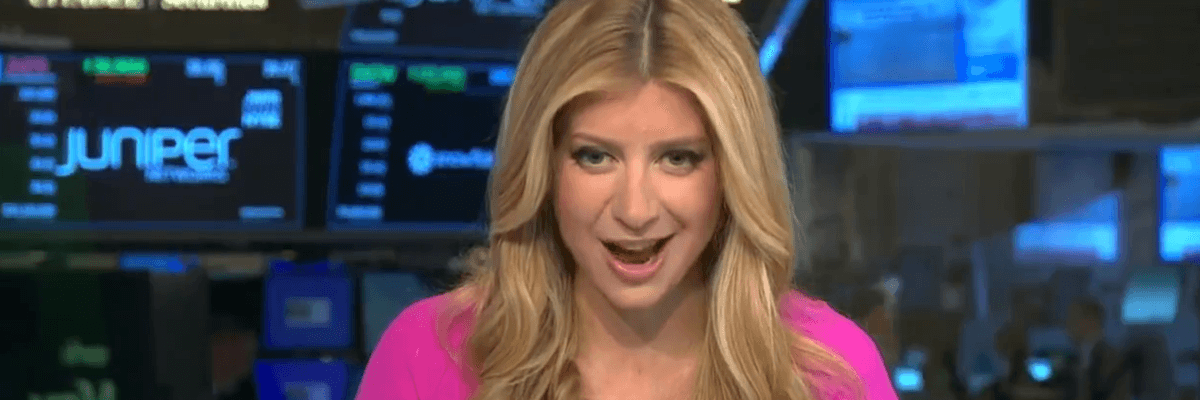
Sara Eisen, co-anchor of CNBC's "Squawk on the Street," is seen during an August 2024 episode of the program.
One observer called Sara Eisen's Iran War remarks a "glorious time capsule of this broken moment we are in."
CNBC anchor Sara Eisen was dragged on social media this week for on-air comments asking whether US President Donald Trump's threat to destroy Iran's civilization is good for investors.
As the US-Israeli war of choice on Iran and the Iranian military's closure of the Strait of Hormuz—through which around 20% of the world's oil is shipped—fueled volatility in global markets, Trump issued an ultimatum to Tehran: reach an agreement to reopen the vital waterway by Tuesday night, or “a whole civilization will die tonight, never to be brought back again."
While much of the world recoiled in horror at Trump's explicitly genocidal threat, Eisen, who co-hosts the cable business news network's "Squawk on the Street" program, opted for a different angle.
“This deadline that President Trump has set, 8:00 pm, has threatened to destroy a civilization. How does an investor process that?" she asked Tuesday. "Is it a bigger upside risk or downside risk?”
Reactions ranged from incredulity to outrage.
Journalist and writer Charlie Warzel called Eisen's remarks a "glorious time capsule of this broken moment we are in."
David Sirota—whose Oscar-nominated 2021 satirical comedy Don't Look Up skewers vapid TV hosts who filter the existential threat of an imminent comet impacting Earth through a profit-driven lens—asked, "What stage of corporate media is this?"
(Video by YouTube)
Eisen's comments are part of a societal landscape in which the price of a gallon of gasoline is a bigger concern for Americans than the US-Israeli slaughter of hundreds of Iranian children.
Numerous news and analysis articles lauded the profit potential of the Iran war. So have some Republican politicians.
“When this regime goes down, we’re gonna have a new Mideast,” US Sen. Lindsey Graham (R-SC) told Fox News last month. “We’re gonna make a ton of money."
Big Oil—which invested $445 million in electing Trump and other Republicans in 2024—and fossil fuel executives are doing just that, cashing in on the war with record-setting stock sales.
Dear Common Dreams reader, It’s been nearly 30 years since I co-founded Common Dreams with my late wife, Lina Newhouser. We had the radical notion that journalism should serve the public good, not corporate profits. It was clear to us from the outset what it would take to build such a project. No paid advertisements. No corporate sponsors. No millionaire publisher telling us what to think or do. Many people said we wouldn't last a year, but we proved those doubters wrong. Together with a tremendous team of journalists and dedicated staff, we built an independent media outlet free from the constraints of profits and corporate control. Our mission has always been simple: To inform. To inspire. To ignite change for the common good. Building Common Dreams was not easy. Our survival was never guaranteed. When you take on the most powerful forces—Wall Street greed, fossil fuel industry destruction, Big Tech lobbyists, and uber-rich oligarchs who have spent billions upon billions rigging the economy and democracy in their favor—the only bulwark you have is supporters who believe in your work. But here’s the urgent message from me today. It's never been this bad out there. And it's never been this hard to keep us going. At the very moment Common Dreams is most needed, the threats we face are intensifying. We need your support now more than ever. We don't accept corporate advertising and never will. We don't have a paywall because we don't think people should be blocked from critical news based on their ability to pay. Everything we do is funded by the donations of readers like you. When everyone does the little they can afford, we are strong. But if that support retreats or dries up, so do we. Will you donate now to make sure Common Dreams not only survives but thrives? —Craig Brown, Co-founder |
CNBC anchor Sara Eisen was dragged on social media this week for on-air comments asking whether US President Donald Trump's threat to destroy Iran's civilization is good for investors.
As the US-Israeli war of choice on Iran and the Iranian military's closure of the Strait of Hormuz—through which around 20% of the world's oil is shipped—fueled volatility in global markets, Trump issued an ultimatum to Tehran: reach an agreement to reopen the vital waterway by Tuesday night, or “a whole civilization will die tonight, never to be brought back again."
While much of the world recoiled in horror at Trump's explicitly genocidal threat, Eisen, who co-hosts the cable business news network's "Squawk on the Street" program, opted for a different angle.
“This deadline that President Trump has set, 8:00 pm, has threatened to destroy a civilization. How does an investor process that?" she asked Tuesday. "Is it a bigger upside risk or downside risk?”
Reactions ranged from incredulity to outrage.
Journalist and writer Charlie Warzel called Eisen's remarks a "glorious time capsule of this broken moment we are in."
David Sirota—whose Oscar-nominated 2021 satirical comedy Don't Look Up skewers vapid TV hosts who filter the existential threat of an imminent comet impacting Earth through a profit-driven lens—asked, "What stage of corporate media is this?"
(Video by YouTube)
Eisen's comments are part of a societal landscape in which the price of a gallon of gasoline is a bigger concern for Americans than the US-Israeli slaughter of hundreds of Iranian children.
Numerous news and analysis articles lauded the profit potential of the Iran war. So have some Republican politicians.
“When this regime goes down, we’re gonna have a new Mideast,” US Sen. Lindsey Graham (R-SC) told Fox News last month. “We’re gonna make a ton of money."
Big Oil—which invested $445 million in electing Trump and other Republicans in 2024—and fossil fuel executives are doing just that, cashing in on the war with record-setting stock sales.
CNBC anchor Sara Eisen was dragged on social media this week for on-air comments asking whether US President Donald Trump's threat to destroy Iran's civilization is good for investors.
As the US-Israeli war of choice on Iran and the Iranian military's closure of the Strait of Hormuz—through which around 20% of the world's oil is shipped—fueled volatility in global markets, Trump issued an ultimatum to Tehran: reach an agreement to reopen the vital waterway by Tuesday night, or “a whole civilization will die tonight, never to be brought back again."
While much of the world recoiled in horror at Trump's explicitly genocidal threat, Eisen, who co-hosts the cable business news network's "Squawk on the Street" program, opted for a different angle.
“This deadline that President Trump has set, 8:00 pm, has threatened to destroy a civilization. How does an investor process that?" she asked Tuesday. "Is it a bigger upside risk or downside risk?”
Reactions ranged from incredulity to outrage.
Journalist and writer Charlie Warzel called Eisen's remarks a "glorious time capsule of this broken moment we are in."
David Sirota—whose Oscar-nominated 2021 satirical comedy Don't Look Up skewers vapid TV hosts who filter the existential threat of an imminent comet impacting Earth through a profit-driven lens—asked, "What stage of corporate media is this?"
(Video by YouTube)
Eisen's comments are part of a societal landscape in which the price of a gallon of gasoline is a bigger concern for Americans than the US-Israeli slaughter of hundreds of Iranian children.
Numerous news and analysis articles lauded the profit potential of the Iran war. So have some Republican politicians.
“When this regime goes down, we’re gonna have a new Mideast,” US Sen. Lindsey Graham (R-SC) told Fox News last month. “We’re gonna make a ton of money."
Big Oil—which invested $445 million in electing Trump and other Republicans in 2024—and fossil fuel executives are doing just that, cashing in on the war with record-setting stock sales.