SUBSCRIBE TO OUR FREE NEWSLETTER
Daily news & progressive opinion—funded by the people, not the corporations—delivered straight to your inbox.
5
#000000
#FFFFFF
To donate by check, phone, or other method, see our More Ways to Give page.
Daily news & progressive opinion—funded by the people, not the corporations—delivered straight to your inbox.
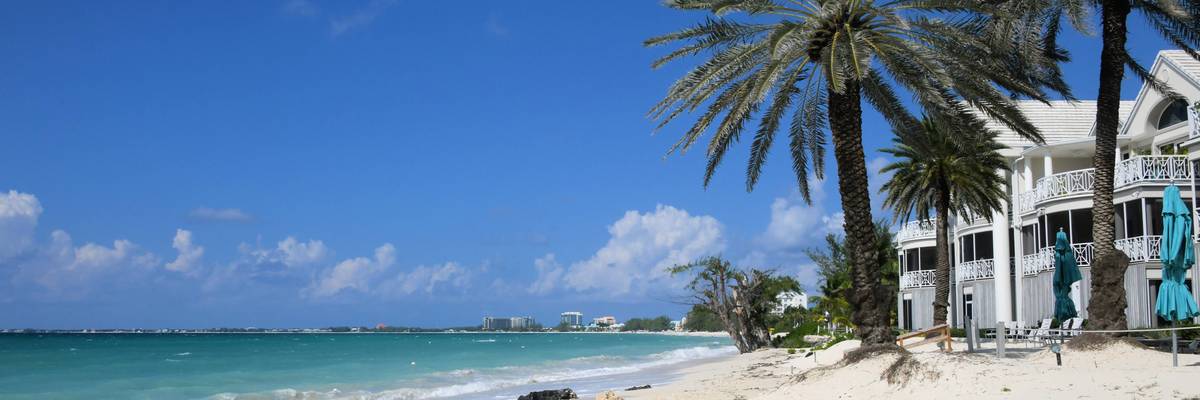
Seven Mile Beach on Grand Cayman on the Cayman Islands is photographed on March 18, 2026.
A decade after the Panama Papers, the global rich are still hiding more than $2.8 trillion in tax havens. Just a fraction of that money could end extreme hunger and provide clean water to everyone on Earth.
The richest 0.1% of people on Earth are hiding more than $2.8 trillion in offshore accounts to avoid taxes. That money alone is more wealth than is owned by the entire bottom half of humanity, more than 4.1 billion people.
These findings were published in a report released Thursday by Oxfam International on the 10th anniversary of the 2016 Panama Papers, which provided an unprecedented look at how the world's most powerful capitalists, financiers, political leaders, celebrities, and criminals exploited offshore tax havens to stash their money.
"Ten years on, the superrich are still sequestering oceans of wealth in offshore vaults,” said Christian Hallum, Oxfam International’s tax lead.
The percentage of untaxed wealth in offshore accounts has dropped in the past 10 years, in large part due to global reforms like the adoption of the Organization for Economic Cooperation and Development's Automatic Exchange of Information framework (AEOI), which allows revenue authorities around the world to easily share information and crack down on cheats.
However, many nations in the Global South are excluded from this system, even though they need the tax revenue the most.
Oxfam found that a staggering $3.5 trillion, more than 3.2% of the global gross domestic product, still remains in untaxed accounts. That's more than the entire GDP of France and is more than twice the combined wealth of the world's 44 poorest nations.
And while the percentage of untaxed wealth is shrinking, that doesn't mean inequality has shrunk.
On the contrary, the December 2025 "World Inequality Report" found that the richest 0.001% of humanity—fewer than 60,000 multimillionaires and billionaires—now have three times as much wealth as the poorest half of the world’s population combined.
Inequality has surged around the world in part due to taxation policies and pandemic recovery packages that overwhelmingly favor the rich. The most glaring was adopted in the world's financial hub, the United States, last year.
The megabudget passed by Republicans and signed into law by President Donald Trump handed a $1 trillion tax cut to America's wealthiest 1% while slashing more than $1 trillion in spending from Medicaid, food assistance, and other safety net programs. It has been described by some economists as the largest upward transfer of wealth in US history.
While the global top 0.1% holds about 80% of untaxed offshore wealth, an even smaller group of uber-wealthy individuals does most of the cheating. The world's richest 0.01%, who hold at least $50 million apiece, control about half of all money in global tax shelters—$1.7 trillion.
According to the Tax Justice Network's Corporate Tax Haven Index, Caribbean islands under UK ownership, including the British Virgin Islands, the Cayman Islands, and Bermuda, are among the worst offenders. Other notable tax havens include Switzerland, Singapore, Hong Kong, Ireland, and the Netherlands.
A February Oxfam report on Elon Musk, who is well on his way to becoming the world's first trillionaire, found that his company, Tesla—which managed to pay zero dollars on its $2.3 billion income in 2024—has not published a country-by-country report on its taxes and that it has subsidiaries in many countries considered to be tax havens.
Big Pharma companies, including AbbVie and Merck, also used tax shelters to lower their total tax expense in 2025 by more than $1 billion, according to a report released earlier this month by the Financial Accountability & Corporate Transparency Coalition.
"This isn’t just about clever accounting—it’s about power and impunity," Hallum said. "When millionaires and billionaires stash trillions of dollars in offshore tax havens, they place themselves above the obligations that bind the rest of society."
"The consequences are as predictable as they are devastating," he continued. "We see our public hospitals and schools starved of funds, our social fabric shredded by rising inequality, and ordinary people forced to shoulder the costs of a system rigged to enrich a tiny few.”
Even a fraction of the money currently stashed away by the world's wealthiest could alleviate untold amounts of suffering.
In November, the United Nations' World Food Program estimated that extreme hunger, which currently affects more than 318 million people around the world, could be eradicated by 2030 with investments of about $93 billion per year, but that global hunger programs instead remain “slow, fragmented, and underfunded."
According to a 2021 UN Educational, Scientific, and Cultural Organization (UNESCO) report, investments of around $114 billion per year would similarly be enough to ensure that everyone on Earth has access to safe drinking water and sanitation.
Oxfam called on governments around the world to increase coordination to prevent the wealthy from hiding their riches from tax authorities. It also urged them to adopt more aggressive policies to tax the 1%'s wealth at home, including taxes on income and on extreme wealth.
Dear Common Dreams reader, It’s been nearly 30 years since I co-founded Common Dreams with my late wife, Lina Newhouser. We had the radical notion that journalism should serve the public good, not corporate profits. It was clear to us from the outset what it would take to build such a project. No paid advertisements. No corporate sponsors. No millionaire publisher telling us what to think or do. Many people said we wouldn't last a year, but we proved those doubters wrong. Together with a tremendous team of journalists and dedicated staff, we built an independent media outlet free from the constraints of profits and corporate control. Our mission has always been simple: To inform. To inspire. To ignite change for the common good. Building Common Dreams was not easy. Our survival was never guaranteed. When you take on the most powerful forces—Wall Street greed, fossil fuel industry destruction, Big Tech lobbyists, and uber-rich oligarchs who have spent billions upon billions rigging the economy and democracy in their favor—the only bulwark you have is supporters who believe in your work. But here’s the urgent message from me today. It's never been this bad out there. And it's never been this hard to keep us going. At the very moment Common Dreams is most needed, the threats we face are intensifying. We need your support now more than ever. We don't accept corporate advertising and never will. We don't have a paywall because we don't think people should be blocked from critical news based on their ability to pay. Everything we do is funded by the donations of readers like you. When everyone does the little they can afford, we are strong. But if that support retreats or dries up, so do we. Will you donate now to make sure Common Dreams not only survives but thrives? —Craig Brown, Co-founder |
The richest 0.1% of people on Earth are hiding more than $2.8 trillion in offshore accounts to avoid taxes. That money alone is more wealth than is owned by the entire bottom half of humanity, more than 4.1 billion people.
These findings were published in a report released Thursday by Oxfam International on the 10th anniversary of the 2016 Panama Papers, which provided an unprecedented look at how the world's most powerful capitalists, financiers, political leaders, celebrities, and criminals exploited offshore tax havens to stash their money.
"Ten years on, the superrich are still sequestering oceans of wealth in offshore vaults,” said Christian Hallum, Oxfam International’s tax lead.
The percentage of untaxed wealth in offshore accounts has dropped in the past 10 years, in large part due to global reforms like the adoption of the Organization for Economic Cooperation and Development's Automatic Exchange of Information framework (AEOI), which allows revenue authorities around the world to easily share information and crack down on cheats.
However, many nations in the Global South are excluded from this system, even though they need the tax revenue the most.
Oxfam found that a staggering $3.5 trillion, more than 3.2% of the global gross domestic product, still remains in untaxed accounts. That's more than the entire GDP of France and is more than twice the combined wealth of the world's 44 poorest nations.
And while the percentage of untaxed wealth is shrinking, that doesn't mean inequality has shrunk.
On the contrary, the December 2025 "World Inequality Report" found that the richest 0.001% of humanity—fewer than 60,000 multimillionaires and billionaires—now have three times as much wealth as the poorest half of the world’s population combined.
Inequality has surged around the world in part due to taxation policies and pandemic recovery packages that overwhelmingly favor the rich. The most glaring was adopted in the world's financial hub, the United States, last year.
The megabudget passed by Republicans and signed into law by President Donald Trump handed a $1 trillion tax cut to America's wealthiest 1% while slashing more than $1 trillion in spending from Medicaid, food assistance, and other safety net programs. It has been described by some economists as the largest upward transfer of wealth in US history.
While the global top 0.1% holds about 80% of untaxed offshore wealth, an even smaller group of uber-wealthy individuals does most of the cheating. The world's richest 0.01%, who hold at least $50 million apiece, control about half of all money in global tax shelters—$1.7 trillion.
According to the Tax Justice Network's Corporate Tax Haven Index, Caribbean islands under UK ownership, including the British Virgin Islands, the Cayman Islands, and Bermuda, are among the worst offenders. Other notable tax havens include Switzerland, Singapore, Hong Kong, Ireland, and the Netherlands.
A February Oxfam report on Elon Musk, who is well on his way to becoming the world's first trillionaire, found that his company, Tesla—which managed to pay zero dollars on its $2.3 billion income in 2024—has not published a country-by-country report on its taxes and that it has subsidiaries in many countries considered to be tax havens.
Big Pharma companies, including AbbVie and Merck, also used tax shelters to lower their total tax expense in 2025 by more than $1 billion, according to a report released earlier this month by the Financial Accountability & Corporate Transparency Coalition.
"This isn’t just about clever accounting—it’s about power and impunity," Hallum said. "When millionaires and billionaires stash trillions of dollars in offshore tax havens, they place themselves above the obligations that bind the rest of society."
"The consequences are as predictable as they are devastating," he continued. "We see our public hospitals and schools starved of funds, our social fabric shredded by rising inequality, and ordinary people forced to shoulder the costs of a system rigged to enrich a tiny few.”
Even a fraction of the money currently stashed away by the world's wealthiest could alleviate untold amounts of suffering.
In November, the United Nations' World Food Program estimated that extreme hunger, which currently affects more than 318 million people around the world, could be eradicated by 2030 with investments of about $93 billion per year, but that global hunger programs instead remain “slow, fragmented, and underfunded."
According to a 2021 UN Educational, Scientific, and Cultural Organization (UNESCO) report, investments of around $114 billion per year would similarly be enough to ensure that everyone on Earth has access to safe drinking water and sanitation.
Oxfam called on governments around the world to increase coordination to prevent the wealthy from hiding their riches from tax authorities. It also urged them to adopt more aggressive policies to tax the 1%'s wealth at home, including taxes on income and on extreme wealth.
The richest 0.1% of people on Earth are hiding more than $2.8 trillion in offshore accounts to avoid taxes. That money alone is more wealth than is owned by the entire bottom half of humanity, more than 4.1 billion people.
These findings were published in a report released Thursday by Oxfam International on the 10th anniversary of the 2016 Panama Papers, which provided an unprecedented look at how the world's most powerful capitalists, financiers, political leaders, celebrities, and criminals exploited offshore tax havens to stash their money.
"Ten years on, the superrich are still sequestering oceans of wealth in offshore vaults,” said Christian Hallum, Oxfam International’s tax lead.
The percentage of untaxed wealth in offshore accounts has dropped in the past 10 years, in large part due to global reforms like the adoption of the Organization for Economic Cooperation and Development's Automatic Exchange of Information framework (AEOI), which allows revenue authorities around the world to easily share information and crack down on cheats.
However, many nations in the Global South are excluded from this system, even though they need the tax revenue the most.
Oxfam found that a staggering $3.5 trillion, more than 3.2% of the global gross domestic product, still remains in untaxed accounts. That's more than the entire GDP of France and is more than twice the combined wealth of the world's 44 poorest nations.
And while the percentage of untaxed wealth is shrinking, that doesn't mean inequality has shrunk.
On the contrary, the December 2025 "World Inequality Report" found that the richest 0.001% of humanity—fewer than 60,000 multimillionaires and billionaires—now have three times as much wealth as the poorest half of the world’s population combined.
Inequality has surged around the world in part due to taxation policies and pandemic recovery packages that overwhelmingly favor the rich. The most glaring was adopted in the world's financial hub, the United States, last year.
The megabudget passed by Republicans and signed into law by President Donald Trump handed a $1 trillion tax cut to America's wealthiest 1% while slashing more than $1 trillion in spending from Medicaid, food assistance, and other safety net programs. It has been described by some economists as the largest upward transfer of wealth in US history.
While the global top 0.1% holds about 80% of untaxed offshore wealth, an even smaller group of uber-wealthy individuals does most of the cheating. The world's richest 0.01%, who hold at least $50 million apiece, control about half of all money in global tax shelters—$1.7 trillion.
According to the Tax Justice Network's Corporate Tax Haven Index, Caribbean islands under UK ownership, including the British Virgin Islands, the Cayman Islands, and Bermuda, are among the worst offenders. Other notable tax havens include Switzerland, Singapore, Hong Kong, Ireland, and the Netherlands.
A February Oxfam report on Elon Musk, who is well on his way to becoming the world's first trillionaire, found that his company, Tesla—which managed to pay zero dollars on its $2.3 billion income in 2024—has not published a country-by-country report on its taxes and that it has subsidiaries in many countries considered to be tax havens.
Big Pharma companies, including AbbVie and Merck, also used tax shelters to lower their total tax expense in 2025 by more than $1 billion, according to a report released earlier this month by the Financial Accountability & Corporate Transparency Coalition.
"This isn’t just about clever accounting—it’s about power and impunity," Hallum said. "When millionaires and billionaires stash trillions of dollars in offshore tax havens, they place themselves above the obligations that bind the rest of society."
"The consequences are as predictable as they are devastating," he continued. "We see our public hospitals and schools starved of funds, our social fabric shredded by rising inequality, and ordinary people forced to shoulder the costs of a system rigged to enrich a tiny few.”
Even a fraction of the money currently stashed away by the world's wealthiest could alleviate untold amounts of suffering.
In November, the United Nations' World Food Program estimated that extreme hunger, which currently affects more than 318 million people around the world, could be eradicated by 2030 with investments of about $93 billion per year, but that global hunger programs instead remain “slow, fragmented, and underfunded."
According to a 2021 UN Educational, Scientific, and Cultural Organization (UNESCO) report, investments of around $114 billion per year would similarly be enough to ensure that everyone on Earth has access to safe drinking water and sanitation.
Oxfam called on governments around the world to increase coordination to prevent the wealthy from hiding their riches from tax authorities. It also urged them to adopt more aggressive policies to tax the 1%'s wealth at home, including taxes on income and on extreme wealth.