

SUBSCRIBE TO OUR FREE NEWSLETTER
Daily news & progressive opinion—funded by the people, not the corporations—delivered straight to your inbox.
5
#000000
#FFFFFF
To donate by check, phone, or other method, see our More Ways to Give page.
Daily news & progressive opinion—funded by the people, not the corporations—delivered straight to your inbox.
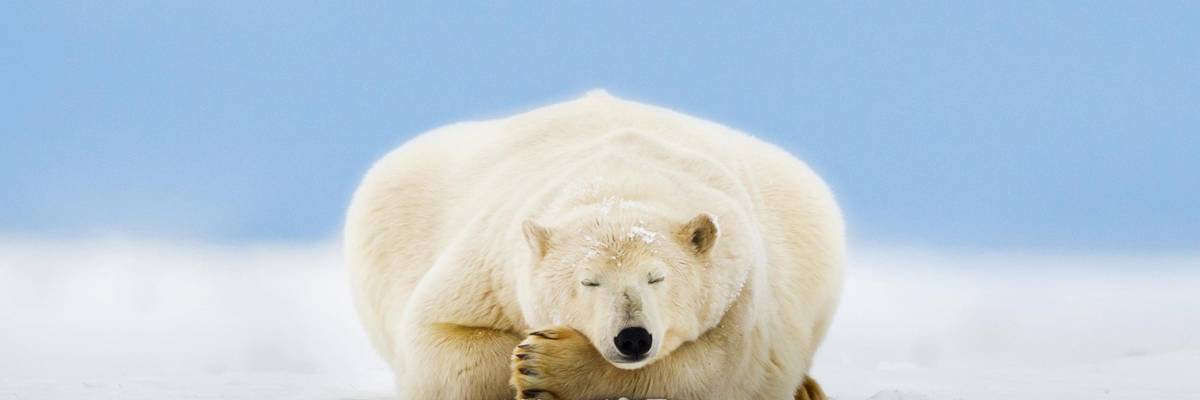
A polar bear rests on a barrier island in the Beaufort Sea in Alaska's Arctic National Wildlife Refuge.
"We need a law on the books that will affirm these lands are not for sale, preserve the wilderness of the Coastal Plain, and uphold the sovereignty of Arctic Indigenous peoples," said Sen. Ed Markey, one of the bill's lead sponsors.
Indigenous, climate, and conservation advocates on Wednesday welcomed the reintroduction of congressional legislation to restore protections and prevent fossil fuel development in Alaska's Arctic National Wildlife Refuge.
Sens. Ed Markey (D-Mass.), Maria Cantwell (D-Wash.), Martin Heinrich (D-N.M.), and Michael Bennet (D-Colo.), along with Reps. Jared Huffman (D-Calif.) and Brian Fitzpatrick (R-Pa.), reintroduced the Arctic Refuge Protection Act, the continuation of legislative efforts dating back to the 1980s to protect the critical wilderness and its inhabitants.
The lawmakers said in a statement that their bill "will restore critical protections to the Arctic National Wildlife Refuge—home to the Gwich'in people and the nation's largest national wildlife refuge—by designating the Coastal Plain ecosystem as wilderness under the National Wilderness Preservation System."
If passed, the bill "would permanently halt any new oil and gas leasing, exploration, development, and drilling on the Coastal Plain, and would safeguard the subsistence rights of the Arctic Indigenous peoples who depend upon the unique ecosystem within the Arctic Refuge," the statement explained.
As Huffman's office noted:
The Arctic National Wildlife Refuge covers 19.6 million acres and is the largest unit in the National Wildlife Refuge System. The 1.56 million-acre Coastal Plain, the biological heart of the refuge, contains the calving grounds for the Porcupine caribou herd and is home to denning polar bears, musk oxen, wolves, and more than 150 species of migratory birds. The 9,000-strong Gwich'in Nation, living in Alaska and Canada, make their home on or near the migratory route of the Porcupine caribou herd, and have depended on this herd for their subsistence and culture for thousands of years.
"The Arctic National Wildlife Refuge is a national treasure and a cultural and spiritual home for Arctic Indigenous peoples," said Markey. "The traditional relationship that the Gwich'in and Iñupiat have had with the refuge for generations, as well as the singular ecosystem on the Coastal Plain, should not be put into harm's way because of old failed promises of a fictional financial windfall."
"We need a law on the books that will affirm these lands are not for sale, preserve the wilderness of the Coastal Plain, and uphold the sovereignty of Arctic Indigenous peoples—who must be consulted regarding the use, management, and conservation of the Coastal Plain," he added.
"The Arctic National Wildlife Refuge is a national treasure and a cultural and spiritual home for Arctic Indigenous peoples."
Karlin Itchoak, Alaska regional director for the Wilderness Society, stated that the bill "recognizes not only the importance of protecting wildlife and public land, but also shows respect and concern for the Indigenous peoples who live in and near the Arctic National Wildlife Refuge."
"The Coastal Plain of the refuge is sacred to the Gwich'in Nation, and the Iñupiat people have stewarded this land since time immemorial," Itchoak added. "Protecting the Coastal Plain from oil drilling is essential to their cultures, food security, and ways of life, as well as to the global climate."
Some Indigenous and conservationist activists expressed their deep disappointment last year after congressional Democrats excluded Arctic protections from their $430 billion budget reconciliation package. Protections including a measure to end the Trump-era mandate for oil and gas leases on the Coastal Plain were included in the Build Back Better package that made it no further than passage by House Democrats in 2021.
The lawmakers said the reintroduced bill "would enshrine the protections sought by President [Joe] Biden on his first day in office, which were reaffirmed last June when the administration temporarily suspended drilling lease sales in the Arctic refuge."
However, they stressed that "the Coastal Plain ecosystem remains at risk due to oil and gas lease sales mandated by the 2017 Tax Cuts and Jobs Act"—also known as the Republican Tax Scam—signed into law by then-President Donald Trump. Such lease sales ultimately generated little interest.
The reintroduction of the Arctic Refuge Protection Act came on the same day that the Biden administration's Bureau of Land Management infuriated climate advocates by publishing an environmental assessment recommending partial approval of ConocoPhillips' Willow Project, a major drilling initiative on Alaska's North Slope, which contains much of the Arctic National Wildlife Refuge.
Dear Common Dreams reader, It’s been nearly 30 years since I co-founded Common Dreams with my late wife, Lina Newhouser. We had the radical notion that journalism should serve the public good, not corporate profits. It was clear to us from the outset what it would take to build such a project. No paid advertisements. No corporate sponsors. No millionaire publisher telling us what to think or do. Many people said we wouldn't last a year, but we proved those doubters wrong. Together with a tremendous team of journalists and dedicated staff, we built an independent media outlet free from the constraints of profits and corporate control. Our mission has always been simple: To inform. To inspire. To ignite change for the common good. Building Common Dreams was not easy. Our survival was never guaranteed. When you take on the most powerful forces—Wall Street greed, fossil fuel industry destruction, Big Tech lobbyists, and uber-rich oligarchs who have spent billions upon billions rigging the economy and democracy in their favor—the only bulwark you have is supporters who believe in your work. But here’s the urgent message from me today. It's never been this bad out there. And it's never been this hard to keep us going. At the very moment Common Dreams is most needed, the threats we face are intensifying. We need your support now more than ever. We don't accept corporate advertising and never will. We don't have a paywall because we don't think people should be blocked from critical news based on their ability to pay. Everything we do is funded by the donations of readers like you. When everyone does the little they can afford, we are strong. But if that support retreats or dries up, so do we. Will you donate now to make sure Common Dreams not only survives but thrives? —Craig Brown, Co-founder |
Indigenous, climate, and conservation advocates on Wednesday welcomed the reintroduction of congressional legislation to restore protections and prevent fossil fuel development in Alaska's Arctic National Wildlife Refuge.
Sens. Ed Markey (D-Mass.), Maria Cantwell (D-Wash.), Martin Heinrich (D-N.M.), and Michael Bennet (D-Colo.), along with Reps. Jared Huffman (D-Calif.) and Brian Fitzpatrick (R-Pa.), reintroduced the Arctic Refuge Protection Act, the continuation of legislative efforts dating back to the 1980s to protect the critical wilderness and its inhabitants.
The lawmakers said in a statement that their bill "will restore critical protections to the Arctic National Wildlife Refuge—home to the Gwich'in people and the nation's largest national wildlife refuge—by designating the Coastal Plain ecosystem as wilderness under the National Wilderness Preservation System."
If passed, the bill "would permanently halt any new oil and gas leasing, exploration, development, and drilling on the Coastal Plain, and would safeguard the subsistence rights of the Arctic Indigenous peoples who depend upon the unique ecosystem within the Arctic Refuge," the statement explained.
As Huffman's office noted:
The Arctic National Wildlife Refuge covers 19.6 million acres and is the largest unit in the National Wildlife Refuge System. The 1.56 million-acre Coastal Plain, the biological heart of the refuge, contains the calving grounds for the Porcupine caribou herd and is home to denning polar bears, musk oxen, wolves, and more than 150 species of migratory birds. The 9,000-strong Gwich'in Nation, living in Alaska and Canada, make their home on or near the migratory route of the Porcupine caribou herd, and have depended on this herd for their subsistence and culture for thousands of years.
"The Arctic National Wildlife Refuge is a national treasure and a cultural and spiritual home for Arctic Indigenous peoples," said Markey. "The traditional relationship that the Gwich'in and Iñupiat have had with the refuge for generations, as well as the singular ecosystem on the Coastal Plain, should not be put into harm's way because of old failed promises of a fictional financial windfall."
"We need a law on the books that will affirm these lands are not for sale, preserve the wilderness of the Coastal Plain, and uphold the sovereignty of Arctic Indigenous peoples—who must be consulted regarding the use, management, and conservation of the Coastal Plain," he added.
"The Arctic National Wildlife Refuge is a national treasure and a cultural and spiritual home for Arctic Indigenous peoples."
Karlin Itchoak, Alaska regional director for the Wilderness Society, stated that the bill "recognizes not only the importance of protecting wildlife and public land, but also shows respect and concern for the Indigenous peoples who live in and near the Arctic National Wildlife Refuge."
"The Coastal Plain of the refuge is sacred to the Gwich'in Nation, and the Iñupiat people have stewarded this land since time immemorial," Itchoak added. "Protecting the Coastal Plain from oil drilling is essential to their cultures, food security, and ways of life, as well as to the global climate."
Some Indigenous and conservationist activists expressed their deep disappointment last year after congressional Democrats excluded Arctic protections from their $430 billion budget reconciliation package. Protections including a measure to end the Trump-era mandate for oil and gas leases on the Coastal Plain were included in the Build Back Better package that made it no further than passage by House Democrats in 2021.
The lawmakers said the reintroduced bill "would enshrine the protections sought by President [Joe] Biden on his first day in office, which were reaffirmed last June when the administration temporarily suspended drilling lease sales in the Arctic refuge."
However, they stressed that "the Coastal Plain ecosystem remains at risk due to oil and gas lease sales mandated by the 2017 Tax Cuts and Jobs Act"—also known as the Republican Tax Scam—signed into law by then-President Donald Trump. Such lease sales ultimately generated little interest.
The reintroduction of the Arctic Refuge Protection Act came on the same day that the Biden administration's Bureau of Land Management infuriated climate advocates by publishing an environmental assessment recommending partial approval of ConocoPhillips' Willow Project, a major drilling initiative on Alaska's North Slope, which contains much of the Arctic National Wildlife Refuge.
Indigenous, climate, and conservation advocates on Wednesday welcomed the reintroduction of congressional legislation to restore protections and prevent fossil fuel development in Alaska's Arctic National Wildlife Refuge.
Sens. Ed Markey (D-Mass.), Maria Cantwell (D-Wash.), Martin Heinrich (D-N.M.), and Michael Bennet (D-Colo.), along with Reps. Jared Huffman (D-Calif.) and Brian Fitzpatrick (R-Pa.), reintroduced the Arctic Refuge Protection Act, the continuation of legislative efforts dating back to the 1980s to protect the critical wilderness and its inhabitants.
The lawmakers said in a statement that their bill "will restore critical protections to the Arctic National Wildlife Refuge—home to the Gwich'in people and the nation's largest national wildlife refuge—by designating the Coastal Plain ecosystem as wilderness under the National Wilderness Preservation System."
If passed, the bill "would permanently halt any new oil and gas leasing, exploration, development, and drilling on the Coastal Plain, and would safeguard the subsistence rights of the Arctic Indigenous peoples who depend upon the unique ecosystem within the Arctic Refuge," the statement explained.
As Huffman's office noted:
The Arctic National Wildlife Refuge covers 19.6 million acres and is the largest unit in the National Wildlife Refuge System. The 1.56 million-acre Coastal Plain, the biological heart of the refuge, contains the calving grounds for the Porcupine caribou herd and is home to denning polar bears, musk oxen, wolves, and more than 150 species of migratory birds. The 9,000-strong Gwich'in Nation, living in Alaska and Canada, make their home on or near the migratory route of the Porcupine caribou herd, and have depended on this herd for their subsistence and culture for thousands of years.
"The Arctic National Wildlife Refuge is a national treasure and a cultural and spiritual home for Arctic Indigenous peoples," said Markey. "The traditional relationship that the Gwich'in and Iñupiat have had with the refuge for generations, as well as the singular ecosystem on the Coastal Plain, should not be put into harm's way because of old failed promises of a fictional financial windfall."
"We need a law on the books that will affirm these lands are not for sale, preserve the wilderness of the Coastal Plain, and uphold the sovereignty of Arctic Indigenous peoples—who must be consulted regarding the use, management, and conservation of the Coastal Plain," he added.
"The Arctic National Wildlife Refuge is a national treasure and a cultural and spiritual home for Arctic Indigenous peoples."
Karlin Itchoak, Alaska regional director for the Wilderness Society, stated that the bill "recognizes not only the importance of protecting wildlife and public land, but also shows respect and concern for the Indigenous peoples who live in and near the Arctic National Wildlife Refuge."
"The Coastal Plain of the refuge is sacred to the Gwich'in Nation, and the Iñupiat people have stewarded this land since time immemorial," Itchoak added. "Protecting the Coastal Plain from oil drilling is essential to their cultures, food security, and ways of life, as well as to the global climate."
Some Indigenous and conservationist activists expressed their deep disappointment last year after congressional Democrats excluded Arctic protections from their $430 billion budget reconciliation package. Protections including a measure to end the Trump-era mandate for oil and gas leases on the Coastal Plain were included in the Build Back Better package that made it no further than passage by House Democrats in 2021.
The lawmakers said the reintroduced bill "would enshrine the protections sought by President [Joe] Biden on his first day in office, which were reaffirmed last June when the administration temporarily suspended drilling lease sales in the Arctic refuge."
However, they stressed that "the Coastal Plain ecosystem remains at risk due to oil and gas lease sales mandated by the 2017 Tax Cuts and Jobs Act"—also known as the Republican Tax Scam—signed into law by then-President Donald Trump. Such lease sales ultimately generated little interest.
The reintroduction of the Arctic Refuge Protection Act came on the same day that the Biden administration's Bureau of Land Management infuriated climate advocates by publishing an environmental assessment recommending partial approval of ConocoPhillips' Willow Project, a major drilling initiative on Alaska's North Slope, which contains much of the Arctic National Wildlife Refuge.

